Disclosure: topratedkitchenware.com is reader-supported. When you buy through links on our site, we may earn an affiliate commission from Amazon and other retailers, at no extra cost to you.
Where to buy
If you are shopping for the best espresso machines for milk frothing, the six models below are the shortlist this guide is built around. Listings change often on Amazon, so use the links to check the current listing before you buy. Orders are placed on Amazon, and each listing there carries the full manufacturer detail for its model.
- Best Overall for Milk Drinks: De’Longhi Rivelia (Beige) — Check on Amazon
- De’Longhi Magnifica Start — Check on Amazon
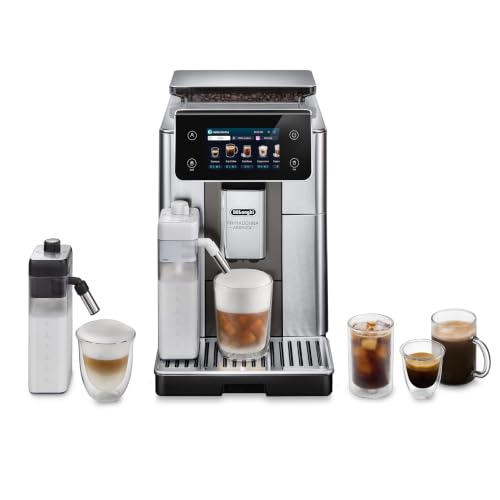
- De’Longhi PrimaDonna Aromatic — Check on Amazon
- Philips 5500 Series — Check on Amazon
- Philips 2300 Series — Check on Amazon
- De’Longhi Rivelia (White) — Check on Amazon
Read the full guide ↓
The best espresso machines for milk frothing are not simply the best espresso machines with a frother attached — frothing is its own discipline, and the machine’s milk system decides whether your lattes and cappuccinos are a pleasure or a chore. Foam quality, foam temperature, how the milk is stored and delivered, whether cold foam is possible, and above all how the system cleans up afterward: those are the questions this guide is built around, applied to six fully automatic machines from De’Longhi and Philips whose milk systems represent the main approaches on the market today.
A word on what automatic frothing is and is not. These machines froth milk for you — heating and texturing it as part of a one-touch drink — which is a different proposition from a manual steam wand, where you texture the milk yourself and can, with practice, pour latte art. Automatic systems trade that manual ceiling for consistency and zero learning curve: the same foam, from any member of the household, on the first try and the fiftieth. For most milk-drink households that trade is exactly right, and this guide judges these machines on how well they deliver it.
Milk also drives the daily routine more than coffee does. Milk systems need fresh cold milk, rinsing after use, and fridge space between drinks, whichever brand you choose — so the reviews below weigh cleanup design as heavily as foam features. If your household is also weighing a machine for a shared space, our guide to Best Espresso Machines For Office covers how milk routines play out when colleagues rather than family are involved. Start with the Quick Picks for the milk-first ranking, then read the two or three reviews that match your drinks.
Key Takeaways
- Judge these machines by their milk systems first: foam style, hot-only versus hot-and-cold capability, and how the system cleans.
- The PrimaDonna Aromatic has the widest foam repertoire here, frothing hot and cold across thirty-eight recipes.
- Philips’ LatteGo system, on the 5500 and 2300, is the convenience pick: milk handling designed to be simple to use and to clean.
- The two Rivelia models pair full automatic frothing with swappable bean hoppers — ideal when milk drinks come in regular and decaf versions.
- Every milk system needs fresh cold milk, a rinse after use, and fridge space for the container; budget that routine into your decision.
- The Magnifica Start proves frothing quality does not require a long menu — three recipes, done automatically, covers the classic milk drinks.
In this guide
Quick Picks
If milk frothing is why you are buying, the machine decision changes: the espresso side of these six automatics is broadly capable across the board, so what separates them is the milk system — how the foam is made, whether it works cold as well as hot, how much of the process is one-touch, and how much cleaning the system asks for afterward. This table ranks the six by their milk proposition first. Read the badge column as a milk-first summary, then use the detailed reviews to check the trade-offs, because the best frother for a latte-every-morning household is not necessarily the best for a cappuccino-at-weekends one.
| Pick | Badge | Why it earns its place |
|---|---|---|
| De’Longhi Rivelia (Beige) | Best Overall for Milk Drinks | Eighteen one-touch recipes built around an automatic milk frother, plus swappable bean hoppers for regular and decaf milk drinks. |
| De’Longhi Magnifica Start | Best Simple Frothing | The simplest automatic frothing here: a short menu, a built-in grinder, and an easy-to-clean design for daily lattes without fuss. |
| De’Longhi PrimaDonna Aromatic | Best for Hot and Cold Foam | Hot and cold milk frothing across thirty-eight recipes — the widest foam repertoire in this guide, from cappuccino to cold-foam iced drinks. |
| Philips 5500 Series | Best LatteGo Convenience | LatteGo milk system with twenty hot and iced presets and adjustable strength, milk, and cup size for dialed-in milk drinks. |
| Philips 2300 Series | Best Compact LatteGo Pick | LatteGo convenience in its most focused form: three presets, a ceramic grinder, and customizable strength and cup size. |
| De’Longhi Rivelia (White) | Best for Two Beans and Milk Drinks | The Rivelia formula in white: swappable hoppers and eighteen recipes for households whose milk drinks run on two kinds of beans. |
How These Picks Were Chosen
To build this guide we compared the verified listings of the leading automatic machines specifically through a milk lens. For each model we recorded how its listing describes the milk system — automatic frother, the LatteGo system, or hot-and-cold capability — how many of its recipes are milk-based, what adjustment the drinker gets over milk and cup size, and what the manufacturer says about cleaning the parts milk touches. Machines whose milk offering was an afterthought did not make the shortlist; every model here treats milk drinks as a core job, not an accessory function.
We also weighted the unglamorous side of frothing — the cleanup — because it is where milk-drink ownership succeeds or fails over years. A frother that produces beautiful foam but demands a fiddly strip-down after every latte will quietly train its household to stop making lattes. Systems designed for simple rinsing and straightforward washing, and menus that keep the milk routine one-touch from start to finish, scored accordingly. Readers who want the wider automatic picture beyond milk can compare this shortlist with our guide to Best Espresso Machines For Regular Home Production, where the same class of machine is judged on whole-routine grounds.
As with all our guides, we print no prices and no scores: listings change, and milk performance claims in this guide are limited to what each listing actually states about its system — recipe counts, frothing modes, and adjustability — rather than invented foam measurements. Where the listing does not specify a detail, we say nothing rather than guess. What that leaves is a reliable map of the six milk approaches on offer, and honest guidance on matching them to the drinks your household actually makes.
The 6 Best Espresso Machines for Milk Frothing
Each review leads with the milk system — how it froths, what drinks it makes possible, and what it asks of you afterward — then covers the machine around it. Badges match the Quick Picks table.

De’Longhi Rivelia (Beige)
Badge: Best Overall for Milk Drinks
Strengths
- Automatic milk frother integrated into an eighteen-recipe menu, so the standard milk drinks are all one-touch.
- Swappable bean hoppers mean decaf lattes and regular lattes both come from fresh beans without emptying anything.
- A design-led machine in four colors, including this beige, that is meant to live proudly on the counter.
Trade-offs
- The frother is hot-milk focused; households wanting cold foam for iced drinks should look at the PrimaDonna.
- Swappable hoppers add an accessory to store, and single-bean households gain nothing from them.
- Eighteen recipes is generous, but the milk routine — rinse, refrigerate — is the standard automatic one.
Key specs from the listing: Automatic espresso machine with grinder and milk frother, beige finish (one of 4 unique colors); removable bean hoppers; 18 one-touch recipes. (Listing details as provided by De’Longhi.)
The Rivelia takes our Best Overall badge for milk frothing because it treats milk drinks as the center of home coffee life, which for most households they are. Its automatic frother is built into an eighteen-recipe one-touch menu, so cappuccinos, lattes, and the variations between them are single-button drinks with no wand technique to learn and no separate frothing jug routine. The foam is the machine’s job, consistently, whoever in the household presses the button — and that consistency is precisely what automatic frothing is for.
What lifts the Rivelia above a merely competent milk machine is the bean side of its milk drinks. Milk drinks are where decaf demand lives — the evening latte, the guest who takes decaf — and the Rivelia’s removable hoppers let you swap between regular and decaf beans in moments. A decaf cappuccino made from fresh-ground decaf beans, rather than from a stale workaround, is a genuinely better drink, and no other machine in this guide can produce it so easily.
The limitations are clear-eyed ones. The frother works with hot milk; if your household’s milk life includes cold foam over iced drinks, the PrimaDonna below is the machine designed for that. And the hoppers, like all clever hardware, need a home in a cupboard when not fitted. But for the mainstream milk household — hot milk drinks daily, two kinds of beans in the house, zero interest in manual steaming — the beige Rivelia is the most complete answer in this list.
Best for: households whose daily drinks are milk-based and who keep regular and decaf beans in the house / Not suited for: cold-foam and iced-drink households — the PrimaDonna’s hot-and-cold frother suits them better

De’Longhi Magnifica Start
Badge: Best Simple Frothing
Strengths
- Automatic frothing on a deliberately short menu: the classic milk drinks without settings to manage.
- Easy-to-clean design focus matters doubly on a milk machine, where the frother is the part that needs daily attention.
- Built-in grinder keeps milk drinks bean-to-cup fresh with the simplest routine in this guide.
Trade-offs
- Three recipes means the milk menu is the classics only; there is no cold foam and no long list of variations.
- No deep customization of milk texture or drink size compared with the Philips models’ adjustable settings.
- It is the starting point of the range, so enthusiastic milk-drink explorers will outgrow it first.
Key specs from the listing: Automatic espresso machine with milk frother, black finish; 3 one-touch recipes; built-in grinder; easy-to-clean design. (Listing details as provided by De’Longhi.)
The Magnifica Start makes a case that deserves respect in a frothing guide: for the classic milk drinks, a simple automatic frother used daily beats a sophisticated system used rarely. Its three one-touch recipes cover the essential ground, the frother is fully automatic, and the design’s easy-to-clean emphasis is aimed squarely at the part of milk-drink ownership that actually wears people down — the washing up. If your household’s milk life is a cappuccino or latte at breakfast and another in the afternoon, the Start’s proposition is honestly sufficient.
Because the menu is short, the Start is also the easiest milk machine here to share. There is nothing to configure and nothing to get wrong: fill the milk, press the drink, rinse the frother parts as directed. Households where one person is the coffee enthusiast and everyone else just wants a latte will find that flat learning curve worth more than a settings menu. The built-in grinder keeps the coffee side fresh without any separate equipment or technique.
Its boundaries are equally clear. There is no cold foam, no long list of milk variations, and less adjustment over the drink than the Philips models offer with their customizable milk and cup settings. A household that treats milk drinks as a hobby — different drinks for different days, iced versions in summer — will feel the ceiling quickly. But as a frothing machine for the classics, kept simple and kept clean with minimal effort, the Start is a rational and likeable choice.
Best for: households that want classic milk drinks automatically, with the easiest cleaning routine in this guide / Not suited for: variety seekers and cold-foam fans, who will find the short, hot-only menu limiting


De’Longhi PrimaDonna Aromatic
Badge: Best for Hot and Cold Foam
Strengths
- Froths milk hot and cold, which no other approach in this list matches for range: cappuccinos to cold-foam iced lattes.
- Thirty-eight one-touch recipes give milk drinks in more variations than any other model here.
- Touchscreen control keeps a very long milk menu browsable for the whole household.
Trade-offs
- The widest repertoire comes with the most milk-system parts in the daily rinse routine.
- Thirty-eight recipes is more menu than most households will explore; you pay for breadth.
- It is the premium model here, justified only if hot-and-cold milk drinks are a weekly reality.
Key specs from the listing: Fully automatic espresso machine; 38 one-touch recipes; hot and cold milk frother; built-in grinder; touchscreen display. (Listing details as provided by De’Longhi.)
The PrimaDonna Aromatic is the frothing maximalist of this guide, and its headline is the one milk feature nobody else here offers in the same way: a frother that works hot and cold. Hot foam covers the cappuccino and latte canon; cold foam opens the iced repertoire — cold-topped lattes and iced milk drinks with real texture rather than just milk poured over ice. For households whose milk drinking runs all year and in all weathers, that single capability can be the deciding one.
The menu behind the frother is the largest in this guide at thirty-eight one-touch recipes, navigated by touchscreen. Milk drinks dominate any realistic reading of that menu, and the variety is genuinely useful in a household where one person’s flat white habit coexists with another’s flavored lattes and a teenager’s iced drinks. Everything remains one-touch and bean-to-cup, with the built-in grinder feeding the whole repertoire from the same beans.
The costs of maximalism are the usual ones. More milk capability means more milk-system parts in the daily rinse, and a thirty-eight-drink menu is a lot of appliance to buy for a household that drinks two drinks. The PrimaDonna earns its price of admission only when its range is used — but for the household that will use it, no other machine in this list does as much with milk. Our guide to Best Espresso Machines For Third Wave Cafes shows where this kind of menu breadth leads in a commercial direction, and how far the PrimaDonna goes toward it for a home.
Best for: milk-drink enthusiasts who want hot and cold foam and the widest menu of milk drinks / Not suited for: small, simple households that would use a fraction of its menu and resent its upkeep

Philips 5500 Series
Badge: Best LatteGo Convenience
Strengths
- LatteGo milk system is designed for straightforward handling and cleaning — the two things milk systems live or die by.
- Twenty hot and iced presets include plenty of milk drinks, with strength, milk, and cup size all adjustable.
- QuickStart gets the first milk drink of the morning moving sooner.
Trade-offs
- LatteGo’s container needs fridge space between uses, as with any milk carafe system.
- Twenty presets still require a first week of dialing in your preferred milk and strength settings.
- Hot and cold here refers to the drink presets; buyers wanting dedicated cold foam should compare the PrimaDonna’s frother.
Key specs from the listing: Fully automatic espresso machine, model EP5544/94; LatteGo milk system; 20 hot and iced coffee presets; customizable coffee strength, milk, and cup size; QuickStart; ceramic grinder; 15 bars pump pressure. (Listing details as provided by Philips.)
Philips’ LatteGo system is the milk-convenience story of this guide, and the 5500 is its fullest expression. LatteGo is designed around the two moments milk systems usually fumble — handling and cleaning — with a milk container arrangement intended to be straightforward to use, store, and wash. On the 5500 that system serves twenty hot and iced presets, and the drinker can adjust coffee strength, milk quantity, and cup size, which is exactly the control set milk drinks need: the same latte, tuned longer, shorter, stronger, or milkier, saved to your taste.
The iced presets deserve emphasis in a frothing guide. Iced milk drinks are where automatic machines historically disappointed, either omitting them or treating them as hot drinks poured over ice. A preset range that includes iced options, served through a milk system designed for easy fridge storage between uses, makes the 5500 a year-round milk machine in practice, not just in marketing. QuickStart adds a small but real morning benefit: the first drink arrives sooner, and milk households tend to be morning households.
The trade-offs are the LatteGo standard ones: the milk container lives in the fridge between uses, so it needs a shelf, and the system’s parts join the regular washing rotation. Twenty presets also invite a week of experimentation before your drinks are dialed in. Neither is a serious burden, and for households that want milk variety with the least milk-system friction in this guide, the 5500 is the machine we would look at first alongside the Rivelia.
Best for: households that want milk variety with the least milk-system friction, plus adjustable milk and cup size / Not suited for: households wanting a saved signature-drink feature or swappable bean hoppers

Philips 2300 Series
Badge: Best Compact LatteGo Pick
Strengths
- LatteGo frothing in its most focused package: three presets that keep the daily milk drink to one touch.
- Ceramic grinder and customizable strength and cup size let you tune a milk drink without a complicated interface.
- Hot water function adds tea and top-ups to a small, milk-friendly menu.
Trade-offs
- Three presets is the shortest menu in this guide — variety seekers should step up to the 5500.
- Milk adjustment is present but simpler than on the larger Philips; fine control belongs to the 5500.
- Its compact brief means it is a household machine, not one for entertaining crowds of latte drinkers.
Key specs from the listing: Fully automatic espresso machine, model EP2330/14; LatteGo milk system; 3 coffee presets; ceramic grinder; customizable coffee strength and cup size; hot water function; 15-bar pressure. (Listing details as provided by Philips.)
The Philips 2300 is LatteGo frothing distilled to its essentials: three coffee presets, a ceramic grinder, customizable strength and cup size, and a hot water function, all behind the same milk system philosophy as its bigger sibling. For a small household whose milk life is one or two drinks made daily, that focus is the point — the 2300 spends nothing on menu breadth and everything on making the core milk routine pleasant, quick, and easy to clean up after.
There is a real argument that a short menu improves milk drinks in practice. With fewer presets, the household actually learns its settings — the strength and size adjustments get dialed in once, properly, and the daily drink is consistent. The hot water function quietly extends the machine’s usefulness to tea and top-ups, which matters in a small kitchen where every appliance should earn its footprint twice.
The ceiling is obvious: three presets is three presets, and households that want a rotation of milk drinks, or dedicated iced variety beyond the basics, should step up to the 5500 or across to the PrimaDonna. The 2300 is also a household-scale machine; a run of lattes for six guests will keep it busy for a while. But for one or two milk drinkers who value an easy system over a long menu, it is the most sensibly judged package in this guide — and its simplicity is a feature, not a shortcoming.
Best for: one or two milk drinkers who want LatteGo convenience without paying for a long menu / Not suited for: variety seekers and larger households making milk drinks in long runs

De’Longhi Rivelia (White)
Badge: Best for Two Beans and Milk Drinks
Strengths
- Same Rivelia milk package in a white finish: automatic frother, eighteen recipes, and hoppers that swap between bean types.
- Decaf milk drinks in the evening stop being a compromise — swap the hopper and the drink is fresh-ground.
- Four-color range means the white version suits bright, modern kitchens that black appliances dominate.
Trade-offs
- Functionally identical thinking to the beige Rivelia — choose between them on color and availability, not features.
- Hot-milk frothing only, so cold-foam fans should look to the PrimaDonna instead.
- The hopper system rewards bean variety; one-bean households pay for a feature they will not use.
Key specs from the listing: Automatic espresso machine with milk frother, white finish (one of 4 unique colors); removable bean hoppers; 18 one-touch recipes; built-in grinder. (Listing details as provided by De’Longhi.)
The white Rivelia mirrors the beige model that leads this guide — same eighteen one-touch recipes, same automatic milk frother, same removable hoppers that swap between bean types — in the finish that suits bright kitchens. We list it separately because it is a separate verified model in our pool, and because color is a legitimate deciding factor for an appliance that lives on the counter for years; a machine you enjoy looking at is a machine that stays out and stays used, which is where milk drinks get made.
Its milk case is the Rivelia case: one-touch hot milk drinks across a generous menu, with the unique ability to keep regular and decaf — or a standard and a special roast — in swappable hoppers. Evening decaf lattes, a partner’s regular cappuccino, a guest’s choice between them: the hopper system turns what is normally a compromise drink into a fresh-ground one, and milk drinks are where that flexibility gets used most.
Choose between the two Rivelias on finish and current listing, not on features, and weigh the same caveats: hot-milk frothing rather than cold foam, and a hopper accessory to store. If your household’s milk drinks run on one bean only, both Rivelias offer more bean flexibility than you need, and the Philips models’ LatteGo convenience may serve you better. If two beans and daily milk drinks describe your kitchen, either Rivelia is a genuinely well-aimed machine.
Best for: bright kitchens and two-bean households that want the full Rivelia milk package in white / Not suited for: single-bean households and cold-foam fans, who should look at the Philips or PrimaDonna models
Comparison Table
The comparison that matters here is milk-first: what the frother does, whether cold foam exists, and how the cleanup is designed. Espresso capability is a given at this level; milk is the differentiator.
| Pick | Drink menu | Milk system | Stands out for | Listing |
|---|---|---|---|---|
| De’Longhi Rivelia (Beige) | 18 one-touch recipes | Automatic milk frother (hot) | Milk drinks in regular and decaf from swappable hoppers | Check on Amazon |
| De’Longhi Magnifica Start | 3 one-touch recipes | Automatic milk frother (hot) | The simplest frothing routine and easiest cleanup focus | Check on Amazon |
| De’Longhi PrimaDonna Aromatic | 38 one-touch recipes | Hot and cold milk frother | The widest milk repertoire, including cold foam | Check on Amazon |
| Philips 5500 Series | 20 hot and iced presets | LatteGo milk system | Milk variety with adjustable milk quantity and easy handling | Check on Amazon |
| Philips 2300 Series | 3 coffee presets | LatteGo milk system | LatteGo convenience in its most focused form | Check on Amazon |
| De’Longhi Rivelia (White) | 18 one-touch recipes | Automatic milk frother (hot) | The Rivelia milk package in a white finish | Check on Amazon |
How to Choose an Espresso Machine for Milk Frothing
Begin with your household’s milk drinks, listed honestly. Count how many milk drinks are made in a week, which ones they are, and whether iced versions appear in summer. A household living on cappuccinos and lattes needs a dependable hot frother and little else; a household splitting between hot drinks and iced ones needs either cold-foam capability, like the PrimaDonna’s frother, or iced presets served through a fridge-friendly milk system, like the Philips models. The menu counts in this guide — from three presets to thirty-eight recipes — only matter as coverage of your list, never as a score in themselves.
Next, examine how each milk system handles its milk, because this decides your daily routine. Carafe and container systems keep milk in a vessel that lives in the fridge between drinks and attaches for serving; the routine is rinse after use, refrigerate always, wash regularly. LatteGo is Philips’ take on minimizing that system’s friction. Automatic frothers on the De’Longhi models follow the same broad pattern with their own designs. Whichever you choose, the questions to ask of a listing are the same: how many parts does milk touch, how do those parts wash, and how does the system rinse itself? The answers matter more to your long-term satisfaction than any foam claim.
Then consider adjustability, which is where milk drinks become your milk drinks. The Philips models in this guide let you customize milk quantity alongside strength and cup size — the difference between a latte that is right for your cup and one that is merely close. De’Longhi’s menus approach the same goal through recipe variety: more pre-set milk drinks, each with its own proportions. Neither approach is wrong; choose the one that matches how you think. Drinkers who tinker will enjoy adjustment settings; drinkers who want the machine to decide will prefer a menu of ready-made drinks.
Bean flexibility is the milk-specific factor most buyers overlook. Milk drinks are where households split — regular for one person, decaf for another, a flavored roast at weekends — and most automatic machines make bean changes a chore of scooping and waste. The Rivelia models’ swappable hoppers exist precisely for milk-drink households, and if your milk routine involves two bean types, that feature can outweigh every other difference in this guide. If it does not, ignore it completely and judge on frother and cleanup alone. Households scaling up their milk routine for guests or family gatherings can also browse our guide to Best Espresso Machines For Small Business to see how milk capacity thinking changes beyond the home.
Finally, be honest about the ceiling of automatic frothing. These systems produce consistent, enjoyable foam for lattes and cappuccinos with no skill, and for most households that is the whole requirement. What they do not offer is the manual control of a steam wand in trained hands — the micro-adjustments behind competition-level latte art. If pouring art is your ambition, you are shopping for a different type of machine altogether. If great-tasting milk drinks with zero technique is the ambition, every machine in this guide delivers it, and your choice comes down to menu, milk handling, and cleanup fit.
How to Froth Milk Well With an Automatic Machine — and Keep the System Clean
Automatic frothing removes the technique, but not the inputs: the machine can only texture the milk you give it, in the condition you give it. Start with fresh, cold milk straight from the fridge — cold milk gives any frothing system the longest, easiest working time and the sweetest result. Whole milk is the most forgiving for foam; lower-fat milks foam more airily and can taste thinner, and plant-based alternatives vary widely by brand, so expect a little experimentation to find the one your machine and your taste agree on.
- Fill the milk container or carafe with fresh, cold milk to the level your drink requires — no more, to avoid waste.
- Attach the milk system exactly as the manual directs and place your cup before starting the drink.
- Select the milk drink and let the machine complete its full cycle without interrupting the frothing phase.
- Serve promptly; automatic foam is at its best in the first minutes after the drink finishes.
- Immediately return leftover milk — in its container, where the system design allows — to the fridge, and run the frother rinse the manual specifies.
- At the end of the day, wash the milk-touching parts that the manual marks for daily washing, and leave them to dry before reassembly.
The cleaning rhythm is the price of milk drinks, and it is worth stating plainly: milk residue is the one genuinely perishable thing in an espresso machine, and every system in this guide is designed around managing it with rinses and regular washing rather than deep scrubbing. Follow your model’s stated routine — which parts rinse automatically, which wash by hand or in a dishwasher where the manual allows — and never leave milk sitting in a warm machine. Households that build the two-minute post-drink routine into the habit keep their machines tasting fresh for years; households that skip it blame the machine for flavors that were really housekeeping.
Two smaller habits improve results noticeably. First, keep cups reasonably warm for hot milk drinks — a cold cup steals heat from a small drink — whether that is a cup warmer like the Bosch models offer in other guides or simply a rinse of hot water from the machine’s hot water function, which both Philips models here include. Second, when a new milk or a new bean arrives, make one test drink and adjust strength or milk quantity before serving a round to guests. Automatic machines are consistent, but they are consistent around your settings, and a minute of calibration keeps the consistency pointed at drinks you love.
Troubleshooting
Problem: Foam is thin, bubbly, or disappears quickly → start with fresh, colder milk, confirm the milk parts are fully clean and correctly seated, and try whole milk for comparison; tired milk and milk residue are the two most common causes.
Problem: The frother sputters or delivers mostly hot milk → check the milk container’s fill level and connections, rinse the frothing path as the manual directs, and make sure no dried milk is narrowing any tube or outlet.
Problem: Drinks taste slightly stale even though the coffee is fresh → deep-clean the milk system parts on the manufacturer’s schedule — old milk residue in a warm machine flavors every drink, and a full wash cycle usually restores a clean taste immediately.
Hot Foam, Cold Foam, and Iced Presets: Sorting Out the Milk Menu
Three different ideas hide behind the word “iced” in this category, and separating them helps you choose. Cold foam, offered by the PrimaDonna’s hot-and-cold frother, is milk textured while cold — a distinct ingredient that sits on iced drinks with body and sweetness. Iced presets, as on the Philips models, are drink programs designed to be served over ice, handling proportions for a cold cup. And any hot milk drink can, of course, simply be poured over ice at home, which works better with some drinks than others. None of these is a gimmick, but they are not interchangeable.
Match the idea to your household’s actual iced habits. If iced lattes with a proper foam cap are a summer staple, cold foam is worth prioritizing and the PrimaDonna is the machine in this guide built for it. If iced drinks are occasional and simple, iced presets through a fridge-friendly LatteGo system cover the need with less machinery. And if your household drinks hot milk drinks eleven months a year, spend nothing on cold capability at all — the Rivelia and Start will serve you better per dollar of relevance. Our guide to Best Espresso Machines For Regular Home Production puts the same milk questions in a whole-routine context for readers still deciding how milk-heavy their home production really is.
Milk for a Household: Quantities, Storage, and Waste
Milk logistics sound trivial until a machine makes them daily. A household making four milk drinks a day will move through milk at a pace that surprises people used to cereal-and-tea consumption, and the container systems in this guide — carafes and LatteGo vessels that live in the fridge — become part of the kitchen’s cold storage geography. Plan the fridge shelf when you plan the machine, keep milk rotation strict, and size your shopping to your real consumption so freshness never becomes the limiting factor in foam quality.
Waste is the other side of the same coin. Automatic drinks use set milk quantities — adjustable on the Philips models — so right-sizing drinks to your cups is the easiest waste cut available: a milk drink made to the cup’s measure tastes better and throws nothing away. The households that get the most from these machines treat milk like the fresh ingredient it is: bought in rhythm with use, kept cold, and never left standing in a warm machine between drinks. Do that, and any of the six systems here will reward you with consistent foam and a clean-tasting cup.
Common Buying Mistakes
The most common milk-buying mistake is choosing on foam features while ignoring the cleanup design, then discovering that the daily reality of a milk machine is rinsing and washing. Judge the milk system’s parts and routines as a headline feature. The second mistake is expecting steam-wand art from an automatic frother: these systems are built for consistent, tasty foam without technique, and buyers who secretly wanted a barista hobby will be restless with any of them. Be honest about which pleasure you are buying.
The third mistake is neglecting milk itself — old milk, warm milk, or milk left in the machine — and blaming the frother for the results. Fresh, cold milk and a two-minute rinse routine do more for foam than any model upgrade. The fourth is overbuying menu: a household that drinks lattes needs a great latte routine, not thirty-eight recipes. And the fifth is forgetting the fridge: every container system here needs cold storage for its milk vessel, so check that your kitchen’s fridge geography can absorb it before the machine arrives.
Final Recommendation
Our recommendation for milk frothing is the De’Longhi Rivelia in beige: an eighteen-recipe automatic menu built around its frother, with the swappable hoppers that make regular and decaf milk drinks equally fresh — the most complete milk package for a typical household.
Start with the De’Longhi Rivelia (Beige) if you want the safest all-round choice from this list. It covers the classic milk repertoire in one touch, and its bean flexibility solves the exact problem milk-drink households run into every evening.
If that first choice does not fit your kitchen, the De’Longhi PrimaDonna Aromatic is the alternative we would look at next. It matches the Rivelia’s milk abilities while adding the two things it lacks — cold foam alongside hot, and a thirty-eight-recipe menu — for households whose milk drinking genuinely spans iced drinks and endless variations. Choose the Philips 5500 instead if LatteGo’s easy handling and adjustable milk quantities matter most, the Philips 2300 for the same system in its simplest form, the Magnifica Start for classic milk drinks with the lightest routine, and the white Rivelia if its finish suits your kitchen better.
Frequently Asked Questions
What makes a machine good for milk frothing?
Three things: a milk system that textures milk consistently without technique, a menu that makes your household’s milk drinks one-touch, and a cleanup design you will actually keep up with. Foam features get the attention, but the third factor decides long-term satisfaction, because milk residue punishes neglected systems quickly.
Can automatic machines froth milk as well as a steam wand?
They froth it differently. An automatic system delivers consistent, enjoyable foam for lattes and cappuccinos with no learning curve, whoever makes the drink. A steam wand in trained hands offers more manual control, including latte-art texture. Most households prefer the automatic trade; aspiring latte artists should shop for a manual machine instead.
Which machine here makes cold foam?
The De’Longhi PrimaDonna Aromatic, whose frother works with both hot and cold milk across its thirty-eight recipes. The Philips 5500 and 2300 serve iced drinks through their presets and LatteGo system, which is a different approach — drinks designed for ice rather than milk foamed cold.
What milk works best in these machines?
Fresh, cold milk gives every system here its best results, and whole milk is the most forgiving for stable foam. Lower-fat milks produce a lighter, airier foam, and plant-based alternatives vary by brand, so expect to test a couple to find the one that textures well in your machine and suits your taste.
How much cleaning does a milk system need?
A rinse after milk drinks, the milk container kept refrigerated between uses, and regular washing of the milk-touching parts as the manual directs. Systems like LatteGo are designed to keep that routine simple. The routine is minutes, not hard labor — but it is non-negotiable, and it is the main daily difference between a milk machine and a black-coffee machine.
We drink decaf milk drinks in the evening. Which machine suits us?
One of the De’Longhi Rivelia models. Their bean hoppers are removable and swappable, so regular and decaf beans each keep their own hopper and your evening decaf latte is fresh-ground in one touch, with no emptying or scooping. Choose between the beige and white versions on finish and current listing.
Is a bigger recipe menu better for milk drinks?
Only where the menu overlaps your household’s drinks. The range here runs from three presets on the Philips 2300 and Magnifica Start to thirty-eight recipes on the PrimaDonna. A household that drinks two milk drinks daily is perfectly served at the small end; variety only becomes value when it is actually drunk.