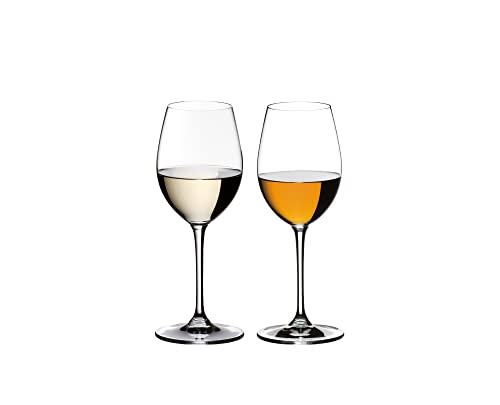
Sweet wines such as Sauternes, late-harvest Riesling and ice wine have rich fruit and honey notes and high sugar. A good glass for them is small enough to keep servings modest, with a bowl shaped to push the aroma toward the nose without letting the sweetness feel heavy. The right glass also keeps the wine cool in your hand for longer.
The six glasses below are shaped for sweet white wines rather than fortified port or sherry. We have not used these products ourselves, so confirm the capacity, glass material and pack size on the current listing before buying. Makers revise their lines often, so we describe shapes in general terms. Treat these notes as a starting point, then compare sizes, set contents and current availability across the listings before you decide.
As an Amazon Associate we earn from qualifying purchases. Links below are affiliate links, and they do not change the product information we give.
What to Look For
| Feature | Why it matters |
|---|---|
| Bowl shape | A narrow tapered bowl focuses honey and apricot aromas on the nose |
| Size | Small bowls suit sweet wines served in modest portions |
| Stem | A longer stem helps keep the wine cool in the hand |
| Rim | A thin rim sends the wine to the front of the tongue where sweetness is balanced by acidity |
In this guide
Specs at a Glance
| Glass | Material | Style | Notes |
|---|---|---|---|
| Riedel Vinum Dessert Wine Glass | Crystal glass | Small tapered bowl | Machine-made |
| Riedel Vinum Sauternes Glass | Crystal glass | Tapered bowl | Style-specific design |
| Eisch Sensis Plus Sauternes Glass | Crystal glass | Narrow bowl | Maker’s Sensis finish |
| Stolzle Classic Dessert Glass | Crystal glass | Plain tapered | Restaurant style |
| Luigi Bormioli Atelier Dessert Glass | Crystal glass | Slender stem | Modern design |
| Libbey Dessert Wine Glasses | Glass | Small bowl | Easy to replace |
The 6 Best Dessert Wine Glasses for Sweet Wines
Top pickBest for sweet whites in general
1. Riedel Vinum Dessert Wine Glass
The Vinum range includes a dessert wine glass with a small tapered bowl made to balance sweetness and acidity. It is a classic option for a range of sweet wines.
Suits: sweet whites in general. Strengths: a well-known design. Weaknesses: fairly small, so fewer swirls. Skip it if you want a bigger bowl.
View Riedel Vinum Dessert Wine Glass on Amazon
Best for sauternes fans
2. Riedel Vinum Sauternes Glass
A glass built for Sauternes and similar noble-rot wines, with a bowl that lets honeyed aromas rise while keeping the pour modest.
Suits: Sauternes fans. Strengths: a specific, thoughtful shape. Weaknesses: narrower use than all-purpose glasses. Skip it if you rarely drink sweet wine.
View Riedel Vinum Sauternes Glass on Amazon
Best for design-conscious buyers
3. Eisch Sensis Plus Sauternes Glass
A German-made stem from a line the maker says is polished for extra brilliance. The bowl is sized for sweet wines, and the look is clean and modern.
Suits: design-conscious buyers. Strengths: striking clarity. Weaknesses: marketing claims are the maker’s own. Skip it if you want a budget glass.
View Eisch Sensis Plus Sauternes Glass on Amazon
Best for frequent hosts
4. Stolzle Classic Dessert Wine Glass
A restaurant-grade stemmed glass with a plain, durable shape. Stolzle is common in hotels, so the glass is built for repeated use.
Suits: frequent hosts. Strengths: durability and a simple look. Weaknesses: less decorative than gift glasses. Skip it if you want an ornate design.
View Stolzle Classic Dessert Glass on Amazon
Best for formal dinners
5. Luigi Bormioli Atelier Dessert Glass
An Italian glass with a modern shape and a slender stem. The maker describes the line as strong and clear, and it looks good on a formal table.
Suits: formal dinners. Strengths: a polished shape. Weaknesses: stems can be delicate. Skip it if you are rough on glassware.
View Luigi Bormioli Atelier Dessert Glass on Amazon
Best for occasional use
6. Libbey Signature Dessert Wine Glasses
A simple, affordable glass in a small size. It is a practical choice if you serve sweet wines occasionally and want a basic set that is easy to replace.
Suits: occasional use. Strengths: a low cost. Weaknesses: plain styling. Skip it if you want a premium glass.
View Libbey Dessert Wine Glasses on Amazon
Care and Setup
- Rinse sweet wine off soon after serving so sugar does not harden on the glass.
- Hand wash thin stems with warm water and mild soap.
- Dry with a lint-free cloth and polish the bowl gently.
- Store glasses upright so dust does not settle inside the narrow bowl.
Mistakes to Avoid
- Serving sweet wine too warm, which makes it taste heavy and syrupy.
- Pouring a full-size serving into a small glass.
- Using a tall, wide glass that lets aromas escape.
- Putting thin stems in the dishwasher without checking the maker’s advice.
Know Your Sweet Wine Styles
Sweet wine is not one thing. The category covers several styles that differ in how the sweetness is achieved, how much acidity balances it and how they are best served. Understanding the style in front of you helps you choose a glass and a serving approach.
- Noble-rot wines: made from grapes affected by a beneficial mold that concentrates sugar and adds notes of honey, apricot and saffron. Sauternes is the best-known example, and they often combine sweetness with bright acidity.
- Late-harvest wines: made from grapes left on the vine longer to build sugar. They range from lightly sweet to rich, depending on the grape and producer.
- Ice wines: made from grapes frozen on the vine, which concentrates sugar and acid. They are intensely sweet and usually served in small amounts.
- Sweet sparkling wines: lighter and fizzier, usually served in a different kind of glass to keep the bubbles.
- Dried-grape styles: made from grapes dried to concentrate sugar, producing very rich wines with dried fruit and nut flavors.
The label usually describes the style, and the winemaker’s notes or the retailer’s description often help. Some sweet wines show more acidity and others lean toward honeyed richness. Higher acidity makes a wine feel fresher, which can suit a slightly larger glass, while very rich wines benefit from a smaller pour.
This post is about still sweet white wines, rather than fortified wines such as port or sherry, which have their own styles of glass. If you are not sure which type you have, check the label, and look for words like late harvest, noble rot or ice wine.
Small Bowl, Short Pour: Why Size Matters
Sweet wines are rich and concentrated, so servings are traditionally small. A dessert wine glass reflects this with a bowl that is smaller than a standard white wine glass. A modest bowl makes a modest pour look appropriate, so you are not tempted to fill the glass to the brim.
Size influences aroma. A narrow, tapered bowl gathers the scents of honey, orchard fruit and spice, and delivers them to the nose. A bowl that is too large lets aromas disperse, and the wine may seem less expressive. A bowl that is too small can feel cramped, leaving little room to swirl.
When checking a listing, look at the stated capacity and consider these points:
- Capacity is usually the brim volume, so the actual pour is smaller.
- A pour of about a third of the bowl is a common approach, but follow your taste.
- If you serve flights, glasses of the same size help guests compare wines fairly.
- A slightly larger bowl suits lighter late-harvest styles with higher acidity.
Rim shape also matters. A gently inward-curving rim concentrates aroma, while a flared rim directs the wine toward the front of the tongue, which can emphasize sweetness. Different makers design for different effects, though the differences are subtle. If you are unsure, a moderate tapered shape is a safe choice.
Remember that a small glass is not just about tradition. It also keeps the wine cooler during a slow, unhurried sip.
Serving Temperature and Chilling Tips
Temperature has a large effect on sweet wine. Too warm, and the sugar can feel heavy and cloying. Too cold, and the aromas are muted. A cool, not icy, temperature balances sweetness with freshness and lets the flavors show.
Many sweet white wines are served chilled, though the ideal temperature differs between styles. Lighter, sparkling or high-acid wines suit a cooler setting, while richer, more complex wines may be better slightly less cold. Check the producer’s advice, and when in doubt, serve cool and let the wine warm a little in the glass.
Practical tips for chilling:
- Place the bottle in the refrigerator for a few hours before serving, or in an ice bath for a shorter time.
- Take the bottle out a few minutes before pouring if it has been very cold, so aromas can emerge.
- Use a wine sleeve or bucket to keep the bottle cool at the table.
- Pour small amounts, which warm less in the glass than a large pour would.
A stemmed glass helps because you can hold the stem and avoid warming the bowl with your hand. Glasses themselves can be chilled, but a brief rinse with cold water is usually enough. Avoid freezing thin glasses, as sudden temperature changes can cause damage.
After opening, sweet wines often keep longer than dry ones because sugar and acid help preserve them, though this varies. Reseal the bottle and store it in the refrigerator. Taste before serving again, and follow the producer’s advice.
Pairing Sweet Wines with Food
Sweet wines suit more than the last course. They can complement a range of dishes, and the glass you choose supports the experience. A few general ideas can help you plan.
The classic rule is to serve the wine at least as sweet as the food. If the dessert is sweeter than the wine, the wine can taste thin or sour. Fruit tarts, custards and simple cakes often suit sweet wines with good acidity. Very rich chocolate desserts may overwhelm lighter wines.
Beyond dessert, consider contrasts:
- Salty and sweet: blue cheese and sweet wine is a famous pairing, since the saltiness and creaminess balance the sugar.
- Rich and sweet: pate, foie gras and similar rich dishes pair with noble-rot wines, a traditional match.
- Spicy and sweet: a touch of sweetness can soften spicy foods, though intense heat may clash with strong alcohol.
- Fruit and nuts: fresh fruit, almonds and dried fruit are easy, versatile companions.
Serve the wine in small glasses alongside small portions. This keeps the experience balanced, and you can taste each element without feeling overwhelmed. Provide water and plain bread or crackers to refresh the palate.
If you host, pour each guest a small measure and offer a refill rather than filling glasses. People often enjoy tasting more than one sweet wine in small amounts, and a set of matching dessert glasses makes this easy.
Using, Washing and Storing Small Stemware
Small glasses need some care. Sugar left on the glass dries into a sticky film, and narrow bowls are harder to clean. A routine keeps your glasses clear and ready.
Rinse the glasses soon after use with warm water. If you wash by hand, use a soft sponge, mild soap and a gentle touch. A narrow bowl may not fit your hand, so use a long-handled soft brush designed for stemware, taking care not to press on the stem. Rinse thoroughly, as soap residue can affect the next wine.
Dry with a lint-free cloth while holding the bowl rather than twisting the stem. If water spots form, buff the glass gently. Many thin stems are best washed by hand, but if the listing says the dishwasher is acceptable, space the glasses well apart and use a gentle cycle.
- Soak glasses with dried sugar in warm water before washing.
- Check the rim for chips regularly, since small glasses can be tricky to inspect.
- Store them upright, so dust does not collect inside the bowl.
- Keep them away from the edge of shelves, and do not stack.
- Consider a small box or divider if you only use them occasionally.
Because dessert glasses are used less often, it is tempting to leave them dusty. Give them a quick rinse before use, and dry them carefully, so they are clean when guests arrive.
Sweet Wine Glass FAQ
What size glass suits sweet wine?
A small bowl, often smaller than a standard wine glass, keeps portions modest and aroma focused.
Can I use a white wine glass?
Yes. A white wine glass works well enough, but a smaller dessert glass keeps the serving small and the wine cooler.
Should sweet wines be chilled?
Many are served cool rather than ice cold, so check the style, and a stem helps keep the wine from warming in your hand.
Can I serve ice wine in a regular wine glass?
You can, but a smaller glass keeps the pour modest and focuses the aroma. Ice wine is usually served in small amounts because it is very sweet and concentrated.
How cold should sweet wine be?
Cool rather than icy is a good starting point. Lighter, high-acid styles can be colder, while rich ones may show better slightly warmer. Follow the producer's advice if available.
How long does an opened bottle of sweet wine last?
Sweet wines often last longer than dry wines once opened, but it varies. Reseal and refrigerate, taste before serving and follow the producer's guidance.
Should I use a flute for sweet sparkling wine?
A flute or a small sparkling wine glass helps keep the bubbles. A dessert wine glass suits still sweet wines better.
What food goes well with sweet wine besides dessert?
Blue cheese, rich pates, fruit, nuts and some spicy dishes work well. The wine should usually be as sweet as or sweeter than the food.
Why does my sweet wine taste too sugary?
It may be too warm, or the glass may be too large and the pour too big. Try chilling it a little more, and pour a smaller amount.
Do dessert wine glasses need to be crystal?
No. Crystal feels thin and delicate, but standard glass works well and is sturdier. Choose according to how you use and wash the glasses.
Stem Length, Rim Shape and How Aromas Reach You
Dessert wine glasses look small, but their shapes do real work. A narrower rim concentrates aromas and directs the first sip toward the center of the tongue, which can make a very sweet wine taste more balanced. A wider rim exposes more surface to air, which suits wines whose aromas need to open up. Many Sauternes-style glasses use a slightly flared lip to guide the wine forward and keep sweetness from landing all at once at the front of the mouth.
Stem length affects both comfort and temperature. A longer stem keeps your hand away from the bowl so a chilled wine stays cool a little longer. A shorter stem feels more casual, steadies the glass on a crowded table and often fits in dishwasher racks more easily. Neither choice is wrong, but think about how you will serve. At a seated dinner, a longer stem looks formal and works well. At a buffet or a party, a shorter stem is less likely to tip.
- Tapered bowls suit richly aromatic wines such as late-harvest whites.
- Rounder bowls suit fortified wines that benefit from a little more air.
- A thin rim feels more delicate on the lip, while a rolled rim is sturdier for everyday use.
Crystal, Lead-Free Crystal and Machine-Made Glass
Material changes the feel and the price of a glass. Traditional crystal contained lead, which gave it brilliance and weight, but modern crystal is usually made with other minerals such as titanium or zinc, and many makers now describe their glasses as lead-free. This type is clear, rings when tapped and can be spun very thin without breaking easily.
Machine-made glass tends to be heavier at the rim and costs less. It is a practical choice for households that host often, drop things sometimes or run the dishwasher daily. Hand-blown glass can be extremely light and is often prized for its delicacy, but it requires more careful washing.
If you are deciding between the two, think about use rather than prestige. A sweet wine is served in small amounts, so the glass is handled less and for a shorter time than a regular wine glass, which can make an investment in finer material feel worthwhile for special occasions. For frequent use, a sturdier, thicker option will usually last longer. Look for a clear statement on the packaging about the material and the care it needs, and be wary of claims you cannot check.
Serving a Flight of Sweet Wines at Home
A small flight is a pleasant way to taste several sweet styles side by side. Pour about two ounces of each wine, and arrange them from lightest to richest so that the sweeter ones do not overwhelm the delicate ones. A sparkling sweet wine can come first, followed by a late-harvest white, a noble-rot wine and finally a fortified style.
Use one glass per wine if you have a matched set, because swirling between pours muddies the aromas. If you only have a few glasses, rinse with a splash of the next wine, or with water, and shake out the drops. Keep a pitcher of water and plain crackers or bread on the table, since they cleanse the palate between sips.
- Label each pour with a small card so guests can follow the order.
- Keep chilled bottles in a bucket and warmer styles on the counter.
- Offer a spit cup for guests who want to taste without finishing every glass.
Avoid pouring too much. Because sweet wines are rich, smaller servings feel more generous and keep the evening from becoming too heavy.
How Many Glasses to Buy and How to Build a Set
Start by counting how many people you usually entertain. For most households, four to six dessert glasses cover everyday dinners and small gatherings, and eight or twelve make sense if you host holiday meals. Because the glasses are small, they store compactly, so buying a larger set costs little in cupboard space.
Consider whether you want one glass for all sweet styles or separate shapes for different wines. A single versatile design works for most people, and it also stretches to cover port, sherry and small pours of liqueur. Specialized shapes add variety, but they are a luxury rather than a need.
If you are buying as a gift, a boxed set of two or four is easy to wrap and often arrives in protective packaging. Check whether replacement glasses are likely to be available later, since a broken stem can leave an odd number in the set. Finally, keep a spare or two if you plan to use them often. Small glasses are easy to chip when washed, and having an extra in the cupboard saves a broken set from becoming unusable.
It also helps to check the glass height against your cabinet shelves before ordering. Stemware that looks compact in a photo can still be too tall for a shallow shelf, and a quick measurement avoids a return.
Pairing the Glass With the Moment: A Host’s Decision Order
When several suitable glasses are on the shelf, a simple decision order keeps service smooth. First, match the glass to the drink: the pour size, the temperature, and how much aroma the drink needs to show. Second, match it to the setting: a formal seated dinner can carry your most delicate stems, while a standing gathering with plates in hand calls for the steadiest base you own. Third, match it to the guest: someone who loves the ritual of a fine glass will enjoy the Riedel Vinum Sauternes Glass, while a guest who worries about breaking things relaxes far more with a sturdier pour in the Stolzle Classic Dessert Wine Glass — and a relaxed guest enjoys the drink more, which is the entire point.
Pouring order helps, too. Serve the most delicate drink first, while palates are fresh and the table is tidy, and move toward richer pours as the evening builds. Keep water glasses filled and obvious; alternating sips of water keeps flavours clear and slows the pace in a way everyone appreciates the next morning. If a drink needs a rinse between courses, a small rinse with the next pour, tipped into a dump glass, is the old sommelier habit and works at home just as well.
At the end of the evening, resist washing the finest glassware while tired. A rinse to remove residue, a safe spot away from the sink’s edge, and a proper wash the next morning will save more stems than any amount of careful midnight scrubbing. Owning good dessert wine glasses should add pleasure to hosting, not a background worry, and a calm routine — decide by drink, setting, and guest, in that order — is what turns a shelf of glass into a habit you look forward to using.
A Side-by-Side Test You Can Run at Home Before You Commit
Specifications tell you capacity and material, but they cannot tell you how a glass feels at your own table. If you are choosing between two finalists from this list — say the Riedel Vinum Dessert Wine Glass and the Eisch Sensis Plus Sauternes Glass — a short home test with glasses you already own can clarify what actually matters to you. Pour the same drink, at the same temperature, into two different shapes you have in the cupboard and taste them back to back. Notice where the aroma gathers, whether the drink lands on the front or the back of your tongue, and how often you have to tilt your head. That simple comparison usually reveals whether you care more about aroma concentration, a delicate rim, or a bowl you can hold without thinking about it.
Next, test the practical side. Carry a filled glass from the kitchen to the table at your normal pace and watch for sloshing, especially with wide, shallow bowls. Set the glass down on your usual surfaces — a wooden table, a stone counter, a tray — and listen and feel for stability. A glass that rocks or rings sharply on a hard surface will demand more attention every single time you use it. Then wash both test glasses the way you honestly plan to wash the new set, by hand or in the machine, and notice how long drying and polishing actually takes. Ten unhurried minutes in the shop becomes a chore you repeat for years.
Finally, involve the people who will drink from the set. Hand a filled glass to a partner, a parent, or a friend and watch their grip. Some people instinctively hold a stem, others cup the bowl, and others wrap a hand around the whole glass. None of these is wrong, but a set chosen for careful stem-holders will live a harder life in a household of bowl-cuppers. The right dessert wine glasses are the ones that suit the hands, habits, and washing routine in your home, not just the ones with the most impressive description on the page.
Serving Outdoors and in Busy Rooms: What Changes
Glassware that behaves beautifully at a quiet dinner table faces a different set of challenges on a patio, at a garden party, or in a crowded kitchen. Wind is the first variable: a wide bowl catches gusts, chills or warms a drink faster, and can tip a top-heavy stem on an uneven outdoor table. If you entertain outside often, weigh the steadier picks in this guide more heavily, and consider keeping the most delicate stems — the kind represented by the Riedel Vinum Sauternes Glass — for indoor service where the surface is flat and the traffic is calmer.
Movement is the second variable. In a busy room, glasses travel: from counter to hand, hand to side table, side table to sink. Every handoff is a chance for a rim to meet a door frame or a base to clip a chair. Serving from a tray reduces that risk, as does pouring at a fixed station instead of carrying a bottle from guest to guest. Agree on one landing zone for empties, well away from the edge of the counter, and clear it regularly rather than letting a forest of stems build up where elbows are flying.
Temperature behaves differently outside, too. A cold drink in a warm garden warms quickly in a thin bowl, while a chilled glass pulled straight from a cool room can fog and turn slippery. Keep pours a little smaller outdoors and refill more often; guests get a fresher drink, and a smaller volume in the glass is more forgiving if a glass is knocked. When the evening ends, gather stemware first, before plates and bottles, and carry it in small batches. Most breakage happens during tired, overloaded trips at the end of the night, not during the party itself.
Building Good Habits: Teaching Everyone in the House to Handle Stemware
The lifespan of a set of dessert wine glasses depends less on the glass itself than on the habits of everyone who touches it. A short, friendly household routine makes delicate glass far less stressful to own. Start with the grip: show family members and regular guests how holding the stem keeps hands off the bowl, keeps the drink at the right temperature, and gives better control when setting the glass down. People copy what they see, so the host’s own grip quietly sets the standard for the table.
Washing is where most damage occurs, and it is worth agreeing on a system. Wash stemware separately from heavy pans and cutlery, never stacked in a crowded sink where a tap or a falling utensil can chip a rim. Use a soft sponge rather than a scouring pad, support the bowl from below instead of twisting by the stem, and dry on a clean cloth rather than a rack where stems can slide. If a glass does go in the dishwasher, load it where it cannot lean against anything, and skip the heated dry for the thinnest pieces.
Storage habits matter just as much. Store glasses upright unless the maker advises otherwise, with a little space between neighbours so rims do not touch. Keep the set where it can be reached without stretching over other items, and return glasses to the same shelf every time so nobody has to hunt and clink through the cupboard. When a piece does break — and eventually one will — note which pick it was and how it happened. That small record makes the next buying decision, whether a like-for-like replacement such as the Stolzle Classic Dessert Wine Glass or a sturdier direction such as the Luigi Bormioli Atelier Dessert Glass, an informed one instead of a guess.
Rotating Glassware Through the Seasons and the Menu
A single set of dessert wine glasses rarely has to do every job in the house, and thinking seasonally helps you get more from what you own. In warmer months, drinks tend to be colder, pours more frequent, and gatherings more casual. That is when a slightly sturdier, easy-washing pick earns its keep, and when smaller, more frequent pours keep drinks at their best. In cooler months, service slows down: meals move indoors, drinks are savoured rather than refreshed, and the finer rim and lighter bowl of a pick like the Riedel Vinum Dessert Wine Glass come into their own.
Menus rotate too, and the glass should follow the drink rather than the other way round. Plan the glassware when you plan the meal: what is being poured first, what follows with the main course, and what, if anything, closes the evening. Laying the glasses out in serving order before guests arrive prevents the mid-meal cupboard search and lets you check each piece for water spots while there is still time to polish them away. If a course changes at the last minute, a versatile middle option — the role the Libbey Signature Dessert Wine Glasses often plays in this line-up — covers the swap without fuss.
Rotation also spreads wear. If you own more than one set, alternate them instead of always reaching for the favourite, so washing, polishing, and the occasional knock are shared across the collection. Once or twice a year, take everything out, inspect rims against the light, and retire any piece with a chip to non-drinking duty or the recycling. A smaller collection of sound glasses serves you better than a crowded shelf where a damaged rim hides until it meets someone’s lip.
How Many Glasses Do You Really Need? Planning for Guests, Spares, and Breakage
Set sizes in listings are tidy; real households are not. A practical way to plan is to count your most common occasion first, not your largest. If four people sit at your table most weeks, a set built around that number, plus two spares, will serve nearly everything you do. The spares are not a luxury: one covers the glass that is always in the dishwasher, and one covers the inevitable breakage, so a single accident does not leave the table mismatched for months. Larger gatherings can borrow from a simpler backup set rather than forcing you to store a dozen delicate stems all year.
Think about the rhythm of an evening as well. A household that serves one drink per guest needs fewer glasses than one that moves through several different pours, because each change of drink ideally means a fresh glass. If your evenings involve Sauternes, port, sherry and other sweet pours in small measures, the washing load between courses can quietly dictate how many pieces you need. A mid-sized set of an easy-care pick like the Stolzle Classic Dessert Wine Glass can absorb that churn, while a smaller number of the finest stems are reserved for the pour that matters most.
Before ordering, measure the shelf, not just the table. Check the height of the cupboard or rack where the set will live, the width between dividers, and whether the door closes without pressing on the tallest stem. Then check the listing for the replacement policy in plain terms: can you buy a single glass later, or is the design sold only in full sets? Makers differ, and a design that can be topped up piece by piece — worth confirming for the Eisch Sensis Plus Sauternes Glass and the Riedel Vinum Sauternes Glass alike — is far easier to live with over five years than one that cannot.
Reading a Glassware Listing Like a Buyer, Not a Browser
Product pages for dessert wine glasses mix useful facts with atmosphere, and separating the two saves disappointment. Start with the measurable details: capacity, height, bowl diameter, and whether the stated size is for a single glass or is described loosely for the set. Then find the material statement and read it precisely. Crystal, lead-free crystal, and glass are different materials with different weight, clarity, and care needs, and the exact wording on the listing for a pick like the Luigi Bormioli Atelier Dessert Glass matters more than the headline above it.
Next, look for the care instructions and treat them as part of the price of ownership. Hand-wash-only glass is not a flaw, but it is a commitment, and it should match the routine you actually keep. Check whether the set count in the box matches the count in the photographs, whether stems are pulled or joined — a detail that affects both feel and strength — and whether the maker states a country of manufacture if that matters to you. Photographs taken at an angle can flatter a bowl shape; a straight side view, ideally with a hand or a familiar object for scale, tells you far more.
Finally, read the questions and answers section on the listing, where owners tend to report the things brochures omit: whether the rim feels sharp, whether the base fits a standard rack, whether the glasses arrive well packed. Weigh recent comments more heavily than old ones, since production runs change. When two picks remain tied after all this — as the Riedel Vinum Dessert Wine Glass and the Libbey Signature Dessert Wine Glasses may well be — let the deciding factor be the one you cannot change later: the shape of the bowl and the feel of the rim, because those are what you will notice at every single pour.
What to Do When a Glass Breaks Mid-Service
Breakage during an evening is not a failure of hosting; how it is handled decides whether it becomes the story of the night. The first rule is to freeze the scene: guests stay seated, nobody reaches for shards with bare hands, and drinks near the break are set aside rather than risked. Clear the area with a brush or a folded damp cloth, which picks up the fine fragments a broom leaves behind, and check the floor where bare feet or stockinged feet will walk later. A torch held low, so fragments glint, finds what overhead light hides.
The second rule concerns the drinks themselves. Any glass that was within the scatter zone of the break should be poured away without debate, however good its contents were. Glass travels invisibly, and no pour is worth the risk. Replace the broken piece from your spares — this is the moment the spare in the cupboard justifies its existence — refill, and carry on without ceremony. Guests take their cue from the host: calm efficiency reads as competence, while fuss reads as disaster.
Afterwards, note which piece broke and how. A rim that met a tap, a stem twisted during washing, a base that clipped a counter edge — each cause points to a different fix, from washing order to storage position. If the same pick breaks the same way twice, the household has learned something real about the match between that design, whether it is the Riedel Vinum Dessert Wine Glass or the Stolzle Classic Dessert Wine Glass, and the way it actually lives. That knowledge is worth more than the glass.
Polishing, Streaks, and the Last Ten Per Cent of Presentation
Two identical glasses can present the same drink completely differently, and the difference is usually the final polish. Polishing is not vanity: a spotless bowl shows colour honestly, lets foam or bubbles behave as they should, and removes the faint odours that storage lends to glass. The method matters more than the effort. Use a large, clean, lint-free cloth, hold the glass by the base with the cloth rather than by the bowl with a bare hand, and work in a warm room where the glass is not fighting condensation as fast as you can remove it.
Steam is the polisher’s oldest tool. A glass held briefly over a kettle or a pan of hot water fogs evenly, and that fog wipes away to a clarity that dry polishing rarely matches. Never twist the bowl against the stem while polishing; support the bowl from inside with the cloth and let the stem take no torque at all. More stems are lost to enthusiastic polishing than to any accident at the table, a fact worth remembering with fine pieces like the Riedel Vinum Sauternes Glass.
Know when to stop. A glass polished to perfection and then handled by the bowl for the journey to the table arrives marked anyway, so carry polished glass by the stem or on a tray, and set it down once, decisively, in its final position. The last ten per cent of presentation is mostly logistics: clean glass, carried correctly, placed once. Master that, and even a modest set like the Luigi Bormioli Atelier Dessert Glass presents like something far grander.
Related guides
- 6 Best Riedel Wine Glasses: Vinum, O and Veritas (2026)
- 6 Best Sherry Glasses for Fortified Wine and Port (2026)
- 6 Best Universal Wine Glasses for Reds and Whites
- 6 Best Riesling Wine Glasses for White Wine (2026)
Frequently Asked Questions
How many dessert wine glasses do I need?
Four to six covers most households for dinners and small gatherings. If you host holiday meals, eight to twelve is a comfortable number. The glasses are small and store compactly, so buying a few extra costs little cupboard space and helps if one chips.
What is the difference between a port glass and a dessert wine glass?
Port glasses are usually small with a narrow rim to concentrate the aromas of a strong fortified wine. Dessert glasses are similar but can be slightly wider for lighter sweet wines. The two overlap, and many people use one design for both.
How much dessert wine should I pour?
A typical pour is about two to three ounces. Sweet wines are rich and high in sugar, so small servings feel satisfying and let the aromas show without overwhelming the palate. Fill the glass only partway to leave room to swirl.
Can I use dessert wine glasses for liqueur or sherry?
Yes. The small bowl and narrow rim work for sherry, port, small pours of liqueur and even a spirit served neat. Check that the glass is clean and free of soap residue first, because strong scents carry quickly in a small bowl.
The Short Version
For all-round sweets, the Riedel Vinum Dessert Wine Glass. For Sauternes, the Riedel Vinum Sauternes Glass. For clarity, the Eisch Sensis Plus Sauternes Glass. For busy tables, the Stolzle Classic Dessert Glass. For a formal table, the Luigi Bormioli Atelier Dessert Glass. For occasional pours, the Libbey Dessert Wine Glasses.

