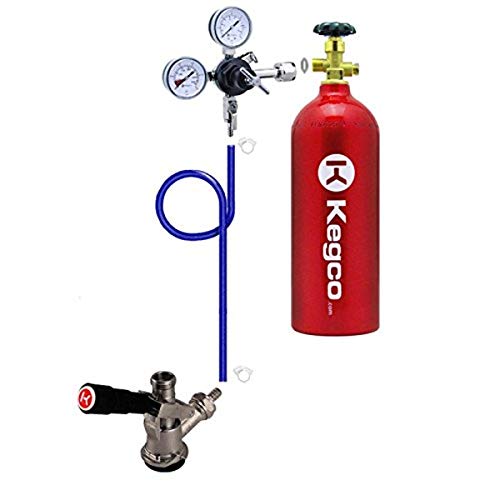
A draft beer dispensing system is the full set of parts that gets beer from a keg to a glass: the cooler, the faucet, the lines, the coupler and the CO2 supply. Some systems come in one cabinet, while others are kits that you add to an existing fridge.
The six systems below range from complete dual-tap kegerators to conversion kits and a hand-pump option. We have not used these products ourselves, so please confirm what is included, the keg sizes supported and the dimensions on the current listing before buying. Contents change between versions, so we keep descriptions general. Treat these notes as a starting point, then compare sizes, set contents and current availability across the listings before you decide.
As an Amazon Associate we earn from qualifying purchases. Links below are affiliate links, and they do not change the product information we give.
What to Look For
| Feature | Why it matters |
|---|---|
| What is included | Check whether the tank, regulator, lines and faucet come in the box |
| Coupler type | The coupler must match the type of keg you plan to use |
| Tap count | Two taps let you serve two beers at once |
| Space | A conversion kit needs a suitable fridge, while a full unit needs floor space |
In this guide
Specs at a Glance
| System | Type | Taps | Notes |
|---|---|---|---|
| Kegco K199SS-2 | Full kegerator | Dual tap | Stainless finish |
| EdgeStar KC2000TWIN | Full kegerator | Dual tap | Complete kit |
| Kegco Keg Tap Kit | Conversion kit | Single tap | DIY |
| Taprite Draft Beer Kit | Conversion kit | Single tap | Regulator included |
| Fizzics Waytap | Countertop dispenser | Single pour | Compact |
| Kegco Party Pump | Hand-pump tap | Single tap | No CO2 needed |
The 6 Best Draft Beer Dispensing Systems
Top pickBest for two beers at once
1. Kegco K199SS-2
A full-size stainless steel kegerator with two taps. It lets you serve two different beers from one cabinet and is popular in home bars.
Suits: two beers at once. Strengths: two taps and a sturdy build. Weaknesses: needs floor space. Skip it if you only serve one beer.
Best for ready-to-use setups
2. EdgeStar KC2000TWIN
A full-size twin-tap kegerator from an established appliance maker. It is built for buyers who want a ready-to-use dual-tap system.
Suits: ready-to-use setups. Strengths: a twin-tap kit. Weaknesses: large footprint. Skip it if you have limited room.
View EdgeStar KC2000TWIN on Amazon
Best for dIY builders
3. Kegco Keg Tap Kit
A kit that turns a compatible refrigerator into a kegerator, with a tap, lines and a CO2 setup. It is a popular option for DIY builders.
Suits: DIY builders. Strengths: flexibility and a lower cost. Weaknesses: it needs a suitable fridge. Skip it if you want a finished appliance.
View Kegco Keg Tap Kit on Amazon
Best for custom builds
4. Taprite Draft Beer Kit
A kit with a regulator and fittings from a company known for gas regulators. It is a sensible base for a custom draft system.
Suits: custom builds. Strengths: a respected regulator. Weaknesses: you assemble it yourself. Skip it if you want an all-in-one unit.
View Taprite Draft Beer Kit on Amazon
Best for small spaces
5. Fizzics Waytap
A compact countertop dispenser that pours a draft-style head from cans and bottles. It does not use a keg and fits a small kitchen or bar.
Suits: small spaces. Strengths: a tiny footprint. Weaknesses: no chilling. Skip it if you want a keg system.
Best for parties
6. Kegco Party Pump Keg Tap
A hand-pump keg tap that works with a standard keg. It suits parties and events where you do not have CO2, but it is not meant for long-term storage.
Suits: parties. Strengths: simplicity. Weaknesses: beer goes flat quickly. Skip it if you want a lasting system.
View Kegco Party Pump on Amazon
Care and Setup
- Flush the lines with a recommended cleaner on a regular schedule so old beer does not leave a flavour in the next pour.
- Keep couplers and gaskets clean and replace any that wear out or start to leak.
- Set the gas pressure to the level suggested for your beer style, and adjust it slowly if the pour looks off.
- Store the CO2 tank upright and secure it with a strap or stand so it cannot tip.
Mistakes to Avoid
- Buying a coupler that does not match your kegs, which is a common and avoidable problem.
- Leaving the gas on when the system is not in use, which can waste CO2.
- Using a regular fridge without checking the space for a keg and the door swing.
- Ignoring the length of the beer lines, which affects the pour and the foam.
Choosing Between System Types
Draft systems fall into a few families, and the right one depends on how often you serve and how much space you have. A complete kegerator is a cabinet with cooling, a tap and the gas hardware already designed to work together. It is the least fuss option, and it suits people who want to open a keg and start pouring.
A conversion kit adds a tap, lines and a CO2 setup to a refrigerator you already own. It can be economical, but the fridge must fit the keg, the door must close and the cooling must be able to keep the beer at a steady temperature. A countertop can or bottle dispenser skips kegs altogether and gives a draft-style pour from packaged beer, which suits small kitchens. A hand-pump tap is the simplest option for a one-off event, though it is not intended for storing a keg for long.
Ask yourself:
- How many beers do you want on at once?
- Will you serve weekly, or only at parties?
- Do you have a spot for a cabinet, a fridge and a gas cylinder?
- How willing are you to maintain lines and gas?
Be honest about maintenance. A system you rarely use may be better served by a simple setup you can clean in minutes than a multi-tap build that sits idle.
Keg Sizes and Couplers
Kegs come in several sizes, and not every system accepts all of them. A full-size cabinet is often built for the larger common keg format, while compact units and converted fridges are sized for smaller kegs. Check the listing or manual for the exact keg sizes it supports and the interior dimensions, then compare with the kegs your local suppliers sell.
The coupler is the fitting that connects the keg to the gas and beer lines, and kegs use different coupler types depending on where the beer was brewed. Many American kegs use one common type, while other types are found on certain imported and craft beers. If the coupler does not match, the system will not connect. Some owners keep an extra coupler for the second type, and others buy only beers that fit their equipment.
Before you order, check:
- Which coupler type is included, and whether others are sold separately.
- The interior height of the cabinet, including any hump from the compressor.
- Whether the CO2 tank fits inside the unit or must sit outside.
- Room to remove and swap the keg without tilting it dangerously.
Ask your keg supplier what coupler a particular beer needs before you buy a keg.
CO2, Regulators and Pressure
CO2 pushes beer out of the keg and keeps it carbonated. The regulator sets the pressure that reaches the keg, and getting it right matters more than any other adjustment. Too little pressure gives flat, slow pours, and too much gives foam and over-carbonated beer.
A good regulator has a gauge you can read, a shutoff valve and a secure connection to the tank. Many include two gauges, one showing the pressure in the tank and one showing the pressure going to the keg. Some beer styles prefer different pressures, and the brewery or keg supplier often gives a recommended range. Start with that range and adjust slowly, giving the keg time to settle between changes.
- Check for leaks by brushing soapy water on joints and looking for bubbles.
- Close the tank valve when the system will not be used for a while.
- Secure the tank upright with a strap, chain or stand.
- Check the tank’s testing date and use a reputable refill supplier.
If beer is foamy even with the pressure set properly, look at the temperature and the length of the lines as well, not just the regulator.
Replace a regulator whose gauge reads oddly or which drifts under load, and ask for a reputable supplier when you refill a gas cylinder. A small leak can empty a cylinder overnight, so check connections whenever you swap a keg.
Line Length, Temperature and Foam
Foam is the most common complaint with a new draft system, and it usually comes from a mismatch between pressure, temperature and line resistance. The beer line has to slow the beer down so it arrives at the faucet calmly. A line that is too short lets it rush out and foam, while one that is too long makes the pour slow.
The right length depends on the line diameter, the pressure and the faucet, so consult the manufacturer’s recommendation instead of guessing. Keep the beer cold from keg to tap. A cooled keg with a warm line, such as a long run through a warm room, will foam even when everything else is correct.
- Keep the cabinet or fridge at a steady cold temperature, and avoid opening it constantly.
- Use a clean glass, since grease or soap film makes foam worse.
- Hold the glass at an angle at the start of the pour and straighten as it fills.
- Let a freshly moved keg rest before tapping, because shaking stirs up gas.
If one tap foams and another does not, compare line lengths and faucet condition between them.
Write down the settings that finally give a good pour, including pressure, temperature and line length, so you can return to them after cleaning or moving a keg. Small changes made one at a time are far easier to track than several at once.
Cleaning Schedule and Replacement Signs
A draft system touches beer every day, and old residue changes how fresh beer tastes. Plan a regular cleaning routine instead of waiting until something tastes off. Many people clean the lines whenever they change a keg or on a set interval, and the manufacturer or the cleaner’s label can suggest a schedule.
- Flush the lines with a cleaner designed for beer systems, then rinse well with water.
- Take the faucet apart and clean each piece with a soft brush.
- Wipe the drip tray and cabinet interior to prevent odours and mould.
- Check washers and gaskets while the system is apart.
Replace parts that show wear. Signs include persistent leaks at a fitting, lines that have become cloudy or tasteful of old beer even after cleaning, a sticky faucet that will not seal, or a regulator gauge that no longer reads sensibly. A cabinet that no longer keeps temperature may need servicing or replacement.
Keep a few spare gaskets, washers and clamps on hand, since they are inexpensive and save a weekend without beer.
Keep cleaning supplies, spare washers and a small brush in a labelled box near the system. Having them to hand makes the routine quick, and a routine that is quick is far more likely to be done on time.
Draft Beer Dispensing System FAQ
What parts make up a draft system?
A keg, coupler, lines, faucet, regulator and CO2 tank, plus a cooler to keep the beer cold. A complete kegerator bundles most of these, while a kit leaves the cooler up to you.
Is a conversion kit cheaper than a kegerator?
It can be, if you already own a suitable fridge, but you must check that a keg will fit inside with the door closed. Measure the interior before you order.
Is a party pump good for long storage?
No. It pushes air into the keg, which dulls the beer, so the keg should be finished within a short time. For longer storage, use CO2 instead.
How long does a keg stay fresh once tapped?
With CO2 and a cold cabinet, many beers stay in good condition for weeks, though this varies by style and how well the system is sealed. A hand pump pushes air into the keg, so beer tends to go stale within days. Check the brewer's guidance for the beer you serve.
Can I use any refrigerator to build a kegerator?
Only if it is large enough for the keg, holds a steady cold temperature and has a door that closes properly with the keg and gas lines in place. Measure the inside before ordering. Some fridges also need a hole drilled, so check the manufacturer's advice first.
Do I need a special glass for draft beer?
No. Any clean glass works, and a glass free of oil or soap residue helps the pour. Pick a shape that suits the beer style you drink most.
What is the difference between a kegerator and a keg cooler?
Terms vary, but a kegerator usually means a refrigerated cabinet with a tap and gas hardware, while a cooler may only chill. Read the listing to see what is included and what is not.
Why is my first pour always foamy?
The beer sitting in the line and faucet has warmed up and lost some carbonation. Pour off the first small amount until it runs cold and clear. If foam continues throughout the pour, check pressure, temperature and line length.
Are countertop draft dispensers a replacement for a kegerator?
They give a draft-style pour from packaged beer in a small space, but they do not offer the volume or the variety of kegs. They suit people who want a draft feel without storing a keg.
How do I move a keg safely?
Kegs are heavy, so lift with your legs, use a dolly where possible and get help. Let the keg sit upright and rest before tapping it so the beer settles after moving.
Faucets, Shanks and Towers: What Each Part Does
The visible part of a draft system, the tap on the front or top, is really a small assembly of parts, and knowing them helps when you read listings or replace something. The faucet is the lever and spout that releases beer. It connects to a shank, a short metal tube that passes through the cabinet wall or tower and links the faucet to the beer line inside. The shank holds a washer and a nut, and a tailpiece connects the shank to the line.
Some systems mount faucets on the front of the cabinet, while others use a tower on top. A tower often has a cooling effect on the shanks, or it may not, depending on the design. Warm shanks are a common cause of foam in the first pour, so look at whether a listing mentions cooling or insulation. Systems with a rear-sealing faucet design are common, and many makers say these are easier to clean, though that varies by product.
Material matters as well. Stainless steel faucets and shanks resist corrosion and are easy to wipe clean. Chrome-plated brass is also common, and it can wear over time where plating is thin. If you plan to use unusual beer styles, such as stouts on nitrogen, a different faucet type may be required, so check what the listing supports. Replacement faucets, shanks and washers are widely sold, so the system you choose should allow upgrades without replacing the whole cabinet.
Planning Space, Power and Ventilation
A draft system is an appliance, and it needs room to operate. Measure the intended location, including height for the keg and clearance for the door swing. Full-size kegerators have a compressor that produces heat, and the manufacturer usually asks for several inches of clearance on the sides and back so air can circulate. Building a unit into cabinetry without checking whether it is designed for that can cause overheating and shorten its life, so look for specific statements about built-in use in the specifications.
Power is another consideration. Plug the unit into a properly rated outlet, preferably a dedicated one, and avoid extension cords that are not designed for appliance loads. If you intend to use it in a garage, shed or covered patio, check the maker’s operating temperature range. Many refrigeration units are intended for indoor use and may not cool well or may struggle in very hot or very cold ambient temperatures.
Also plan for the CO2 tank. Decide where it will sit, how it will be secured and how you will swap it. Leave a clear path for moving kegs, which are heavy, and think about floor strength and drainage. A drip tray catches spills but should be emptied regularly, and a small mat under the unit protects flooring from moisture. If you are converting a fridge, drilling a hole for a shank is a one-way step, so confirm where the cooling lines run before you cut.
Ongoing Costs: Kegs, CO2 and Cleaning Supplies
The price of the equipment is only part of owning a draft system. Kegs of beer usually cost less per ounce than packaged beer, but you must buy the keg, often with a deposit, and be able to return it. Availability varies by region, so ask local stores which styles they carry and what the process is. Smaller kegs are easier to handle and help you avoid keeping one beer on tap for too long.
CO2 is an ongoing expense. Tanks must be refilled or exchanged, and the cost and process differ by supplier. Keep an eye on the gauge, and consider having a spare tank if you serve often. Cleaning supplies add up as well, including line cleaner, brushes, replacement gaskets and washers, and sometimes a pump or bottle to circulate the cleaner. Lines should be replaced periodically, since scratches and residue can affect flavor.
Electricity is a smaller but real cost, because the cabinet runs continuously to keep beer cold. A well-sealed unit with good insulation uses less, and opening the door less often helps. When you compare options, add up the likely yearly costs for kegs, gas, supplies and power, not only the purchase price. A cheaper system with higher upkeep may end up costing more than a better-equipped one, and a hand pump or countertop dispenser avoids some of these costs altogether.
Safety and Practical Responsibilities
A CO2 cylinder holds gas under high pressure, so treat it with care. Keep it upright and secured, away from heat sources, and never drop or hit it. Always use a regulator designed for the cylinder, and open the valve slowly. Because CO2 displaces oxygen, store tanks in a ventilated area rather than a closed small room, and consider a CO2 monitor if you keep cylinders in an enclosed space. Check the date stamped on the cylinder, since cylinders require periodic testing.
Kegs are heavy and awkward, and lifting them badly is a common cause of injuries. Use a dolly or ask for help, and keep the path clear. Keg couplers should be attached and detached according to the manual, and never point a keg valve toward your face when working with it.
Finally, think about who has access. If children or guests are around, keep the tank and keg area controlled. Check local rules about serving alcohol at events, and keep the cabinet door shut when not in use. Clean the system regularly for both flavor and hygiene, and keep the manual and parts list where you can find them for later maintenance.
The First Keg and the Fifth Keg: What Experience Teaches
Almost every draft system owner tells the same story: the first keg is a learning exercise and the fifth keg feels effortless. The difference is not the equipment — it is a handful of small habits absorbed along the way. You learn to chill the keg fully before tapping it, because a keg tapped warm foams no matter how carefully everything else is set. You learn to make one adjustment at a time, then wait, because pressure and temperature changes take time to show themselves and chasing them in circles is how an evening disappears.
You also learn your own system’s personality. Every setup has a serving pressure it prefers, a faucet that pours a touch faster than the others, a spot where the line runs warm. A complete unit like the Kegco K199SS-2 arrives with those relationships largely decided for you, while a kit-based approach like the Taprite Draft Beer Kit asks you to establish them yourself. Neither is a flaw; they are different apprenticeships. Keeping a small notebook by the unit — keg in, pressure set, how it poured, keg out — compresses that apprenticeship from a year of guesswork into a few kegs of evidence.
By the fifth keg, the ritual becomes social rather than technical. You know how the first pour after a quiet week behaves, how a nearly empty keg announces itself, and how long a fresh keg needs before a party. That ease is the real product being bought with any of the draft beer dispensing systems in this guide, and it is worth remembering when the first keg foams: the equipment is rarely broken, the operator is simply still in training, and training, in this hobby, is measured in kegs.
Serving at a Party: Keeping the Pours Good When the Queue Forms
A draft system that pours beautifully for one person can struggle at a party, not because it fails but because the pattern of use changes completely. The door opens and closes, the unit works harder, glasses arrive warm from a dishwasher or a sunny table, and a dozen guests pour with a dozen different techniques. A little preparation keeps quality steady. Chill spare glasses in rotation rather than serving in warm ones, position the unit out of the main traffic flow, and put one person — cheerfully, not officiously — in charge of the taps for the first hour, until guests have seen a good pour and can copy it.
Technique is the party variable nobody expects. Show guests the simple sequence once: glass held at an angle, faucet opened fully and quickly, straighten as it fills, close fully and quickly. A half-open faucet is the single most common cause of party foam, and it is a habit, not a malfunction. A small handwritten card by the tower solves it for the whole evening and saves the host from playing instructor between conversations.
Plan the keg side, too. A gathering drinks faster than a household, and a keg that kicks mid-party leaves you with a foamy line and a warm replacement. If the occasion matters, have the next keg already cold and settled before the first is finished — advice that applies whether your system is a full cabinet like the EdgeStar KC2000TWIN or a tower setup like the Kegco Keg Tap Kit. The systems in this guide all reward the same truth: at a party, preparation pours the beer, and the equipment merely helps.
Off-Season and Quiet Weeks: Keeping a System Ready Without Waste
Draft systems dislike neglect more than use. In quiet weeks, the risks are stale beer in the lines, dried seals, and a slow drift of temperature or pressure that goes unnoticed until the next pour disappoints. The countermeasures are simple and cheap. If a keg will sit for a while, keep it cold and connected rather than warm in a corner; beer ages far more gracefully cold. Pour a small glass every few days even if you discard it — moving beer through the faucet keeps the mechanism exercised and shows you the system’s state while there is still time to act.
When a keg finishes and no replacement is ready, clean the lines promptly rather than leaving residue to dry inside them; dried deposits are dramatically harder to remove than fresh ones. If the system will rest for a long stretch, follow the maker’s guidance for your unit — a cabinet model like the Fizzics Waytap and a countertop device like the Kegco Party Pump Keg Tap ask for different kinds of rest — and leave everything dry, open, and ventilated rather than sealed and damp.
Restarting deserves the same calm as the first setup. Check seals for cracks, confirm the gas supply, chill the new keg fully, and expect the first pour or two to clear the system rather than delight the table. Owners who treat quiet weeks as part of the routine, rather than an interruption to it, find their systems last longer and pour better — and that the first glass of a new season tastes like a continuation, not a rescue operation.
Diagnosing a Bad Pour: Foam, Flatness, and Off Flavours in Order
When a pour goes wrong, a fixed diagnostic order beats random adjustment every time. Start with temperature, because it causes the majority of foam problems: beer that is too warm, a tower or line run that warms between cabinet and faucet, or a glass that came straight from a hot wash. Feel the glass, check the cabinet temperature, and remember that a keg moved recently needs time to settle and chill through, not just a cold surface.
Next, pressure — but adjust it last among the quick checks and change it in small steps, waiting between changes. Pressure that is too high forces beer out violently and knocks the gas out of it in the glass; pressure too low gives a lazy pour that tempts people to half-open the faucet, which foams for mechanical reasons. Then examine the pour itself: glass angle, faucet opened fully, no contact between faucet and beer in the glass. A surprising share of mystery foam is simply technique, which is why the same system can pour perfectly for one person and badly for another.
Off flavours have their own order of suspicion: line cleanliness first, then the age and storage of the keg, then the glass. A glass with detergent residue kills foam and adds a chemical note; a glass that is truly beer-clean shows it in the way foam clings to the sides as the level falls. Work through temperature, pressure, technique, and cleanliness in that order, changing one thing at a time, and nearly every bad pour on systems like the Kegco K199SS-2 or the Kegco Keg Tap Kit explains itself within a glass or two.
Placement Revisited: Noise, Heat, and Daily Life Around the Unit
Where a draft system lives shapes how much you enjoy it, and the considerations go beyond the measurements in the buying guides. Compressors cycle, and a unit that is inaudible in a garage can be a presence in an open-plan room or near a bedroom wall. Listen for where the sound will travel at night, when the house is quiet, before committing to a spot. Likewise, every refrigerated cabinet sheds heat; a unit boxed into an alcove without airflow works harder, runs louder, and holds temperature less steadily than the same unit with breathing room around it.
Daily traffic matters, too. A kegerator door opened constantly by a busy household lets cold out and invites temperature swings, while a tower mounted on a bar in the flow of a party collects elbows and drips. Think about the path a full keg travels from delivery point to cabinet: stairs, tight corners, and door widths decide whether changeover day is a two-minute job or an expedition. A compact cabinet like the Kegco Keg Tap Kit exists precisely for homes where that path is awkward, and choosing it for honest spatial reasons is good buying, not compromise.
Finally, consider water and mess. Drip trays fill, lines get changed, kegs sweat condensation. A surface and a floor that forgive the occasional spill make maintenance a non-event, and a small mat or tray under the work area protects finishes quietly for years. Placement is the one decision in draft ownership that is genuinely hard to reverse, so it deserves the same care as the choice between the draft beer dispensing systems themselves.
Keeping Records: The Logbook That Makes You an Expert on Your Own System
The fastest route to expertise with any draft setup is a humble logbook. Note each keg: style, date tapped, serving pressure, temperature, and a line about how it poured at the start, the middle, and the end of the keg. Note every line cleaning, every gas refill, every part replaced. Within a few kegs, patterns emerge that no general guide can give you, because they belong to your unit, your room, and your water: the pressure your favourite style prefers, the interval at which your lines genuinely need attention, the true pace at which your household empties a keg.
The logbook pays for itself at the first fault. When foam appears, the log tells you what changed — a new keg, a recent move, a warm spell, a skipped cleaning — and fault-finding becomes comparison rather than guesswork. It also disciplines buying: knowing your real consumption rate prevents both the embarrassment of a keg kicking during a gathering and the waste of a keg ageing past its best in a slow month, and it tells you whether a second tap, of the kind offered by the EdgeStar KC2000TWIN, would be used weekly or merely admired.
Keep the log where the work happens — taped inside a cupboard door near the unit beats a perfect spreadsheet on a distant computer. Paper survives wet hands and has no login. Review it whenever you order parts or plan an upgrade such as a new faucet like the Fizzics Waytap or a regulator like the Kegco Party Pump Keg Tap, and let evidence, not enthusiasm, sequence the purchases. Draft beer rewards methodical people, and the logbook is simply method made visible.
Draft Beer and Food: Serving Pours Alongside a Meal
Serving draft beer with food is one of the pleasures that justifies a home system, and a few principles make pairings feel effortless. Match weight with weight: delicate dishes want a pour that refreshes rather than overwhelms, while rich, roasted, or spicy food can stand up to — and often needs — a more assertive glass beside it. Carbonation is your ally at the table; a well-poured draft, with its fine, persistent foam, scrubs the palate between bites in a way that makes fatty and fried foods taste lighter and keeps flavours distinct across a long meal.
Sequence matters as much as matching. Begin with the lightest pour of the evening and build gradually, because a palate led from delicate to powerful enjoys both, while the reverse order makes the delicate glass taste thin by comparison. If two taps are running, as on a dual setup like the EdgeStar KC2000TWIN, the contrast can be part of the menu: one pour chosen for the starter, another for the main, with guests free to test the theory that the host’s pairing is wrong — a debate that has enlivened many dinners.
Temperature and glassware finish the job. Serve each pour at the temperature the system holds best rather than chasing extremes the cabinet cannot deliver, and use a glass that leaves room for foam, since aroma above the glass is half the pairing. None of this requires expertise, only attention: weight, sequence, temperature, glass. A home draft system used with that much care turns an ordinary weeknight meal into the kind of occasion people used to go out for — which, for many owners, was the point of buying one.
Gas, Regulators, and the Quiet Art of Leaving Settings Alone
Of all the skills draft ownership teaches, restraint may be the most valuable, and it centres on the regulator. Once a system is pouring well, every further adjustment should need a reason. Pressure interacts with temperature over hours, not seconds, so a change made at noon declares itself by evening; the owner who adjusts three times in that window never learns which change did what. Make one change, record it in the logbook, and live with the result for a full day of normal use before judging it.
Learn the signs that genuinely call for intervention: a pour that has changed character on the same keg at the same temperature, foam that appears suddenly after weeks of calm, or a gauge reading that has drifted from where you set it. Each points somewhere specific — a warming line, a failing seal, a tank running low — and the regulator is rarely the culprit. A dependable regulator, of the kind represented by the Kegco Party Pump Keg Tap in this guide, mostly asks to be set carefully, checked occasionally, and otherwise left in peace.
This restraint extends to the whole system. Resist re-plumbing a working setup on the eve of a gathering, resist lending parts between systems, and resist the internet’s more theatrical modifications until the basics have poured well for several kegs. Draft beer is a slow hobby wearing a fast costume: the beer changes over days, the system settles over weeks, and the owner’s judgement — the component no purchase in this guide can supply — improves over kegs.
Two Taps and Beyond: Deciding Whether More Choice Helps
The jump from one tap to two changes a home system from a single conversation into a small menu, and it is worth making deliberately. Two taps shine when the household genuinely drinks two styles at different speeds, or when gatherings regularly split between a crowd-pleasing pour and something more adventurous. A dual setup like the EdgeStar KC2000TWIN lets the fast keg be the familiar one while the second tap carries the experiment, and that division of labour keeps both kegs turning over while they are still at their best.
The costs are equally real. Two kegs mean two lines to clean, two kegs to keep cold, and twice the chance that one of them ages past its prime in a quiet month. Households that drink slowly often find a single, well-kept tap — the pattern of the Kegco K199SS-2 or the compact Kegco Keg Tap Kit — delivers fresher beer than two taps stretched thin. The honest measure is your logbook: if a single keg regularly empties while it still tastes bright, a second tap has a job waiting for it; if kegs linger, it does not.
Where two taps do earn their place, assign them roles and keep them. Swapping styles between lines constantly muddles flavours and records alike, while a settled arrangement — this tap for this kind of pour, cleaned on this schedule — becomes part of the house’s hospitality. Guests read a confident two-tap pour as abundance; the owner knows it as arithmetic that happened to work out.
The Sensible Spare Parts Shelf: What to Own Before You Need It
Draft systems fail at inconvenient moments in small, predictable ways, and a modest shelf of spares converts most failures from a cancelled evening into a ten-minute repair. The essentials are unglamorous: replacement seals and washers in the sizes your system uses, a spare length of line, hose clamps, a backup faucet washer set, and the correct wrench for your fittings kept with the parts rather than in a distant toolbox. Add cleaning solution measured and ready, so maintenance is never postponed for want of supplies.
Match the shelf to your system’s actual design. A complete cabinet like the Fizzics Waytap and a conversion build around parts like the Taprite Draft Beer Kit wear different components at different rates, and the maker’s documentation — plus your own logbook of what has actually failed — tells you which. One spare of each wear item is enough for a home system; this is insurance, not inventory, and money spent duplicating rare parts is better spent on the keg itself.
Review the shelf whenever a keg changes. Seals perish quietly in drawers, cleaning supplies run out invisibly, and a spare that has itself degraded is a disappointment deferred rather than avoided. The owners whose systems seem magically reliable are usually just the owners whose small failures happen in private, midweek, with the right washer already in the house — which is to say, reliability is a shelf, a logbook, and a habit, in that order.
Related guides
- 6 Best Draft Beer Systems: Kegerators, Kits and Upgrades
- 6 Best Cocktail Dispensing Stations for Home Parties
- 6 Best Coffee Bar Carts for Small Kitchens (2026)
- 6 Best Coffee Bar Sideboards and Buffet Cabinets (2026)
Frequently Asked Questions
How much does it cost to run a home draft system?
Beyond the equipment, expect recurring costs for kegs, CO2 refills, line cleaner, replacement washers and electricity. Keg prices and deposits vary by region, so ask local suppliers. Adding up yearly use gives a better picture than the purchase price alone.
Can I put a kegerator in a garage?
Only if the manufacturer says it supports the temperature range of your garage. Many units are designed for indoor use and may struggle in extreme heat or cold. Check the operating range in the specifications, and give the compressor the clearance the maker recommends.
How often should I replace beer lines?
There is no single schedule, but lines should be replaced when they show scratches, cloudiness, lingering off flavors after cleaning or persistent odors. Many owners replace them periodically as part of maintenance. Follow the guidance from your system maker or supplier.
Is it safe to keep a CO2 tank indoors?
Many people do, but treat it carefully. Secure it upright, keep it away from heat, and store it in a ventilated space because CO2 displaces oxygen in small closed rooms. Follow the cylinder and regulator instructions, and check the test date on the tank.
The Short Version
For two beers, the Kegco K199SS-2. For twin taps, the EdgeStar KC2000TWIN. For a DIY build, the Kegco Keg Tap Kit. For a custom build, the Taprite Draft Beer Kit. For tiny spaces, the Fizzics Waytap. For a one-off party, the Kegco Party Pump.
Related Guides
- 6 Best Draft Beer Systems: Kegerators, Kits and Upgrades
- 6 Best Wine Dispensing Systems for Home: Pour Without Pulling Corks (2026)
- 6 Best Draft Beer Dispensers: Kegerators and Countertop Taps
- 6 Best Draft Beer Towers: Single, Dual and Triple Tap
- 6 Best Beer Steins for a Home Bar: Glass, Stoneware, Steel

