A high-end home ice cream maker is built for people who make frozen desserts often. The upper tier brings built-in freezing, firmer texture, more settings and sturdier construction than a basic freezer-bowl machine, so there is no planning around a bowl chilling overnight. Many add a compressor, stainless steel and extra controls, so it helps to be honest about how often you will really churn.
The six machines below include true compressor models and premium frozen-pint and bowl systems. We have not used these machines ourselves, so please confirm capacity, included parts and counter size on the current listing before you buy.
As an Amazon Associate we earn from qualifying purchases. Links below are affiliate links, and they do not change the product information we give.
What to Look For
| Feature | Why it matters |
|---|---|
| Freezing method | Compressor machines freeze on demand, while bowl systems need a pre-frozen part |
| Capacity | A batch size from a pint to a couple of quarts changes how often you churn |
| Settings | Hardness and mode controls give you more say over texture |
| Footprint | Compressor units are heavy and need counter space |
| Cleaning | Removable parts that wash easily keep upkeep short |
In this guide
Specs at a Glance
| Machine | Type | Freezing | Notes |
|---|---|---|---|
| Breville Smart Scoop BCI600XL | Compressor churner | Built in | Hardness settings and a pre-cool option |
| Lello Musso Lussino 4080 | Compressor churner | Built in | Stainless steel body |
| Ninja CREAMi Deluxe NC501 | Frozen pint processor | Freeze pints first | Larger pint size; several modes |
| Cuisinart ICE-70 | Bowl churner | Freezer bowl | Electronic controls and a timer |
| Cuisinart ICE-30BC | Bowl churner | Freezer bowl | Pure Indulgence line; larger batch |
| Whynter ICM-201SB | Compressor churner | Built in | Stainless steel bowl; removable |
The 6 Best High-End Ice Cream Makers

Top pickBest for serious home dessert makers
1. Breville Smart Scoop BCI600XL
A self-refrigerating machine with multiple hardness settings that adjusts texture for sorbet, gelato and ice cream. A pre-cool function chills it before you pour in the base.
Suits: serious home dessert makers. Strengths: automatic hardness control. Weaknesses: a large, heavy body on the counter. Skip it if you have little counter space.
View Breville Smart Scoop on Amazon

Best for gelato fans
2. Lello Musso Lussino 4080
An Italian-made compressor machine with a stainless steel body and a removable bowl. It is known for steady, repeatable batches without a freezer bowl.
Suits: gelato fans. Strengths: a compressor and a durable build. Weaknesses: a minimal control set. Skip it if you want preset modes.
View Lello Musso Lussino on Amazon
Best for flavor experiments
3. Ninja CREAMi Deluxe NC501
A frozen-pint processor that turns a solid frozen base into ice cream, sorbet or milkshake, with a larger pint size than the standard model.
Suits: flavor experiments. Strengths: many modes from one machine. Weaknesses: pints must freeze for a day first. Skip it if you want an on-demand churn.
View Ninja CREAMi Deluxe on Amazon
Best for dessert lovers wanting an upgrade
4. Cuisinart ICE-70
A freezer-bowl machine with electronic controls and a timer, aimed at people who want something more refined than a basic model.
Suits: dessert lovers wanting an upgrade. Strengths: simple operation with a timer. Weaknesses: the bowl needs advance freezing. Skip it if you want an instant batch.
View Cuisinart ICE-70 on Amazon
Best for families
5. Cuisinart ICE-30BC
Part of the Pure Indulgence line, a bowl-based machine that makes a larger batch. It has a fully automatic churn and an ingredient spout.
Suits: families. Strengths: a larger bowl and easy use. Weaknesses: the bowl must be pre-frozen. Skip it if you want a stainless body.
View Cuisinart ICE-30BC on Amazon
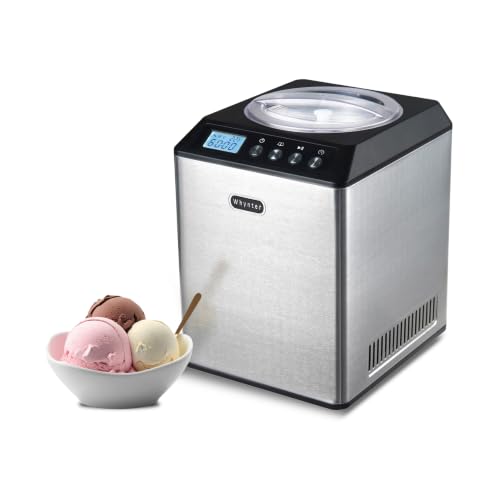
Best for those wanting a compressor model
6. Whynter ICM-201SB
A self-cooling machine with a stainless steel bowl you can lift out. It pairs a compressor with a simple control panel.
Suits: those wanting a compressor model. Strengths: built-in freezing. Weaknesses: a bulky counter footprint. Skip it if you want a compact unit.
View Whynter ICM-201SB on Amazon
Care and Setup
- Wash the bowl and paddle by hand unless the maker says otherwise.
- Let a compressor machine rest before moving or restarting it.
- Chill your base fully before churning.
- Dry every part before storing it. Keep the lid off so trapped moisture can escape.
Mistakes to Avoid
- Overfilling the bowl, which leaves no room for expansion.
- Skipping the freezing step for pint or bowl systems.
- Tilting a compressor machine when carrying it.
- Using sharp tools on a nonstick bowl.
Compressor, Bowl or Pint System: How the Three Designs Compare
The word high-end covers three quite different ways of getting a frozen dessert. A compressor machine has its own refrigeration unit, so you pour in a chilled base, press start and the bowl cools while the paddle turns. You can run a second batch straight afterward because nothing has to be re-frozen. A freezer-bowl machine relies on a double-walled bowl that you freeze ahead of time, usually for many hours. It is simpler, lighter and cheaper to build, but the cold is finite, so once the bowl warms up the batch is done and a second round has to wait. A frozen-pint processor works the other way round: you freeze the base solid in a container and the machine shaves and blends it into a creamy texture.
Each design suits a different habit. Compressor models fit people who churn on impulse or entertain and want several flavors in one afternoon. Bowl machines fit people who plan ahead and keep the bowl in the freezer permanently. Pint systems fit people who like trying small portions of many flavors, including sorbet and milkshake style drinks, and who do not mind waiting a day for a pint to freeze. Before you decide, picture your last three dessert cravings and ask whether you would have waited. If the answer is rarely, the on-demand convenience of a compressor is what you are really paying for.
Base Recipes and the Texture You Can Expect
A better machine does not rescue a poorly balanced base, so it is worth understanding what drives texture. Fat, sugar, protein and water all matter. Fat coats ice crystals and gives a rich mouthfeel, sugar lowers the freezing point so the dessert stays scoopable, and too much water produces an icy result. Custard-style bases that include egg yolks tend to feel dense and smooth, while eggless bases are lighter and quicker to prepare. Sorbets depend almost entirely on sugar balance, which is why a very tart fruit puree sometimes needs more sweetener than you would guess.
- Chill the base thoroughly, ideally overnight in the refrigerator, before it goes near the machine.
- Strain custards so no cooked egg bits reach the bowl.
- Reduce high-water fruit purees a little or add a small amount of alcohol or corn syrup if the manual allows it, to limit iciness.
- Add chunky mix-ins only once the base has thickened, so they do not sink or jam the paddle.
Hardness settings on premium machines are a convenience, but they do not replace a well-built recipe.
Counter Space, Weight and Ventilation
Upper-tier machines are often large and heavy, and compressor units in particular behave like small appliances rather than gadgets. Measure the spot where you plan to keep it, including the height under wall cabinets if the lid lifts upward. Check the listing or manual for the weight, because a machine you cannot comfortably lift will end up living on the counter permanently or never being used at all.
Compressor models need airflow around the body so heat can escape. Leave the clearance the manual recommends and avoid pushing the unit tight against a wall or into a cabinet. Place it on a level, stable surface; a tilted machine can strain the cooling system. If you must move one, follow the maker’s guidance on how long to let it stand before switching it on, since the refrigerant needs time to settle. Also confirm the cord length and that the outlet you plan to use is not already loaded with other heavy appliances. Bowl and pint systems are far less demanding, but the freezer space they need is its own consideration: a pre-frozen bowl needs a clear, level spot in your freezer, and pint containers need room to sit upright.
Batch Planning, Hardening and Storage
Fresh from the churn, most homemade ice cream has a soft-serve texture. For a scoopable result, transfer it to a shallow, airtight container and let it firm in the freezer for a few hours. A pre-chilled container reduces melting while you fill it, and pressing a sheet of parchment against the surface limits ice crystals and freezer odors.
Think about batch size honestly. Capacity varies from about a pint to a couple of quarts depending on the model, and filling the bowl beyond the manual’s limit leaves no room for the mixture to expand as air is incorporated. Overfull batches churn poorly and can overflow. If you cook for a crowd, a compressor machine lets you make two flavors back to back, which a freezer bowl cannot do.
Homemade ice cream has no commercial stabilizers, so it is at its best within a short time of making. Plan to eat it within a few days rather than stockpiling, and label containers with the flavor and date. If a batch has turned hard as a rock, let it sit at room temperature for a few minutes before scooping instead of forcing a scoop through it.
Questions to Ask Before You Spend More
Premium machines make sense only when they match how you cook. Ask yourself how many times a month you would churn, whether you would really use hardness or mode controls, and whether a simpler bowl model would deliver the same result with a little planning. Look at the listing for what is included: some bundles add extra containers, spoons or recipe books, while others sell accessories separately.
- What is the warranty length, and what does it cover on the cooling unit versus the motor?
- Are the paddle, bowl and lid sold as replacement parts?
- Can the bowl go in the dishwasher, or is hand washing required?
- How noisy is the machine in recent customer feedback?
Signs it may be time to replace a machine include a compressor that no longer chills the base, a paddle that wobbles or scrapes the bowl, cracked bowl walls, or a freezer bowl that has lost its liquid sloshing sound and no longer holds cold. Repair parts and service access vary by maker, so check support options before committing to a large, heavy unit.
High-End Ice Cream Maker FAQ
Is a compressor machine worth it?
If you churn often, yes, because it freezes on demand. Occasional bakers may do fine with a bowl model. You can also make a second batch right away, which bowl models cannot do.
Which type suits mix-ins best?
Most designs allow add-ins near the end of churning. Check the listing for the method used. Add chopped nuts, chips or swirls only after the base has thickened.
Do these make frozen yogurt and sorbet?
Most do. Check each listing for the modes it supports.
How loud are they?
Compressor models hum more than bowl models. Reading recent customer feedback can help. Fans and compressors are the main noise sources.
How long can I leave a base in the refrigerator before churning?
Many home cooks chill a base overnight, and a day is usually fine for cooked custards. Keep it covered and cold, and follow food-safety guidance for dairy and eggs. If it smells off or has been out too long, discard it.
Why does my ice cream turn icy after a day in the freezer?
Ice crystals grow when a dessert is stored loosely, exposed to air, or goes through temperature swings. Use a shallow airtight container, press parchment against the surface and keep it toward the back of the freezer. A base with too little fat or sugar also freezes harder and iciest.
Can I use alcohol in a base?
A small amount can keep the dessert softer because alcohol lowers the freezing point. Too much will prevent it from setting properly. Check any recipe from the machine maker for suggested amounts.
Do I need to pre-chill a compressor machine?
Some models have a pre-cool function and some do not. Using it can help the first batch freeze evenly, but follow the manual because the steps differ between machines.
Is stainless steel better than a plastic bowl?
Stainless is durable, resists staining and is easy to clean, which is why many premium machines use it. Plastic parts can still work well but may scratch or hold odors over time. Check whether the bowl is removable, since that makes washing much easier.
Can I make dairy-free ice cream in these machines?
Yes, most machines handle plant-based bases made with coconut milk, nut milks or fruit. These bases vary in fat content, so texture will differ, and recipes may need adjusting. Check the manual for any limits on ingredients.
What should I do if the paddle stops turning mid-batch?
The mixture may have frozen too hard or the bowl may be overfilled. Stop the machine, unplug it and check the paddle and bowl before restarting. If it keeps happening, consult the maker's support rather than forcing the paddle.
Sugar, Fat and Air: The Science Behind Smooth Ice Cream
Texture in homemade ice cream comes down to three things: ice crystal size, fat and air. Smaller ice crystals feel smooth, and they form when the mix freezes quickly while being stirred. Fat coats the crystals and keeps them apart, which is why a base with plenty of cream tastes richer and feels creamier than one made mostly from milk. Air, called overrun, makes the finished product lighter. Commercial ice cream may contain a large amount of air, while homemade versions usually have less, which makes them denser.
Sugar does more than sweeten. It lowers the freezing point of the mix, which keeps ice cream scoopable instead of rock hard. Too little sugar produces a hard, icy result, while too much prevents proper freezing and leaves a soft, sticky texture. Some recipes add a small amount of corn syrup, glucose or alcohol for the same reason, and stabilizers such as egg yolks or a pinch of cornstarch help bind water and reduce iciness.
- More fat: creamier, denser, melts slower on the tongue.
- More sugar: softer scoop, risk of a sticky texture if overdone.
- Faster freezing: smaller crystals, smoother result.
Egg-Based Custard Versus Eggless Bases
French-style ice cream uses egg yolks cooked into a custard, which produces a rich, silky result and a pale yellow color. It takes more effort, since the custard must be heated carefully and cooled before churning. Philadelphia-style bases skip the eggs and use just cream, milk and sugar. They are quicker to make, taste cleaner and let flavors like fresh fruit or vanilla stand out, though they can be slightly more prone to iciness.
Both approaches work in any of the machines in this guide. Compressor machines tolerate either type well, since they freeze steadily. Pre-frozen bowl machines work best with a thoroughly chilled base so the bowl is not asked to do too much work. If you make custard, chill it overnight for the best texture, since a colder base freezes faster.
Cleaning, Storage and Machine Longevity
Dairy residue spoils quickly, so clean the machine parts soon after use. Removable paddles, lids and bowls usually wash well by hand with warm soapy water. Check the instructions before putting any part in a dishwasher, because heat can warp plastic components. Dry everything fully before storing, and keep the freezer bowl in the freezer if it needs to be pre-frozen.
For compressor machines, allow the unit to rest upright for a while if it has been moved, since the compressor fluid needs time to settle. Keep vents clear and wipe the interior regularly. Store finished ice cream in an airtight container with a layer of parchment pressed against the surface, which reduces freezer burn and ice crystals on top. Homemade ice cream is best eaten within a couple of weeks, since it lacks the stabilizers that preserve commercial products.
Budgeting for Add-Ins, Cones and Serving
An ice cream maker is only the start. Mix-ins like chocolate chips, cookie pieces, nuts or swirls add flavor and cost money. Quality vanilla extract or vanilla beans, good chocolate and fresh fruit make a noticeable difference. If you plan to serve guests, think about waffle cones, bowls and a good scoop, since serving can be part of the fun.
Plan the amount you make. Most machines produce around one to two quarts at a time, enough for a family dessert, but not for a large party unless you run several batches. If you entertain often, a compressor machine that can make batch after batch without refreezing a bowl will save you time.
Recipes That Suit Each Machine Style
Different machine types reward different recipes. Compressor machines are the most flexible, handling custard bases, sorbets and frozen yogurt without pre-freezing, so they suit people who like to experiment. Pre-frozen bowl machines work best with simple, well-chilled bases and are good for single batches of classic flavors such as vanilla, chocolate and fruit sorbet.
Pint-based systems that process a frozen block work well for quick, small servings and for mix-ins folded in during a re-spin cycle. They are suited to people who want a single serving of dessert on short notice and are happy to plan ahead by freezing a base overnight. They also handle protein shakes and low-sugar recipes, though these tend to be less creamy because they contain less fat and sugar.
Whichever machine you choose, start with a simple recipe to learn how it behaves before attempting complicated flavors. Take notes on churn times, texture and any adjustments, and you will build a reliable set of recipes over a few weeks.
Related guides
- 6 Best High-End Juicer Machines: Slow and Fast (2026)
- 6 Best Home Ice Cream Makers for Every Kitchen (2026)
- 6 Best Ice Cream Maker Attachments and Add-Ons (2026)
- 6 Best Compressor Ice Cream Makers for Home
Frequently Asked Questions
Why is egg yolk used in ice cream?
Egg yolks contain emulsifiers that bind fat and water, which gives French-style ice cream a smooth, rich texture and helps resist iciness. They require cooking the base into a custard first. Eggless bases are quicker and taste cleaner but may be slightly icier.
How much overrun does homemade ice cream have?
Overrun is the amount of air whipped into ice cream. Commercial products often contain a lot of air, while homemade ice cream typically has less, so it is denser. The exact amount depends on the machine and how long you churn, so expect a richer, heavier result.
Can I put ice cream machine parts in the dishwasher?
Check your manual first. Many removable parts are hand-wash only, because the heat of a dishwasher can warp plastic or damage seals. Wash with warm, soapy water soon after use to prevent dairy residue from spoiling, and dry thoroughly before storing.
How long does homemade ice cream last in the freezer?
Most homemade ice cream is best within about two weeks, since it lacks the stabilizers in commercial products and develops ice crystals over time. Pressing parchment against the surface and using an airtight container keeps it fresher for longer.
The Texture Question: What High-End Money Actually Buys in Ice Cream
Ice cream is a battle against ice crystals, and every feature in this category is a weapon in that one war. Crystals grow when a base freezes slowly and undisturbed; they stay small when the base freezes fast, churns constantly, and arrives at the dasher already cold. A high-end machine buys advantage at each of those points: a compressor that drives the temperature down hard rather than politely, a dasher shaped to scrape the coldest layer off the bowl wall and fold it back into the mass hundreds of times, and the power to keep churning as the base thickens into real resistance instead of stalling at the exact moment the texture is being decided.
That is why two machines with the same nominal capacity can produce ice cream of different character from the same base. The question to carry through every pick in this guide is not how much the machine holds but how it treats the freezing minutes — the speed of the freeze, the diligence of the scrape, the strength to finish. A base that freezes quickly and evenly emerges dense and smooth, with the luxurious, almost chewy body that distinguishes great ice cream from merely cold, sweet cream. A slow freeze gives the crystals time to organize, and no amount of premium ingredients can fully call them back.
The second thing the money buys is repeatability. A machine with real freezing power behaves the same in a warm August kitchen as in a cool spring one, and the same base on the same setting produces the same result in July as it did in May. Home cooks underestimate how much of their frustration with lesser machines is actually weather: a freezer-bowl model at the mercy of a warm room and a tired freezer will vary batch to batch no matter how carefully the recipe is followed. Consistency is not a luxury in a dessert people request by name; it is the difference between a signature and a lottery.
The Six Machines, Sorted by How a Household Actually Freezes
The Breville Smart Scoop is the thinking household’s compressor machine: it senses hardness as it churns and works to a chosen texture, which makes it the natural pick for a family whose members argue — productively — about whether ice cream should be soft-serve soft or scoop-shop firm. Its automation suits households that want excellent results without standing over the bowl, and its keep-cool patience forgives a dinner that runs long before dessert is served.
The Lello Musso Lussino is the traditionalist’s compressor: an Italian-made machine in the old style, built heavily, churning with authority, and asking the cook to be the intelligence in the system. For the enthusiast who already understands bases and wants a machine that simply freezes superbly and will do so for a very long time, the Lello’s lack of fuss is its luxury. It is the pick that treats ice cream making as a craft the cook owns, with the machine as a powerful, silent partner.
The Ninja CREAMi Deluxe represents the third philosophy entirely: freeze the base solid in its pint first, then process it into ice cream on demand. That inversion delights a particular household — the one that wants many flavors in small amounts, protein-packed and alternative bases that conventional churning handles poorly, and individual servings processed minutes before eating. Its texture is its own category, and its devotees are not wrong; they are optimizing for variety and spontaneity rather than for the classic churned scoop.
The Cuisinart ICE-70 and ICE-30BC carry the freezer-bowl tradition at two levels of ambition, and they deserve respect rather than apology. For a household that makes ice cream a few times each summer, plans a day ahead without resentment, and has freezer space to keep a bowl in permanent readiness, a freezer-bowl machine delivers genuinely good ice cream with a fraction of the counter commitment. The Whynter ICM-201SB completes the set as the value-minded compressor route — the household that has decided it wants no-bowl-prep convenience and back-to-back batches, and prefers to spend its savings on cream, chocolate and vanilla worth freezing. Six machines, three philosophies, and the right answer is whichever philosophy matches the way your household actually eats dessert.
Bases That Reward a Serious Machine
A powerful machine deserves a base that can show it off, and the principles are few and learnable. Fat is the first: it coats the palate, carries flavor and physically interferes with crystal growth, which is why premium bases are generous with cream and yolk. Sugar is the second, and it is a texture ingredient as much as a sweetener — it lowers the freezing point of the base, keeping the finished ice cream scoopable rather than brick-hard at freezer temperature. Too little and the texture turns icy no matter how fine the machine; too much and the base may never firm up in the churn at all.
The cooked custard base is the classic test of both cook and machine. Yolks thickened gently in hot cream produce a base of unmatched richness, but it must be cooked with patience — pushed too hot, it scrambles; pulled too early, it stays thin and the ice cream tastes of it. Strain it, chill it thoroughly, ideally overnight, and only then give it to the machine: a base that enters the churn already cold spends its freezing minutes making texture instead of merely getting cold, and the difference is audible in the dasher’s changing note and visible in the finished scoop.
Alcohol, in small and deliberate amounts, is the home maker’s quiet ally for scoopability, because it resists freezing and keeps a tub pliable across days in the freezer. Fruit bases ask the opposite care: their water is the enemy of smoothness, so fruit is cooked down, macerated with sugar to draw its juice, or added in a form that brings flavor without flooding the base. A high-end machine widens the margin for all of these judgments — its freezing power forgives a base that is slightly warm, slightly wet, slightly imperfect — but it cannot repeal the principles, and the cook who learns them will make every machine in this guide taste more expensive than it is.
The Serving and Storage Half of the Craft
Ice cream leaves the machine at its most eloquent and then begins, immediately, to change. Freshly churned ice cream is soft, glossy and at its aromatic peak; an hour in the freezer firms it to scooping texture; days in the freezer test its storage. The households that eat best from these machines plan around that arc: churn close to serving when the occasion allows, and for storage, pack the ice cream into a container with as little trapped air as possible, press a layer of wrap or parchment directly onto the surface, and freeze it in the coldest part of the freezer rather than the door, where every opening swings the temperature and grows the crystals the machine worked so hard to prevent.
Serving is a skill with two rules. The first is tempering: a tub pulled from a hard freezer needs a short rest on the counter to reach the temperature where flavor blooms and the scoop glides, and the patience to give it those minutes is repaid in every bite. The second is the warm scoop, run under hot water and dried, which cuts clean servings without tearing the surface. Neither rule costs anything, and together they explain why the same ice cream tastes better in some houses than others despite identical machines and identical bases.
Leftovers, finally, should be treated as an ingredient rather than a disappointment. A half tub of vanilla is the beginning of an affogato under a shot of espresso, of a milkshake of unreasonable quality, of a warm pie’s proper companion. The high-end machine’s quietest virtue is that it makes ice cream abundant enough to cook with — and a household that cooks with its own ice cream has fully arrived in the category this guide is about.
Troubleshooting the Batches That Disappoint
Every ice cream maker, however serious the machine, produces a disappointing batch eventually, and the disappointments sort themselves into a few honest causes. Ice cream that freezes icy and coarse was usually betrayed before the machine ever started: a base too lean, too watery or churned while still warm gives crystals their head start. Ice cream that never firms in the churn carries too much sugar or alcohol, or met a machine asked to freeze in a kitchen hot enough to fight it — move the work to the coolest hour, chill the base colder, and the same recipe often redeems itself.
Ice cream that tastes flat despite good texture is a flavoring problem, and the fix is to season the base more boldly than feels polite, because cold numbs flavor: a base that tastes slightly too sweet, slightly too intense, slightly too salted at room temperature tastes exactly right at freezing temperature. And ice cream that is glorious on day one and gritty by day four is a storage story — air at the surface, a warm freezer spot, a container opened daily — answered by the packing discipline described earlier. None of these failures is the machine’s confession. They are the craft’s curriculum, and a high-end machine simply makes the lessons clearer by removing itself as an excuse.
The Social Life of a Serious Ice Cream Machine
Something changes in a household’s entertaining when ice cream can be made at will. Dessert stops being a purchase and becomes a production: guests choose a flavor at dinner and eat it after, children design combinations with the seriousness of chefs, and the machine earns a place in the family’s rituals that no specification predicted. Compressor machines, with no bowl to pre-freeze, are the natural hosts of that spontaneity; pint-system machines make it personal, one custom portion at a time; even the freezer-bowl household joins in, with a bowl kept frozen as a standing invitation.
That social return is worth weighing honestly against the counter space and the cost, because for many households it is the true return on the purchase. A machine used four times a year is an expense however fine its texture. A machine that anchors birthdays, summer Sundays and the standing Friday experiment is a member of the household. Choose from these six the one whose rhythm — instant, planned or pint-by-pint — matches the rhythm of your table, and the ice cream will take care of itself, one small, cold, perfect batch at a time.
A Note on Sorbets, Frozen Yogurts and the Lighter Side
The same machines that churn custard open a second repertoire that many owners discover late: sorbets and frozen yogurts, where the craft inverts. Without fat to hide behind, a sorbet’s texture depends entirely on the balance of sugar, water and fruit solids, and on the machine’s ability to freeze the mixture fast enough to keep its crystals fine. A watery sorbet in a slow machine is a granita whether it wanted to be or not; the same mixture in a strong compressor emerges smooth and intensely flavored, proof that freezing power matters even more when the base is lean.
Frozen yogurt sits between the worlds, its tang surviving the churn and its texture governed by how much water the yogurt brought with it — strained yogurt churns into something approaching gelato’s density, while unstained, it freezes lighter and icier. Both styles reward the cook who tastes and adjusts the base cold, just before churning, because freezing will mute sweetness and acidity alike. A household that masters the light repertoire doubles the value of any machine in this guide, and discovers that the most requested flavor of the summer is often the simplest one: fruit, sugar, cold, and a machine strong enough to unite them.
Keeping the Machine Ready for the Season
Ice cream machines live seasonal lives in most homes, and a little ceremony at each end of the season keeps them young. Before the warm months, run the machine once with a simple base to confirm it freezes with its old authority, check the dasher and bowl for the nicks of last year’s storage, and clear the vents of a winter’s dust — compressors breathe, and a machine that cannot breathe cannot chill. At the season’s end, clean and dry everything with unusual thoroughness, because a trace of dairy left in a seam will announce itself unforgettably in spring.
Store the machine where its weight will not be moved casually; these are among the heaviest appliances in a kitchen, and most damage in their lives happens not during churning but during carrying. Then, when the first hot week arrives, the machine is already in place, already proven, already waiting — and the household that planned that readiness will use it twice as often as the one that has to excavate it. Readiness, in ice cream as in everything else this guide has covered, is the difference between owning a capability and enjoying one.
The Flavor Notebook
Serious home ice cream makers keep a notebook, and it becomes the most valuable accessory the machine ever gets. Record the base, the adjustments, the churn’s behavior and the verdict in a few honest lines per batch: which vanilla sang, which chocolate needed more salt, which fruit sorbet wanted its sugar nudged. Within a single summer the notebook turns experimentation into knowledge, and by the second summer the household has something no machine can be bought with — a repertoire, tuned to its own tastes and its own equipment, that guests begin to request by name.
The notebook also protects against the saddest sentence in home cooking: we made a perfect one once and nobody wrote it down. Ice cream is unusually forgettable in its details because its variables are many and its pleasures immediate. Write the batch down while the dasher is being licked, keep the notebook with the machine, and every future batch starts from the accumulated wisdom of all the previous ones. That, more than horsepower or heritage, is what separates the household that owns a high-end ice cream maker from the household that has become good at ice cream.
Choosing Day: A Calm Way to Decide
Stand back from the six and answer three questions in order. How spontaneously does your household eat ice cream — decided at dinner, or planned with pleasure a day ahead? That answer chooses between compressor, pint system and freezer bowl more honestly than any feature list. How much counter can the machine own permanently, in a spot with air around it? That answer removes the machines your kitchen cannot host, however fine they are. And who is the cook: an enthusiast who wants to command the process, or a household that wants the machine to carry the expertise? That answer sorts the traditional instruments from the automated ones.
Three answers, and the field of six usually narrows to one machine that feels less like a purchase and more like a recognition. Buy that one, chill your first base overnight, and churn it on a day when people you like are coming to dinner. The machine will do the rest — and the second batch, informed by the notebook’s first page, will be better than the first, which is the whole story of this delightful category in miniature.
First Batch Advice
Let the first batch be a classic vanilla custard, made carefully and churned without experimental additions. Vanilla is the diagnostic flavor of ice cream: with nowhere to hide, it reports the base’s balance, the machine’s freezing character and the cook’s chilling discipline in a single spoonful. Master it and every other flavor becomes a variation on a theme you understand. Then, and only then, let the household’s imagination loose — the chocolate, the fruit, the combinations with names of their own. A machine learned on vanilla will serve a family for years; a machine judged on a chaotic first experiment may never get the chance to.
Keep that first spoonful in mind as the standard every later batch is quietly compared against, and the machine — whichever of these six earned its counter space — stops being an appliance you own and becomes a standard you keep. That is the moment the purchase is complete, and it usually arrives, fittingly, with a bowl in your hand and people you like waiting for theirs.
From there, the seasons take over: spring’s first fruit sorbet, summer’s weekly churn, the holiday batch made for a full table. A good machine does not just survive those seasons — it gives them a flavor, and a household that tastes its own years in its own ice cream has gotten everything this category promises.
The Short Version
For auto hardness, the Breville Smart Scoop. For gelato, the Lello Musso Lussino. For many modes, the Ninja CREAMi Deluxe. For a timer, the Cuisinart ICE-70. For a bigger batch, the Cuisinart ICE-30BC. For a steel bowl, the Whynter ICM-201SB. Match the machine to how often you will make dessert.

