Disclosure: topratedkitchenware.com is reader-supported. When you buy through links on our site, we may earn an affiliate commission from Amazon and other retailers, at no extra cost to you.
Where to buy
The six machines below are the verified picks in this guide to the best cold hot coffee makers, for readers who want one machine to cover hot coffee and cold coffee. Each name links to its Amazon listing, where you can check the latest price on Amazon and confirm the current configuration before you decide.
- Elite Gourmet EHC111A
- Keurig K-Mini Mate
- Tastyle Mini Hot and Iced Coffee Maker
- Keurig K-Express (Evergreen)
- Keurig K-Express (Mint)
- Hamilton Beach FlexBrew Advanced 4-in-1
Read the full guide ↓ for the reasoning behind the order, the honest limitations of every pick, and the checks that matter more than any headline claim.
The search for the best cold hot coffee makers usually starts with a familiar frustration: a kitchen that has collected a hot brewer for winter mornings and a separate cold-coffee gadget for summer afternoons, with neither doing the other job well. One machine that genuinely covers both halves of the year is the obvious answer, and the good news is that the current single-serve generation has quietly become good at exactly that — provided you know which machines have a real iced function and which are simply hot brewers with hopeful marketing.
This guide ranks six verified machines for the mixed routine. Two of them, the Tastyle Mini and the Hamilton Beach FlexBrew Advanced, are designed from the start for hot and iced drinks, and they take the top positions for that reason. The Keurig and Elite Gourmet models behind them are hot machines, included honestly: their strong brews and flexible formats still serve cold drinks through the brew-over-ice method, and their other virtues — reservoir size, tiny footprints, grounds freedom — matter to households whose cold coffee is an occasional pleasure rather than a daily ritual.
Read the reviews with your own week in mind. A household that drinks iced coffee daily from May to September should weight the iced modes heavily; a household that wants one cold drink on a hot Saturday can safely prioritise reservoir and format. Readers whose main interest is format flexibility across pods and grounds will also find the Best Combination Coffee Makers K Cup guide useful, since several machines appear in both conversations for different reasons.
Key Takeaways
- The Tastyle Mini and Hamilton Beach FlexBrew are the true dual-temperature machines here, with dedicated iced capability confirmed in their listings.
- Hot-only machines can still make good iced coffee by brewing small and strong over a full glass of fresh ice.
- The FlexBrew pairs the dual modes with a 45 oz reservoir, making it the strongest choice for households.
- Pod-only Keurig models trade cold specialisation for reservoir rhythm and the widest pod choice.
- The Elite Gourmet is the budget-minded grounds route: no pods, a reusable filter, and a tiny footprint.
In this guide
Quick Picks
The six verified picks below are ordered for a household that wants both hot and cold coffee from one machine. Badges name the job each machine does best, and the same badges appear in the detailed reviews and the comparison table.
| Pick | Badge | Best for | Link |
|---|---|---|---|
| Elite Gourmet EHC111A | Best for Grounds Drinkers | Drinkers who want their own grounds for hot cups and strong brews to chill | Check on Amazon |
| Keurig K-Mini Mate | Best for Small Spaces | Single drinkers in small kitchens who mostly drink hot, occasionally iced | Check on Amazon |
| Tastyle Mini Hot and Iced Coffee Maker | Best Overall | Mixed households that drink hot and iced coffee every week | Check on Amazon |
| Keurig K-Express (Evergreen) | Best Reservoir Pod Pick | Pod households that want hot coffee on tap and occasional strong brews over ice | Check on Amazon |
| Keurig K-Express (Mint) | Best Light Finish | Pod households furnishing a bright kitchen that occasionally ices a cup | Check on Amazon |
| Hamilton Beach FlexBrew Advanced 4-in-1 | Best for Households | Families split between hot and iced, pods and grounds | Check on Amazon |
How These Picks Were Chosen
Choosing for a cold-and-hot brief means scoring two different talents at once. The first pass over the verified data separated machines with a confirmed iced function from hot-only machines, because that single attribute changes what a household can make without workarounds. The second pass weighed the everyday hot-coffee factors: reservoir capacity, brew size range, format flexibility between pods and grounds, and footprint. Only attributes confirmed in the verified listings appear in the spec boxes, and where a machine is hot-only, the review says so in plain words.
This guide is research-led rather than a hands-on laboratory report. Temperature behaviour is judged from design and confirmed features — an iced mode is engineered to brew at a strength and pace that survives ice, while a hot-only machine asked to chill a normal cup will dilute. That reasoning is stated openly in each review so you can discount it if your experience differs. What this method will not do is invent specifications: if a listing does not confirm a feature, the feature is not claimed.
The 6 Best Cold Hot Coffee Makers

Elite Gourmet EHC111A
Badge: Best for Grounds Drinkers
The Elite Gourmet EHC111A takes the opposite route to the pod machines around it: instead of a capsule, it brews through a reusable filter filled with your own ground coffee, and it will handle loose-leaf tea as well. That single design choice changes the running relationship completely, because your coffee choice becomes whatever bag is open in the cupboard rather than whatever pods you remembered to order. At 600W with one-touch operation it is intentionally simple, aimed at a 14 oz travel mug brewed directly and taken away. Auto shut-off removes the worry of leaving a small appliance on in a dorm, office or spare room, and the dishwasher-safe parts make the reusable filter routine realistic rather than a chore that quietly gets abandoned after the first week. Its compact shape fits the corners of a kitchen that larger machines cannot use: beside a student desk, on an office credenza, in a spare room when guests stay over.
In a cold-and-hot household, the Elite Gourmet plays the role of the flexible understudy. Its hot coffee is its own grounds brewed through a reusable filter, which means the strength is yours to set — and a deliberately strong, smaller brew is exactly the raw material for a respectable glass of iced coffee an hour later, or chilled in the fridge overnight. It will also brew loose-leaf tea, which iced-tea drinkers in the same household quietly appreciate in summer. There is no iced button and no reservoir, so it asks for a little more intention than the dual-mode machines. What it returns is freedom from pods and the lowest-fuss route to a coffee you have specified yourself.
Strengths
- Reusable filter brews your own grounds, with no pods to stock
- Also handles loose-leaf tea, which pod machines cannot do natively
- Auto shut-off and dishwasher-safe parts suit dorms and offices
Trade-offs
- No reservoir, so every cup starts with a fresh fill
- 600W output means a gentler pace than larger machines
- One mug at a time, with no batch option
Key specifications
- Format: Single-serve coffee maker for grounds
- Capacity: 14 oz brew
- Power: 600W
- Filter: Reusable filter for grounds and loose-leaf tea
- Feature: Auto shut-off
- Care: Dishwasher-safe parts
Best for: Drinkers who want their own grounds for hot cups and strong brews to chill / Not suited for: Households wanting one-touch iced coffee from a pod
Keurig K-Mini Mate
Badge: Best for Small Spaces
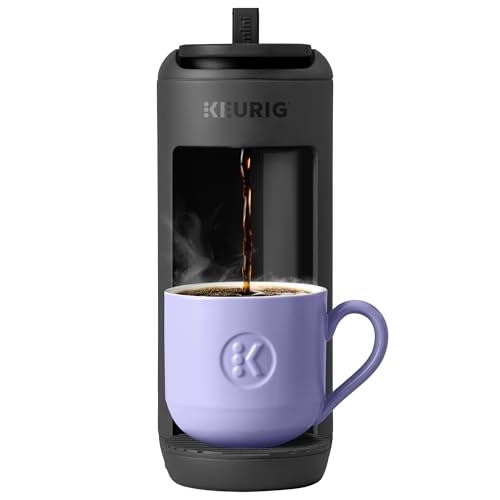
The Keurig K-Mini Mate is the K-Cup idea reduced to its smallest sensible form: a compact, portable single-serve machine that brews up to a 12 oz cup and is aimed squarely at small spaces, dorms and offices. There is no reservoir to manage; you add water for the cup you are about to brew, which keeps the machine tiny and makes it easy to move between a desk, a dorm shelf and a kitchen counter. That fill-per-cup routine is the trade at the heart of the design. For one person making one or two cups a day it is barely a thought, and the machine disappears into spaces where a full-size brewer simply cannot live. For a household queueing for coffee it would be a bottleneck. Judged on its own brief — personal coffee in a small footprint, with the whole K-Cup pod range available — the K-Mini Mate is coherent, honest and easy to recommend to the right owner.
The K-Mini Mate is a hot machine first, and this guide ranks it for cold-and-hot duty with that stated clearly. Its cold contribution is the commuter trick: brew a cup, let it cool briefly, pour it over ice in a travel bottle, and the morning drink becomes an iced coffee for the train. Because it fills per cup, nothing sits in a reservoir going stale between the weekday hot routine and the weekend iced one. For a studio flat or a dorm, where the second appliance for summer simply has nowhere to live, a compact hot machine that can improvise a cold drink beats a dual-mode machine that does not fit the shelf.
Strengths
- Compact footprint fits dorms, desks and tiny counters
- Brews up to a 12 oz cup, enough for most mugs
- Simple one-cup-at-a-time routine with familiar K-Cup pods
Trade-offs
- Fill-per-cup design means no reservoir rhythm for groups
- Maximum 12 oz rules out the largest travel mugs in one pass
- Pods only, so grounds drinkers need a different machine
Key specifications
- Format: Single-serve K-Cup pod coffee maker
- Brew size: Up to 12 oz per cup
- Design: Compact and portable
- Intended spaces: Small spaces, dorms and offices
- Finish: Black
Best for: Single drinkers in small kitchens who mostly drink hot, occasionally iced / Not suited for: Families queueing for mixed hot and cold drinks
Tastyle Mini Hot and Iced Coffee Maker
Badge: Best Overall
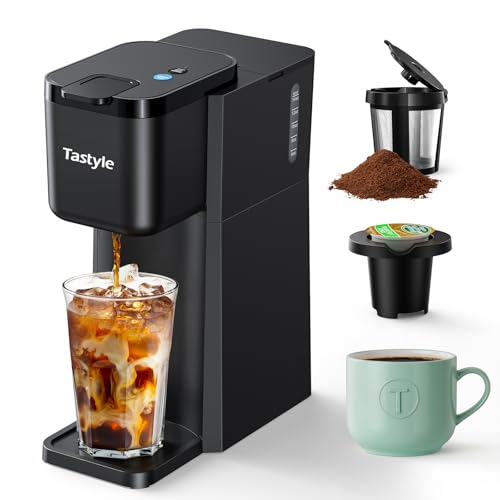
The Tastyle Mini is the most flexible small machine in this pool, because it accepts both K-Cup pods and ground coffee and brews both hot and iced drinks across a 6 to 14 oz range. That combination covers an unusual amount of ground for a mini machine: a pod on a rushed morning, your own grounds when you want a particular bag, a small strong cup or a full travel mug, and an iced coffee in the afternoon without a second appliance. The included recipe book nudges experimentation, and the 120V design is pitched at homes, travel, RVs, offices and dorms — anywhere a full-size brewer is too much machine. The honest limits are size and throughput: this is a one-cup-at-a-time mini, with filling and brewing per cup rather than a reservoir rhythm. For a single drinker or a couple with varied tastes, that trade buys remarkable versatility in a very small footprint.
The Tastyle is what this keyword is actually asking for. Hot and iced are both native modes rather than one being an improvisation, and the dual format — pods for speed, grounds for preference — means the machine follows the drinker rather than the other way round. Its 6 to 14 oz range is the quiet star: small and strong for the concentrate an iced glass needs, full-size for a hot travel mug. In a mixed household the Tastyle becomes the default machine for everyone, which is the highest compliment a small appliance can earn. Its only structural limit is throughput, one cup at a time, and households bigger than two regular drinkers should read the FlexBrew review next.
Strengths
- Genuinely dual-format: K-Cup pods and ground coffee
- Hot and iced modes in one compact machine
- Wide 6 to 14 oz brew range covers espresso-style small cups to travel mugs
Trade-offs
- Mini format means filling and brewing one cup at a time
- No large reservoir for back-to-back group service
- Iced results still depend on using enough ice and strong settings
Key specifications
- Format: Single-serve for K-Cup pods and ground coffee
- Modes: Hot and iced coffee
- Brew sizes: 6 to 14 oz
- Included: Recipe book
- Power: 120V
- Model: K310IC, version 2.0, Classic Black
Best for: Mixed households that drink hot and iced coffee every week / Not suited for: Anyone needing a reservoir for back-to-back group service

Keurig K-Express (Evergreen)
Badge: Best Reservoir Pod Pick
Evergreen is the boldest colourway of the K-Express, and mechanically it is the same dependable package: a 42 oz removable reservoir, three brew sizes, a Strong Brew button, travel mug clearance and compatibility with all K-Cup pods. A deep green machine makes a deliberate statement on the counter, pairing well with brass fittings, cream cabinetry and the plant-filled kitchens that are currently fashionable, and it hides coffee splashes better than pale finishes do. The brewing story is unchanged and that is a virtue: pods are the fastest route from sleepy to caffeinated, the reservoir stretches across a morning of cups, and the Strong Brew setting answers the most common pod-coffee complaint, a cup that tastes thin, by slowing the extraction for a bolder result. Choose Evergreen when you want the K-Express routine and a machine that looks like a chosen object rather than an appliance that merely happened to you.
The Evergreen K-Express serves the cold-and-hot brief from the hot side, and serves it well within that honesty. The Strong Brew button is the bridge feature: a concentrated cup at a smaller size, poured over a full glass of ice, makes a convincing iced coffee, and the 42 oz reservoir means a round of hot drinks for the household and a round of iced drinks for the garden can happen in the same hour without refilling. Evergreen’s finish also shrugs off the condensation rings and splash marks that cold drinks leave behind. If your cold coffee is a weekly pleasure rather than a daily identity, this balance of reservoir, pods and one strong-brew trick is a sensible place to land.
Strengths
- Full K-Express feature set in a distinctive green finish
- 42 oz reservoir supports back-to-back cups for a household
- Strong Brew button adds intensity without changing pods
Trade-offs
- Evergreen is a commitment if your kitchen colours change
- Pods only in normal use, so running costs follow pod prices
- No dedicated iced or cold-brew programme
Key specifications
- Format: Single-serve K-Cup pod coffee maker
- Brew sizes: 3 brew sizes
- Reservoir: 42 oz, removable
- Feature: Strong Brew button
- Mug fit: Travel mug friendly
- Finish: Evergreen
Best for: Pod households that want hot coffee on tap and occasional strong brews over ice / Not suited for: Daily iced-coffee drinkers who want a dedicated iced mode

Keurig K-Express (Mint)
Badge: Best Light Finish
The Mint K-Express brings the standard K-Express formula — 42 oz removable reservoir, three brew sizes, Strong Brew button, travel mug friendly, works with all K-Cup pods — in a pale mint finish that suits retro-leaning and pastel kitchens. Functionally nothing separates it from its black, Warm Stone and Evergreen siblings, so the honest advice is to choose it for the colour and enjoy the same routine: several cups per reservoir fill, a bolder option when a pod tastes weak, and clearance for the travel mug on workday mornings. The pale finish does ask for a little more wiping, because coffee drips and grounds dust show against mint more readily than against black or green. In exchange, the machine brightens a counter corner instead of darkening it. For a renter, a student house or anyone furnishing a small kitchen with some personality, Mint is the K-Express that does not take itself too seriously.
Mint brings the same K-Express cold-drink method as Evergreen — strong, small, over ice — in the finish most likely to cheer up a rental kitchen. The practical difference for a cold-and-hot household is housekeeping: pale mint shows coffee splashes and the sticky rings of iced glasses more readily, so it rewards an owner who wipes the drip tray as a habit. In return it keeps a small kitchen feeling light, which matters in the months when the machine is also producing the household’s summer drinks. Choose between the K-Express colours on looks and upkeep; the coffee, hot or chilled, is identical.
Strengths
- Full K-Express feature set in a light, retro-leaning mint finish
- 42 oz removable reservoir is easy to carry to the tap
- Three brew sizes plus Strong Brew cover most single-cup needs
Trade-offs
- Pale finish shows coffee splashes and needs wiping more often
- Pods only in normal use, with pod cost per cup to budget for
- No dedicated iced or cold-brew programme
Key specifications
- Format: Single-serve K-Cup pod coffee maker
- Brew sizes: 3 brew sizes
- Reservoir: 42 oz, removable
- Feature: Strong Brew button
- Mug fit: Travel mug friendly
- Finish: Mint
Best for: Pod households furnishing a bright kitchen that occasionally ices a cup / Not suited for: Heavy iced-coffee households

Hamilton Beach FlexBrew Advanced 4-in-1
Badge: Best for Households
The Hamilton Beach FlexBrew Advanced 4-in-1 is the pool member that tries to end arguments. It brews hot and iced coffee, it accepts both pod packs and ground coffee, and it carries a removable 45 oz reservoir — the largest water capacity in this guide alongside genuinely fast brewing. That combination means a household split between pod loyalists and grounds drinkers can share one machine, and a drinker who wants iced coffee in summer and hot coffee in winter is not maintaining two appliances. The reservoir changes the morning maths: several cups can be brewed back to back before anyone visits the tap, which is exactly when single-serve machines usually show their limits. It remains a single-serve design, so there is no carafe for a brunch table, and its broader brief takes more counter space than the minis. As a one-machine answer to mixed household tastes, though, it is the most complete package here.
The FlexBrew is the machine that ends the cold-versus-hot negotiation in a busy household. It has the iced capability the keyword demands, the 45 oz reservoir that family mornings demand, and it accepts pods and grounds so nobody’s preference is exiled to a second appliance. Fast brewing matters more in a mixed household than in any other, because hot and cold requests arrive in the same ten minutes and a slow machine creates a queue at the exact moment the household is trying to leave. The FlexBrew is not small and it is not simple, but for the household this keyword describes — several people, both temperatures, all week — it is the most complete answer in the pool, and the natural upgrade from the Tastyle when one cup at a time starts to pinch.
Strengths
- Largest reservoir here paired with hot and iced modes
- Takes both pod packs and grounds, so no format lock-in
- Fast brewing suits back-to-back morning cups
Trade-offs
- Bigger brief than the minis, so it needs real counter space
- Still a single-serve machine: no carafe for a table of guests
- More modes means more settings for a household to learn
Key specifications
- Format: 4-in-1 single-serve coffee maker
- Modes: Hot and iced coffee
- Reservoir: 45 oz, removable
- Inputs: Pod packs and ground coffee
- Brewing: Fast brewing
- Finish: Black
Best for: Families split between hot and iced, pods and grounds / Not suited for: Minimalists who want the smallest possible machine
Notice how the order above is really two rankings woven together: the Tastyle and FlexBrew lead on cold capability, while the K-Express models lead on hot-routine polish, and the Elite Gourmet leads on freedom from pods. A household should read the ranking through its own calendar. If your cold season is long and serious, the top of the list is your list. If your cold drinks are a garnish on a hot-coffee life, the middle of the list may serve you better for a decade. The comparison table that follows strips the six down to the attributes that decide between those readings.
Comparison Table
Line the six up by format, water handling and standout trait. The pattern to notice is that iced capability and reservoir size rarely arrive together — the FlexBrew is the exception, which is why it anchors the household end of this guide.
| Pick | Format | Water capacity | Standout trait | Link |
|---|---|---|---|---|
| Elite Gourmet EHC111A | Grounds with reusable filter | Fill per cup, 14 oz brew | Also brews loose-leaf tea | Check on Amazon |
| Keurig K-Mini Mate | K-Cup pods | Fill per cup, up to 12 oz | Compact and portable design | Check on Amazon |
| Tastyle Mini Hot and Iced Coffee Maker | K-Cup pods and grounds | Fill per cup, 6 to 14 oz | Dedicated hot and iced modes | Check on Amazon |
| Keurig K-Express (Evergreen) | K-Cup pods | 42 oz reservoir | Strong Brew button for concentrated cups | Check on Amazon |
| Keurig K-Express (Mint) | K-Cup pods | 42 oz reservoir | Mint finish, full K-Express feature set | Check on Amazon |
| Hamilton Beach FlexBrew Advanced 4-in-1 | Pod packs and grounds | 45 oz reservoir | Hot and iced modes with fast brewing | Check on Amazon |
How to Choose a Machine for Both Hot and Cold Coffee
Decide first whether cold coffee is a daily drink or an occasional one in your house, because that answer does most of the choosing. Daily cold drinkers should insist on a confirmed iced function — the Tastyle or the FlexBrew here — because the brew-over-ice workaround, while genuinely workable, adds steps and ice consumption to every single drink, and small frictions compound over a summer. Occasional cold drinkers can treat iced capability as a bonus and choose on hot-coffee merits: reservoir, format and footprint.
Then weigh the water. Hot-and-cold households brew more total drinks than single-temperature ones, because the same machine serves the morning mug and the afternoon glass. Reservoir models — 42 oz in the K-Express line, 45 oz in the FlexBrew — turn that double duty into a rhythm, while fill-per-cup minis turn it into a chore at exactly the busy moments. Count your household’s drinks on a heavy day, not an average one, and choose the water capacity that survives the heavy day without a refill argument.
Format is the third decision, and it interacts with temperature in a way buyers miss. Pods are at their best for hot speed and variety; grounds give the control that strong iced brews reward. A dual-format machine removes the need to predict which drinker you will be in August. Households still torn between a pot for weekends and single cups for weekdays face a related question, covered in the Best Combination Coffee Makers With Pot And One Cup guide, while readers focused purely on the cold side should compare the Best Combination Ice Coffee Makers shortlist before deciding.
How to Get the Best From a Hot and Cold Machine
For hot coffee, the routine is the familiar one, with two details that matter. Use fresh water in the reservoir and replace it rather than endlessly topping up, because water that has sat warm for days flattens flavour. And match brew size to mug honestly: a small cup stretched by a large brew setting is just diluted coffee, while the right size at the right strength is the cup the machine was designed to make. On strong-brew models, reserve the strong setting for the pods that taste thin, not as a default for everything.
For iced coffee on a dual-mode machine, follow the mode rather than improvising: fill the glass fully with ice before brewing, choose the iced setting, and let the machine’s calibration do the work it was designed for. On a hot-only machine, brew small and strong into a jug, then pour over fresh ice in the serving glass — never brew onto yesterday’s half-melted ice, and never chill a large hot batch in the fridge if you want it bright, because slow cooling dulls the flavour. Sweeten while warm if you sweeten at all.
Problem: iced coffee tastes thin and watery → the drink was under-concentrated for its ice; brew a smaller, stronger cup and use more, larger ice cubes. Problem: hot coffee tastes flat from a reservoir machine → the water has sat too long or scale is building; refresh the water, run a descale cycle, and store the reservoir emptied during holidays. Problem: the machine struggles in a heatwave kitchen → warm ambient water and a sun-heated counter raise brew temperatures and melt ice faster; move the machine out of direct sun and start iced drinks with fridge-cold water in the glass routine.
Cleaning is the unglamorous skill that keeps both modes tasting right. Coffee oils coat the brew path and turn rancid, and cold drinks expose stale flavours that hot drinks mask. Rinse removable parts weekly, wipe the splash zone after iced sessions, and descale on the schedule your water hardness demands. A machine that makes both temperatures earns its keep only while both taste clean.
The Seasonal Kitchen: One Machine Across the Year
A dual-temperature machine changes the kitchen calendar. In winter it is a hot brewer with a reservoir rhythm; in summer the same counter space produces the afternoon iced drinks that used to require a café trip or a second gadget. That continuity is worth more than the feature list suggests, because appliances earn their place by weekly use, and a machine used in every season never becomes the cupboard clutter that single-season gadgets turn into by October.
There is also a household diplomacy angle. Partners rarely share a temperature preference, and teenagers discover iced coffee at exactly the age they discover opinions. One machine that serves both camps — and, in the FlexBrew’s case, both coffee formats — removes a small daily negotiation. Readers building that kind of all-in-one station often end up comparing espresso ambitions too, which the Best Combo Coffee And Espresso Makers guide covers with the same honesty about what these machines can and cannot do.
Iced Modes Explained: What the Button Actually Changes
An iced mode is not a refrigerator. The machine still brews with hot water, because extraction needs heat; what changes is the brew’s strength and pace, calibrated so that the coffee landing on ice is concentrated enough to survive the melt. Some designs also slow the drip so the ice chills progressively rather than being blasted by a full hot cup at once. The result, done well, is a glass that tastes like coffee at the last sip rather than like coffee-flavoured water.
That is also why the workaround on hot-only machines is specifically small-and-strong rather than just hot coffee plus ice. You are manually recreating the calibration the iced mode automates. Both routes are legitimate; they differ in effort per drink. A household making one iced coffee a week will never notice the effort. A household making four a day will, and should buy the mode.
The Two-Machine Trap, and How One Machine Ends It
Most kitchens that own separate hot and cold coffee gear did not plan it that way. A hot brewer arrived first; a summer exposed its limits; a cold gadget followed, then a second set of supplies, a second cleaning routine and a second claim on the counter. Each machine is used half the year and resented the other half, and the household’s actual coffee — the daily drink, in whichever temperature the season demands — is served by whichever appliance happens to be plugged in. The two-machine trap is not a spending problem so much as a continuity problem.
A dual-temperature machine ends the trap by making temperature a setting rather than an appliance. The counter keeps one machine, the cupboard keeps one set of supplies, and the household learns one routine deeply instead of two routines shallowly. That depth shows up in the cup: owners of one machine learn its strong settings, its size logic and its cleaning rhythm properly, because there is no second machine to blame or escape to. The picks at the top of this guide were ranked with that continuity in mind.
There is one honest exception. A household with a genuine cold brew practice — the overnight steep, the concentrate in the fridge — owns a method, not a gadget, and a simple steeping vessel alongside a hot machine is a system, not a trap. The trap is two powered appliances competing for one job. If that description matches your counter, the consolidation this category offers is worth more than any single feature in the spec boxes above.
Hot Coffee Craft on a Machine That Also Does Cold
A dual-temperature machine should never be allowed to become a cold machine with a hot afterthought, because for most households the hot cups still outnumber the cold ones across a year. Hot craft on these machines rests on the same foundations as anywhere: fresh water, the right brew size for the mug, and a coffee format you actually enjoy. The reservoir models reward a simple discipline — refresh the water on a rhythm rather than topping up forever — and the strong settings reward restraint, used for the pods or doses that need help rather than as a blanket default that flattens every cup into the same intensity.
There is a sequencing craft specific to mixed households. Hot drinks first on a winter morning, while the machine and the kitchen are cold; iced drinks built after breakfast, when the ice is fully frozen and the day has decided its temperature. In summer the order inverts, and the machine that can follow the household’s day rather than dictating it is the machine that stays loved. The Tastyle and FlexBrew were ranked at the top of this guide partly for this suppleness: both temperatures are native, so the day’s order is the household’s choice.
Finally, keep the two modes honest with each other in cleaning. A machine that brews iced coffee daily in August accumulates splash and sugar around its base that a hot-only machine never sees, and a machine that brews hot daily in January builds scale at the pace hot water always does. One weekly wipe that covers both legacies, and a descale matched to your water, keep the dual machine tasting like two good machines rather than one tired one. That maintenance rhythm, more than any feature, is what a cold-and-hot purchase is really buying.
A last consideration belongs to households with children and teenagers, who change the cold-and-hot calculation in ways spec sheets ignore. Iced coffee culture arrives in a house suddenly, usually via one teenager, and it multiplies drinks, glasses and ice consumption in a single summer. A dual-mode machine absorbs that arrival gracefully, because the new drinker is simply using a setting that already exists, while a hot-only household faces a second purchase under time pressure. Conversely, young children argue for the simplest possible hot routine and a machine whose surfaces and routines are forgiving. The picks in this guide span both realities deliberately: the minis for the household as it is, the dual-mode family machines for the household as it is about to become. Buy for the household eighteen months from now, and the machine will not need replacing when the summer of iced coffee arrives.
There is a rhythm worth borrowing from households that run these machines happily for years: the dual-temperature machine gets a small weekly ceremony of its own, distinct from the daily routine. The reservoir is emptied and refilled rather than topped, the drip tray and splash zone are wiped while the kettle boils for something else, and the format parts — pod holder, grounds basket where fitted — are rinsed and left to dry in the open air. Five unhurried minutes, once a week, is the entire ceremony, and it is the difference between a machine entering its third summer tasting new and one that has quietly become part of the kitchen’s background noise. Dual machines ask slightly more of their owners than single-temperature ones; this ceremony is the whole of that difference, and it is a fair price for a machine that covers the calendar.
Common Buying Mistakes
The classic mistake is assuming every machine with a picture of an iced glass on the box has an iced mode. Marketing imagery is not a specification. Check the verified feature list for an explicit iced or over-ice function before paying for cold performance, and treat silence on the subject as a no.
A second mistake is choosing capacity by the wrong season. Buyers shopping in winter pick the big hot reservoir and forget the summer queue for iced drinks; buyers shopping in a heatwave pick the iced specialist and forget the Christmas morning when six relatives want hot coffee. The household test is the heavy day in each season, not the day you happen to be shopping.
Third, do not brew iced coffee onto warm or half-melted ice and blame the machine. Ice is an ingredient with a quality bar: fresh, fully frozen, and plentiful. A glass that starts two-thirds ice will defeat any brewer, dual-mode or not.
Finally, avoid maintaining two half-used systems. A pod machine for hot and a grounds gadget for cold doubles the cleaning, the storage and the supply cupboard. The entire point of this category is consolidation — one machine, one format decision, one routine the whole household learns.
Final Recommendation
If one machine must do everything, the Hamilton Beach FlexBrew Advanced 4-in-1 is this guide’s first choice for households: genuine hot and iced capability, pods and grounds, and the reservoir to serve a family morning. For a single drinker or a couple, the Tastyle Mini Hot and Iced Coffee Maker delivers the same dual-temperature idea in a mini format that fits anywhere.
Hot-first households that ice the occasional cup are well served by the Keurig K-Express (Evergreen) and its Strong Brew workaround, while grounds loyalists should take the Elite Gourmet EHC111A and enjoy specifying their own coffee in both seasons. Match the machine to your heaviest week, in both temperatures, and the choice will still look right in the opposite season.
Related guides
Frequently Asked Questions
What is the difference between an iced mode and brewing hot coffee over ice myself?
An iced mode automates the calibration: it brews a stronger, paced cup designed to land on ice and stay balanced as the ice melts. Doing it manually means choosing a small, strong brew yourself and pouring it over a full glass of fresh ice. The results can be close; the mode simply removes the guesswork from every glass.
Can all six machines in this guide make iced coffee?
All six can contribute to an iced drink, but only the Tastyle and the Hamilton Beach FlexBrew have a dedicated iced function confirmed in their listings. The others are hot brewers whose strong settings make the brew-over-ice method work well. Each review states plainly which camp its machine is in.
Does brewing over ice damage a coffee maker?
No. The machine brews normally into a vessel; the ice is in the glass, not the machine. Use a sturdy glass that tolerates temperature change, fill it with ice before brewing, and the routine is safe for both machine and glassware.
Which machine here is best for a family?
The Hamilton Beach FlexBrew Advanced, because it combines the iced capability with a 45 oz reservoir, both coffee formats and fast brewing. Family life is a queue problem as much as a coffee problem, and the FlexBrew is the only pick designed for the queue.
Should I choose pods or grounds for a mixed hot and cold routine?
Pods win on speed and variety for hot drinks; grounds win on control for strong iced brews and on freedom from a pod supply. A dual-format machine like the Tastyle or FlexBrew postpones the decision entirely, which is why they top this guide.
How do I stop iced coffee tasting diluted?
Start stronger and colder: brew a smaller, stronger cup, use a glass packed with fresh ice, pre-chill the glass if you can, and drink before the ice has fully melted. Large cubes melt more slowly than small ones and buy you time.
Should a dual-temperature machine live on the counter all year?
Yes — that is the point of buying one. A machine stored away for a season is a machine whose routine is forgotten and whose reservoir sits stale. Kept out, rinsed and used in both modes across the year, a dual-temperature machine stays fresh, familiar and worth its space in every month.


