Disclosure: topratedkitchenware.com is reader-supported. When you buy through links on our site, we may earn an affiliate commission from Amazon and other retailers, at no extra cost to you.
Where to buy
The six models below are the verified picks for this guide to the best pressure instant cookers — with the mix stated honestly at the top: two of the six are true electric instant-style cookers, and four are stovetop pressure cookers included and labelled as manual alternatives, because that is what the verified pool contained. Each name links to its Amazon listing, where you can check the latest price on Amazon and confirm the current configuration. Start with our top pick here: Check on Amazon.
- MICHELANGELO Stovetop Pressure Cooker, 4.2 qt
- Peterboo Stainless Steel Pressure Cooker, 6 Quart
- RVGMBO Pressure Cooker 12 Quart, 18/8 Stainless Steel
- Peterboo 3Qt Stainless Steel Pressure Cooker
- Instant Pot Duo 6 Qt 7-in-1 Electric Pressure Cooker
- Cosori Pressure Cooker 6QT, 9-in-1
Read the full guide ↓ for what “instant cooker” actually means, which picks genuinely are one, and how the manual alternatives compare when speed is the whole point.
The search for the best pressure instant cookers carries a small ambiguity worth resolving before any ranking: “instant” in this category means the electric multi-cooker style popularised under the Instant Pot name — a self-contained appliance that pressurises, times, releases and keeps food warm at the press of a button, with no hob and no supervision. Verified against current catalogue data on 2026-11-20, this guide’s pool contains exactly two such machines: the Instant Pot Duo itself, the appliance that defined the term, and the Cosori 9-in-1, a direct electric rival with its own twist. The other four verified picks are stovetop pressure cookers — excellent pressure cookers, several of them faster to pressure on a strong burner than any countertop machine, but not “instant cookers” in the term’s honest sense, and this guide will not pretend otherwise. They are reviewed below as what they are: manual alternatives for shoppers whose real goal is fast pressure cooking, and who may discover that a hob pot serves that goal as well as a button does.
That structure makes this guide genuinely useful rather than merely tidy. If you came for an instant cooker, the first two reviews are your shortlist, compared in depth. If you came for speed and are format-curious, the four manual alternatives show what the hob offers — harder searing, faster pressurisation on gas or induction, no electronics to age — and what it asks in return: your attention. Either way, every claim below is tied to a verified specification, every pick’s badge tells the truth about its format, and the comparison table keeps the two families clearly separated. Readers weighing the electric side further will find Best Pressure Cookers Recipes useful for the recipe ecosystem these machines serve, and Best Pressure Cookers Sweethome for the editorial view of the category.
Key Takeaways
- “Instant cooker” honestly means an electric, self-timing multi-cooker; in this verified pool of six, only the Instant Pot Duo and the Cosori fully qualify as one.
- The four stovetop picks are labelled as manual alternatives throughout — fast, capable pressure cookers, but not instant cookers, and this guide never blurs that line for a single paragraph.
- Instant format buys automation: set the programme, close the lid and walk away, with keep-warm waiting at the end. Manual format buys searing power, hob speed and decades of electronic-free service with a single cheap consumable part.
- For recipe compatibility, the Duo speaks the largest recipe library’s native language; the Cosori adds sous vide and a ceramic-coated pot to the same electric format.
- Choose by who minds the cooking: if the answer is “the machine”, buy electric; if the answer is “me, happily, at the stove”, the manual picks are superb.
- Whichever format you choose, the fill rules, the gasket care and the release discipline are identical — pressure is pressure, in every kitchen, on every hob and in every format.
- Many serious households end with one of each: electric for the unattended weeknight load, stovetop for attended pleasures, hard searing and batch work.
- Judge the formats by your kitchen’s geography too — the electric lives on the counter, the stovetop pot in the cupboard and on the hob.
- Safety is architecture in both formats — counted, layered systems in the listings themselves — plus one shared cook’s discipline: clear vents, respected fill lines, a maintained gasket and a lid never forced.
In this guide
Quick Picks
| Pick | Badge | Capacity | Format truth |
|---|---|---|---|
| Instant Pot Duo | Best True Instant Cooker | 6 Qt | Electric 7-in-1 — the original instant format |
| Cosori 9-in-1 | Best Instant-Style Rival | 6QT | Electric 9-in-1 with sous vide and a ceramic-coated pot |
| Peterboo 6 Quart | Best Manual Alternative | 6 Quart | Stovetop — not an instant cooker; the hob equivalent |
| MICHELANGELO 4.2 qt | Best Manual for Small Households | 4.2 qt | Stovetop, two settings, one-hand lid |
| RVGMBO 12 Quart | Best Manual for Batches | 12 Quart | Stovetop canner size for stock and crowds |
| Peterboo 3Qt | Best Manual Compact | 3Qt | Stovetop mini for one or two people |
How These Picks Were Chosen
Every model comes from a verified pick pool checked against Amazon’s catalogue data through the Creators API on 2026-11-20, so names, capacities and functions match the current listings. We link a cooker only when the API-returned title confirms a genuine pressure cooker of the stated type and size. The ranking applies the keyword honestly: true instant-format machines first, judged on automation quality, recipe ecosystem and pot material; then the manual alternatives, judged as stovetop cookers and clearly badged as such, included because the pool offered them and because many “instant” shoppers are really shopping for speed, which the hob also sells.
This is a research-led guide, not a hands-on lab test. Where a pick’s format does not match the keyword’s core meaning, the review says so in its badge, its verdict and its prose — the disclosure standard this site applies whenever a pool and a keyword disagree in part rather than in whole. The sources file records the split (two electric, four stovetop) explicitly.
The 6 Best Picks, With the Format Line Drawn Clearly

Instant Pot Duo 6 Qt 7-in-1 Electric Pressure Cooker
Badge: Best True Instant Cooker
Strengths
- The defining instant cooker: pressure, slow cook, rice, yogurt, steam, sauté, warm and sterilize in one appliance.
- The largest recipe ecosystem in the category is written for this exact platform and size.
- Stainless steel inner pot tolerates acidic dishes, metal tools and in-pot blending.
Trade-offs
- Searing is countertop-class; a hob pot browns harder.
- The sealing ring absorbs strong flavours; a spare ring helps dessert and yogurt cooks.
- Electronics set a lifespan ceiling that a steel stovetop pot does not have.
Mini spec box
- Capacity: 6 Qt
- Format: 7-in-1 electric pressure cooker — a true instant cooker
- Functions: Pressure cook, slow cook, rice, yogurt, steam, sauté, warm, sterilize (per listing)
- Inner pot: Stainless steel
- Recipe support: Companion app with recipes (per listing title)
Start with the name itself: the instant-cooker category exists because this appliance family made pressure cooking a countertop, button-driven activity, and the Duo is its reference model. Everything the term promises is here — load the pot, choose the programme, and the machine manages pressurisation, timing and the landing into keep-warm without asking anything of a hob or of your attention. The 6-quart size is the one the recipe world standardised on, the sauté function builds flavour bases in the pot before the lid closes, and the yogurt and sterilize functions cover the quiet corners of the repertoire that make owners evangelical.
For the shopper who typed this keyword, this is the most literal correct answer in the guide: an instant cooker, from the brand that coined the expectation, in the size the recipes assume. Its limits are the format’s limits — gentler searing than a burner, electronics with a finite horizon — and they are priced into every honest comparison below. If automation is the point of your search, your search substantially ends here.
Best for: Anyone who wants the true instant-cooker experience and its recipe world / Not suited for: Cooks who prefer hob control or maximum searing power
A note on learning curve, since instant is a promise about effort as much as time: the Duo’s first week is genuinely gentle. The controls map onto the recipe language a new owner will meet everywhere, the water test teaches the seal in minutes, and the keep-warm landing forgives the distracted evening that ruins a stovetop learner’s first braise. By the second week the machine has become furniture — trusted, unremarkable, reached for without thought. That disappearance into routine is the instant format’s true product, and this platform delivers it more completely than any rival because the world’s recipes conspire to help it.

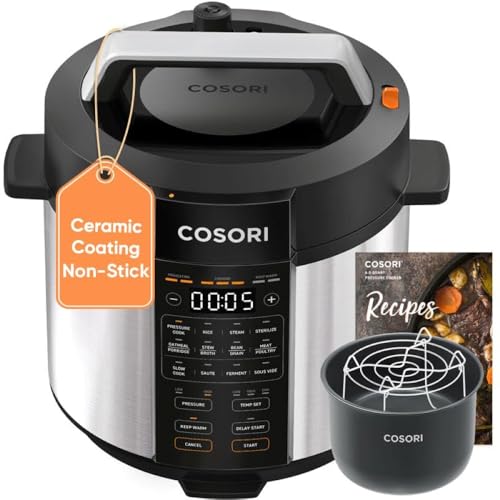
Cosori Pressure Cooker 6QT, 9-in-1
Badge: Best Instant-Style Rival
Strengths
- A full instant-format electric cooker with nine functions, including sous vide — beyond the reference model’s list.
- Ceramic-coated inner pot releases rice, oats and cheesy dishes easily.
- Twelve safety features listed; stainless steel exterior; 1100W per the title.
Trade-offs
- Coated pot wants gentle tools and has a finite surface life.
- Recipe ecosystem is smaller than the category leader’s; some recipes need light adaptation.
- Sous vide in a multi-cooker suits modest portions.
Mini spec box
- Capacity: 6QT
- Format: 9-in-1 electric pressure cooker — a true instant-style cooker
- Inner pot: Ceramic coating
- Power: 1100W (per listing title)
- Safety: 12 safety features (per listing title)
The Cosori is the credible alternative answer to the instant question: same electric, self-timing format, same family size, with two deliberate differences. The first is breadth — nine functions crowned by sous vide, which opens precise-temperature cooking (eggs, steaks, custards) that the reference model cannot perform at all. The second is the pot: a ceramic-coated inner vessel that makes the sticky staples of instant-cooker life — rice dishes, oatmeal, macaroni and cheese — release and rinse with a fraction of stainless steel’s effort. For cooks whose repertoire leans sticky and adventurous, those are not garnish; they are the deciding features.
The trade-offs mirror the differences: protect the coating with gentle tools, accept a smaller (though compatible) recipe ecosystem, and weigh whether sous vide will be a weekly practice or a honeymoon feature. Judged strictly as an instant cooker, the Cosori stands level with the leader on the core and ahead on its two chosen axes — which is exactly what a rival is supposed to do.
Best for: Instant-cooker buyers who want sous vide and an easy-release pot / Not suited for: Metal-utensil cooks or the largest recipe library’s loyalists
There is a breakfast argument for this machine that rarely makes the brochures: the coated pot plus the programme library turns the sticky morning repertoire — oats, congee, rice porridge, eggs in their various precise forms — into the lowest-effort cooking of the day, at the hour when effort is scarcest. Add the sous vide egg possibilities for weekends and the Cosori builds a case that is less about replacing the leader than about serving a particular household’s actual menu better. Instant shoppers should buy against their menu, and menus like this one point here.

Peterboo Stainless Steel Pressure Cooker, 6 Quart
Badge: Best Manual Alternative
Strengths
- 3-ply composite base sears harder and heats more evenly than any countertop element here.
- Listed for induction, gas and ceramic stoves — the modern-hob manual option.
- No electronics: the longest service horizon in this guide.
Trade-offs
- Not an instant cooker: no programmes, no timer, no keep-warm — you are the control system.
- Requires a suitable hob and your presence at the pressure stage.
- No basket named in the verified title.
Mini spec box
- Capacity: 6 Quart
- Material: Stainless steel
- Format: Stovetop pressure cooker — manual alternative, not an instant cooker
- Base: 3-ply composite base
- Compatibility: Induction, gas and ceramic stove (per listing title)
Here the guide crosses its clearly marked line. The Peterboo is a stovetop pressure cooker: it will never time itself, beep at you or hold dinner warm, and if those are the reasons you searched “instant”, skip to the two reviews above with our blessing. What it offers instead is the manual format at its most modern — a layered base that browns like serious cookware, compatibility with the induction and glass hobs filling today’s kitchens, a clear pressure indicator, and the standard 6-quart size. On a strong burner it reaches pressure briskly, and its total cooking times for seared dishes can embarrass the electrics, because the flavour stage runs at hob power.
Who should consider crossing the line: cooks who enjoy the stove, distrust appliance lifespans, or already own the hob and begrudge the counter space. The Peterboo asks for attention and repays it with control and longevity. That is a fair trade, honestly labelled — which is all this section of the guide claims for it.
Best for: Hob cooks wanting instant-class speed with manual control / Not suited for: Anyone who wants set-and-forget automation
Consider also the failure economics. When an electric cooker fails, it fails whole — a board, a sensor, a sealed unit — and the kitchen loses the appliance. When a stovetop pot “fails”, it is almost always a gasket, a part measured in small money and stocked widely, after which the pot returns to full service the same day. For households that keep equipment for decades and distrust disposable appliances, that asymmetry is not a footnote; it is the purchase. The Peterboo, with its modern base and safeguards, is where that philosophy meets a contemporary hob.
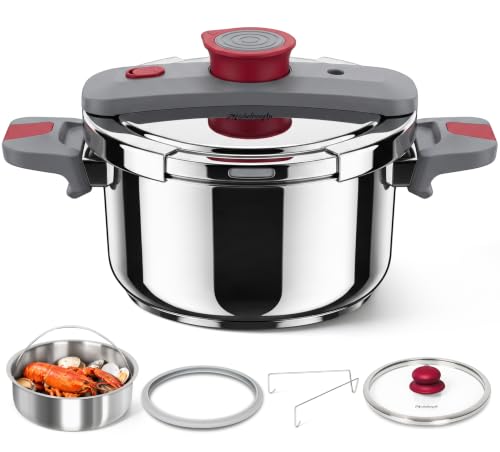
MICHELANGELO Stovetop Pressure Cooker, 4.2 qt
Badge: Best Manual for Small Households
Strengths
- Two pressure settings — the manual format’s answer to delicate instant-cooker programmes.
- One-hand easy-open lid; steamer basket and glass lid included.
- Small pot pressurises and releases quickly, suiting weeknight speed.
Trade-offs
- Not an instant cooker: manual heat management throughout.
- 4.2 qt capacity limits larger dishes.
- Newer brand; shorter parts history.
Mini spec box
- Capacity: 4.2 qt
- Material: 304 stainless steel
- Format: Stovetop pressure cooker — manual alternative, not an instant cooker
- Settings: 2 pressure settings
- Included: Steamer basket and glass lid
- Compatibility: Induction compatible (per listing title)
For a small household weighing the instant promise against a small kitchen, the MICHELANGELO is the manual counter-argument in its strongest form. Its two pressure settings cover the delicate-to-hearty range that electric programmes subdivide, its one-hand lid removes the fiddliest moment of stovetop cooking, and its modest size means pressure arrives and leaves quickly — the manual format’s version of instant gratification. The included glass lid and basket make it a complete small-kitchen vessel: pressure pot, steamer and saucepan in one footprint.
It remains a pot you drive. There is no programme to blame or praise, and eggs will still punish a wandering attention span. But for one to three people who cook attentively, it delivers most of what the instant format promises — speed, versatility, small-batch ease — with nothing electronic to age. Labelled honestly, it earns its place in this guide.
Best for: Small households happy to drive a fast manual pot / Not suited for: Anyone seeking true set-and-forget cooking
The glass lid deserves its sentence, because it quietly answers the instant format’s serving advantage: with it, the same pot that pressurised dinner can sit at the table or on a low hob keeping that dinner warm in the ordinary, visible way — no programme, but also no transfer to a second vessel and no extra washing. Small households feel such consolidations daily. The MICHELANGELO is best understood as a one-pot kitchen system that happens to cook under pressure, and for the right household that system out-serves an appliance twice its electronic sophistication.

RVGMBO Pressure Cooker 12 Quart, 18/8 Stainless Steel
Badge: Best Manual for Batches
Strengths
- 12-quart volume — a scale no instant cooker in this guide attempts.
- Pressure-canner format for stock days and preserving, per tested guidance.
- 18/8 stainless with glass lid and steamer rack included.
Trade-offs
- The opposite of instant in spirit: a planned, attended, batch-day instrument.
- Very heavy full; monopolises the largest burner.
- Far too large for everyday meals.
Mini spec box
- Capacity: 12 Quart
- Material: 18/8 stainless steel
- Format: Stovetop pressure cooker / canner — manual alternative, not an instant cooker
- Included: Glass lid and steamer rack
- Compatibility: Induction and gas stovetop (per listing title)
The RVGMBO is in this guide for completeness of the speed question at the opposite scale. Instant cookers optimise the single meal; this optimises the month — a stock day that fills the freezer, a batch that feeds a gathering, a canning session run under tested recipes and official guidance. Its one-hand locking lid and included rack serve that workflow, and its stainless construction suits the heavy, abrasive duty involved.
No honest sentence can call it instant, and none here does. It is the manual format’s heavy artillery, included so that shoppers whose “fast” means “feed everyone at once” can see the whole verified field. Everyone else should admire it briefly and return to the top of the list.
Best for: Batch cooks and canners needing maximum volume / Not suited for: Weeknight speed seekers or small kitchens
Even its slowness is instructive. A pot that takes a while to pressurise a full load teaches the batch cook to organise — jars staged, towels laid, the session planned like the small production it is — and that organisation, once learned, makes every subsequent batch safer and calmer. Instant cooking has many virtues, but teaching a cook to run a proper canning day is not among them. For the households that need that skill, this unapologetically manual instrument is the teacher and the tool in one.

Peterboo 3Qt Stainless Steel Pressure Cooker
Badge: Best Manual Compact
Strengths
- The fastest manual route to pressure for one or two people: small pot, small burner, quick cycle.
- 8+ safety features listed; stainless and induction compatible.
- Tiny footprint and easy washing suit small kitchens.
Trade-offs
- Not an instant cooker: no automation of any kind.
- Roughly two quarts of working capacity.
- The listing’s broad 8-in-1 wording should be read as a compact stovetop pressure pot.
Mini spec box
- Capacity: 3Qt
- Material: Stainless steel
- Format: Stovetop pressure cooker — manual alternative, not an instant cooker
- Safety: 8+ safety features (per listing title)
- Compatibility: Induction compatible (per listing title)
The Peterboo 3Qt closes the manual side with the speed argument in miniature. For one or two people, a small stovetop pot on a small burner reaches pressure with a briskness that narrows the practical gap to the electrics: the total elapsed time of a small bean stew or a rice-and-dal dinner is genuinely competitive, because there is so little mass to heat. It is also the easiest pot here to wash, store and forgive.
What it cannot do is leave you alone with your evening — no timer ticks on your behalf. Singles and couples who cook attentively will find it a nimble daily tool; those who want dinner to cook itself should take the electric route at the top of this guide, where the instant promise is kept literally.
Best for: Attentive solo and couple cooks wanting manual speed / Not suited for: Set-and-forget seekers or family cooking
It also travels. A 3-quart stainless pot is the cooker that goes to the holiday rental, the camper kitchen and the relative’s house, because it asks only for a burner and gives back real pressure cooking in return — no counter footprint negotiations, no programme translations. For the cook whose life is mobile or whose kitchen is borrowed as often as owned, that portability is a feature no countertop appliance in this guide can match, and it rounds out the manual case: control at home, freedom away from it.
Comparison Table
| Model | True instant cooker? | Capacity | Automation | Standout | Link |
|---|---|---|---|---|---|
| Instant Pot Duo | Yes — electric 7-in-1 | 6 Qt | Programmes + keep-warm | Recipe ecosystem | Check on Amazon |
| Cosori 9-in-1 | Yes — electric 9-in-1 | 6QT | Programmes + keep-warm | Sous vide; coated pot | Check on Amazon |
| Peterboo 6 Quart | No — stovetop manual | 6 Quart | None (cook-managed) | 3-ply base; multi-hob | Check on Amazon |
| MICHELANGELO | No — stovetop manual | 4.2 qt | None (cook-managed) | 2 settings; bundle | Check on Amazon |
| RVGMBO | No — stovetop manual | 12 Quart | None (cook-managed) | Canner-scale volume | Check on Amazon |
| Peterboo 3Qt | No — stovetop manual | 3Qt | None (cook-managed) | Compact speed | Check on Amazon |
How to Choose: Instant Automation or Manual Speed
Decide who minds the pot. This is the whole decision, and it is about your evenings, not about specifications. Be specific with yourself: picture next Tuesday at half past six, with everything else your household does at that hour happening at once. If the honest picture has no spare attention in it, the instant format is not a luxury but the difference between pressure cooking happening and not happening — buy the automation without a backward glance. If the picture has you at the stove by preference, glass in hand, enjoying the one part of the day that is yours, the manual format returns that attention multiplied, as flavour and control. Both pictures are respectable; the mistake is buying for the other household’s Tuesday.
If cooking time is also errand time, homework time or rest time, the instant format’s automation is worth more than any other feature in this guide — buy the Duo, or the Cosori if its two axes (sous vide, coated pot) match your cooking. If you cook standing at the stove anyway, the manual format returns your attention as control, searing power and longevity.
Then check the recipe language you speak. Online and app recipes overwhelmingly assume the electric format and its buttons; classic cookbooks assume the hob. A household fluent in the first will feel friction with the second, and vice versa. The comparison at Best Pressure Cookers Tested can help you weigh the evidence for each platform before committing.
Weigh the counter against the cupboard. An electric cooker lives on the counter, visible and ready, and earns that space by being used several times a week; a stovetop pot lives in a cupboard and asks for a hob ring only when cooking. Small kitchens should make this a first-order question rather than a storage afterthought: the best format is the one your kitchen’s geography will actually host daily, and a cooker exiled from its natural home — the electric banished to a high shelf, the hob pot buried under roasting tins — is a cooker retiring early, whatever its badge.
Size last, and honestly.
Both families obey the same fill rules — two-thirds generally, half for foamy foods — so convert headline quarts into servings before choosing. Six quarts serves the standard family case in either format; the manual side stretches from 3 to 12 quarts for the households the instant format serves less well.
How to Get Instant-Grade Speed From Either Format
Speed in pressure cooking is a system, not a button. Start hot: use the sauté stage (electric) or the open hob (manual) to bring ingredients and liquid toward temperature while you prep, so the pressure stage starts warm. Cut for speed: smaller, even pieces pressurise and cook faster than heroic whole cuts; save the whole chicken for weekends. Use enough, not excess, liquid: surplus liquid is surplus heating time. Release with intent: quick release where texture demands it, natural where the dish finishes in the fall — and on a stovetop, a careful cold-water release is the fastest stop of all. Maintain the seal: a tired gasket adds minutes to every pressurisation, in every format, forever, until it is replaced.
Care is shared ground: wash gaskets after strong dishes, rinse vents after foamy ones, store lids inverted, and descale in hard-water areas. The format war ends at the sink — both families reward the same housekeeping.
One speed habit deserves its own emphasis because it is free: mise en place. Pressure cooking’s active stages are short and its passive stages are sealed, which means the cook who has chopped, measured and staged everything before the lid closes cooks faster and calmer in either format than the cook who preps mid-cycle. The instant format forgives disorganisation with its programmes; the manual format exposes it. Either way, the ten minutes of preparation before the pot closes are the highest-leverage minutes in the entire method — spend them like a professional and both formats will feel quicker than their specifications suggest.
Troubleshooting the Speed Promise
Problem: My instant cooker takes far longer than the recipe’s headline time → The headline counts only minutes at pressure. Add the pressurisation climb (longer with full or cold loads) and the release; plan door-to-door, and pre-warm ingredients on sauté to shorten the climb.
Problem: The stovetop pot will not hold pressure without constant adjusting → Your hob’s holding setting takes practice to find, or the gasket is tired. Note the setting that works, use a diffuser on aggressive gas burners, and replace the ring if leaks persist.
Problem: Food is undercooked when the programme ends → Pieces were too large, the pot was overfilled, or the release cut the cooking short. Cut evenly, respect the fill lines, and let natural release finish meats and pulses as recipes intend.
Safety Across Both Formats, Without the Folklore
New shoppers sometimes carry an inherited nervousness about pressure cooking, and the verified listings here answer it with architecture rather than reassurance. The electric models layer their safeguards electronically and mechanically — the Cosori lists a dozen safety features, the Duo’s platform is the category’s reference for interlocked lids and controlled release. The stovetop models answer with their own counted systems: a 6-fold system on the MICHELANGELO, multiple safeguard devices on the Peterboo 6 Quart, 8+ features on the little Peterboo, one-hand locking designs that cannot be forced under pressure. The formats differ in how safety is implemented, not in whether it is taken seriously.
The cook’s share of the bargain is identical on both sides of the line: keep vents clear, respect fill lines, maintain the gasket, never force a lid, and let pressure fall the way the dish directs. A modern cooker of either format, used by the book, is among the most disciplined appliances in the kitchen — and the discipline, unlike the folklore, is verifiable in the listings themselves.
Children and other cooks in the house deserve a sentence here, because format changes the household rules. An electric cooker mid-programme is a sealed, self-managing appliance whose main household rule is simply to leave the release alone until the cook returns; a stovetop pot mid-cook is an active station that asks for a cook’s presence and a child’s distance. Neither is a reason to fear the category — both are reasons to choose the format whose household rules your home can actually keep, and to teach those rules once, clearly, before the first family dinner depends on them.
What “Instant” Changed — and What It Did Not
The instant format’s real revolution was not pressure; pressure is a century old. It was the removal of supervision — the conversion of a skilled, attended technique into an appliance routine that a beginner could run on a Tuesday. That is why the recipe ecosystem exploded around it: a recipe could finally assume the same machine, the same buttons and the same behaviour in every reader’s kitchen. What it did not change is the cooking itself: the fill rules, the release logic, the sauté-first flavour building and the gasket’s quiet tyranny are identical on both sides of this guide’s format line. Shoppers who understand that can choose freely — the Duo for the routine, the Cosori for the routine plus its extras, or any of the four manual pots for the craft — without believing that one side of the line cooks and the other merely heats. The wider family context, including the rice-cooker relatives of these machines, sits at Best Pressure Rice Cookers for readers comparing across the shelf.
A Week of Dinners, Run Both Ways
Make the format choice concrete by running one week through both kitchens. Monday, beans from dry: the instant cookers take the evening off your hands entirely — load, programme, return to a finished pot held warm. The manual pots ask for twenty attentive minutes and repay with a harder initial sauté if the beans are destined for a chilli. Tuesday, rice and a curry: the electrics run the curry while a second vessel handles rice; the manual household staggers the two across burners with a cook’s choreography that becomes pleasure with practice. Wednesday, eggs and vegetables: the electrics’ gentle programmes shine; the manual pots answer with the low setting on the MICHELANGELO and a quick cold-water release. Thursday, a braise: the hob pots sear like champions and finish under pressure; the electrics sauté politely and then vanish from your attention for an hour. The weekend: stock and batch ambitions belong to the RVGMBO’s scale, while the electrics host the slow, social cooking of a house full of people. Neither kitchen wins the week. The winner is the household whose temperament matches its tools — which is why this guide ranks formats honestly instead of crowning one and apologising for the other.
The Two-Cooker Kitchen: Why Many Households End Up With Both
Talk to households that pressure-cook seriously for a few years and a pattern emerges: many own one of each. The electric handles the unattended weeknight load — grains, beans, the soup that must be ready when the door opens — while the stovetop pot handles the attended pleasures: the hard-seared braise, the stock, the dish where the cook wants a hand on the heat. Far from redundancy, the pairing covers the full map of pressure cooking with no compromises at either pole, and the total footprint is one counter corner plus one cupboard shelf. If this guide’s format line has left you torn, that may be the resolution: choose the side of the line your weekdays live on now, and know that the other side remains a legitimate future purchase rather than a rejected one. The picks above were ranked to make either first step a good one.
Common Buying Mistakes
- Buying a stovetop pot expecting instant automation. The formats share pressure, not supervision. Read the badge: this guide labels every manual pick as one.
- Believing headline recipe times. Door-to-door time includes the climb and the release, in every format.
- Ignoring the recipe ecosystem. Your recipe sources assume a format; buy the one they speak.
- Judging speed by pressurisation alone. Searing power and release control move total time as much as the climb does.
- Skipping gasket care because the machine is smart. Seals age identically in smart and simple cookers.
- Oversizing for guests. Both formats punish a half-empty pot with slow, uneven cooking.
A last word about the word itself. “Instant” was always a promise about attention more than minutes — no pressure cooker is instant, and the honest ones in this guide do not claim to be. What the best of them offer, in their two dialects, is the conversion of an hour’s watched cooking into either a few minutes of programming or a shorter spell of skilled, pleasurable attendance. Both conversions are real, both are worth money, and neither requires exaggeration to sell. You now know which dialect each pick speaks; choose the one your kitchen is fluent in.
Final Recommendation
If you want an instant cooker — the real, self-timing article — the first choice is the Instant Pot Duo, with the Cosori as the rival for cooks who want sous vide and an easy-release coated pot. If your search was really for fast pressure cooking and you are happy at the hob, the manual alternatives earn their place honestly labelled: the Peterboo 6 Quart as the all-round hob equivalent, the MICHELANGELO for small households, the RVGMBO for batches, and the Peterboo 3Qt for compact speed. Choose the format that matches who minds your cooking, and every pick on this page will keep its promise — because each promise was written to match its pot.
Frequently Asked Questions
What is an instant pressure cooker, exactly?
An electric multi-cooker in the style the Instant Pot popularised: a self-contained appliance that sautés, pressurises on a timer, manages release behaviour and keeps food warm, with no hob, no burner-watching and no supervision beyond the loading and the seasoning. The word “instant” is marketing shorthand for that whole package — the appliance’s real gift is not raw speed but the removal of the cook from the process, from the moment the lid closes to the moment the meal is served. In this guide’s verified pool, the Instant Pot Duo and the Cosori 9-in-1 are the two true examples.
Are the stovetop cookers in this guide instant cookers?
No, and the guide labels them as manual alternatives in their badges, spec boxes, verdict lines and the comparison table, so that no reader can mistake the nature of any pick on this page. They are genuine, fast pressure cookers, but they require a hob and the cook’s attention. They are included because the verified pool contained them and because many shoppers searching “instant” are really seeking speed, which the hob also provides.
Which is faster: an instant cooker or a stovetop pressure cooker?
Door-to-door, it depends on the dish and the hob. A stovetop pot on a strong burner pressurises quickly and sears faster; an electric cooker spends no attention and lands in keep-warm automatically. For attended cooking, manual can win on the clock; for unattended cooking, instant wins on the life. The fairest summary is that the formats tie on physics and differ on staffing — and staffing, for most households, is the scarcer resource.
Can instant-cooker recipes be used in a stovetop pot?
Yes, with translation: choose the pressure level and time the recipe’s programme implies, manage the heat yourself, and check a few minutes early the first time you run it. Ingredients, order, liquid logic and release choice carry across unchanged — it is the same cooking wearing a different control panel, which is precisely why this guide can compare the formats honestly.
Does the Cosori do everything the Instant Pot does?
It covers the same core repertoire — pressure, rice, slow cook, sauté, steam and keep-warm — and adds sous vide, with a ceramic-coated pot instead of stainless steel at its centre. Its recipe ecosystem is smaller, so some recipes written for the leading platform need light adaptation of programme names and settings.
Can I leave an instant cooker alone while it cooks?
That is the format’s design intent: electric instant cookers regulate themselves, manage their own pressure throughout the programme and settle into keep-warm when the programme ends, which is why they suit fragmented evenings, shift-working households and any kitchen where dinner must be ready before the cook is. Sensible practice still applies — run a new cooker attended the first few times, keep the steam path clear of cupboards, and follow the manufacturer’s guidance. A stovetop pot, by contrast, is attended cooking from start to finish by definition.
Which should a beginner buy?
A beginner who wants the machine to supervise should buy a true instant cooker — the Duo for the deepest recipe support, the Cosori for its extras and its forgiving coated pot. A beginner who enjoys learning a craft skill, and has a good hob, can start manual with the MICHELANGELO or the Peterboo 6 Quart and learn pressure cooking at its source. Either way, begin with the water test and one forgiving dish — a bean soup or a lentil dal — and let the first week be a curriculum rather than a performance. The wider cooker market, for orientation beyond this category, is tracked at Best Prices For Range Cookers.


