Disclosure: topratedkitchenware.com is reader-supported. When you buy through links on our site, we may earn an affiliate commission from Amazon and other retailers, at no extra cost to you.
Where to buy
All six models below are low-flow toilets verified against their product data, spanning the full range of what low flow means in today’s market — from a 0.9-gallon light flush to efficient two-piece designs built for easy installation. Compare the flush volumes, heights and formats against your bathroom, then read the full reviews before choosing.
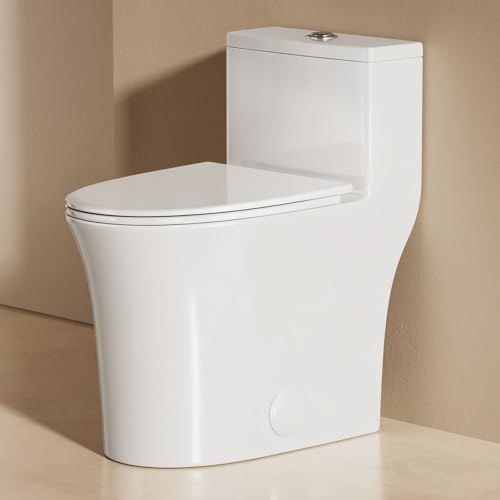
- BayRoll One Piece Sleek Modern Toilet
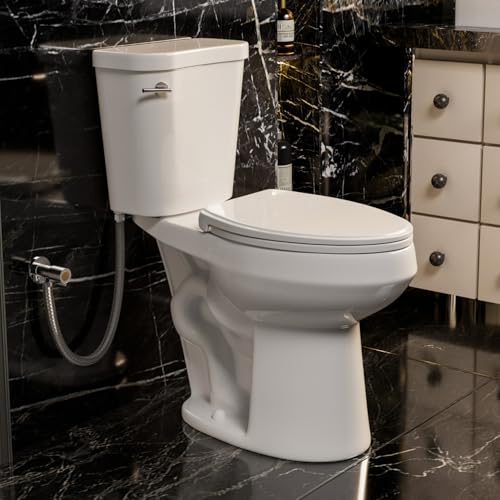
- Casta Diva Elongated One Piece Toilet
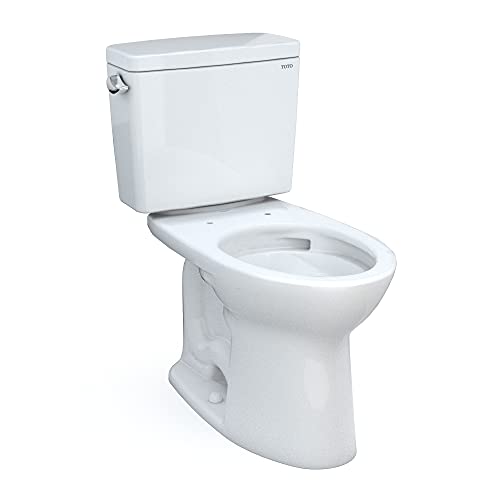
- TOTO Drake Two-Piece Elongated Toilet
- MAXSA Elongated Two-Piece Toilet
- HOROW 17 Inch Comfort Height Toilet
- Gerber Maxwell Crest Elongated Two-Piece Toilet
Read the full guide ↓
The best low flow toilets answer a question that older plumbing answered badly: how little water can a toilet use while still doing its one job completely, every time? A generation ago the honest answer was “more than this,” and low-flow toilets earned a reputation for double flushing that took years to shake. The modern answer is different, because the engineering changed. Today’s low-flow designs move waste with trapway geometry, siphon jets and rim delivery systems that extract more work from each gallon, and the best of them carry standardized test scores proving they clear heavy loads at volumes their predecessors could not manage at twice the water. This guide covers the six models that best represent that progress across the formats American bathrooms actually use.
It helps to know what the numbers mean before comparing them. In the United States, 1.6 gallons per flush has been the federal maximum for new toilets since the 1990s — it is the baseline, not an achievement. High-efficiency toilets go further, at 1.28 gallons or less, a threshold used by efficiency programs and many local rebate schemes. Dual-flush models split the difference intelligently, offering a reduced volume for liquids — as low as 0.9 gallons in this guide — and a full volume for solids. When this article calls a toilet low flow, it means the model beats the old high-volume era decisively and sits at or works toward the high-efficiency end of the modern market; where a model’s exact position needs nuance, the review gives it.
The six picks divide by household rather than by rank alone. There is an ultra-efficient skirted one-piece for the water-focused renovator, an elongated chair-height dual-flush for tall users, the category’s most established name in a two-piece format, a straightforward efficient two-piece at a middle height, a tall dual-flush model aimed squarely at seniors, and a two-piece designed around tool-free installation with the seal included. Somewhere in that spread is the right answer for almost any bathroom — and the buying guide below explains how to tell which one is yours, including the drain-line and septic considerations that specifications never mention.
Key Takeaways
- Low flow today means engineered efficiency: the BayRoll’s full flush is 1.28 GPF with a 0.9-gallon light flush, and it carries a stated maximum performance score of 1000 grams.
- 1.28 GPF is the high-efficiency threshold; 1.6 GPF is the long-standing federal maximum. Both appear in this guide, and the reviews are explicit about which is which.
- Dual-flush models (BayRoll, Casta Diva, HOROW) cut liquid-flush volumes further; single-flush models (TOTO, MAXSA, Gerber) trade that ceiling for simplicity.
- Seat heights span standard comfort to a full 17-inch chair height — match the height to the users, not to fashion.
- Every pick uses the standard 12-inch rough-in except where the verified data states otherwise, and every pick should still be checked against your own flange measurement.
- Homes on septic systems should read Best Low Flow Toilets For Septic next, because flush volume interacts with tank sizing and drain-field load.
In this guide
Quick Picks
| Pick | Badge | Flush | Format | Link |
|---|---|---|---|---|
| BayRoll One Piece Sleek Modern Toilet | Best Overall | Dual 0.9/1.28 GPF, stated MaP 1000g | One-piece skirted, 17 inch | Check on Amazon |
| Casta Diva Elongated One Piece Toilet | Best Elongated Comfort | Dual 1.1/1.6 GPF | One-piece, 17 inch | Check on Amazon |
| TOTO Drake Two-Piece Elongated Toilet | Best Established Brand | 1.6 GPF Tornado Flush | Two-piece, Universal Height | Check on Amazon |
| MAXSA Elongated Two-Piece Toilet | Best Two-Piece Value | 1.28 GPF siphonic single flush | Two-piece, 15 inch | Check on Amazon |
| HOROW 17 Inch Comfort Height Toilet | Best for Seniors and Tall Users | Dual 1.1/1.6 GPF, stated MaP 1000g | Two-piece, 17 inch | Check on Amazon |
| Gerber Maxwell Crest Elongated Toilet | Best Easy Install | Efficient flush (as described) | Two-piece | Check on Amazon |
How These Picks Were Chosen
Candidates were screened against verified product data for flush volume and mechanism first, because low flow is the keyword’s promise. Models at the high-efficiency threshold, dual-flush models whose light settings pull their average down, and established designs whose efficiency is their documented design intent were eligible; anonymous high-volume models were not. Each pick’s specification box in this guide contains only what its verified data states — where a figure is not stated, as with the Gerber’s exact flush volume, the guide says the volume is not stated rather than guessing one, and judges the model on what is documented: its efficient-flush design intent, glazed trapway and installation system.
Flush power was weighed through the evidence hierarchy this site always uses: a stated standardized maximum performance score outranks a mechanism description, which outranks a bare claim. Two picks here carry the top stated score. Format, height and bowl shape were then balanced across the list so the guide serves small bathrooms, tall users, seniors, brand-loyal buyers and first-time installers rather than six versions of the same household. This is a research-led guide with no hands-on testing claimed, and no prices are printed because they change constantly — positioning is qualitative, by tier. Readers whose first question is raw clearing power should continue to Best Low Flow Toilets With Enough Power, where that single criterion leads.
The 6 Best Low Flow Toilets

BayRoll One Piece Sleek Modern Toilet
Badge: Best Overall
Strengths
- Lowest volumes in the guide: a 0.9-gallon light flush and a 1.28-gallon full flush.
- Stated maximum performance score of 1000 grams — proven clearing at high-efficiency volume.
- 17-inch ADA chair height, fully skirted body and soft-close seat in a compact footprint.
Trade-offs
- Round bowl front is less roomy for adults than elongated designs.
- Ultra-low volumes are the least forgiving of sagging or rough drain lines.
- One-piece weight at installation.
Key specs
- Format: One-piece, fully skirted, compact
- Bowl: Round, ADA chair seat height 17 inch
- Flush: Dual flush 0.9/1.28 GPF, stated MaP 1000g
- Seat: Soft-close included
- Rough-in: 12 inch
The BayRoll leads this guide because it is the purest expression of what low flow has become. Its full flush — the setting that handles solid waste — uses 1.28 gallons, the high-efficiency benchmark, and its light flush drops to 0.9 gallons for the liquid flushes that dominate household use. Crucially, the low numbers are backed by a stated maximum performance score at the top of the standardized scale, which is the evidence that separates engineered efficiency from mere restriction. A toilet that simply used less water without redesigning the flush would leave waste behind; this one was designed around its volumes, and the test figure says the design works.
The rest of the package matches the brief of a modern renovation: a fully skirted one-piece body that wipes clean in seconds, chair height for adult comfort and safer transfers, a soft-close seat, and a compact round-front footprint that fits bathrooms where an elongated bowl would crowd the room. The round front is the one ergonomic compromise, felt by larger adults as reduced seating room. In a main bathroom with space to spare, the elongated picks below may suit better; in a standard or small bathroom, the BayRoll’s combination of efficiency evidence and footprint is unmatched in this list.
Treat its drain requirement with respect. Low volumes transport waste with less water through horizontal runs, so this model rewards sound, well-sloped plumbing and is the wrong prescription for a home with a known sagging drain line — that household should start with the power-led picks and the drainline discussion in the how-to section. In the right home, no toilet here uses less water with better evidence.
Best for: Water-focused renovators with sound modern drains / Not suited for: Homes with problem drain lines or buyers who need an elongated bowl

Casta Diva Elongated One Piece Toilet
Badge: Best Elongated Comfort
Strengths
- Dual flush 1.1/1.6 GPF described as high efficiency in its verified data.
- Elongated bowl at a full 17-inch comfort chair height — the complete ergonomic package.
- Compact one-piece body keeps the installation footprint modest.
Trade-offs
- No maximum performance score stated in its verified data.
- The 1.6-gallon full flush means realized savings depend on light-flush habits.
- Elongated bowl needs more room depth than the BayRoll’s round front.
Key specs
- Format: One-piece, compact
- Bowl: Elongated, 17 inch comfort chair height seat
- Flush: Dual flush 1.1/1.6 GPF, high efficiency flush (as described)
- Rough-in: 12 inch
- Finish: Standard white
Where the BayRoll optimizes the water ledger, the Casta Diva optimizes the person. Its elongated bowl at chair height is the seating configuration most adults choose when both are offered, and wrapping it in a compact one-piece body with a dual-flush mechanism makes it the comfort-led low-flow pick. The dual pairing — 1.1 gallons for liquids against a 1.6-gallon full flush described as high efficiency — follows the classic dual-flush pattern: the average consumption across a week of realistic use lands well below the full-flush figure, provided the household uses the light setting as intended.
That proviso is this model’s honest limitation, along with the absence of a stated performance score in its verified data. Neither is disqualifying: the siphonic engineering at these volumes is mature, and the model is aimed at homes with sound plumbing whose users want comfort first and efficiency as a close second. But a buyer choosing purely on documented clearing power should take the BayRoll or the HOROW below, both of which publish the top score, and a buyer whose household will ignore the light button should recognize that this toilet then performs, consumption-wise, as a 1.6-gallon model with excellent ergonomics.
In the room, the one-piece casting removes the tank joint and its ledge, and the white finish and compact stance suit the clean-lined renovations this class of toilet is usually bought for. It is the balanced, comfort-weighted answer in a guide whose leader is the efficiency-weighted one.
Best for: Tall users wanting low-flow dual flush with full elongated comfort / Not suited for: Buyers who want published test evidence for the flush
TOTO Drake Two-Piece Elongated Toilet
Badge: Best Established Brand
Strengths
- Tornado Flush rim delivery and a CEFIONTECT glaze that resists waste adhesion — a genuinely cleaner bowl.
- Universal Height elongated bowl from the category’s most established specialist manufacturer.
- Two-piece format with deep long-term parts and service support.
Trade-offs
- At 1.6 GPF it sits at the federal maximum — low flow relative to older toilets, but the highest volume in this guide.
- Single flush, so liquid waste uses the full volume every time.
- Premium tier positioning in this comparison.
Key specs
- Format: Two-piece
- Bowl: Elongated, Universal Height
- Flush: 1.6 GPF, Tornado Flush with CEFIONTECT
- Finish: Cotton White
- Model: Drake CST776CSFG#01 (as stated in verified data)
The Drake’s presence in a low-flow guide needs its context stated plainly, because it is the boundary case. Against the toilets it typically replaces — the 3.5-gallon and larger models still installed in millions of American homes — a 1.6-gallon Drake cuts consumption by more than half, and its Tornado Flush uses that volume exceptionally well, driving water through the rim in a swirling action that scrubs as it empties. The CEFIONTECT glaze is the other half of its case: an exceptionally smooth bowl surface that waste clings to less, so the bowl stays cleaner between flushes and needs less chemical cleaning across its life. For many buyers, “low flow” means exactly this step — from an old guzzler to a proven modern toilet — and for them the Drake is a landmark improvement.
Against the rest of this guide, however, it is the thirstiest model here, and it offers no light flush. A household choosing between the Drake and the BayRoll is choosing between bowl technology and brand depth on one side, and roughly a fifth less water again — plus dual-flush averages far below that — on the other. This guide’s position is that both choices are defensible and neither should be made under a misapprehension: the Drake is a superb toilet whose low-flow claim is relative to history, while the 1.28-class models are low flow relative to the modern standard. Readers who want the Drake’s rim-wash engineering examined on its own terms will find it central to Best Low Flow Toilets Rim Wash.
Ownership is the Drake’s quiet strength: two-piece serviceability, a manufacturer with a long presence, and internals that plumbers know. Buy it for the bowl and the backing, with eyes open about the volume.
Best for: Brand- and bowl-technology-first buyers upgrading from old high-volume toilets / Not suited for: Buyers targeting the 1.28 GPF high-efficiency class

MAXSA Elongated Two-Piece Toilet
Badge: Best Two-Piece Value
Strengths
- A true high-efficiency single flush: 1.28 GPF with siphonic action.
- Practical two-piece format at a middle 15-inch comfort height, soft-close seat included.
- Easy-clean white ceramic and standard rough-in keep the whole purchase uncomplicated.
Trade-offs
- No dual flush, so its average can never drop below its single 1.28-gallon volume.
- No maximum performance score stated in its verified data.
- Two-piece tank joint to assemble and maintain, unlike the one-piece picks.
Key specs
- Format: Two-piece
- Bowl: Elongated, 15 inch comfort height
- Flush: 1.28 GPF water-saving siphonic flush
- Seat: Soft-close included
- Rough-in: 12 inch
The MAXSA is the guide’s argument that simple can be efficient. One flush volume, set at the high-efficiency 1.28-gallon figure, delivered siphonically through an elongated bowl at a versatile 15-inch height, with a soft-close seat in the box. There is no mechanism to learn, no button discipline to maintain, and no guest confusion: every flush uses the efficient volume, and the household’s average is guaranteed by the hardware rather than by habits. For rentals, family bathrooms with young children, and anyone who has watched a dual-flush toilet’s light button go permanently unused, that guarantee has real value.
Its ceiling is the mirror of its floor: it can never beat 1.28 gallons on average, where a well-used dual-flush model averages meaningfully less. And without a stated performance score, its clearing confidence rests on its siphonic design rather than published test evidence — adequate for sound plumbing, less reassuring for a home with a history of slow drains. Within those honest bounds, it is the most straightforward low-flow purchase in the guide: standard rough-in, standard format, standard parts logic, at the efficient volume, in the accessible tier of the two-piece market.
Consider it the default for a second bathroom or a rental refresh, where the priorities are efficiency without instruction and service without surprises.
Best for: Simple guaranteed efficiency, rentals and second bathrooms / Not suited for: Households that would use a light flush and want the lowest average

HOROW 17 Inch Comfort Height Toilet
Badge: Best for Seniors and Tall Users
Strengths
- Full 17-inch ADA chair height in a two-piece format, aimed at seniors, elderly and tall adults.
- Dual flush 1.1/1.6 GPF with a stated maximum performance score of 1000 grams.
- Soft-close seat included, and the two-piece format keeps installation manageable.
Trade-offs
- Full-flush volume is 1.6 gallons, so savings rely on the light flush being used.
- Chair height is too tall for some shorter users and young children.
- Two-piece body lacks the skirted easy-clean profile of the one-piece picks.
Key specs
- Format: Two-piece
- Bowl: Elongated, 17 inch comfort height, ADA chair height
- Flush: Dual flush 1.1/1.6 GPF, stated MaP 1000g
- Seat: Soft-close included
- Rough-in: 12 inch
This HOROW is what happens when the low-flow brief is written by someone thinking about their parents. The 17-inch ADA chair height is the headline for its intended users — seniors and tall adults for whom the sit-to-stand motion is the daily challenge a toilet can genuinely ease — and it arrives in a two-piece format that keeps the purchase and the installation in familiar, manageable territory. Underneath the ergonomic brief, the engineering is fully modern: a dual flush with a 1.1-gallon light setting and a full flush carrying the top stated performance score in its data. Power and accessibility, in other words, are not traded against each other here.
The two-piece format deserves a word in this context, because for this audience it is a feature. A two-piece toilet arrives in two lighter cartons — a real consideration when the installer is an adult child carrying the unit into a parent’s home — and its tank internals are the conventional, widely understood kind that any local plumber services without research. The soft-close seat prevents the slams that startle and, over years, chip rims. Against the one-piece picks it gives up the skirted silhouette and one-wipe cleaning; against the MAXSA it gives up single-flush simplicity for dual-flush averages. For its stated audience, those are the right trades.
If the bathroom serves a mobility-limited user daily, this is arguably the most humane pick in the guide — and pairing it with the septic guidance in Best Low Flow Toilets Home Depot is unnecessary, but pairing it with grab-bar planning in the same renovation is very wise indeed.
Best for: Seniors, tall adults and accessibility-led renovations / Not suited for: Households of shorter users or those wanting a skirted one-piece look

Gerber Maxwell Crest Elongated Two-Piece Toilet
Badge: Best Easy Install
Strengths
- Tool-free install kit with the wax ring included — the box anticipates the whole job.
- Glazed trapway, stated in its data as preventing clogs, with an efficient flush described as clearing the bowl with ease.
- Soft-close seat included and an elongated two-piece format from an established plumbing brand.
Trade-offs
- Its verified data does not state an exact flush volume, so it cannot be ranked on GPF against the other picks.
- Single-flush format — no reduced liquid flush.
- Less design-forward than the skirted one-piece models.
Key specs
- Format: Two-piece
- Bowl: Elongated
- Flush: Efficient flush (as described in verified data; exact volume not stated)
- Seat: Soft-close included
- Included: Tool-free install kit with wax ring
- Trapway: Glazed, stated to prevent clogs
The Gerber Maxwell Crest approaches low flow from the installer’s direction. Gerber is a long-standing plumbing brand, and this model’s distinguishing data points are practical: an efficient flush described as clearing the bowl with ease, a glazed trapway — the smooth internal coating that keeps waste moving and resists the buildup that causes repeat clogs — and a tool-free installation kit with the wax ring in the box. That last detail matters more than it sounds. The most common failure of a home toilet replacement is not the toilet; it is the forgotten seal, the reused ring, the missing part discovered with the old unit already removed. A manufacturer that packs the job’s consumables with the product has understood the assignment.
Honesty requires the caveat in its spec box: the verified data for this model does not state an exact gallons-per-flush figure, so this guide will not assign it one or rank it numerically against the 1.28-class picks. Its low-flow standing rests on its documented efficient-flush design and the brand’s positioning of the line. A buyer for whom the exact volume is the deciding figure — for a rebate application with a documented threshold, for instance — should choose one of the picks whose volume is stated, or confirm this model’s figure from the manufacturer’s own documentation before ordering. A buyer whose priority is a complete, clog-resistant, easy installation from an established name will find this the most considerate package in the guide.
It closes the list as the pragmatist’s pick: fewer numbers, more of the job done for you.
Best for: First-time installers and buyers who value a complete in-box job / Not suited for: Buyers who need a stated GPF figure for rebates or strict comparisons
Comparison Table
| Model | Flush | Format | Height | Standout trait | Link |
|---|---|---|---|---|---|
| BayRoll One Piece | Dual 0.9/1.28 GPF, stated MaP 1000g | One-piece skirted | 17 inch | Lowest volumes | Check on Amazon |
| Casta Diva Elongated | Dual 1.1/1.6 GPF | One-piece | 17 inch | Elongated comfort | Check on Amazon |
| TOTO Drake | 1.6 GPF Tornado Flush | Two-piece | Universal Height | Bowl glaze technology | Check on Amazon |
| MAXSA Elongated | 1.28 GPF single | Two-piece | 15 inch | Guaranteed simple efficiency | Check on Amazon |
| HOROW Comfort Height | Dual 1.1/1.6 GPF, stated MaP 1000g | Two-piece | 17 inch | Senior-focused design | Check on Amazon |
| Gerber Maxwell Crest | Efficient flush (volume not stated) | Two-piece | Elongated class | Tool-free install kit | Check on Amazon |
How to Choose a Low Flow Toilet
Start with the volume ladder and place yourself on it honestly. If your home still runs a pre-1990s toilet, almost anything in this guide transforms your consumption, and you can choose on comfort and format. If you are replacing a 1.6-gallon model, the meaningful step is to the 1.28 class or a dual-flush average below it — a like-for-like swap buys new porcelain, not new efficiency. If water cost, drought or a septic constraint is pressing, go straight to the dual-flush models and compare their pairings, remembering that the light flush does most of the week’s work. Rebates, where offered, usually key on the 1.28 threshold and often require the model to appear on an approved list, so document-driven buyers should confirm the exact stated volume of their chosen pick before purchase — one reason this guide flags the Gerber’s unstated figure rather than papering over it.
Next, match flush evidence to your drains. A stated standardized performance score is the strongest public evidence that a low volume still clears completely; homes with modern, well-sloped drains can buy on volume alone with confidence, while homes with older, flatter or rougher runs should insist on the scored models and read the drainline analysis in Best Low Flow Toilets With Enough Power Getwaste Thru Pipes. The physics are unforgiving: water is both the cleaning agent and the transport medium in a drain run, and the less of it there is, the more the pipe’s slope and condition matter. That is not an argument against low flow — it is an argument for pairing the right low-flow toilet with the plumbing you actually have.
Then settle the human factors. Height by user: chair height for tall and mobility-limited adults, standard or middle heights for mixed households and children. Bowl by room: elongated for comfort where depth allows, round or compact where it does not. Format by temperament: one-piece skirted for the owner who cleans, two-piece for the owner who services and carries. And mechanism by household discipline: dual flush for homes that will use it, a guaranteed-efficient single flush for homes that will not. A low-flow toilet chosen on all four axes will satisfy for the fifteen-plus years it should serve; one chosen on the gallon figure alone often disappoints on one of the others within a month.
How to Install and Maintain a Low Flow Toilet
Installation follows the universal sequence, with low-flow-specific checks at the end. Remove the old unit, prepare a clean flange sitting level with or just above the finished floor, set a fresh seal — wax, or a silicone ring if you value repositioning — and lower the new toilet straight down with help for one-piece models. Tighten base nuts alternately and gently until rocking stops, connect a new supply line, and fill slowly. Now the low-flow part: verify the tank water level sits exactly at the manufacturer’s marked line. On a high-volume toilet a level set a little low merely weakens the flush; on a low-flow toilet engineered around a precise volume, it changes the product you bought. Run several flushes — both settings on a dual-flush model — and confirm complete clearing and a full bowl refill to a healthy water spot each time.
Maintenance keeps the engineering honest. Mineral scale is the slow enemy: it narrows rim and jet outlets, throttling the delivery speed that low-flow power depends on, so in hard-water homes a gentle periodic descaling of the outlets preserves as-new performance. Keep chemical drop-in tablets out of the tank; they degrade flappers and dual-flush seals and cause the slow leaks that silently waste more water than the toilet saves. Once a year, check for a running toilet — the single largest water waste in most homes is not an inefficient flush but a leaking one — by confirming the tank stays silent and full between uses.
Problem: The flush leaves material behind and needs a second flush. → what to do: Check the tank level against its mark, then clear the rim and jet outlets of scale. If the problem is new and sudden, auger the trapway for a lodged object. Persistent trouble in an older home points at the drain run, not the toilet.
Problem: The water bill rose after installing a low-flow toilet. → what to do: Suspect a leak, not the flush. A passing flapper or tower seal can waste water continuously and invisibly. Test by checking whether the fill valve cycles when nobody has flushed, and service the seal.
Problem: The bowl water level looks low and the bowl marks easily. → what to do: The bowl refill during the flush cycle restores the water spot; if the spot is shallow, the refill path or level is off. Confirm the tank level and that the refill tube is positioned as the manufacturer directs, sending water down the overflow to refill the bowl.
Low Flow and the Rest of the Bathroom
A toilet does not use water in isolation, and the low-flow decision interacts with two systems buyers often plan separately. The first is the septic system, where reduced volume is usually a gift — less hydraulic load per flush gives the tank’s biology more time and the drain field less to absorb — balanced against the need for a flush that clears in one attempt. That interaction is important enough to have its own guide in this series, and septic households should treat it as required reading rather than a footnote. The second system is the household’s hot-water-free plumbing generally: unlike showers and faucets, a toilet’s saving is pure cold water, realized on every use, in every season, with no comfort trade-off when the engineering is right — which is precisely why efficiency programs target toilets first and why the toilet is the correct first purchase in a water-led renovation.
There is also a forward-looking point. Water standards have tightened in one direction for three decades, and several states and cities already require high-efficiency volumes in new construction and major renovations. A 1.28-class or dual-flush purchase today is aligned with where codes are going, which protects the renovation’s compliance and its resale story. Buying at the old federal maximum remains legal in most places and may suit specific households — the Drake’s buyers among them — but it is a purchase made against the direction of travel, and it should be made for its genuine merits, as this guide has framed them, rather than by default.
Understanding Flush Performance Scores and Efficiency Labels
Two kinds of evidence appear on toilet specifications, and confusing them is the source of most bad purchases in this category. The first is the efficiency figure: gallons per flush, a simple, regulated measurement of volume. It tells you exactly what the toilet will consume and nothing about what it will accomplish. The second is the performance score, produced by standardized bulk-removal testing in which a toilet must clear test loads of increasing weight; the maximum performance figure states the heaviest load the toilet cleared completely. A score at the top of that scale — the 1000-gram figure stated for two picks in this guide — is the strongest public evidence available that a low volume has been engineered rather than merely imposed. When you compare two toilets at the same volume, the one publishing the higher verified score is making the more checkable claim, and checkable claims are what a research-led purchase should rest on.
Efficiency labeling programs add a third layer. In the United States, the best-known framework sets its toilet criteria at the high-efficiency volume and requires a minimum bulk-removal performance alongside it — an acknowledgment, built into the program’s design, that volume alone is a half-truth. Local water districts often mirror that threshold in their rebate rules, sometimes with their own approved-model lists. The practical guidance follows directly: if a rebate matters to your purchase, verify that your exact chosen model, with its stated volume, appears on your district’s current list before ordering, because programs update their lists and this guide’s research cannot substitute for your district’s paperwork. If no rebate is in play, the underlying logic still serves you — prefer models that document both sides of the equation, volume and clearing evidence, over models that document only the cheaper half.
One more label deserves translation: the rough-in and certification marks. Certification listings indicate a model has been tested to the plumbing codes’ safety and performance standards for sale in North American markets, and their presence in a model’s data — as with the cUPC mark noted on one pick earlier in this series — is a baseline legitimacy signal rather than a performance ranking. Treat certifications as the floor, volumes as the consumption, and performance scores as the capability. A toilet that discloses all three, in its own verified data, is a toilet whose manufacturer expects to be checked — and in a category full of bare claims, that expectation is itself information worth buying on.
What About Pressure-Assist and Other Flush Technologies?
Readers who research low flow thoroughly will meet pressure-assist toilets, whose sealed vessel uses supply-line pressure to deliver a forceful, unmistakably loud flush at low volumes. They clear superbly and serve some commercial settings well. They are absent from this guide’s picks for household reasons rather than performance ones: the flush noise is considerable in a home at night, the vessel and its parts are more specialized to service, and the gravity siphonic designs in this guide now achieve documented clearing at the same volumes without those trade-offs. Gravity remains the household default because its engineering matured to meet the efficiency era on its own terms — quiet, simple, and repairable with generic parts. If your home’s drains are genuinely extreme, a pressure-assist model is a legitimate specialist conversation to have with a plumber; for the bathrooms this guide serves, the six gravity picks cover the need with fewer compromises.
Common Buying Mistakes
The classic mistake is believing that low flow still means weak
, and over-buying volume as insurance — ending with a 1.6-gallon single flush where a tested 1.28 would have cleared better. The evidence hierarchy exists to prevent exactly this: trust the stated performance score over the gallon figure as a predictor of clearing. The reverse mistake also occurs: buying the lowest volumes for a home whose drain lines cannot transport waste on little water, then blaming the toilet. Match the model to the plumbing. Third, ignoring the water level and outlet maintenance that low-flow engineering depends on, and concluding a year later that the toilet “lost power” when its rim jets quietly scaled up.
Fourth, choosing height and bowl shape by showroom impression rather than by user and room measurements — the elongated chair-height model that crowds a small bathroom will annoy daily. Fifth, forgetting that a toilet’s real consumption includes its leaks: a poorly seated install or a degraded seal wastes more than any specification saves, so installation care and the annual silent-tank check are efficiency measures, not chores. Sixth, printing a price in your head from a listing seen months ago and budgeting the renovation around it — prices move; confirm the current figure at purchase through the links in this guide, and keep the budget focused on the complete job: toilet, seal, supply line, and any flange repair your floor turns out to need.
Final Recommendation
The BayRoll One Piece Sleek Modern Toilet is this guide’s answer for the buyer who means low flow seriously: the lowest volumes here, test evidence behind them, chair height and a skirted body in one compact unit. Comfort-led buyers should take the Casta Diva Elongated One Piece Toilet for its elongated chair-height package, and households renovating around a senior or a tall adult should take the HOROW 17 Inch Comfort Height Toilet, whose dual flush carries the same top test score. The MAXSA is the guaranteed-simple efficient choice, the Gerber the easiest installation, and the TOTO Drake the bowl-technology purchase for buyers upgrading from genuinely old toilets. Whichever you choose, set the water level exactly, keep the outlets clear, and a modern low-flow toilet will use a fraction of the water of the one it replaced — without asking you to flush twice for the privilege.
Frequently Asked Questions
What GPF counts as low flow?
In modern terms, 1.28 gallons per flush or less is the high-efficiency class and the usual threshold for low-flow labeling and rebates. The 1.6-gallon figure is the long-standing federal maximum — far below historical volumes, but the top of the modern range rather than the efficient end. Dual-flush toilets complicate the single number: judge them by their pairing and the average your household’s habits will produce.
Will a low flow toilet clog more?
A well-engineered one will not. The models here with stated maximum performance scores cleared the heaviest standardized loads at efficient volumes. Clogs in low-flow installations usually trace to scaled-up rim jets reducing delivery speed, a water level set below its mark, or a drain run in poor condition — all addressable causes covered in the maintenance section, rather than the flush volume itself.
How much water will I actually save?
It depends on what you replace and how you flush. Replacing a pre-1990s toilet with any pick here cuts per-flush use by well over half. Replacing a 1.6-gallon model with a 1.28 saves about a fifth per flush, and a dual-flush household using its light flush for liquids saves considerably more on average. Multiply your household’s daily flush count by the per-flush difference to get your own figure — it compounds quickly in a family bathroom.
Are low flow toilets good for septic systems?
Generally yes: less water per flush means less hydraulic load on the tank and drain field. The conditions are a flush that clears in one attempt and no chemical tank additives. Because the interaction has real detail to it — tank sizing, flush pairing, drain-field condition — septic households should read the dedicated septic guide linked from this article before finalizing a model.
Does low flow affect how clean the bowl stays?
Bowl cleanliness depends on rim delivery and bowl surface more than on volume. Designs that drive water around the full rim — and glazes that resist adhesion, like the Drake’s CEFIONTECT — keep a bowl cleaner at low volumes than a crude high-volume flush keeps a rough bowl. The rim-wash-focused comparison in this series, Best Low Flow Water Saving Toilets, examines that side of the design in depth.
Can I install a low flow toilet on an old drain line?
Yes, with the right model choice. Older, flatter or rougher runs transport waste less readily, and water volume is part of the transport system, so choose a model with a stated performance score and a full flush at the stronger end of the low-flow range, and have any known sag or obstruction in the run corrected. In a sound old line — many are — even the lowest-volume picks perform as designed.
What is the difference between low flow and dual flush?
Low flow describes how much water a toilet uses; dual flush describes a mechanism that offers two volumes. A dual-flush toilet is one route to a low average consumption, but a single-flush 1.28-gallon toilet is also low flow, with its efficiency guaranteed by hardware rather than habits. The guides in this series treat the terms separately for exactly that reason — the best choice depends on which route suits your household.