Disclosure: topratedkitchenware.com is reader-supported. When you buy through links on our site, we may earn an affiliate commission from Amazon and other retailers, at no extra cost to you.
Where to buy
The six models below are the verified picks for this guide to countertop microwaves. Each name links to its Amazon listing, where you can check the latest price on Amazon, confirm dimensions and current configuration, and read the newest owner feedback before you decide.
- TOSHIBA Countertop Microwave Oven, 1.2 Cu.Ft, 1000W, Black
- COMFEE’ Countertop Microwave Oven, 0.7 Cu.Ft, 700W, Black
- Farberware Countertop Microwave Oven 1.1 cu.ft, 1000 Watts, Stainless Steel
- Chefman Countertop Microwave Oven 0.9 Cu. Ft., 900 Watts, Black
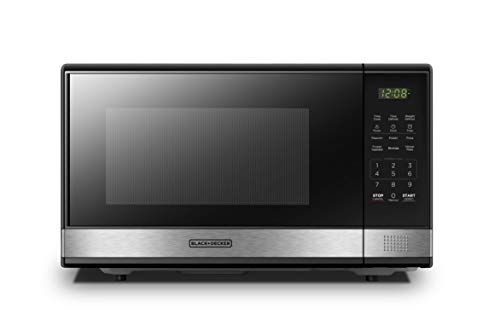
- BLACK+DECKER Microwave Oven Countertop, 1.1 Cu.Ft, 1000W, Stainless Steel
- TOSHIBA Flatbed Microwave Oven with Inverter Technology, 1.3 Cu.Ft, 1200W, Black Stainless Steel
Read the full guide ↓ for the detailed review of every pick, the capacity and wattage maths that decide which size belongs on your counter, and the setup and cleaning routine that keeps a countertop microwave performing for years.
The best microwave ovens countertop microwaves shoppers can buy today split into a clearer set of choices than the marketing suggests. Strip away the finishes and the preset counts and every countertop model is really a combination of four decisions: how much capacity, how much power, turntable or flatbed, and conventional or inverter heating. Get those four right for your household and almost any reputable model will please you. Get one wrong — a cavity too small for your plates, wattage too low for your frozen meals, a footprint that eats the counter you prep on — and you will feel the mistake every day for years. This guide works through those four decisions properly, then ranks six verified countertop models across the size range from a 0.7 cu ft dorm compact to a 1.3 cu ft inverter flatbed, so you can match a machine to your kitchen rather than to a headline.
Countertop is the right default format for most homes, and it is worth saying why before the picks. There is no installation, no cabinet modification, and no venting decision: you unbox, leave the specified air gaps, plug into a standard outlet, and cook. If you move house, it comes with you. If it eventually fails, replacement is a purchase, not a project. Built-in and over-the-range models earn their place in specific kitchens, but they lock a size and a location in a way a countertop model never does, and their capacities often surprise buyers by being no larger inside than the countertop equivalents. Readers set on a range-hood format can compare the neighbouring category in Best Microwaves 20 Cubic Ft research, but for renters, first-home buyers, and anyone who values flexibility, the six machines below are the sensible centre of the market.
Inside the guide you will find a comparison table, a buying section that does the plate-and-casserole maths in plain language, a how-to section covering placement, first use, everyday technique, cleaning, and troubleshooting, and a short section on the two technologies — inverter power and flatbed cavities — that most change how a countertop microwave cooks. Cross-check wattage-focused shortlists such as Best Microwaves 1100 Watt once you know your size, because power and capacity only make sense chosen together.
Key Takeaways
- Measure your largest plate and your favourite casserole before choosing capacity: turntable diameter and interior height decide what fits, not the cu ft headline alone.
- 0.7 cu ft suits one person, 0.9 cu ft suits one to two, 1.1–1.3 cu ft is the family centre of the market, and anything larger starts to dominate a counter.
- Wattage sets speed: 700W compacts need patience and adjusted timings, 900–1000W is the versatile middle, and 1200W inverter models cook fastest and most evenly.
- Flatbed models drop the turntable, gaining usable rectangular space for dishes and easier cleaning, while turntable models remain the cheaper, proven default.
- Inverter power delivers true low-power cooking for defrosting and melting, instead of the on-off pulsing conventional microwaves use at lower settings.
- Leave the manufacturer’s air gaps around the cabinet and clean the interior gently and often; those two habits decide how long any of these picks lasts.
In this guide
Quick Picks
- Best Overall — TOSHIBA Flatbed Microwave Oven with Inverter Technology, 1.3 Cu.Ft, 1200W. Inverter power, a smart sensor, and a turntable-free cavity that takes rectangular dishes and wipes clean in seconds. Check on Amazon
- Best for Families — TOSHIBA Countertop Microwave Oven, 1.2 Cu.Ft, 1000W, Black. Sensor cooking, 12 auto menus, and a 12.4-inch turntable that takes a full dinner plate flat. Check on Amazon
- Best Mid-Size All-Rounder — Farberware Countertop Microwave Oven 1.1 cu.ft, 1000 Watts, Stainless Steel. Multi-stage cooking, defrost by weight or time, and express cooking in the classic 1.1 cu ft format. Check on Amazon
- Best Stainless Classic — BLACK+DECKER Microwave Oven Countertop, 1.1 Cu.Ft, 1000W, Stainless Steel. Push-button door, child safety lock, and six auto presets from a household-name brand. Check on Amazon
- Best Compact with Full Power Levels — Chefman Countertop Microwave Oven 0.9 Cu. Ft., 900 Watts, Black. Ten power levels, express cook, ECO mode, mute, and child lock in a 0.9 cu ft body. Check on Amazon
- Best Budget Pick — COMFEE’ Countertop Microwave Oven, 0.7 Cu.Ft, 700W, Black. ECO mode, sound on/off, and one-touch simplicity for dorms, offices, and single-person kitchens. Check on Amazon
How These Picks Were Chosen
This is a research-led guide. Every model was verified against its manufacturer’s listing data through the Creators API, and the capacities, wattages, and features in the spec boxes come only from that verified data — nothing is copied from memory or from other roundups. We then organised the verified countertop field by the four decisions that matter: capacity class, power class, cavity type, and heating technology. The six picks were chosen to give a best answer in each meaningful class rather than six near-identical mid-size boxes: a compact 700W budget model, a feature-complete 0.9 cu ft model, two proven 1.1 cu ft 1000W models with different strengths, a 1.2 cu ft sensor model for families, and a 1.3 cu ft inverter flatbed as the technology leader.
We did not hands-on test these units, and we do not present invented cooking trials. Instead, the reviews assess each model on documented design: what its cavity genuinely fits, what its power level means for everyday foods, which controls and safety features it carries, and where its honest limitations sit. Where two models share a class, the review says so and names the deciding difference — door style, defrost method, sensor, or finish — so the choice between them is a preference, not a mystery. If your research started from older test roundups, Best Microwaves 2017consumer Reports explains how to translate that era’s criteria to today’s models, many of which descend directly from the designs those reports evaluated.
Badges follow use case. Best Overall went to the inverter flatbed because it removes the two most common countertop complaints — uneven low-power cooking and turntable-limited dish shapes — in one machine. The family badge went to the largest turntable model with sensor cooking. The two 1.1 cu ft models split the classic middle by cooking flexibility versus brand-and-door simplicity, and the compact badges reward the 0.9 cu ft Chefman’s unusual feature completeness and the COMFEE”s budget simplicity.
The 6 Best Microwave Ovens: Countertop Models in Detail

TOSHIBA Countertop Microwave Oven, 1.2 Cu.Ft, 1000W, Black
Badge: Best for Families
Strengths
- Smart humidity sensor ends reheating cycles when food is ready, the single biggest quality upgrade for leftovers.
- 12.4-inch removable turntable fits a full-size dinner plate flat, so plates heat evenly without tilting.
- 12 auto menus, mute, ECO mode, and an Easy Clean interior make it complete rather than merely large.
Trade-offs
- Black finish and mid-size footprint need real counter depth plus ventilation clearance.
- No inverter, so low-power cooking pulses on and off like conventional models.
- Sensor menus reward reading the manual once; guessing at them wastes their advantage.
Spec box: Capacity 1.2 cu ft · Power 1000W · Finish: black · 12.4-inch removable turntable · Smart humidity sensor · 12 auto menus · Mute function · ECO mode · Easy Clean interior
This is the family workhorse of the list. At 1.2 cu ft with a 12.4-inch turntable, it handles the actual objects family kitchens microwave most: dinner plates, medium casseroles, big bowls of soup, and the rectangular meal-prep containers that smaller cavities reject. The humidity sensor is the feature families feel daily, because reheating is most of what a family microwave does, and sensor reheating — which reads the moisture coming off the food and stops at readiness — produces noticeably better rice, pasta, and roast leftovers than fixed timers. The 1000W output keeps frozen meals close to their printed timings, the mute function protects nap time, and the Easy Clean interior wipes down after the inevitable pasta-sauce eruption without harsh chemicals.
Its limitation is technology rather than size: without an inverter, delicate jobs like melting butter or gently defrosting mince rely on pulsed power, which works but demands a little more attention. Families who defrost daily should look at the flatbed Toshiba below; families who reheat daily will be happiest here.
Best for: families reheating full plates and medium casseroles every day / Not suited for: tiny counters or buyers who specifically want inverter defrosting


COMFEE’ Countertop Microwave Oven, 0.7 Cu.Ft, 700W, Black
Badge: Best Budget Pick
Strengths
- Genuinely small footprint that leaves counter room in dorms, offices, and studio kitchens.
- ECO mode and sound on/off show design attention to shared and small spaces.
- One-touch controls make it the easiest model here for guests, kids, and tired students to use correctly.
Trade-offs
- 700W is the slowest class here; frozen meals need added time beyond package directions.
- 0.7 cu ft excludes large plates and most casserole dishes.
- No sensor or inverter technology; results depend on user timing.
Spec box: Capacity 0.7 cu ft · Power 700W · Finish: black · ECO mode · Sound on/off · One-touch buttons · Child safety lock
The COMFEE’ earns its place by being honest about its job. It exists to heat a mug, a bowl of noodles, a single serving of leftovers, in the smallest sensible box, at the budget end of the market — and its feature list is tuned to the places that job happens. ECO mode matters where a microwave sits plugged in all day in a dorm. Sound control matters where a roommate sleeps three metres away. One-touch buttons matter where the user is half awake. Judged as a compact, it is well judged; judged as a family oven, it would be undersized, which is a shortlist error rather than a product flaw.
Cooking technique adapts to 700 watts: add roughly a third more time than 1000W package directions suggest, let food stand a minute so heat equalises, and stir or rotate halfway for anything dense. Within those habits, it reheats single portions perfectly respectably. Buyers who regularly microwave for two or more should step straight to the 0.9 or 1.1 cu ft picks rather than stretching this one.
Best for: dorms, offices, caravans, and single-person kitchens / Not suited for: families, large plates, or daily frozen-meal cooking


Farberware Countertop Microwave Oven 1.1 cu.ft, 1000 Watts, Stainless Steel
Badge: Best Mid-Size All-Rounder
Strengths
- Multi-stage cooking lets you program defrost-then-cook sequences in one go, a feature keen cooks actually use.
- Defrost by weight or by time covers both labelled frozen foods and guesswork portions.
- Express cooking and an LED display keep daily operation quick and legible.
Trade-offs
- No humidity sensor, so reheating quality depends on the preset or the user’s judgement.
- Conventional pulsed low power rather than inverter delivery.
- Stainless finish needs soft-cloth cleaning to stay mark-free.
Spec box: Capacity 1.1 cu ft · Power 1000W · Finish: stainless steel · 10 power levels · Multi-stage cooking · 6 preset options · Defrost by weight or time · LED display · Express cooking
The 1.1 cu ft, 1000W format is the historic centre of the countertop market, and the Farberware shows why: big enough for a dinner plate and a medium baking dish, fast enough for family frozen meals, small enough to leave a workable counter. Its distinguishing strength is cooking control. Multi-stage cooking — defrost at low power, rest, then cook at full power, programmed once — is the feature that separates a microwave used as a cooking appliance from one used as a reheating box, and cooks who batch-prepare meals will use it weekly. Defrosting by weight suits the labelled supermarket pack; defrosting by time suits the unlabelled container from your own freezer, and having both is more useful than it sounds.
What it lacks is sensing: there is no humidity sensor to call time on reheating, so results lean on the six presets and on the user’s habits. Buyers comparing the two 1.1 cu ft models here should decide by this split — Farberware for cooking flexibility, BLACK+DECKER for door and brand simplicity — and readers eyeing still larger formats in Best Microwaves 22 Cu should remember that countertop depth, not just capacity, grows with size.
Best for: home cooks who use multi-stage programs and defrost by weight / Not suited for: buyers who want set-and-forget sensor reheating

Chefman Countertop Microwave Oven 0.9 Cu. Ft., 900 Watts, Black
Badge: Best Compact with Full Power Levels
Strengths
- Full 10 power levels at a compact size, where rivals often simplify controls.
- Mute, ECO mode, and child safety lock together are rare in a 0.9 cu ft body.
- One-touch express cook keeps the daily beverage-and-oats routine to a single press.
Trade-offs
- 900W still trails 1000W models slightly on large frozen meals.
- 0.9 cu ft limits tall containers and the biggest plates.
- No sensor cooking at this size and tier.
Spec box: Capacity 0.9 cu ft · Power 900W · Finish: black · 10 power levels · 6 cooking presets · One-touch express cook · Eco mode · Child safety lock · Mute button
The Chefman 0.9 is the compact for buyers who refuse compact compromises in the control panel. Ten genuine power levels mean you can soften butter at the bottom of the range, defrost in the lower middle, and reheat at full 900W pace, all in a cabinet sized for an apartment counter. The supporting features read like a checklist from a larger machine — express cook, ECO standby, a mute for early mornings, a child lock for family kitchens — and together they make this the easiest small microwave here to recommend to mixed households where one machine serves a student schedule and a family weekend alike.
The trade is capacity headroom. A 0.9 cu ft cavity takes a standard dinner plate and everyday bowls, but tall travel mugs, big popcorn bowls, and family casseroles crowd it. If your reheating is mostly plates and bowls for one or two, this is the sweet spot; if it regularly includes a 9-inch square dish, move up to the 1.1 cu ft models, where the same money buys meaningfully more room.
Best for: apartment households of one or two who want full controls in a compact body / Not suited for: large dishes or households microwaving for three or more at once

BLACK+DECKER Microwave Oven Countertop, 1.1 Cu.Ft, 1000W, Stainless Steel
Badge: Best Stainless Classic
Strengths
- Push-button door opens with a press, kinder to latches than handle-yanking over years of use.
- The classic 1.1 cu ft / 1000W format fits standard plates and follows package timings closely.
- Child safety lock and six auto presets cover family basics without menu clutter.
Trade-offs
- No sensor, no inverter, no multi-stage programming — a deliberately simple feature set.
- Six presets is the standard list; specialised menus live on the Toshiba models.
- Stainless shows fingerprints in bright light.
Spec box: Capacity 1.1 cu ft · Power 1000W · Finish: stainless steel · Push-button door · Child safety lock · 6 auto cook presets · 10 power levels
If the Farberware is the cook’s 1.1, this BLACK+DECKER is the classicist’s. It does the standard things in the standard way, from a brand whose small appliances fill American kitchens, and its one design flourish — the push-button door — is the practical kind: a press-to-open mechanism that removes the daily yank on the latch assembly, one of the most-cycled mechanical parts in any microwave. Ten power levels and six auto cook presets handle the everyday repertoire, the child lock covers family duty, and the stainless cabinet matches the default kitchen.
Choose it over the Farberware if your cooking is reheating, defrosting by the preset, and beverages, and you value the door design and brand familiarity. Choose the Farberware if multi-stage programming and weight-based defrost are features you will genuinely use. Either way, you are in the market’s most proven format — a point worth remembering when exotic alternatives promise more; readers weighing pure wattage upgrades can see how this class compares in Best Microwaves 1250 Watts.
Best for: buyers who want the proven format, a push-button door, and a familiar brand / Not suited for: cooks who want sensor menus or multi-stage programming

TOSHIBA Flatbed Microwave Oven with Inverter Technology, 1.3 Cu.Ft, 1200W, Black Stainless Steel
Badge: Best Overall
Strengths
- Inverter technology delivers continuous low power for even defrosting, melting, and softening — the tasks conventional microwaves do worst.
- Flatbed cavity with no turntable fits rectangular dishes, takes larger footprints, and wipes clean without a ring and plate to remove.
- 1200W plus a smart sensor makes it the fastest and most autonomous cooker here.
Trade-offs
- The technology leader of the group sits at a premium tier relative to basic turntable models.
- 1.3 cu ft flatbed is a substantial countertop presence; measure depth and door swing.
- Without a turntable, very small items benefit from a mid-cycle stir or reposition, which the sensor largely manages.
Spec box: Capacity 1.3 cu ft · Power 1200W · Finish: black stainless steel · Inverter technology · Smart sensor · Mute function · No turntable (flatbed)
This Toshiba answers the two complaints that follow turntable microwaves around. The first is shape: a rotating plate wastes the corners of the cavity and limits you to dishes that fit a circle. The flatbed removes the plate entirely, so rectangular baking dishes, long platters, and two bowls side by side use the full 1.3 cu ft floor, and the empty cavity wipes clean in one pass with nothing to lift out. The second complaint is low-power cooking. Conventional microwaves fake low power by cycling full power on and off, which is why defrosted mince cooks at the edges while the centre stays frozen. The inverter delivers genuinely reduced, continuous power, so defrosting, melting chocolate, and softening butter happen evenly — and at 1200W maximum, full-power jobs are the fastest here. Add the smart sensor for reheating and the mute function, and this is the most complete countertop microwave in the guide.
Its costs are size and tier. It asks for a serious stretch of counter and sits in the premium band of this list, so small kitchens and tight budgets are better served below. For households that microwave daily and cook — not just reheat — with the machine, it is the pick we would buy.
Best for: daily users who defrost, melt, and cook in the microwave and want the easiest cavity to clean / Not suited for: small counters or budget-first buyers
Comparison Table
| Pick | Badge | Capacity | Power | Cavity / technology | Link |
|---|---|---|---|---|---|
| TOSHIBA 1.2 Cu.Ft Black | Best for Families | 1.2 cu ft | 1000W | Turntable, humidity sensor | Check on Amazon |
| COMFEE’ 0.7 Cu.Ft | Best Budget Pick | 0.7 cu ft | 700W | Turntable, ECO mode | Check on Amazon |
| Farberware 1.1 cu.ft | Best Mid-Size All-Rounder | 1.1 cu ft | 1000W | Turntable, multi-stage cooking | Check on Amazon |
| Chefman 0.9 Cu. Ft. | Best Compact with Full Power Levels | 0.9 cu ft | 900W | Turntable, 10 power levels, mute | Check on Amazon |
| BLACK+DECKER 1.1 Cu.Ft | Best Stainless Classic | 1.1 cu ft | 1000W | Turntable, push-button door | Check on Amazon |
| TOSHIBA Flatbed 1.3 Cu.Ft | Best Overall | 1.3 cu ft | 1200W | Flatbed, inverter, smart sensor | Check on Amazon |
How to Choose the Best Microwave Ovens Countertop Microwaves Offer
Start with objects, not numbers. Put your largest dinner plate, your favourite casserole, and your tallest mug in a row and measure them. The plate’s diameter must be smaller than the turntable — or, on a flatbed, smaller than the cavity floor in both directions. The casserole must fit with the door closed and room to lift it out by its handles. The mug must clear the interior height. Those three measurements eliminate more wrong purchases than any review can. As a rough map: 0.7 cu ft models take a standard plate and a mug; 0.9 cu ft adds comfortable bowls and medium plates; 1.1–1.2 cu ft takes full dinner plates, medium casseroles, and family bowls; 1.3 cu ft flatbed space additionally welcomes rectangular dishes that turntables reject.
Then choose power for your food habits. Package directions on frozen meals assume roughly the 1000–1100W class. A 700W compact will cook those meals, but with meaningfully longer times and more standing time to equalise; a 900W model splits the difference; 1000W follows the box; 1200W finishes fastest but asks you to shave time off delicate items. Households that mostly reheat coffee and leftovers can happily live at 700–900W. Households that cook frozen meals several times a week should not go below 900W, and daily defrosters should look hard at inverter models, whose advantage is evenness rather than raw speed. Finally, measure the counter, not just the cavity: allow the manufacturer’s clearance on the sides, top, and back for ventilation, check the door swings clear of walls and other appliances, and confirm the outlet position works without an extension lead, which microwaves should not use. Shoppers tempted by the very largest formats reviewed under Best Microwaves 1100 Watts comparisons should repeat this counter maths carefully, because exterior size grows faster than interior size at the top of the range.
How to Set Up and Use a Countertop Microwave Well
Setup is short but specific. Unbox, remove all packaging from inside the cavity including any turntable packing, and place the unit on a level surface with the manual’s clearances on every side — those gaps are how the electronics cool themselves. Plug directly into a wall outlet. Set the clock, then run the acceptance test: heat a mug of water for two minutes. It should be steaming, the turntable should rotate smoothly (on turntable models), the interior light should work, and the door should latch with a positive click. Any failure at this stage is a retailer conversation, not a repair project.
Everyday technique is mostly three habits. First, arrange food in a ring or an even layer where you can, because microwaves heat edges faster than centres. Second, use standing time: a minute or two after the cycle lets temperatures equalise and finishes the cooking the timer started, especially for dense foods. Third, match power to the job — full power for water, soups, and reheating; mid power for defrosting and reheating delicate items like fish or cheese-topped dishes; low power for melting and softening. Troubleshooting follows the same practical pattern. Problem: food heats unevenly → stir or rearrange halfway, add standing time, and check the turntable is seated on its ring. Problem: sparking or arcing → stop immediately, remove any metal, foil, or damaged cookware, and inspect the interior for coating damage before using it again. Problem: the unit runs but does not heat → confirm the door is fully latched and demo mode is off; if it persists, that is a service issue, not a settings issue. Cleaning is a weekly wipe with a damp cloth, a bowl of water microwaved and left to steam for stubborn splashes, and never abrasive pads or oven cleaner inside the cavity.
Turntable or Flatbed, Conventional or Inverter: The Two Technology Choices
The turntable exists to move food through the microwave’s uneven energy field, and it works — but it costs usable shape and cleaning effort. Flatbed designs move the energy instead, stirring the field beneath a fixed floor, which frees the whole rectangle of the cavity and removes the plate, ring, and roller from your cleaning routine. Neither is automatically better: turntable models are cheaper, proven over decades, and available in every size, while flatbeds earn their premium in households that use rectangular dishes often or hate cleaning around a turntable. Judge by your dish cupboard.
Inverter technology changes the power supply so the oven can run continuously at reduced power instead of pulsing full power on and off. The difference shows up exactly where conventional microwaves are weakest: defrosting without cooked edges, melting without scorching, simmering without boil-overs, and reheating delicate foods gently. If your microwave use is almost entirely full-power reheating and frozen meals, an inverter is a luxury. If you defrost meat weekly or cook sauces and custards in the machine, it is the feature most likely to change your results — which is why it anchors our Best Overall pick and appears in wattage-led comparisons such as Best Microwaves 1250 Watts.
Countertop vs Over-the-Range and Built-In: Why Countertop Wins for Most Homes
Buyers often meet the countertop category while comparing it against the two installed formats, so the honest comparison belongs in this guide. Over-the-range models combine a microwave with an extractor hood above the hob. They free counter space, but they fix the cooking height — uncomfortable for shorter users and awkward for lifting heavy, hot dishes down from above shoulder level — and their interior capacity is frequently no larger than a mid-size countertop model despite the imposing exterior. They also turn a future replacement into an installation job with ducting and mounting to match. Built-in models sit in cabinetry for a seamless look, at premium prices, with the same lock-in problem: the hole in your kitchen is cut for one size class, and the next microwave must fit it.
Countertop models trade a stretch of worktop for total freedom. There is nothing to install, nothing to match when you replace the unit, and no compromise on cooking height. Renters can take them from home to home; homeowners can upgrade capacity without touching a cabinet. The real cost is counter space, which is why the capacity advice in this guide is deliberately conservative: buy the smallest size that fits your dishes, and the countertop format’s one disadvantage shrinks with it. For most households — and for every household that has not specifically planned a kitchen around an installed unit — the countertop remains the rational default, and it is no accident that the category holds the widest choice of sizes, technologies, and price tiers in the market.
Energy Use, Noise, and the Everyday Ownership Details
Three ownership qualities rarely headline a listing but shape daily satisfaction. The first is standby behaviour: a microwave draws a small amount of power around the clock to run its clock and keypad. Models with ECO modes, two of which appear in this guide, cut that draw when the oven is idle, which matters more across a year of continuous standby than any single cooking cycle. The second is noise, which has two sources: the fan and turntable during cooking, and the end-of-cycle beeps afterwards. Mute functions, offered by the Toshiba and Chefman picks here, solve the second completely and are worth more in open-plan homes and flats with sleeping children than their one-line feature mention suggests. The third is lighting: a clear interior light and a legible display sound trivial until you are checking whether soup is about to boil over at midnight; the better-lit models here make that check effortless.
Door design is the fourth detail. Handle doors let you open the oven with an elbow when your hands are full of hot dish; push-button doors remove the yank on the latch and suit users who prefer a flat front. Neither is superior in the abstract — but the latch and switch assembly behind both is the most mechanically worked part of the machine, so the gentlest habit, opening without slamming or forcing, pays off over years. Finally, consider the keypad. Flat membrane panels wipe clean in one pass and resist grease ingress; they are the practical choice for kitchens where the microwave sits near the hob and collects the same film as everything else in that zone. Place any of these picks a sensible distance from direct hob steam, wipe the panel weekly, and the controls will outlast the kitchen around them.
A Countertop Microwave for Every Household Size
It helps to see the six picks as a ladder matched to households rather than a ranking from best to worst. A single person in a studio, heating drinks, noodles, and one-plate leftovers, is genuinely best served by the COMFEE’ 0.7: everything bigger is empty air heated daily, and counter in a studio is worth more than capacity. A couple in an apartment, reheating two plates and cooking the occasional shared dish, sits exactly on the Chefman 0.9’s design brief, with the BLACK+DECKER or Farberware 1.1 as the step up when frozen meals become a weekly habit. A family of three or four, reheating full plates nightly and defrosting ingredients for dinner, belongs with the Toshiba 1.2’s sensor cooking or the flatbed 1.3’s inverter — the two picks whose automation repays itself in fewer ruined leftovers. Multigenerational households and keen microwave cooks should read the capacity maths generously and take the largest model their counter honestly fits, because two runs of a mid-size oven cost more daily time than one run of a large one.
Two special cases deserve direct advice. If the microwave will serve a home office or a workshop, prioritise the mute function and ECO standby over capacity; the machine will spend its life reheating coffee beside someone working. If it will serve an elderly relative, prioritise control simplicity and a legible display over features: one-touch express cooking, a door that opens without force, and presets that do not require menu navigation. Several picks here carry those traits, and choosing for the actual user — rather than for the specification sheet — is the difference between a microwave that is used confidently for a decade and one that is quietly avoided.
What a Countertop Microwave Cannot Do — and What to Use Instead
Knowing a category’s limits prevents the disappointments that get blamed on individual models. A countertop microwave will not brown or crisp food the way an oven or air fryer does, because microwaves heat water molecules rather than surfaces; pastry softens, pizza bases go supple, and roast skins never crackle. It will not handle metal cookware, foil-wrapped leftovers, or sealed containers, all of which belong to other appliances or need decanting first. It is a poor tool for large roasting joints, delicate baking, and anything whose pleasure is a crust. What it does better than any rival is speed with moisture: reheating without drying, steaming vegetables in their own water, defrosting safely, melting and softening gently, and cooking grains and eggs in minutes. The households happiest with their countertop microwave are the ones that bought it for that list — and the six picks here were chosen to cover it completely, from the compact’s mug of oats to the flatbed’s family casserole.
Common Buying Mistakes
- Choosing by cu ft alone. Turntable diameter, interior height, and cavity shape decide what fits. Measure your dishes, not just the headline capacity.
- Ignoring the counter maths. Forgetting ventilation gaps and door swing turns a perfect capacity choice into a daily obstruction.
- Buying 700W for frozen-meal duty. Compact wattage plus family frozen meals equals long waits and uneven results. Match power to your most common food.
- Paying for features you will not touch. Multi-stage cooking and sensors are valuable only if your habits use them; simple reheating households can save by choosing simpler models.
- Skipping the water test on day one. Two minutes with a mug of water surfaces out-of-box problems while the retailer’s return window is wide open.
- Cleaning with abrasives. Scouring pads and oven cleaner damage the interior coating; steam and a soft cloth handle almost everything.
Final Recommendation
Most buyers should take the TOSHIBA Flatbed Microwave Oven with Inverter Technology, 1.3 Cu.Ft: it is the fastest, gentlest, and easiest-to-clean countertop design here, and it removes the two classic countertop frustrations in one purchase. Families who prefer a proven turntable format should choose the TOSHIBA 1.2 Cu.Ft with humidity sensor, while the classic middle belongs to the Farberware 1.1 cu.ft for cooks and the BLACK+DECKER 1.1 for traditionalists. Apartments of one or two will be happiest with the Chefman 0.9, and the COMFEE’ 0.7 remains the right answer for dorms and offices. Whichever you pick from this guide to the best microwave ovens countertop microwaves offer, measure your dishes and your counter first — those two tapes decide satisfaction more than any feature list.
Frequently Asked Questions
What size countertop microwave does a family need?
For most families, 1.1 to 1.3 cu ft is the comfortable range: full dinner plates fit flat, medium casseroles fit with room to lift, and wattage in this class is usually 1000W or more. Smaller households of one or two are well served by 0.9 cu ft, and 0.7 cu ft is best kept to single-person reheating.
Is a flatbed microwave better than a turntable model?
Flatbeds fit rectangular dishes, use the whole cavity floor, and clean more easily because there is no plate or ring to remove. Turntable models cost less, come in more sizes, and are proven over decades. Choose by your dishes: rectangular cookware points to flatbed, round plates and a tighter budget point to turntable.
What does inverter technology actually change?
An inverter delivers continuous power at lower settings instead of pulsing full power on and off. Defrosting becomes more even, melting stops scorching at the edges, and gentle reheating improves. At full power for soups and frozen meals, the difference is small; at low and medium power, it is the most noticeable upgrade in modern microwaves.
How much clearance does a countertop microwave need?
Follow the manual for your model, but plan on clear space on the sides, top, and back for ventilation — typically a few inches at the back and sides and more above. Never push the cabinet flush into a corner or under a low shelf without checking the specified gaps, because blocked vents shorten the machine’s life.
Can I put a countertop microwave in a cabinet or built-in space?
Only if the model is approved for it and fitted with the manufacturer’s trim and ventilation kit. Standard countertop models vent into the room and overheat in enclosed spaces. If you want a built-in look, buy a model designed and warranted for that installation rather than enclosing a countertop unit.
How long should a countertop microwave last, and what decides it?
Years of daily service are a reasonable expectation from the established brands in this guide, and the deciding factors are mostly in the owner’s hands: ventilation gaps kept clear so the electronics run cool, a surge protector between the oven and the wall, gentle interior cleaning that preserves the cavity coating, and doors opened and closed without slamming so the latch switches survive. Models with fewer exotic parts and wide parts availability — the pattern behind several picks here — also repair more economically if a common component eventually fails.
Why do package cooking times not match my microwave?
Package directions are written for a reference wattage, commonly around the 1000–1100W class. Lower-wattage models need more time — a useful rule is to add roughly a quarter to a third more time at 700W and check — while higher-wattage models may need slightly less. Standing time after the cycle matters at every wattage, because the food keeps cooking as heat equalises.