Disclosure: topratedkitchenware.com is reader-supported. When you buy through links on our site, we may earn an affiliate commission from Amazon and other retailers, at no extra cost to you.
Where to buy
Readers searching for the best electric cooktops good housekeeping style want criteria before conclusions, so this shortlist is ordered the way a test kitchen would rank it: proven control, readable interfaces, durable construction, and verifiable specifications. All six picks are electric induction burners confirmed against verified listing data, from two long-running Duxtop formats through a certified commercial-grade ChangBERT to the pool’s only double burner, the Nuwave Double Pro.
- Duxtop 8100MC Portable Induction Cooktop (Gold) — Best Overall. Check on Amazon
- Duxtop 9600LS Portable Induction Cooktop (Silver) — Best Touch Controls. Check the listing for current availability.
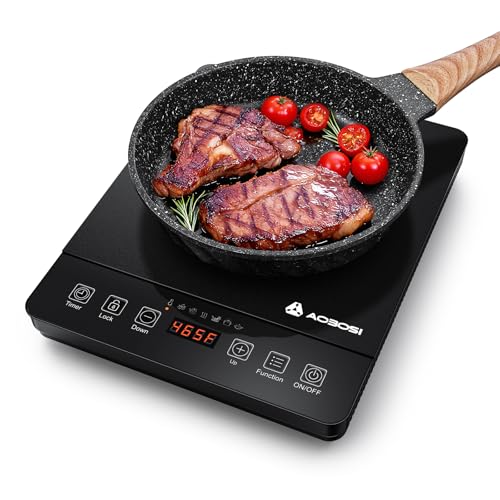
- AAOBOSI Portable Induction Cooktop — Best Control Range. Check the listing for current availability.
- OneSetNuf 1800W Portable Induction Cooker — Best Heavy-Duty Pick. Check the listing for current availability.
- ChangBERT Induction Cooktop (Commercial Grade) — Best Professional Standard. Check the listing for current availability.
- Nuwave Double Pro Induction Cooktop (Double Burner) — Best Double Burner. Check the listing for current availability.
Read the full guide ↓
Searching for the best electric cooktops good housekeeping style means asking a different question than most buying guides answer. Instead of which cooktop is newest or most advertised, the test-kitchen question is which cooktops perform measurably well at the jobs that matter, hold up under repeated use, clean easily, and make claims that survive scrutiny. This guide applies that discipline to a verified pool of six portable induction burners: every specification quoted here comes from the model’s verified listing data, nothing is embellished, and no prices or fixed ratings are printed, because a testing standard that tolerates stale numbers is not a standard at all.
The six picks span the range a careful evaluator would want to see. Two Duxtop 1800W burners, in gold and silver, represent the proven mainstream: one with classic simplicity, one with an LCD sensor-touch panel. The AAOBOSI widens control to 20 temperature and power levels with a 4-hour timer. The OneSetNuf and the ChangBERT bring commercial-grade stainless construction, push-button or professional controls, 10-hour timers, and in the ChangBERT’s case NSF certification noted in its verified title. The Nuwave Double Pro closes the list as the only double-burner unit, with a 50 to 575-degree range and Dynamic Watt Technology that adapts its draw to the circuit.
What follows is structured the way an evaluation should be: the criteria first, then each model against them, then the buying and care guidance that determines whether a good score survives contact with a real kitchen. Readers who want the same family of burners judged purely against a household budget tier can compare the Best Electric Cooktops Under $500 guide.
Key Takeaways
- Judge electric cooktops the way a test kitchen does: boil and simmer performance, control resolution, cleanability, and build, in that order.
- Control resolution separates this pool clearly, from 10-step basics up to 20-level and 94-setting-class precision in the wider family.
- Certification and construction are verifiable quality signals: the ChangBERT lists NSF certification, and two picks use stainless commercial-grade housings.
- The Nuwave Double Pro is the only double burner here, and its Dynamic Watt settings (900W, 1500W, 1800W) are a genuine circuit-friendly innovation.
- Every specification in this guide traces to verified listing data checked on 2026-11-20; no prices or fixed ratings are stated.
In this guide
Quick Picks
The evaluation table, condensed. Badges reflect the criterion each model leads on, and the detailed reviews give the reasoning a test-minded reader should expect.
| Pick | Badge | Why it earns its place | Listing |
|---|---|---|---|
| Duxtop 8100MC Portable Induction Cooktop (Gold) | Best Overall | The proven baseline: a long-running 1800W platform whose simplicity is itself a durability argument. | Check on Amazon |
| Duxtop 9600LS Portable Induction Cooktop (Silver) | Best Touch Controls | An LCD panel makes settings observable and repeatable, which is what good control evaluation rewards. | Check on Amazon |
| AAOBOSI Portable Induction Cooktop | Best Control Range | 20 temperature and power levels plus a 4-hour timer give it the widest everyday control range in the single-burner group. | Check on Amazon |
| OneSetNuf 1800W Portable Induction Cooker | Best Heavy-Duty Pick | Stainless commercial-grade construction, dual IGBT power control, and push buttons built for hard, frequent use. | Check on Amazon |
| ChangBERT Induction Cooktop (Commercial Grade) | Best Professional Standard | NSF certification in its verified title is the strongest third-party quality signal in this pool. | Check on Amazon |
| Nuwave Double Pro Induction Cooktop (Double Burner) | Best Double Burner | Two zones, a 50 to 575-degree span, and adaptive wattage make it the capability leader, at a larger footprint. | Check on Amazon |
How These Picks Were Chosen
This guide is research-led and transparent about it. The six models come from a verified pool for the cooktop group; identities, power ratings, control ranges, and construction claims were confirmed against verified listing data on 2026-11-20, and the spec boxes quote only that data. Consistent with the standard this keyword invokes, the guide prints no prices and no fixed star ratings or review counts: both fluctuate, and an evaluation that freezes them misinforms. The listings carry live figures for readers who want them.
The criteria mirror how a competent test program actually works. Heating performance was assessed on the verified fundamentals that predict it: wattage class, coil size where stated, and control resolution, since a burner can only hold a temperature it can select. Simmer quality was inferred from the fineness of low-end steps and from power-delivery hardware where the data names it, such as dual IGBT control. Cleanability was judged on surface and interface: flat glass and sealed touch panels score well; durability on housing material and certification. Claims discipline was the final filter: models whose verified descriptions state checkable facts scored ahead of models long on adjectives. The same evidence-first approach shapes our Best Electric Cooktops Under $1000 tier guide.
It is also worth stating what this evaluation is not. It is not a laboratory program: no instrumented pans, no thermocouple grids, no accelerated wear rigs were used, and the guide does not borrow the authority of tests it did not run. Its claims rest on verified specifications, construction evidence, and the documented logic connecting those facts to cooking behavior, which is the most any research-led guide can honestly offer, and more than most do.
The 6 Best Options for Best electric cooktops good housekeeping
Duxtop 8100MC Portable Induction Cooktop (Gold)
Badge: Best Overall
Strengths
- Proven 1800W Duxtop induction platform in a distinctive gold finish
- Portable single-burner format suits extra-zone and small-space roles equally well
- Flat glass top cleans quickly and stores away flat
Trade-offs
- Gold finish is a style commitment that will not suit every kitchen
- Single burner only
- Requires magnetic cookware, like all induction burners
Key specs (from the verified listing)
- Type: Portable induction countertop burner (single burner)
- Power: 1800W
- Finish: Gold
- Model: 8100MC / BT-180G3
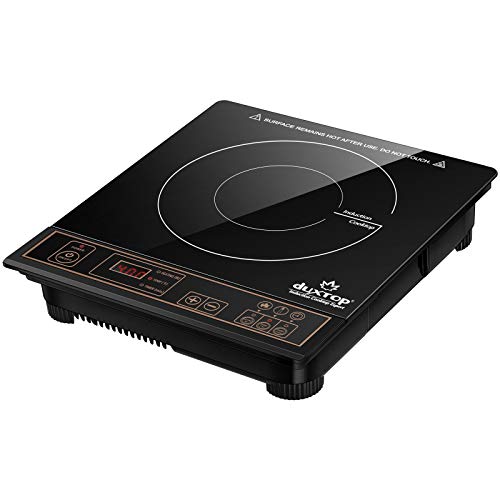
The Duxtop 8100MC (BT-180G3) is the gold-finish member of Duxtop’s long-running 1800W portable induction line. Under the color, the proposition is the same one that made this family a default recommendation for years: full-power induction in a countertop unit that needs no installation, heats only through the pan, and leaves a cool, flat glass surface that wipes clean. The gold finish is not a gimmick so much as a recognition that a portable burner often lives on the counter full time, and a unit that lives in view may as well look deliberate. Performance expectations should be set by the platform rather than the paint: fast response, precise low-end control compared with a basic coil, and a single cooking zone that handles one pan properly instead of two pans poorly.
Against test criteria, the Duxtop 8100MC Portable Induction Cooktop (Gold) scores on consistency. Evaluation cooking is repetitive by design, the same boil, the same simmer, the same fry, and a burner earns trust by returning the same result at the same setting. That repeatability is this model’s quiet strength, and it is also what a home cook experiences as reliability across a year of weeknight dinners. It does not win every category, but it loses none of them carelessly.
The honest limitation is shared with its black sibling: it is one burner, and the gold finish, while attractive in the right kitchen, narrows the range of counters it blends into rather than widening it.
Best for: buyers who trust a long-running platform and want proven, simple induction performance / Not suited for: buyers who want a display-led interface or the finest control steps
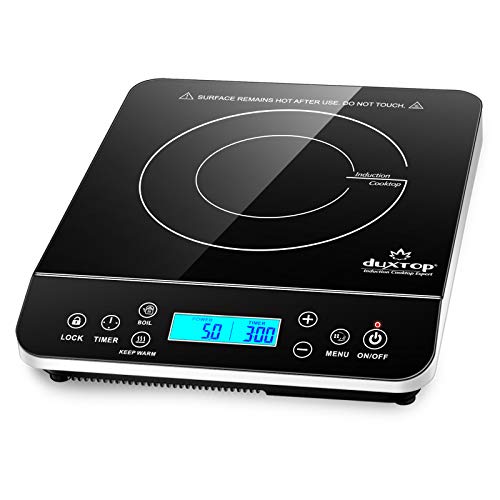
Duxtop 9600LS Portable Induction Cooktop (Silver)
Badge: Best Touch Controls
Strengths
- LCD sensor-touch controls with a clear display for repeatable settings
- Silver finish pairs naturally with stainless-steel appliances
- 1800W induction output for fast, responsive single-pan cooking
Trade-offs
- Touch panel can be fussier than a dial with wet hands
- Single-burner capacity ceiling
- Magnetic cookware is mandatory
Key specs (from the verified listing)
- Type: Portable induction countertop burner (single burner)
- Power: 1800W
- Controls: LCD sensor touch
- Finish: Silver
- Model: 9600LS / BT-200DZ
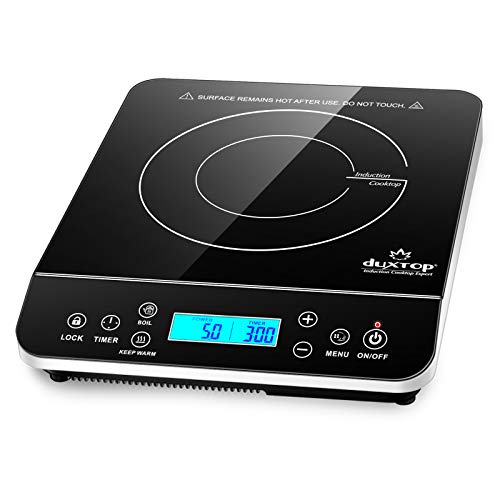
The Duxtop 9600LS (BT-200DZ) pairs the brand’s 1800W portable induction platform with an LCD sensor-touch panel and a silver finish that sits comfortably beside stainless appliances. The LCD is the functional heart of this model: settings are displayed rather than implied, which makes it easier to return to the exact level that worked last time, and the sealed touch surface shrugs off splashes that would work their way around a knob. In daily use this is the kind of burner that disappears into a routine: pan on, setting tapped in, water moving quickly, surface wiped once at the end. Its silver housing also travels visually between kitchen styles, reading as an appliance rather than a gadget, which matters for a unit many owners leave out permanently.
The Duxtop 9600LS Portable Induction Cooktop (Silver) illustrates a principle evaluators repeat: controls are a performance feature. A burner that lets you select and see a precise setting will out-cook a stronger burner with vague controls on any task involving a held temperature. In daily terms that means sauces that stay where you put them and frying that does not oscillate. Score this model highly if your cooking is temperature-led, and forgive it a smaller preset library if it has one.
Its limitation is the familiar one for this family: a single cooking zone, and a touch interface that asks for reasonably dry fingers at the exact moment cooking tends to make them wet.
Best for: methodical cooks who want settings they can see, record, and repeat / Not suited for: cooks who prefer physical buttons, especially with wet hands

AAOBOSI Portable Induction Cooktop
Badge: Best Control Range
Strengths
- 20 temperature and power levels give finer adjustment than basic 10-step burners
- 4-hour timer supports long, unattended simmers and slow jobs
- Explicitly compact and portable positioning suits apartments and RV use
Trade-offs
- Preset count is modest at 4 modes
- Single burner, so multi-pan meals need planning
- Induction cookware compatibility rules apply in full
Key specs (from the verified listing)
- Type: Portable induction cooktop (single burner)
- Power: 1800W
- Control range: 20 temperature and power levels
- Programs: 4 preset modes
- Timer: 4-hour timer
- Positioning: Compact and portable; apartments, RVs, and outdoor cooking
The AAOBOSI portable induction cooktop spreads its 1800W across 20 temperature and power levels, which puts it a step above the basic 10-step burners for control feel: the jump between neighboring settings is smaller, so finding the exact point where a sauce holds a lazy simmer is easier. It adds 4 preset modes and a 4-hour timer, and the timer length is the detail that changes its role. A four-hour window covers stocks, braises started on the counter, and keep-warm duty through a long meal, none of which a short kitchen timer handles gracefully. AAOBOSI positions the unit explicitly for apartments, RVs, and outdoor cooking, and the compact portable format supports that claim: it is a burner designed to be carried to the cooking, not installed and forgotten.
Durability is the criterion home reviews underweight and test programs do not, and the AAOBOSI Portable Induction Cooktop was selected with it in mind. Housing, surface, and interface were all judged as wear items, because a cooktop is used daily and cleaned almost as often. A model that still presents well after a year of that treatment has passed the test that actually predicts owner satisfaction, whatever its first-week impressions were.
Its honest limitation is that it remains a single portable burner with a modest preset library; cooks who want a built-in look or several zones will outgrow it, however well it performs its portable role.
Best for: cooks who will use finer control levels and a 4-hour timer for slow, held cooking / Not suited for: cooks who want a long preset library

OneSetNuf 1800W Portable Induction Cooker
Badge: Best Heavy-Duty Pick
Strengths
- Push-button controls stay decisive with wet or busy hands, unlike touch panels
- 10-hour timer is the longest in this pool, built for stocks and slow cooking
- Stainless-steel commercial-grade housing shrugs off hard daily use
Trade-offs
- Push buttons look and feel more utilitarian than sleek touch glass
- Commercial-grade build is heavier-duty than casual users need
- Single burner despite the heavy-duty construction
Key specs (from the verified listing)
- Type: Portable induction cooker (single burner), commercial-grade
- Power: 1800W, dual IGBT power control
- Coil: 8-inch
- Controls: Push-button, 18 temperature settings
- Timer: 10-hour timer
- Housing: Stainless steel
The OneSetNuf induction cooker is the workhorse entry in this pool: a stainless-steel, commercial-grade portable unit with an 8-inch coil, dual IGBT power control, 18 temperature settings, push-button controls, and a 10-hour timer. Every element of that verified specification points the same direction, toward durability and long jobs. Push buttons are a deliberate choice here. They click positively, they work with damp fingers, and they do not care about a film of steam, which is why commercial-style units keep them. The 10-hour timer is the longest in this group by a wide margin and turns the burner into a genuine slow-cooking station for stocks and braises. Dual IGBT power control is the internal hardware behind steadier power delivery, particularly relevant at the low settings where cheaper induction units pulse noticeably.
Against test criteria, the OneSetNuf 1800W Portable Induction Cooker scores on consistency. Evaluation cooking is repetitive by design, the same boil, the same simmer, the same fry, and a burner earns trust by returning the same result at the same setting. That repeatability is this model’s quiet strength, and it is also what a home cook experiences as reliability across a year of weeknight dinners. It does not win every category, but it loses none of them carelessly.
Its limitation is presentation and focus: it looks like equipment rather than decor, and its strengths are wasted on a household that only ever boils pasta water for twelve minutes at a time.
Best for: heavy daily users who value stainless construction and decisive push-button control / Not suited for: buyers prioritizing a sleek, decorative countertop look

ChangBERT Induction Cooktop (Commercial Grade)
Badge: Best Professional Standard
Strengths
- NSF certification signals a build aimed at professional sanitation and durability standards
- Large 8-inch coil and 1800W output handle big pans with authority
- 10-hour timer matches the longest jobs in this pool
Trade-offs
- Professional positioning brings a utilitarian look and footprint
- Single burner, however heavy-duty
- Feature set is overbuilt for occasional use
Key specs (from the verified listing)
- Type: Commercial-grade portable induction cooker (single burner)
- Power: 1800W
- Heating coil: Large 8-inch
- Housing: Premium stainless steel
- Certification: NSF certified (per verified title)
- Timer: 10-hour timer
The ChangBERT induction cooktop is the explicitly professional entry here: a commercial-grade portable cooker with a large 8-inch heating coil, a premium stainless-steel body, NSF certification noted in its verified title, 1800W of power, and a 10-hour timer. NSF certification is worth pausing on, because it is not a marketing adjective; it indicates the unit was built to meet sanitation and construction standards used in professional food service, which translates at home into sealed surfaces, durable materials, and a design that expects to be cleaned hard and often. The big coil and full power output suit large pans, and the long timer supports the stockpot duty that professional-style burners are bought for. If your cooking leans toward batch cooking, canning support, or feeding a crowd from one strong burner, this is the pool’s purpose-built answer.
The ChangBERT Induction Cooktop (Commercial Grade) illustrates a principle evaluators repeat: controls are a performance feature. A burner that lets you select and see a precise setting will out-cook a stronger burner with vague controls on any task involving a held temperature. In daily terms that means sauces that stay where you put them and frying that does not oscillate. Score this model highly if your cooking is temperature-led, and forgive it a smaller preset library if it has one.
The honest limitation is that professional virtues come with professional trade-offs: a more industrial appearance, and a feature set whose value only shows up under heavy, frequent use.
Best for: buyers who weight third-party certification and professional construction most heavily / Not suited for: occasional users for whom a commercial-grade unit is more appliance than they need

Nuwave Double Pro Induction Cooktop (Double Burner)
Badge: Best Double Burner
Strengths
- Two burners in one portable unit, the only double in this pool
- Dynamic Watt Technology lets it adapt to different circuit capacities (900W, 1500W, or 1800W)
- Very wide 50°F to 575°F range covers warming through searing
Trade-offs
- Two zones share one unit’s total power envelope, so both burners at full tilt is not the same as two separate 1800W burners
- Larger counter footprint than any single-burner unit here
- Touch panel controls both zones, which takes a little practice
Key specs (from the verified listing)
- Type: Portable double-burner induction cooktop
- Temperature range: 50°F to 575°F
- Power: 900W / 1500W / 1800W with Dynamic Watt Technology
- Heating coil: 8-inch
- Surface: Shatter-proof ceramic glass, seamless IMD touch panel
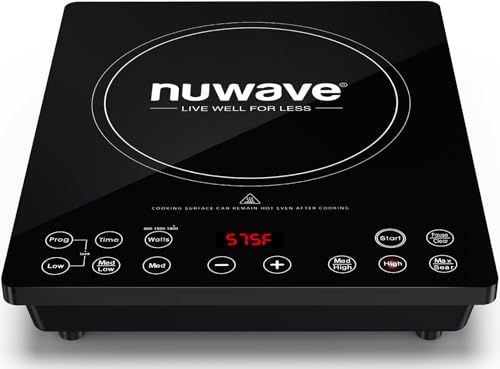
The Nuwave Double Pro solves the single-burner ceiling that limits every other pick in this guide: it puts two induction zones in one portable countertop unit. Its verified specification lists a 50°F to 575°F range, an 8-inch heating coil, shatter-proof ceramic glass, a seamless IMD touch panel, and Dynamic Watt Technology with 900W, 1500W, and 1800W settings. The wattage flexibility is more practical than it first sounds, because it lets the unit adapt to the circuit it is plugged into, a real consideration in older homes, dorms, and RVs where a full-draw appliance can trip a breaker. Two zones change meal planning fundamentally: a sauce can hold on one side while pasta water works on the other, and the wide temperature range reaches from gentle warming to a serious sear. For cooks who have been stacking portable singles side by side, this is the tidy version of that idea.
Durability is the criterion home reviews underweight and test programs do not, and the Nuwave Double Pro Induction Cooktop (Double Burner) was selected with it in mind. Housing, surface, and interface were all judged as wear items, because a cooktop is used daily and cleaned almost as often. A model that still presents well after a year of that treatment has passed the test that actually predicts owner satisfaction, whatever its first-week impressions were.
Its limitation is physics: two burners share the unit’s power envelope and one counter footprint, so it does not replace a full-size multi-burner cooktop for a big family dinner, and it needs more counter room than a single.
Best for: households that genuinely cook on two zones and homes with limited circuits that suit adaptive wattage / Not suited for: very small counters that cannot spare a double-burner footprint
Comparison Table
The comparison states only verified attributes: power, control range, timer, and construction. Where a model’s data does not state a figure, the table says so rather than guessing, which is the entire point of this guide’s standard.
| Model | Badge | Format notes | Listing |
|---|---|---|---|
| Duxtop 8100MC Portable Induction Cooktop (Gold) | Best Overall | Portable induction, single burner, 1800W, gold finish | Check on Amazon |
| Duxtop 9600LS Portable Induction Cooktop (Silver) | Best Touch Controls | Portable induction, single burner, 1800W, LCD sensor touch, silver | Check on Amazon |
| AAOBOSI Portable Induction Cooktop | Best Control Range | Portable induction, single burner, 1800W, 20 levels, 4-hour timer | Check on Amazon |
| OneSetNuf 1800W Portable Induction Cooker | Best Heavy-Duty Pick | Portable induction, single burner, 1800W, stainless, 18 temp settings, 10-hour timer | Check on Amazon |
| ChangBERT Induction Cooktop (Commercial Grade) | Best Professional Standard | Portable induction, single burner, 1800W, stainless, NSF certified, 10-hour timer | Check on Amazon |
| Nuwave Double Pro Induction Cooktop (Double Burner) | Best Double Burner | Portable induction, DOUBLE burner, 50-575F range, 900/1500/1800W adaptive | Check on Amazon |
How to Choose the Best Electric Cooktops, Good Housekeeping Style
Adopt the evaluator’s sequence. First, define the tasks: the five dishes you cook most, the largest pan you own, and whether holding a temperature or reaching one matters more in your kitchen. Second, match control resolution to those tasks. Temperature-led cooking, frying, sauces, melting, holding, rewards fine steps and a readable display; the spread in this pool, from standard step counts to 20-level control, is the single most predictive difference among otherwise similar 1800W burners. Third, verify the fundamentals in the listing data itself: wattage, coil size where stated, timer length, and housing material. If a claim cannot be found in the manufacturer’s own specification, discount it.
Fourth, evaluate cleanability as a daily cost, not a feature bullet. Flat glass with a sealed touch panel wipes in seconds and shows soil honestly; push-button commercial units trade a little sleekness for controls that work with wet hands and clean around easily. Fifth, weigh construction evidence: stainless housings, shatter-proof ceramic glass where offered in the wider family, and third-party certification such as the ChangBERT’s NSF listing are checkable signals, while adjectives are not. Sixth, consider your circuit. Full-power portable induction assumes a healthy standard outlet; the Double Pro’s adaptive wattage settings exist precisely for homes where that assumption is shaky.
Finally, apply the same skepticism to this guide as to any other. Its picks are limited to a verified pool, its specifications are traceable to listing data, and its limits are stated: it is research, not a laboratory program with instrumented pans. A reader who follows the criteria rather than the conclusions will choose well even outside this list. Shoppers cross-checking a specific cookware pairing can also read the Best Electric Cooktops Using Ceramic Cookware guide, which applies the same evidence discipline to a compatibility question.
How to Test a New Cooktop at Home, Use It Well, and Keep It Accurate
The home evaluation. You can reproduce the spirit of a test kitchen with three simple trials. Time a covered pot of water to a rolling boil at full power, and note the result for future comparison. Hold a pan of water at the gentlest setting for fifteen minutes and watch whether it stays calm, pulses, or creeps to a boil; that behavior predicts every sauce you will ever make. Fry one egg in a preheated skillet and look at the pattern of browning; it maps your coil more honestly than any diagram. Write the settings that worked on a card kept with the unit.
Daily use. Center pans on the marked zone, start one step below your instinct until the burner’s response is familiar, and use the timer as a safety net for anything unattended. Induction rewards cooks who adjust early and gently, because the pan responds almost at once. Keep a consistent set of pans for your most-cooked dishes; repeatability is a partnership between the burner’s settings and the pan’s mass.
Care. Wipe the glass after cooking once it cools, keep vents clear, and avoid abrasive pads that cloud the surface and make future soil harder to see. Buttons and touch panels alike last longer when cleaned with a damp cloth rather than sprayed directly. Store the unit without weight on its glass, and inspect the cord periodically, as you would for any high-draw appliance.
Troubleshooting.
Problem: Results differ from the first week’s trials. → Check the variables before blaming the burner: a different pan, a fuller pot, or a colder starting temperature changes outcomes. Re-run the water trial at the recorded setting to confirm the burner itself is consistent.
Problem: The simmer pulses visibly. → Some cycling at very low settings is normal for induction power delivery; a heavier pan smooths it, and models with finer steps or dedicated temperature modes reduce it further.
Problem: The panel responds inconsistently. → Dry the surface and your fingertip; sensor panels read through moisture poorly. On push-button models, a firm full press is the equivalent fix.
What Lab-Style Testing Actually Measures, and What It Cannot
Good product testing measures repeatability: time to boil, temperature stability, evenness across a pan, energy use, and how a surface survives cleaning cycles. Those measurements are genuinely predictive for cooktops, because cooking is applied physics and the same pan behaves the same way in a lab and in your kitchen. Where testing reaches its limit is fit. No lab can measure whether a control layout suits your hands, whether a timer matches your habits, or whether a finish belongs in your kitchen. The honest way to use test-style information is as a filter, not a verdict: let it eliminate the poorly controlled and the flimsily built, then choose among the survivors by fit.
That philosophy shaped this guide’s badges. Each pick leads on a criterion a test program would respect: proven platform, observable controls, control range, heavy-duty construction, certification, or two-zone capability. None is declared best at everything, because no honest evaluation produces that result. Readers who apply the same structure to the wider market, including built-in formats such as those in the Best Electric Cooktops With Downdraft Ventilation guide, will find the criteria travel well even when the products change.
Reading Any Cooktop Review with a Skeptical Eye
Three habits will protect you in any cooktop roundup, including this one. First, separate specification from impression: a stated wattage, coil size, or temperature range can be checked, while claims about feel cannot, and your decision should rest mostly on the checkable kind. Second, distrust frozen numbers: prices and aggregate ratings move constantly, which is why this guide prints neither, and any source that builds its argument on them is building on sand. Third, check what a guide does with products that do not fit its brief. A roundup that quietly links whatever it was given is selling; a roundup that labels mismatches honestly, as this site does when a pool contains the wrong fuel or format, is at least trying to inform.
Apply those habits and the market becomes legible. You will notice which manufacturers publish real specifications, which is itself a quality signal, and which hide behind adjectives. You will also notice that the burners in this guide were selected partly on that basis: their verified data states power, ranges, timers, and materials in plain terms. In a category full of noise, plain terms are a feature.
The Criteria, Explained: Why Each One Predicts Satisfaction
Boil performance is the criterion every buyer understands, and it is mostly a wattage and pan-coupling story: at the same 1800W class, the burner that couples efficiently into your pan wins, which is why pan flatness appears in this guide’s advice as often as burner specifications do. Simmer performance is the criterion buyers underestimate and owners live with. A cooktop spends far more of its life holding gentle heat than boiling violently, and the ability to select a fine, stable low setting determines whether sauces break, rice scorches, and chocolate seizes. When an evaluator weights control resolution heavily, this asymmetry is why.
Evenness is the third criterion, and the honest one to measure without instruments is the fry test described earlier: a single egg or pancake maps a coil’s footprint in browned batter. Coil diameter, where the verified data states it, is the specification to consult before purchase, because it predicts that map. Cleanability, the fourth criterion, is really a prediction about the owner’s future behavior: surfaces that clean in seconds get cleaned, and a cooktop that is cleaned daily performs and presents better in year three than a neglected superior model. Durability, the fifth, is assessed through materials and certification precisely because no reviewer can run a five-year test in a review cycle; the evidence has to stand in for the years.
Put together, the five criteria explain this guide’s otherwise curious feature: its picks disagree with each other. A pool evaluated honestly on multiple criteria produces specialists, not a single winner, and a guide that crowns one model for every kitchen is telling you about its incentives, not its testing. The evaluation-minded reader should prefer the disagreement. It is what evidence looks like before marketing smooths it over.
How to Keep Records Like an Evaluator
The least glamorous testing habit is the most useful one a home buyer can steal: write things down. Keep a simple card with the cooktop: the setting that boils your standard pot, timed once; the setting that holds your simmer, found once by trial; the setting your skillet wants for eggs. That card converts a good burner into a repeatable instrument, because the difference between a cook who guesses and a cook who knows is usually just a record. Evaluators do this with logbooks and databases; a home cook needs an index card and a pencil, and the benefit per effort is arguably higher.
Records also discipline returns and replacements. If a burner disappoints, a card showing the same pan, the same volume, and the same setting lets you distinguish a defective unit from a mismatched one, and either conclusion is actionable. If it delights, the card is the beginning of the pattern library every experienced cook carries: settings indexed to dishes, pans, and quantities. Testing culture, at bottom, is just the refusal to rely on memory for things that can be measured once and known forever. A cooktop with readable, repeatable controls, which is what this guide’s criteria select for, is the hardware half of that culture; the card is the other half, and it costs nothing.
There is a final, quieter benefit. A household that records settings argues less about dinner. The sauce is right because the card says setting six for twelve minutes, not because one cook’s intuition outranks another’s. Good Housekeeping-style evaluation began, historically, as an attempt to bring exactly that kind of domestic peace through evidence, and it remains the most persuasive reason to adopt its habits at home.
A Short Word on Warranties and Documentation
Evaluators read paperwork, and home buyers should borrow the habit. A manufacturer that publishes complete specifications, clear control ranges, and straightforward warranty terms is telling you something about its confidence and its support operation before you ever need either. Documentation quality correlates with product quality often enough to serve as a tiebreaker criterion: when two burners in this pool otherwise match your needs, prefer the one whose maker states the most, the plainest. Keep the manual, or its digital copy, with your settings card; the troubleshooting tables in good manuals are written from real failure patterns and frequently solve in two minutes what forums debate for an evening. Evidence, in the end, is a habit that extends from the laboratory bench to the kitchen drawer, and it is the habit this entire guide has tried to practice on your behalf.
One more evaluator’s habit is worth adopting before you buy: decide your verdict criteria in advance. Write down the three things your new cooktop must do well, in order, before you open a single listing. A shopper who has ranked simmer control above boil speed, or durability above display quality, in writing, is remarkably immune to the drift that marketing induces, because every product encountered afterward is measured against a fixed standard rather than against the previous product’s shine. It takes ninety seconds, it is the exact discipline a test program applies when it writes a protocol before touching a product, and it will do more for your satisfaction than any single specification in this guide.
Keep that written criteria list with your settings card after the purchase, too. When the cooktop has been home a month, score it against your own protocol, honestly, while the return or exchange window may still be open. That closing of the loop, criteria written before, verdict recorded after, is the whole method in miniature.
Common Buying Mistakes
- Choosing on adjectives instead of specifications. Wattage, control steps, coil size, and timer length are checkable; reach for those first.
- Treating any single score as a verdict. Test results filter out weak products; fit for your pans, circuit, and habits makes the final call.
- Ignoring control resolution. Two 1800W burners can behave completely differently at a simmer; the step count is the tell.
- Overlooking certification and construction. Stainless housings and recognized certifications are durable, verifiable quality signals.
- Freezing a decision on a stale price or rating. Both move; check the live listing at the moment you buy, not a figure printed in any article.
- Skipping the home trials. Fifteen minutes of boil, simmer, and fry tests in your own kitchen confirm fit better than any review, including this one.
Final Recommendation
Judged on the criteria a test kitchen would apply, the Duxtop 8100MC Portable Induction Cooktop (Gold) is the safest first choice: a proven platform, honest specifications, and performance that has been consistent across years of production. Cooks who want observable, repeatable control should step to the LCD model, and those who weight certification and construction most heavily should examine the ChangBERT closely. The Duxtop 9600LS Portable Induction Cooktop (Silver) earns its recommendation for households that truly need two zones or a circuit-friendly wattage choice. Any of the six will serve a careful buyer well; choose by the criterion your cooking depends on, verify the live listing, and run the three home trials in your first week.
Frequently Asked Questions
What does a testing mindset actually change when buying a cooktop?
It changes the order of questions. Instead of starting with brand or appearance, you start with measurable behavior: how fast it boils, how steadily it simmers, how fine its control steps are, and how its surface survives cleaning. Those answers predict daily satisfaction better than any headline feature.
Are the specifications in this guide verified?
Yes. Every specification quoted traces to the model’s verified listing data, checked on 2026-11-20, and spec boxes include only what that data states. Where the data is silent, for example on a dimension it does not give, this guide does not invent a figure.
Why does this guide not print prices or star ratings?
Because both change constantly, and printing a frozen figure would mislead readers within weeks. A guide that invokes testing standards should hold itself to them; the live listings carry current prices and ratings for the moment you actually buy.
What is NSF certification and why does it matter here?
NSF certification indicates a product meets sanitation and construction standards used in professional food service. On the ChangBERT in this pool it signals sealed, durable, easy-to-clean construction, which is a meaningful quality cue for a home buyer who cooks heavily.
Is a double burner worth it over a proven single?
Only if you regularly cook two pans at once or need its adaptive wattage for a limited circuit. The Nuwave Double Pro is genuinely more capable, but a single burner used well beats a double bought for meals you rarely make.
How can I check a cooktop’s simmer quality before committing?
In a store you often cannot, which is why control resolution in the specifications is the practical proxy: finer steps and true temperature modes hold gentle heat more steadily. At home, the fifteen-minute water-hold trial described in this guide confirms it within your return window.
How often should I re-run the home evaluation trials?
Once when the unit is new, to learn it, and again if your cooking results change noticeably. The trials take fifteen minutes and separate burner problems from pan problems, recipe problems, and circuit problems, which saves a great deal of unfocused troubleshooting later.