Disclosure: topratedkitchenware.com is reader-supported. When you buy through links on our site, we may earn an affiliate commission from Amazon and other retailers, at no extra cost to you.
Where to buy
For the best electric cooktops using ceramic cookware, control finesse matters more than brute power, because ceramic cookware changes what a cooktop must do: the pans are light, slick, and often induction-ready rather than magnetic through and through. Four linked electric induction burners lead this shortlist, each judged on how gently and evenly it treats ceramic-coated pans. Two gas cooktops from the assigned pool are reviewed in full but not linked, because they burn gas rather than electricity, whatever their compatibility with ceramic pans.
- Duxtop 9100MC Portable Induction Cooktop — Best Overall. Check on Amazon
- Duxtop 9610LS Portable Induction Cooktop — Best Touch Controls. Check the listing for current availability.
- Nuwave Pro Chef Induction Cooktop — Best Precision Control. Check the listing for current availability.
- ISILER 1800W Portable Induction Cooktop — Best for Families. Check the listing for current availability.
- VEVOR 30-Inch Gas Cooktop (5 Burners) — Comparison Reference (Gas). Covered in full in the guide below; no listing is linked for this model because it does not match the brief of this guide (see its review).
- ThermoMate 36-Inch Gas Cooktop (5 Burners) — Comparison Reference (Gas). Covered in full in the guide below; no listing is linked for this model because it does not match the brief of this guide (see its review).
Read the full guide ↓
Finding the best electric cooktops using ceramic cookware starts with understanding what ceramic cookware actually is, because the answer decides everything else. Most modern ceramic cookware is not solid ceramic at all: it is an aluminum or similar core wearing a slick ceramic nonstick coating, and many of those pans carry a magnetic base layer that makes them induction-ready. Pure ceramic and clay vessels are the other branch of the family, and they conduct heat slowly and cannot trigger an induction burner at all. A guide that ignores that split would mislead you, so this one is built on it: the linked electric picks are induction burners, and they pair with the induction-ready branch of ceramic cookware, which is the branch most households actually own.
Six cooktops from the verified pool are compared. Four are portable induction burners: two proven Duxtop formats, a precision Nuwave with 94 temperature settings, and a family-oriented ISILER with presets and a safety lock. They are judged here on ceramic-specific virtues: gentle low-end control that will not scorch a coating, even fields that respect a light pan’s thinner core, and flat glass that a smooth ceramic base glides over without the scratching anxiety of heavier cookware. The two remaining models are built-in gas cooktops. Gas heats any pan, ceramic included, but these are gas appliances in an electric guide, so they are covered in full as prose-only references and not linked.
The buying guidance below includes the one test that settles compatibility in five seconds, the magnet test, and explains how to read a ceramic pan’s base before you buy either a pan or a burner. Readers who want the surface side of this pairing in more depth will find it in our guide to the Best Electric Glass Cooktops, which covers glass-top care and cookware compatibility together.
Key Takeaways
- Most ceramic cookware is ceramic-coated metal; check for a magnetic, induction-ready base, because that layer decides whether an induction burner can heat it.
- Pure ceramic and clay pans do not work on induction at all; they belong on radiant heat or gas, and no setting on an induction burner changes that.
- Ceramic coatings reward gentle, fine control: the precision pick’s 5-degree steps protect coatings better than coarse power jumps.
- Light ceramic pans heat fast on induction, so start one setting lower than habit suggests and let the pan settle.
- The two gas cooktops here would heat ceramic pans, but they are gas appliances in an electric guide, so they are documented prose-only.
In this guide
Quick Picks
The fast view, judged on ceramic pairing: control finesse, even heating, and a smooth surface. The gas models are marked guide-only, as fuel honesty requires.
| Pick | Badge | Why it earns its place | Listing |
|---|---|---|---|
| Duxtop 9100MC Portable Induction Cooktop | Best Overall | A proven, responsive single burner whose flat glass and full power suit everyday ceramic-coated skillets and pots. | Check on Amazon |
| Duxtop 9610LS Portable Induction Cooktop | Best Touch Controls | Visible LCD settings make it easy to repeat the gentle levels ceramic coatings prefer. | Check on Amazon |
| Nuwave Pro Chef Induction Cooktop | Best Precision Control | 94 settings in 5-degree steps plus an 8-inch coil: the gentlest, most even treatment of ceramic cookware in this pool. | Check on Amazon |
| ISILER 1800W Portable Induction Cooktop | Best for Families | Presets and a safety lock suit family kitchens where ceramic pans are the daily drivers. | Check on Amazon |
| VEVOR 30-Inch Gas Cooktop (5 Burners) | Comparison Reference (Gas) | A five-burner gas deck that would heat ceramic pans, documented for comparison only; it is not electric. | Guide-only coverage |
| ThermoMate 36-Inch Gas Cooktop (5 Burners) | Comparison Reference (Gas) | A wide gas deck that would heat ceramic pans, documented for comparison only; it is not electric. | Guide-only coverage |
How These Picks Were Chosen
This guide is research-led. All six models come from a verified pool for the cooktop group, with identities and headline specifications confirmed against verified listing data on 2026-11-20. Spec boxes quote only that data, and no prices or fixed ratings are printed, because both change too often to state honestly in a static article.
The selection lens here was the pairing, not the burner alone. Control fineness was weighted first, because ceramic coatings degrade fastest under thermal shock and scorching, and a burner that can move in small steps protects them. Evenness came second: a ceramic-coated pan’s lighter core spreads heat less forgivingly than cast iron, so coil size and steady power delivery matter more, not less. Surface compatibility came third; smooth glass against a smooth pan base is the gentlest common pairing in home cooking. Compatibility honesty ran through everything: induction-ready ceramic cookware is the assumed partner for the linked picks, pure ceramic is addressed directly rather than glossed over, and the gas units, though pan-agnostic, are flagged prose-only because fuel type is this keyword’s core attribute. The flat-surface discussion in the Best Electric Flat Cooktops guide extends the surface side of this analysis.
One scope note deserves emphasis: the linked picks assume induction-ready ceramic cookware because that is what the verified electric pool supports. A reader whose set is entirely pure ceramic should not force this guide’s conclusion; the honest recommendation for that kitchen is a radiant electric format, and this guide’s compatibility sections explain why in enough detail to shop that category well.
The 6 Best Options for Best electric cooktops using ceramic cookware
Duxtop 9100MC Portable Induction Cooktop
Badge: Best Overall
Strengths
- Full 1800W induction power in a single portable burner, so it behaves like a serious cooking zone rather than a warmer
- Flat glass surface wipes clean in seconds and leaves no grate or coil to scrub around
- Portable format plugs in where you need it and stores upright in a cabinet between uses
Trade-offs
- Single burner only, so a second pan means a second unit or cooking in sequence
- Induction only heats magnetic cookware; aluminum or pure ceramic pans without a magnetic base will not register
- Portable burners sit on top of the counter, so very tall stockpots sit higher than on a built-in cooktop
Key specs (from the verified listing)
- Type: Portable induction countertop burner (single burner)
- Power: 1800W
- Finish: Black
- Model: 9100MC / BT-M20B
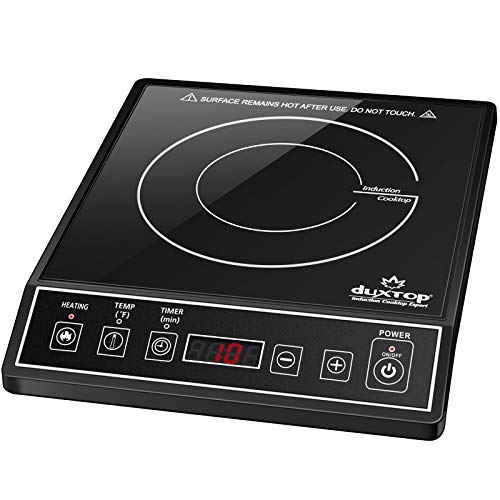
The Duxtop 9100MC is the straightforward reference point in this pool: a single 1800W induction burner in a black housing, sold under the BT-M20B model code. There is no exotic feature list to decode, and that is exactly its appeal. Induction puts the energy into the pan itself, so the surface responds quickly when you raise the setting and eases off just as quickly when you lower it, which makes it forgiving for sauces and reliable for a hard sear. Because the glass around the pan stays comparatively cool, splashes do not bake on the way they do on a radiant element, and cleanup is a wipe rather than a soak. As a countertop unit it asks for nothing more than a standard outlet and a flat stretch of counter, and when the meal is done it can go back in a cabinet, which is more than any built-in cooktop can offer.
With ceramic-coated pans, the Duxtop 9100MC Portable Induction Cooktop is really a study in gentleness. The coating’s enemies are sudden maximum heat and long dry preheats, and a responsive burner lets you approach temperature in steps instead of leaps. Bring the pan up gradually, add food before the coating ever smokes, and the slick surface will stay slick far longer. Owners who cook eggs and fish daily, the jobs ceramic was bought for, will feel this pairing working within the first week.
The honest limitation is capacity: one burner is one burner. Households that routinely run three pans at once will feel the ceiling immediately, and this unit works best as a primary burner for one- and two-pan cooking or as a powerful extra zone beside an existing range.
Best for: households whose ceramic-coated pans are induction-ready and who want a proven everyday burner / Not suited for: owners of pure ceramic or clay cookware, which induction cannot heat
Duxtop 9610LS Portable Induction Cooktop
Badge: Best Touch Controls
Strengths
- LCD sensor-touch panel gives a clear readout and precise, repeatable settings
- 1800W induction output matches the strongest single burners in this pool
- Smooth touch surface has no knobs to trap grease and wipes down fast
Trade-offs
- Touch controls can be less convenient with wet or floury hands than a physical dial
- Single-burner format limits simultaneous pans
- Like every induction unit here, it needs magnetic cookware to work at all
Key specs (from the verified listing)
- Type: Portable induction countertop burner (single burner)
- Power: 1800W
- Controls: LCD sensor touch
- Finish: Black
- Model: 9610LS / BT-200DZ
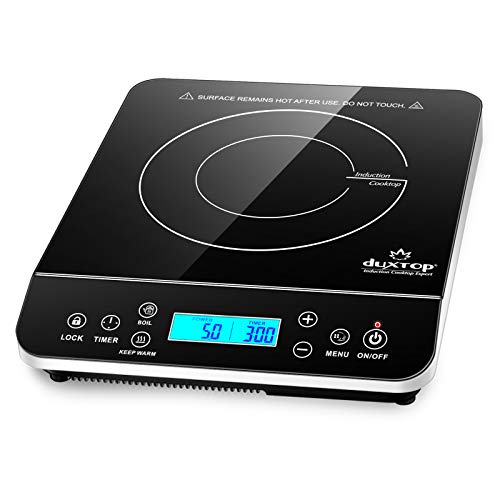
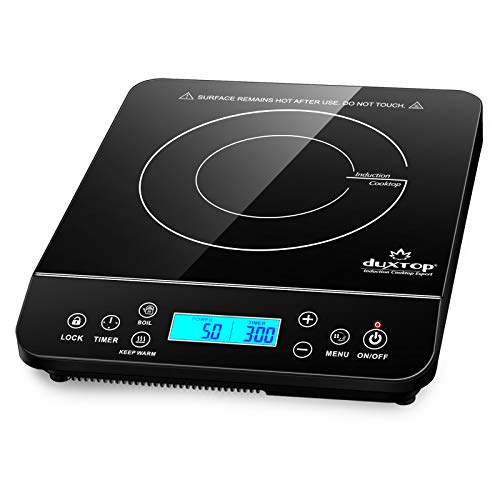
The Duxtop 9610LS (BT-200DZ) takes the same 1800W portable induction formula as its sibling and upgrades the interface: an LCD sensor-touch panel replaces simpler controls, giving you a legible display and tap-or-slide adjustments that are easy to repeat from one meal to the next. Repeatability is the quiet virtue of induction done well. Once you learn which setting holds a gentle simmer for your pan, you can return to it exactly, and the LCD makes that number visible instead of guessed. The flat panel also seals the front of the unit, so a boil-over runs across glass instead of into knob stems. For cooks who value a tidy counter and a modern control feel, this is the more polished of the two Duxtop singles in this guide.
The Duxtop 9610LS Portable Induction Cooktop also respects the lighter build of ceramic cookware. A thin-cored pan on a fierce, narrow coil develops a hot bullseye; a broad, steady field heats the whole base at once, which is how ceramic pans are meant to be used. Keep the pan centered, keep the heat moderate, and delicate food releases cleanly instead of welding to a scorched center. That discipline, more than any feature, is what this guide is recommending.
Its limitation is the touch interface itself in messy, real cooking: wet fingertips and heavy steam can make sensor panels less decisive than a knob, and the single-burner layout still caps how much you can run at once.
Best for: cooks who want to see and repeat the exact gentle settings their ceramic pans prefer / Not suited for: cooks who prefer physical buttons with wet hands

Nuwave Pro Chef Induction Cooktop
Badge: Best Precision Control
Strengths
- 94 temperature settings in fine 5-degree steps give the most precise control in this pool
- Large 8-inch heating coil supports bigger pans more evenly than compact coils
- Shatter-proof ceramic glass surface is built for heavy, everyday use
Trade-offs
- Temperature range and settings menu are more than casual cooks will ever use
- Single burner, despite the commercial-grade build
- Precise temperature control rewards cooks who learn it; it is not a set-and-forget dial
Key specs (from the verified listing)
- Type: Commercial-grade portable induction burner (single burner)
- Power: 1800W
- Heating coil: Large 8-inch
- Temperature control: 94 settings, 100°F to 575°F in 5°F increments
- Surface: Shatter-proof ceramic glass
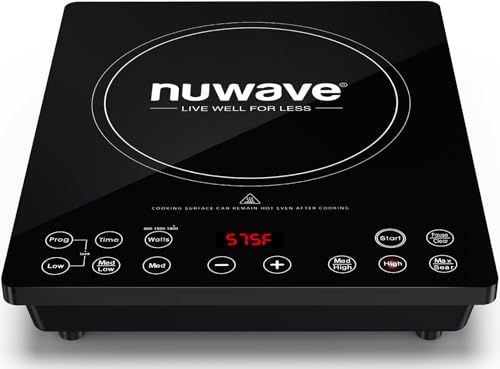
The Nuwave Pro Chef is the precision instrument of this group. Its verified specification is unusually explicit: 1800W of power, a large 8-inch heating coil, and 94 temperature settings running from 100°F to 575°F in 5°F increments, all under a shatter-proof ceramic glass surface. That granularity changes how you cook. Instead of nudging a power level and hoping the pan settles where you want it, you set a temperature and let the burner hold it, which is a genuine advantage for holding a poach, keeping chocolate fluid, frying at a steady heat, or keeping a low simmer from breaking into a boil. The 8-inch coil matters too, because it spreads the induction field across more of the pan base than a small coil can. Nuwave positions the unit as commercial-grade, and the surface material backs that positioning for busy home kitchens as well.
For households where ceramic pans are the everyday fleet, the Nuwave Pro Chef Induction Cooktop offers the right temperament: quick when water is the job, patient when a coating is at stake. Use its lower settings without embarrassment; they are the settings ceramic cookware was designed around. And keep one heavier magnetic pan for the rare violent sear, so the ceramic set never has to do the one job that shortens its life.
The honest limitation is that precision has a learning curve: with 94 settings available, new owners spend their first sessions experimenting, and cooks who simply want high, medium, and low may find the control scheme more involved than their routine requires.
Best for: ceramic owners who want the finest, gentlest temperature control and a wide coil for even heating / Not suited for: owners of pure ceramic cookware, and set-and-forget cooks who dislike menus

ISILER 1800W Portable Induction Cooktop
Badge: Best for Families
Strengths
- 7 cooking presets shorten the path for routine jobs like boiling, frying, and keeping warm
- Safety lock is a real plus in households with curious small hands
- 8-inch heating plate and even-heating design suit everyday pan sizes
Trade-offs
- 10 power and 10 temperature steps are coarser than the finest-control units in this pool
- Preset names never match every cook’s habits, so some owners end up using manual settings anyway
- Single-burner portable format, like the rest of the countertop units here
Key specs (from the verified listing)
- Type: Portable induction cooktop (single burner)
- Power: 1800W
- Heating plate: 8 inch
- Controls: Touch control, 10 power and 10 temperature settings
- Programs: 7 cooking presets, timer, safety lock
The ISILER portable induction cooktop is built around convenience: 1800W of power, an 8-inch heating plate, touch controls with 10 power and 10 temperature settings, and 7 cooking presets, plus a timer and a safety lock. Presets are easy to dismiss as decoration, but for repeatable weeknight jobs they earn their place, because one touch replaces the small ritual of dialing in a setting you use every day. The safety lock deserves a specific mention, since a flat, cool-looking glass surface can invite a child’s touch, and locking the panel removes a category of worry. ISILER also emphasizes even heating in its verified description, which pairs sensibly with the full-size 8-inch plate: the pan base gets a broad field rather than a hot ring in the middle.
With ceramic-coated pans, the ISILER 1800W Portable Induction Cooktop is really a study in gentleness. The coating’s enemies are sudden maximum heat and long dry preheats, and a responsive burner lets you approach temperature in steps instead of leaps. Bring the pan up gradually, add food before the coating ever smokes, and the slick surface will stay slick far longer. Owners who cook eggs and fish daily, the jobs ceramic was bought for, will feel this pairing working within the first week.
Its limitation is granularity: ten steps in each mode is plenty for most meals, but cooks chasing a very specific holding temperature will feel the gaps between steps more than they would on the finest-control model in this guide.
Best for: families cooking daily in ceramic pans who value presets and a safety lock / Not suited for: precision cooks who need the finest manual steps
VEVOR 30-Inch Gas Cooktop (5 Burners)
Badge: Comparison Reference (Gas)
Strengths
- Five burners give the most simultaneous cooking space of any unit discussed here
- NG/LPG convertibility suits homes, RVs, and apartments with either gas supply
- Thermocouple protection cuts the gas if the flame goes out
Trade-offs
- It is a gas appliance, so it does not meet an electric-cooktop brief at all
- Built-in installation requires a cutout, a gas line, and proper ventilation
- Open grates and burners take longer to clean than a flat glass surface
Key specs (from the verified listing)
- Type: Built-in gas cooktop (not electric)
- Size: 30 inch, 5 burners
- Output note: 12250 BTU (per verified title)
- Fuel: NG / LPG convertible
- Material: Stainless steel
- Safety: Thermocouple protection
The VEVOR 30-inch gas cooktop is included in this guide as a prose-only reference point, and the reason is stated plainly: it is a gas appliance, not an electric cooktop. Its verified specification describes a built-in stainless-steel unit with 5 burners, NG/LPG convertibility, and thermocouple protection, positioned for homes as well as camping, RV, and apartment use. Judged purely as a cooktop, the format has real virtues: five burners end the one-pan shuffle, gas responds instantly and visibly, and convertible fueling is genuinely useful where bottled LPG is the practical supply. But none of that changes the fuel mismatch. A reader who came here for an electric cooktop, whether because the kitchen has no gas line, because a lease forbids gas, or because they prefer induction’s cool surface, cannot use this unit as a substitute without a completely different installation decision.
The VEVOR 30-Inch Gas Cooktop (5 Burners) also respects the lighter build of ceramic cookware. A thin-cored pan on a fierce, narrow coil develops a hot bullseye; a broad, steady field heats the whole base at once, which is how ceramic pans are meant to be used. Keep the pan centered, keep the heat moderate, and delicate food releases cleanly instead of welding to a scorched center. That discipline, more than any feature, is what this guide is recommending.
Beyond the fuel mismatch, its limitation for this guide’s readers is installation: a built-in gas cooktop is a permanent, plumbed commitment with ventilation requirements, the opposite of the plug-in flexibility the electric picks offer.
Best for: readers cross-shopping gas for a remodel who own pure ceramic pans / Not suited for: anyone whose brief is an electric cooktop; this unit burns gas
ThermoMate 36-Inch Gas Cooktop (5 Burners)
Badge: Comparison Reference (Gas)
Strengths
- 36-inch width gives five burners real elbow room for large pans
- 304 stainless-steel construction is a durable, food-environment-grade material
- Sabaf burners and CSA certification signal serious component sourcing
Trade-offs
- Gas fuel places it outside an electric-cooktop brief entirely
- 36-inch built-in format needs a wide cutout and a gas supply
- The largest, most permanent installation discussed in this guide
Key specs (from the verified listing)
- Type: Built-in gas cooktop (not electric)
- Size: 36 inch, 5 burners
- Burners: Italy Sabaf power burners (per verified title)
- Material: 304 stainless steel
- Fuel: NG / LPG convertible
- Safety: Thermocouple protection, CSA certified (per verified title)
The ThermoMate 36-inch gas cooktop is the second prose-only reference in this guide, included so the comparison is honest rather than silent. Its verified specification describes a heavy built-in gas hob in 304 stainless steel with 5 Italy Sabaf power burners, NG/LPG convertibility, thermocouple protection, and CSA certification. As gas cooktops go, that is a serious specification: Sabaf is a recognized burner maker, 304 stainless is the grade used where corrosion resistance matters, and a 36-inch deck gives five burners enough spacing for genuinely large cookware. None of those merits, however, make it an electric cooktop. It needs a gas line, a cutout, and ventilation, and it answers a different shopping question than the one this guide’s keyword asks.
For households where ceramic pans are the everyday fleet, the ThermoMate 36-Inch Gas Cooktop (5 Burners) offers the right temperament: quick when water is the job, patient when a coating is at stake. Use its lower settings without embarrassment; they are the settings ceramic cookware was designed around. And keep one heavier magnetic pan for the rare violent sear, so the ceramic set never has to do the one job that shortens its life.
Its limitation for this guide is total: wrong fuel, largest footprint, and a permanent installation. It is documented here for completeness, so readers weighing a kitchen remodel can see the contrast, not as an alternative pick.
Best for: readers comparing a wide gas deck for a remodel and a mixed cookware collection / Not suited for: anyone whose brief is an electric cooktop; this unit burns gas
Comparison Table
The comparison keeps the decisive column in view: what each format means for ceramic cookware. Read the fuel and format notes before the badges; compatibility is the whole question in this guide.
| Model | Badge | Format notes | Listing |
|---|---|---|---|
| Duxtop 9100MC Portable Induction Cooktop | Best Overall | Portable induction, single burner, 1800W — pairs with induction-ready ceramic cookware | Check on Amazon |
| Duxtop 9610LS Portable Induction Cooktop | Best Touch Controls | Portable induction, single burner, 1800W, LCD touch — pairs with induction-ready ceramic cookware | Check on Amazon |
| Nuwave Pro Chef Induction Cooktop | Best Precision Control | Portable induction, single burner, 1800W, 8-inch coil, 94 settings — gentlest ceramic pairing | Check on Amazon |
| ISILER 1800W Portable Induction Cooktop | Best for Families | Portable induction, single burner, 1800W, presets and lock — family ceramic kitchens | Check on Amazon |
| VEVOR 30-Inch Gas Cooktop (5 Burners) | Comparison Reference (Gas) | Built-in GAS, 30 inch, 5 burners — heats any pan, but not electric; prose-only | Guide-only coverage |
| ThermoMate 36-Inch Gas Cooktop (5 Burners) | Comparison Reference (Gas) | Built-in GAS, 36 inch, 5 burners — heats any pan, but not electric; prose-only | Guide-only coverage |
How to Choose the Best Electric Cooktops Using Ceramic Cookware
Start at the bottom of your pans. Flip each ceramic piece over and apply a fridge magnet to the base. If it sticks firmly, the pan has a magnetic layer and will work on the induction burners in this guide; if it slides off, the pan is pure ceramic or non-magnetic coated metal, and induction cannot heat it, full stop. That five-second test, repeated across your set, determines whether this guide’s linked picks are your answer or whether your cookware is telling you to shop for radiant electric formats instead. Honest guides should say that plainly, and this one does.
Assuming your ceramic set is induction-ready, as most modern sets are, choose the burner by control finesse. Ceramic coatings age by heat abuse: repeated scorching, dry preheating at maximum, and thermal shock from a cold pan slammed onto full power. Fine temperature steps are therefore not a luxury in this pairing but the main protective feature, and they are why the 94-setting precision pick leads on this criterion. Evenness is next: a wider coil heats a light pan’s base uniformly, sparing the center the bullseye that ruins both the food and eventually the coating above it.
Then consider the surface relationship, which in this pairing is a pleasure. Ceramic-coated bases are smooth and light, so they sit flat, slide rarely, and mark glass far less readily than rough cast iron. A flat glass induction top is the natural partner, easy to wipe and kind to the pan. What the pairing asks in return is handling discipline: no metal utensils in the pan, no maximum-heat heroics, and no stacking pans inside each other without protection, habits that cost nothing and double a coating’s useful life.
Finally, keep the household picture in view. If your kitchen runs on ceramic for daily cooking but keeps one heavy pan for searing, a single strong induction burner serves both, and the range-format survey in the Best Electric Oven Cooktops guide covers the built-in alternative. If your collection is genuinely pure ceramic, treat the gas references in this guide as a signpost to a different fuel conversation rather than a recommendation, and shop radiant formats with this same compatibility discipline.
How to Cook in Ceramic Cookware on Induction, and Keep the Coating Alive
Setup. Place the burner on a level counter, plug it directly into a wall outlet, and confirm each pan with the magnet test before its first use. Center the pan on the marked zone; light ceramic pans are easy to nudge off-center without noticing, and an induction field only heats where the base overlaps the coil.
Cooking technique. Preheat gradually at a moderate setting, never at maximum, and never leave an empty ceramic pan heating while you prep; the coating’s lifespan is spent in exactly those minutes. Add oil or food as the pan comes up to temperature, and remember that light pans respond faster than heavy ones, so the window between perfect and scorched is shorter. For eggs, fish, and pancakes, the jobs ceramic exists for, the lowest effective setting plus patience outperforms any amount of power. If a recipe demands a violent sear, reach for a different pan and keep the ceramic set for its own work.
Cleaning and care. Let the pan cool before washing; plunging a hot coated pan into cold water is thermal shock in its purest form. Wash with a soft sponge, store pans separated by a cloth or felt protector, and use silicone, wood, or nylon utensils. The cooktop itself needs only a wipe once cool, one of the quiet joys of the glass-and-ceramic pairing: neither surface wants to hold a grudge.
Troubleshooting.
Problem: The burner does not detect the pan at all. → The pan’s base is not magnetic. Confirm with a magnet; pure ceramic and some coated pans without an induction layer cannot be heated by induction, and the fix is a different pan or a different heat type, not a higher setting.
Problem: Food sticks despite the nonstick coating. → The pan was likely overheated, which degrades the coating, or the heat was too high for the food. Cook at a lower setting, preheat gently with oil in the pan, and give proteins time to release naturally.
Problem: A hot spot burns food in the center. → The pan is wider than the coil or was preheated too hard. Use a moderate, longer preheat, match pan size to the coil, and favor the wide-coil precision pick for your largest ceramic skillet.
Ceramic-Coated Versus Pure Ceramic: The Distinction That Decides Everything
The word ceramic covers two almost opposite products. Ceramic-coated cookware is metal, usually aluminum, wearing a thin ceramic-derived nonstick layer; it is light, slick, and, when built with a magnetic base plate, fully induction-ready. Pure ceramic cookware is ceramic all the way through; it is beautiful, chemically inert, slow to heat and slow to cool, and entirely invisible to an induction field. Manufacturers market both under the same word, which is why so many buyers discover a compatibility problem only at the stove.
The practical advice is unglamorous and absolute: test, do not assume. A magnet settles the question for any pan in seconds, and the base markings settle it in the shop, where an induction-ready symbol is worth more than any salesperson’s assurance. Buyers building a ceramic set specifically for an electric kitchen should choose induction-ready pieces from the start, because the pairing, slick light pans over fine, gentle control, is genuinely excellent when the bases cooperate. The wider flat-top context for these surfaces is covered in the Best Electric Flat Cooktops guide.
Heat Discipline: The Skill Ceramic Cookware Actually Requires
Every cookware material has a temperament, and ceramic’s is that it rewards restraint and punishes bravado. Its coating is happiest below the temperatures a searing steak demands, its light core heats faster than intuition suggests, and its surface releases food best when it is hot enough rather than as hot as possible. Cooks who internalize that temperament get years of easy-release cooking; cooks who treat a ceramic skillet like a cast iron one get a stained, sticking pan within a season and blame the coating.
This is why control resolution dominates this guide’s judging. A burner with fine steps is not being precious; it is giving the cook the exact tool ceramic requires, a way to approach temperature gradually and hold it modestly. The same logic explains the safety-lock pick’s place here: in a family kitchen, the discipline that protects coatings is easier to keep when the appliance itself is calm and predictable. Choose the burner that makes gentle cooking easy, and the pans will repay you.
Building a Ceramic Set That Loves Induction: A Buyer’s Field Guide
If you are choosing ceramic cookware and an electric cooktop in the same season, buy them as a system. Start with the two pieces that do most of the work, a skillet around the size of your burner’s coil and a lidded pot, and insist on a stated induction-ready base for both, verified in the shop with a magnet if the packaging is vague. Prefer heavier bases within the ceramic category: a thicker core spreads heat more forgivingly, resists the warping that light pans develop, and gives the burner a steadier load to control. Handles should be oven-safe if you ever finish dishes under a broiler, and lids should be glass if you cook the way most people do, by looking.
Resist the giant set. Ceramic coatings age at different rates by piece, and the skillet that works daily will tire years before the little-used saucepan; buying open-stock pieces lets you replace the warrior without replacing the regiment. Add a saucepan and a larger pot only when a real recipe pattern demands them, and keep one non-ceramic heavy pan, cast iron or thick stainless, for the searing work that shortens coating life. That mixed fleet, ceramic for the delicate majority and iron for the violent minority, is the configuration experienced cooks converge on, and it is the configuration this guide’s burner picks serve best.
Finally, budget a small ritual into ownership: the thirty seconds of gentle preheating, the soft sponge, the felt separator between stacked pans. Ceramic cookware’s bargain with its owner is exactly that ritual in exchange for years of easy release and easy cleaning. Owners who keep the ritual rarely replace pans; owners who skip it replace them and blame the material. The cooktop half of the system, fine and gentle control, exists to make the ritual easy to keep.
What to Do When a Favorite Pan Fails the Magnet Test
Almost every ceramic owner has one beloved pan that turns out to be non-magnetic: a gift, an heirloom, or the perfect omelet pan bought before induction entered the plan. The options deserve a calm ranking. The first and best is reassignment: keep the pan for the oven, where many ceramic pieces excel, or for the occasional use on a different heat source at a friend’s or relative’s stove, and let the induction-ready fleet handle daily duty. Sentiment is a legitimate cookware value, and reassignment honors it without distorting the whole kitchen around one pan.
The second option is the interface disc, a magnetic plate sold to sit between an induction burner and a non-magnetic pan. This guide mentions it to counsel caution rather than enthusiasm: a disc adds a lossy middleman, heating the disc which then heats the pan by contact, surrendering much of induction’s speed and control, and some burner makers discourage the practice. As an emergency bridge for one treasured pan it can serve; as a system for a whole non-magnetic set it defeats the purchase. The third option, replacing the pan with its induction-ready equivalent, is the right call for a daily driver and the wrong call for a treasure. Judge each pan by how often it cooks, and the fleet sorts itself.
Common Buying Mistakes
- Assuming ceramic means induction-ready. Only pans with a magnetic base layer work on induction. The magnet test is five seconds; use it on every piece.
- Preheating an empty ceramic pan at maximum. The fastest way to age a coating. Bring pans up gradually, with oil or food present.
- Using a ceramic skillet for violent sears. Keep one heavy pan for that job and let the ceramic set do the delicate work it was bought for.
- Ignoring coil size with light pans. Thin cores forgive nothing; a wide, even field prevents the scorched bullseye.
- Treating the gas references as electric picks. Gas heats ceramic pans happily, but these units are gas appliances and outside this guide’s electric brief.
- Washing a hot coated pan in cold water. Thermal shock warps pans and stresses coatings; let it cool first, every time.
Final Recommendation
If your ceramic cookware is induction-ready, as most modern sets are, start with the Duxtop 9100MC Portable Induction Cooktop for proven, responsive everyday cooking that treats coatings kindly. Ceramic owners who cook delicately and often should step up to the Duxtop 9610LS Portable Induction Cooktop, whose fine temperature steps and wide coil are the most protective pairing in this pool. The touch-control Duxtop suits cooks who want to repeat exact gentle settings, and the ISILER suits families. If your pans fail the magnet test, let that result redirect the whole purchase honestly, toward radiant formats or a cookware refresh, rather than forcing a pairing physics will not allow.
Frequently Asked Questions
Does ceramic cookware work on induction cooktops?
Ceramic-coated cookware with a magnetic, induction-ready base works very well. Pure ceramic and clay cookware does not work at all, because induction needs a magnetic material to heat. A fridge magnet on the pan’s base settles which kind you own in seconds.
How can I tell if my ceramic pan is induction-ready before buying a cooktop?
Hold a magnet against the base. A firm stick means a magnetic layer is present and the pan will heat on induction. Many pans also carry an induction symbol on the base or packaging, but the magnet is the authority.
What heat settings should I use with ceramic pans on induction?
Moderate ones, approached gradually. Preheat at a medium setting rather than maximum, avoid heating an empty pan, and use the burner’s finer low steps for eggs, fish, and sauces. Ceramic coatings last longest when they are never scorched or shocked.
Why are gas cooktops reviewed in this electric guide?
They were in the assigned pool, so they are covered honestly and in full. Gas would heat ceramic pans of either kind, but these are gas appliances, not electric cooktops, so they are not linked or recommended as electric picks.
Will ceramic pans scratch a glass induction top?
Ceramic-coated pans have smooth, light bases and are among the gentlest cookware on glass. Keep grit off the base, avoid dragging any pan, and the surface relationship is an easy one compared with heavy, rough cast iron.
My ceramic pan is not magnetic. What are my options?
Use it on radiant electric or gas heat, where it will work as designed, or reserve it for oven use if it is oven-safe. If you are committed to induction’s control, replace the daily skillet and pot with induction-ready ceramic pieces and keep the pure ceramic for the oven.
Can I stack ceramic pans for storage on or near the cooktop?
Stack them in a cabinet with a cloth or felt protector between each piece, never bare coating against metal base. Do not store them on the cooktop itself; the glass is a cooking surface, not a shelf, and a stored stack invites both scratches and accidents.