Disclosure: topratedkitchenware.com is reader-supported. When you buy through links on our site, we may earn an affiliate commission from Amazon and other retailers, at no extra cost to you.
Where to buy
Only two of the six verified picks for the best gas cooktops for lp gas actually burn gas and convert to LP, and those two carry the Amazon links below. The other four are portable induction burners that were in the verified pool; they are reviewed honestly as electric alternatives, in plain text with no link, because sending you to an induction burner when you asked for LP gas would be a disservice. Each linked name below goes to its Amazon listing, where you can check the latest price on Amazon and confirm the current conversion kit details before you order.
- Duxtop 1800W Portable Induction Cooktop 9100MC (Black) (covered prose-only in this guide — see its review below for why)
- Duxtop Portable Induction Cooktop 9610LS (Black, LCD Sensor Touch) (covered prose-only in this guide — see its review below for why)
- Nuwave Pro Chef Induction Cooktop (covered prose-only in this guide — see its review below for why)
- ISILER 1800W Portable Induction Cooktop (covered prose-only in this guide — see its review below for why)
- VEVOR Gas Cooktop 30 Inch, 5 Burners, NG LPG Convertible
- ThermoMate 36 Inch Gas Cooktop with 5 Sabaf Burners
Read the full guide ↓ for the reasoning behind every position, the honest limitations of each pick, and the checks that matter more than any headline claim.
Shopping for the best gas cooktops for lp gas starts with a fact many listings bury: most gas cooktops ship set up for natural gas, and LP (liquefied petroleum, usually propane) needs different orifices, a different regulator setting, and an installer who checks the conversion properly. A cooktop that is merely described as gas is not automatically an LP cooktop. In this guide the word convertible is doing real work, and only the picks whose verified titles actually state NG/LPG conversion are linked as LP answers.
That honesty rule shapes the whole list. Of the six verified picks, exactly two — a 30-inch VEVOR and a 36-inch ThermoMate — are built-in gas cooktops stated to convert between natural gas and LPG. The other four are portable induction burners. They are good at what they do, and some households reading this will honestly be better served by switching fuels than by converting, so they are reviewed in full as prose-only alternatives. But they are not gas, they will never burn propane, and this guide will not pretend otherwise with a link and a photo.
The rest of the guide works through the LP-specific decisions in order: what conversion actually involves, how burner layout matters more on LP than on natural gas, what thermocouple protection does, and how to size a regulator and ventilation for a bottled-gas kitchen. If you are comparing neighbouring questions while you decide, the community angle in Best Gas Cooktops Forum is worth reading alongside this page, because LP conversion is one of the topics owners argue about most from real experience.
Key Takeaways
- Only two picks in this guide are true LP answers: both are built-in gas cooktops whose verified titles state NG/LPG conversion.
- Conversion is a hardware change — orifices, regulator setting, and a leak check — not a software setting or a knob position.
- Thermocouple flame-failure protection matters more on LP, because bottled gas keeps flowing if a flame blows out and nobody notices.
- The four induction picks are reviewed prose-only as fuel-switch alternatives; they cannot run on LP gas in any configuration.
- Measure your cutout before anything else: the two linked gas picks are 30-inch and 36-inch, and they are not interchangeable.
- Budget your attention for the installation, not just the appliance: regulator, line sizing, and ventilation decide how an LP cooktop behaves daily.
In this guide
Quick Picks
| Pick | Badge | Why it earns its place | Listing |
|---|---|---|---|
| Duxtop 1800W Portable Induction Cooktop 9100MC (Black) | Best Portable Alternative | The simplest portable electric alternative, included so the fuel decision is explicit rather than assumed. | Prose-only — see review |
| Duxtop Portable Induction Cooktop 9610LS (Black, LCD Sensor Touch) | Best Touch-Control Alternative | A touch-control induction option for readers weighing a fuel switch instead of an LP conversion. | Prose-only — see review |
| Nuwave Pro Chef Induction Cooktop | Most Precise Alternative | The precision benchmark among the electric alternatives, with the finest temperature steps in this pool. | Prose-only — see review |
| ISILER 1800W Portable Induction Cooktop | Best Preset Alternative | The preset-and-timer option among the portable electric alternatives. | Prose-only — see review |
| VEVOR Gas Cooktop 30 Inch, 5 Burners, NG LPG Convertible | Best Overall | One of only two true LP-capable gas cooktops in this pool, and the more compact of the two. | Check on Amazon |
| ThermoMate 36 Inch Gas Cooktop with 5 Sabaf Burners | Best Large LP Pick | The full-size LP answer in this pool: 36 inches, five burners, and stated NG/LPG conversion. | Check on Amazon |
How These Picks Were Chosen
These picks were chosen from a verified pool for the Cooktops group, and every product named here was checked against its listing title on 2026-11-20. The screening question for this keyword was strict: does the verified title show a gas cooktop that can run on LP? Two picks passed — the VEVOR 30-inch and the ThermoMate 36-inch, both stated as NG/LPG convertible, both with thermocouple protection in their titles. Four picks failed that question because they are electric induction burners, and they were kept in the guide as clearly labelled prose-only alternatives rather than quietly linked as if they were gas.
Specs in this guide come only from those verified titles: sizes, burner counts, the BTU figure printed in the VEVOR title, materials, and stated safety features. Nothing here invents a simmer rating, a grate material, or a conversion-kit contents list that the title does not support. Where a detail matters and is not in the title — exact cutout dimensions, for example — the guide tells you to confirm it on the listing and in the manual rather than guessing a number.
This is research-led guidance, not a hands-on test report. No claim is made that these cooktops were installed in a test kitchen. What the guide does instead is explain the LP decision the way an installer would frame it, flag the honest limitation of every pick, and make the fuel mismatch impossible to miss. Readers comparing wider layouts can also look at Best Gas Fired 36 Cooktops for the 36-inch gas question treated on its own terms.
The 6 Best Gas Cooktops for LP Gas (and the Honest Alternatives)
The reviews below follow the assignment order of the verified pool, which puts the electric alternatives first and the two true LP gas cooktops last. Read the badges carefully: the two linked picks are the ones that answer the keyword, and the four prose-only reviews explain, for each induction burner, exactly who might reasonably choose it instead — and who absolutely should not.
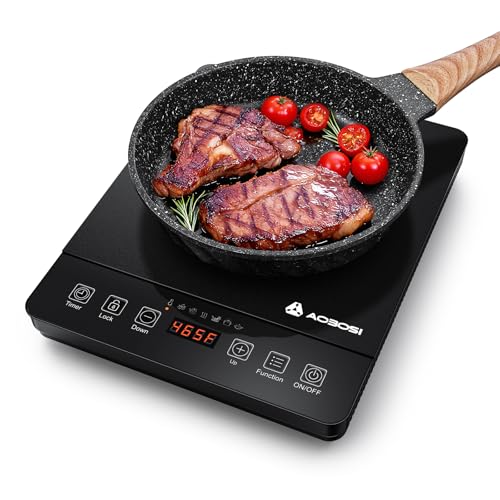
Duxtop 1800W Portable Induction Cooktop 9100MC (Black)
Badge: Best Portable Alternative
Prose-only pick: this is an induction burner, not a gas cooktop. It cannot use LP gas, and it is reviewed here only so you can judge the electric alternative honestly — it carries no Amazon link in this guide.
Strengths
- Fully portable: it needs only a counter and an outlet, with no gas line, regulator, or conversion work
- Induction heats compatible pans quickly and the surface around the pan stays comparatively cool
- Easy to store, which suits small kitchens, dorms, and temporary cooking setups
Trade-offs
- It is not a gas cooktop and cannot run on LP gas in any configuration
- Works only with induction-compatible (magnetic) cookware
- A single portable burner cannot replace a multi-burner built-in for family cooking
| Specification (from the verified listing title) | Detail |
|---|---|
| Fuel / type | Electric induction, portable countertop burner |
| Power | 1800W |
| Colour / model | Black, 9100MC (BT-M20B) |
As a portable burner, the Duxtop 9100MC is the kind of appliance that earns its keep in specific weeks of the year: a holiday when every burner on the main cooktop is spoken for, a canning weekend, a dorm or studio where a full cooktop was never installed. Its 1800W induction element heats compatible pans fast, and because the energy goes into the pan rather than the room, it is a comfortable summer cooking tool.
None of that makes it an LP gas cooktop, and this review exists mainly to draw that line clearly. If your home runs on propane because there is no natural gas service — the classic LP situation — an induction burner only helps if you have reliable electricity and a spare circuit to give it. For households whose LP choice is about resilience during power cuts, an electric burner is the opposite of a solution.
Treat this pick as a supplement, never a substitute: a useful extra burner beside a real gas cooktop, or a stopgap while an LP installation is scheduled. If you came here for a cooktop that burns propane, skip ahead to the VEVOR and ThermoMate reviews, which are the picks that actually answer the question.
Best for: Renters and anyone who wants a spare burner without touching a gas line / Not suited for: Anyone who specifically needs a cooktop that burns LP gas
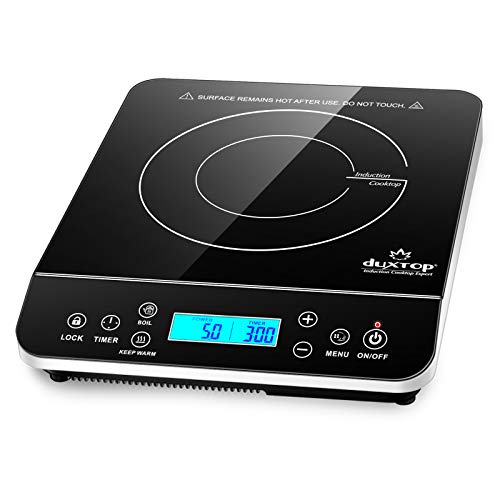
Duxtop Portable Induction Cooktop 9610LS (Black, LCD Sensor Touch)
Badge: Best Touch-Control Alternative
Prose-only pick: an induction hot plate with touch controls. It runs on electricity only, never on LP gas, and carries no Amazon link in this guide.
Strengths
- Touch controls wipe clean and give repeatable power steps
- Portable format works as a buffet warmer, a canning-season helper, or an extra burner at holidays
- No open flame, which some households prefer for indoor air and safety reasons
Trade-offs
- Not a gas appliance and not convertible to LP gas
- Single burner, and the fan and electronics add parts a simple gas hob does not have
- Requires induction-ready pans; aluminium and copper pans without a magnetic base will not heat
| Specification (from the verified listing title) | Detail |
|---|---|
| Fuel / type | Electric induction, portable countertop burner |
| Power | 1800W |
| Controls | LCD sensor touch (BT-200DZ) |
The 9610LS variant leans on its LCD sensor touch controls, and that is its real personality: a flat, wipe-clean surface with repeatable electronic power steps instead of a dial. For cooks who reheat, melt, and simmer in small pans, that control style is pleasant, and the portable format means the burner can live in a cupboard rather than on the counter.
The LP verdict is identical to its sibling, though, and it is worth stating without softening: there is no conversion kit, no regulator setting, and no accessory that turns an induction hot plate into a gas appliance. It also demands induction-compatible cookware, so a household with a beloved set of non-magnetic pans would face a second purchase on top of the first.
Where this pick makes sense is in a mixed-fuel kitchen: LP gas for the main cooktop, and a touch-control induction burner for the tasks flame does badly, like holding a delicate sauce without scorching. Bought with that job description, it is a sensible tool. Bought as an LP cooktop, it would be a mistake this guide is trying to prevent.
Best for: Cooks who like touch controls and want a cleanable flat surface / Not suited for: Off-grid or LP-only kitchens with no reliable electricity at the cooktop
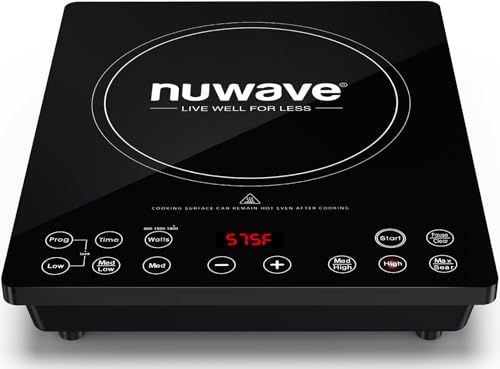
Nuwave Pro Chef Induction Cooktop
Badge: Most Precise Alternative
Prose-only pick: a precision induction burner. Its temperature control is genuinely interesting, but it burns no gas at all, so it carries no Amazon link in an LP gas guide.
Strengths
- Very fine temperature steps suit chocolate, sauces, and low-and-slow work that is fiddly over a flame
- Ceramic glass surface is flat and easy to wipe once cool
- Commercial-grade positioning suggests a sturdier build than basic hot plates
Trade-offs
- Still electric induction: useless during a power cut and impossible to run on LP
- Precision features are wasted if your real need is five burners of flame cooking
- Portable single-burner format limits pan size and batch cooking
| Specification (from the verified listing title) | Detail |
|---|---|
| Fuel / type | Electric induction, commercial-grade portable burner |
| Power | 1800W |
| Heating coil | 8-inch |
| Temperature control | Settings from 100°F to 575°F in 5°F steps (per listing title) |
| Surface | Shatter-proof ceramic glass (per listing title) |
The Nuwave Pro Chef is the most technically interesting of the electric alternatives. Its verified title claims commercial-grade positioning, an 8-inch heating coil, and temperature settings running from 100°F to 575°F in 5°F steps across a shatter-proof ceramic glass surface. That granularity is the sort of thing that matters for chocolate work, confit, and sauces that break when a flame cooktop cycles too coarsely at the bottom of its range.
It is also, plainly, not a gas cooktop. A reader outfitting an off-grid cabin on LP, or a farmhouse where the propane tank is the point of the exercise, gets nothing from this burner when the power is out. Even with power on, a single portable burner cannot host the multi-pan cooking that a built-in five-burner cooktop exists for.
So read this review as a precision benchmark: if your real frustration is temperature control rather than fuel, the Pro Chef shows what the electric side of the market offers. If your frustration is that your current cooktop cannot be converted to LP, the answer is further down the page, in steel, with burners that light.
Best for: Sauce and confectionery work where holding an exact temperature matters / Not suited for: Anyone shopping for an LP gas cooktop to install permanently
ISILER 1800W Portable Induction Cooktop
Badge: Best Preset Alternative
Prose-only pick: a compact preset-driven induction burner. Useful context for the fuel decision, but it is not an LP gas cooktop and carries no Amazon link here.
Strengths
- Presets and a timer suit set-and-check cooking like rice, soups, and reheating
- Safety lock is a thoughtful touch in homes with curious children
- Compact body stores in a drawer or cabinet between uses
Trade-offs
- Electric only: no LP conversion exists for this design
- Preset logic can fight experienced cooks who want direct, immediate control
- One burner, modest plate size, and induction-only cookware requirements
| Specification (from the verified listing title) | Detail |
|---|---|
| Fuel / type | Electric induction, portable |
| Power | 1800W |
| Heating plate | 8-inch |
| Controls | Touch control; power and temperature settings; cooking presets; timer and safety lock (per listing title) |
The ISILER burner competes on convenience: touch control, separate power and temperature settings, cooking presets, a timer, and a safety lock, all in a compact portable body with an 8-inch heating plate. For one-pot cooking in a small apartment — soup started, timer set, lock engaged so a child cannot change the setting — that feature set is coherent and genuinely handy.
Convenience, however, does not change the fuel. This is an electric induction appliance, and no part of its design touches LP gas. Its presets also cut both ways: cooks who think in flame behaviour often find preset logic slower than simply turning a knob and watching the pan, and the single-burner ceiling arrives quickly the first time a meal needs a sauce, a side, and a main at once.
Its honest place in this guide is as the small-space electric alternative. If you rent, cannot modify a gas line, and cook mostly one-pot meals, it deserves consideration on its own terms. If you own your kitchen and your propane tank, it answers a question you did not ask, and the linked gas picks below are where your attention belongs.
Best for: Small households that cook one-pot meals and value a timer and lock / Not suited for: LP gas shoppers, wok cooking over flame, or multi-pan meals
VEVOR Gas Cooktop 30 Inch, 5 Burners, NG LPG Convertible
Badge: Best Overall
Strengths
- Genuinely convertible between natural gas and LPG, which is the whole point of this guide
- Five burners in a 30-inch footprint, a layout many 30-inch cooktops do not offer
- Thermocouple protection cuts the gas if a flame goes out, a meaningful safety layer on LP
Trade-offs
- A 30-inch, five-burner layout is crowded: large pans on adjacent burners will compete for space
- Built-in installation means a cutout, a regulator, and a proper leak check — not a casual weekend swap
- Total output is shared across burners, so do not expect every burner at full power to behave like a large range
| Specification (from the verified listing title) | Detail |
|---|---|
| Fuel / type | Gas, built-in; NG LPG convertible (per listing title) |
| Size | 30 inch |
| Burners | 5 burners; 12250 BTU total figure in listing title |
| Material | Stainless steel |
| Safety | Thermocouple protection (per listing title) |
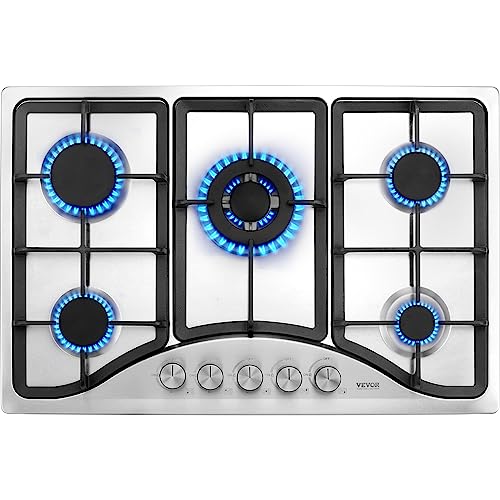
The VEVOR is the first pick in this guide that actually does the job in the title: a built-in gas cooktop, 30 inches wide, with five burners, a stainless steel surface, thermocouple protection, and a verified title that states NG LPG convertible in plain words. For an LP household with a standard 30-inch opening, that combination is exactly the shopping brief, and it is why this pick carries the Best Overall badge here despite arriving fifth in the pool order.
Five burners in 30 inches is a blessing and a squeeze at the same time. The blessing is flexibility: a rapid burner for the stockpot, smaller burners for sauces, and enough simultaneous capacity for a family meal. The squeeze is geometry — two genuinely large pans will crowd each other, and you will develop opinions about which burner gets the big skillet. The 12250 BTU figure in the title is a total for the cooktop, so judge it as a whole-appliance number rather than imagining it at every burner at once.
On LP specifically, plan the installation like you mean it: correct orifices for propane, the regulator set for LP, a soap-solution or electronic leak check at every joint, and a flame check afterwards — LP flames should burn blue and stable, and a lazy yellow flame is a message to stop and call the installer back. Readers who also want a centre griddle in the plan sometimes cross-shop Best Gas Cooktops With Grill ideas, but for a straight LP conversion brief, this VEVOR is the compact answer in this pool. Check on Amazon for the current listing details before you commit your cutout.
Best for: Homes on LP with a 30-inch cutout that want five burners and flame control / Not suited for: Anyone who needs a 36-inch layout or a portable, no-install solution

ThermoMate 36 Inch Gas Cooktop with 5 Sabaf Burners
Badge: Best Large LP Pick
Strengths
- The 36-inch width gives five burners real elbow room for large stockpots and wide pans
- Sabaf burners are a recognised component name in gas cooking, and the listing states them plainly
- NG/LPG convertibility plus thermocouple protection covers both the LP requirement and flame-failure safety
Trade-offs
- Needs a true 36-inch cutout and cabinet width; it will not drop into a 30-inch opening
- Heavier, permanent installation: plan on a licensed installer for the LP line and regulator
- Five burners across 36 inches still means choosing which large pan gets the centre spot
| Specification (from the verified listing title) | Detail |
|---|---|
| Fuel / type | Gas hob, built-in; NG/LPG convertible (per listing title) |
| Size | 36 inch |
| Burners | 5 Italy Sabaf power burners (per listing title) |
| Material | 304 stainless steel |
| Safety | Thermocouple protection; CSA certified (per listing title) |
The ThermoMate is the full-size version of the same honest answer: 36 inches of built-in gas cooktop, five burners from Sabaf — a component maker whose name carries weight in the gas world — a body of 304 stainless steel, thermocouple protection, CSA certification stated in the title, and the same NG/LPG convertibility that this keyword demands. If your kitchen has the width, this is the pick that stops feeling like a compromise.
The extra six inches over a 30-inch model change daily life more than the spec sheet suggests. A wide stockpot and a full-size skillet stop negotiating for the same airspace, and the centre burner becomes a genuine workstation instead of a compromise you route around. For households that cook for gatherings, preserve in batches, or run a wok alongside two side dishes, that space is the difference between a cooktop that copes and one that helps.
LP conversion on a cooktop this size deserves a licensed installer, full stop: five burners of orifice changes, regulator work, and leak testing is professional territory in most jurisdictions, and your insurer may have opinions if it is not. Done properly, you get flame cooking that survives power cuts and behaves the same in January as in July. Shoppers whose plans also involve island ventilation sometimes read Best Gas Cooktops With Down Vents next, but the cooktop decision itself, for LP at 36 inches, is this ThermoMate.
Best for: Larger kitchens on LP that cook with several big pans at once / Not suited for: 30-inch cutouts, rental kitchens, or anyone avoiding a permanent gas installation
Comparison Table
The table below puts the fuel question first, because on this keyword it outranks every other attribute. Note that only the two gas rows carry a listing link; the induction rows are prose-only by design.
| Pick | Badge | Key verified attributes | Listing |
|---|---|---|---|
| Duxtop 1800W Portable Induction Cooktop 9100MC (Black) | Best Portable Alternative | Electric induction; portable single burner; 1800W | Prose-only — see review |
| Duxtop Portable Induction Cooktop 9610LS (Black, LCD Sensor Touch) | Best Touch-Control Alternative | Electric induction; portable single burner; 1800W; LCD sensor touch | Prose-only — see review |
| Nuwave Pro Chef Induction Cooktop | Most Precise Alternative | Electric induction; portable single burner; 1800W; 8-inch coil; wide temperature range in small steps | Prose-only — see review |
| ISILER 1800W Portable Induction Cooktop | Best Preset Alternative | Electric induction; portable single burner; 1800W; 8-inch plate; presets, timer, safety lock | Prose-only — see review |
| VEVOR Gas Cooktop 30 Inch, 5 Burners, NG LPG Convertible | Best Overall | Gas built-in; 30 inch; 5 burners; NG/LPG convertible; stainless steel; thermocouple protection | Check on Amazon |
| ThermoMate 36 Inch Gas Cooktop with 5 Sabaf Burners | Best Large LP Pick | Gas built-in; 36 inch; 5 Sabaf burners; NG/LPG convertible; 304 stainless steel; CSA certified | Check on Amazon |
How to Choose a Gas Cooktop for LP Gas
Start with the conversion statement, and treat it as a pass-or-fail gate. A cooktop for LP must either be factory-set for propane or be explicitly convertible, with the conversion covering both the burner orifices and the pressure regulator. Listings that say only gas, without naming LP, LPG, or propane convertibility, have not answered your question. Both linked picks in this guide state NG/LPG conversion in their verified titles, which is exactly the wording to look for anywhere else you shop.
Understand what LP changes about the flame. Propane is delivered at a higher pressure and carries more energy per cubic foot than natural gas, which is why the orifices are smaller: the appliance meters a denser fuel. A cooktop converted carelessly — orifices changed but regulator ignored, or the reverse — will soot pans, lift flames off burners, or simmer badly. This is also why the conversion belongs to a qualified installer in most places, and why you should keep the conversion paperwork with your appliance documents.
Size the cooktop to the cutout you have, not the kitchen you imagine. The two linked picks frame the choice cleanly: 30 inches with five burners for standard cabinets and tighter pan spacing, or 36 inches with five burners and real working room. Measure the existing cutout in the counter, the cabinet width beneath it, and the clearance to any wall or tall unit beside it. A 36-inch cooktop in a 30-inch world is not a small problem that enthusiasm solves; it is a counter replacement.
Weigh burner layout over burner count. Five burners help only if your pans fit them simultaneously. Sketch your two largest pans as circles on the cooktop diagram before you buy: if they overlap badly on the 30-inch layout, the 36-inch model or a different burner arrangement matters more than any other feature. Households that regularly use a griddle across two burners should check that the layout supports it, a question that overlaps with Best Gas Cooktops With Downdraft And Griddle And Conversions for kitchens planning all three changes at once.
Treat flame-failure protection as non-negotiable on LP. A thermocouple device, stated in both linked picks’ titles, shuts the gas supply to a burner if its flame goes out. On natural gas that is a safety feature; on bottled LP, where a tank can feed an unlit burner for a long time in a closed kitchen, it is closer to a requirement. If a cooktop you are considering does not state flame-failure protection, ask the manufacturer directly before it goes on your shortlist.
Finally, decide honestly whether you want gas at all. The four prose-only induction picks in this guide exist because some readers arrive at an LP search out of frustration with an old cooktop rather than commitment to flame. Induction offers precise low temperatures, a cool room, and no combustion byproducts indoors; gas offers power-cut resilience, universal pan compatibility, and the visual feedback of a flame. Either answer can be right. What is never right is buying one fuel while believing you bought the other.
How an LP Conversion and Setup Actually Work
Knowing the sequence of a proper LP conversion helps you judge quotes, supervise the work, and spot the steps that should never be skipped. The outline below describes the process at the level a homeowner should understand it; the hands-on gas work itself belongs to a licensed installer wherever your local rules require one, which is most places.
- Confirm the kit and the paperwork. Before anyone touches the appliance, the installer verifies that the cooktop is convertible, that the LP orifices for every burner are present, and that the regulator can be set for propane. If any of that is missing, the job stops here rather than improvising.
- Isolate and disconnect. The gas supply is shut off, the old appliance is disconnected, and the work area is ventilated. On an LP system this includes the tank valve, not just the shut-off behind the appliance.
- Swap the orifices. Each burner orifice is replaced with its smaller LP counterpart. Five burners means five swaps, and the removed natural-gas orifices are worth keeping, labelled, in case the appliance ever converts back.
- Set the regulator. The pressure regulator is converted or adjusted for LP delivery pressure. Skipping this step while changing orifices is the classic half-conversion that produces sooty, unstable flames.
- Reconnect and leak-test. Every disturbed joint is tested with an approved leak-detection method. Bubbles or a detector alarm mean the joint is remade, not tightened hopefully and forgotten.
- Light and judge every burner. Each burner is lit in turn and checked at full power and at simmer: flames should be blue, stable, and sitting on the burner ports. The installer also confirms the thermocouple protection by the manufacturer’s procedure.
- Ventilate and document. The kitchen’s ventilation is run, the conversion label is filled in and attached to the appliance, and you keep the installer’s paperwork with the manual.
Day to day, living with an LP cooktop adds a few habits that natural-gas households never think about. Watch the tank gauge the way you watch a heating-oil gauge, and order a refill before the low mark rather than after a mid-dinner flame-out. Keep the burner caps seated correctly after cleaning, because a tilted cap is the most common cause of a suddenly uneven flame. And once a year, lift the grates and look at the burner ports: a port blocked by a boil-over changes flame shape long before it stops a burner lighting.
Troubleshooting. Problem: flames are tall, yellow, and sooting the pans after a conversion → what to do: stop using the cooktop and call the installer back; yellow, sooty flames on LP usually mean the conversion is incomplete or the regulator setting is wrong, and it is not a user adjustment. Problem: a burner clicks but will not stay lit → what to do: check that the burner cap is seated flat and dry, since moisture and misalignment defeat the thermocouple’s flame sensing; if it still drops out, that is a service call. Problem: the whole cooktop weakens when several burners run together → what to do: check the tank level first, then ask your gas supplier whether the regulator and line are sized for the appliance’s total demand, because an undersized supply starves every burner at once.
LP Gas vs Natural Gas: What Actually Differs at the Cooktop
Buyers often ask whether LP and natural gas cooktops are the same appliance with different labels. At the level of the box — burners, grates, valves, ignition — they largely are, which is exactly why conversion is possible. The difference lives in metering: orifice size and supply pressure. Everything you feel at the knob, from simmer quality to how a flame responds when a second burner lights, traces back to whether that metering matches the fuel in the pipe.
There is also a logistics difference that shapes ownership. Natural gas arrives continuously and is billed after use; LP arrives in a tank you own the management of. A household that cooks heavily, cans in autumn, and hosts at holidays should treat tank capacity and refill timing as part of the cooktop purchase, because the best-converted cooktop in the world still goes dark when the tank runs dry. None of this argues against LP — millions of kitchens run on it happily — but it argues for buying the cooktop and planning the supply as one decision.
One more ownership difference deserves a sentence, because it surprises city buyers moving to a rural LP home: delivery rhythm. A propane tank is refilled on a schedule you manage, and the first winter teaches most households to watch the gauge the way drivers watch a fuel needle on a long trip. Some suppliers offer automatic delivery based on estimated usage, which pairs well with a household whose cooking — and therefore gas use — spikes predictably around preserving season and the holidays. None of this changes which cooktop to buy, but it changes how the first year feels, and a guide about LP cooking that ignored the tank would be leaving out the part of the system you interact with most after the knobs themselves.
Ventilation and Clearance on Bottled Gas
Gas cooking produces heat, moisture, and combustion byproducts, and an LP installation deserves the same ventilation seriousness as any other gas appliance: a hood or vent that actually exhausts outside, sized for the cooktop’s total output, with make-up air considered in tight modern houses. Island installations attract extra planning, which is why some readers pair this guide with Best Gas Cooktops With Down Vents And 5 7 Burners when a five-burner island layout is on the table.
Clearances are the quieter half of the same topic. The manual for your chosen cooktop states the distances required to combustible surfaces above and beside it, and those numbers are part of the product, not decoration. When you measure your cutout, measure the clearances in the same pass, especially if upper cabinets or a microwave sit over the cooking surface. An installer who waves at clearances is telling you something about the rest of the job.
Common Buying Mistakes
The most expensive mistake is assuming gas means LP-ready. A natural-gas-only cooktop installed on propane without conversion will burn wrong from the first lighting — sooting, lifting flames, and poor simmer — and the fix is the conversion that should have happened first. Read for the explicit NG/LPG convertible wording, as both linked picks here state, before any other feature impresses you.
The second mistake is converting the orifices and forgetting the regulator, or hiring on price alone and never asking what the job includes. A complete conversion has a checklist — orifices, regulator, leak test, flame check, label — and a quote that sounds too simple usually is. Ask for the checklist in writing; good installers are happy to provide it.
Third, buyers routinely measure the cooktop’s width and forget the cutout, the cabinet, and the clearances, in that order. A 36-inch cooktop is a wonderful thing in a kitchen built for it and a counter-cutting project in one that is not. Measure three times, in three places, before the order — not after the delivery truck leaves.
Finally, do not let a portable induction burner quietly become the plan. They are useful tools, and this guide reviews four of them fairly, but a household that needs LP flame cooking — for power resilience, for wok work, for the simple preference of cooking over fire — will not be talked out of that need by a good hot plate. Buy the fuel you actually want.
Final Recommendation
For most LP households, the first choice in this guide is the VEVOR 30-inch: it is the compact, five-burner, stainless built-in whose verified title states the NG/LPG conversion and thermocouple protection that this keyword is really asking for. If your kitchen has a standard 30-inch opening and your pans are everyday-sized, it answers the brief without asking you to rebuild the counter. Check on Amazon to confirm the current listing and conversion details for your installation.
Choose the ThermoMate instead when your kitchen is genuinely 36 inches wide and your cooking is genuinely wide too — big stockpots, batch cooking, several large pans in play at once. Its Sabaf burners, 304 stainless build, and stated certification make it the full-size LP pick of this pool. And if, after reading the alternatives honestly, you realise your household would rather leave gas behind, the induction burners reviewed above are respectable tools — just buy them as the electric appliances they are, with your eyes open.
Frequently Asked Questions
Can any gas cooktop be converted to LP gas?
No. A cooktop must be designed and certified for conversion, with LP orifices available for its burners and a regulator that can be set for propane. Both linked picks in this guide state NG/LPG convertible in their verified titles. If a listing does not state convertibility, treat the answer as no until the manufacturer confirms otherwise in writing.
Who should perform an LP conversion?
A licensed gas installer, in most jurisdictions. The work involves orifice changes at every burner, regulator adjustment, and leak testing, and your home insurance may require professional installation for gas appliances. This guide explains the sequence so you can supervise and ask good questions, not so you can bypass the professional.
What does thermocouple protection do on a gas cooktop?
It senses whether the burner’s flame is actually lit. If the flame goes out — a gust, a boil-over — the thermocouple cools and the valve shuts off that burner’s gas supply. On LP, where a tank can feed an unlit burner for a long time, that protection is one of the most valuable lines in a specification, and both linked picks state it.
Why are induction burners reviewed in an LP gas guide?
Because they were in the verified pick pool, and hiding them would not help you. They are reviewed honestly as prose-only electric alternatives, with no Amazon link and no image, for readers who may decide to switch fuels entirely. They cannot run on LP gas, and the guide says so in each of their reviews rather than letting a headline imply otherwise.
Is a 30-inch or 36-inch cooktop better for LP cooking?
Neither is better in the abstract; they fit different kitchens and cooking styles. The 30-inch VEVOR suits standard cutouts and everyday pan sizes, while the 36-inch ThermoMate gives five burners room for large pans to coexist. Measure your cutout and sketch your two biggest pans on the burner layout — that exercise answers the question more reliably than any general advice.
What should LP flames look like after conversion?
Blue, steady, and seated on the burner ports, at full power and at a low simmer. Tall yellow flames, flames lifting away from the burner, or heavy soot on pan bottoms all signal a conversion or pressure problem. Those are stop-and-call-the-installer symptoms, not things to cook through.
Can I use an LP cooktop during a power cut?
Generally yes for the burners themselves, which is one of LP cooking’s real advantages — though electronic ignition may need a manual lighting method described in the manual, and any electronic features will be unavailable. This resilience is a legitimate reason to choose gas over the induction alternatives, provided the manual’s manual-lighting procedure is followed exactly.