Disclosure: topratedkitchenware.com is reader-supported. When you buy through links on our site, we may earn an affiliate commission from Amazon and other retailers, at no extra cost to you.
Where to buy
The best highend electric cooktops in today’s market are, almost without exception, induction cooktops — and this guide’s verified pool shows why. Electric cooking used to mean slow radiant elements and guesswork; induction changed the physics, heating the pan directly, responding instantly, and holding temperatures with a precision no resistance coil can match. All six products below are induction models verified for this keyword, ranging from a commercial-grade certified burner to the finest-stepping precision unit in its class, and all six are linked so you can check the latest price on Amazon for the exact model.
- Nuwave Pro Chef Induction Cooktop — Best Precision. Ninety-four temperature settings in fine 5°F steps across a wide range.
- Nuwave Double Pro Cooktop — Best Overall Range. From 50°F to 575°F with three wattage settings and dynamic watt technology.
- ChangBERT Induction Cooktop — Best Professional Grade. NSF certified stainless commercial countertop burner.
- Duxtop Portable Induction Cooktop 9610LS — Best Touch Control. LCD sensor touch on a proven 1800W platform.
- Duxtop 1800W Portable Induction Cooktop 9100MC — Best Established Classic. The benchmark portable electric burner of its generation.
- ISILER 1800W Portable Induction Cooktop — Best Compact for Beginners. Ten plus ten settings, seven presets, timer and safety lock.
Read the full guide ↓ for the detailed reviews, comparison table, and the explanation of why induction now defines the top of the electric category.
Electric cooktops carry a reputation problem inherited from another era. The radiant coil stove of memory — slow to heat, slower to cool, impossible to judge by eye — taught two generations of cooks that electric meant compromise. Induction is the rebuttal, and it is worth understanding before spending at the high end of this category. An induction cooktop generates a magnetic field that heats the pan itself; the glass surface stays comparatively cool, energy stops being wasted into the kitchen air, and a change of setting changes the pan’s temperature almost immediately. Add digital temperature control — the ability to name a temperature and have the burner hold it — and electric cooking stops imitating gas and starts doing things gas cannot. That is the standard the six products in this guide are judged against, and it is why households comparing fuels should also read the gas-side analysis in Best Home Propane Cooktops before deciding which high end is theirs.
Key Takeaways
- High-end electric now means induction: direct pan heating, instant response, precise holdable temperatures and a surface that stays comparatively cool.
- The Nuwave Pro Chef offers the finest control in this pool — 94 temperature settings in 5°F increments from 100°F to 575°F.
- The Nuwave Double Pro offers the widest range, starting at 50°F, plus flexible 900W, 1500W and 1800W wattage settings.
- The ChangBERT brings professional evidence — NSF certification and stainless commercial construction — to an electric countertop burner.
- Every pick requires magnetic-base cookware; run the magnet test over your pans before ordering any of them.
- Safety is an electric advantage worth naming: no open flame, no combustion in the kitchen, and surfaces that cool far faster than radiant elements.
In this guide
Quick Picks
| Pick | Badge | Power | Standout feature | Link |
|---|---|---|---|---|
| Nuwave Pro Chef | Best Precision | 1800W | 94 temp settings, 5°F steps, 100°F–575°F | Check on Amazon |
| Nuwave Double Pro | Best Overall Range | 900/1500/1800W | 50°F–575°F, dynamic wattage | Check on Amazon |
| ChangBERT | Best Professional Grade | 1800W | NSF certified, stainless body, 10-hour timer | Check on Amazon |
| Duxtop 9610LS | Best Touch Control | 1800W | LCD sensor touch panel | Check on Amazon |
| Duxtop 9100MC | Best Established Classic | 1800W | Long-running benchmark design | Check on Amazon |
| ISILER Portable | Best Compact for Beginners | 1800W | 7 presets, safety lock, touch control | Check on Amazon |
The quick picks sort by temperament as much as by specification: the laboratory cook, the professional, the traditionalist, the beginner. The detailed reviews take each in turn, and readers planning a permanent electric installation rather than a countertop unit will find the built-in formats addressed in Best Induction 30 Inch Cooktops and Best Induction 36 Cooktops.
How These Picks Were Chosen
These picks were chosen by research rather than hands-on testing, and the guide claims no cooking sessions it did not hold. Each product was verified through Creators API listing data — exact title, brand, power, temperature structure, controls, surface and certifications — and only facts present in those listings appear as specifications below. The keyword’s core attribute is electric fuel, and induction is an electric technology, so all six pool products qualify on fuel; they were then ranked on the qualities that separate high-end electric cooking from basic electric cooking.
Those qualities, in order, are: temperature architecture (how many settings, in what steps, across what range), power delivery (headline wattage is capped by household circuits, so management features matter more), surface and construction (shatter-proof ceramic glass, stainless bodies), control design (touch, button or preset philosophies), and intended environment (home counter, commercial counter, small apartment). Certifications were treated as evidence, not decoration. Prices and ratings were excluded from the selection evidence altogether — both fluctuate, and neither measures control, build or fit for your kitchen.
One framing decision deserves stating. This pool consists of portable and countertop units, because that is where the verified high-end electric products for this keyword currently concentrate. The buying guide below places them honestly against built-in electric formats, so a reader whose project is a permanent installation can see exactly where the countertop category ends and the built-in category begins.
The 6 Best Highend Electric Cooktops, Reviewed in Detail

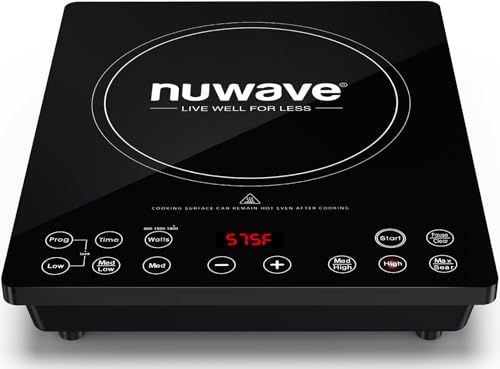
Nuwave Pro Chef Induction Cooktop
Badge: Best Precision
Strengths
- Ninety-four temperature settings across 100°F to 575°F, adjustable in 5°F increments — the finest control structure in this pool.
- Commercial-grade positioning with a large 8-inch heating coil and a shatter-proof ceramic glass surface.
- Full 1800W power, so precision does not come at the cost of boiling and searing ability.
Trade-offs
- Fine control rewards methodical cooks; improvisers may find the granularity more than they use.
- The 8-inch coil disciplines pan size, as with most precision portables.
- A single burner caps multi-pan meals regardless of how precise that burner is.
Mini spec box
- Format: Portable countertop single burner, commercial-grade
- Fuel: Induction (electric)
- Power: 1800W
- Coil: Large 8-inch heating coil
- Temperature: 94 settings, 100°F–575°F in 5°F increments
- Surface: Shatter-proof ceramic glass
There is a moment in every precision cook’s life when a recipe stops being approximate. Candy reaches a stage by degrees. A custard sets or splits across a narrow band. Chocolate seized yesterday at a temperature today’s cook intends to hold exactly. The Pro Chef is built for that cook: ninety-four settings is not a marketing flourish but a working structure, letting you move the temperature in steps small enough to hunt for a threshold without overshooting it, and return to the exact setting next week from a notebook rather than from memory.
The supporting specification respects the headline. A large coil gives the precision a fair stage — temperature control means little if the pan’s edges live in a different climate from its centre — and shatter-proof ceramic glass answers the reasonable fear of putting serious cookware, and serious money, on a glass surface. Commercial-grade positioning suggests the unit expects daily, unglamorous work rather than occasional display, which is the right expectation for an instrument you intend to lean on.
Its honest limitation is temperament, not quality: this is a tool for cooks who measure. If your cooking is gloriously approximate — and much wonderful cooking is — the finer steps will go unused and a simpler unit will feel friendlier. But for the cook who has ever wished a burner could simply be told a temperature and trusted, the Pro Chef is the clearest expression in this pool of what high-end electric means. Its category context is explored further in Best Inductin Cooktops.
Best for: precision cooks — candy, sauces, custards, delicate holding — who will use fine temperature steps daily / Not suited for: improvisational cooks or multi-burner family production

Nuwave Double Pro Cooktop
Badge: Best Overall Range
Strengths
- The widest temperature span here: 50°F to 575°F, from gentle warming to full searing in a single electric unit.
- Dynamic Watt Technology with 900W, 1500W and 1800W settings adapts to different circuits, venues and tasks.
- Shatter-proof ceramic glass and a seamless IMD touch panel make a durable, wipe-clean working surface.
Trade-offs
- An 8-inch coil still governs which pans heat evenly.
- The seamless touch panel shares touch technology’s wet-hands caveats.
- Its range is wasted on cooks who live entirely in the middle temperatures.
Mini spec box
- Format: Portable countertop induction cooktop
- Fuel: Induction (electric)
- Temperature range: 50°F–575°F
- Wattage: 900W / 1500W / 1800W with Dynamic Watt Technology
- Coil: 8-inch heating coil
- Surface: Shatter-proof ceramic glass
- Controls: Seamless IMD touch panel
If the Pro Chef is the pool’s scalpel, the Double Pro is its multitool — and the more versatile instrument for most households. The low end of its range deserves attention first, because 50°F is a warming and holding temperature, the territory of keeping plates, sauces and finished dishes in their happy state without cooking them further. Electric cooking’s party trick has always been this low, steady, flameless hold; a range that starts there turns one burner into both the gentlest warmer and, at the other end, a 575°F searing station.
The wattage flexibility is the practical intelligence underneath. Households do not all offer the same electrical environment: an older kitchen circuit shared with other appliances, an RV supply, a hall or venue socket of unknown provenance. A burner that can be set to draw less — and still cook — travels between those worlds without tripping breakers or sulking. Combined with the seamless panel and shatter-proof surface, the design reads as engineered for real, varied life rather than for a single showroom counter.
Its honest limitation is the familiar geometry: range cannot widen a coil. Buy it for versatility across temperatures and electrical settings, use pans sized to its coil, and it is arguably the most complete single electric burner in this guide. Readers comparing built-in versatility at full kitchen scale can continue in Best Induction Cooktops 30 Inch.
Best for: versatile households wanting one electric burner that warms, holds, cooks and sears across different circuits / Not suited for: cooks wedded to oversized pans or physical controls

ChangBERT Induction Cooktop
Badge: Best Professional Grade
Strengths
- NSF certification named in the listing — third-party, professional-grade evidence rarely attached to countertop electric burners.
- Premium stainless steel countertop construction built for commercial environments.
- Large 8-inch coil, 1800W power and a 10-hour timer form a coherent working specification.
Trade-offs
- Professional intent means fewer domestic presets and a utilitarian presence on the counter.
- Its build and size are more than a light, occasional-use buyer needs.
- Single burner: the format ceiling applies to professionals’ side stations too.
Mini spec box
- Format: Portable commercial countertop burner
- Fuel: Induction (electric)
- Power: 1800W
- Coil: Large 8-inch heating coil
- Body: Premium stainless steel
- Certification named in listing: NSF Certified
- Timer: 10 hours
Electric cooking has a particular advantage in professional environments that gas cannot copy: no combustion, no open flame, and no heat dumped into an already hot kitchen beyond what the pan needs. The ChangBERT is the pool’s clearest expression of that professional electric case. NSF certification is the headline because it is evidence — a design examined against standards that commercial food operations actually specify — and the stainless construction and ten-hour timer are its supporting witnesses.
Imagine the settings where this specification earns its keep: a café’s soup or sauce station, a food truck working within electrical limits, a caterer’s mobile kitchen, a test kitchen that needs an extra precise burner without a gas fitter. In each, the unit’s virtues are durability, repeatability and cleanliness of operation. The large coil respects professional pan sizes, and the timer respects a working day.
Domestic buyers should weigh its character honestly. This is equipment, and it behaves like equipment: capable, solid, and uninterested in being pretty or preset-holding. A home cook who runs a serious preserving, brewing or batch-cooking practice may find that exactly right. A home cook wanting a friendly first electric burner will be better served by the beginner-oriented pick below. High end, again, is a fit — and for the professional fit, this is the pool’s strongest candidate.
Best for: professional counters, food businesses and serious batch cooks wanting certified electric equipment / Not suited for: casual domestic users wanting presets and a light footprint
Duxtop Portable Induction Cooktop 9610LS
Badge: Best Touch Control
Strengths
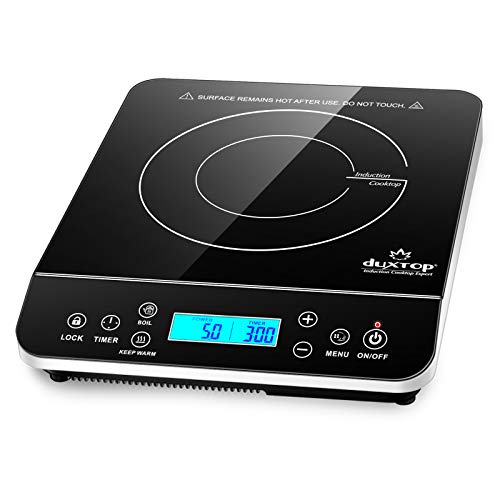
- LCD sensor touch controls give a flat, modern interface with nothing to trap grease or crumbs.
- Built on Duxtop’s established 1800W portable platform — proven underpinnings beneath the modern panel.
- Digital settings are repeatable: note a level for a favourite dish and return to it exactly.
Trade-offs
- Touch panels can misread steam, splashes and wet fingers.
- Its temperature architecture is the established one, not the pool’s precision frontier.
- Single burner with a standard coil size.
Mini spec box
- Format: Portable countertop single burner
- Fuel: Induction (electric)
- Power: 1800W
- Controls: LCD sensor touch
- Model: 9610LS / BT-200DZ
- Finish: Black
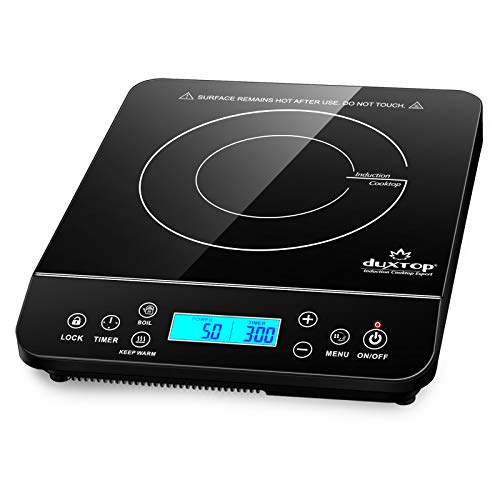
The 9610LS argues that interface is a high-end feature in its own right. A cooktop’s controls are touched more often than any other part of it, and the flat LCD sensor panel changes that touch completely: a deliberate press on glass, a number that can be remembered, and afterwards a single wipe that leaves no knob shafts furry with grease. In an electric category whose surfaces are already famously easy to clean, extending that cleanliness to the controls is a coherent, satisfying idea.
Underneath the panel sits the platform that made Duxtop the category’s household name, which matters: this is not an experimental interface on an unknown burner, but a modern front on proven machinery. For the methodical home cook — the one with a notebook of settings for eggs, rice and sauces — digital repeatability is a genuine daily pleasure, and the black glass presence suits the modern counter it will likely live on.
The honest limitations are touch technology’s own. Steam is a kitchen’s weather, and sensors occasionally read weather as input; wet hands are a cook’s normal state, and panels prefer dry ones. Cooks who work fast and splashy may prefer physical buttons. But for the tidy, deliberate cook, the 9610LS is the pool’s most civilised interface, and a fine ambassador for high-end electric in a domestic kitchen. The full-format electric picture continues in Best Induction Cooktops 36.
Best for: tidy, methodical home cooks wanting a flat touch interface on a proven electric burner / Not suited for: wet-handed, high-splash cooking styles
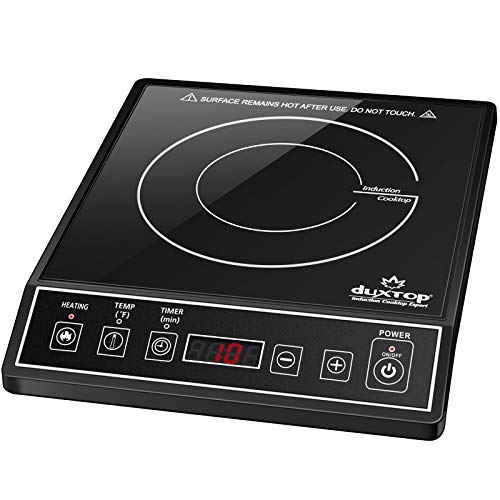
Duxtop 1800W Portable Induction Cooktop 9100MC
Badge: Best Established Classic
Strengths
- The benchmark portable electric design of its generation, with a long record of ownership behind it.
- Full 1800W power and the straightforward, honest core of induction cooking.
- Compact black unit that stores easily and asks little of its owner.
Trade-offs
- Newer rivals in this pool offer finer steps, wider ranges and longer timers.
- Black glass shows dust and fingerprints between cooks.
- Single burner, standard coil — the portable ceiling.
Mini spec box
- Format: Portable countertop single burner
- Fuel: Induction (electric)
- Power: 1800W
- Model: 9100MC / BT-M20B
- Finish: Black
Every technology has the product that carried it into ordinary homes, and for portable induction that product is very plausibly this one. The 9100MC’s specification is unadorned — full power, level control, a black glass top — because its historical job was to prove that electric induction worked, cooked beautifully and belonged on a home counter. A generation of owners later, that proof is complete, and the model’s continued presence in a high-end guide rests on the most old-fashioned premium quality of all: it is known.
Known means its behaviour holds no surprises. Its strengths and its quirks have been mapped by years of kitchens, and the buyer choosing it is choosing certainty over novelty. For a household adding induction beside an existing stove — to gain a fast kettle-boiling burner, a precise sauce station, an overflow ring at holidays — certainty is often the exact requirement, and the classic delivers it without demanding that its owner learn a new control philosophy.
Its honest limitation is that the frontier has moved. The precision and range specialists in this pool genuinely do things this design does not attempt, and a cook shopping specifically for those capabilities should buy them instead. But high end is not only the frontier; it is also the settled, perfected standard — and on that definition the 9100MC’s badge is earned.
Best for: buyers wanting the proven benchmark of portable electric cooking, especially as a supplementary burner / Not suited for: seekers of the finest temperature steps or widest range

ISILER 1800W Portable Induction Cooktop
Badge: Best Compact for Beginners
Strengths
- A legible control scheme for newcomers: 10 power settings and 10 temperature settings with touch control.
- Seven cooking presets translate common jobs into single presses while a beginner learns the technology.
- Timer and safety lock add household-friendly protection, and the compact design stores anywhere.
Trade-offs
- Ten-step granularity is a starting point, not the precision this guide celebrates elsewhere.
- Presets approximate; serious cooks will outgrow them and cook manually.
- Single burner, 8-inch plate — small-scale cooking by design.
Mini spec box
- Format: Portable countertop single burner
- Fuel: Induction (electric)
- Power: 1800W
- Heating plate: 8 inch
- Controls: Touch control, 10 power and 10 temperature settings
- Extras named in listing: 7 cooking presets, timer, safety lock
High-end guides rarely spare a kind word for the beginner’s product, which is a mistake: the right first appliance is the one that teaches without intimidating. The ISILER’s design understands the assignment. Ten power and ten temperature settings are enough to learn what induction levels feel like without drowning a newcomer in granularity, and the seven presets let a nervous first cook produce dinner on day one and start experimenting on day two. The safety lock acknowledges real households — children, cats, elbows — and the timer builds the habit of trusting the burner with timed work.
Its natural homes are the first flat, the dorm room, the office kitchenette and the small household whose cooking is honestly one pan deep. In those settings its compactness is a headline feature: it stores in a drawer or a cupboard, travels to a holiday rental, and turns any socket into a kitchen. Even heating across its plate, as the listing describes, matters most exactly there, where this burner is not the backup but the stove.
The honest limitation is headroom. A cook who catches the precision bug — and induction tends to cause it — will eventually want finer steps and a wider range, and this unit will become the household’s second burner rather than its instrument. That is a fine lifecycle for an appliance at the friendly end of a high-end category: it starts the journey honestly, and it stays useful after the journey continues.
Best for: beginners, students, small flats and anyone wanting a compact, preset-friendly first electric cooktop / Not suited for: precision specialists or family-scale cooking
Comparison Table
| Pick | Power | Temperature story | Controls | Standout evidence | Link |
|---|---|---|---|---|---|
| Nuwave Pro Chef | 1800W | 94 settings, 5°F steps, 100°F–575°F | Precision panel | Shatter-proof ceramic glass | Check on Amazon |
| Nuwave Double Pro | 900/1500/1800W | 50°F–575°F range | Seamless touch | Dynamic Watt Technology | Check on Amazon |
| ChangBERT | 1800W | Commercial-grade control | Professional panel | NSF certified, stainless | Check on Amazon |
| Duxtop 9610LS | 1800W | Established level control | LCD sensor touch | Proven Duxtop platform | Check on Amazon |
| Duxtop 9100MC | 1800W | Established level control | Classic panel | Benchmark longevity | Check on Amazon |
| ISILER Portable | 1800W | 10 power + 10 temp settings | Touch + presets | 7 presets, safety lock | Check on Amazon |
The temperature column separates the pool into its true classes: two precision instruments, one professional, two established benchmarks and one friendly starter. None of those classes is a failure — the table’s job is to make sure you buy from the class your cooking actually belongs to.
How to Choose a High-End Electric Cooktop
Start with the physics, because electric is not one technology. Radiant electric heats an element that heats glass that heats your pan — serviceable, but slow to respond and hard to hold precisely. Induction heats the pan directly and is the technology behind every pick in this guide and, increasingly, behind the entire premium end of the electric category. If you are spending at the high end of electric, you are spending on induction’s control; make sure the product in front of you actually is induction, a check that sounds obvious and is failed in search results every day.
Next, run the magnet test over your cookware. Induction requires a magnetic pan base: cast iron, enamelled steel and induction-ready stainless pass; plain aluminium, copper and glass fail. The test takes five minutes with a fridge magnet and decides whether your purchase includes a cookware replacement bill. Do it before ordering, and weigh the result honestly — a beloved non-magnetic pan collection is a real cost of switching, even if the long-term control gains repay it.
Then interrogate the temperature architecture. Count the settings, measure the steps, check the range’s ends. Fine steps serve delicate work; a low range floor serves warming and holding; a high ceiling serves searing. Match the architecture to your three most-cooked dishes and your one most ambitious dish, and you will choose correctly. After that, consider power flexibility — selectable wattage is a quiet superpower in older homes, RVs and shared circuits — and the surface: shatter-proof ceramic glass and flat, cleanable panels are the difference between a cooktop that ages gracefully and one that looks tired in a year.
Finally, place the format honestly. These countertop units excel as primary cookers for small households and as precision or overflow stations in larger ones. A household that cooks four burners deep every night should translate the same priorities — induction, fine control, good surfaces — into a built-in format instead, and treat this guide’s pool as the proof of what to demand there.
How to Cook Well on Induction: Setup, Technique and Care
Setup begins with the circuit. An 1800W burner is a major appliance load; give it a circuit that is not simultaneously feeding a kettle and a microwave, set the unit where its vents can breathe, and centre flat-based pans on the coil marking for full contact. If your model offers wattage settings, learn which setting your kitchen’s wiring prefers before the dinner party, not during it.
Technique adjusts in one delicious direction: everything happens sooner. Water boils faster than gas habits expect, preheats complete while you are still chopping, and a pan taken from high to low actually becomes low instead of coasting on stored heat. Exploit the temperature settings for repeatable work — eggs, rice, sauces, chocolate — and note the settings that work, because digital control turns your notebook into an asset. With cast iron, preheat gently and gradually; the pan’s mass will even out, but a violent start can create a hotspot fierce enough to warp a lesser pan over time.
Care is the category’s daily dividend. Because the surface itself never reaches element temperatures, spills do not bake on during cooking; most wipe away afterwards with a cloth. Attend promptly to sugary spills, which can mark glass if left to harden and reheat, use non-abrasive cleaners, and keep vents dust-free. Lift heavy pans rather than dragging them, and the surface will look new for years.
Troubleshooting, in the usual pattern. Problem: the burner will not recognise a pan → the base is non-magnetic or too small; confirm with cast iron and a magnet. Problem: a large pan cooks unevenly → its base overhangs the coil; use a pan matched to the coil or accept a gentle rim for gentle dishes. Problem: the unit pauses or shuts down in long sessions → check vent clearance and circuit sharing before suspecting a defect; protection systems and busy circuits explain most interruptions.
Electric Safety and Efficiency: The Quiet High-End Arguments
Two arguments for high-end electric rarely make the brochure’s front page and deserve this section. The first is safety. There is no open flame to catch a towel, no combustion consuming the kitchen’s air and producing by-products that must be vented, and no burner that stays dangerously hot long after cooking — induction surfaces carry residual heat from the pan, not from an element, and cool correspondingly faster. For households with children, elderly cooks, or small and under-ventilated kitchens, those are not footnotes; they are the decision.
The second is efficiency of the unglamorous, bill-paying kind. Energy that goes into the pan is energy you paid for doing its job; energy that heats the kitchen air around a flame or an element is a tax on every meal, and in summer it is a tax paid twice when cooling follows. Induction’s direct transfer is why these burners boil so startlingly fast. Neither argument requires exaggeration — electric’s high end does not need it. Control, safety and efficiency, in one flat glass surface, is a strong enough case stated plainly.
Where Radiant Electric Still Fits — and Why This Pool Is Induction
A fair guide should acknowledge the electric technology that is not in this pool. Radiant cooktops — smooth glass over heating elements, or the older exposed coil — remain on sale, remain cheaper to buy, and work with every pan ever made, including the aluminium and copper that induction refuses. For a landlord fitting a rental kitchen, a cabin that cooks twice a year, or a household whose cookware collection is entirely non-magnetic and entirely beloved, radiant can be the rational purchase. Its costs are paid in daily experience rather than money: slower response, heat that lingers after the setting drops, surfaces that bake spills on while cooking, and low-temperature control that amounts to hopeful cycling.
The reason this pool is entirely induction is that the keyword asks for the high end, and the high end is where those daily-experience costs are exactly what the buyer is paying to escape. Control is the product. When a household has decided to spend for the top of the electric category, the comparison that matters is among induction designs — their steps, ranges, surfaces and builds — which is the comparison the six reviews above conduct. Radiant’s honest role in this guide is as the baseline that defines what “high end” is an improvement upon.
There is one more hybrid reality worth naming: many households live with both. A radiant or gas stove carries the multi-burner load while a single premium induction burner — the pattern of every pick here — handles the precision work, the fast boils and the overflow. That mixed kitchen is not a failure to commit; it is often the smartest allocation in the room, putting each technology on the work it does best. If that is your kitchen, this pool is not an alternative to your stove but its most capable colleague, and the reviews should be read with that partnership in mind.
Wattage, Circuits and Kitchen Wiring: The Unglamorous Decider
Every portable electric cooktop lives inside an electrical reality that brochures prefer not to discuss, so this guide will discuss it. A standard household socket circuit has a ceiling, and an 1800W burner at full power is a large share of it. Run the burner beside a kettle, a microwave or a toaster on the same circuit and the breaker may end your cooking session abruptly and correctly. This is not a defect in any product; it is arithmetic. The buyer’s job is to know their kitchen’s circuits — which sockets share a breaker, where the heavy appliances live — and to place a high-power burner on a circuit that can feed it.
This is also where selectable wattage stops sounding like a specification and starts sounding like wisdom. A unit that can be set to draw 900W or 1500W instead of its full 1800W can keep cooking politely in an older home, an RV or a shared venue where the full draw would be antisocial or impossible. The trade is speed, not capability: water takes longer, searing waits a little, but dinner happens. When you compare the products in this pool, weigh that flexibility by your actual sockets, not by an abstract preference for maximum numbers. The highest wattage you cannot use is worth less than the lower wattage you can.
Built-in electric cooktops solve the same problem permanently with dedicated circuits installed by an electrician, which is one more reason the format decision and the electrical decision are secretly the same decision. Renters and countertop buyers manage the circuit they have; renovators get to design the circuit they want. Either way, the household that thinks about wiring before the first tripped breaker cooks calmer than the household that learns about it mid-sauce.
A Day of Cooking on High-End Electric
Morning is where induction first seduces. Water for coffee or porridge boils with a speed that rearranges a routine — the kettle’s job, suddenly contestable by a pan. Eggs, the classic test of control, reward the temperature settings: a pan held at a chosen, repeatable level produces the same gentle set today that it produced yesterday, and the cook who keeps notes starts to build a small private cookbook of numbers. This repeatability is the daily texture of high-end electric, unglamorous and cumulative.
Midday and evening test the other virtues. A soup or sauce can sit at an exact, patient hold through an afternoon — the low end of the range earning its keep — while a sear at dinner uses the ceiling and the instant response: the pan is hot when the food lands, and the setting drops the moment the cook decides, not seconds later when an element cools. Between meals, the flat surface returns to being counter, wiped in a pass, with no grates to move and no burner caps cooling on the side. In a small kitchen, that shapeshifting — stove, then counter, then stove again — is worth as much as any specification in this guide.
None of this requires the cook to be a technician. It requires only that the burner hold what it is told, respond when it is told, and clean without a negotiation. That is the whole promise of the category’s high end, and it is why the products in this pool — precision, professional, classic and beginner alike — are all expressions of one idea: electricity, finally, cooking on the cook’s terms.
Common Buying Mistakes
Mistake one: buying a radiant electric unit believing it is induction, and discovering the difference in response time at the first meal — read the technology line, not the photograph. Mistake two: skipping the magnet test and meeting your cookware’s incompatibility on delivery day. Mistake three: judging by headline wattage when every serious single burner shares the same circuit ceiling, and the real differences are steps, range and power management. Mistake four: mismatching pan and coil sizes, then blaming the physics for a geometry error. Mistake five: buying a precision instrument for improvisational cooking, or a beginner’s preset unit for precision ambitions — the mismatch of temperament is the most expensive mistake in this guide, and the easiest to avoid by knowing your own cooking.
Final Recommendation
Choose by temperament and you will choose well. The precision cook’s answer is the Nuwave Pro Chef (Check on Amazon), with its ninety-four settings and fine steps. The versatile household’s answer is the Nuwave Double Pro (Check on Amazon), spanning warming to searing with wattage flexibility. The professional’s answer is the ChangBERT (Check on Amazon), certified and stainless. Run the magnet test first, match the temperature architecture to your real dishes, and high-end electric will repay you at every meal.
Frequently Asked Questions
Is induction really electric, and how is it different from radiant?
Yes — induction is fully electric, powered from the same supply as any electric cooktop. The difference is delivery: a radiant element heats itself and then the pan, while induction’s magnetic field heats the pan directly. That is why induction responds instantly, holds temperatures precisely and leaves its surface comparatively cool, and why it defines the high end of the electric category.
What pans work on these cooktops?
Any pan with a magnetic base: cast iron, enamelled steel and induction-ready stainless steel. Plain aluminium, copper and glass do not work unless made with a magnetic base layer. The fridge-magnet test settles every case in seconds — if the magnet grips the base firmly, the pan will heat.
Why do the temperature steps matter so much?
Because holding a temperature is induction’s signature skill, and steps are how finely you can aim it. Coarse steps force a choice between slightly-too-hot and slightly-too-cool; fine steps — the Pro Chef’s ninety-four settings in small increments — let you park a sauce, a custard or a chocolate exactly where it belongs and return to that setting reliably.
Can these countertop units handle a big stockpot?
Within reason. The constraint is the coil: most units here use an 8-inch class coil, so a pot with a base near that size heats evenly, while a much wider pot will have a cooler rim. For gentle simmering that is acceptable; for even searing it is not. Match your largest regular pot’s base to the coil before buying.
Are electric cooktops safer than gas?
They remove several specific risks: no open flame, no combustion by-products in the kitchen air, and no element that stays at full heat after cooking. They introduce their own ordinary cautions — hot pans are still hot, and glass surfaces need reasonable care — but for households with children or limited ventilation, the electric safety profile is a genuine advantage.
What does selectable wattage actually do for me?
It lets the burner draw less power when the environment requires it: an older circuit, a shared socket, an RV supply or a venue of unknown wiring. The Double Pro’s three settings are the example in this pool. Cooking slows somewhat at lower settings, but the burner keeps working where a fixed full-power unit might trip a breaker and stop entirely.
Do these cooktops work during a power cut?
No — electric cooking’s honest weakness is its dependence on the supply, where a gas burner with a match can keep working. Households in outage-prone areas weigh that seriously, and some keep a simple camping stove for emergencies. For most households the trade is worth it for the control, safety and efficiency described in this guide, but it should be a conscious trade, not a surprise.
Is an induction cooktop a good choice for elderly cooks or beginners?
Often an excellent one. There is no flame to manage, no element glowing at full heat after cooking, and the surface cools quickly once the pan leaves it. Temperature settings also forgive inattention better than a dial position does, because a set temperature is a ceiling the burner works to hold rather than a flow of heat that continues regardless. Combined with features like the safety lock and timer on the beginner pick in this pool, those traits make high-end electric a genuinely considerate choice for households cooking across generations.
How long do glass induction surfaces stay looking good?
Years, with ordinary care: lift heavy pans instead of dragging them, clean sugary spills promptly, and use non-abrasive cleaners. The surface never endures element heat directly, which is why induction tops age more gracefully than radiant glass. Fine scratches from daily life are cosmetic, not functional, and the shatter-proof designs in this pool address the more serious fear outright.
Should I buy countertop or built-in electric?
Countertop if you rent, live small, cook one or two pans deep, or want a precision station beside an existing stove. Built-in if you own the kitchen, cook multi-burner meals daily, and are planning for a decade. The technology priorities — induction, fine control, good surfaces — are identical; only the format and the commitment differ.