Disclosure: topratedkitchenware.com is reader-supported. When you buy through links on our site, we may earn an affiliate commission from Amazon and other retailers, at no extra cost to you.
Where to buy
This guide to the best induction cooktops australia shoppers can realistically order, use and live with brings together six verified listings from our research pool. Four of them are genuine portable induction burners and carry Amazon links, so you can check the latest price on Amazon for the exact model. Two listings in the pool turned out to be gas cooktops, not induction at all, so they are reviewed honestly as prose-only contrast picks with no link and no image: naming them here protects you from buying the wrong fuel type by mistake. Read the full guide ↓ for badges, honest trade-offs, a comparison table and the Australia-specific buying advice — voltage, plugs, cookware and sizing — that matters more than any single feature list.
- VEVOR Gas Cooktop 30 Inch, 5 Burners — Contrast Pick, Gas Not Induction (prose-only, no link). Listed so Australian readers can recognise and rule out a gas built-in that appears in induction searches.
- ThermoMate 36 Inch Gas Cooktop, 5 Burners — Contrast Pick, Gas Not Induction (prose-only, no link). A large stainless gas hob that fails the first test of this guide: the fuel type.
- Duxtop 1800W Portable Induction Cooktop, Gold 8100MC — Best Overall. Best for Australian households wanting a proven single-burner starting point.
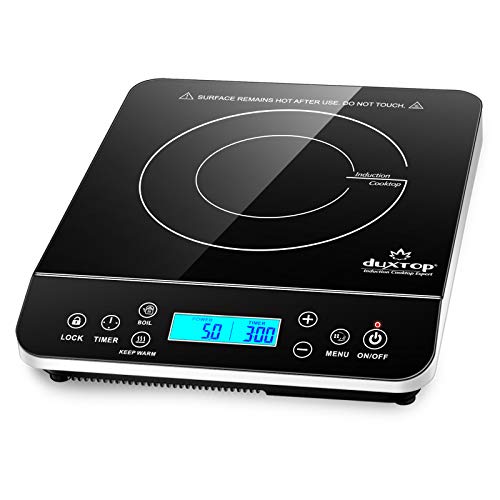
- Duxtop Portable Induction Cooktop, Silver 9600LS — Best Touch Controls. Best for cooks who prefer an LCD sensor-touch panel over dials and buttons.
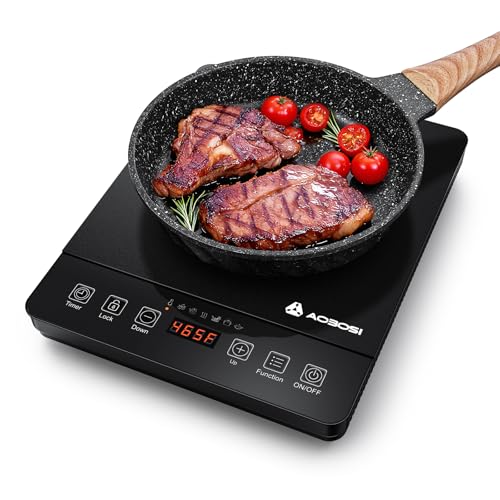
- AAOBOSI Portable Induction Cooktop, 1800W — Best for Apartments and Travel. Best for renters, units and holiday cooking with presets and a timer.
- 1800W Portable Induction Cooker, Stainless Steel — Best Long-Timer Pick. Best for slow, supervised cooks who value push-button controls and a long timer window.
Shopping for the best induction cooktops australia-wide raises questions that a generic global guide rarely answers. Australian homes run on a different voltage and frequency from North America, our plugs are different, our kitchen measurements are metric, and many of the listings an Australian shopper finds online were written for another market entirely. None of that makes induction a bad buy here — induction is arguably better suited to Australian conditions than anywhere, because it adds almost no waste heat to the kitchen during a long, hot summer. It does mean the homework is different, and this guide is organised around that homework.
The honest starting point is format. Every verified induction pick in this guide is a portable countertop single burner, not a built-in bench-top unit. That is a deliberate, defensible shape for a first induction purchase in Australia: portables need no electrician, no cabinetry cut-out and no hardwiring decision, they work in rentals where modifying a kitchen is not allowed, and they can be stored in a cupboard when bench space is tight. If your end goal is a full built-in induction bench, treat a portable as the low-risk way to learn the cooking style, test your cookware with a magnet, and discover whether you like touch controls before committing to a major install. Readers weighing a second burner for a van or annexe will also find useful overlap in our companion guide on Best Induction Cooktops For Rv, where power budgets are tighter still.
Two warnings frame everything below. First, fuel type: two of the six pool listings are gas cooktops wearing induction-adjacent search placement, and they are flagged plainly rather than quietly linked. Second, electrical compatibility: a portable induction burner designed for the North American market cannot simply be plugged into an Australian power point with a travel adaptor and expected to work correctly or safely. The detailed section on voltage below explains what to check, what a step-down transformer can and cannot do, and why many Australians ultimately buy portables through local channels while using guides like this one for the model research. None of that reduces the value of comparing these models carefully — the control style, timer range and build you prefer here is the same shortlist logic you will use locally.
Key Takeaways
- Only four of the six pool listings are actually induction; the two gas built-ins are prose-only contrast picks with no links, because fuel type is the first filter in this category.
- Every linked pick is a portable 1800W single burner — ideal for rentals, units, caravans and as a first induction trial before committing to a built-in bench.
- Australia runs on 230–240V at 50Hz with Type I plugs; a North American 120V burner needs more than a plug adaptor, so verify voltage compatibility before ordering anything.
- Induction only heats magnetic cookware; the fridge-magnet test on the base of your pans is the cheapest compatibility check you will ever run.
- Control style is the real day-to-day difference between these models: push buttons, sensor touch and preset programs suit different cooks.
- A long timer and fine low-end control matter more for Australian slow cooking, rice and gentle sauces than headline wattage, which is identical across the linked picks.
In this guide
Quick Picks
| Pick | Badge | Format | Why it stands out | Check |
|---|---|---|---|---|
| VEVOR Gas Cooktop 30 Inch, 5 Burners | Contrast Pick — Gas, Not Induction (Prose-Only) | Built-in gas, 5 burners | Included only so you can rule it out: wrong fuel type for an induction search | Prose-only — no link |
| ThermoMate 36 Inch Gas Cooktop | Contrast Pick — Gas, Not Induction (Prose-Only) | Built-in gas, 5 burners | A large stainless gas hob that fails this guide’s first test | Prose-only — no link |
| Duxtop 1800W Portable Induction Cooktop, Gold 8100MC | Best Overall | Portable induction, single burner | The long-running, straightforward 1800W design most first-time buyers mean | Check on Amazon |
| Duxtop Portable Induction Cooktop, Silver 9600LS | Best Touch Controls | Portable induction, single burner | LCD sensor-touch panel in a silver finish for wipe-clean control | Check on Amazon |
| AAOBOSI Portable Induction Cooktop, 1800W | Best for Apartments and Travel | Portable induction, single burner | 20 temperature and power levels, 4 preset modes and a 4-hour timer | Check on Amazon |
| 1800W Portable Induction Cooker, Stainless Steel | Best Long-Timer Pick | Portable induction, single burner | Push-button controls, 18 temperature settings and a 10-hour timer | Check on Amazon |
Read the badges as a map, not a ranking carved in stone. If you cook mostly weeknight meals for two, the Best Overall Duxtop in gold is the simplest answer. If you hate physical buttons catching crumbs, the silver touch-panel model earns its badge. If your cooking leans on presets and set-and-check timers, the AAOBOSI and the stainless long-timer model are the two to compare closely. And if you arrived here actually wanting open-flame cooking, the two prose-only gas entries explain what you would be choosing instead — a legitimate choice, but a different purchase with different installation and ventilation needs, as readers comparing Best Induction Electric Cooktops will also notice when they weigh radiant electric against true induction.
How These Picks Were Chosen
This is a research-led guide, not a hands-on laboratory test, and it is written to be honest about that. We started from a verified pool of listings checked through the Creators API on 2026-11-20, recording each product’s ASIN, official title and image before a single word was drafted. Only specifications that appear in those verified titles are stated as specifications in this article — wattage, timer length, control type, preset counts and temperature-setting counts. Where a title does not state a figure, this guide does not invent one.
The first pass was a fuel-type audit, and it changed the shape of the guide. Two pool listings with strong search placement turned out to be gas cooktops. Linking them inside an induction guide would mislead exactly the readers the guide exists to help, so both were demoted to prose-only contrast picks: fully described, clearly badged, carrying no Amazon link and no product image, with the reason recorded in the sources file. That is the same standard applied across this site, and it is why the link count in this article is lower than in a guide where all six picks qualify.
The remaining four portables were then compared on the factors Australian buyers actually feel: control interface, timer range, preset usefulness, build materials named in the listing, and suitability for rentals, units, caravans and small benches. Because all four share the same headline power figure, the comparison deliberately looks past wattage to the low end of the range — how gently a burner can hold a simmer — and to the practical question of cleaning a flat glass surface in a busy kitchen. Finally, each pick was checked against the Australia lens itself: would this recommendation still make sense given local voltage, metric cookware sizing and summer heat? Picks that only made sense in a North American kitchen context would not have survived that pass.
The 6 Best Induction Cooktops for Australian Kitchens, Compared Honestly
A quick word on how to read this section. The two gas entries come first, in pool order, because recognising them early will save you the most money. The four induction burners follow, each with an official product image, strengths and trade-offs, a specification box limited to verified listing data, and a clear verdict. Prose-only picks carry no image and no link, by design.
VEVOR Gas Cooktop 30 Inch, 5 Burners
Badge: Contrast Pick — Gas, Not Induction (Prose-Only)
Strengths
- Five burners on a 30 inch built-in footprint, the classic family layout for a full bench installation.
- Natural gas and LPG convertible, which matters in Australian homes off the mains gas network using bottled gas.
- Thermocouple protection named in the listing, a flame-failure safety feature worth having on any gas appliance.
Trade-offs
- It is a gas cooktop, not induction — it fails the defining requirement of this guide outright.
- Built-in installation means cabinetry work, a licensed gasfitter in Australia, and compliance certification.
- Open flame adds significant waste heat and combustion moisture to the kitchen, the opposite of induction’s appeal in summer.
Spec box (verified listing data only): Fuel: gas, NG/LPG convertible. Size: 30 inch. Burners: 5. Total output figure in title: 12250 BTU. Build: stainless steel. Safety: thermocouple protection. Format: built-in.
Why include a gas cooktop in an induction guide at all? Because Australian shoppers searching for induction regularly land on listings like this one, and the costliest mistake in this category is ordering the wrong fuel type. As a gas appliance, the VEVOR is a coherent product: five burners, a familiar stainless finish, and dual-fuel flexibility that suits regional homes on bottled LPG. Judged as a gas hob for someone who has deliberately chosen flame cooking, it has a clear audience. Judged against the search that brought you here, it is simply not the product type under review, and no honest guide should present it as one.
There is also an Australian compliance angle. Gas installations must be carried out by a licensed gasfitter, and appliances must carry the required local certification. A reader who ordered this unit expecting a plug-in induction burner would face return shipping, restocking stress and a kitchen project they never planned. That is the practical harm this prose-only treatment exists to prevent.
Best for: readers who have consciously decided on gas and want a five-burner built-in layout / Not suited for: anyone shopping for induction, renters, or anyone wanting a portable burner
ThermoMate 36 Inch Gas Cooktop, 5 Burners
Badge: Contrast Pick — Gas, Not Induction (Prose-Only)
Strengths
- A wide 36 inch, five-burner layout with room for large stockpots and multiple pans at once.
- 304 stainless steel construction named in the listing, a grade associated with corrosion resistance.
- Italy Sabaf burners and CSA certification named in the listing, with thermocouple protection included.
Trade-offs
- Again: gas, not induction. The fuel mismatch is total, however good the hardware may be.
- The 36 inch built-in format demands a large cut-out, serious bench space and professional gas installation.
- Five open flames produce the highest waste-heat load of anything in this article — a real drawback in an Australian summer kitchen.
Spec box (verified listing data only): Fuel: gas, NG/LPG convertible. Size: 36 inch. Burners: 5, Italy Sabaf. Build: 304 stainless steel. Safety: thermocouple protection, CSA certified. Format: built-in.
The ThermoMate is the bigger sibling of the same story. On paper it is an appealingly serious gas hob: wide, stainless, with named European burners and a certification callout. In a guide about gas cooktops it would deserve a full linked review. In this guide it serves as the second, larger example of why the first check in any cooktop purchase is not size, finish or burner count — it is fuel type, printed plainly in the title if you read titles carefully.
For Australian readers, the size deserves a metric translation: 36 inches is roughly 91 centimetres, wider than the standard 60 centimetre cooktop footprint most Australian kitchens are built around. Even a reader who genuinely wanted gas would need to measure the existing cut-out before considering a unit like this. Size mismatches and fuel mismatches are the two most common expensive errors in this category, and this pair of prose-only picks demonstrates both.
Best for: committed gas cooks with a large bench and a licensed gasfitter booked / Not suited for: induction shoppers, standard 60 cm Australian kitchens, or anyone avoiding installation work
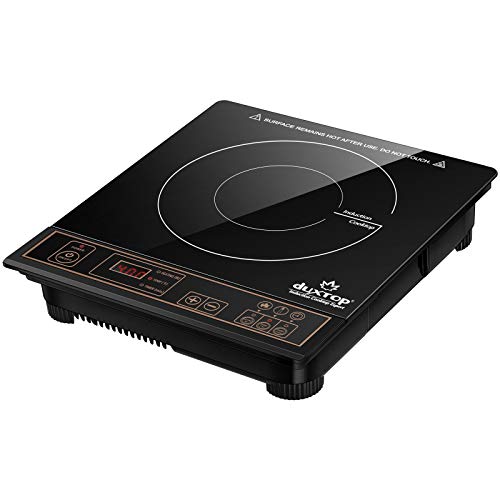
Duxtop 1800W Portable Induction Cooktop, Gold 8100MC
Badge: Best Overall
Strengths
- A long-running 1800W portable design (model 8100MC, BT-180G3) with a deep base of owner experience behind the name.
- Single-burner countertop format: no installation, no electrician, easy to store upright in a cupboard or pantry.
- Fast, responsive induction heating that keeps waste heat out of the kitchen — a genuine advantage in Australian summers.
Trade-offs
- One burner only; cooking a full multi-pot meal means sequencing dishes or owning a second unit.
- North American market design, so Australian buyers must verify voltage and plug compatibility before ordering (see the voltage section below).
- Gold finish is a love-it-or-leave-it look that will not blend into every kitchen.
Spec box (verified listing data only): Power: 1800W. Type: portable induction cooktop, countertop burner. Model: 8100MC, BT-180G3. Finish: gold. Burners: 1.
The Duxtop 8100MC earns Best Overall because it is the reference point for this entire product class: a single, full-power induction burner in a compact countertop body, from a brand that has sold portable induction longer than most rivals have existed. For an Australian reader testing whether induction suits their cooking, this is the lowest-drama way to find out. Boiling a kettle’s worth of water for pasta, searing a steak in a cast-iron pan, or holding a gentle simmer for a curry — the burner handles the everyday repertoire without asking you to renovate anything.
Its honest limitation is throughput, not quality. One burner means one pot at full power, and family cooks who routinely juggle three pans will feel that ceiling quickly. Many owners solve it the modular way: one portable now, a second later if the style clicks, which still avoids the cost and permanence of a built-in install. Readers exploring that two-burner path often compare notes with the models in Best Induction Cooktops For Rvs, where cooking on limited bench space is the whole design problem.
Best for: first-time induction buyers, renters, and anyone wanting a reliable extra burner / Not suited for: large families cooking several pots simultaneously every night
Check on Amazon to check the latest price on Amazon for the Duxtop 8100MC.
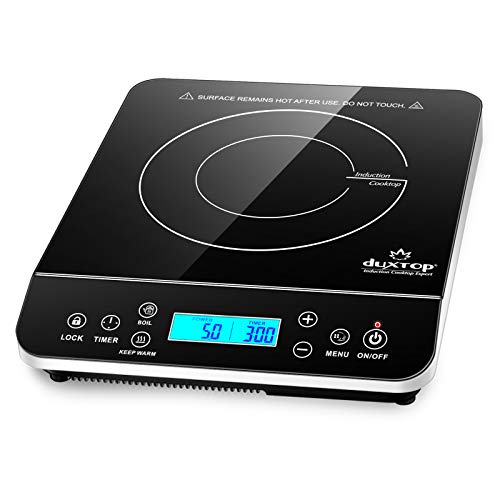
Duxtop Portable Induction Cooktop, Silver 9600LS
Badge: Best Touch Controls
Strengths
- LCD sensor-touch control panel (model 9600LS, BT-200DZ): a flat surface that wipes clean in seconds after a splatter.
- Same proven 1800W Duxtop induction platform in a silver finish that suits stainless-heavy Australian kitchens.
- Touch controls pair naturally with a flat glass top — no knobs or button gaps trapping grease.
Trade-offs
- Touch panels can be less forgiving with wet fingers or when a cloth wipes across them mid-cook.
- Still a single burner with the same sequencing limits as every portable in this guide.
- Like its gold sibling, it is a North American listing, so voltage verification is an essential pre-order step for Australians.
Spec box (verified listing data only): Power: 1800W. Type: portable induction cooktop, countertop burner. Controls: LCD sensor touch. Model: 9600LS, BT-200DZ. Finish: silver. Burners: 1.
If the gold 8100MC is the platform’s classic form, the 9600LS is its modern face. The decision between them is mostly about how you like to cook. Sensor touch suits cooks who adjust heat in small steps while watching a display, and who value a bench appliance that looks like a single sheet of glass and metal. In a small Australian unit kitchen, where the burner may live on the bench permanently, that cleanability is not cosmetic — it is the difference between a surface you wipe daily and one that quietly accumulates grime around controls.
The honest caveat is tactile. Some cooks, especially those moving from gas knobs, miss physical feedback and find touch sliders fiddly with damp hands. Neither reaction is wrong; it is exactly the kind of preference a first portable purchase is meant to reveal cheaply, before the same control style is built into a bench at renovation prices.
Best for: cooks who prefer touch controls and easy-clean surfaces / Not suited for: cooks who strongly prefer physical buttons or dials
Check on Amazon to check the latest price on Amazon for the Duxtop 9600LS.

AAOBOSI Portable Induction Cooktop, 1800W
Badge: Best for Apartments and Travel
Strengths
- 20 temperature and power levels give finer adjustment steps than basic models, useful for gentle sauces and rice.
- 4 preset modes plus a 4-hour timer suit set-and-check cooking in busy households.
- The listing explicitly names apartments, RVs and outdoor cooking — the portable brief, stated plainly.
Trade-offs
- Preset modes are only as good as their fit with your pans and portions; expect a learning week.
- A newer name than Duxtop in this category, with a shorter owner-history trail to research.
- Single burner, and the same Australian voltage-check requirement as every North American portable here.
Spec box (verified listing data only): Power: 1800W. Levels: 20 temperature and power levels. Presets: 4 modes. Timer: 4 hours. Type: portable induction cooktop. Named uses: apartments, RVs, outdoor cooking.
The AAOBOSI is the pick for readers whose cooking is scheduled rather than supervised. Twenty adjustment levels and a four-hour timer window make it the natural home for the dishes Australian households batch on a Sunday — a slow curry, a stock, a pot of rice that must be ready when people are. Presets will not replace judgement, but for repeatable weeknight tasks they remove the fiddling that makes some cooks abandon a new appliance.
Its travel framing is real but needs the Australian footnote: a portable burner is only as portable as the power supply at the destination. In a caravan park on mains hookup, or a holiday rental with standard power points, it is a genuinely useful second burner. Off-grid, it belongs to the inverter-and-battery conversation, which the Best Induction Cooktops For Rvs guide treats in more depth.
Best for: apartment cooks, preset-and-timer fans, and holiday-rental cooking / Not suited for: cooks who want the longest-established brand name in the category
Check on Amazon to check the latest price on Amazon for the AAOBOSI portable induction cooktop.

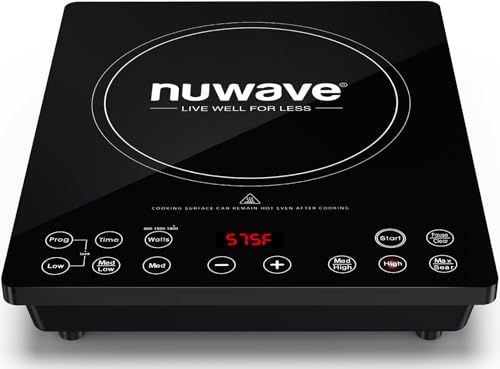
1800W Portable Induction Cooker, Stainless Steel (OneSetNuf)
Badge: Best Long-Timer Pick
Strengths
- A 10-hour timer — the longest window in this guide — for genuinely slow, supervised cooking sessions.
- Push-button controls that work with wet hands and give unambiguous tactile feedback.
- Stainless steel body, dual IGBT power control and 18 temperature settings named in the listing; commercial-grade positioning.
Trade-offs
- The 8-inch coil size in the title means very large pans will overhang the heating zone and heat less evenly at the edges.
- Push buttons are less sleek than a touch panel and take a fraction longer to wipe down.
- Commercial-grade language describes build intent, not a certification — and the voltage check still applies for Australia.
Spec box (verified listing data only): Power: 1800W. Heating coil: 8 inch. Temperature settings: 18. Timer: 10 hours. Controls: push-button. Build: stainless steel. Power control: dual IGBT. Positioning: commercial-grade.
This stainless unit is the workhorse temperament of the group. Where the Duxtop touch model optimises for elegance, this one optimises for endurance: physical buttons you can operate without looking, a timer that outlasts any recipe in a home kitchen, and a metal body that shrugs off the knocks of being moved between bench, cupboard and holiday house. For Australian readers who preserve, batch-cook sauces, or run long gentle simmers, the ten-hour timer is not a gimmick — it is the feature the other picks cannot match.
Its limitation is geometry. An 8-inch coil under a very wide frypan leaves the outer ring cooking by conduction from the centre, so this burner rewards right-sized pans. That is true of induction generally, but it is worth stating plainly here because the listing itself names the coil size — use it as your pan-shopping guide.
Best for: batch cooks, preservers, and anyone who prefers physical buttons / Not suited for: cooks whose favourite pans are much wider than the stated coil
Check on Amazon to check the latest price on Amazon for the stainless portable induction cooker.
Comparison Table
| Pick | Fuel / Type | Power | Controls | Timer | Check |
|---|---|---|---|---|---|
| VEVOR Gas Cooktop 30 Inch | Gas, built-in, 5 burners | 12250 BTU (title figure) | Gas knobs | — | Prose-only — no link |
| ThermoMate 36 Inch Gas Cooktop | Gas, built-in, 5 burners | Gas burners | Gas knobs | — | Prose-only — no link |
| Duxtop 8100MC Gold | Induction, portable, 1 burner | 1800W | Standard controls | See listing | Check on Amazon |
| Duxtop 9600LS Silver | Induction, portable, 1 burner | 1800W | LCD sensor touch | See listing | Check on Amazon |
| AAOBOSI Portable | Induction, portable, 1 burner | 1800W | 20 levels, 4 presets | 4 hours | Check on Amazon |
| Stainless Induction Cooker | Induction, portable, 1 burner | 1800W | Push-button, 18 settings | 10 hours | Check on Amazon |
The table makes the guide’s central fact impossible to miss: wattage does not separate these induction burners at all. What separates them is how you interact with them — touch versus buttons, presets versus manual levels, a four-hour timer versus a ten-hour one. Choose on interaction and use case, and you will choose well. Choose on headline power, and you are choosing on the one number that is identical everywhere.
How to Choose the Best Induction Cooktops Australia Shoppers Should Shortlist
Start with voltage, not features. Australia supplies 230–240 volts at 50Hz through Type I power points. North America supplies roughly half that voltage at 60Hz. A portable induction burner built for the North American market is therefore not an adaptor away from working in Brisbane or Ballarat: a simple travel adaptor changes only the plug shape, not the voltage, and running a 120V appliance on 240V can destroy it and create a safety hazard. A step-down transformer rated comfortably above the burner’s draw is the technically correct bridge, but at 1800W that means a large, heavy, costly transformer that erases most of the portability you bought. The practical paths for Australians are to buy a locally supplied 240V version of a similar model, or to treat guides like this one as model research — control style, timer, build — and then source the equivalent through an Australian channel. Either way, verify before you pay, and treat any listing that is vague about voltage as a listing to skip.
Test your cookware with a magnet. Induction heats the pan itself through a magnetic field, so the pan must be magnetic: cast iron and most stainless steels with a magnetic base qualify; pure aluminium, copper and glass do not, unless they carry a bonded induction base. Hold a fridge magnet to the base of each pan you own. If it sticks firmly, the pan will almost certainly work. Budget honestly for replacements if your favourite pans fail the test — a new burner plus three new pans is a different purchase from a burner alone, and readers comparing tighter budgets often start with the shortlist in Best Induction Cooktops Under $200 before adding cookware costs.
Think in centimetres and in meals. Australian benches and cabinetry are metric, and standard cooktop footprints here are 60 cm and 90 cm — the 30 and 36 inch figures in imported listings are roughly 76 cm and 91 cm. For portables the relevant measurement is simpler: the coil or heating zone in the listing (8 inches, about 20 cm, on the stainless pick) tells you the pan base size that will heat most evenly. Then think in meals, not burners: a single portable suits couples, singles, and households happy to cook sequentially; entertainers who regularly run three pots at once should treat a portable as a supplement, not a replacement, for a full cooktop.
Match controls and timers to your cooking. If you simmer, braise and preserve, timer length and low-end gentleness dominate: the ten-hour stainless pick and the four-hour AAOBOSI exist for you. If you sear, stir-fry and boil, responsiveness dominates, and any of the four linked burners will feel dramatically faster than an old radiant electric hob. If your kitchen is small and the burner lives out permanently, prioritise the wipe-clean touch surface. Features only matter where they meet a habit you actually have.
How to Set Up and Use a Portable Induction Burner Safely
- Check the power point and circuit. Plug the burner directly into a wall outlet, not a power board or extension lead, and avoid running another heavy appliance on the same circuit at the same time.
- Give it air. Portable induction units cool themselves with internal fans and vents. Leave clear space around the sides and back, and never run one on a soft surface that blocks airflow.
- Start with a magnet-tested pan, centred on the coil marking. An off-centre or undersized pan heats unevenly and may not be detected at all.
- Add food or liquid before long high-power runs. Induction can heat an empty pan to damaging temperatures remarkably fast; dry-heating is the quickest way to warp a pan and stress the glass surface.
- Learn your burner’s low end first. Cook rice, melt chocolate or hold a sauce at the gentlest setting before testing maximum power — low-end behaviour is where models differ most and where daily satisfaction is won.
- Let the fan finish. Many units keep a cooling fan running briefly after switch-off. Wait for it before packing the burner away, especially in a caravan or cupboard.
- Wipe the surface once cool. A flat glass top cleans with a damp cloth and mild detergent; burnt-on sugar should be removed promptly once the surface is safe to touch, before it bonds.
Troubleshooting. Problem: the burner will not start or flashes an error with a pan on it → the pan is probably non-magnetic, too small for the coil, or off-centre; test with a magnet and a larger cast-iron pan. Problem: the unit shuts down mid-cook on high power → overheating protection has likely tripped; check that vents are unblocked and the surface underneath is flat and hard, then restart at a lower setting. Problem: a humming or buzzing sound while cooking → light pans at high power can vibrate against the glass; it is usually harmless, and heavier cookware or a small power reduction typically quiets it.
Voltage, Plugs and Ordering from Overseas: The Australia Section Most Guides Skip
Because this guide is specifically for Australian readers, this section deserves its own space. Three separate compatibility questions get conflated in most listings: plug shape, voltage, and frequency. Plug shape is the easy one — adaptors exist. Voltage is the hard one, as covered above: 240V into a 120V appliance is destructive, and no passive adaptor fixes it. Frequency (50Hz here, 60Hz in North America) is the subtle one: many modern appliances tolerate both, but motors and some electronics are designed around one, which is another reason the manufacturer’s stated input range — printed on the rating label, not the marketing copy — is the document that decides.
There is also a warranty and consumer-rights dimension. Goods bought from overseas marketplaces may not carry the practical consumer guarantees Australians expect from local purchases, and returning a heavy appliance internationally is rarely economical. None of this is an argument against researching models globally — the four linked burners here are genuinely good designs worth knowing. It is an argument for separating the research decision (which model, which controls, which timer) from the supply decision (which channel delivers a 240V, locally warranted version to your door). Readers who enjoy the deeper technology comparison behind that research often continue into Best Inductive Cooktops, where the terminology itself gets unpacked.
Induction in an Australian Summer, and Why Portables Suit Rentals
Gas and radiant electric cooktops heat the kitchen almost as enthusiastically as they heat the pan. Induction heats the pan and little else: the surface warms mainly by contact with the hot cookware, and there is no combustion and no glowing element shedding heat into the room. Across a long summer of evening cooking, that difference is felt in comfort and in air-conditioning load. It is one of the strongest Australia-specific arguments for the technology, and it applies in full to a portable on the bench.
The rental argument is just as strong. A large share of Australian households rent, and renters generally cannot cut benchtops, hardwire appliances or replace a landlord’s cooktop. A portable induction burner changes none of the property: it sits on the bench, plugs in (in its correct-voltage form), and leaves with you. It also upgrades the cooking experience in exactly the rentals that need it most — the ones with a slow, stained, radiant-electric hob that takes forever to boil water. For students, share houses and granny flats, a single good portable is often the highest-impact kitchen purchase available at any tier, and a qualitative step up from the hotplates of memory.
Everyday Living with a Portable Burner: Noise, Cleaning and Bench Habits
A few lived-experience details rarely appear in listings but shape satisfaction within the first fortnight. Fan noise is the first: portable induction burners cool their electronics with a small fan, and the sound is noticeable in a quiet kitchen, roughly in the family of a rangehood on low. It stops mattering quickly for most owners, but if you cook late at night in a studio unit, it is worth knowing in advance rather than discovering at midnight. The second detail is the beep vocabulary. Every model here signals button presses, pan removal and timer completion audibly; learning which beep means what — especially the pan-detection warning — turns early annoyance into useful feedback.
Cleaning habits change for the better. Because the glass around the pan stays comparatively cool, splashes do not bake on the way they do around a gas burner or radiant element, and a nightly wipe genuinely keeps the surface looking new. The trade-off is vigilance with sugar and with sliding pans: sugary spills should be cleaned promptly once the surface is safe, and heavy cast iron should be lifted, not dragged, to protect the glass. A thin silicone mat or a sheet of baking paper between pan and glass is a trick many long-term owners adopt to prevent scratches and dampen vibration noise.
Finally, think about where the burner lives. A portable that must be fetched from a high cupboard will be used less than one with a permanent, ventilated spot on the bench or a low, easy shelf. Measure that spot before ordering, check the cord can reach a wall outlet without crossing a walkway or resting against a hot pan, and keep the storage position somewhere the glass will not be stacked upon. These unglamorous logistics, more than any single feature, decide whether a portable burner becomes a daily driver or an occasional guest.
Common Buying Mistakes
- Buying the wrong fuel type. Two of the six listings in this very guide’s pool were gas. Read the title’s fuel word before anything else, every time.
- Assuming a plug adaptor solves voltage. It does not. Adaptors change shape, not voltage; check the rating label and the input range.
- Forgetting the magnet test. Discovering your pans are non-magnetic after the burner arrives turns a happy purchase into a second, unbudgeted one.
- Choosing on wattage alone. All four linked burners here share the same headline figure. Controls, timers and low-end behaviour are the real differences.
- Ignoring pan-to-coil size. A small coil under a very large pan cooks the centre and warms the edges. Match your most-used pan to the stated coil size.
- Planning to run it on a power board. High-draw appliances belong directly in a wall outlet, with a circuit that is not already carrying another heavy load.
A Final Word on Reading Any Cooktop Listing Like an Australian
The habits this guide has practised — fuel type first, voltage always, dimensions converted to centimetres, specifications believed only when the listing itself states them — generalise far beyond these six products. Australian shoppers are routinely served global listings written for other voltages, other gas standards and other kitchen conventions, and the cost of that mismatch is borne by the buyer, not the listing. Ten minutes of verification before ordering is the cheapest insurance in the category, and it is the real skill this article hopes to leave behind, whichever burner you ultimately bring home.
Final Recommendation
For most Australian readers, the first choice is the Duxtop 1800W Portable Induction Cooktop, Gold 8100MC: the proven platform, the simplest ownership story, and the easiest way to learn induction without touching your kitchen’s wiring or cabinetry. If you know you prefer touch controls and a surface that wipes clean in one pass, choose the silver 9600LS instead — the same platform in the form factor your habits will thank you for. Batch cooks and preservers should look hardest at the stainless long-timer pick, while apartment dwellers who live by presets will get the most from the AAOBOSI. And whichever model you choose, do the Australian homework first: magnet-test your pans, confirm the voltage story for your supply channel, and never let a search result sell you a gas cooktop under an induction headline again.
Frequently Asked Questions
Can I plug a North American portable induction cooktop into an Australian power point with a travel adaptor?
No — not safely or correctly. A travel adaptor only changes the plug shape. Australian power points supply roughly double the voltage the North American appliance is built for, which can destroy the unit and create a hazard. You would need a properly rated step-down transformer, which at this power level is large and impractical, or a locally supplied version built for Australian voltage. Always check the rating label’s input range before ordering.
How do I know if my pans will work on induction?
Use the magnet test: hold a fridge magnet against the flat base of the pan. A firm stick means the base is magnetic and should work. Cast iron is the classic pass; aluminium, copper and glass fail unless they have a bonded induction base. Test every pan you rely on, including the big stockpot, before the burner arrives.
Is a portable induction burner powerful enough for real cooking?
Yes. The linked picks in this guide are full-power 1800W units, the standard ceiling for plug-in portables, and induction delivers that power into the pan efficiently. They boil, sear and stir-fry convincingly. The real limit is not power but count: one burner cooks one pot at a time, so multi-pot meals need sequencing or a second unit.
Why were two cooktops in this guide given no Amazon link?
Because they are gas cooktops, not induction. Both appeared in the research pool for this keyword, but linking them inside an induction guide would mislead readers into the wrong fuel type. They are reviewed openly as prose-only contrast picks, with the reason stated in their sections and recorded in the sources file, so you can recognise and avoid the same mismatch elsewhere.
Will induction help keep my kitchen cooler in summer?
Yes, noticeably compared with gas or radiant electric. Induction heats the cookware directly, so far less waste heat escapes into the room, and there is no flame adding heat and moisture. The glass surface still gets hot from the pan sitting on it, so normal care applies, but the room-level difference across a summer of cooking is one of the technology’s underrated benefits in Australian conditions.
Can I use a portable induction burner in a caravan or rental?
In a rental, a portable is usually the ideal upgrade because it requires no modification to the property. In a caravan, it works well on mains hookup at a powered site; off-grid use depends on your battery and inverter capacity, because an 1800W draw is substantial for a 12V system. Run it at reduced power where your setup requires, and always on a stable, ventilated surface.
What size pan should I use on an 8-inch induction coil?
Choose pans whose flat base is close to the coil diameter — around that size or modestly larger. A much larger pan will still cook, but its outer ring heats mainly by conduction through the pan base, so edges lag the centre. A much smaller pan may not be detected reliably. When in doubt, your heavy mid-size frypan or stockpot is the natural partner.