Disclosure: topratedkitchenware.com is reader-supported. When you buy through links on our site, we may earn an affiliate commission from Amazon and other retailers, at no extra cost to you.
Where to buy
The best mixers for honey whiskey all answer the same request from the spirit: acidity, above all else. The six bottled mixes below are the citrus-forward bottles we would pair with a honeyed whiskey — each name links to its Amazon listing so you can check the latest price on Amazon before ordering.
- Master of Mixes Margarita/Daiquiri Variety Pack — six 1 liter flavors plus salt, the widest flavor range in this guide. Check on Amazon
- Agalima Organic Margarita Drink Mix — an organic, all-natural lime mix in an individually boxed glass bottle.
- Daily’s Margarita Mix — a 64 oz party-format bottle for pitchers and batching.
- Zing Zang Original Margarita Cocktail Mix — 32 fl oz, made with real fruit juice and no high fructose corn syrup.
- Zing Zang Strawberry Margarita-Daiquiri Mix — a 32 fl oz strawberry twist on the same real-juice formula.
- Master of Mixes Margarita Mix — the classic single 1 liter bottle from the same range.
Read the full guide ↓ for the ratios, the reasoning behind a citrus shortlist for a sweet spirit, and how to serve honey whiskey hot or cold without losing balance.
Searching for the best mixers for honey whiskey usually starts with a small disappointment: the bottle is lovely on its own for two sips, and then the sweetness takes over the glass. Honey whiskey — whether your shelf holds a honey liqueur blend or a honey-flavored whiskey — is built on a sweet base, and sweet bases punish sweet mixers. The fix is not complicated, but it is specific. You need mixers that bring acid, and ideally a little fruit complexity, so the honey tastes like a flavor instead of a sugar rush. That is why this guide is built around lime-forward bottled mixes: poured at the right ratio they turn a honey whiskey into something close to a whiskey sour, the classic template that has balanced sweet and sour in a glass for well over a century. Below are six verified bottles, what each one does to the drink, how to choose between them, and the serving method that keeps the balance intact from the first pour to the last. If your bottle is specifically the Tennessee honey blend, the ratios tighten slightly in our notes on the honey-specific shelf — and drinkers stocking for tequila as well will recognize some of these bottles from Best Mixers For Horns, where the same lime logic serves a very different spirit.
Key Takeaways
- Honey whiskey plus a sweet mixer equals a drink nobody finishes; honey whiskey plus a citrus mixer equals a balanced sour-style serve.
- The working ratio is two parts mix to one part honey whiskey over full ice, adjusted once after tasting.
- The Master of Mixes variety pack is the best overall starting point because its tart flavors (classic lime, blood orange, passion fruit) all suit a honey base.
- Real-juice and organic picks (Zing Zang, Agalima) suit shoppers who read ingredient lists; the 64 oz Daily’s suits anyone batching for a group.
- A strawberry mix is the one deliberate exception to the citrus rule — berry and honey are natural partners, provided the pour stays measured.
- Refrigerate opened bottles and finish them while the citrus still tastes bright; a tired mix cannot balance a sweet spirit.
In this guide
Quick Picks
| Pick | Badge | Format (from listing) | Why it works with honey whiskey |
|---|---|---|---|
| Master of Mixes Variety Pack | Best Overall | Six 1 liter bottles plus salt | Classic lime, blood orange, and passion fruit all cut honey sweetness; fruit flavors add range. |
| Agalima Organic Margarita Mix | Best Organic Pick | Glass bottle, individually boxed | Organic, all-natural lime profile for ingredient-led shoppers. |
| Daily’s Margarita Mix | Best for Parties | 64 oz bottle | The batching bottle: one purchase covers a pitcher program for a crowd. |
| Zing Zang Original Margarita Mix | Best Real-Juice Flavor | 32 fl oz bottle | Real fruit juice and no high fructose corn syrup, in a household-friendly size. |
| Zing Zang Strawberry Mix | Best Fruity Twist | 32 fl oz bottle | Strawberry and honey are a natural pairing for a dessert-leaning serve. |
| Master of Mixes Margarita Mix | Best Classic Single Bottle | 1 liter bottle | The straightforward lime original, for drinkers who want one flavor done simply. |
How These Picks Were Chosen
This guide is research-led. We started from the verified pick pool for this category and read every listing against the needs of one specific job: balancing a honeyed whiskey. That job description eliminated whole families of mixers before we began — colas, cream sodas, and sweet fruit punches all stack sugar on a spirit that is already sweetened. What survived were bottles whose listings put citrus or real fruit up front, because acidity is the mechanism that makes honey taste like a flavor note rather than a syrup.
Within that filter we compared formats and ingredient stories. Multipacks were judged flavor by flavor, not by bottle count: a variety box only helps a honey whiskey drinker if several of its flavors are tart enough to do the balancing work, which is why we describe which flavors in the pack lead and which ones lean sweet. Single bottles were judged on size honesty and sweetener transparency — listings that name cane sugar, agave, real fruit juice, or an organic brief give a shopper something real to decide on, and we rewarded that. We also kept the practical test in view throughout: every pick had to be a pour-and-mix product usable by someone with a glass, ice, and a measuring cup, because a mixer that demands technique defeats its own purpose. Specs in this guide come only from the listings themselves; where a listing is silent, the review says what the bottle does rather than inventing numbers it never claimed.
The 6 Best Mixers for Honey Whiskey

Master of Mixes Margarita/Daiquiri Variety Pack
Badge: Best Overall
Strengths
- Six 1 liter flavors — blood orange, mango, margarita, passion fruit, watermelon, white peach — plus salt, all pour-ready.
- Three of the six flavors are naturally tart, giving a honey whiskey several distinct balanced serves from one box.
- A household can run a tasting flight and find its house ratio without buying six separate experiments.
Trade-offs
- The sweetest flavors need a firmer hand and a shorter pour against a honey base.
- Six liters is a lot of fridge once opened; open two bottles at a time.
- Quality of match varies by flavor — expect favorites, not six equals.
Mini spec box
- Format: six 1 liter bottles plus salt
- Flavors: blood orange, mango, margarita, passion fruit, watermelon, white peach
- Style: pour-ready cocktail and mocktail mixes
- Type: Non-alcoholic cocktail mixes
A honey whiskey is a forgiving spirit in one respect: it welcomes fruit. Honey and orange are old partners, honey and passion fruit are natural ones, and honey and lime is the backbone of half the sour family. This variety pack is the only pick here that lets you test all of those directions in a single purchase, which is why it leads the guide. Build the classic margarita flavor at two-to-one for your reference drink, then pour the blood orange at the same ratio and notice how the deeper citrus rounds the honey out; the passion fruit version runs brighter and makes the liveliest warm-weather glass of the three. Mango and white peach are dessert-leaning — pour them at one-and-a-half to one and add ice generously — and watermelon makes a long, light serve topped with soda. It suits households that entertain, couples with different tastes, and anyone new to honey whiskey who wants to find their direction by tasting rather than by reading. The limitation is logistics, honestly stated: six opened liters will outrun a small household’s pace, so treat the box as a cellar — open deliberately, finish before you open the next.
Best for: explorers and hosts who want several balanced directions in one box / Not suited for: minimalists who want a single house bottle

Agalima Organic Margarita Drink Mix
Badge: Best Organic Pick
Strengths
- Organic and all-natural positioning, stated plainly in the listing.
- Glass bottle, individually boxed — the most giftable object in this guide.
- A clean, classic lime profile that keeps the honey in the foreground where it belongs.
Trade-offs
- The listing prints both “1 Liter” and “18 Fl Oz” in its title — verify the size on the listing page before comparing formats.
- Organic positioning generally means a premium qualitative tier.
- One classic flavor only; no rotation for households that like variety.
Mini spec box
- Format: glass bottle, individually boxed
- Listing size note: 1 liter (18 fl oz) as printed in the product title
- Positioning: organic, all natural
- Type: Non-alcoholic cocktail mix
There is a coherence to pairing this bottle with a honey whiskey: both products sell themselves on a natural flavor source, and drinkers who chose honey over plain sugar in their spirit usually care about the same question in their mix. Agalima answers with an organic, all-natural brief and a lime profile that behaves exactly as a honey whiskey needs — tart first, clean through the middle, and gone without a candy aftertaste. At two-to-one it makes the most classically sour-styled drink in this guide, the one that will most please a drinker who also loves a traditional whiskey sour. The glass bottle and individual box make it the pick to hand a host, and the one that looks right on an open shelf rather than hidden in the fridge door. It suits ingredient-led shoppers, smaller households, and gift-givers. Its honest limitations are the ambiguous size line in its own listing title — check the confirmed size before you judge it against the 1 liter bottles — and the simple fact that a single classic flavor offers no second direction when your palate wants a change.
Best for: ingredient-conscious drinkers and anyone buying a bottle as a gift / Not suited for: shoppers comparing purely on bottle volume

Daily’s Margarita Mix, 64 oz
Badge: Best for Parties
Strengths
- 64 oz is the largest format here — one bottle covers a full pitcher program.
- A familiar, uncomplicated lime profile that a whole table can agree on.
- Batching at a fixed ratio keeps every guest’s drink consistent, which is hard to do drink-by-drink.
Trade-offs
- Too much bottle for a small household; an opened citrus mix fades before a couple finishes it.
- The profile is a workhorse lime, less layered than the real-juice or organic picks.
- A heavy, full bottle is awkward to pour for a single glass.
Mini spec box
- Format: 64 oz bottle
- Profile: classic margarita lime
- Best use: pitchers and batching
- Type: Non-alcoholic cocktail mix
Honey whiskey is a crowd spirit — it is often the bottle that converts the “I don’t drink whiskey” guest — and crowds need volume with consistency. That is this bottle’s whole case. Build a pitcher at two parts mix to one part honey whiskey, taste and adjust once, chill it well, and pour over fresh ice in each glass: every guest gets the same balanced drink, and the host gets to leave the bar. The lime profile is straightforward rather than fancy, which at party scale is the right call, because a pitcher drink has to please the sweet-toothed and the tart-loving at once, and the ratio does that diplomatic work. It suits entertainers, big households, tailgates, and anyone who has designated themselves maker of the house honey sour. The limitation is the mirror of the strength: opened for two drinks on a quiet Friday, this bottle will spend weeks in the fridge losing the brightness that is its entire purpose. Buy it for the event on the calendar, and let the smaller bottles serve the quiet weeks between events.
Best for: parties, pitchers, and designated house bartenders / Not suited for: slow drinkers who open a bottle a month

Zing Zang Original Margarita Cocktail Mix
Badge: Best Real-Juice Flavor
Strengths
- Made with real fruit juice and no high fructose corn syrup, per the listing.
- The 32 fl oz format is the most practical household size in this guide.
- Made in the USA, as stated in the listing.
Trade-offs
- A rounder, fruitier body than the driest lime picks; ratio discipline matters with a sweet spirit.
- Single classic flavor — the strawberry sibling below is the variety route within this brand.
- Real-juice profiles can taste softer to drinkers who want a sharp, bracing lime.
Mini spec box
- Format: 32 fl oz plastic bottle
- Sweetening note from listing: no high fructose corn syrup
- Juice note from listing: made with real fruit juice
- Type: Non-alcoholic cocktail mix
Zing Zang’s margarita bottle is the one we would hand to a skeptic — the drinker who assumes bottled mixes taste like candy. The listing’s claims, real fruit juice and no high fructose corn syrup, show up in the glass as a lime flavor with actual fruit weight behind it: the drink feels composed rather than assembled. With a honey whiskey that body is a genuine asset, because honey itself has body; the two meet in the middle, and the finish tastes like a cocktail rather than a soft drink with whiskey in it. The 32 fl oz size is quietly the smartest in the guide for a normal household — enough for several rounds across a couple of weekends, small enough to finish while the citrus is still itself. It suits sweetener-conscious shoppers, households of two to four, and anyone who wants one dependable bottle rather than a shelf of experiments. The limitation is stylistic: if your ideal honey whiskey drink is austere and sharply tart, this rounder profile will always feel a half-step generous, and you should pour the mix at a disciplined two-to-one and let the ice do the rest.
Best for: households wanting real-juice flavor in a right-sized bottle / Not suited for: drinkers who want the sharpest, driest lime cut

Zing Zang Strawberry Margarita-Daiquiri Mix
Badge: Best Fruity Twist
Strengths
- Strawberry and honey are a natural flavor pairing — the one fruit direction that deepens honey instead of fighting it.
- Same real-juice family as the original: made with real fruit juices, non-alcoholic, made in the USA per the listing.
- Doubles as a daiquiri-style mix, so the bottle also serves rum drinkers in the same household.
Trade-offs
- It is the sweetest direction in this guide; pour shorter and ice harder than the lime picks.
- A dessert-leaning profile that will not suit drinkers who want a classic sour.
- Berry mixes show age faster once opened — finish the bottle promptly.
Mini spec box
- Format: 32 fl oz bottle
- Flavor: strawberry margarita-daiquiri
- Juice note from listing: made with real fruit juices
- Type: Non-alcoholic cocktail mix
Every rule has one good exception, and this is the exception to the citrus rule. Strawberry and honey have been paired in desserts for centuries because the berry’s gentle acidity and perfume lift honey without erasing it, and the same chemistry works in a glass. Poured at one-and-a-half parts mix to one part honey whiskey — a shorter pour than the lime picks, deliberately — this makes a soft, rounded, almost dessert-style drink that is genuinely delicious and completely different from the sour serves above it. It suits the drinker who finds lime sours too sharp, the host building a small menu of contrasting drinks, and anyone whose honey whiskey ritual is an after-dinner glass. It also moonlights for rum, since the listing frames it as a margarita-daiquiri mix, which raises its value in a mixed household. The honest limitation is balance risk: of all six picks, this is the one that can tip into sweetness if you pour by eye or skimp on ice. Measure it, chill it hard, and it rewards you; free-pour it and it becomes the cautionary tale from this guide’s introduction.
Best for: a dessert-leaning, berry-and-honey serve and mixed-spirit households / Not suited for: classic sour drinkers
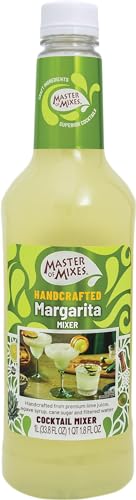
Master of Mixes Margarita Mix, 1 Liter
Badge: Best Classic Single Bottle
Strengths
- The classic lime original in a full 1 liter bottle — the reference flavor, without the variety box commitment.
- Same pour-ready family as the variety pack, so ratios learned here transfer if you upgrade later.
- A sensible middle format: bigger than the premium minis, smaller than the party jug.
Trade-offs
- One flavor only; households that bore easily should start with the variety pack instead.
- A mainstream profile — dependable rather than distinctive.
- Like all citrus mixes, it wants refrigeration and a reasonable pace once opened.
Mini spec box
- Format: 1 liter bottle
- Profile: classic margarita lime
- Family: Master of Mixes pour-ready range
- Type: Non-alcoholic cocktail mix
Not every shopper wants a tasting program. Some want one good bottle of lime mix that makes a honey whiskey taste right, tonight, without a decision tree — and that is exactly this bottle. It is the classic margarita flavor from the same range as the variety pack, in a straightforward 1 liter format, and at two-to-one it produces the reference version of the drink this whole guide describes: lime up front, honey through the middle, clean at the finish. There is no trick to it and no apology needed; mainstream bar mixes became mainstream by being consistent, and consistency is what lets you learn your preferred ratio and repeat it. It suits smaller households, first-time buyers who want the standard before the variations, and anyone restocking a known favorite. The limitation is simply scope: one flavor, competently done, will eventually bore the curious drinker, at which point the variety pack from the same family is the natural next step — and the ratios you learned here carry straight over. Readers building drinks for flavored vodkas will find the same one-good-bottle logic applied to sparkling mixers in Best Mixers For Infused Vodkas.
Best for: anyone who wants the classic lime pairing in a single honest bottle / Not suited for: flavor explorers
Comparison Table
| Pick | Badge | Size | Standout listing detail | Link |
|---|---|---|---|---|
| Master of Mixes Variety Pack | Best Overall | 1 liter × 6 + salt | Six flavors; three naturally tart | Check on Amazon |
| Agalima Organic Margarita Mix | Best Organic Pick | Glass bottle | Organic, all natural, individually boxed | Check on Amazon |
| Daily’s Margarita Mix | Best for Parties | 64 oz | Largest bottle; built for pitchers | Check on Amazon |
| Zing Zang Original Margarita Mix | Best Real-Juice Flavor | 32 fl oz | Real fruit juice; no high fructose corn syrup | Check on Amazon |
| Zing Zang Strawberry Mix | Best Fruity Twist | 32 fl oz | Strawberry daiquiri-style; real fruit juices | Check on Amazon |
| Master of Mixes Margarita Mix | Best Classic Single Bottle | 1 liter | The classic lime original | Check on Amazon |
How to Choose a Mixer for Honey Whiskey
Begin with the acid question, because it decides everything else. Hold the listing up against one test: does this bottle lead with citrus or real fruit, or does it lead with sweetness? Honey whiskey supplies all the sweetness the glass can hold, so the mixer must supply the acid. Lime is the classic source, which is why this guide is lime-led — but blood orange and passion fruit pass the same test, and strawberry passes it in a gentler, dessert key. What fails the test is any mixer whose own profile is primarily sweet: it will taste pleasant for one sip and exhausting by the fifth.
Next, be honest about format. The arithmetic is simple: at a two-to-one ratio with a standard whiskey measure, a liter of mix makes roughly eight to ten drinks. Map that against your household’s real pace. A couple who make a Friday drink should live in the 32 fl oz to 1 liter world, where a bottle finishes while it is still bright. A household that hosts monthly should keep the 64 oz or the variety pack and accept the fridge space as the cost of readiness. Buying big “for value” and drinking a fading bottle for two months is the most common false economy in this category.
Then decide your ingredient priorities, because this shortlist genuinely spans them: an organic, all-natural brief (Agalima); real fruit juice with no high fructose corn syrup (both Zing Zang bottles); and mainstream pour-ready consistency (Master of Mixes, Daily’s). None of these positions is a gimmick — they produce measurably different glasses, the organic and real-juice bottles tasting fruitier and softer, the mainstream bottles tasting brighter and more standardized. Choose by the glass you want, not by the label you admire. Finally, think about the second job. A mix that also serves mocktails, rum, or tequila nights earns its shelf space twice; the variety pack and the strawberry daiquiri mix are the multi-tools here. Warm-drink households should also note that these citrus bottles behave differently heated — the method section below covers the adjustment, and the separate question of purpose-built warm drinks is explored in Best Mixers For Hot Chocolate.
How to Mix Honey Whiskey: The Balanced Method
- Refrigerate the mix and chill the glass if you can. Cold ingredients mean the ice preserves the drink instead of chilling it.
- Fill the glass to the top with ice. Full ice melts slower per sip than a few cubes swimming in liquid, so the ratio you built survives the drink.
- Measure one part honey whiskey. Sweet spirits are the easiest to over-pour by eye, and over-pouring is just adding sugar.
- Add two parts mix and stir for five seconds. Honey liqueur is viscous and sinks; an unstirred drink is a layered drink.
- Taste and adjust exactly once. Too sweet: a squeeze of fresh lime or a splash of soda. Too sharp: a half-part more mix. Write your preferred ratio on the bottle with a marker — future you will be grateful.
- For a hot serve, warm one-and-a-half parts mix with the whiskey and hot water until steaming, never boiling; heat mutes acid, so the tighter ratio keeps the drink composed.
- For a pitcher, scale the ratio, build without ice, chill, and pour over fresh ice per glass so the last drink matches the first.
Troubleshooting
Problem: the drink tastes like candy by the third sip → the ratio drifted sweet or the ice gave up; rebuild measured, with a full glass of fresh ice, and consider the strawberry mix only at the shorter one-and-a-half ratio.
Problem: the honey has vanished and only lime remains → the mix is shouting; drop to one-and-a-half parts mix and stir briefly, so the honey returns in the finish.
Problem: a pitcher tastes great at first and watery an hour later → it was built over ice; rebuild the batch without ice, refrigerate it, and ice each glass at pouring time.
Honey Whiskey Next to Its Flavored Cousins
Honey is the gateway flavor of the whiskey shelf, and most households that own it eventually own a cinnamon, apple, or peach bottle too. The mixing principle you learn here transfers with one twist: the mixer’s acid must rise as the spirit’s sweetness rises, and must fall when the spirit brings its own tartness, as apple does. That is why a single shelf of lime mixes can serve the whole flavored-whiskey family with nothing more than ratio changes — and why the same bottles would be wasted on an already-tart spirit, where they double the sourness. It is also worth saying plainly what these bottles are not: they are beverage mixes, full stop. The word “mixer” on a kitchen shelf means a machine for doughs and frostings, a different purchase entirely, which is why the pastry question lives in its own guide at Best Mixers For Industrial Pastry and the frosting question at Best Mixers For Icing — no bottle in this guide will whip anything, and no stand mixer will improve a whiskey sour.
Reading a Mixer Label Like a Bartender
Professional bartenders choose bottled mixes the way chefs choose stock: by the ingredient list, read in order, because ingredients are listed by weight and the first three entries are effectively the recipe. Apply that habit here and the whole category becomes legible. If water and a sweetener lead the list and lime appears as “flavor” language further down, you are holding a sweet drink with a lime accent — the exact profile a honey whiskey cannot use. If lime or fruit juice appears early, and especially if the listing can say “made with real fruit juice” or name its limes’ origin, the bottle was built acid-first and will do the balancing work this spirit needs. That single reading skill explains most of the spread in this guide: the picks above earned their places because their listings put fruit, lime, agave, or an organic ingredient brief where a shopper can actually verify it.
The second label skill is spotting the sweetener strategy. Cane sugar and agave taste round and dissolve into a drink invisibly; high fructose corn syrup is the industry workhorse that some shoppers prefer to avoid, which is why a listing that can state its absence says so in the title itself; and “skinny” formulations trade body for lightness, which reads as refreshment in a long drink and as thinness in a short one. None of these is a moral category — they are flavor decisions, and the right one is the one that matches the glass you pictured when you bought the whiskey. The third skill is the least glamorous and the most useful: check the size math before the flavor poetry. Listings print sizes in different units and occasionally, as with one pick in this guide, print two different figures in the same title. Convert everything to drinks-per-bottle at your ratio before you compare two bottles, and most “which is better value” arguments resolve themselves.
Your First Three Honey Whiskey Drinks, in Order
If this shelf is new to you, do not start by experimenting — start by calibrating. The first drink to make is the reference sour: two parts classic lime mix to one part honey whiskey, full ice, stirred, nothing else. Drink it slowly and pay attention to two things — where the honey sits (it should arrive after the lime, not before it) and how the finish feels (clean, not coating). This glass is your baseline, and every later adjustment is measured against it. If it tastes too sweet, your palate wants the ratio at two-and-a-half parts mix; if it tastes too sharp, it wants one-and-a-half. Neither is wrong; the baseline exists so you can find out which drinker you are.
The second drink is the long one: the same build in a tall glass, topped with a modest splash of soda and a squeezed lime wedge. This is the warm-weather and session version, lighter in strength and longer in the glass, and it is the serve that converts most skeptics, because the honey becomes a background warmth rather than the headline. The third drink is the contrast: the strawberry mix at one-and-a-half to one, short over ice, after dinner. Tasting the dessert direction right after the sour direction teaches your palate the full width of what one bottle of honey whiskey can do — and it makes the buying decision for your second mixer purchase almost automatic, because you will know exactly which direction you kept reaching for. Three drinks, one evening or three, and you will understand this category better than a shelf of unopened bottles could ever teach you.
Storage, Freshness, and Getting the Last Glass Right
Citrus mixes are fresh products wearing shelf-stable clothing, and treating them that way is the difference between a guide that works on paper and drinks that work in your kitchen. Unopened bottles belong in a cool, dark pantry; heat and sunlight are the twin enemies of lime flavor, and a bottle kept on a bright counter will taste tired before it is ever opened. Once opened, every bottle in this guide goes into the refrigerator, cap tight, in the body of the fridge rather than the door where temperatures swing. Pour promptly and recap — a bottle left open through a long evening of drinks loses brightness measurably faster than one that is opened, poured, and returned to the cold.
Freshness also has a serving dimension that most guides skip: the last third of any citrus bottle is fighting oxidation, so it needs a small assist. A squeeze of fresh lime over the glass restores the aromatic top note that storage steals, and building the drink a fraction shorter on the mix compensates for the acid that has faded. If you batch pitchers for events, refrigerate leftovers in a sealed jar rather than the open pitcher and finish them within days, not weeks. And never marry the end of an old bottle into a fresh one to “top it up” — you simply age the whole fresh bottle down to the old one’s level. Households that entertain in bursts should also consider the freezer trick for the whiskey side of the equation: a well-chilled honey whiskey pours more viscous and tastes less sweet on first contact, which buys the mix a little more room to be itself. None of this is fussy for its own sake; it is the accumulated small print of why one home bar’s honey sours taste composed all month and another’s taste tired by the second weekend, from identical bottles.
Common Buying Mistakes
- Pairing sweet with sweet. The founding mistake of this category; if the mixer does not bring acid, the drink cannot balance.
- Buying party volume for a quiet household. Opened citrus mix fades; the right size is the one you finish bright.
- Judging the mix straight from the bottle. These are built for dilution and a spirit partner — judge them mixed, at ratio, over ice.
- Free-pouring a sweet spirit. A jigger costs almost nothing and is the difference between a recipe and a rumor.
- Leaving the opened bottle in the pantry. Refrigeration after opening is not optional for citrus mixes.
- Expecting the strawberry exception to behave like the lime rule. Berry and honey is a dessert serve; pour it shorter and ice it harder, or it will cloy.
A Note on Strength, Sweetness, and Drinking Well
One under-discussed property of honey whiskey is that its sweetness disguises its strength. A plain whiskey announces itself; a honey whiskey tastes gentle, and a well-balanced sour made from it tastes gentler still, which makes it easy to pour a second and third glass at the strength of the first without noticing. The ratio discipline this guide keeps recommending is therefore doing two jobs at once: it balances the flavor, and it keeps the drink’s strength predictable, because a measured drink is a known drink. If you are serving guests, the pitcher method helps here as well — a batch built at a fixed ratio pours the same strength all evening, while free-poured individual drinks tend to drift stronger as the night goes on and the host’s hand gets generous.
The soda-topped long serve deserves a second mention in this context: it is the natural format for long evenings, stretching one measure of whiskey across a tall, cold, flavorful glass that takes time to drink. Alternating a full-strength sour with a long soda-topped version — or with the mocktail build of mix, soda, and ice — keeps the ritual and the flavor while pacing the alcohol, a pattern experienced hosts use without ever naming it. None of this requires special equipment or special virtue; it is simply the practical knowledge that a sweet spirit hides its proof, and that the measure, the ice, and the ratio are how a home drinker stays in charge of the glass rather than the other way around.
Final Recommendation
Start with the Master of Mixes Variety Pack if you are new to honey whiskey: its classic lime, blood orange, and passion fruit bottles will teach you your own preferred ratio faster than any single bottle can, and the sweeter flavors give you a dessert direction for later. If you already know you love the classic sour serve, skip the sampling and make the Zing Zang Original your house bottle — real-juice flavor in the most practical size on the list. Choose Agalima when ingredients lead your buying, Daily’s when your drinks are usually pitchers, the strawberry Zing Zang when you want the one sweet exception done properly, and the single Master of Mixes liter when you simply want the standard, restocked. Whichever bottle you land on, the method matters more than the label: measure the whiskey, respect the ice, stir the honey up from the bottom, and the sweetest bottle on your shelf becomes one of the most balanced drinks you make.
Frequently Asked Questions
What is the best ratio for honey whiskey and a citrus mix?
Two parts mix to one part honey whiskey over full ice is the reliable starting point. Taste once and adjust: a squeeze of lime or splash of soda if it leans sweet, a half-part more mix if it leans sharp. Note your ratio on the bottle so you can repeat it exactly.
Why do all the picks lean citrus?
Because balance is chemistry before it is taste. Honey whiskey arrives sweet; the mixer must arrive acidic or the glass has no counterweight. Lime is the most available and versatile acid in bottled form, with blood orange and passion fruit as close relatives that pass the same test.
Can I drink honey whiskey with one of these mixes hot?
Yes, as a toddy-style serve: warm one-and-a-half parts mix with the whiskey and hot water until it steams, without boiling. Heat mutes acidity and amplifies sweetness, which is why the hot ratio is tighter than the cold one.
Does the strawberry mix really work with whiskey?
It does, as a deliberate dessert serve. Strawberry’s gentle acidity and perfume lift honey rather than fighting it. Pour it shorter than the lime mixes — one-and-a-half parts to one — and use plenty of ice so the drink stays composed.
How long will an opened bottle stay good?
Follow the use window on your bottle’s label, keep it refrigerated with the cap tight, and judge by brightness: when the lime tastes dull, the mix can no longer balance a sweet spirit, whatever the date says. Smaller bottles exist precisely so you finish them inside that bright window. If a bottle is nearing the end of its best days but still tastes sound, use it in a pitcher for a group rather than in a single careful drink — batching is forgiving of a mix that has lost a step of freshness, especially with a squeeze of fresh lime added to the batch, while a solo glass built for quiet appreciation will show every bit of the fade.
What if I do not drink alcohol?
These mixes are non-alcoholic and several are positioned as mocktail friendly. Poured over ice and topped with soda, the lime and blood orange versions make structured, adult-tasting drinks with no spirit at all — the acid that balances whiskey also balances soda.
Should I chill the honey whiskey itself?
It helps more than most people expect. A honey whiskey poured at fridge or freezer temperature tastes noticeably less sweet on the first sip, because cold softens our perception of sugar while the honey’s aroma survives. That gives the mix room to work and lets you hold the standard two-to-one ratio even with the rounder real-juice bottles. At minimum, store the bottle away from heat and light, and let the ice in the glass do the rest of the chilling work.
Is a variety pack worth it for a single-spirit household?
If the spirit is honey whiskey, yes — unusually so. Because honey welcomes fruit, more of a variety pack’s flavors genuinely suit this one bottle than would suit a plainer spirit. Just open two bottles at a time so nothing fades unfinished.


