Disclosure: topratedkitchenware.com is reader-supported. When you buy through links on our site, we may earn an affiliate commission from Amazon and other retailers, at no extra cost to you.
Where to buy
The six picks below are the verified drink mixers for this guide to the best mixers for Malibu rum. Malibu’s range is flavoured and friendly — coconut at the centre, with fruit expressions around it — so the mixer’s job is to supply what flavoured rum does not: acidity, bitterness, and sparkle. This pool answers with one fruit-led daiquiri mix, one classic margarita mix for lime, and four Fever-Tree tonic waters in cans and bottles for the dry direction. Each review judges its bottle on how it behaves with a sweet, flavoured rum base, honestly and by serve. Each name links to its Amazon listing, where you can check the latest price on Amazon and confirm the current pack before you order.
- Zing Zang Strawberry Margarita-Daiquiri Mix, 32 Fl Oz
- Master of Mixes Margarita Mix, 1 Liter Bottle
- Fever-Tree Tonic Water Mixer, 24 Pack, 5.1 Fl Oz Cans
- Fever-Tree Light Tonic Water Mixer, 24 Pack, 5.1 Fl Oz Cans
- Fever-Tree Tonic Water Mixer, 24 Pack, 6.8 Fl Oz Bottles
- Fever-Tree Premium Indian Tonic Water, 16.9 Fl Oz, Pack of 8
Read the full guide ↓ for the serve-by-serve reasoning, the ratios that keep flavoured rum balanced, and the format decision — cans versus bottles — that decides whether your tonic is sparkling in month three.
Choosing the best mixers for Malibu rum starts with the same truth as its coconut-specific sibling guide, widened: flavoured rum arrives pre-sweetened and pre-flavoured, so a mixer that merely adds more fruit sugar is doing half a job. The complete mixer adds structure. Citrus structure comes from the margarita-family bottles. Fruit structure — fruit with body, for frozen serves — comes from the daiquiri mix. Bitter, sparkling structure comes from the tonics, and this pool is unusually rich there: four Fever-Tree formats that differ by recipe, sweetness level, and packaging in ways that genuinely change the drink and the ownership experience.
So this guide is organised as a fork. Down one path, the blended and rocks drinks: two bottles, clear roles, honest limits. Down the other, the highball: four tonics compared closely, because when a pool gives you classic and light, cans and bottles, the interesting buying question is which tonic architecture fits your drinking. Readers whose shelf centres on the coconut expression specifically should also read the companion coconut-rum guide in this cluster, which treats that bottle in depth; this guide covers the Malibu shelf as a whole.
Key Takeaways
- Flavoured rum needs structure from its mixer: acidity, bitterness, or sparkle — not just more sweetness.
- The strawberry daiquiri mix is the frozen-serve anchor; the margarita mix is the lime tool for rocks serves.
- Four Fever-Tree tonics split by recipe and format: classic versus light, single-serve cans versus bottles.
- Cans protect carbonation for irregular drinkers; bottles suit hosts pouring several highballs at once.
- The Premium Indian tonic in larger bottles is the statement bitterness option; the Light cans are the gentlest frame.
- Buy the format your household finishes fresh — that rule decides more good purchases than any flavour debate.
In this guide
Quick Picks
Badges separate the six picks by serve and format, and the same badges appear in the detailed reviews.
| Pick | Badge | Best for | Link |
|---|---|---|---|
| Zing Zang Strawberry Margarita-Daiquiri Mix | Best Overall | Frozen and blended Malibu serves | Check on Amazon |
| Master of Mixes Margarita Mix, 1 Liter | Best for Rocks Serves | Lime-led drinks over ice | Check on Amazon |
| Fever-Tree Tonic Water Cans, 24 Pack | Best Everyday Highball | Single-serve sparkling highballs | Check on Amazon |
| Fever-Tree Light Tonic Cans, 24 Pack | Best Light Option | Gentler, rum-led highballs | Check on Amazon |
| Fever-Tree Tonic Water Bottles, 24 Pack | Best for Hosting | Pouring several highballs in one session | Check on Amazon |
| Fever-Tree Premium Indian Tonic, 8 Pack | Best Premium | The fullest quinine statement in larger bottles | Check on Amazon |
How These Picks Were Chosen
This guide is research-led and claims no hands-on tasting panel that did not happen. All six picks come from the verified beverage-mixer pool, with each product’s identity, format, and stated characteristics confirmed against its listing data before inclusion. Claims in this guide trace to that data: that the daiquiri mix is made with real fruit juices, that the light tonic lists 30 calories per can with a hint of Mexican bitter orange, that the Premium Indian tonic contains no artificial sweeteners, flavourings, or preservatives. Prices and ratings are never asserted; they change, and neither tells you how a tonic frames a flavoured rum.
Selection logic ran serve-first, as in the coconut guide, but with a tonic-heavy pool the second filter became format architecture. A 24 pack of 5.1 fl oz cans, a 24 pack of 6.8 fl oz bottles, and an 8 pack of 16.9 fl oz bottles are three different ownership propositions — single drinks over months, a party’s worth of highballs, or shared bottles for a table — and the guide treats that difference as a first-class buying factor rather than packaging trivia. The two bottled mixes were chosen for complementary roles, fruit and citrus, at the two most useful home-bar sizes in the pool.
The honesty note from the coconut guide applies with equal force: fresh citrus and fresh fruit remain the from-scratch benchmark, and bottled mixes win on consistency, speed, and shelf life. The tonics need no such apology; a well-made tonic is a finished product in its own right, which is why this pool’s depth sits there.
The 6 Best Mixers for Malibu Rum
Each review states what the bottle is, how it behaves with Malibu rum, where it honestly falls short, and who should buy it. Formats and stated characteristics come only from the verified listing data.

Zing Zang Strawberry Margarita-Daiquiri Mix, 32 Fl Oz
Badge: Best Overall
Strengths
- A daiquiri mix belongs to rum’s own drink family, so the pairing is native rather than improvised.
- The listing states it is made with real fruit juices and made in the USA.
- Strawberry gives flavoured rum a fruit partner with body, ideal for frozen serves.
Trade-offs
- Fruit plus flavoured rum runs sweet; ice dilution and fresh lime are the balancing tools.
- The strawberry leads the finished drink, which suits parties more than purists.
- A 32 fl oz opened bottle is a fridge item with a finite bright life.
Mini spec box: Format: 32 fl oz bottle, pack of 1 · Style: strawberry margarita-daiquiri mix, non-alcoholic · Stated: made with real fruit juices, made in USA
For the way most Malibu is actually drunk — socially, cold, often frozen — this is the pool’s centre of gravity. Strawberry and rum have a long shared history in the daiquiri family, and a flavoured rum slots into that tradition without translation. Blend it with ice for the headline serve; the dilution is part of the design, softening the combined sweetness of mix and rum into something balanced and easy. On the rocks, pour the mix shorter than instinct suggests and let the rum’s own flavour carry more of the glass.
The stated real-fruit-juice basis matters because strawberry is the flavour most often faked into candy; a fruit-led mix keeps the drink tasting like a drink. Its limit is direction: this bottle decides that the evening is fruity and frozen. Drinkers building a Malibu shelf for varied serves should pair it with one tonic from this guide, so the shelf holds a dry gear as well as a sweet one — the two-bottle system this guide’s final recommendation returns to, and the same contrast logic used in Best Mixers For Mango Rum.
Best for: frozen serves and social drinking / Not suited for: dry palates or rum-purist serves
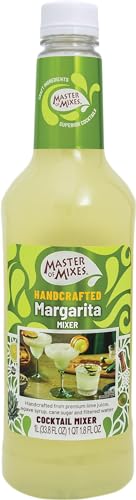
Master of Mixes Margarita Mix, 1 Liter Bottle
Badge: Best for Rocks Serves
Strengths
- A lime-led margarita profile supplies the acidity flavoured rum lacks.
- The 1 liter bottle is the right size for a home bar that mixes weekly.
- It behaves consistently across rocks and frozen serves, making drinks reproducible.
Trade-offs
- It is a margarita mix used as a citrus tool; the resulting drink is a twist, not a classic rum serve.
- It brings citrus only — no fruit body and no bitterness.
- Its sweetness is fixed, so balance is managed by ratio and fresh lime.
Mini spec box: Format: 1 liter bottle · Style: margarita mix
This bottle’s role is precise: it is the lime in the shelf. Malibu over ice with a measured pour of this mix and a squeezed lime wedge is the quickest credible drink in the guide — built in the glass in under a minute, with the mix’s acidity doing the structural work that the sweet rum cannot do for itself. Start near two parts rum to one part mix; flavoured rum needs a lighter mix hand than tequila does, and the wedge lets each drinker tune the final acid line.
The litre format suits the role. Citrus is the utility ingredient, used a few ounces at a time across many drinks, and a litre bottle serves that rhythm for weeks without the waste risk of a party-size bottle or the constant rebuying of small ones. Its honesty box is equally clear: it will not make a frozen fruit drink and it will not make a dry one. It makes the citrus serve, reliably, and a Malibu shelf that also holds the daiquiri mix or a tonic has covered the flavoured-rum map with two or three bottles total.
Best for: quick rocks serves and a reproducible house drink / Not suited for: frozen fruit serves or dry highballs

Fever-Tree Tonic Water Mixer, 24 Pack, 5.1 Fl Oz Cans
Badge: Best Everyday Highball
Strengths
- Real quinine bitterness is the strongest structural contrast to flavoured rum’s sweetness.
- The listing describes subtle citrus and fruit notes balanced by quinine bitterness.
- Single-serve 5.1 fl oz cans keep every highball fully sparkling across the whole 24 pack.
Trade-offs
- The listing frames the tonic for gin and vodka; the rum pairing is a drinker’s choice on pairing logic.
- A dry highball is a deliberate departure from Malibu’s sweet house style.
- Cans are a single-serve format; a table of highball drinkers works through them quickly.
Mini spec box: Format: 24 pack, 5.1 fl oz cans · Style: tonic water with real quinine · Stated profile: subtle citrus and fruit notes balanced by quinine bitterness
If one tonic in this guide becomes a household’s default, it will be this one, because the can format quietly solves tonic’s oldest problem: the opened bottle going flat before the household drinks again. A rum-and-tonic built on a fresh can is bright, bitter, and properly sparkling every time, whether the household drinks highballs nightly or monthly. With Malibu, the classic tonic’s quinine frame turns a sweet flavoured rum into a long, refreshing drink whose flavour still reads clearly — the citrus and fruit notes in the tonic’s stated profile meet the rum halfway.
Serve it tall, over a full glass of ice, with lime. The discipline is in the ice and the chill: a cold can over abundant ice keeps carbonation alive to the last sip, while a warm can over three cubes is a flat drink by the halfway mark. Its trade-offs are honest ones — it is the assertive end of the tonic range, and drinkers who want the rum to lead should take the Light cans next door. But as the everyday dry option on a Malibu shelf, this is the benchmark the other three tonics are compared against, here and in neighbouring guides such as Best Mixers For Margaritas.
Best for: a reliable dry highball, one drink at a time / Not suited for: sweet-serve loyalists or bulk party pouring

Fever-Tree Light Tonic Water Mixer, 24 Pack, 5.1 Fl Oz Cans
Badge: Best Light Option
Strengths
- The listing states 30 calories per can, with a hint of Mexican bitter orange and balanced botanicals.
- The lighter frame lets a flavoured rum’s own character lead the drink.
- The 24 pack of single-serve cans keeps the format as practical as the classic tonic’s.
Trade-offs
- A gentler bitterness means less corrective power against a very sweet rum expression.
- The bitter-orange note nudges the drink citrus-ward whether you planned it or not.
- It shares the highball-only limitation of every tonic here.
Mini spec box: Format: 24 pack, 5.1 fl oz cans · Style: light tonic water with real quinine · Stated: 30 calories per can, hint of Mexican bitter orange, smooth crisp taste
The Light cans answer a specific drinker: the one who likes Malibu’s flavour and wants length and sparkle without a bitter takeover. Where the classic tonic frames the rum, the light tonic accompanies it — quinine present but polite, botanicals in support, and the stated bitter-orange hint adding a citrus lift that flavoured rums generally welcome. For coconut and fruit expressions alike, this is the highball most likely to become a weeknight habit, because it asks the least of the palate while still delivering a properly adult, structured drink.
Its limit is corrective power. If a particular Malibu expression reads cloying to you in other serves, the classic tonic’s stronger frame is the better medicine; the light version is tuned for balance, not rescue. Households unsure which side they fall on can treat the two can packs as a tasting project: same rum, same glass, same ice, two tonics, one evening — a small experiment that settles the household’s tonic question more reliably than any review, including this one.
Best for: rum-led, lighter highballs and weeknight serves / Not suited for: drinkers needing maximum bitter correction

Fever-Tree Tonic Water Mixer, 24 Pack, 6.8 Fl Oz Bottles
Badge: Best for Hosting
Strengths
- The classic tonic profile — subtle citrus and fruit notes balanced by quinine bitterness — in a pourable bottle format.
- At 6.8 fl oz per bottle, each bottle serves a generous highball or shares between two shorter ones.
- A 24 pack of bottles suits a household that hosts: many drinks, one session, no waste concern.
Trade-offs
- An opened bottle’s carbonation fades; the format rewards sessions over solitary drinks.
- Glass bottles need more careful storage than cans.
- The profile matches the canned classic, so the choice is format, not flavour.
Mini spec box: Format: 24 pack, 6.8 fl oz bottles · Style: tonic water with real quinine · Stated profile: subtle citrus and fruit notes balanced by quinine bitterness
Hosting inverts the tonic format logic. When six highballs are poured in an evening, the opened-bottle problem disappears — bottles are finished while they are bright — and the bottle’s pour feels more generous and ceremonial than a can at a table. This 24 pack of 6.8 fl oz bottles is built for exactly that household: the one whose Malibu shelf serves friends regularly. The flavour brief matches the canned classic, so a household can move between formats by occasion without changing its house drink.
The discipline is to match purchase to calendar. Bought for a party season, this pack is the best-value way in the pool to pour classic tonic highballs at volume. Bought for a quiet household, it becomes a row of slowly flattening bottles, and the cans are the honest recommendation instead. Neither outcome reflects on the tonic; both reflect on the match between format and life, which is why this guide treats format as a flavour-level decision.
Best for: hosts pouring several highballs per session / Not suited for: occasional solo drinkers

Fever-Tree Premium Indian Tonic Water, 16.9 Fl Oz, Pack of 8
Badge: Best Premium
Strengths
- The flagship Indian tonic profile, presented in generous 16.9 fl oz bottles.
- The listing states no artificial sweeteners, flavourings, or preservatives.
- An 8 pack of larger bottles suits shared highballs and a tonic-forward serve.
Trade-offs
- The largest bottles carry the sharpest opened-bottle clock; plan to pour them across a table or an evening.
- A premium, assertive tonic can overshadow a delicate flavoured rum if poured heavy.
- Eight large bottles are a storage commitment compared with a flat of cans.
Mini spec box: Format: 16.9 fl oz bottles, pack of 8 · Style: Premium Indian tonic water · Stated: no artificial sweeteners, flavourings, or preservatives
This is the tonic for drinkers who want the tonic to matter as much as the rum. The Premium Indian bottling is Fever-Tree’s flagship statement — the fullest quinine frame in this guide — and against a sweet flavoured rum it produces the most grown-up drink in the pool: bitter, sparkling, and long, with the rum’s flavour held in a firm structure rather than floating in sweetness. The larger bottle format suits the serve it implies: two generous highballs poured together, or a table sharing, so the bottle is finished while its carbonation is at its peak.
Pour it with a slightly lighter hand than the canned tonics if your Malibu expression is delicate, and always over a full glass of ice. Its stated absence of artificial sweeteners, flavourings, and preservatives will matter to label-reading households, and it is recorded here as a listing fact, not a health claim. For the tonic enthusiast, this bottle plus the daiquiri mix is the complete Malibu system: the sweetest serve and the driest, with nothing needed in between — a two-pole shelf that mirrors the contrast strategy in Best Mixers For Masking Vodka Taste.
Best for: tonic enthusiasts and shared, tonic-forward highballs / Not suited for: solo drinkers or delicate palates wanting a soft frame
Comparison Table
| Pick | Format | Direction with Malibu rum | Badge | Link |
|---|---|---|---|---|
| Zing Zang Strawberry Daiquiri Mix | 32 fl oz bottle | Fruit-led, frozen or blended | Best Overall | Check on Amazon |
| Master of Mixes Margarita Mix | 1 liter bottle | Lime-led, rocks serves | Best for Rocks Serves | Check on Amazon |
| Fever-Tree Tonic Cans | 24 × 5.1 fl oz cans | Classic bitter highball, single-serve | Best Everyday Highball | Check on Amazon |
| Fever-Tree Light Tonic Cans | 24 × 5.1 fl oz cans | Lighter highball, rum-led | Best Light Option | Check on Amazon |
| Fever-Tree Tonic Bottles | 24 × 6.8 fl oz bottles | Classic highball, hosting format | Best for Hosting | Check on Amazon |
| Fever-Tree Premium Indian Tonic | 8 × 16.9 fl oz bottles | Fullest bitterness, shared serves | Best Premium | Check on Amazon |
How to Choose a Mixer for Malibu Rum
Decide your dominant serve, then your format, then your flavour — in that order. Frozen drinkers need exactly one bottle from this guide, the daiquiri mix, and can stop reading the tonic comparison entirely. Rocks drinkers need the margarita mix and a lime habit. Highball drinkers face the real decision, and it splits in two: recipe first (classic bitterness, light frame, or the Premium Indian statement), then format (cans for irregular drinking, bottles for sessions). A household that drinks one highball a week and buys the 24 pack of bottles has made a format error that no recipe choice can rescue; a household that hosts monthly and buys cans has made the mirror-image error.
Then audit sweetness honestly. Malibu expressions are sweet by design, and drinkers differ in how much correction they want. If your complaint about flavoured rum is that it disappears in drinks, choose structure at the gentler end — light tonic, shorter mix pours. If your complaint is that it cloys, choose the firm end — classic or Premium Indian tonic, a full lime wedge in rocks serves. The shelf that results will usually be two or three bottles deep, and that is enough: depth of contrast beats breadth of similar bottles every time, on a rum shelf as much as in the neighbouring Best Mixers For Mezcal cabinet.
How to Build the Three Core Malibu Serves
The frozen serve: chill the daiquiri mix, fill the blender with hard ice, add Malibu and mix, and blend to a uniform slush. Taste and correct with fresh lime — blending dulls acid — and serve immediately in a chilled glass. The rocks serve: build over fresh ice in the glass, rum first, then a measured pour of margarita mix starting near two parts rum to one part mix, stir briefly, squeeze and drop a lime wedge. The highball: fill a tall glass completely with ice, add the rum, top with tonic — a full can, or a generous pour from a freshly opened bottle — and stir once, gently, so the sparkle survives to the last sip.
Troubleshooting, in the pattern worth remembering:
- Problem: the drink tastes flat → the tonic was warm, the ice was scant, or the bottle had been open too long; chill everything, fill the glass with ice, and open fresh carbonation.
- Problem: the drink is too sweet → increase structure, not dilution alone: more lime in mixed serves, or move the next round to a classic or Premium Indian tonic.
- Problem: the rum flavour vanishes → the mixer pour is too heavy; pull it back in small steps, or switch to the light tonic whose frame lets the rum lead.
Cans Versus Bottles: A Tonic Format Field Guide
Carbonation is tonic’s life, and format is how long that life lasts. A sealed can is a single perfect serving preserved indefinitely; opening it starts no clock for its neighbours. A sealed bottle is a session preserved; opening it starts a clock for everything left inside. That single physical fact generates the whole format guide: irregular drinkers, small households, and variety-seekers should live in cans; hosts, families of highball drinkers, and anyone pouring rounds should live in bottles. Bottle size then tunes the session — 6.8 fl oz bottles pour one generous or two short highballs, while the 16.9 fl oz Premium Indian bottles are built for sharing across an evening.
Storage follows the same logic. Cans stack, chill fast, and forgive a crowded fridge. Bottles want upright, careful storage and a plan. None of this is a verdict on quality — the classic tonic’s stated profile is the same in can and bottle in this pool — it is a verdict on matching. The best tonic in the world, flat in a forgotten bottle, loses to a good tonic poured sparkling from a can, every single time.
The Two-Bottle Malibu Shelf
If this guide had to furnish a shelf from its six picks for a typical household, it would choose two: one sweet-serve bottle and one dry-serve format. The daiquiri mix covers celebration, guests, and frozen weather; a tonic — cans for most households — covers the weeknight, the pre-dinner drink, and the palate reset. The margarita mix joins as the third bottle when rocks serves enter the rotation, and the remaining tonics are upgrades and format changes rather than new capabilities. This restraint is not a compromise; it is how real home bars stay fresh, finished, and used. Bottles bought beyond the household’s occasions become fridge archaeology, and the honest guides in this cluster — from coconut rum to Best Mixers For Mic party planning — all converge on the same advice: buy for the drinks you make, in the amounts you finish.
Matching Mixers to Different Malibu Expressions
Malibu is a family, not a single flavour, and the mixer’s job shifts slightly with the expression in the glass. Coconut, the flagship, is rich and rounded; it tolerates — and rewards — the firmest structures in this guide, from the classic tonic’s bitterness to a full lime wedge in a rocks serve. Fruit expressions arrive with their flavour pre-loaded, so the daiquiri mix’s strawberry can either echo the fruit, for a deliberate double-fruit frozen serve, or crowd it; the safer general move is to give fruit expressions the citrus and tonic tools and let their own flavour lead. Lighter, fresher expressions need the least correction and pair most naturally with the light tonic, whose frame was designed to accompany rather than direct.
The practical method is a two-minute audit before you mix: taste the expression neat, name its dominant note and its sweetness level in plain words, then pick the mixer that supplies the missing opposite. Dominant fruit with high sweetness wants citrus or classic tonic. Coconut richness wants bitterness or acid. A delicate expression wants the lightest structure available. This audit, repeated across a shelf, is what separates a home bar that works from a collection of bottles that merely coexist — and it transfers unchanged to every other spirit in this cluster.
A Home Tasting Protocol for Mixers
Because this guide is research-led rather than panel-tested, it owes you the method to test for yourself, cheaply and conclusively. Buy the smallest formats of the two or three candidates your serve requires. Pour the same measure of the same Malibu expression into identical glasses over the same ice. Add each mixer at the same starting ratio, taste in order from lightest to strongest structure — light tonic, classic tonic, citrus mix, fruit mix — and write one sentence per glass: what led, what balanced, what you would change. Then adjust only the winner’s ratio in small steps until it is your house drink, and record that ratio where you will find it again.
Two disciplines make the protocol honest. Taste mixers in the drink, not only neat: a tonic that seems assertive alone may be perfectly judged against a sweet rum, and a mix that tastes pleasant alone may vanish or cloy in the glass. And repeat the winner on a second evening before buying its larger format; palates drift with food, weather, and mood, and a house drink should survive that drift. An hour and a few small bottles spent this way will teach a household more about its own Malibu shelf than any guide can — including this one, which is exactly why the method belongs in it.
Planning Purchases Around the Occasion Calendar
The final buying skill is calendar sense. Bottled mixes are at their best in the weeks after opening, and tonic bottles are at their best in the session they are opened, so purchases should be timed to occasions rather than to discounts. A household entering a summer of hosting can justify the hosting formats in this guide — the 24 pack of tonic bottles, the litre of margarita mix — because the occasions will consume them at their peak. The same household in a quiet autumn should be buying cans and 32 oz bottles. Discounts invert this logic and fill fridges with expiring good intentions; the cluster’s standing advice, here and in guides like Best Mixers For Mimosas, is to let the calendar, not the promotion, set the format.
Keep a one-line shelf inventory where you will see it — what is open, when it was opened, what is sealed — and let it veto duplicates. Most home bars do not suffer from too few mixers; they suffer from three open bottles doing one job while the contrasting job goes unbought. A Malibu shelf with one fruit mix, one citrus bottle, and one tonic format, all fresh, will out-drink a crowded shelf every week of the year.
Ice, Glassware, and Garnish for Malibu Serves
The cheapest quality upgrade available to a Malibu drinker is frozen water. Frozen serves demand hard, fresh ice in real quantity; a blender half-filled with wet, melting ice produces a drink that is watery before it is cold. Rocks serves demand cubes that chill faster than they melt, which means keeping a dedicated tray or bag rotating rather than raiding a half-empty one. Highballs demand a glass filled to the top with ice — the counterintuitive truth of long drinks is that more ice means slower dilution, because a full glass of ice keeps the drink colder and the melt rate lower than a few cubes swimming in tonic.
Glassware should follow the serve’s physics. Frozen drinks want a wide glass that holds slush without spilling and a short straw. Rocks drinks want a heavy base that keeps the drink cold through the hand. Highballs want height and narrowness to protect carbonation. Garnish, finally, is seasoning: lime for acid, a strawberry to announce a fruit serve honestly, a citrus twist over a tonic highball for aroma. A garnish that does none of those jobs is decoration, and decoration is the first thing a working home bar learns to skip.
Zero-Proof and Lighter Malibu-Style Serves
A well-built Malibu shelf serves the whole table, including guests who are not drinking. The structural insight from this guide — that flavoured sweetness needs acid, bitterness, or sparkle — applies with the rum removed. The citrus margarita mix over ice, lengthened with classic or light tonic, gives a non-drinking guest a drink with the same architecture as the table’s cocktails: sour, bitter, sparkling, and adult. The daiquiri mix blended with ice and a squeeze of lime makes a frozen serve that sits naturally beside the rum version rather than apologising for existing.
Lighter serves for drinking guests follow the same tools. A half-measure of Malibu lengthened with a full can of light tonic is a genuinely different drink from the standard highball — longer, drier, and sessionable — and it is the serve many flavoured-rum drinkers graduate to. Building these options from the same six bottles, rather than from a separate set of purchases, is the mark of a shelf that was chosen by structure instead of by label, and it is the note this guide most wants to leave behind: the mixers are the architecture, and architecture serves everyone.
What to Do When a Bottle Disappoints
Even a well-chosen shelf produces an occasional mismatch: a tonic firmer than the household likes, a mix sweeter than the rum it was bought for. The disciplined response is adjustment before abandonment. A too-firm tonic becomes the light drinker’s mixer at a shorter pour, lengthened with soda-style dilution from ice and a taller glass; a too-sweet mix becomes a blender ingredient, where ice dilution and fresh lime do corrective work that a rocks serve cannot. Bottles can also change jobs across the cluster — a margarita mix that underwhelms with rum may be exactly right for its native serve, which is why the shelf’s bottles should be judged in their best role before they are judged at all.
What not to do is double down: buying a second sweet bottle to fix a sweet problem, or a second firm tonic to fix a firm one, crowds the shelf with variations of the same error. The two-minute audit from earlier in this guide — name the dominant note, name the missing opposite, buy only that — is the corrective. Keep it, and disappointments become cheap tuition instead of a pattern.
Common Buying Mistakes
- Stocking four tonics before knowing your bitterness preference. Run the classic-versus-light taste test first; the result directs every later purchase.
- Buying bottles for a can household. Irregular drinkers who buy large bottles drink flat tonic and blame the brand.
- Pouring bottled mixes at tequila ratios. Flavoured rum is sweet and softer; start lighter and adjust upward only if the drink reads thin.
- Treating the daiquiri mix as a tonic substitute. Fruit and bitterness do different structural jobs; a shelf needs the contrast, not a winner.
- Letting opened mixes age unmarked. Date the cap when you open a bottle, and taste before serving guests from an old one.
Final Recommendation
Build the shelf in this order. First, the Zing Zang Strawberry Margarita-Daiquiri Mix for the frozen and social serves that define Malibu for most drinkers. Second, a tonic in your household’s format — the Fever-Tree Tonic Water cans for most homes, the bottled classic or the Premium Indian for hosts and tonic enthusiasts. Third, when rocks serves join the rotation, the Master of Mixes Margarita Mix litre for lime. That sequence gives a Malibu shelf its full range — sweet, citrus, and dry — with no bottle bought before its occasion exists. Resist the urge to complete the set in a single order: a shelf built across a season of actual drinking will fit the household that owns it, while a shelf bought in a single enthusiastic afternoon fits only that afternoon’s passing enthusiasm.
Frequently Asked Questions
What is the best mixer for Malibu rum overall?
For most drinkers, the strawberry daiquiri mix, because frozen and blended serves are how Malibu is most often enjoyed and daiquiri is rum’s native drink family. Drinkers who prefer dry, long drinks will find their best mixer in the tonic range instead — the classic cans for everyday drinking, the Premium Indian bottles for a tonic-forward serve.
Can you drink Malibu rum with tonic water?
Yes, and it is one of the best correctives to flavoured rum’s sweetness. The quinine bitterness and carbonation give the rum structure, producing a long, refreshing highball. Use a full glass of ice, a chilled tonic, and a lime wedge, and choose the light tonic if you want the rum’s flavour to lead.
Should I buy tonic in cans or bottles?
Buy cans if you drink highballs irregularly or one at a time — each can is a fresh, fully sparkling serving. Buy bottles if you pour several highballs in a session, since an opened bottle is best finished while its carbonation is bright. The classic tonic’s profile is the same across both formats in this guide; the difference is ownership, not flavour.
What ratio of margarita mix to Malibu rum works best?
Start near two parts rum to one part mix over ice, with a squeezed lime wedge, then adjust in small steps. Malibu is sweet and softer than tequila, so the full margarita ratio usually overwhelms it. If the drink reads sharp, add a little more rum; if it reads sweet, add lime before adding anything else.
How long do opened mixers keep?
Opened bottled mixes should be refrigerated and used while they still taste bright — citrus and fruit profiles dull with time. Mark the opening date on the cap. Unopened cans of tonic keep far longer with no quality deadline pressing, which is one reason this guide recommends cans for irregular drinkers.
How should I store opened and unopened mixers?
Unopened bottled mixes and tonic cans or bottles keep best in a cool, dark place, used oldest first. Once a bottled mix is opened, refrigerate it, mark the date on the cap, and use it while its citrus or fruit still tastes bright. Opened tonic bottles should be recapped, refrigerated, and finished in the near term; tonic cans, being single-serve, avoid the problem entirely once their pack is your format.
Can these mixers be used with other rums, or only Malibu?
All six work with rum generally, because the pairing logic — flavoured or sweet rum needs acid, fruit structure, or bitter sparkle — is not brand-specific. The same holds for the shelf’s working habits: the format discipline, the opening-date labels, and the two-minute audit before mixing all transfer to any rum you pour, which is why a household that learns them on Malibu tends to keep them for good. The daiquiri mix is native to rum as a category, and the tonics frame any sweet-leaning rum the way they frame Malibu. Where a rum is dry and unflavoured, pour mixers with a slightly firmer hand than this guide’s Malibu ratios, since there is less sweetness in the base to balance. The bottles will not be wasted if the shelf’s rum changes; the architecture transfers.
What is the difference between the classic and light Fever-Tree tonics here?
As stated in their listings, the light tonic lists 30 calories per can and a hint of Mexican bitter orange over balanced botanicals, with a smooth, crisp taste; the classic is described with subtle citrus and fruit notes balanced by quinine bitterness. In the glass, the classic frames a flavoured rum more firmly, while the light version lets the rum lead — choose by how much bitter correction you want.


