Disclosure: topratedkitchenware.com is reader-supported. When you buy through links on our site, we may earn an affiliate commission from Amazon and other retailers, at no extra cost to you.
Where to buy
The six picks below are the verified mixers for this guide to the best mixers for mango rum, and they share a deliberate direction: every pick is a Fever-Tree tonic water. Mango rum is a flavoured rum — ripe fruit up front, sweetness underneath — and the mixer it needs most is the one that frames fruit with bitterness and sparkle instead of burying it under more sugar. That mixer is tonic. The six picks differ where tonic genuinely differs: classic versus light recipes, a Mediterranean herbal variation, the flagship Premium Indian profile, and cans versus bottles. Each review judges its bottling on how it handles mango rum’s fruit and sweetness. Each name links to its Amazon listing, where you can check the latest price on Amazon and confirm the current pack before you order.
- Fever-Tree Tonic Water Mixer, 24 Pack, 5.1 Fl Oz Cans
- Fever-Tree Light Tonic Water Mixer, 24 Pack, 5.1 Fl Oz Cans
- Fever-Tree Tonic Water Mixer, 24 Pack, 6.8 Fl Oz Bottles
- Fever-Tree Premium Indian Tonic Water, 16.9 Fl Oz, Pack of 8
- Fever-Tree Mediterranean Tonic Mixer, 24 Pack, 6.8 Fl Oz Bottles
- Fever-Tree Light Tonic Water Mixer, 8 Pack, 5.07 Fl Oz Cans
Read the full guide ↓ for the recipe-by-recipe differences, the can-versus-bottle decision, and the garnish and ratio discipline that keeps a mango highball tasting like mango.
Finding the best mixers for mango rum means resisting the obvious move. The obvious move is more tropical sweetness — juices and fruit mixes that double down on the rum’s own register until the drink tastes like candy and finishes nowhere. Mango rum already brings the fruit and the sugar; what it cannot bring is bitterness, acidity, or carbonation, and those are precisely the qualities that turn a flavoured rum into a long, balanced drink. Rum and tonic is an established serve for exactly this reason, and a mango expression, with its ripe, aromatic fruit, is arguably the flavoured rum that benefits most: quinine’s dry frame makes the mango taste more like fruit and less like flavouring.
This guide therefore compares six tonics the way a careful buyer should: by recipe intent first — the classic profile, the lighter frame, the herbaceous Mediterranean detour, the flagship Indian statement — and by format second, because a 24 pack of single-serve cans and an 8 pack of large sharing bottles are different commitments that suit different households. If your mango rum drinking also runs to blended fruit serves, the neighbouring cluster guides cover those bottles; here, the highball gets the full attention it deserves, in the spirit of Best Mixers For Margaritas serve-first thinking.
Key Takeaways
- All six verified picks are Fever-Tree tonics; the guide compares recipes and formats rather than pretending the pool holds juices it does not.
- Tonic suits mango rum because quinine bitterness and carbonation frame ripe fruit instead of adding more sweetness.
- The classic cans are the everyday default; the Light cans let the mango lead; the Mediterranean adds a herbal twist.
- The Premium Indian bottles pour the firmest, most tonic-forward highball and suit sharing.
- Cans protect sparkle for irregular drinkers; bottles reward sessions and hosting.
- Garnish with lime or herbs, chill everything, and fill the glass with ice — mango highballs are made or lost on those details.
In this guide
Quick Picks
Badges separate the six tonics by recipe and occasion, and the same badges appear in the detailed reviews.
| Pick | Badge | Best for | Link |
|---|---|---|---|
| Fever-Tree Tonic Water Cans, 24 Pack | Best Overall | Everyday mango rum highballs, single-serve | Check on Amazon |
| Fever-Tree Light Tonic Cans, 24 Pack | Best for Mango-Forward Serves | A gentler frame that lets the fruit lead | Check on Amazon |
| Fever-Tree Mediterranean Tonic Bottles, 24 Pack | Most Distinctive | Herbaceous, garden-style highballs | Check on Amazon |
| Fever-Tree Premium Indian Tonic, 8 Pack | Best Premium | Firm, tonic-forward shared serves | Check on Amazon |
| Fever-Tree Tonic Water Bottles, 24 Pack | Best for Hosting | Classic profile poured across a session | Check on Amazon |
| Fever-Tree Light Tonic Cans, 8 Pack | Best Starter Pack | Trying the light recipe in a small pack | Check on Amazon |
How These Picks Were Chosen
This is a research-led guide with no claim of a hands-on tasting panel that did not happen. The six picks come from the verified beverage-mixer pool for this keyword, and each product’s identity, format, and stated characteristics were confirmed against its listing data before inclusion. Every factual claim in the reviews traces to that data: real quinine as the tonic base, the light recipe’s stated 30 calories per can and hint of Mexican bitter orange, the Mediterranean’s stated rosemary oils and African quinine, the Premium Indian’s stated absence of artificial sweeteners, flavourings, or preservatives. Prices and ratings are never asserted.
Because the pool is a single brand’s tonic range, selection became an exercise in honest differentiation. The guide does not invent variety that is not there; it maps the variety that is — four recipe directions across three formats — and matches each to the household and the serve it genuinely suits. That mapping is the useful work: a first-time buyer needs the starter pack or the everyday cans, a host needs bottles, a herbal-drink fan needs the Mediterranean, and a tonic enthusiast needs the Premium Indian. Readers who want fruit-mix bottles for blended mango serves will find them in the cluster’s neighbouring rum guides, linked throughout; this guide’s scope is the tonic shelf, treated thoroughly.
The 6 Best Mixers for Mango Rum
Each review states the bottling’s recipe direction as listed, how it behaves with mango rum, its honest trade-offs, and who should buy it.

Fever-Tree Tonic Water Mixer, 24 Pack, 5.1 Fl Oz Cans
Badge: Best Overall
Strengths
- The classic profile — subtle citrus and fruit notes balanced by quinine bitterness — is the natural frame for ripe mango.
- Real quinine supplies the dry structure a flavoured rum cannot supply itself.
- Single-serve 5.1 fl oz cans keep every highball sparkling, first can to last.
Trade-offs
- The listing frames the tonic for gin and vodka serves; the mango rum pairing rests on pairing logic, not a label claim.
- The classic frame is assertive enough to share the stage with the mango rather than disappear behind it.
- A 24 pack is a real commitment of shelf space for a first experiment.
Mini spec box: Format: 24 pack, 5.1 fl oz cans · Style: tonic water with real quinine · Stated profile: subtle citrus and fruit notes balanced by quinine bitterness
This is the reference mango highball: a tall glass full of ice, mango rum, a full can of this tonic, a lime wedge squeezed and dropped in. The classic tonic’s stated citrus-and-fruit undertones sit comfortably beside mango instead of competing with it, while the quinine bitterness does the essential work of drying the finish so the drink stays refreshing to the last sip. The can format makes it the everyday default for a simple reason — consistency. A household that drinks two highballs a week gets the same sparkling drink in week twelve as in week one, which no opened bottle can promise.
Choose it as the starting point if you are new to rum and tonic. Its balance is the centre of the range: firmer than the Light, softer than the Premium Indian, and without the Mediterranean’s herbal detour. If the centre turns out to be exactly right, the search ends here; if you want the mango louder or the bitterness bolder, this guide’s other picks are the two directions to walk. Either way, serve it cold and fully iced — a warm, under-iced rum and tonic misrepresents every bottling in this guide, this one included.
Best for: the everyday mango rum highball / Not suited for: drinkers wanting a sweet, juice-led serve

Fever-Tree Light Tonic Water Mixer, 24 Pack, 5.1 Fl Oz Cans
Badge: Best for Mango-Forward Serves
Strengths
- The listing states 30 calories per can, with a hint of Mexican bitter orange and balanced botanicals for a smooth, crisp taste.
- The lighter quinine frame lets mango’s ripe fruit lead the drink.
- The 24 pack of cans matches the classic’s practicality in the gentler recipe.
Trade-offs
- Less bitter correction: if your mango rum reads cloying, the classic or Premium Indian will serve you better.
- The bitter-orange hint adds a citrus steer some drinkers may not want.
- It remains a dry mixer — sweet-serve drinkers will not be converted by it.
Mini spec box: Format: 24 pack, 5.1 fl oz cans · Style: light tonic water with real quinine · Stated: 30 calories per can, hint of Mexican bitter orange, balanced botanicals
Some mango rums are delicate, and a firm tonic can push their fruit into the background. This Light bottling is the answer for those bottles and those palates: the highball keeps its architecture — bitterness, sparkle, length — while stepping back so the mango arrives first and the tonic reads as refreshment. The stated bitter-orange note is a quiet asset here, bridging the rum’s tropical fruit and the tonic’s botanical register without announcing itself.
Buy the 24 pack when you already know the light direction is yours — a household of regular, mango-forward highball drinkers. Buy the 8 pack below when you are still finding out. The mistake to avoid is treating Light as a lesser tonic; it is a different tuning of the same instrument, and for a fruit-led rum it is frequently the better judged one, in this guide and in the neighbouring Best Mixers For Masking Vodka Taste discussion of gentler frames.
Best for: mango-led highballs and regular light-tonic drinkers / Not suited for: palates needing strong bitter correction
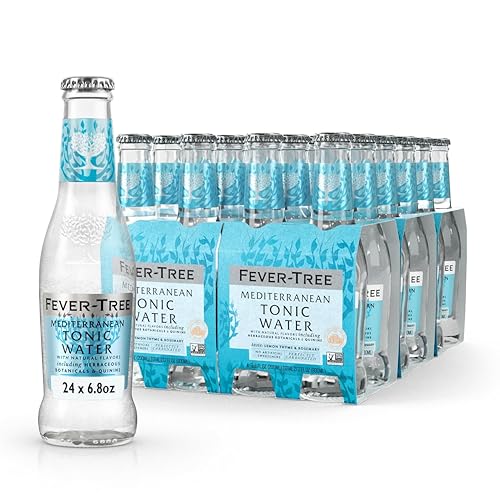
Fever-Tree Mediterranean Tonic Mixer, 24 Pack, 6.8 Fl Oz Bottles
Badge: Most Distinctive
Strengths
- The listing describes essential oils of rosemary combined with African quinine for a subtly herbaceous, refreshing flavour — a genuine variation, not a relabel.
- Herbal notes give mango rum a garden-style serve unlike anything else in the pool.
- The 6.8 fl oz bottle format pours a generous highball or two shorter ones.
Trade-offs
- Rosemary’s savoury steer will not suit every mango drinker; it is the pool’s most opinionated bottle.
- Bottles carry the opened-bottle carbonation clock; this pack suits households that pour in sessions.
- Its herbal direction pairs less naturally with additional sweet garnishes.
Mini spec box: Format: 24 pack, 6.8 fl oz bottles · Style: Mediterranean tonic · Stated profile: essential oils of rosemary with African quinine, subtly herbaceous and refreshing
Every tonic shelf benefits from one bottle that changes the conversation, and in this pool it is the Mediterranean. Rosemary against mango sounds unlikely until the glass is in hand: the herb’s savoury, resinous edge cuts the fruit’s ripeness the way a herb salad cuts a rich main, and the result is the most food-friendly, aperitif-style serve in the guide. Garnish it with a herb sprig or a citrus twist rather than anything sweet, and serve it before dinner, where its dry, aromatic profile belongs.
It is also the pick most likely to divide a household, so buy it as a deliberate variation, not as the default. Hosts who already own the classic cans will find the Mediterranean bottles the interesting second format: same shelf logic, entirely different glass. Drinkers whose mango rum habit is purely about the fruit should pass it by without regret and double down on the Light cans instead — distinctiveness is only a virtue when it points at your palate.
Best for: herbaceous, aperitif-style mango highballs / Not suited for: fruit-purist drinkers or irregular solo pouring

Fever-Tree Premium Indian Tonic Water, 16.9 Fl Oz, Pack of 8
Badge: Best Premium
Strengths
- The flagship Indian tonic profile pours the firmest quinine frame in the guide.
- The listing states no artificial sweeteners, flavourings, or preservatives.
- Generous 16.9 fl oz bottles suit shared highballs poured across an evening.
Trade-offs
- Its firmness can overshadow a delicate mango rum if poured without restraint.
- The large bottles carry the sharpest opened-bottle clock in the pool.
- An 8 pack of large bottles is the biggest storage footprint here.
Mini spec box: Format: 16.9 fl oz bottles, pack of 8 · Style: Premium Indian tonic water · Stated: no artificial sweeteners, flavourings, or preservatives
For the drinker who finds flavoured rum too soft and wants the mixer to push back, this is the bottle. The Premium Indian’s firm bitterness turns a mango highball into a genuinely tonic-forward drink — the mango becomes the fruit note inside a dry, sparkling structure rather than the whole story. Poured across a table, where the large bottle is finished while bright, it is also the most convivial serve in the guide: two generous highballs per bottle, identical and sparkling.
Restraint is the skill it asks for. With a bold mango rum it is magnificent; with a delicate one, pour the rum a touch heavier or choose the classic cans. Label-reading households will note the stated absence of artificial sweeteners, flavourings, and preservatives, recorded here as a listing fact. Buy it when the household’s palate is settled in the firm direction and its drinking is social enough to honour the bottle size — the same conditions that govern its role in Best Mixers For Mezcal highball discussions.
Best for: tonic-forward drinkers and shared serves / Not suited for: delicate rums, solo drinkers, or sweet palates

Fever-Tree Tonic Water Mixer, 24 Pack, 6.8 Fl Oz Bottles
Badge: Best for Hosting
Strengths
- The classic tonic profile — subtle citrus and fruit notes balanced by quinine bitterness — in a session-friendly bottle.
- Each 6.8 fl oz bottle pours a generous highball, and a 24 pack covers a party without a second purchase.
- Bottles pour with a ceremony cans cannot match at a set table.
Trade-offs
- Opened bottles lose sparkle; the format punishes slow, solitary drinking.
- The flavour duplicates the canned classic, so this is a format decision, not a new taste.
- Glass needs upright, careful storage.
Mini spec box: Format: 24 pack, 6.8 fl oz bottles · Style: tonic water with real quinine · Stated profile: subtle citrus and fruit notes balanced by quinine bitterness
Hosting is a format problem before it is a flavour problem, and this pack solves the format. When mango highballs are being poured for a table across an evening, bottles are opened and finished in their prime, the pour feels generous, and the classic profile keeps every palate at the table inside its comfort zone — firmer than the Light, friendlier than the Premium Indian, and without the Mediterranean’s herbal wager. If your mango rum mostly appears when friends do, this is your default purchase.
The mirror warning applies with equal force: a quiet household that buys this pack for occasional drinks will spend the season pouring from slowly flattening bottles and misjudging a good tonic. That household should buy the identical profile in cans. The guide’s insistence on this point — format as a first-class decision — is the single most transferable lesson in it, applying to every carbonated mixer in the cluster, from brunch drinks in Best Mixers For Mimosas to this highball.
Best for: hosts and session pouring / Not suited for: occasional solo drinkers

Fever-Tree Light Tonic Water Mixer, 8 Pack, 5.07 Fl Oz Cans
Badge: Best Starter Pack
Strengths
- The light recipe — stated at only 30 calories per serving with a touch of Mexican bitter orange — in a trial-size 8 pack.
- Single-serve cans let a new drinker test the rum-and-tonic idea with zero waste risk.
- Balanced botanicals give a smooth, crisp taste that flatters a fruit-led rum.
Trade-offs
- Eight cans disappear quickly if the household converts; the 24 pack is the follow-up purchase.
- It shares the light recipe’s gentler correction — not the bottle for a cloying rum.
- Per-can convenience is bought at pack scale; heavy drinkers should size up.
Mini spec box: Format: 8 pack, 5.07 fl oz cans · Style: light tonic water with real quinine · Stated: only 30 calories per serving, touch of Mexican bitter orange, balanced botanicals
Every range needs an honest entry point, and this 8 pack is the mango shelf’s. A drinker unsure whether rum and tonic is their drink at all can test the proposition in its gentlest form — light frame, fruit forward, single-serve cans — across a couple of weekends, with no large pack ageing in a cupboard if the answer is no. If the answer is yes, the same recipe waits in the 24 pack, and nothing about the house drink has to change except the shopping.
It is also the right pack for mixed households: a few cans for the one mango drinker, while the rest of the shelf serves other tastes. Judge it as a doorway, not a destination — its value is the cheapness of the experiment it enables, and experiments, run honestly, are how home bars improve.
Best for: first trials of rum and tonic and small households / Not suited for: committed light-tonic drinkers, who should buy the 24 pack
Comparison Table
| Pick | Format | Recipe direction | Badge | Link |
|---|---|---|---|---|
| Fever-Tree Tonic Cans, 24 Pack | 24 × 5.1 fl oz cans | Classic balance, everyday | Best Overall | Check on Amazon |
| Fever-Tree Light Tonic Cans, 24 Pack | 24 × 5.1 fl oz cans | Light frame, mango-led | Best for Mango-Forward Serves | Check on Amazon |
| Fever-Tree Mediterranean Tonic | 24 × 6.8 fl oz bottles | Herbaceous rosemary variation | Most Distinctive | Check on Amazon |
| Fever-Tree Premium Indian Tonic | 8 × 16.9 fl oz bottles | Firmest bitterness, flagship | Best Premium | Check on Amazon |
| Fever-Tree Tonic Bottles, 24 Pack | 24 × 6.8 fl oz bottles | Classic profile, session format | Best for Hosting | Check on Amazon |
| Fever-Tree Light Tonic Cans, 8 Pack | 8 × 5.07 fl oz cans | Light recipe, trial size | Best Starter Pack | Check on Amazon |
How to Choose a Tonic for Mango Rum
Choose on two axes, in order. The first axis is frame: how firmly should the tonic hold the mango? Drinkers who love the fruit and find their rum balanced already belong at the light end — the 8 pack to test, the 24 pack to commit. Drinkers who find mango rum soft or sweet belong at the classic centre or the Premium Indian’s firm end. Drinkers bored by both should take the Mediterranean’s herbal exit. The second axis is format, and it is decided by your calendar, not your palate: cans for drinking that happens one glass at a time across weeks, bottles for drinking that happens several glasses at a time across an evening.
Most first purchases should be small and central: the starter 8 pack, or the classic cans if the household already knows it likes bitterness. Tonic preferences are unusually personal and unusually stable once discovered, which makes the cheap experiment worth running before any 24 pack enters the house. Once the frame is known, format follows the household’s rhythm, and the shelf is done — six picks, but most homes will live happily on one or two of them, chosen well.
How to Build the Mango Rum Highball
Chill the rum and the tonic. Fill a tall glass completely with fresh ice — not most of the way, completely. Pour the mango rum over the ice, then the tonic in a steady pour down the side of the glass to protect its carbonation: a full single-serve can, or a generous pour from a freshly opened bottle. Stir once, gently, with a long spoon or a chopstick, just enough to marry the drink without beating out its sparkle. Squeeze a lime wedge over the surface and drop it in. Taste the first sip and learn your house adjustment: a second wedge for acid, a shorter tonic pour next time for a rum-led glass, a firmer tonic next purchase for a drier one.
Troubleshooting, in the pattern worth remembering:
- Problem: the drink tastes flat → the tonic was warm, the ice was scant, or the bottle had been open; chill everything, fill the glass, and open fresh carbonation.
- Problem: the mango disappears → the frame is too firm for this rum; move down the range to the classic or the light tonic, or pour the rum slightly heavier.
- Problem: the drink is too sweet → move up the range instead: classic instead of light, Premium Indian instead of classic, plus the lime wedge you may have skipped.
Garnish and Variations: Lime, Herbs, and Heat
Lime is the default garnish for a reason: its acid tightens the mango and echoes the tonic’s citrus register, and a wedge hands the adjustment to the drinker. Herbs are the variation with the highest return — a basil or mint leaf slapped between the palms and floated on the Mediterranean serve turns a highball into a signature, while the same leaf on the classic reads as freshness. A thin slice of fresh chilli, floated briefly, is the adventurous variation: mango and gentle heat are natural partners, and the tonic’s sparkle keeps the heat polite. Remove the slice once the warmth is where you want it; a garnish you can subtract is a seasoning, one you cannot is a wager.
What to avoid is sweetness as garnish — sugared rims, syrups, and juice floats all push the drink back toward the candy register the tonic was hired to escape. If a guest asks for sweeter, hand them the light-tonic version with an extra measure of rum before reaching for sugar; fruit-led and longer usually answers the request better than sweeter does. The discipline generalises across the cluster’s flavoured spirits, as Best Mixers For Minibar planning shows: garnish is the last seasoning, applied with a specific job in mind.
Storing Tonic and Planning the Mango Shelf
Unopened cans are the easiest stock in the home bar: cool, dark, upright storage, oldest used first, and no quality clock worth worrying about between purchase and pour. Unopened bottles ask only for the same courtesy plus protection from knocks. Opened bottles are the opposite — refrigerate, recap promptly, and plan to finish them in the near term while their sparkle is honest; a bottle opened for one highball on Friday is a cooking-and-soda ingredient by the following weekend, not a highball mixer.
Plan the shelf by occasions, as this cluster’s guides consistently advise. A household with a monthly games night can justify the hosting bottles; a household of two evening drinkers cannot, and its money belongs in cans. Write opening dates on bottle caps, keep a one-line inventory where you shop from, and let the inventory veto the duplicate purchase your memory was about to make. A small, fresh, correctly formatted tonic shelf will out-pour a large stale one every week of the year.
The Rum Side of the Glass: Handling Mango Rum Well
A mixer guide owes the base spirit a section, because half of every highball is the rum. Mango rums vary more than their shared name suggests: some are ripe and rounded, others leaner and more spirit-forward, and the same tonic will frame them differently. Taste a new bottle neat first, at room temperature, and name two things — how sweet it reads, and how natural the mango seems. A very sweet, confectionary bottle wants the classic or Premium Indian frame. A fresher, fruit-true bottle wants the Light. That thirty-second audit, done once per bottle, directs every pour that follows and prevents the common error of blaming a tonic for a mismatch that began with the rum.
Storage matters quietly. Keep flavoured rum upright, capped tightly, and away from strong light and heat; aromatic fruit notes are the first casualty of a bottle kept on a sunny counter. Serve it cold in highballs — chill the bottle if fridge space allows — because a warm spirit spends the ice’s chilling budget before the tonic even arrives. And measure, at least while a bottle is new to you: free-poured flavoured rum drifts sweet across an evening, and the highball’s balance depends on a ratio your hand has not yet memorised.
Mango Highballs with Food
The mango highball is a better food drink than its tropical reputation suggests, precisely because the tonic keeps it dry. With grilled food — chicken, prawns, vegetables with char on them — the drink’s fruit echoes the caramelised edges while its bitterness and sparkle cut richness, and the lime garnish bridges to any citrus or herb notes on the plate. With spicy food, the highball refreshes without the sugar load that makes sweet drinks cloying beside heat; keep the frame classic rather than light, because bitterness stands up to spice better than gentleness does. With salads and lighter plates, the Mediterranean serve is the table’s best friend, its rosemary register reading almost culinary.
Before food, pour the aperitif version: light tonic, a herb or citrus-twist garnish, nothing sweet in sight. During food, the classic. After food, when palates want either a rest or a small sweet close, the honest answer is often a shorter, rum-heavier pour rather than a different bottle. Planning the drink’s arc across a meal this way costs nothing but attention, and it is the difference between a mixer shelf that gets used and one that gets admired.
A Four-Week Tasting Plan for a New Mango Shelf
Week one belongs to the centre: buy the starter 8 pack of Light cans or the classic cans, build the reference highball exactly as this guide describes, and write down your ratio and one sentence of verdict. Week two, change one variable only — the garnish, from lime to herb to a brief chilli float — and notice how much of a drink’s identity lives in its last seasoning. Week three, invite the comparison: the same rum against the other end of the frame, Light drinkers tasting the classic, classic drinkers tasting the Light, at identical ratios and ice. Week four, take the winner to the table with food, and test the pairing notes above against a real plate.
By the end of the month the household will know its frame, its format, its ratio, and its garnish — the complete specification of a house drink — and every later purchase becomes a refill or a deliberate variation rather than a guess. That is the actual product this guide is selling under the tonic reviews: not six bottles, but a method for ending mixer uncertainty on one small shelf, transferable to every other shelf in the cluster. Keep the month’s notes with the shelf rather than in a drawer you will never open: the next new rum, the next guest with a different palate, and the next summer’s first hot evening will all ask the same questions, and the household that can answer them from its own record will mix better drinks in less time than any amount of fresh guessing allows.
When the Drink Is for a Crowd: Batching the Highball
Highballs resist batching more than punches do, because their life is carbonation, and carbonation poured into a jug begins leaving immediately. The workable crowd method is therefore assembly, not batching: set out the rum, the chilled tonics in their cans and bottles, a bucket of fresh ice, tall glasses, and a garnish station, and let each drink be built in its glass in twenty seconds. A small printed card with the house ratio turns guests into competent bartenders and keeps the host out of permanent pouring duty. For a seated dinner, the alternative is table bottles: the Premium Indian or classic bottles placed with the glasses, opened at the table, and finished within the meal, where their format is an asset rather than a clock.
Quantities follow the format logic of the whole guide. Cans make counting honest — one per drink, plus a margin for the second round that good evenings produce. Bottles ask for a session estimate: the 6.8 fl oz size pours one generous highball, the 16.9 fl oz size pours two, and any bottle left half-full at the evening’s end should be planned into the next day’s cooking or soda use rather than saved for a future highball it will only disappoint. Crowds also justify the Mediterranean as a second tonic on the table: offering two frames costs little and lets each guest find the version of the drink that suits them, which is the entire philosophy of this shelf in miniature.
Reading Tonic Labels: What the Listings Actually Tell You
The facts this guide relies on are worth naming as a reusable checklist, because tonic labels reward close reading. Format first: total volume, count, and whether the pack is cans or bottles decide the ownership experience before flavour is consulted. Recipe signals second: a stated calorie count and a bitter-orange hint mark the light direction; rosemary oils mark the Mediterranean; a flagship name and a stated absence of artificial sweeteners, flavourings, or preservatives mark the Premium Indian’s positioning. Quinine third: every bottling here is built on real quinine as listed, which is the shared foundation that makes the comparisons about tuning rather than kind.
What labels cannot tell you is the only thing that finally matters — how a given tonic frames your given rum for your given palate. That is why this guide keeps returning to small packs, identical-glass comparisons, and written verdicts. The label narrows the field to a sensible experiment; the experiment, honestly run, finishes the job. Buyers who internalise that division of labour stop being disappointed by mixers, because they stop asking bottles to answer questions only a glass can.
Zero-Proof Mango Serves from the Same Shelf
The tonic shelf serves non-drinking guests without a separate shopping trip, and it serves them well, because the architecture that balances mango rum — bitterness, sparkle, acid — is exactly what a zero-proof drink needs to taste adult. Build the glass identically: tall, full of ice, a full can of tonic, lime squeezed and dropped in. Add a measure of mango juice or a mango-flavoured base where the rum would go, at a shorter measure than the rum pour, since juice is sweeter than the spirit it replaces. The Mediterranean version, with its rosemary register, is the most dinner-worthy of these serves, and the light version is the easiest drinking.
The principle is worth stating plainly, because it decides whether mixed company feels catered to or tolerated: a zero-proof drink should be built, garnished, and served in the same glassware with the same care as every other drink on the table. A shelf chosen by structure, as this one is, makes that effortless — which is one more reason the tonic direction, rather than a cupboard of sweet mixes, is the right centre for a mango shelf.
Common Buying Mistakes
- Adding sweetness to a flavoured rum and calling it balance. Mango rum needs frame, not reinforcement; that is the entire premise of this tonic pool.
- Buying a 24 pack before knowing your frame. Run the light-versus-classic test in small packs first; tonic preference is personal and stable.
- Pouring warm tonic over scant ice. The serve fails on physics before flavour is even consulted.
- Keeping opened bottles for next month’s highball. Carbonation does not wait; finish bottles in sessions or buy cans.
- Garnishing with more sugar. Syrups and sweet rims undo the tonic’s work; season with acid, herbs, or aroma instead.
Final Recommendation
Start at the centre: the Fever-Tree Tonic Water cans, 24 pack, poured as the reference mango highball, will suit most mango rum drinkers most of the time. If the mango should lead, step to the Light Tonic cans — or its 8 pack starter if you are still deciding. If the drink should push back, step up to the Premium Indian Tonic for shared serves, and keep the Mediterranean bottles in mind as the variation that turns a familiar highball into an occasion. Whichever direction you walk first, walk it in the small format, prove it across a few evenings and at least one meal, and only then let the larger pack into the house — the shelf you end with will be smaller, fresher, and far more yours than one assembled in a single ambitious order. And when the shelf is settled, protect it from drift: replace like with like, keep the notes current, and let new bottles earn their place through the same small-format trial that built the shelf in the first place.
Frequently Asked Questions
Does tonic water really go with mango rum?
Yes. Rum and tonic is an established highball, and mango rum benefits particularly because the tonic’s quinine bitterness and carbonation frame the fruit instead of adding sweetness. Built over a full glass of ice with a lime wedge, it is a long, refreshing drink in which the mango reads as fruit rather than flavouring.
Which Fever-Tree tonic is best for mango rum?
The classic cans are the balanced starting point. Choose the Light cans if you want the mango to lead, the Premium Indian bottles if you want the firmest, most tonic-forward drink, and the Mediterranean bottles for an herbaceous, aperitif-style variation. Your rum’s sweetness and your own bitterness preference decide between them.
Should I buy tonic in cans or bottles for rum highballs?
Cans for drinking one glass at a time across weeks — every can is fresh and fully sparkling. Bottles for sessions and hosting, where an opened bottle is finished while its carbonation is bright. The classic profile is available in both formats in this guide, so the choice can be purely about your household’s rhythm.
How much tonic should I use with mango rum?
A full single-serve can over a standard rum pour in a tall glass filled with ice is the reliable starting point. From there, adjust by taste: a shorter pour makes a rum-led drink, and moving to a firmer tonic makes a drier one without changing volumes. Keep the glass full of ice either way — dilution control is what makes the ratio repeatable.
What garnish works best in a mango rum and tonic?
Lime is the default: its acid tightens the fruit and hands the final adjustment to the drinker. Herbs such as basil or mint suit the Mediterranean serve particularly well, and a briefly floated slice of fresh chilli is the adventurous option, since mango and gentle heat are natural partners. Avoid sweet garnishes, which undo the tonic’s balancing work.
What if I do not like tonic water at all?
Then this pool is honestly not your shelf, and the guide would rather say so than oversell a bottle. The cluster’s neighbouring rum guides cover the fruit-mix and citrus bottles that serve blended and rocks drinks, and a mango rum built that way — with the sweetness discipline those guides describe — is a legitimate drink. What this guide asks is only that the tonic highball be tried once, built properly with a full glass of ice and a lime wedge, before it is dismissed: a surprising share of tonic sceptics have only ever met it warm, flat, or drowned, and the properly built version is a different drink.
Can I use these tonics with other flavoured rums or spirits?
Yes — the frame logic is not mango-specific. Any sweet or flavoured spirit benefits from the same contrast, and the six bottlings here will frame coconut, pineapple, or spiced rums exactly as they frame mango, with the light recipes suiting delicate flavours and the firm recipes suiting sweet ones. The garnish changes with the spirit; the method — chill, fill the glass with ice, pour to protect the sparkle, season last — does not.
How long does tonic keep once opened?
An opened bottle should be refrigerated, recapped promptly, and finished in the near term while its carbonation is still lively; it will pour noticeably flatter with time. Unopened cans and bottles keep far longer in cool, dark storage, which is why irregular drinkers are steered to single-serve cans throughout this guide.


