Disclosure: topratedkitchenware.com is reader-supported. When you buy through links on our site, we may earn an affiliate commission from Amazon and other retailers, at no extra cost to you.
Where to buy
The six products below are the verified picks for this guide to the best mixers for pizza making. Each name links to its Amazon listing, where you can check the latest price on Amazon, confirm the current configuration and colour, and read the newest owner feedback before you decide. Four of the six are finishes of one stand mixer platform, and two are hand mixers for smaller batches — the guide explains exactly where each one earns its place.
- Cuisinart SM-50 Stand Mixer, White Linen — Check on Amazon
- Cuisinart SM-50 Stand Mixer, Onyx
- Cuisinart SM-50 Stand Mixer, Periwinkle Blue
- Cuisinart SM-50 Stand Mixer, Ruby Red
- Cuisinart HM-90BCS 9-Speed Hand Mixer
- Proctor Silex Easy Mix Hand Mixer
Read the full guide ↓ for the ranking logic, the honest limits of hand mixers on dough, and the batch-size maths that should drive your choice.
Choosing the best mixers for pizza making is mostly a question of how much dough you make, how often you make it, and how stiff you like it. Pizza dough is not cake batter. Even a soft, high-hydration dough resists the hook, climbs, and works a motor in a way that light batters never do, and a lean Neapolitan-style dough at lower hydration is tougher again. A mixer that breezes through frosting can stall, walk across the counter, or overheat on a double batch of dough for Friday night. This guide therefore ranks mixers the way a pizza maker actually uses them: dough capacity first, kneading endurance second, and everything else — whisking sauce-seasoning blends, whipping ricotta toppings, mixing a quick focaccia — after that.
Two styles of machine appear here, and they suit different kitchens. A stand mixer with a dough hook does the kneading for you, batch after batch, and frees your hands for stretching, topping, and watching the oven. A hand mixer costs and weighs far less, stores in a drawer, and can start a small, soft dough, but it asks you to be the stand: you hold it, you feel the resistance build, and you finish most doughs by hand on the bench. Neither answer is wrong. The mistake is buying one while expecting the other. The six picks below were verified against their listings, and the reviews are blunt about which doughs each machine should — and should not — be asked to knead.
Key Takeaways
- For regular pizza nights, a stand mixer with a dough hook is the reliable route: the Cuisinart SM-50 platform below pairs a 5.5-quart stainless steel bowl with a dedicated dough hook and 12 speeds.
- Four of the picks are the same SM-50 machine in different finishes. Pick your colour; the dough performance is identical, so this is a kitchen-matching decision, not a performance decision.
- Hand mixers can start small, soft, high-hydration doughs, but stiff or double batches will strain them. Treat them as a starter tool and finish kneading on the bench.
- Batch size matters more than headline power: one 5.5-quart bowl comfortably handles a family pizza night; pushing flour weight past the bowl’s comfortable working range is what burns motors out.
- Low, controlled speeds knead dough best. A wide speed range helps because dough work lives at the bottom of the dial, while whipping and mixing live higher up.
- Whatever you buy, rest the dough. No mixer — at any tier — replaces fermentation time for flavour and texture.
In this guide
Quick Picks
| Pick | Badge | Type | Why it is here |
|---|---|---|---|
| Cuisinart SM-50 Stand Mixer, White Linen | Best Overall | Stand mixer | 12 speeds, 5.5-quart bowl, dough hook included; the finish that hides flour dust best |
| Cuisinart SM-50 Stand Mixer, Onyx | Best for Modern Kitchens | Stand mixer | Same platform in a dark finish that suits contemporary counters |
| Cuisinart SM-50 Stand Mixer, Periwinkle Blue | Best Statement Finish | Stand mixer | Same platform in a soft blue for kitchens built around colour |
| Cuisinart SM-50 Stand Mixer, Ruby Red | Best Classic Finish | Stand mixer | Same platform in a traditional red that pairs with classic ranges |
| Cuisinart HM-90BCS Hand Mixer | Best Hand Mixer | Hand mixer | 9 speeds, 220 W motor, SmoothStart, storage case; the strongest hand option here |
| Proctor Silex Easy Mix Hand Mixer | Best Budget Pick | Hand mixer | 5 speeds, 215 watts of peak power, bowl rest, compact and lightweight |
How These Picks Were Chosen
This is a research-led guide, not a hands-on test report, and it does not pretend otherwise. Each pick was verified against its Amazon listing data through the Creators API: the exact model, the attachments named in the listing, the bowl size, the speed count, and the finish. Only products whose listing data confirms the features discussed are linked. Where a listing does not state a specification, this guide leaves it out rather than guessing — you will not find invented wattages, capacities, or performance figures anywhere below.
The ranking logic is pizza-specific. First, can the machine knead? For the stand mixers, the listing confirms a dough hook is in the box alongside the chef’s whisk and mixing paddle, which is the single most important line in any pizza-mixer listing. Second, can it knead repeatedly — bowl capacity and speed control at the low end matter more than top speed, because dough is worked slowly. Third, what else does it do on pizza night and beyond: whipping, mixing batters, and general baking, because a mixer that only earns its counter space once a week is a harder purchase to defend. Readers who blend dry ingredients for other projects may also find our guide to Best Mixers For Pressing Powders useful, since low-speed control matters there for the same reasons it matters with flour.
One structural note, stated plainly: picks one to four are four finishes of a single machine, the Cuisinart SM-50. That is deliberate transparency, not padding. The platform is the strongest verified stand mixer in this pool for pizza dough, and rather than inventing variety, the guide presents the finish choice honestly and spends its words on the decision that actually differs — how each finish behaves in a flour-dusted kitchen. If you already know you want the platform, the four reviews below are short reads; the hand mixer reviews and the buying guide carry the rest of the decision.
The 6 Best Mixers for Pizza Making

Cuisinart SM-50 Stand Mixer, White Linen
Badge: Best Overall
Strengths
- Dough hook included in the box, alongside the chef’s whisk and mixing paddle — the full pizza-night toolkit.
- 5.5-quart stainless steel bowl gives a family batch of dough room to climb without spilling over.
- 12 speeds let you start flour and water slowly, which keeps the counter — mostly — free of flour clouds.
Trade-offs
- A stand mixer is a permanent counter resident; small kitchens feel the footprint.
- The white linen finish shows tomato and turmeric stains more readily than the darker finishes.
- Very stiff, low-hydration doughs in maximum-size batches still deserve a rest-and-resume approach rather than one long knead.
Mini spec box
- Type: Stand mixer
- Speeds: 12
- Bowl: 5.5-quart stainless steel
- Included: Chef’s whisk, mixing paddle, dough hook, splash guard with pour spout
- Finish: White Linen (SM-50NAS)
For most home pizza makers, this is the machine the rest of the guide is measured against. The workflow is the one you want on a Friday evening: flour and water in the bowl, splash guard on, start at the lowest speed until the shaggy mass forms, then let the dough hook work while you prep toppings. The 5.5-quart bowl is the practical sweet spot for home pizza — big enough for a double batch for a family or a small gathering, small enough that a single dough ball still gets properly worked by the hook rather than smeared around the walls. The paddle handles everything from meatball mixture to cake batter, and the whisk turns the same machine into your dessert maker after the pizzas are done.
The honest limitation is the one shared by every mid-size stand mixer: it is not a bakery spiral mixer. A very lean, stiff dough at the top of the bowl’s flour capacity will make the head work hard, and the sensible technique — mix, rest ten minutes, mix again — is part of owning any machine in this class. Build that rest into your recipe and the SM-50 will knead pizza dough reliably for years. The White Linen finish earns the Best Overall slot for a practical reason beyond looks: flour dust, the constant companion of pizza making, is nearly invisible on it between cleanups.
Best for: Home pizza makers who knead weekly and want one machine for the whole menu / Not suited for: Kitchens with no spare counter space, or bakers routinely making very large stiff batches
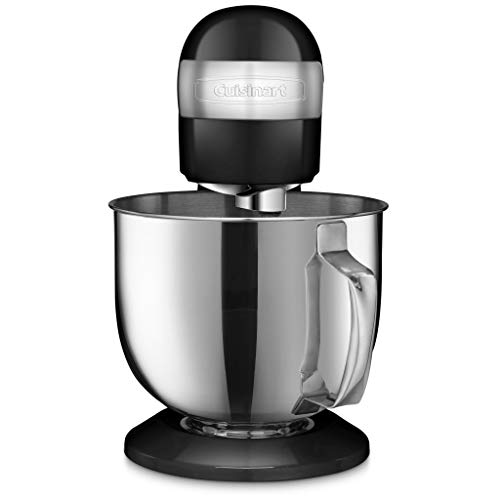
Cuisinart SM-50 Stand Mixer, Onyx
Badge: Best for Modern Kitchens
Strengths
- Identical dough performance to the Best Overall pick: dough hook, 5.5-quart bowl, 12 speeds.
- The dark Onyx finish hides tomato sauce splashes and general cooking grime between deep cleans.
- Pairs naturally with black and stainless appliance suites, so it can live on the counter without clashing.
Trade-offs
- Flour dust shows up starkly on the dark finish — expect to wipe it down after every pizza session.
- Same counter footprint and same stiff-dough caveats as the rest of the platform.
- If your kitchen is light and traditional, this is the finish most likely to look out of place.
Mini spec box
- Type: Stand mixer
- Speeds: 12
- Bowl: 5.5-quart stainless steel
- Included: Chef’s whisk, mixing paddle, dough hook, splash guard with pour spout
- Finish: Onyx (SM-50BK)
Everything said about the platform applies here: the same dough hook kneading the same 5.5-quart bowl through the same 12 speeds. What changes is the daily reality of owning it in a working kitchen. Onyx is the finish for cooks whose pizza nights are saucy affairs — a San Marzano splash that would shout on a white machine fades into the background here, and the machine looks composed sitting next to a black range or dark stone counters. If your mixer will live permanently on display, and your kitchen runs dark and modern, this is the version that belongs there.
The counterweight is flour. Pizza making is a flour-forward activity, and white dust on a near-black machine is the single most visible mess in the kitchen. You will wipe this mixer down after every session, where the White Linen can go two or three sessions before the dust reads as dirt. Neither fact should outweigh the dough performance — but since the performance is identical, the finish genuinely is the decision, and it should be made with your cleaning tolerance in mind rather than the showroom photo.
Best for: Modern, dark-toned kitchens and saucy pizza styles / Not suited for: Bakers who hate wiping down appliances after every use
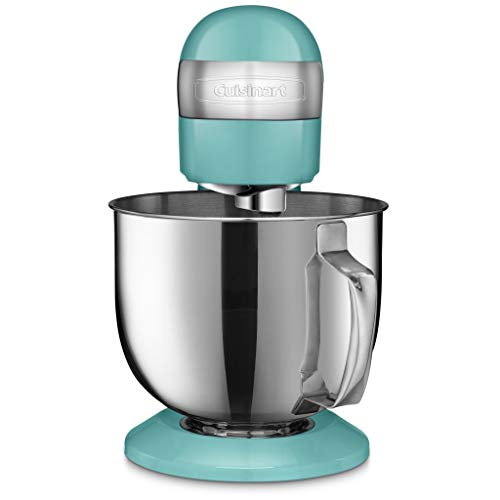
Cuisinart SM-50 Stand Mixer, Periwinkle Blue
Badge: Best Statement Finish
Strengths
- The full SM-50 platform — dough hook, whisk, paddle, splash guard, 5.5-quart bowl — in a distinctive soft blue.
- The mid-tone finish splits the difference: it hides flour dust better than Onyx and sauce better than White Linen.
- A genuine design piece for kitchens built around colour, rather than an appliance to hide away.
Trade-offs
- Colour-matching is a commitment: if you redecorate, the mixer keeps its personality.
- Identical footprint and batch-size limits to the other finishes.
- Less common finishes can be the first to sell through, so availability varies.
Mini spec box
- Type: Stand mixer
- Speeds: 12
- Bowl: 5.5-quart stainless steel
- Included: Chef’s whisk, mixing paddle, dough hook, splash guard with pour spout
- Finish: Periwinkle Blue (SM-50TQNAS)
Periwinkle Blue is the pick for the cook who treats the stand mixer as the kitchen’s centrepiece and chooses it the way you would choose a kettle or a range colour — deliberately. Underneath the colour is the same pizza-capable platform: dough hook for the main event, paddle for everything from focaccia doughs enriched with oil to brownie batter, whisk for the whipped ricotta or the mascarpone you dollop on a dessert pizza. Pizza night performance is not compromised by choosing the pretty one; that is precisely why this finish can be recommended without a caveat about capability.
Practically, the mid-tone blue is the quiet overachiever of the four finishes. Flour dust reads softly against it, tomato splashes do not stain it the way they can mark white, and it forgives the in-between state of a busy week better than either extreme. If you like the platform and want the version that asks the least cosmetic maintenance while still making you smile when you walk into the kitchen, this is the one.
Best for: Colour-led kitchens and cooks who want the lowest-fuss finish / Not suited for: Anyone planning a near-term kitchen remodel in a different palette
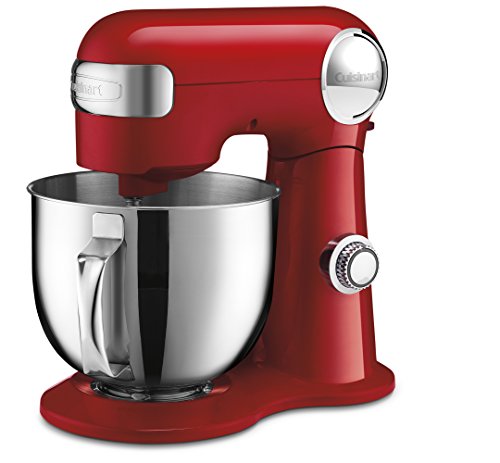
Cuisinart SM-50 Stand Mixer, Ruby Red
Badge: Best Classic Finish
Strengths
- Full SM-50 dough capability in the classic stand-mixer colour.
- Red hides both flour dust and sauce splashes reasonably well — a forgiving working finish.
- The traditional look suits farmhouse, retro, and classic range kitchens where modern finishes jar.
Trade-offs
- Same platform limits as the other finishes: counter footprint, and care needed with maximum stiff batches.
- A bold colour dominates a small kitchen visually.
- No performance difference whatsoever from the other three finishes — buy it for the look you love.
Mini spec box
- Type: Stand mixer
- Speeds: 12
- Bowl: 5.5-quart stainless steel
- Included: Chef’s whisk, mixing paddle, dough hook, splash guard with pour spout
- Finish: Ruby Red (SM-50R)
Ruby Red is the heritage choice — the colour stand mixers have worn in family kitchens for generations, and the one that looks most at home next to a classic range, a checkered floor, or a wall of well-used cast iron. The pizza credentials are the platform’s own: dough hook, 5.5-quart stainless bowl, splash guard with a pour spout that genuinely helps when you are adding water gradually to bring a dough together, and 12 speeds that cover everything from the slowest dough start to a fast whip.
As a working finish, red is quietly practical. It does not advertise flour dust the way Onyx does, and it does not hold onto sauce stains the way White Linen can. For a multi-generational kitchen where the mixer will be used hard and admired often, Ruby Red is the finish that ages most gracefully. Choose it if the classic look is the one you will still love in ten years — because with dough performance equal across the platform, longevity of affection is a legitimate buying criterion.
Best for: Classic and farmhouse kitchens; buyers choosing a decades-long counter companion / Not suited for: Minimalist kitchens where a bold colour would dominate

Cuisinart HM-90BCS 9-Speed Hand Mixer
Badge: Best Hand Mixer
Strengths
- 9 speeds with SmoothStart anti-splatter technology — slow, gentle starts that keep flour in the bowl.
- 220 W motor is the strongest hand-mixer specification in this guide.
- Snap-on storage case keeps the 6-piece set together in a drawer, ready for small jobs.
Trade-offs
- You are the stand: your arm absorbs the resistance as dough firms up, and long kneads are tiring.
- Realistic dough work is limited to small, softer batches; stiff doughs belong on the bench or in a stand mixer.
- No bowl is included as a matched set — you supply a deep bowl, and depth matters.
Mini spec box
- Type: Hand mixer
- Speeds: 9
- Motor: 220 W with SmoothStart anti-splatter technology
- Set: 6-piece, with snap-on storage case
- Finish: Brushed chrome
Not every pizza maker needs — or has room for — a stand mixer, and this is the hand mixer that comes closest to covering pizza duty. The technique is different and the guide will not pretend otherwise: you combine flour and water at the lowest speed in a deep bowl, let the beaters bring a soft, shaggy dough together, and switch to hand-kneading on the bench for the final development. Used that way, the HM-90BCS saves the messiest, stickiest stage of dough making and handles the small, high-hydration doughs — a single personal pizza, a small focaccia — from start to finish. Its 9 speeds and SmoothStart make it equally good at the rest of the pizza-night workload: whipping ricotta, mixing a quick garlic-herb oil base, blending batter for a cast-iron skillet pizza.
The honest limitation is physics. A hand mixer concentrates all the dough’s resistance into your wrist, and a stiff, low-hydration dough will fight back, climb the beaters, and heat the motor. If your pizza style is a big, lean, chewy dough, this is a helper, not the main machine — and the bakers in community discussions of hand mixers versus stand mixers say the same, a pattern you can see in the threads surveyed for our guide to Best Mixers For Podcasting Reddit on how forum consensus forms around gear limits, even in a very different corner of the mixer world. For small households, occasional pizza nights, and kitchens where a stand mixer simply cannot live, it is the strongest hand-held option verified in this pool.
Best for: Small households, occasional pizza nights, drawer-storage kitchens / Not suited for: Weekly large batches or stiff, low-hydration dough styles

Proctor Silex Easy Mix 5-Speed Hand Mixer
Badge: Best Budget Pick
Strengths
- Compact and lightweight — the easiest pick here to grab for a quick small dough or batter.
- Bowl rest feature lets you perch it on the bowl’s edge between additions, keeping counters cleaner.
- 215 watts of peak power covers soft doughs, batters, and whipped toppings without fuss.
Trade-offs
- 5 speeds give less low-end finesse than the 9-speed Cuisinart when starting flour.
- Dough duty is strictly light: small, soft batches only, with hand-kneading to finish.
- No storage case in the listing — attachments live loose in a drawer.
Mini spec box
- Type: Hand mixer
- Speeds: 5
- Power: 215 watts of peak power
- Features: Bowl rest, compact and lightweight body
- Finish: Black (62511)
The Proctor Silex Easy Mix is the entry point: an inexpensive, featherweight hand mixer that earns its place in a pizza guide by being honest about its lane. That lane is the small stuff — a single soft dough started in the bowl and finished by hand, the batter for a deep-dish skillet pizza, whipped toppings, and the general mixing a small kitchen needs day to day. Its bowl rest is a small feature that matters more than it sounds: perching the mixer on the bowl’s rim while you add flour keeps drips off the counter and the beaters out of the sink. For a first apartment, a dorm-adjacent kitchen, or a camper, it covers pizza night’s mixing needs at the lowest commitment in this guide — it sits, as a product class, in the lower-cost tier of hand mixers.
Do not ask it to be a dough machine. A full-size stiff dough will overwhelm it, and repeated attempts will shorten its life. The right mental model is a mixing assistant that handles the wet, early stages and everything light thereafter, while your hands — the oldest dough tool there is — do the kneading. Bought with that expectation, it is excellent value; bought as a stand-mixer substitute, it will disappoint. That distinction, between tools bought for their real lane and tools bought for a fantasy, is the same one that separates happy owners from frustrated ones across the mixer categories, from kitchen benches to the setups discussed in Best Mixers For Powered Speakers.
Best for: First kitchens, tiny storage, soft small-batch doughs and batters / Not suited for: Anyone expecting stand-mixer dough performance
Comparison Table
| Pick | Type | Speeds | Key pizza-relevant feature | Link |
|---|---|---|---|---|
| Cuisinart SM-50, White Linen | Stand | 12 | Dough hook + 5.5 qt bowl; hides flour dust | Check on Amazon |
| Cuisinart SM-50, Onyx | Stand | 12 | Dough hook + 5.5 qt bowl; hides sauce splashes | Check on Amazon |
| Cuisinart SM-50, Periwinkle Blue | Stand | 12 | Dough hook + 5.5 qt bowl; low-fuss mid-tone finish | Check on Amazon |
| Cuisinart SM-50, Ruby Red | Stand | 12 | Dough hook + 5.5 qt bowl; classic forgiving finish | Check on Amazon |
| Cuisinart HM-90BCS | Hand | 9 | 220 W, SmoothStart, storage case; small soft doughs | Check on Amazon |
| Proctor Silex Easy Mix | Hand | 5 | 215 W peak, bowl rest; lightest mixing duty | Check on Amazon |
How to Choose a Mixer for Pizza Making
Start with your dough, not the machine. Write down the pizza you actually make: how many balls per session, roughly what flour weight, and how wet the dough is. A couple of small, soft doughs once a month is hand-mixer territory. A weekly double batch of a lean, chewy dough is stand-mixer territory, full stop. Most disappointed buyers skipped this step and bought for the pizza they imagined making.
Understand hydration, because it changes everything. Hydration — water weight as a percentage of flour weight — decides how hard a dough works a machine. A wet, slack dough at high hydration is comparatively gentle: it folds and stretches rather than resisting. A stiff dough at low hydration is the motor-killer: dense, resistant, and prone to climbing hooks and beaters. If your style runs stiff, weight your decision toward the stand mixer and sensible batch sizes; if your style runs wet and soft, a good hand mixer covers more ground than you might expect.
Bowl capacity is a working range, not a maximum. A 5.5-quart bowl can physically hold a large amount of flour and water, but dough needs room to be folded and worked, and an overfilled bowl kneads unevenly and stresses the drive. As a rule of thumb, plan your regular batch comfortably inside the bowl rather than at its brim, and split a party-sized quantity into two batches — dough rests happily while the first batch is worked. Two relaxed batches beat one strained one, for the machine and for the crumb.
Low-speed control is the pizza specification. Dough is combined and kneaded at the bottom of the dial. A mixer with more speeds — 12 on the SM-50 platform, 9 on the HM-90BCS — gives you finer control exactly where pizza work lives, plus a genuinely slow start that keeps flour in the bowl. Top speed is for whipping cream; it tells you almost nothing about dough. When comparing any two mixers for pizza, compare their low ends first. This is the same principle that governs other precision mixing tasks — the controlled starts discussed in Best Mixers For Pro Tools coverage of fine-grained control apply in spirit: the bottom of the range is where careful work happens.
Attachments decide the machine’s second life. A dough hook makes the pizza; a paddle and whisk make the machine worth its counter space the other six days. The SM-50’s included set — whisk, paddle, dough hook, splash guard — covers baking, mashing, whipping, and mixing without extra purchases. With hand mixers, check what the set includes and whether it stores together; the HM-90BCS’s snap-on case sounds minor until you have fished loose beaters out of a utensil drawer for the tenth time.
Plan for where it lives. Stand mixers that live on the counter get used; stand mixers that live in a cupboard get used twice. Measure your counter-to-cabinet clearance and your storage honestly. If the honest answer is “drawer,” buy the best hand mixer and a good bench scraper, and knead by hand with confidence — hand-kneaded dough has made great pizza for centuries.
How to Make Pizza Dough with a Mixer, Step by Step
Step 1 — Combine gently. Add flour and most of the water to the bowl. With a stand mixer, fit the dough hook and start at the lowest speed; with a hand mixer, start the beaters at the lowest speed in a deep bowl. Add yeast and salt once the flour is mostly hydrated, and drizzle in the remaining water as the mass comes together. Two to three minutes should give you a shaggy, unified dough with no dry pockets.
Step 2 — Rest before you knead (autolyse). Stop the machine, cover the bowl, and walk away for 20–30 minutes. This rest hydrates the flour and starts gluten development for free, which means less machine work, less heat, and better dough. It is the single easiest quality upgrade in home pizza making, and it also protects your mixer: a rested dough kneads faster and gentler than a raw one.
Step 3 — Knead in intervals. Stand mixer: knead at low speed in stretches of a few minutes, resting the machine briefly between them, until the dough is smooth and elastic — typically it will pull cleanly from the bowl sides and pass the windowpane test, stretching thin enough to see light through without tearing. Hand mixer: work a soft dough for short bursts only, then turn it onto a floured bench and finish by hand with stretch-and-folds.
Step 4 — Ferment with patience. Ball the dough, oil it lightly, cover, and let it rise until roughly doubled, or refrigerate it for a slow cold ferment of one to three days for deeper flavour. The mixer did the mechanical work; time now does the flavour work, and no amount of extra kneading substitutes for it.
Step 5 — Clean as you go. Dough dries into cement. Soak the bowl, hook, and beaters in warm water immediately after use, wash, and dry fully before storing. Stainless bowls and attachments reward this habit by staying bright for years.
Troubleshooting
Problem: Dough climbs the hook or beaters and tries to escape the bowl → The batch is likely too stiff or too large; stop, push the dough down, split the batch, or add a spoonful of water to soften it, and work in shorter intervals.
Problem: The motor sounds strained, slows, or the machine walks on the counter → Stop immediately. The dough is beyond the machine’s comfortable load. Rest the dough 10 minutes (it will relax and knead more easily), reduce the batch, and never hold a walking stand mixer down and force it to continue.
Problem: Flour erupts everywhere at startup → Start at the absolute lowest speed, use the splash guard if your machine has one, add flour to liquid in stages rather than all at once, and consider mixing the first minute by hand with a sturdy spoon before the machine takes over.
Dough Styles and the Mixer Each One Wants
Neapolitan-style dough — soft, wet, extensible — is the friendliest to mixers of both types: a stand mixer handles it beautifully at low speed, and even a hand mixer can carry a small batch most of the way. New York-style dough, leaner and chewier, is the stand mixer’s home turf and the hand mixer’s limit; make it in the stand mixer or by hand. Pan and focaccia doughs, enriched with oil and mixed to a batter-like softness at the start, suit both machine types and are the best starting point for hand-mixer owners. Whole-grain doughs drink more water and feel stiffer than they are; give them the autolyse rest without fail, whichever machine you own. Matching dough style to machine honestly — rather than asking one tool to cover every style — is what separates a relaxed pizza night from a wrestling match, and it is why this guide ranks a platform and two hand tools instead of pretending one product wins everything.
Beyond Pizza Night: What Else These Mixers Do
A pizza mixer that only makes pizza is a hard sell in most kitchens, so it is worth mapping the second life of each style. The SM-50 platform’s paddle and whisk cover the baking canon — cakes, cookies, mashed potatoes, whipped cream, meringue — which is why stand mixers anchor so many kitchens. The hand mixers shine at the opposite end: the two-minute jobs. Whipping a small amount of cream, mixing a pancake batter, blending a dip — tasks where hauling out a stand mixer feels absurd. Many households end up owning both styles eventually, and there is no contradiction in that; they are complements, not rivals. The same complement logic shows up across the wider mixer landscape this site covers — a home bar, for instance, has entirely different needs, explored in Best Mixers For Plain Vodka — and recognising which mixer category a job belongs to is the first step of every good purchase in this space.
A Pizza Night Workflow That Suits Your Mixer
The cooks who get the most from any mixer in this guide share one habit: they organise pizza night around the dough’s timetable instead of the oven’s. Start the dough first — combine, autolyse, knead — because everything else can happen while it ferments. While the dough rises, the same mixer earns its keep a second time: the paddle blends a seasoned ricotta filling, the whisk loosens a sauce base or whips cream for dessert, and the bowl’s capacity means one washing-up cycle covers the whole menu. Stretch and top only when the dough has relaxed; a dough that springs back aggressively is telling you it needs ten more minutes, not more flour. Bake hot, and while the first pizza is in the oven, the mixer is already clean and soaking — dough residue removed now is a thirty-second job, while dough residue found tomorrow morning is a chiselling job.
Batch planning follows the same logic. If friends are coming, two sequential batches in a 5.5-quart bowl, staggered by half an hour, give you doughs at slightly different stages of readiness — which is a feature, not a flaw, because pizzas leave the oven one at a time anyway. Hand-mixer owners should stagger differently: mix each small dough fresh in sequence and hold the finished balls under a damp cloth. Either way, the mixer stops being a bottleneck the moment you stop asking it to produce every dough at the same minute.
Keeping a Mixer Alive on Dough Duty
Dough is the hardest work most home mixers ever do, and a few habits decide whether a machine lasts three years or thirteen. First, respect the interval rhythm: knead in stretches, rest the machine briefly, and never run a straining motor continuously to “push through” — heat is the enemy, and a warm machine deserves a pause. Second, keep batch sizes honest; the comfortable working batch, repeated, is always cheaper than the heroic batch that ends in a repair. Third, clean the dough-contact parts immediately and dry them fully — dried dough in a hub or hinge is both a hygiene problem and a mechanical one. Fourth, store hand mixers with their cords loosely coiled rather than tightly wrapped around the body, which fatigues the cord at the entry point over time. Finally, keep the splash guard and attachments with the machine: the SM-50’s guard is what makes slow, flour-safe starts easy, and a guard lost in a cupboard is a feature you no longer own. None of this is glamorous, but it is the difference between a mixer that anchors a decade of pizza nights and one that becomes a cautionary tale.
Common Buying Mistakes
- Buying a hand mixer to do a stand mixer’s dough job. If you knead stiff dough weekly, no hand mixer will make you happy. Buy for your real dough.
- Judging by top speed or peak wattage alone. Pizza work lives at low speed, under sustained load. Low-end control and honest capacity matter more.
- Overfilling the bowl. A brim-full bowl kneads badly and strains the drive. Split big batches; the dough does not mind.
- Skipping the autolyse. Ten minutes of impatience costs you texture and makes the machine work harder. Rest the dough.
- Choosing a finish before checking the fit. With platform picks like the SM-50, performance is equal — but measure your counter clearance before any of them comes home.
- Kneading at high speed to save time. Fast kneading heats dough, tears gluten, and stresses motors. Low and steady wins.
Final Recommendation
For most readers, the answer is the Cuisinart SM-50 Stand Mixer in whichever finish suits your kitchen — the platform’s dough hook, 5.5-quart bowl, and 12 speeds are the complete pizza-making package in this pool, and the White Linen finish hides flour dust best. Choose Onyx for a modern dark kitchen, Periwinkle Blue for the lowest-fuss finish, or Ruby Red for a classic one; the dough will not know the difference. If a stand mixer cannot fit your space or budget, the Cuisinart HM-90BCS is the hand mixer to buy for small, soft doughs, and the Proctor Silex Easy Mix is the honest budget assistant for light duty. Buy the machine that matches your dough, rest your dough properly, and pizza night gets easier every single week.
Frequently Asked Questions
Can a hand mixer really knead pizza dough?
A hand mixer can bring a small, soft, high-hydration dough together and do the early mixing well, especially a 9-speed model with a gentle start like the HM-90BCS. What it cannot do comfortably is fully knead a stiff or large dough — your arm takes the load the stand would take, and the motor heats up. The proven workflow is machine for the messy combining stage, then hand-kneading on the bench to finish. For occasional small pizzas, that is a perfectly good system.
What size stand mixer bowl do I need for pizza?
For most households, a 5.5-quart bowl is the sweet spot: it handles a family batch — several pizzas’ worth of dough — with room for the dough to be worked properly, while still kneading a single small batch effectively. Much larger bowls can struggle to engage a single dough ball; much smaller ones force you into split batches for a crowd. Match the bowl to your typical batch, not your biggest-ever party.
Why do four of the picks look like the same mixer?
Because they are — the Cuisinart SM-50 platform in White Linen, Onyx, Periwinkle Blue, and Ruby Red. The guide lists the finishes separately because the finish is a real ownership decision (flour dust shows on dark finishes, sauce shows on light ones), and it states the sameness openly rather than disguising one machine as four different recommendations. Dough performance is identical across all four.
How long should I knead pizza dough in a stand mixer?
After a 20–30 minute autolyse rest, most pizza doughs need only a few minutes of low-speed kneading in intervals to become smooth and elastic — far less than many recipes suggest. Judge by the dough, not the clock: it should pull cleanly from the bowl, feel smooth and slightly tacky, and stretch thin without tearing when you perform the windowpane test. Over-kneading is real, and it makes dough tight and hard to stretch.
Is a dough hook essential, or can I use the paddle?
The paddle is fine for bringing ingredients together and for soft, enriched doughs, but a dough hook is the right tool for developed pizza dough: it folds and stretches the mass the way kneading requires, without smearing it around the bowl. Every stand mixer in this guide includes a dough hook in the box, which is one of the reasons the platform anchors the rankings.
How do I stop my stand mixer from walking across the counter?
Walking means the load is fighting the machine: the batch is too big or too stiff for comfortable kneading. Stop, rest the dough for ten minutes so it relaxes, split the batch if needed, and resume at low speed. Also check that the machine sits on a clean, dry counter with its feet gripping properly. Persistent walking with normal batches is a sign to reduce batch size permanently, not to hold the machine down.
Can these mixers handle whole wheat pizza dough?
Yes, with technique. Whole wheat flour absorbs more water and its bran can cut gluten strands, so whole-grain doughs benefit most from the autolyse rest and from slightly higher hydration. The stand mixer handles them well at sensible batch sizes; hand-mixer owners should keep whole-grain batches small and soft, and lean on stretch-and-folds on the bench to build strength gently.


