Disclosure: topratedkitchenware.com is reader-supported. When you buy through links on our site, we may earn an affiliate commission from Amazon and other retailers, at no extra cost to you.
Where to buy
The six products below are the verified picks for this guide to the best mixers for plain vodka. Each name links to its Amazon listing, where you can check the latest price on Amazon, confirm the current pack format, and read the newest owner feedback before you stock the bar.
- Fever-Tree Tonic Water, 24 Pack, 6.8 Fl Oz Bottles — Check on Amazon
- Fever-Tree Premium Indian Tonic Water, 16.9 Fl Oz (Pack of 8)
- Fever-Tree Mediterranean Tonic, 24 Pack, 6.8 Fl Oz Bottles
- Fever-Tree Light Tonic Water, 8 Pack, 5.07 Fl Oz Cans
- Fever-Tree Elderflower Tonic, 24 Pack, 5.1 Fl Oz Cans
- Fever-Tree Sparkling Sicilian Lemonade, 4 Pack, 6.8 Fl Oz
Read the full guide ↓ for why tonic dominates this list, how to match each style to the vodka serve you actually make, and the ratios and technique that matter more than the brand on the bottle.
Finding the best mixers for plain vodka starts with an honest truth about vodka itself: a good plain vodka is deliberately neutral. It brings strength, a clean texture, and very little flavour of its own — which means the mixer is not supporting the drink, it is the drink. Whatever you pour over plain vodka decides whether the glass tastes bright or dull, balanced or sweet, refreshing or medicinal. That is why this guide takes mixers seriously as the main event, and why five of the six picks are tonics of distinct styles, with one sparkling lemonade for drinkers who want to leave tonic behind entirely.
Tonic earns that dominance honestly. Its quinine bitterness gives neutral vodka the structure it lacks, its carbonation lifts the texture, and its citrus edges supply the aroma vodka does not bring. But “tonic” is not one flavour: an Indian tonic built on clean quinine bitterness, a Mediterranean tonic softened with rosemary and herbal oils, a light tonic with a leaner calorie profile, and an elderflower tonic with a floral sweetness are four genuinely different drinks waiting inside the same vodka bottle. The reviews below treat them that way — as distinct serves with distinct fans — and the buying guide explains how to choose by palate rather than by habit.
Key Takeaways
- Tonic is the default mixer for plain vodka because quinine bitterness supplies the structure a neutral spirit lacks; five of the six picks explore its main styles.
- All six picks are Fever-Tree products verified against their listings — this guide compares styles within one quality-focused range rather than pretending to survey every brand.
- Format matters: 6.8 fl oz bottles suit single highballs, the 16.9 fl oz bottles suit batching for guests, and small cans suit drinkers who hate waste.
- The Light tonic is the pick for a leaner serve, at 30 calories per serving as stated in its listing, with Mexican bitter orange in the flavour mix.
- The Sparkling Sicilian Lemonade is the one non-tonic route — the pick for drinkers who find quinine bitterness is not for them.
- Ratio and temperature beat brand loyalty: a well-chilled 3:1 tonic-to-vodka highball with fresh ice outperforms a careless pour of any premium mixer.
In this guide
Quick Picks
| Pick | Badge | Format | Why it is here |
|---|---|---|---|
| Fever-Tree Tonic Water | Best Overall | 24 × 6.8 fl oz bottles | Real quinine, subtle citrus and fruit notes; the classic vodka tonic |
| Fever-Tree Premium Indian Tonic Water | Best for Entertaining | 8 × 16.9 fl oz bottles | Larger bottles for batching rounds; no artificial sweeteners, flavourings or preservatives |
| Fever-Tree Mediterranean Tonic | Best Herbal Twist | 24 × 6.8 fl oz bottles | Rosemary essential oils with African quinine; softer, herbaceous profile |
| Fever-Tree Light Tonic Water | Best Light Option | 8 × 5.07 fl oz cans | 30 calories per serving; Mexican bitter orange; crisp, leaner serve |
| Fever-Tree Elderflower Tonic | Best Floral Option | 24 × 5.1 fl oz cans | Soft, sweet elderflower notes over African quinine; the aperitif serve |
| Fever-Tree Sparkling Sicilian Lemonade | Best Non-Tonic Option | 4 × 6.8 fl oz | Bright lemon sparkle for vodka lemonade highballs, no quinine |
How These Picks Were Chosen
This is a research-led guide. Every pick was verified against its Amazon listing data through the Creators API — the exact product name, pack size, bottle or can volume, and the flavour notes the maker itself states. Only what the listings confirm is repeated here: you will find no invented ingredient lists, no guessed sugar figures beyond the one calorie statement a listing itself makes, and no scores or tallies of other people’s opinions dressed up as facts.
The selection logic runs on three rails. First, flavour fit with a neutral spirit: each pick had to contribute something plain vodka lacks — bitterness, herbal depth, floral lift, citrus brightness, or a lighter body. Second, format fit for real drinking patterns: single-serve bottles for the nightly highball, large bottles for a table of guests, small cans for the drinker who opens one drink, not four. Third, honesty about scope: the verified pool for this keyword is one maker’s range, so the guide compares the styles within that range carefully instead of padding the list with unverified alternatives. Readers researching the other meanings of the word “mixer” on this site — the guide to Best Mixers For Podcasting 5 Preamp, for instance, covers audio desks for multi-microphone shows — will find the same verification standard applied there: if a listing does not confirm a claim, the guide does not make it.
A note on what this guide is not: it is not a claim that tonic is the only respectable partner for vodka. Juice, soda, ginger beer, and a dozen other mixers all have their drinks. They are simply not what the verified pool for this guide contains, and rather than inventing products, the guide goes deep on the tonic family and one lemonade — the serves the largest number of plain-vodka drinkers actually pour, week in and week out.
The 6 Best Mixers for Plain Vodka

Fever-Tree Tonic Water, 24 Pack, 6.8 Fl Oz Bottles
Badge: Best Overall
Strengths
- Built on real quinine, with subtle citrus and fruit notes balanced against the bitterness — the textbook vodka tonic profile.
- The 6.8 fl oz bottle is sized for a single generous highball, so each serve gets fresh carbonation.
- A 24 pack keeps a home bar stocked through weeks of regular serves without emergency shopping.
Trade-offs
- Glass bottles are heavy to store and to recycle compared with cans.
- The profile is deliberately classic — drinkers chasing novelty will find the flavoured tonics below more interesting.
- Once opened, a bottle’s fizz fades, so it is a one-serve format by design.
Mini spec box
- Style: Tonic water with real quinine
- Format: 24 pack, 6.8 fl oz bottles
- Flavour notes (per listing): Subtle citrus and fruit notes balanced by quinine bitterness
- Suggested serves (per listing): Gin and tonic or vodka and tonic
This is the reference serve, and it takes the Best Overall badge because it is the bottle against which every other pick in this guide is implicitly compared. Poured over plain vodka and ice, it delivers exactly what the drink promises: a clean bitter frame, a gentle citrus lift, and enough carbonation to keep the glass lively to the last sip. The balance is the point — the bitterness is present enough to structure the drink but never tips into the medicinal harshness that gives cheap tonic its reputation, and the fruit notes soften the edges without turning the serve sweet. If you drink vodka tonic regularly and want one case to keep on hand, this is the case.
The format deserves its share of the credit. A 6.8 fl oz bottle maps neatly onto a single highball at a generous ratio, which means the tonic is always at full sparkle — no half-flat remnants from a big bottle opened three days ago. The honest limitation is storage and weight: a case of glass is a commitment of shelf and fridge space, and households that drink a vodka tonic twice a month may find the cans below a better fit. But for the regular drinker, this is the benchmark bottle, and everything else in the guide is a variation on its theme.
Best for: Regular vodka tonic drinkers who want the classic serve, always fresh / Not suited for: Occasional drinkers with minimal storage, or anyone avoiding quinine

Fever-Tree Premium Indian Tonic Water, 16.9 Fl Oz (Pack of 8)
Badge: Best for Entertaining
Strengths
- The 16.9 fl oz bottle pours a round of highballs from one opening — the natural format for guests.
- Made with no artificial sweeteners, flavourings or preservatives, per the listing.
- The classic Indian tonic profile is the crowd-pleasing centre of the tonic world: bitter, citrus, clean.
Trade-offs
- A big bottle loses sparkle across a long evening; the last glass is softer than the first.
- For a solo nightly drink, the format invites waste compared with single-serve bottles or cans.
- Eight large bottles are a storage commitment of their own.
Mini spec box
- Style: Premium Indian tonic water
- Format: Pack of 8, 16.9 fl oz bottles
- Listing note: No artificial sweeteners, flavourings or preservatives
Entertaining changes the maths of mixers. When four or six people are drinking vodka tonics, opening a fresh small bottle per glass is fiddly and slow; the 16.9 fl oz format exists for exactly this moment. One chilled bottle builds several highballs in a single pass around the counter, the pours stay consistent, and the host spends the evening with the guests instead of with the bottle opener. The Premium Indian profile is the right flavour for a crowd, too — it is the canonical tonic taste, bitter and bright, that nobody at the table finds strange. The listing’s no-artificial-sweeteners, flavourings or preservatives note matters to many hosts choosing for a group, and it is stated plainly here because the listing states it.
The trade-off is the physics of carbonation. A large bottle opened at seven o’clock is pouring a noticeably softer drink by ten. The fix is simple and covered in the how-to section: chill the bottle hard, pour rounds rather than sipping from it all night, and consider cracking a second bottle for a late round instead of nursing the first. For the solo drinker, though, this format is the wrong tool — the small bottles and cans in this guide exist precisely for you.
Best for: Hosts building rounds of vodka tonics for a group / Not suited for: Solo drinkers who open one drink at a time
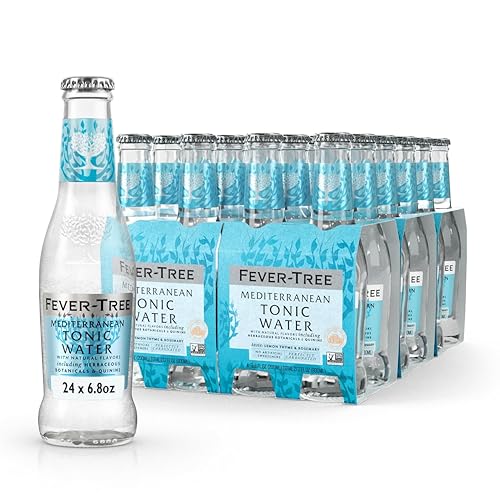
Fever-Tree Mediterranean Tonic, 24 Pack, 6.8 Fl Oz Bottles
Badge: Best Herbal Twist
Strengths
- Essential oils of rosemary combined with African quinine create a subtly herbaceous profile unlike any standard tonic.
- The softer, more aromatic style flatters plain vodka without overwhelming its clean texture.
- Same practical single-serve 6.8 fl oz bottle format as the Best Overall pick, in a 24 pack.
Trade-offs
- The herbal character is a love-it-or-leave-it profile; committed classicists may find it distracting.
- It steers the drink toward a savoury, aperitif direction that does not suit every occasion or garnish.
- As a 24 pack of glass, it carries the same storage weight as the classic tonic.
Mini spec box
- Style: Mediterranean tonic
- Format: 24 pack, 6.8 fl oz bottles
- Flavour notes (per listing): Essential oils of rosemary, African quinine; subtly herbaceous, refreshing
The Mediterranean tonic is where this guide stops being about refreshment alone and starts being about aroma. Rosemary’s essential oils give the drink a garden-herb top note that changes what plain vodka is for: instead of a clean, cold highball, you get something closer to an aperitif — savoury at the edges, aromatic, and unusually food-friendly. It is the vodka tonic to pour before a Mediterranean dinner, with olives and salted almonds on the table, where the classic tonic’s citrus snap would be merely fine and this one is genuinely interesting. A sprig of rosemary or a strip of lemon peel as garnish doubles down on what the mixer is already doing.
That distinctiveness is also the limitation. A flavoured tonic commits the drink; you cannot build a neutral vodka tonic with it, and drinkers who love the classic profile sometimes read the herbal note as an intrusion. The wisest way to buy it is as a second case, not a replacement: keep the classic tonic for the standard serve, and bring the Mediterranean out when the menu or the mood leans herbal. Bought that way, it is one of the most rewarding variations in the whole tonic family.
Best for: Aperitif-style serves and Mediterranean menus; drinkers bored of the classic profile / Not suited for: Purists who want one neutral tonic for everything

Fever-Tree Light Tonic Water, 8 Pack, 5.07 Fl Oz Cans
Badge: Best Light Option
Strengths
- Only 30 calories per serving, per the listing — the leanest serve in this guide.
- A touch of Mexican bitter orange keeps the flavour interesting rather than merely diluted.
- The small 5.07 fl oz can is a true single serve: open, pour, done, with nothing left to go flat.
Trade-offs
- The lighter body reads thinner than the full tonics; committed tonic drinkers notice the difference.
- An 8 pack is the smallest commitment here — regular drinkers will reorder often.
- Cans chill fast but also warm fast in the hand on a hot day.
Mini spec box
- Style: Light tonic water with real quinine
- Format: 8 pack, 5.07 fl oz cans
- Listing note: Only 30 calories per serving; touch of Mexican bitter orange; smooth, crisp taste
Light mixers live or die on whether they taste like a choice or a compromise, and this one is built like a choice. The listing’s own framing is flavour-first — balanced botanicals, a smooth crisp taste, and a touch of Mexican bitter orange — with the 30-calorie serving as the supporting fact rather than the whole story. In the glass, over plain vodka, it drinks leaner and drier than the classic tonic: the bitterness is there, the orange note gives it a lift, and the finish is clean. For the drinker who wants a vodka tonic that sits lightly — a weekday serve, a long afternoon, a second glass that does not feel like a second helping — this is the pick that respects the intention.
The format reinforces the brief. A 5.07 fl oz can is one drink, full stop: no half-used bottle flattening in the fridge door, no temptation to top up just because the bottle is open. The honest trade-offs are body and logistics — the serve is thinner than the full-strength tonics, and an 8 pack disappears quickly in a household of regular drinkers. But as a deliberately lighter way to drink the same classic serve, it is the strongest verified option in this pool, and it earns its badge without apology.
Best for: Lighter serves, weekday highballs, portion-controlled single drinks / Not suited for: Drinkers who want the fullest, roundest tonic body

Fever-Tree Elderflower Tonic, 24 Pack, 5.1 Fl Oz Cans
Badge: Best Floral Option
Strengths
- Soft, sweet elderflower notes over the finest African quinine, per the listing — a delicate, balanced profile.
- Transforms plain vodka into a floral aperitif with zero extra ingredients or skill required.
- The 5.1 fl oz cans are single-serve and fridge-friendly, in a generous 24 pack.
Trade-offs
- The floral sweetness, however gentle, is not the dry classic profile; it will not satisfy a purist’s craving.
- It is a speciality serve — most drinkers will reach for it occasionally, not nightly.
- Cans show dents and are less giftable-looking than the glass bottles for a stocked bar shelf.
Mini spec box
- Style: Elderflower tonic
- Format: 24 pack, 5.1 fl oz cans
- Flavour notes (per listing): Delicate, balanced; soft, sweet elderflower notes; African quinine
Elderflower is the flavour that turns a vodka tonic into an occasion. The listing describes a delicate, balanced blend — soft, sweet elderflower notes over African quinine — and that is exactly the role it plays over plain vodka: the spirit disappears into a floral, gently bitter aperitif that tastes composed rather than mixed. It is the bottle — well, can — to open when the evening starts on a terrace, when there are guests who “don’t really drink vodka” and leave converted, or when you want one beautiful drink rather than two ordinary ones. A cucumber ribbon or a few mint leaves as garnish underline the garden register the mixer sets.
Its speciality is also its boundary. Elderflower tonic is a flavour with a point of view, and like the Mediterranean pick, it commits the drink — you are having the elderflower serve, not a neutral one. Most households will drink it in rotation rather than in replacement, which the 24-can pack quietly acknowledges by being the format you can keep in a fridge corner for the right evenings. In a guide full of sensible defaults, this is the romantic pick, and it earns its place by being genuinely good at the one thing it does.
Best for: Aperitif serves, spring and summer evenings, converting vodka sceptics / Not suited for: Drinkers who want one dry, neutral tonic for every occasion

Fever-Tree Sparkling Sicilian Lemonade, 4 Pack, 6.8 Fl Oz
Badge: Best Non-Tonic Option
Strengths
- The one pick with no quinine at all — the escape route for drinkers who dislike tonic’s bitterness.
- Sparkling lemon brightness makes the simplest vodka lemonade highball taste deliberate and fresh.
- The 6.8 fl oz format pours one tall serve per unit, like the tonic bottles.
Trade-offs
- The 4 pack is the smallest in the guide — a taster format, not a stocking format.
- Without quinine’s bitterness, the drink leans sweeter and simpler; some will miss the structure.
- It is a one-drink specialist: lemonade does not moonlight in other classic serves the way tonic does.
Mini spec box
- Style: Sparkling lemonade
- Format: 4 pack, 6.8 fl oz
- Flavour notes (per listing): Sicilian lemonade, sparkling
Every tonic guide needs an honest answer for the drinker who has tried tonic and simply does not like it — and this sparkling Sicilian lemonade is that answer. Vodka and lemonade is one of the oldest highball combinations there is, and with a quality sparkling lemonade it stops tasting like a fallback and starts tasting like a choice: bright lemon up front, gentle sparkle, and the vodka providing clean strength underneath. It is the easiest serve in this entire guide to make well — ice, vodka, this, a lemon wedge — which makes it the natural pick for new home bartenders and for mixed company where palates vary.
The compromises are structural. Without quinine, there is no bitter spine, so the drink is softer and sweeter in register; drinkers who love tonic will find it pleasant but simple. And the 4 pack is frankly a trial size — if it becomes your house serve, you will be reordering in multiples. Treat it as the guide’s pivot pick: the bottle that keeps everyone at the table drinking the same spirit, each in the style they actually enjoy. Discussions of mixer versatility across categories — the same “one base, many serves” thinking appears in Best Mixers For Pressing Powders for dry blends — start from exactly this principle: match the mixer to the palate, not the other way round.
Best for: Tonic sceptics, new home bartenders, bright and simple highballs / Not suited for: Bitter-drink lovers, or stocking a bar in one purchase
Comparison Table
| Pick | Style | Format | Defining note | Link |
|---|---|---|---|---|
| Fever-Tree Tonic Water | Classic tonic | 24 × 6.8 fl oz bottles | Real quinine, citrus and fruit balance | Check on Amazon |
| Fever-Tree Premium Indian Tonic | Indian tonic | 8 × 16.9 fl oz bottles | Large format; no artificial sweeteners, flavourings or preservatives | Check on Amazon |
| Fever-Tree Mediterranean Tonic | Herbal tonic | 24 × 6.8 fl oz bottles | Rosemary oils, herbaceous and refreshing | Check on Amazon |
| Fever-Tree Light Tonic | Light tonic | 8 × 5.07 fl oz cans | 30 calories per serving; Mexican bitter orange | Check on Amazon |
| Fever-Tree Elderflower Tonic | Floral tonic | 24 × 5.1 fl oz cans | Soft, sweet elderflower over quinine | Check on Amazon |
| Fever-Tree Sparkling Sicilian Lemonade | Sparkling lemonade | 4 × 6.8 fl oz | Bright lemon, no quinine | Check on Amazon |
How to Choose a Mixer for Plain Vodka
Decide your relationship with bitterness first. Quinine bitterness is tonic’s whole contribution, and drinkers divide cleanly into those who find it refreshing and those who find it medicinal. If you are in the first camp, the only question is which tonic style; if you are in the second, no tonic will convert you and the sparkling lemonade is your pick. Be honest here — the most common home-bar waste is a case of premium tonic bought by someone who never liked tonic.
Then choose your style lane. Classic Indian tonic is the reference serve: bitter, citrus, clean. Mediterranean tonic moves the drink savoury and aromatic with rosemary — aperitif territory, excellent with food. Elderflower moves it floral and gentle — the prettiest serve, and the most occasion-specific. Light tonic keeps the classic shape with a leaner body and a bitter-orange lift. None of these is “better” in the abstract; each is better for a palate and a moment. Stock the lane you drink most, and add a second lane when you entertain.
Match the format to your drinking pattern. This is the unglamorous decision that determines waste. Nightly solo highball: small bottles or cans, one serve each, always fully carbonated. Regular hosting: the 16.9 fl oz bottles pour rounds efficiently. Occasional drinking: cans keep longest in the fridge door without the flat-remnant problem, because each unit is sealed until the moment it is drunk. Buying the right format of the right flavour beats buying the “best” flavour in the wrong format, every time.
Think about the vodka you actually pour. Plain vodka is neutral, but not all neutrality is identical: some vodkas are soft and slightly sweet in texture, others are lean and peppery. Softer vodkas shine with the classic and light tonics, where the mixer’s structure leads. Leaner, spicier vodkas can stand up to — and benefit from — the stronger personalities of the Mediterranean and elderflower styles. You do not need a pairing chart; you need one experiment per style, which a mixed first order conveniently provides.
Run one mixed experiment before you commit. Because all six picks here come from one maker’s range, a first order can be a sampler in disguise: the classic tonic for the reference serve, one flavoured style that intrigues you, and the lemonade as insurance for tonic-averse palates. Three evenings of side-by-side drinking will teach you more about your own preferences than any guide can — including this one. Guides narrow the field; only your palate can crown the winner, and the cost of finding out is one small order and a bag of ice.
Consider the whole glass, not just the mixer. Ice quality, glass temperature, and garnish move a vodka highball as much as mixer choice does. A mediocre tonic over fresh, hard, plentiful ice in a frozen glass will beat a premium tonic over three tired cubes in a warm tumbler. Budget your attention accordingly: mixer first, then ice discipline, then garnish — a citrus peel for classic, rosemary for Mediterranean, cucumber or mint for elderflower, a lemon wedge for the lemonade. The garnish is not decoration; it is the aroma the first sip lands on.
How to Build a Vodka Highball, Step by Step
Step 1 — Chill everything. Mixer in the fridge until properly cold, glass in the freezer if you have ten minutes, vodka wherever you keep it. Carbonation escapes faster from warm liquid, so a cold mixer is a fizzier drink from the first pour to the last.
Step 2 — Fill the glass with ice, properly. Use a tall glass and fill it to the top with the freshest, hardest ice you have. More ice means a colder drink that dilutes slower, not faster — a half-filled glass melts its few cubes quickly and waters the serve.
Step 3 — Add the vodka, then the mixer at roughly 1:3. One part plain vodka to about three parts mixer is the classic highball architecture: spirit present but not hot, mixer leading the flavour. Pour the mixer gently down the side of the glass or over the back of a spoon to keep the bubbles alive, rather than splashing it in from a height.
Step 4 — Stir once, briefly, and garnish. A single gentle stir integrates the drink without knocking out the carbonation. Add the garnish that matches your mixer — citrus peel expressed over the surface for classic tonic, a rosemary sprig for Mediterranean, cucumber or mint for elderflower, a lemon wedge for lemonade — and serve immediately.
Step 5 — Adjust the ratio to your palate, then write it down. Too bitter? Move toward 1:3.5. Too soft? 1:2.5 and a pinch more ice. Every household lands on its own house ratio within a few experiments; the mistake is re-litigating it every time instead of settling on your number.
Troubleshooting
Problem: The drink tastes flat and dull → The mixer was warm, the ice was scant or stale, or the bottle had been open too long. Chill the mixer, fill the glass with fresh ice, and use single-serve formats if flat remnants keep happening.
Problem: The drink tastes harsh and medicinal → The ratio is spirit-heavy or the tonic style is wrong for you. Lengthen the drink toward 1:3.5, and if the quinine edge still bothers you, move from classic tonic to the elderflower style — or leave tonic for the sparkling lemonade.
Problem: The drink waters out before you finish it → Your ice is melting too fast because there is too little of it or the glass is warm. Fill the glass fully with ice, chill the glass, and drink highballs at a highball pace — they are built to be drunk cold and lively, not nursed warm.
Reading Tonic Labels Without the Marketing Haze
Tonic labels reward a sceptical eye. The facts that matter are the ones this guide’s listings state plainly: the bittering source (real quinine, in every tonic here), the flavour architecture (citrus, herbal oils, floral notes, bitter orange), the format and volume, and — where a light product is concerned — the per-serving calorie figure the maker publishes. Everything else on a label is atmosphere. A useful habit is to read a tonic label the way you would read any spec sheet: what is it, how much of it is there, and what does the maker actually claim it tastes like? That discipline — claims verified or claims ignored — is the same one applied across this site’s mixer coverage in every category, from the label checks in Best Mixers For Podcasting Reddit research on community-reported product claims to the format checks in Best Mixers For Powered Speakers. Where a listing is silent, this guide stays silent too, and you should let your own palate, in a single trial serve, fill the gap.
Stocking a Small Home Bar Around Plain Vodka
Plain vodka is the easiest spirit in the world to stock for, because the mixers do the variety work. A rational small bar looks like this: one case of your house tonic in your drinking format, one second style for contrast — Mediterranean if your house is classic, classic if your house is flavoured — a light option if anyone in the household drinks lighter, and a non-tonic option like the sparkling lemonade for the tonic-averse. Add fresh citrus weekly and keep ice production ahead of demand, and you can serve a table of mixed palates from a single bottle of vodka. That is the quiet superpower of a neutral spirit: the bar’s variety lives in the mixers, and the mixers are the cheap, long-keeping part of the equation. Rotate stock so the oldest cans and bottles pour first, keep everything cold-ready, and the home bar runs itself. The same stock-what-you-drink logic governs the far end of the mixer word’s meanings — nobody stocks a studio the way they stock a bar, but the discipline of buying for actual use, explored in Best Mixers For Pro Tools, is identical.
Variations on the Vodka and Mixer Theme
Once the classic highball is second nature, the same six mixers open a small repertoire of variations that keep a single vodka bottle interesting for months. The Mediterranean tonic, lengthened slightly and served with a strip of lemon peel and a green olive, becomes a genuinely savoury aperitif that can open a dinner. The elderflower tonic, poured over vodka with a splash of the sparkling lemonade and a cucumber ribbon, layers floral over citrus for the prettiest drink in this guide. The light tonic makes the long, sessionable version of the classic — the serve for a slow barbecue afternoon when one strong drink is not the plan. And the sparkling lemonade, given a few torn mint leaves and an extra squeeze of lemon, turns into a garden-party pitcher drink that scales without any technique at all. None of these requires a new bottle of anything; they are ratio, garnish, and imagination applied to the same shelf. That is the deeper reason to stock by style lane rather than by single product: variety in a home bar is mostly the art of recombining a few good mixers with intent.
A word on the vodka side of these variations: because plain vodka is neutral, it never fights a variation. The same experiments with a flavoured spirit would collide with the spirit’s own agenda; with plain vodka, the mixer and garnish always win, which makes this the safest spirit in the house to experiment on. If a variation fails, you have lost one glass and learned one preference — the cheapest education in home bartending.
Glassware, Garnish, and the Last Ten Percent
The final layer of a good vodka highball is presentational in the way a frame is presentational: it does not change the picture, but it changes how the picture is received. A tall, narrow glass keeps carbonation lively longer than a wide tumbler, because less surface is exposed to the air; a chilled glass keeps the first sip at the temperature the drink was built at. Garnish works on aroma first and looks second. Expressing a citrus peel over the glass — squeezing it so the oils mist the surface — perfumes every sip without adding juice or sweetness. A rosemary sprig, lightly slapped between the palms to wake its oils, echoes the Mediterranean tonic’s own character. Cucumber and mint belong to the elderflower serve; a plain lemon wedge belongs to the lemonade. The discipline is matching, not maximalism: one garnish that agrees with the mixer beats three that argue with it. Serve immediately, with the glass full of ice and the bubbles still rising, and the humblest of the six mixers in this guide will taste like a considered drink rather than a mixture.
Common Buying Mistakes
- Buying a case before a single serve. Tonic styles are distinct; try the lanes before committing to 24 of one. Variety first, bulk second.
- Choosing format by habit, not by pattern. Big bottles for solo drinkers and small cans for party hosts both waste money and fizz.
- Serving warm mixer over tired ice. The best mixer in the world cannot survive bad temperature discipline. Chill the mixer, fill the glass.
- Assuming “light” means flavourless. The light pick here is built around bitter orange and botanicals; judge it in the glass, not by the label category.
- Forgetting the tonic-averse. A host with only tonic in the house has no drink for a chunk of the table. Keep a non-tonic option.
- Over-stirring the highball. Every extra stir is carbonation lost. One gentle pass, then serve.
Final Recommendation
Start with the classic: the Fever-Tree Tonic Water in single-serve bottles is the reference vodka tonic — real quinine, balanced citrus, always at full sparkle — and it is the right first case for most plain-vodka drinkers. Hosts should add the Premium Indian Tonic in the large format for painless rounds. From there, branch by palate: Mediterranean for the aperitif drinker, Elderflower for the floral serve, Light for the leaner glass, and the Sparkling Sicilian Lemonade for anyone who has honestly decided tonic is not for them. Chill everything, respect the 1:3 ratio until you find your own, and plain vodka becomes the most versatile bottle in the house.
Frequently Asked Questions
Why is tonic the most popular mixer for plain vodka?
Because it supplies exactly what a neutral spirit lacks. Plain vodka brings strength and texture but little flavour; tonic brings quinine bitterness for structure, citrus notes for aroma, and carbonation for lift. The combination tastes complete in a way that vodka plus a merely sweet mixer often does not — the bitterness keeps the drink refreshing rather than cloying, which is why the vodka tonic has remained a default serve for decades.
What is the best ratio of tonic to vodka?
Start at one part vodka to three parts tonic, poured over a full glass of ice. That ratio lets the mixer lead while keeping the spirit present. From there, adjust in small steps: lengthen toward 1:3.5 for a softer, more refreshing drink, or tighten toward 1:2.5 for a spirit-forward serve. Your palate and your tonic style decide the final number — flavoured tonics like elderflower often shine at the longer ratio, while classic tonic handles the tighter one well.
Are flavoured tonics like Mediterranean and elderflower worth it?
Yes, as a second case rather than a replacement. A flavoured tonic commits the drink to a direction — herbal and savoury for Mediterranean, floral and gentle for elderflower — and within that direction it does work no garnish alone can match. Most drinkers enjoy them in rotation: the classic tonic for the standard serve, a flavoured tonic when the menu or the mood calls for it. Buy them once you know your house classic, not instead of finding it.
Does the light tonic actually taste different?
It tastes leaner — a drier, crisper serve with a thinner body than the full tonics — but it is not flavourless. The listing highlights a touch of Mexican bitter orange and balanced botanicals, and in the glass the effect is a tonic that reads more refreshing and less round. Drinkers who prioritise a lighter serve, at 30 calories per serving as the listing states, generally find the trade fair; drinkers who love tonic’s full body will notice what is missing.
Bottles or cans — which format should I buy?
Match the format to your pattern. Bottles in the 6.8 fl oz size pour one generous highball each and suit regular drinkers who value the ritual and the fullest sparkle. The 16.9 fl oz bottles suit hosts pouring rounds. Cans in the 5.07–5.1 fl oz sizes are the zero-waste single serve and keep well in a fridge door for occasional drinking. There is no quality hierarchy here — only fit.
What if I just do not like tonic?
Then do not drink it — the sparkling lemonade route exists for you. A vodka lemonade highball built on a quality sparkling lemonade, plenty of ice, and a lemon wedge is bright, refreshing, and honest, and it asks nothing of your palate that it is not willing to give. Many households keep both: tonic for those who love it, lemonade for those who do not, and one bottle of plain vodka serving everyone.
How long do these mixers keep once opened?
Unopened, they keep as shelf-stable products until the date on the packaging. Once opened, carbonation is on a clock: a large bottle pours its best drinks the day it is opened and noticeably softer ones after a night in the fridge, while single-serve bottles and cans sidestep the question entirely by being finished in one serve. That is the practical argument for single-serve formats in households that drink slowly.


