Disclosure: topratedkitchenware.com is reader-supported. When you buy through links on our site, we may earn an affiliate commission from Amazon and other retailers, at no extra cost to you.
Where to buy
Only one battery in this roundup is a native best 24 volt deep cycle battery that can be linked and recommended as a direct fit. The other five are documented honestly below: four are 12 volt deep-cycle units that people commonly wire in series pairs to build a 24 volt bank, and one is a small 24 volt lithium-ion pack that is not a deep-cycle battery at all. Series components are covered in full, but they carry no purchase link in this guide because they do not meet the native 24 volt criterion on their own.
- SUPER EMPOWER 12.8V 100Ah LiFePO4, Group 31 — series-pair component, covered prose-only below
- Nermak 2 Pack 12V 10Ah LiFePO4 — small series-pair component, covered prose-only below
- yeagulch 12.8V 100Ah LiFePO4, Group 31 — series-pair component, covered prose-only below
- ABKPOWER 12V 20Ah LiFePO4 — compact series-pair component, covered prose-only below
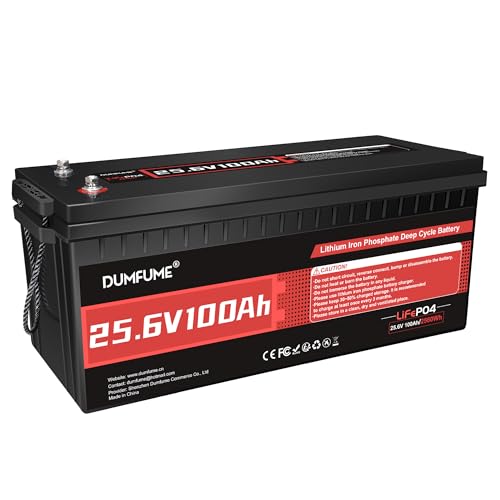
- dumfume 24V 100Ah LiFePO4 Lithium Battery — the native 24 volt pick; check the latest price on Amazon
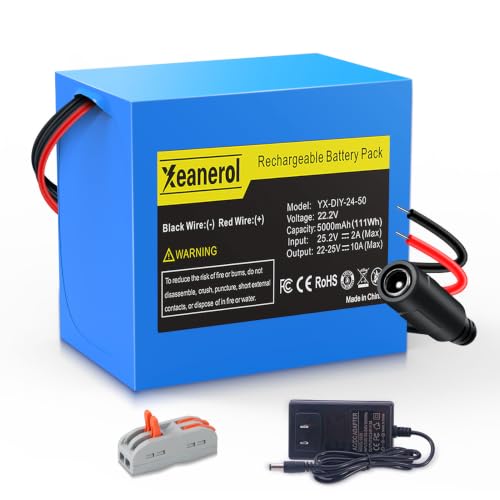
- Qwenoer 22.2V-24V 10Ah Lithium Battery Pack — 24 volt but not deep-cycle, covered prose-only below
Read the full guide ↓
Finding the best 24 volt deep cycle battery sounds simple until you open a few listings and realize how many products wearing a 24 volt headline are actually single 12 volt batteries. A true 24 volt deep cycle battery is one sealed unit, or one factory-built pack, that delivers 24 volt nominal output and is designed to be discharged deeply and recharged hundreds or thousands of times: running a 24 volt trolling motor, a mid-size off-grid inverter, a solar storage bank, or an RV house system built around a 24 volt bus. This guide separates the one genuine native option in the current verified pool from the series-building components that surround it, explains exactly how each approach behaves, and shows you the wiring, charging, and capacity math that decides whether a bank survives its first season. If you are comparing system layouts, our notes on Best 24 Volt Lithium Batteries Deep Cycle cover the architecture side, while this page stays focused on the batteries themselves.
The distinction matters more than most buyers expect. A native 24 volt battery has one battery management system watching every cell group, one set of terminals, and one charge profile. A series pair of 12 volt batteries has two management systems that must stay in balance, twice the interconnect cabling, and a well-known failure mode: one unit drifts, the other gets overworked, and the bank’s usable capacity quietly shrinks. Neither approach is automatically wrong. Series pairs are cheaper to expand and easier to replace one unit at a time. Native units are simpler, cleaner, and far less likely to confuse a charger or a monitor. What is wrong is buying a single 12 volt battery for a 24 volt load because a headline blurred the difference, and that mistake is exactly what the structure of this guide is designed to prevent.
Key Takeaways
- Native 24 volt and series-built 24 volt are different products with different maintenance needs; only the dumfume 24V 100Ah in this pool is a native deep-cycle unit, so it is the only linked recommendation.
- Capacity math is done in watt-hours: a 24V 100Ah battery stores 2560Wh, the same energy as a 12V 100Ah pair in series, which also gives 2560Wh in total.
- Every 12 volt pick here is a legitimate deep-cycle battery, but each one is prose-only because it needs an identical partner, matched wiring, and balanced charging to behave as a 24 volt bank.
- The small Qwenoer 24 volt pack is genuinely 24 volt yet not deep-cycle; it suits lights and small projects, not trolling motors or inverters.
- Low-temperature charge protection and a properly rated BMS matter as much as headline capacity for any battery that will live in a boat, an RV, or an unheated cabin.
- Chargers and solar controllers must be set for a 24 volt lithium profile; a 12 volt charger will never correctly charge a 24 volt bank, however it is wired.
In this guide
Quick Picks
- SUPER EMPOWER 12.8V 100Ah LiFePO4 (Group 31) — Badge: Best Series-Pair Component. A 1280Wh deep-cycle unit with a 100A BMS and low-temperature cutoff, documented as half of a series pair. Prose-only in this guide: it is a 12 volt battery, not a 24 volt one.
- Nermak 2 Pack 12V 10Ah LiFePO4 — Badge: Best for Small Series Experiments. Two small deep-cycle units with a built-in 10A BMS, sold for solar, scooters, lighting, and Power Wheels use. Prose-only: 12 volt units, and far too small for primary 24 volt propulsion or inverter loads.
- yeagulch 12.8V 100Ah LiFePO4 (Group 31) — Badge: Best Group 31 Series Component. A 1280Wh deep-cycle battery with low-temperature protection aimed at RV, marine, and off-grid work. Prose-only: 12 volt native, so it only reaches 24 volt as one half of a matched pair.
- ABKPOWER 12V 20Ah LiFePO4 — Badge: Best Compact Component. A 256Wh deep-cycle battery with a 20A BMS for fish finders, lighting, and small solar. Prose-only: a light-duty 12 volt unit, useful in small series experiments and electronics banks.
- dumfume 24V 100Ah LiFePO4 — Badge: Best Overall Native 24V. The only true 24 volt deep-cycle battery in this pool: 2560Wh, a built-in 100A BMS, low-temperature cutoff, and an IP65 waterproof rating. Check on Amazon
- Qwenoer 22.2V-24V 10Ah Lithium Battery Pack — Badge: Best for Light 24V Loads Only. A genuine 24 volt lithium-ion pack with its own charger and bare leads, built for ride-on cars and DIY projects. Prose-only: it is not a deep-cycle battery and cannot carry deep-cycle loads.
How These Picks Were Chosen
This roundup was built from a verified product pool checked against Amazon’s catalog data on 2026-11-20. Every product name, capacity figure, voltage, cycle figure, and protection feature mentioned in the reviews below comes from the verified listing title for that exact product; nothing was filled in from memory, from a different model, or from a manufacturer’s wider range. Where a listing title does not state a specification, this guide does not claim it. That discipline is why some familiar details you might expect, such as exact dimensions or terminal types, are simply absent: they were not in the verified data, so they are not invented here.
The decisive filter was voltage honesty. The keyword promises a 24 volt deep cycle battery, so a pick only earns a purchase link if it is a native 24 volt deep-cycle unit. Four of the six products in the rotation are 12 volt or 12.8 volt deep-cycle batteries. They are real deep-cycle products with real followings in RV, marine, and solar work, and in the real world they are very often wired as series pairs to feed 24 volt equipment, which is why they are reviewed in full rather than dropped. But a component is not the finished thing, so they are presented as prose-only series components with the pairing requirements spelled out. The sixth product, a small 24 volt lithium-ion pack, fails the other half of the keyword: it is not built or rated as a deep-cycle battery, so it is also prose-only, included because buyers searching this term do encounter it and deserve a clear explanation of why it does not belong on a trolling motor.
This is research-led guidance, not a laboratory test report. No hands-on testing is claimed. The comparisons rest on verified specifications, on the internal logic of how series and native banks behave, and on well-established battery practice: how BMS ratings interact with motor and inverter loads, why low-temperature charge cutoff protects lithium cells, and how usable capacity changes with depth of discharge. Readers weighing a native unit against a paired build will also find the framing in Best 24 Volt Deep Cycle Battery Trolling useful, since trolling motors are the load that exposes weak banks fastest.
The 6 Best 24 Volt Deep Cycle Battery Options, Honestly Sorted
A note before the reviews: the heading above says options, not equivalents. One of these six products can be bolted to a 24 volt system today by itself. Four need a twin and careful wiring. One should be kept away from deep-cycle loads entirely. The reviews are ordered as assigned in the research rotation, and each one states its status in plain language so nobody has to guess.
SUPER EMPOWER 12.8V 100Ah LiFePO4 Battery, Group 31
Badge: Best Series-Pair Component
Strengths
- Full-size 1280Wh deep-cycle capacity in a common Group 31 format, so a series pair delivers a genuine 2560Wh at 24 volts.
- Built-in 100A BMS gives each half of a pair its own protection layer.
- Low-temperature cutoff and stated support for 4P4S expansion show the design expects bank building, not just single-battery use.
Trade-offs
- It is a 12.8 volt battery; alone it cannot power any 24 volt load, full stop.
- A series pair means two BMS units to keep balanced and twice the interconnect hardware.
- The stated expansion ceiling of up to 20.48kWh describes large banks that need careful design well beyond a simple pair.
Spec box (from verified listing data): Nominal voltage 12.8V; capacity 100Ah; energy 1280Wh; chemistry LiFePO4; BMS 100A; format Group 31; low-temperature cutoff; stated expansion support 4P4S, up to 20.48kWh; stated cycle class 15000+ deep cycles.
As a battery, this is a thoroughly mainstream modern LiFePO4 deep-cycle unit: big capacity, a serious BMS rating, low-temperature protection, and a cycle figure that puts it in the long-service class. In RV and trolling-motor service at 12 volts it is exactly the kind of product this pool was built around. The problem is only the label on this page. A buyer building a 24 volt bank from two of these gets a legitimate system, provided both units are bought together, charged to the same state before wiring, connected with equal-length cables, and periodically checked for drift. A buyer who orders one for a 24 volt trolling motor gets a battery that will simply never run it. That is why it is reviewed here in full and linked nowhere: the honest recommendation for the keyword is the native unit further down, and this one is the strongest of the components for readers who deliberately choose the paired route, perhaps because they already own one. Guidance on pairing discipline appears in the how-to section, and the solar-specific version of the same decision is covered in Best 24 Volt Lithium Batteries For Solar.
Best for: builders who deliberately want a two-unit series bank and will maintain balance / Not suited for: anyone who needs a single battery that is 24 volt out of the box
Nermak 2 Pack 12V 10Ah Lithium Ion LiFePO4 Deep Cycle Battery
Badge: Best for Small Series Experiments
Strengths
- Sold as a matched two-pack, which is exactly how small series pairs should be bought.
- Built-in 10A BMS in each unit, with a stated 2000+ cycle life for light deep-cycle work.
- Listing names scooters, lighting, Power Wheels, and fish finders, an honest signal of its true scale.
Trade-offs
- Each unit is 12 volts and only 10Ah; a series pair is a 24V 10Ah bank, roughly 240Wh, which is electronics-scale energy.
- The 10A BMS ceiling rules out trolling motors and inverters entirely.
- Not a substitute for a full-size deep-cycle battery in any primary-power role.
Spec box (from verified listing data): Nominal voltage 12V per unit; capacity 10Ah per unit; pack quantity 2; chemistry LiFePO4 (listed as lithium ion LiFePO4); BMS 10A per unit; stated cycle life 2000+ cycles; named uses solar and wind power, scooters, lighting, Power Wheels, fish finders.
The Nermak pair earns its place in this guide as a teaching example as much as a product. It demonstrates the series principle at pocket scale: two identical 12 volt units, wired positive-to-negative, present 24 volts to a small load while the amp-hour capacity stays at 10Ah. For a fish finder on a kayak, a lighting rig, or a child’s ride-on upgrade project, that can be a tidy solution, and the matched-pack format removes the worst pairing mistake, mixing old and new units. But scale is destiny in battery work. Ten amp-hours at 24 volts is a fraction of what a trolling motor draws in an hour at moderate settings, and the 10A BMS would disconnect long before that anyway. Treat this pair as a small-systems battery, respect its stated uses, and it will behave well; ask it to do a 100Ah battery’s job and it will refuse, which is the protection system working as designed.
Best for: small 24 volt electronics banks built from a matched pair / Not suited for: trolling motors, inverters, or any primary propulsion or house-power role
yeagulch 12.8V 100Ah LiFePO4 Lithium Battery, Group 31
Badge: Best Group 31 Series Component
Strengths
- 1280Wh of deep-cycle capacity with a 100A smart BMS, aimed squarely at RV, marine trolling, solar, and off-grid service.
- Low-temperature protection included, which matters for boats and cabins that sit through cold nights.
- Stated 15000+ deep-cycle class places it among the long-life designs in this pool.
Trade-offs
- Still a 12.8 volt unit; the 24 volt outcome depends entirely on a second, identical battery and correct series wiring.
- Two smart BMS units in series can disagree about protection events if the pair drifts out of balance.
- Group 31 is a large format; a pair is a substantial installation, not a portable solution.
Spec box (from verified listing data): Nominal voltage 12.8V; capacity 100Ah; energy 1280Wh; chemistry LiFePO4; BMS 100A smart BMS; format Group 31 (BIC Group 31 in the listing title); low-temperature protection; stated cycle class 15000+ deep cycles; named uses RV, marine camping, off-grid, home energy storage.
If a reader is determined to build a 24 volt bank from 12 volt components, this yeagulch unit and the SUPER EMPOWER above are the two most credible halves in the rotation: same capacity class, same format family, same protection philosophy. The correct build uses two of the same model bought at the same time, not one of each; mixing brands across a series pair invites mismatched BMS behavior and uneven aging, even when the headline numbers match. Installed as a matched pair, charged with a proper 24 volt lithium profile or balanced individually on a schedule, the bank delivers the full 2560Wh that the native pick offers in one box. The difference is purely operational: more cables, more checks, more chances for a loose terminal to masquerade as a battery fault. Readers who want the pair route for an off-grid cabin should also read Best 24 Volt Lithium Batteries before ordering hardware.
Best for: matched-pair builders who want Group 31 capacity and low-temperature protection / Not suited for: single-battery 24 volt installs or mixed-brand series pairs
ABKPOWER 12V 20Ah LiFePO4 Battery
Badge: Best Compact Component
Strengths
- 256Wh in a compact deep-cycle format with a 20A BMS, sized for electronics rather than propulsion.
- Stated 6000+ cycle class is strong for a small battery.
- Listing is candid about its roles: fish finders, solar, lighting, home backup for small loads.
Trade-offs
- A 12 volt unit, so it is a component here, never a 24 volt answer by itself.
- Even paired, 24V 20Ah is a small bank; runtime for anything beyond electronics is short.
- The 20A BMS caps discharge well below motor or inverter territory.
Spec box (from verified listing data): Nominal voltage 12V; capacity 20Ah; energy 256Wh; chemistry LiFePO4; BMS 20A; stated cycle class 6000+ cycles; named uses fish finder, solar, RV, marine, home backup, lighting.
The ABKPOWER occupies the same honest niche as the Nermak pair, one step larger: a small deep-cycle battery for electronics, lighting, and backup duties. In a 24 volt context it could serve as half of a matched pair feeding a sonar unit, a small lighting bus, or a communications setup in a cabin, where the load is measured in watts rather than kilowatts. Its value in this guide is to mark the lower boundary of the category clearly. Deep-cycle describes a discharge pattern a battery tolerates, not a size, and small deep-cycle batteries are genuinely useful. But the phrase best 24 volt deep cycle battery, as most readers mean it, points at propulsion and house power, and at that scale only the native 100Ah unit below is playing the same sport.
Best for: compact electronics and lighting banks, including small matched series pairs / Not suited for: propulsion, inverter loads, or whole-boat and whole-cabin power

dumfume 24V 100Ah LiFePO4 Lithium Battery
Badge: Best Overall Native 24V
Strengths
- Genuine native 24 volt output in a single unit: no pairing, no balance drift, one BMS watching the whole battery.
- 2560Wh capacity with a built-in 100A BMS and a stated 15000-cycle deep-cycle class.
- IP65 waterproof rating plus low-temperature cutoff protection, with UN38.3 and UL1973 certifications named in the listing.
Trade-offs
- A single large battery is a single point of failure; a paired bank can limp on one unit at 12 volts for lights, this cannot.
- The 100A BMS ceiling must be respected: high-draw 24 volt inverters can exceed it even when the capacity looks ample.
- Expansion means paralleling whole 24 volt units, which is cleaner but a bigger step per addition than adding one 12 volt battery.
Spec box (from verified listing data): Nominal voltage 24V; capacity 100Ah; energy 2560Wh; chemistry LiFePO4; BMS built-in 100A; stated cycle class 15000 deep cycles; protection low-temperature cutoff; ingress rating IP65 waterproof; certifications named UN38.3, UL1973; named uses RV, marine, solar, off-grid.
This is the battery the keyword actually describes. One box, 24 volts, 100 amp-hours, deep-cycle LiFePO4 chemistry, and a protection set that reads like it was specified by someone who has wintered a boat: low-temperature cutoff to stop charging damage in the cold, an IP65 rating for spray and damp lockers, and a BMS rated at 100A so a 24 volt trolling motor running hard stays inside the envelope. On the water, the practical difference versus a series pair is not capacity, since both give 2560Wh, but behavior. There is no mid-bank interconnect to corrode, no second BMS to trip early and leave you with a confused half-bank, and no balance routine in the spring. Charging is equally simple: one 24 volt lithium-profile charger or a solar controller set to a 24 volt bank, and the battery manages itself. For solar pairing context, see Best 24 Volt Lithium Ion Batteries For Solar Storage, and for the dedicated trolling view, Best 24 Volt Deep Cycle Battery Trolling. If you buy one battery from this page for a true 24 volt job, this is the one.
Best for: 24 volt trolling motors, off-grid and solar banks, and RV systems built on a 24 volt bus / Not suited for: loads that continuously draw beyond the 100A BMS rating without a larger or paralleled bank
Qwenoer 22.2V-24V 10Ah Lithium Battery Pack
Badge: Best for Light 24V Loads Only
Strengths
- Genuinely a 24 volt-class pack, supplied with its own matched 25.2V 2A charger.
- Bare leads and a cable connector make it easy to integrate into DIY projects, LED strips, and CCTV setups.
- Listing is explicit about its world: kids ride-on cars, DIY projects, solar panels for small systems, LED light strips, CCTV cameras.
Trade-offs
- It is a lithium-ion project pack, not a deep-cycle battery; nothing in its verified data claims deep-cycle design or cycle class.
- At 10Ah it holds roughly a tenth of the energy of the 100Ah units here.
- Bare-lead project format has none of the case, terminal, or ingress protection expected of a marine or RV battery.
Spec box (from verified listing data): Nominal voltage 22.2V-24V; capacity 10Ah; chemistry lithium-ion; charger included, 25.2V 2A; connection bare leads wire with cable connector; named uses kids ride-on cars, DIY projects, solar panels, LED light strips, CCTV cameras.
The Qwenoer is included so its boundary is unmistakable. Voltage is only one axis of a battery decision; discharge design is the other. Deep-cycle batteries are built to be drawn down substantially, day after day, for years. Project packs like this one are built to deliver modest power to modest loads and to be recharged with the little charger in the box. Putting one in front of a trolling motor or an inverter would not be a bargain experiment; it would be a mismatch the protection circuitry would end quickly, if the wiring survived at all. Within its real roles it is a sensible, self-contained product, and its presence in search results for this keyword is exactly why voltage alone should never close a battery purchase.
Best for: ride-on cars, LED and CCTV projects, and small DIY 24 volt builds / Not suited for: any deep-cycle duty, including trolling, solar storage, or house power
Comparison Table
| Pick | Native voltage | Capacity | Energy | Deep-cycle? | Status in this guide | Link |
|---|---|---|---|---|---|---|
| SUPER EMPOWER 12.8V 100Ah | 12.8V | 100Ah | 1280Wh | Yes | Prose-only series component | — |
| Nermak 2 Pack 12V 10Ah | 12V | 10Ah each | About 240Wh paired | Yes, light duty | Prose-only small component | — |
| yeagulch 12.8V 100Ah | 12.8V | 100Ah | 1280Wh | Yes | Prose-only series component | — |
| ABKPOWER 12V 20Ah | 12V | 20Ah | 256Wh | Yes, light duty | Prose-only compact component | — |
| dumfume 24V 100Ah | 24V | 100Ah | 2560Wh | Yes | Linked recommendation | Check on Amazon |
| Qwenoer 24V 10Ah Pack | 22.2V-24V | 10Ah | Small pack class | No | Prose-only, wrong duty class | — |
How to Choose a 24 Volt Deep Cycle Battery
Start with the load, not the battery. Write down what the bank must run, in watts, and for how long. A 24 volt trolling motor at a strong cruising setting, a small off-grid inverter running a fridge and lights, and a solar cabin bank all live in the same voltage world but ask very different questions about sustained current. Convert everything to watt-hours: watts multiplied by hours. Then compare against usable energy. The native pick here stores 2560Wh in total; prudent planning treats a portion of that as reserve rather than spending every last watt-hour daily, even though LiFePO4 tolerates deep discharge far better than the lead-acid batteries many buyers are replacing.
Next, check current, not just capacity. The BMS rating is the battery’s hard ceiling for discharge. A 100A BMS at 24 volts supports roughly 2400 watts before protection intervenes, and motor surge and inverter startup draws eat into that headroom. If your load list flirts with the ceiling, the answer is a paralleled second unit or a larger battery, never optimism. Series builders face the same math with an extra twist: the pair’s ceiling is set by each unit’s BMS, and the weaker or more discharged unit will trip first.
Then decide the architecture honestly. Native 24 volt wins on simplicity, charging, monitoring, and corrosion points. Series pairs win on staged purchasing and on replacing one failed unit instead of a whole battery. What should never decide it is a headline that hides which architecture you are actually buying. Chemistry is the fourth factor: everything full-size in this guide is LiFePO4, prized for cycle life, stable discharge voltage, and tolerance of partial charging, which is why the wider family in Best 24 Volt Lifepo4 Battery draws so much attention. Finally, weigh protection features against your environment: low-temperature cutoff for cold climates, ingress protection for marine lockers, and certifications you can verify, all of which the native pick states plainly in its listing data.
Monitoring deserves a place in the decision too, because a bank you cannot read is a bank you will misjudge. At minimum, plan for a shunt-based monitor or a charger display that reports state of charge as a percentage derived from actual current flow, not from voltage alone. Lithium’s discharge curve is famously flat, which is wonderful for the load and terrible for guessing: the voltage difference between a comfortably charged LiFePO4 bank and a nearly empty one is small enough that voltage-only gauges mislead even experienced owners. Series builders should additionally plan how they will check each unit individually, since the pair’s total voltage can look healthy while one half quietly falls behind. None of this requires exotic equipment; it requires deciding, before installation, where the readings will come from and who will look at them. Buyers comparing the wider lithium field will find the same monitoring logic running through Best 24 Volt Lithium Batteries as well.
How to Install and Maintain a 24 Volt Deep Cycle Bank
Installation begins before any cable is cut. Charge every battery fully, individually, with a charger matched to its own voltage and chemistry, and let the units rest so their voltages settle close together. For a native 24 volt battery this is a single charging session. For a series pair it is the step that decides whether the pair ages together or fights from day one; a pair wired together at different states of charge will share every future charge unevenly.
Wire the bank with cable sized for the maximum current, kept as short as practical, with properly crimped lugs and a fuse close to the battery sized to protect the cable. In a series pair, the interconnect between the two units should match the main cables in gauge and be as short as possible; the main positive and negative leads come from opposite ends of the pair. Mount batteries so they cannot shift, keep terminals covered, and on a boat keep the installation as dry as the space allows, which is where an IP65-rated unit earns quiet peace of mind. Set the charger or solar controller to a 24 volt lithium profile before the first connection, and confirm any battery monitor is programmed with the bank’s true amp-hour capacity so its percentage readings mean something.
Maintenance for LiFePO4 is mostly observation. Check terminal tightness after the first few outings and then seasonally. Watch for a series pair drifting apart in resting voltage; a growing gap means one unit needs an individual top-up charge to restore balance. Store the bank partially charged rather than brim-full if it will sit for months, keep it somewhere cool and dry, and respect the low-temperature rule: discharging in the cold is fine within reason, charging below freezing without protection is what damages cells, which is why the cutoff feature matters. Three problems cover most field confusion. Problem: the motor or inverter cuts out under load even though the monitor shows charge remaining → check for a BMS protection trip caused by a current spike or a single weak unit in a pair, reduce load, and inspect connections for heat discoloration. Problem: a series pair’s runtime shrinks month by month → the pair is drifting; separate, charge each unit fully on its own, rest them, and rejoin only when their voltages match closely. Problem: the charger finishes suspiciously fast → confirm it is actually set to a 24 volt lithium profile; a 12 volt profile or a lead-acid profile will end the charge far from full.
Native 24 Volt vs Series Pairs: The Honest Trade
Because five of the six products in this rotation circle the same decision, it deserves its own plain summary. A series pair of quality 12 volt LiFePO4 batteries is a legitimate, widely used way to build a 24 volt bank, and for owners who already own one good 12 volt unit, adding its twin can be the most economical path in the whole category. The costs are procedural: matched purchasing, balanced charging discipline, more connections to inspect, and troubleshooting that must always ask which half of the pair is misbehaving. A native battery removes those procedures at the price of a single larger purchase and a single point of failure. Neither answer shames the other. What this guide refuses to do is blur them into one product category, because the blur is where buyers get hurt: wrong chargers ordered, single units installed against 24 volt motors, and warranties argued over installations the battery was never sold for.
Sizing a 24 Volt Bank for Trolling, Solar, and RV Duty
The same 2560Wh bank behaves like three different products depending on the job, and sizing honestly means walking through each pattern. On a trolling motor, draw is bursty and speed-dependent: a long morning at low settings sipping power to hold position in light current is a completely different demand from an afternoon of running hard against wind and tide. Anglers who fish tournaments or big water should treat a single 100Ah native unit as the floor, not the ceiling, and should think in terms of a second paralleled unit for the longest days. The reward for that headroom is not just runtime; a bank that is rarely pushed to its floor ages more gracefully and holds its voltage steadier late in the day, when a tired battery makes a motor feel sluggish even before it cuts out.
In solar service the sizing question flips from hours of load to days of autonomy. The bank must absorb a full day’s harvest without overflowing and then carry the load through the night and through whatever cloudy stretch the local climate considers normal. A 2560Wh bank serving a frugal cabin load of lights, a small fridge, device charging, and a water pump is a credible one-to-two-day buffer; the same bank under a heavy inverter load is an afternoon. This is where the expansion stories in the verified data become practical rather than decorative: the native unit parallels as whole 24 volt batteries, while the 12 volt components advertise structured expansion support up to large multi-unit banks. Either path works, but they should be chosen before the first purchase, because expansion is where mixed models and mixed ages do their worst damage.
RV duty sits between the two patterns: daily cycling like solar, with motor-like bursts from inverters running microwaves, coffee makers, or entertainment systems. The governing constraint is often not total energy but the BMS ceiling during those bursts, compounded by the fact that RV loads tend to grow over ownership as owners add appliances. A bank sized exactly for today’s load list is a bank that will trip its protection during next summer’s upgrade. Building in current headroom at purchase time, whether by choosing the native unit’s 100A ceiling with room to spare or by paralleling a second unit from the start, is cheaper than re-engineering the installation later. Across all three duties the pattern is identical: count energy for runtime, count current for permission, and count protection features for the seasons the battery will actually live through.
Common Buying Mistakes
- Buying a single 12 volt battery for a 24 volt load because the search result grouped them together. Voltage is the first spec to verify, in the title, not the marketing banner.
- Mixing brands, ages, or capacities across a series pair. Series wiring forces identical current through both units, so the weaker unit sets the bank’s real performance and ages fastest.
- Ignoring the BMS current rating and shopping on amp-hours alone. Capacity decides runtime; the BMS decides whether your load is allowed to run at all.
- Charging a 24 volt bank with a 12 volt charger or a lead-acid profile. The bank will undercharge, drift, and disappoint, and the fault will look like a battery defect.
- Treating a small 24 volt project pack as a deep-cycle battery. Matching voltage with the wrong discharge design is still a mismatch.
- Skipping low-temperature protection for batteries that live outdoors. One frozen charge cycle can do more damage than a season of normal use.
One last sizing habit separates satisfied owners from frustrated ones: write the bank’s specification on a label and fix it inside the battery compartment, including nominal voltage, total amp-hours, BMS ceiling, and the charger profile in use. Future troubleshooting, a future charger replacement, and any future expansion all start from those four facts, and memory is the least reliable component in any electrical system.
Final Recommendation
Buy the native battery. For a genuine 24 volt deep-cycle job, the dumfume 24V 100Ah is the only pick in this rotation that arrives as the thing the keyword names: one unit, 2560Wh, a 100A BMS, low-temperature cutoff, and an IP65 case, ready for a trolling motor, a solar bank, or an off-grid system without a pairing project attached. Readers who already own one of the 100Ah 12 volt units reviewed above can reasonably complete a matched pair instead, following the balance discipline in the how-to section, and small-load builders will find the compact components genuinely fit for electronics-scale banks. Everyone else should start, and usually finish, with the native 24 volt pick.
Frequently Asked Questions
Can I really make a 24 volt battery from two 12 volt batteries?
Yes, by wiring two identical 12 volt batteries in series, positive terminal of one to negative of the other, which adds the voltages while the amp-hour capacity stays the same. The pair must be the same model, age, and state of charge, and it will always need more balance maintenance than a native 24 volt battery, which is why the 12 volt picks in this guide are documented as components rather than linked as 24 volt products.
How long will a 24V 100Ah battery run a trolling motor?
Runtime depends on the motor’s draw at your chosen speed setting. The bank holds 2560Wh in total, so divide the energy you plan to use by the motor’s watt draw at that setting for a working estimate, and keep a reserve rather than planning to empty the battery. Lower speed settings stretch runtime dramatically, which is why experienced anglers size the bank for their longest day, not their average one.
What charger does a 24 volt deep cycle battery need?
A charger, or a solar charge controller, set to a 24 volt lithium profile matched to LiFePO4 chemistry. A 12 volt charger cannot correctly charge a 24 volt bank in any wiring arrangement, and a lead-acid profile will undercharge a lithium bank and confuse its balancing. Series-pair owners should also plan occasional individual charging of each 12 volt unit to correct drift.
Is LiFePO4 better than AGM for a 24 volt bank?
For most deep-cycle uses, yes: LiFePO4 offers far more cycles, tolerates deeper discharge, holds voltage steadier under load, and weighs much less for the same usable energy. AGM remains cheaper to buy initially and simpler in very cold starting roles, but for a trolling, solar, or house bank that cycles daily, the lithium chemistry in every full-size pick here is the modern default.
What does the BMS rating actually limit?
The battery management system’s current rating is the maximum continuous discharge the battery will allow before it disconnects to protect the cells. A 100A BMS on a 24 volt battery supports roughly 2400 watts of load. Motors and inverters draw surges above their cruising draw, so leave headroom: if your combined load regularly approaches the ceiling, parallel a second unit or choose a larger battery.
Can a 24 volt battery be used in freezing weather?
Discharging in cold weather is generally acceptable within the battery’s stated limits, with some capacity reduction. Charging below freezing is the danger for lithium cells, which is why low-temperature cutoff protection, present on the native pick and on the better 12 volt components here, matters: it blocks charging until the battery warms to a safe temperature.
How do I expand a 24 volt bank later?
By paralleling additional batteries of the same voltage: whole native 24 volt units alongside the first, or matched 12 volt pairs added as complete series strings. Keep models, capacities, and ages consistent, charge everything to the same state before connecting, and re-check your charger and fuse sizing for the larger bank. Expansion is easiest when it was planned at the first purchase, which is why the stated expansion support in a battery’s verified data is worth reading before you buy, not after.
Why is the small 24 volt pack not recommended for deep-cycle use?
Because voltage is only half the specification. The Qwenoer pack is a 10Ah lithium-ion project battery for ride-on cars, lights, and cameras; its verified data claims no deep-cycle design, and its capacity is a tenth of a full-size bank’s. Deep-cycle duty means repeated substantial discharge under serious load, which is a different product class entirely.