Disclosure: topratedkitchenware.com is reader-supported. When you buy through links on our site, we may earn an affiliate commission from Amazon and other retailers, at no extra cost to you.
Where to buy
Understanding the best ratings for toaster ovens is less about finding a magic number and more about learning what owner feedback can and cannot certify — and this guide is built to teach exactly that while reviewing six verified models. Every pick below was confirmed against Amazon’s catalogue data: model, capacity, functions and standout features all come from the verified listing title, and every pick is linked so you can read its live feedback yourself with the method this guide teaches. No star ratings and no review counts are printed here, deliberately, because both change constantly and a frozen figure would mislead you while looking precise. What does not change is the method: separate cooking feedback from interface feedback, watch for variant mixing, read the calendar of a model’s discussion, and weigh the comments that describe your own cooking. Read the full guide ↓ for the six detailed reviews, the buying guide and the how-to section.
- Chefman Air Fryer 6-in-1 XL 14-Quart Oven — Best Windowed Door
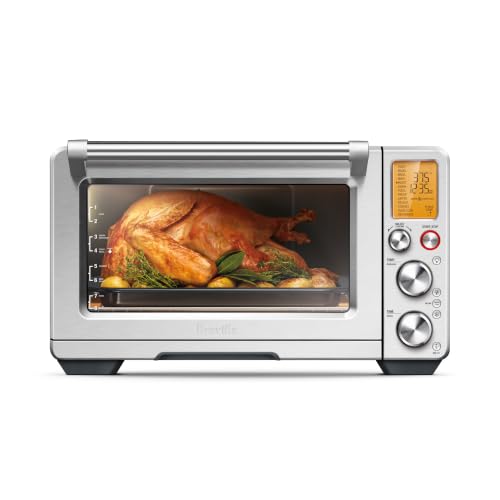
- Breville Smart Oven Air Fryer Pro BOV900 — Best Premium
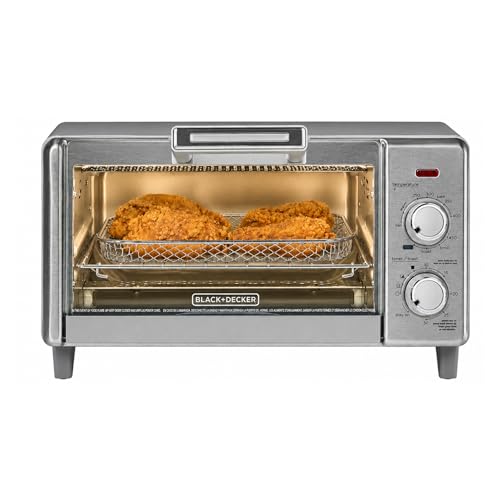
- BLACK+DECKER TO1313SBD Toaster Oven — Best Compact Value
- Oster Extra-Large French Door Air Fryer Oven — Best for Big Pans
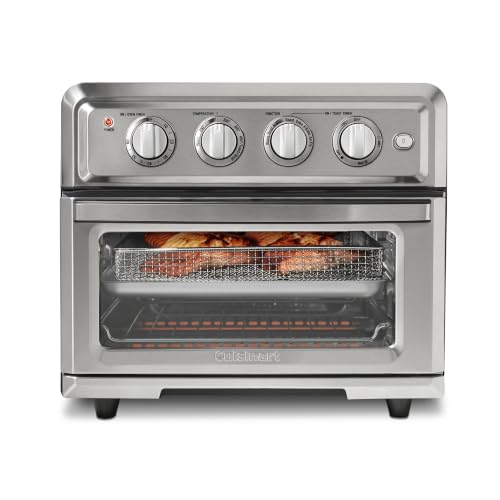
- Cuisinart Air Fryer Toaster Oven Combo TOA-55 — Best Overall Balance
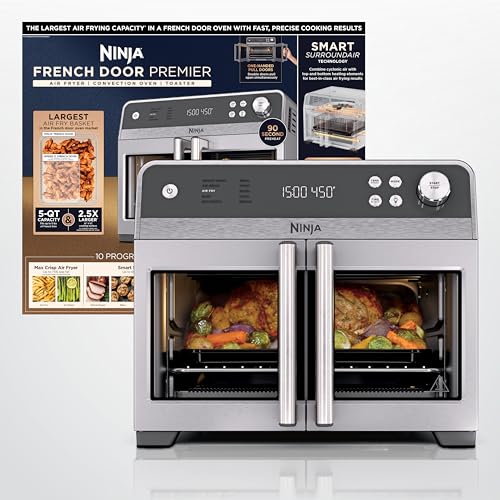
- Emeril Lagasse 26QT French Door Air Fryer Toaster Oven — Best Extra-Large Capacity
Here is the uncomfortable truth about ratings in this category: a toaster oven is not one product in owners’ minds, it is four. It is a toaster at breakfast, a reheating box at lunch, a small oven at dinner and, in air fryer models, a crisping machine on game day. Owners rate whichever of those four they used most, against the expectation they carried in. The same oven collects delight from the reheater and frustration from the ambitious baker, and the average of those verdicts describes neither experience. That is why the best ratings for toaster ovens are not found — they are interpreted, model by model and use by use, and why this guide pairs every pick with the household it actually suits.
The six picks span the category’s whole geometry: a windowed XL Chefman with touchscreen controls, the premium thirteen-function Breville, a compact BLACK+DECKER that fits a 9-inch pizza, an extra-large Oster that swallows 15 x 12 inch pans, Cuisinart’s balanced TOA-55 with its 12-inch pizza fit, and Emeril Lagasse’s 26-quart French-door flagship with two dozen one-touch presets. Between them, every common household pattern — solo, family, entertainer, serious cook — has a reference model, and every model has a feedback profile you can learn to read like a professional once this guide has shown you the patterns.
For a second, complementary pass over the same category, the editors’ shortlist in Best Recommended Toaster Ovens weighs these formats by recommendation logic rather than feedback logic, and the two views together triangulate a decision better than either alone.
Key Takeaways
- Ratings average four different appliances — toaster, reheater, oven and air fryer — so read feedback for the job you will actually give the oven.
- This guide prints no fixed star ratings or review counts because they change constantly; it teaches the reading method instead, and links every pick so you can apply it live.
- Variant mixing is the category’s silent corruptor: feedback pooled across sizes and control types describes none of them accurately.
- Recurring, specific comments — about evenness, door design, tray cleaning, fan noise — are worth more than any summary figure.
- The six verified picks cover compact, mainstream, extra-large and premium classes, so every household pattern has an honest reference model.
- A model’s discussion maturing into recipes and routines is the strongest long-run signal owner feedback can send.
In this guide
Quick Picks
| Pick | Badge | Why it stands out | Check price |
|---|---|---|---|
| Chefman Air Fryer 6-in-1 XL 14-Quart Oven | Best Windowed Door | Touchscreen controls and a windowed door on an XL 14-quart, six-function cabinet | Check on Amazon |
| Breville Smart Oven Air Fryer Pro BOV900 | Best Premium | Thirteen functions in brushed stainless steel, with convection pace | Check on Amazon |
| BLACK+DECKER TO1313SBD Toaster Oven | Best Compact Value | A compact convection cabinet that fits a 9-inch pizza, with removable crumb tray | Check on Amazon |
| Oster Extra-Large French Door Air Fryer Oven | Best for Big Pans | Fits 15 x 12 inch pans, with six cooking presets and auto-shutoff timer | Check on Amazon |
| Cuisinart Air Fryer Toaster Oven Combo TOA-55 | Best Overall Balance | Seven functions, 1800W and a 12-inch pizza fit in a 0.6 cu. ft. stainless interior | Check on Amazon |
| Emeril Lagasse 26QT French Door Air Fryer Toaster Oven | Best Extra-Large Capacity | 26 quarts, 24 one-touch presets and six included cooking accessories | Check on Amazon |
How These Picks Were Chosen
This guide is research-led and claims no hands-on testing. Each pick comes from a verified product pool whose brand, model and headline specifications were confirmed against Amazon’s catalogue data through the Creators API on 2026-11-20. Only specifications present in a pick’s confirmed title are stated in its review — the Chefman’s touchscreen and 14-quart capacity, the Oster’s pan dimensions, the TOA-55’s wattage and interior volume, the Emeril’s preset count and included accessories. Where a title is silent, the review is silent too, because a ratings guide above all must model the discipline it teaches: never let a claim travel further than its evidence.
Selection favoured class coverage. A ratings conversation needs reference points, so the six include the category’s compact floor, its family mainstream, its extra-large entertainers and its premium benchmark. Within each class, the chosen model carries a distinguishing feature that generates distinctive feedback — a windowed door, French doors, a flip of included accessories — because distinctive features are what make owner commentary informative rather than generic. Models that duplicated a classmate’s size and function list without a distinguishing trait were set aside.
One more methodological note: this guide treats feedback as evidence about fit, not as a league table. A compact oven praised by apartment dwellers and a premium oven praised by serious cooks are not rivals for a crown; they are answers to different questions. The detailed reviews therefore end with explicit best-for and not-suited-for verdicts, and the closing sections teach the full reading method — distribution, recency, variant discipline and comment mining — that the companion piece Best Reviewed Toaster Ovens applies to long-form owner writing.
Best ratings for toaster ovens: the six verified models in detail

Chefman Air Fryer 6-in-1 XL 14-Quart Oven
Badge: Best Windowed Door
Strengths
- Touchscreen controls, stated in its verified title, give precise, repeatable time and temperature setting.
- The windowed door lets you judge browning without opening the oven and dumping regulated heat.
- Six functions include a rotisserie and a food dehydrator inside an XL 14-quart cabinet.
Trade-offs
- XL capacity claims serious counter space; small kitchens should measure first.
- Touch controls prefer clean, dry fingers — a real consideration mid-recipe.
- Its breadth invites ambitious use, which is exactly where owner expectations run hottest.
Mini spec box
- Capacity: XL 14-quart
- Functions: 6-in-1 — including rotisserie, food dehydrator, convection oven, bake, broil, reheat
- Controls: touchscreen
- Door: windowed
- Finish: Black
The Chefman is the feedback-reading exercise in its purest form, because its owners judge two things at once: a big, versatile cooking box and a touchscreen interface. When you read its live feedback, sort comments into those two piles before believing either. Interface remarks — responsiveness, readability, the logic of the menus — describe your daily interaction. Cooking remarks describe a 14-quart convection cavity with a rotisserie, and they should be weighed against the foods named: fries and reheats are its home turf, while delicate bakes test any wide countertop cavity. The windowed door, unusually, attracts a third kind of comment — owners who can see their food cook simply open the door less, and their results quietly improve.
As a purchase, it suits households that cook varied food in volume and want the guidance of an exact interface. Its limitation is presence: fourteen quarts is a lot of oven, and the touchscreen asks for a small behavioural tax every cook. Households that mostly toast should look down the list to the compact pick, where the feedback conversation is simpler because the appliance is.
Best for: varied family cooking, touchscreen fans and cooks who like to watch food brown / Not suited for: tiny counters and toast-only households
Breville Smart Oven Air Fryer Pro BOV900
Badge: Best Premium
Strengths
- Thirteen functions is the deepest repertoire in this guide, from roasting and baking to dehydrating.
- Its convection setting is credited in its title with reducing cook time by up to 30 percent.
- Brushed stainless steel construction gives it the premium finish its price tier promises.
Trade-offs
- Premium positioning means feedback judges it against main-oven standards — a harsher bar than any rival here faces.
- Thirteen functions is more repertoire than most households will ever open.
- No capacity figure is stated in its verified title, so interior size must be confirmed on the listing.
Mini spec box
- Functions: 13 — including roast, bake, dehydrate
- Convection: stated to reduce cook time by up to 30%
- Finish: brushed stainless steel
- Model: BOV900BSS
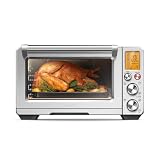
Premium products teach the most important ratings lesson of all: expectations are part of the score. The BOV900 is judged by owners who paid premium money and cook seriously, so its feedback scrutinises evenness, precision and finish with a rigour that budget ovens escape. A mid-pack verdict from that jury can represent better absolute cooking than a glowing verdict from a forgiving one. Read its comments for the specifics — how the convection pace handles roasts, how the thirteen functions divide between weekly staples and curiosities — and let the summary figure go. The specifics are consistently where this oven’s case is made.
For the right household, the case is strong: one appliance that roasts, bakes, dehydrates and air fries at a pace its title quantifies, finished to live permanently on a good counter. For the wrong household, it is repertoire bought and never opened. Audit your real cooking week before pricing it, and if the audit shows range, this is the benchmark the rest of the category is quietly measured against.
Best for: serious cooks who will use a deep function repertoire weekly / Not suited for: simple-needs households and anyone buying repertoire as decoration
BLACK+DECKER TO1313SBD Toaster Oven
Badge: Best Compact Value
Strengths
- A compact convection cabinet in the 15.47-inch class that still fits a 9-inch pizza.
- A removable crumb tray, timer and stay-on function are stated, practical daily touches.
- Operational simplicity generates the category’s most straightforward ownership experience.
Trade-offs
- Compact capacity serves one or two people; families will cook in shifts.
- No air fry function is stated in its verified title.
- Silver finish and simple controls will not satisfy shoppers wanting a statement appliance.
Mini spec box
- Size class: 15.47 inch; compact
- Capacity: fits a 9-inch pizza
- Type: convection toaster oven
- Features: timer, stay-on function, removable crumb tray
- Finish: Silver
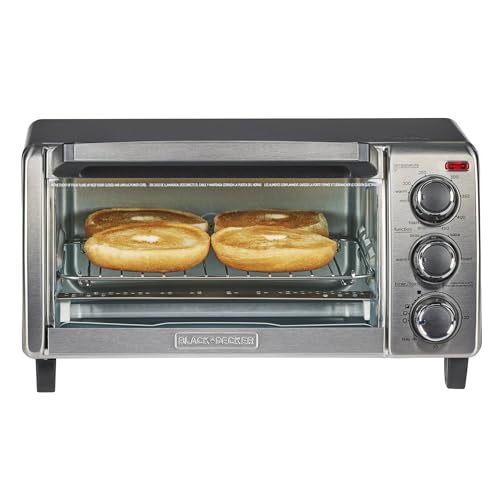
The TO1313SBD demonstrates why simple products often wear contented feedback: the promise is small and completely kept. It toasts, it reheats, it fits a personal pizza, its crumb tray slides out for cleaning, and it occupies a modest slice of counter. Owners judge it against that promise, and the recurring themes in compact-oven feedback — reliability, footprint gratitude, capacity realism — are all visible in miniature here. When you read its live comments, notice how rarely the interface is mentioned at all; in this class, the absence of a topic is itself information, signalling an appliance that stays out of its owner’s way.
Its limits are geometric, not qualitative. Nine-inch pizzas and small trays define its world, and no amount of satisfaction changes that. For apartments, offices, dorm-adjacent kitchens and one- or two-person homes, it is the class answer. Households intrigued by small footprints for a second space can compare its approach with the space-led picks in Best Small Size Toaster Ovens.
Best for: singles, couples, offices and small counters wanting dependable basics / Not suited for: families, air fry seekers and batch cooking

Oster Extra-Large French Door Air Fryer Oven
Badge: Best for Big Pans
Strengths
- Fits 15 x 12 inch pans — standard bakeware fits whole, ending the special-tray problem.
- Six cooking presets plus an auto-shutoff timer are stated, sensible family features.
- Elegant French doors load heavy casseroles gracefully and look the part in entertaining kitchens.
Trade-offs
- Extra-large format demands counter width, depth and storage for large trays.
- Heating a big cavity for a single slice of toast is overkill small households will feel daily.
- Its air fry positioning should be judged on tray loads, not basket-style snack batches.
Mini spec box
- Capacity: extra-large; fits 15 x 12 inch pans
- Presets: 6 cooking presets
- Safety: auto-shutoff timer
- Format: French door air fryer countertop oven
The Oster’s feedback signature is gratitude about geometry. Owners of extra-large ovens talk about pans — the casserole dish that finally fits, the sheet pan that no longer needs a workaround — because capacity is the purchase. When reading its comments, weight pan-and-tray remarks heavily and treat snack-scale air fry comparisons gently; this oven was bought to cook at pan scale, and judging it as a fries machine misreads the assignment its owners gave it. The six presets and auto-shutoff timer draw the practical praise of family cooks who run the oven during the weekday rush, when a forgotten timer is a real household event.
Choose it when your cooking genuinely happens in standard pans and your counter can host it. Its limitation is the mirror of its gift: everything about it is large, including the preheat commitment for small jobs. Households split between big weekend cooking and tiny weekday jobs sometimes pair it with a compact second oven — an extravagance that its most devoted owners describe without embarrassment.
Best for: entertainers, casserole and sheet-pan cooks, larger families / Not suited for: small counters and single-slice households

Cuisinart Air Fryer Toaster Oven Combo TOA-55
Badge: Best Overall Balance
Strengths
- A balanced specification: 7-in-1 functions, 1800W, convection and a 450°F maximum in a 0.6 cu. ft. interior.
- Fits a 12-inch pizza, the family benchmark, in stainless steel with a removable crumb tray.
- Its size class is the category’s mainstream, making its owner feedback the most transferable in this guide.
Trade-offs
- Mainstream balance means no single category crown: not the largest, cheapest or most featured pick here.
- Air fry results in a shared cavity ask for single-layer discipline, as with all oven-format fryers.
- Stainless steel shows fingerprints and rewards a wipe-down habit.
Mini spec box
- Interior: 0.6 cu. ft.
- Functions: 7-in-1 with convection capability
- Power: 1800W
- Maximum temperature: 450°F
- Capacity: fits a 12-inch pizza
- Features: removable crumb tray
- Finish: stainless steel
- Model: TOA-55
If one pick in this guide deserves the phrase most representative, it is the TOA-55. Its specification is the category’s centre of gravity — seven functions, full power, a family pizza fit, a mid-size stainless cavity — and that centrality makes its feedback the best single education available: read its live comments and you have read the mainstream’s verdict on oven-format air frying itself, its genuine convenience and its real compromises, from single-layer discipline to preheat habits. Owners who thrive with it cook the mainstream repertoire; owners who strain against it usually needed the Oster’s pans or the Breville’s depth all along.
As a recommendation it is the safest pair of hands in the set: powerful enough for weeknight dinners, sized for family breakfasts, finished to live on display. Its honest limitation is that balance is a compromise by definition — every rival in this guide beats it at something specific. Buy it when your needs are broad rather than extreme, which describes most kitchens most of the time.
Best for: mainstream family cooking and first-time countertop oven buyers / Not suited for: extreme capacity needs, tiny counters and repertoire collectors
Emeril Lagasse 26QT French Door Air Fryer Toaster Oven
Badge: Best Extra-Large Capacity
Strengths
- A 26-quart extra-large interior is the biggest capacity figure in this guide.
- Twenty-four one-touch presets is the deepest preset library here, guiding an entire repertoire.
- Six cooking accessories are included, so the oven arrives ready to work across its functions.
Trade-offs
- Its footprint and presence dominate a kitchen; measure counters and cabinet clearance carefully.
- Twenty-four presets is a library to learn, and casual users will live in a small corner of it.
- Six accessories need storage, which small kitchens must plan for honestly.
Mini spec box
- Capacity: 26QT; extra-large interior
- Presets: 24 one-touch preset options
- Type: countertop convection cooker
- Format: French door multi-function air fryer toaster oven
- Included: six cooking accessories
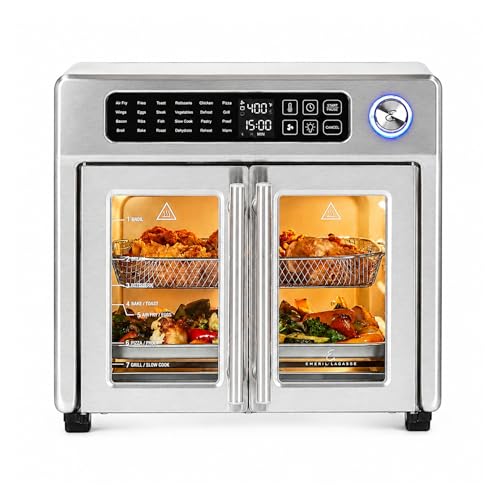
The Emeril 26QT generates the most divided feedback pattern in the category, and the division is predictable: owners who cook at its scale adore it, and owners who bought its scale aspirationally resent its presence. Both are telling the truth about fit. Its twenty-four presets attract comment from guided cooks who work through them like a cookbook, and its included accessories remove the second-purchase friction that dims many big-oven honeymoons. Read its feedback by household size and cooking frequency, and the apparent contradiction resolves into a simple rule: this oven’s satisfaction is a function of how often its capacity is genuinely filled.
Travelling households sometimes ask whether a big French-door oven can moonlight in a recreational vehicle; the honest answer involves power and footprint discipline, explored in Best Rv Toaster Ovens. For a settled family kitchen that hosts, batches and celebrates around food, the 26QT is the capacity flagship of this guide, and its presets make that capacity approachable for less experienced cooks.
Best for: large families, hosts and batch cooks who will fill 26 quarts regularly / Not suited for: small kitchens, solo cooks and minimalists
Comparison Table
| Pick | Capacity signal | Functions | Standout feature | Check price |
|---|---|---|---|---|
| Chefman 6-in-1 XL Oven | XL 14-quart | 6-in-1 | Touchscreen; windowed door | Check on Amazon |
| Breville Smart Oven Pro BOV900 | Premium countertop class | 13 functions | Convection pace; stainless build | Check on Amazon |
| BLACK+DECKER TO1313SBD | Compact; 9-inch pizza | Convection toaster oven | Removable crumb tray | Check on Amazon |
| Oster Extra-Large French Door | Fits 15 x 12 inch pans | 6 presets | Auto-shutoff timer | Check on Amazon |
| Cuisinart TOA-55 | 0.6 cu. ft.; 12-inch pizza | 7-in-1 | 1800W; 450°F maximum | Check on Amazon |
| Emeril Lagasse 26QT | 26QT extra-large | 24 presets | Six accessories included | Check on Amazon |
How to Choose a Toaster Oven That Owners Actually Praise
Work backwards from the feedback you want to give in a year. Owners praise, consistently and across brands, four things: food that browns evenly, an interior that fits their real dishes, controls they never have to think about, and cleaning that takes minutes. Choose against those four and the ratings take care of themselves. Evenness follows air circulation and sensible rack positions; fit follows honest capacity maths — slices for breakfast headcount, pizza diameter for family nights, pan dimensions for bakers; control satisfaction follows matching interface complexity to the household’s patience; cleaning satisfaction follows tray design, crumb access and whether baskets can go in the dishwasher.
Capacity deserves the arithmetic treatment because it generates more disappointed feedback than any other factor. A 4-slice or 9-inch-pizza oven serves one or two people fully and everyone else in shifts. The mainstream — the TOA-55’s 0.6 cubic feet and 12-inch pizza class — covers family breakfasts and weeknight dinners. The extra-large class, Oster and Emeril here, exists for pan-scale and batch cooking. Most regret in this category is a household buying one class down from its appetite or one class up from its counter, so measure both appetite and counter with equal honesty.
Finally, choose your tier by use frequency. Daily cooks monetise premium build and breadth quickly; weekly cooks belong in the mainstream; occasional users should buy the compact class well rather than the premium class cheaply. Feedback patterns confirm the tiers: satisfaction concentrates where price, capacity and frequency align, and curdles where any one of the three is pretending. The upkeep side of that alignment — the cleaning systems owners mention most — gets its own treatment in Best Self Cleaning Toaster Ovens.
How to Use and Care for a Countertop Oven
Set the oven on a heat-safe surface with clearance on every side for its vents, plug it directly into a wall outlet, and run the empty heat cycle the manual prescribes before the first meal. Test your own pans for fit on day one; the tray you own is the capacity that matters. Position the rack in the middle for toast and baking, lower for tall items, and give air fry loads a single layer with breathing room — the technique notes below matter more to results than any specification in this guide.
Daily cooking rewards three habits. Preheat fully for baking, since a small cavity’s temperature swings more than a big oven’s. Turn or shake air fried food halfway, and dry its surface first; moisture is the enemy of crispness in every model reviewed here. Learn your oven’s personal pace over the first week — countertop elements sit close to food, so recipes written for full-size ovens often finish early — and write the adjustments on the recipe, where future-you will find them.
Cleaning is a rhythm, not an event: crumb tray out after toasting sessions, interior wiped warm after fatty cooks, trays and baskets washed promptly. Keep vents clear, avoid abrasive pads on coated surfaces, and never immerse the oven body. French-door hinges appreciate a monthly wipe of crumbs from their tracks. An oven maintained this way holds its performance — and, not coincidentally, generates the kind of long-term owner commentary this guide teaches you to prize.
Troubleshooting: three common problems
Problem: results are uneven — dark at the back, pale at the front → what to do: rotate the tray halfway through cooking, confirm the rack is centred, and avoid blocking the rear fan area with an oversized pan; small cavities reward the halfway turn more than any other single habit.
Problem: air fried food steams instead of crisping → what to do: pat food dry, cook in a single uncrowded layer, and raise the temperature rather than stretching the time; run a second batch instead of stacking the first, and keep the basket and tray grease-free between cooks.
Problem: lingering odours and smoke at high heat → what to do: cool the oven, empty and wash the crumb tray, wipe grease film from the interior walls and tray surfaces, and place the baking pan beneath fatty foods so drips land on a washable surface instead of the cavity floor.
The Anatomy of a Trustworthy Rating
A trustworthy verdict has anatomy: a named use, a time horizon and a comparison. Comments that say what the owner cooked, for how long they have owned the oven, and what they owned before are evidence. Comments that offer a verdict without a use — wonderful, terrible, five stars, one star — are weather. When you read a model’s feedback, harvest the anatomical comments first and let them set your expectations; then scan the weather only for recurring storms, topics that appear again and again across many owners, because repetition across strangers is the one signal that survives every bias in the system. Door feel, tray cleaning, fan character and preheat patience are the recurring topics in this category, and each maps to a pick in this guide whose review names it directly.
Recency cuts both ways and deserves its own discipline. Early feedback over-represents novelty and delivery; very old feedback describes earlier production runs and earlier expectations. The middle band — owners writing after months of routine — is where a model’s true character lives, and a discussion that settles into recipes, routines and second purchases for relatives is the sound of an appliance that has been absorbed into a household’s life. Popularity can support that reading but never substitute for it, a distinction the analysis in Best Selling Toaster Ovens keeps carefully.
What Ratings Cannot Tell You
Feedback cannot measure your counter, your pans or your patience. It cannot tell you whether French doors suit your kitchen’s traffic, whether a touchscreen suits your cooking hands, or whether 26 quarts is a blessing or a monument in your space. Those are fit questions, and fit is decided by measurement and honest self-knowledge, not by other people’s satisfaction. Use ratings to eliminate models with recurring mechanical or usability complaints, use specifications to shortlist by geometry and function, and use fit to make the final call. Shoppers who reverse that order — crown first, measure later — write the disappointed feedback the rest of us learn from.
A Worked Example: Reading One Model’s Feedback End to End
Take the Cuisinart TOA-55, this guide’s mainstream reference, and walk its feedback the way a professional would. Begin with identity: filter or scan for the TOA-55 code and the 0.6 cubic foot, 12-inch pizza specification, setting aside comments that plainly describe other sizes in the range. Then sort what remains into four job piles — toast, reheat, bake and roast, air fry — because the oven is four appliances and each pile has its own standard. Toast comments judge speed and evenness of browning. Reheat comments judge whether leftovers return with their texture intact. Bake and roast comments judge temperature honesty and preheat patience. Air fry comments judge crispness, and they must be read alongside the technique confessions buried inside them: owners who mention single layers and halfway shakes are describing the method as much as the machine.
Next, mark the recurring topics. In mainstream oven feedback the same nouns surface in kitchen after kitchen: crumb tray, door, fan, preheat, tray size. Recurrence is your reliability signal — one owner’s fan is an anecdote, thirty owners’ fans are a characteristic. Then read the calendar: early comments skew toward unboxing and novelty, later comments toward routine, and the routine comments are the ones that predict your second year with the appliance. Finally, extract the fit statements — household sizes, dishes cooked, counters described — and keep only the ones that resemble your own kitchen. What survives that five-step filter is not an average. It is a forecast, written by strangers, of your own ownership. Repeat the same walk for any rival on your shortlist and the comparison between models becomes concrete in a way no summary figure can imitate.
Why Cross-Class Comparisons Mislead
The most common ratings error is also the most natural: placing a compact oven’s verdict beside a premium oven’s verdict and declaring a winner. The two juries were answering different questions. The compact oven’s owners asked whether breakfast for two could be effortless in a small footprint, and their praise means yes. The premium oven’s owners asked whether a countertop appliance could carry serious cooking, and their more measured praise means mostly, with effort. Neither jury was asked the other’s question, so neither verdict can answer it. This is why this guide organises its picks by class and insists on class-internal comparisons: BLACK+DECKER against other compacts, TOA-55 against the mainstream, Breville against the premium tier, Oster and Emeril against the extra-large field.
Class discipline also protects your budget. Cross-class reading manufactures false bargains and false disappointments in equal measure: the compact looks miraculous until it meets a family breakfast, the premium looks flawed until it is asked to do what it was built for. Inside a class, by contrast, differences become legible and worth paying for — a windowed door here, a deeper preset library there, a pan dimension that matches your bakeware. Choose your class by appetite and counter first, crown your winner inside it second, and the feedback you read will finally be about the purchase you are actually making.
The Feedback Seasons of a Model’s Life
Every model’s discussion passes through seasons, and reading the season is as important as reading the words. The launch season is loud and unreliable: early adopters, delivery stories, novelty delight and novelty outrage, all written before a single crumb tray has been cleaned twenty times. The settlement season follows, quieter and far more valuable, when owners write about routines — the school-morning toast protocol, the Friday pizza, the tray that goes in the dishwasher every night. The maturity season is the most revealing of all: second purchases, gifts bought for relatives, replacements of the same model after years of service, and the occasional elegy for a discontinued favourite. A model whose discussion reaches maturity with its routines intact has passed the only test that cannot be gamed, which is time in real kitchens.
Practical shoppers can use the seasons directly. Weight settlement and maturity comments over launch comments. Treat a sudden cluster of similar complaints in a short window as a question to investigate — a production change, a listing change, a variant quietly swapped — rather than a verdict to obey. And when two finalists remain, prefer the one whose mature discussion talks about food more than about the appliance: kitchens that have absorbed an oven talk about what they cook in it.
A Short Glossary for Reading Listings and Feedback
Four terms unlock most of this category’s text. Capacity language — slices, pizza diameter, quarts, cubic feet — describes four different geometries, and none converts cleanly into another; compare within one unit at a time. Convection means a fan circulates hot air for faster, more even cooking, and air fry is convection run hot and fast with a perforated basket, not a separate technology. Presets are stored time-and-temperature programs, judged by their accuracy for your foods rather than their count. And a model code — TOA-55, BOV900, TO1313SBD — is the only identifier that never drifts between variants, colours or generations, which is why every verification habit in this guide begins with it. Armed with those four definitions, most listing copy and most owner commentary in this category becomes transparent: you can see which claims are geometry, which are physics, which are software and which are weather.
Turning Reading Into a Decision: A Fifteen-Minute Protocol
Here is the whole method compressed into a quarter of an hour. Minutes one to three: fix your class — headcount, largest pan, pizza diameter, counter measurements — and delete every pick outside it. Minutes four to eight: for each surviving pick, harvest anatomical comments only, sorting by the job you will give the oven most, and note the recurring topics. Minutes nine to twelve: check the calendar, weighting settled-routine comments over launch noise, and glance at maturity signals — repeat purchases, routine talk, food talk. Minutes thirteen to fifteen: verify the exact model code and specification on the listing, confirm your pans fit the stated interior, and buy. Fifteen minutes sounds brief for an appliance you will use daily for years, but disciplined minutes outperform hours of ambient browsing, because every minute in the protocol is aimed at the evidence that predicts ownership rather than the theatre that surrounds it.
Common Buying Mistakes
- Crowning a winner by average alone. Averages blend four different appliances’ verdicts; read by use, not by summary.
- Ignoring variant mixing. Sizes and control types pooled in one listing pool their feedback too; identify the exact model code before trusting a comment.
- Skipping the calendar. Novelty-era and routine-era feedback describe different ownership phases; weight the settled months most.
- Buying a class away from your appetite. Capacity regret is the category’s most common complaint and the easiest to prevent with a tape measure and a headcount.
- Treating presets as power. Presets are stored settings; the cooking is done by capacity, circulation and heat, which is where your money should go first.
- Forgetting cleaning until it is a grievance. Tray and crumb systems appear in long-term feedback constantly; choose them as deliberately as functions.
Final Recommendation
Start your shortlist with the balanced centre: the Cuisinart TOA-55 is the mainstream reference whose feedback best represents the category itself. Move to the Chefman XL if a touchscreen and a windowed door match your cooking style, and to the Breville BOV900 if your repertoire genuinely runs deep enough to employ thirteen functions weekly. Choose the Oster or the Emeril 26QT when pans and batches rule your kitchen, and the compact BLACK+DECKER when they do not. Whichever you choose, read its live feedback with this guide’s method before you buy — ten disciplined minutes there are worth more than any summary number, including the ones this page refuses to print.
One last encouragement: the goal of all this reading is not certainty, which feedback can never provide, but the removal of avoidable surprise. A buyer who has fixed their class, read by job, checked the calendar and verified the model code will still learn their oven’s personality across the first month — every appliance has one — but they will not discover a wrong size, a missing function or a pooled average’s lie. That is the realistic promise of ratings literacy, and it is enough to buy with confidence.
Frequently Asked Questions
Why does this guide not print star ratings or review counts?
Because both figures change constantly as listings gather new owners, and a number frozen in an article becomes quietly false while retaining an air of authority. Instead, every pick is linked, and the guide teaches the reading method — separation by use, variant discipline, recency weighting, recurring-topic mining — that lets you interpret the live figures correctly for your own household.
How many owner comments should I read before deciding?
Read until the topics start repeating: usually a few dozen considered comments reveal a model’s recurring themes — evenness, door design, cleaning, noise — and after that point additional reading adds anecdotes rather than information. Prioritise comments that name a use, a time horizon and a comparison; they carry the most evidence per minute of your attention.
Do premium toaster ovens earn their higher regard?
Premium models like the Breville in this guide are judged by more demanding owners against higher expectations, so their feedback should be read for specifics rather than summaries. Where the specifics — function depth, convection pace, finish — match your weekly cooking, the regard is earned. Where your cooking is simple, a mainstream model will satisfy you just as completely at a lower tier.
What is the most common complaint about toaster ovens?
Capacity mismatch is the recurring theme across the category: ovens bought one class too small for the household’s appetite, or too large for its counter. It is also the most preventable complaint — count breakfast slices, measure your largest pan, and check the pizza diameter the interior accepts before you buy.
Are French-door models better regarded than drop-door models?
Owners who load heavy trays praise French doors for one-handed opening and wrist safety, while owners in tight kitchens note the width they demand. Regard follows fit rather than format: both door styles satisfy their households when the counter geometry suits them, which is why this guide reviews capacity and kitchen fit alongside every door claim.
Should I trust feedback that mentions a different size of the same oven?
Only for brand-level impressions, never for specifics. Sizes within a range differ in cavity geometry, element spacing and sometimes controls, so evenness, timing and capacity comments do not transfer. Identify the exact model you are buying — TOA-55, BOV900, TO1313SBD — and read feedback for that model wherever the listing lets you filter to it.
When should I choose a compact toaster oven?
When your household is one or two people, your counter is scarce, and your cooking is toast, reheating and personal-size meals. The compact BLACK+DECKER in this guide covers that brief with convection and a 9-inch pizza fit. The moment family breakfasts or pan-scale cooking enter the picture, step up a class rather than asking a compact oven to work in shifts.