Disclosure: topratedkitchenware.com is reader-supported. When you buy through links on our site, we may earn an affiliate commission from Amazon and other retailers, at no extra cost to you.
Where to buy
All six pots in this guide to the best teapots for infusion tea like rooibos are sold through Amazon, and every linked pick below goes straight to its product page so you can confirm the current capacity, infuser style, and availability before ordering. Start with the short list, then read the full guide for the filtration and steeping details that matter most with fine-cut herbal infusions.
- HIWARE 1000ml Glass Teapot with Removable Infuser — Check on Amazon
- PARACITY Glass Teapot Stovetop, 18.6 oz
- Ehugos 1500ml Glass Teapot with Removable Infuser
- Teabloom Glass Teapot, 40 oz, with Glass Infuser
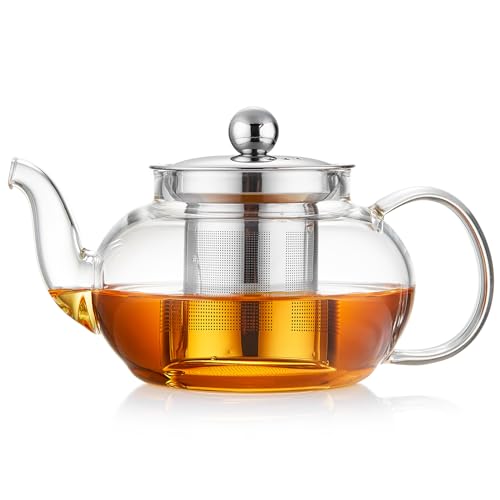
- DOPUDO Small Glass Teapot with Infuser, 18 oz
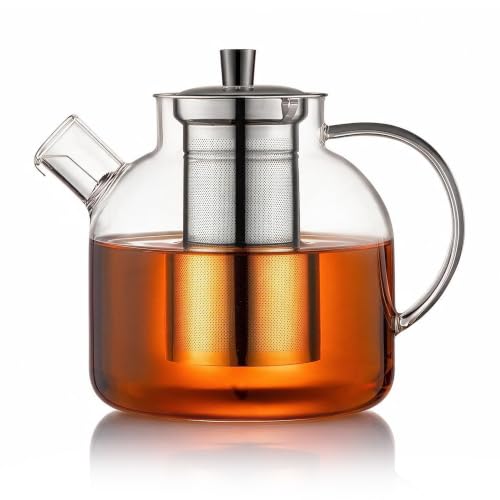
- STNTUS Glass Teapot, 40 oz, with Infuser and Strainer
Read the full guide ↓
Rooibos looks forgiving — no caffeine, no bitterness from a long steep, happy in boiling water — but it exposes weak teapots faster than almost any other infusion. The leaves are cut into fine needles that slip through coarse strainers, drift into the cup as sediment, and clog narrow spouts. The best teapots for infusion tea like rooibos are therefore the ones with a proper removable infuser, enough room for the needles to circulate, and clear walls so you can watch the liquor deepen to that copper-red colour rooibos drinkers love. Every pot in this guide is a glass infuser pot built for blooming and loose leaf tea, which is exactly the format rooibos, honeybush, and similar fine herbal blends need. If your rotation also includes rolled leaves, our research on Best Teapots For Oolong covers how the same pots handle a very different leaf shape, while this page stays with fine-cut infusions.
One more thing rooibos drinkers care about: because the infusion is naturally caffeine-free, it is often the last drink of the evening, brewed in smaller amounts and sometimes re-steeped. Pot size matters more than usual — a huge pot of rooibos left standing goes flat, while a right-sized pot brewed fresh tastes sweet and rounded. The six picks below run from a compact 18 oz solo brewer to a 50 oz family-size pot, so there is a sensible match whether you brew a single mug before bed or a full pot for the table.
Key Takeaways
- The HIWARE 1000ml glass teapot is our first choice for most rooibos drinkers: a mid-size pot with a removable infuser and stovetop-safe glass, sized for two to three generous mugs.
- Fine rooibos needles need a real infuser basket, not just a spout strainer — all six picks here include a removable infuser, and the steel-mesh models hold back sediment best.
- Small pots suit rooibos habits: the 18 oz PARACITY and DOPUDO models brew one fresh mug at a time, which suits an infusion that is best drunk fresh.
- For households, the 50 oz Ehugos and the two 40 oz pots brew for a group without a second kettle boil.
- Glass is a genuine advantage for rooibos: you can judge strength by colour and stop the steep at the shade you like.
In this guide
Quick Picks
| Pick | Badge | Capacity from listing | Infuser noted in listing | Link |
|---|---|---|---|---|
| HIWARE Glass Teapot | Best Overall | 1000ml | Removable infuser | Check on Amazon |
| PARACITY Glass Teapot | Best for Solo Brewing | 18.6 oz / 550ml | Removable 18/8 stainless steel infuser | Check on Amazon |
| Ehugos Glass Teapot | Best Large Pot | 1500ml / 50 oz | Removable stainless infuser | Check on Amazon |
| Teabloom Glass Teapot | Best for Watching the Brew | 40 oz | Removable glass infuser | Check on Amazon |
| DOPUDO Small Glass Teapot | Best Compact Pick | 18 oz / 530ml | Removable 18/8 steel infuser | Check on Amazon |
| STNTUS Glass Teapot | Best for Groups | 40 oz / 1200ml, 4–6 cups | Infuser with stainless steel strainer | Check on Amazon |
Badges reflect how each pot fits rooibos and similar fine herbal infusions specifically — filtration, size, and how the brew is served — rather than any general ranking of glass teapots.
How These Picks Were Chosen
This is a research-led guide. We compared the verified listings for glass infuser teapots in this product group, checked every specification quoted here against the listing title itself, and weighted the criteria that decide success with rooibos: an infuser fine enough to hold needle-cut leaves, a capacity matched to how rooibos is actually drunk, stovetop safety where a listing states it, and clear glass so colour can guide the steep. We did not invent specifications: if a detail such as infuser material is not stated in a listing, we say so and leave it out of that pot’s spec box.
We also weighted honesty about filtration. Rooibos is finer than most loose leaf tea, and no basket infuser holds back every particle — a little sediment in the last cup is normal with this herb. Picks with stainless steel infusers, where the listing states steel, earned an edge for fine blends because woven steel mesh is typically finer than the slots in a glass infuser. Where a pot uses a glass infuser instead, we judged it on capacity, clarity, and how well it suits watching the brew, and we say plainly in its review that very fine rooibos may leave more sediment. Readers comparing everyday brewers alongside these may also find our notes on Best Teapots For Loose Leaf Tea useful, since rooibos behaves like the finest end of the loose leaf spectrum.
Finally, we kept the set to one format — glass pots with removable infusers — because that is the format that solves the rooibos problem. A pot without an infuser forces you to decant through a separate strainer and still leaves needles in the cup; a fully opaque pot hides the colour cue that tells you when the infusion is ready. Within that format we spread sizes widely, because the right size is the most personal decision in the whole purchase.
The 6 Best Teapots for Infusion Tea Like Rooibos
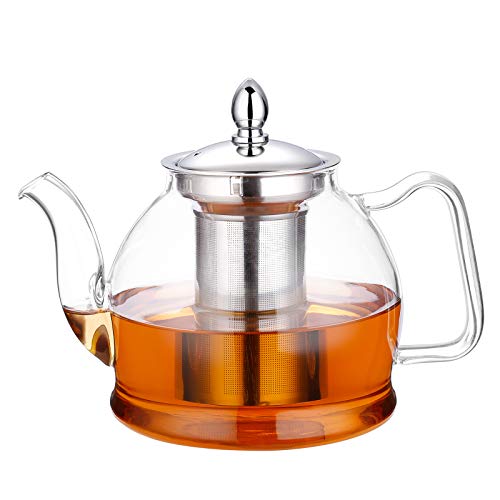
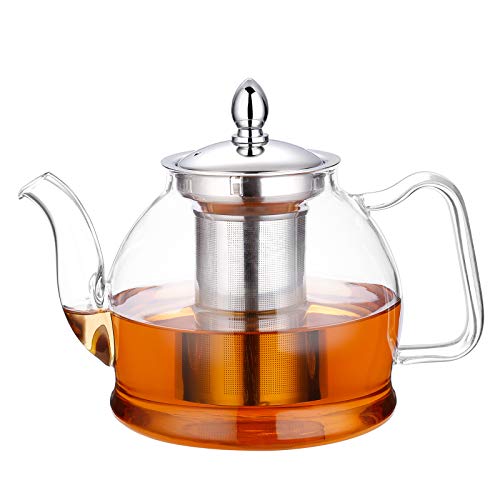
HIWARE 1000ml Glass Teapot with Removable Infuser
Badge: Best Overall
Strengths
- Mid-size 1000ml capacity matches how rooibos is served — two to three mugs from one brew.
- Removable infuser lifts out cleanly, so a long, forgiving rooibos steep can still be stopped on time.
- Listing states stovetop-safe glass, so water can be heated in the pot itself.
Trade-offs
- The listing does not state the infuser material, so we cannot promise steel-mesh-level filtration for the finest needle cuts.
- Too large for a true single-cup routine; a solo drinker will often brew a half pot.
- Glass needs gentler handling than steel or ceramic, especially around a crowded sink.
Mini spec box: Capacity 1000ml · Removable infuser · Stovetop safe per listing · Made for blooming and loose leaf tea.
The HIWARE earns the top spot because it sits exactly where most rooibos drinking happens. A litre of rooibos covers a couple sharing an evening pot or one drinker working through a relaxed morning, and the removable infuser means the needles spend exactly as long in the water as you want — helpful because rooibos blended with vanilla, spices, or other leaves can pick up stewed notes from the added ingredients even though plain rooibos itself is forgiving. The clear walls give you the colour cue: pale amber means wait, deep copper-red means pour.
Who it suits: households where rooibos is a daily habit and one pot serves more than one cup. The honest limitation is filtration certainty — the listing confirms a removable infuser but does not name its material, so if you drink the very finest needle grades and hate any sediment, check the product page photos of the basket before ordering, or choose one of the steel-infuser picks below.
Best for: most rooibos drinkers who brew for two or more cups / Not suited for: strict solo brewers who always make exactly one mug.
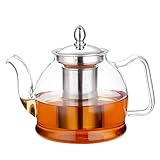

PARACITY Glass Teapot Stovetop, 18.6 oz
Badge: Best for Solo Brewing
Strengths
- Removable 18/8 stainless steel infuser stated in the listing — the right construction for holding back fine rooibos needles.
- Compact 18.6 oz / 550ml size brews one generous mug, fresh every time.
- Borosilicate glass, and the listing pitches it for camping and travel as well as home use.
Trade-offs
- One mug at a time; serving two people means a second brew.
- A small pot loses heat faster than a large one, so long steeps cool noticeably.
- The small basket gives rolled or bulky blends less room to expand than rooibos needs — fine here, limiting elsewhere.
Mini spec box: Capacity 18.6 oz / 550ml · Borosilicate glass · Removable 18/8 stainless steel infuser · For blooming and loose leaf tea.
If your rooibos ritual is one mug in the evening, the PARACITY is built to that scale. The stated 18/8 stainless steel infuser is the detail that matters most for this herb: a woven steel basket is the most reliable way in this set to keep needle-cut rooibos out of the cup, and because the basket lifts out, you can also use the pot for a second steep without the leaves sitting in cooling water between rounds. Borosilicate glass handles the boiling water rooibos wants without drama.
Who it suits: solo drinkers, desk brewers, and anyone who values a clean cup over volume. The honest limitation is throughput — this is a one-mug pot, and no technique turns 550ml into a family serving. Its travel positioning also makes it a sensible second pot for a caravan, office, or guest room where a full-size brewer would be clutter.
Best for: one fresh mug at a time with minimal sediment / Not suited for: brewing for a table of guests.

Ehugos 1500ml Glass Teapot with Removable Infuser
Badge: Best Large Pot
Strengths
- Largest capacity in this guide at 1500ml / 50 oz — a full family pot of rooibos in one brew.
- Removable stainless infuser stated in the listing, the construction fine needles need.
- Stovetop safe per listing, so a big batch can be heated where it will be served from.
Trade-offs
- A half-filled large pot steeps unevenly; it really wants to be brewed near full.
- Rooibos left standing in a big pot goes flat faster than a fresh small brew.
- Hand-crafted large glass is the most delicate format here and the heaviest when full.
Mini spec box: Capacity 1500ml / 50 oz · Removable stainless infuser · Stovetop safe per listing · Hand crafted · For blooming and loose leaf tea.
Some rooibos drinking is communal: a pot on the table after dinner, or a big brew chilled later for iced rooibos. The Ehugos is the pick for that pattern. Fifty ounces covers a table without a second boil, the stainless infuser keeps the fine needles contained even at this scale, and stovetop-safe glass means the pot can go from burner to table as a single vessel. Brew it full and serve it promptly and the cup quality holds up well.
Who it suits: families, hosts, and batch brewers who chill rooibos for later. The honest limitation is freshness discipline — rooibos is forgiving about steep time but not about sitting warm for hours, so a pot this size only shines when its contents will actually be drunk. If your household drinks two mugs a day, the HIWARE or a small pot will serve you better.
Best for: family pots and make-ahead iced rooibos / Not suited for: one-or-two-cup households.

Teabloom Glass Teapot, 40 oz, with Glass Infuser
Badge: Best for Watching the Brew
Strengths
- Removable glass infuser keeps the whole brewer transparent — the full colour show of a rooibos steep, top to bottom.
- Stovetop and microwave safe per listing, a flexible 2-in-1 kettle and tea maker format.
- Listing includes 2 blooming teas, so the pot can double for display brewing.
Trade-offs
- A glass infuser typically filters through slots rather than fine mesh, so the finest rooibos grades may leave more sediment than a steel basket.
- Glass-on-glass parts need careful handling when washing.
- At 40 oz it is more pot than a solo evening brewer needs.
Mini spec box: Capacity 40 oz · Removable glass infuser · Stovetop and microwave safe per listing · Includes 2 blooming teas · 2-in-1 kettle and tea maker.
Teabloom built its name on visual brewing, and for rooibos that is more than theatre: colour is the most reliable doneness cue this herb gives. With a glass infuser inside clear walls, you watch the liquor move from straw to copper and lift the basket at the exact shade you prefer — genuinely useful when brewing rooibos blends whose added spices darken the cup faster than the base herb. The included blooming teas make it a gift-ready set as well.
Who it suits: drinkers who brew by eye, and anyone who also enjoys blooming teas. The honest limitation is sediment with the finest cuts: if your rooibos is powder-fine, expect to let the pot settle for a minute and pour gently, or pair this pot with a finer grade of leaf. For standard needle-cut rooibos it performs the ritual beautifully. Readers who brew many tea types in one pot may also compare the wider set in Best Teapots For Loose Tea.
Best for: colour-guided brewing and blooming tea as a bonus / Not suited for: drinkers who demand a completely sediment-free cup from powder-fine rooibos.


DOPUDO Small Glass Teapot with Infuser, 18 oz
Badge: Best Compact Pick
Strengths
- Compact 18 oz / 530ml size purpose-built, per its listing, for individual loose-leaf brewing.
- Removable 18/8 steel infuser stated in the listing — fine filtration in a small basket.
- Borosilicate glass keeps the solo brew visible and easy to rinse clean.
Trade-offs
- Strictly a one-person pot; a second cup means starting over.
- The small basket is sized for fine and medium leaf — bulky blends will crowd it.
- No stovetop claim in the listing, so heat water separately in a kettle.
Mini spec box: Capacity 18 oz / 530ml · Borosilicate glass · Removable 18/8 steel infuser · Sized for individual brewing.
The DOPUDO makes the same solo argument as the PARACITY with a slightly different emphasis: its listing frames it squarely as an individual loose-leaf brewer, and the stated 18/8 steel infuser gives fine rooibos needles a proper barrier. In practice the two small pots are close cousins; the DOPUDO’s appeal is its tidy, single-purpose design for a permanent spot — a desk corner, a bedside tray, a small kitchen where a litre pot would dominate the counter.
Who it suits: dedicated solo brewers who want a pot that lives where they drink. The honest limitation is the flip side of its focus: it will never serve a guest without a second brew, and because the listing makes no stovetop claim, your routine needs a separate kettle. Within a one-mug ritual, though, it covers rooibos’s needs — fine filtration, visible colour, quick rinsing — with nothing wasted.
Best for: a permanent one-person rooibos station / Not suited for: anyone who regularly pours for two.

STNTUS Glass Teapot, 40 oz, with Infuser and Strainer
Badge: Best for Groups
Strengths
- Infuser plus a stainless steel strainer stated in the listing — two layers of defence against fine needles reaching the cup.
- 40 oz / 1200ml capacity, listed at 4–6 cups, suits a small group.
- Stovetop safe per listing, so the serving pot can also be the heating vessel.
Trade-offs
- Two filtration parts mean two parts to rinse after every session.
- Group size is more than most evening rooibos routines need.
- The listing frames it around loose tea generally rather than fine herbal blends specifically.
Mini spec box: Capacity 40 oz / 1200ml · 4–6 cups per listing · Infuser with stainless steel strainer · Stovetop safe per listing · For loose tea.
The STNTUS takes a belt-and-braces approach to the rooibos problem: the infuser holds the needles during the steep, and the stainless steel strainer catches escapees at the pour. For group brewing that matters, because a big pot gets poured repeatedly and sediment concentrates toward the last cups. Forty ounces listed at four to six cups maps neatly onto a family evening pot, and stovetop-safe glass keeps the routine to one vessel.
Who it suits: households serving several rooibos drinkers at once who are fussy about a clean pour. The honest limitation is upkeep — two filtration components to empty and rinse, every time, and rooibos needles cling when wet. If your group is smaller, the HIWARE covers the same ground with one less part to wash. For a broader look at group-size pots, see Best Teapots For Sale roundups in this category.
Best for: clean pours for a group / Not suited for: minimal-washing solo routines.
Comparison Table
| Pick | Capacity | Filtration from listing | Heating noted in listing | Link |
|---|---|---|---|---|
| HIWARE | 1000ml | Removable infuser | Stovetop safe | Check on Amazon |
| PARACITY | 18.6 oz / 550ml | 18/8 stainless steel infuser | Stovetop format | Check on Amazon |
| Ehugos | 1500ml / 50 oz | Stainless infuser | Stovetop safe | Check on Amazon |
| Teabloom 40 oz | 40 oz | Glass infuser | Stovetop and microwave safe | Check on Amazon |
| DOPUDO | 18 oz / 530ml | 18/8 steel infuser | Heat water separately | Check on Amazon |
| STNTUS | 40 oz / 1200ml | Infuser plus steel strainer | Stovetop safe | Check on Amazon |
How to Choose a Teapot for Rooibos and Similar Infusions
Start with filtration, because rooibos is a filtration problem first. Needle-cut leaves and fine herbal blends pass through wide slots that whole-leaf tea never challenges. A removable basket infuser is the baseline requirement; where a listing states stainless steel or 18/8 steel, expect the finest barrier in this category. Glass infusers are beautiful and adequate for standard cuts, but plan on a gentler pour with the finest grades.
Then match capacity to the session, not the cupboard. Work out your real serving: one mug is roughly 12 to 16 ounces of brewed tea, two mugs are a litre-class pot, and a table of four wants 40 ounces or more. Rooibos tastes best fresh, so the smallest pot that covers your usual session beats a large pot habitually brewed half-full — under-filled baskets steep unevenly because the needles float above the waterline instead of circulating.
Decide how you will heat the water. Listings that state stovetop safe let the pot double as its own kettle, which suits rooibos because the herb wants fully boiling water. Pots without that claim need a separate kettle — a fine routine, but one more vessel to wash. Microwave-safe glass, stated on the Teabloom 40 oz listing, offers a third route for small batches.
Value clarity. With green or black tea you can time a steep; with rooibos, colour is the better instrument because blends vary. Clear glass turns every brew into a visible gradient you can learn. That is also why this whole guide is glass: for this herb, seeing the liquor is a functional feature, not decoration. If you are weighing glass against other materials for general use, our overview of Best Teapots For Japanese Tea shows how different tea traditions prioritise different pot traits.
Think in tiers qualitatively. In this category, simpler small pots with steel infusers sit at the accessible end, mid-size all-rounders in the middle, and large hand-crafted or gift-set pots at the premium end. Pay for filtration quality and the right capacity before paying for presentation extras you will not use.
How to Brew Rooibos in an Infuser Teapot
Rooibos rewards a simple, repeatable routine:
- Warm the pot with a splash of hot water and discard it, so the brew temperature does not drop on contact with cold glass.
- Add the rooibos to the infuser basket — a rounded teaspoon per mug is a sensible starting point; blends with fruit or spice may want a little more.
- Pour over freshly boiled water. Rooibos is a tisane, not a true tea leaf, and it wants full heat to release its sweetness.
- Steep five to seven minutes, watching the colour move to deep copper-red. Taste, and give it another minute if it seems thin.
- Lift the infuser out and set it on a small dish. Serve straight away; keep the basket for an optional second steep with fresh boiling water.
- Empty the basket while it is still warm — dried rooibos needles cement themselves into mesh and are far harder to remove later.
Troubleshooting. Problem: sediment in the cup → let the pot rest a minute after lifting the infuser, pour slowly, and consider a finer grade of basket or a less powdery cut of rooibos. Problem: the brew tastes thin and woody → use hotter water, a touch more leaf, or a longer steep; rooibos rarely turns bitter, so time is safe to add. Problem: the spout dribbles needles into the last cup → the basket was likely overfilled; leave headroom so needles stay below the rim when they swell.
Why Fine Herbal Infusions Behave Differently From Loose Leaf Tea
Rooibos, honeybush, and many herbal blends are cut far finer than rolled or whole tea leaves, and that single fact drives most of this guide. Fine particles extract fast at the surface but clump in a crowded basket, so circulation matters: a basket that lets water move through the bed of needles brews evenly, while a packed basket channels water around the edges and leaves the centre under-extracted. Fine particles also migrate — into spouts, under lids, and into the cup — which is why double filtration, like the STNTUS pot’s infuser-plus-strainer arrangement, exists.
The forgiving side of rooibos is chemistry: without the tannin load of true tea, long steeps stay sweet rather than harsh. That forgiving nature tempts people to leave the basket in indefinitely, which is still a mistake with blends — added ingredients such as citrus peel, spices, or true-tea components can stew even when the rooibos base does not. Treat the removable infuser as your control lever for every infusion in this family, and the category becomes easy. Drinkers who split their time between herbs and true teas often keep one pot for each; our guide to Best Teapots For Steeping Tea covers the timing discipline that true teas demand.
Iced Rooibos and Batch Brewing
Rooibos is one of the best iced infusions: naturally sweet, caffeine-free, and stable in the fridge. The method that works is a strong hot brew — use about half as much water again in leaf terms, steep in the pot as usual, lift the infuser, then chill the liquor promptly rather than leaving it warm on the counter. Large pots like the Ehugos and the two 40 oz picks suit this pattern because a batch brew fills a fridge jug in one go. Add citrus slices or mint after chilling, not during the hot steep, to keep the flavour clean. Brewed rooibos keeps its character for a couple of days refrigerated; after that it flattens, which is another argument for right-sizing the pot to what will actually be drunk.
Rooibos Blends: Vanilla, Spiced, and Flavoured Varieties
Pure rooibos is only part of the story. Much of what people drink is blended — with vanilla, chai-style spices, citrus peel, mint, or other herbs — and blends change what the pot has to do. Spiced blends carry small hard particles that behave like the needles themselves, so filtration demands stay high. Vanilla and fruit blends can leave aromatic oils on glass and mesh; clear glass is again an advantage because you can see the film and know when a deeper clean is due, rather than discovering it as a stale note in the next brew. Flavoured blends also steep less forgivingly than the base herb: the rooibos will not turn bitter, but spices left sitting in hot water keep extracting and can dominate the cup, which is one more reason the removable basket matters more than raw steep tolerance.
Practically, blend drinkers should rinse the basket straight after serving and give the pot a proper wash more often than pure-rooibos drinkers need to. If your household drinks both plain and flavoured rooibos, the mid-size HIWARE pattern — one pot, one basket, easy visibility — handles the rotation without cross-flavour surprises, provided the basket gets that prompt rinse. Strongly spiced blends are also the best argument for the STNTUS approach of a second strainer at the pour, because spice fragments are exactly the particles most likely to escape a basket late in the pot.
Matching Pot Size to Rooibos Habits Through the Day
Rooibos drinking tends to cluster at particular moments, and each moment implies a different pot. The morning mug, often standing in for coffee, wants a small pot brewed strong and drunk immediately — the 18 oz PARACITY and DOPUDO pattern. The afternoon pot, shared or sipped across an hour, wants the litre class, with the basket lifted after the steep so the second and third cups pour at the strength of the first rather than stronger. The evening pot is the classic rooibos moment — caffeine-free, often shared, sometimes blended with vanilla or spices — and it is where the 40 oz pots earn their place, because the session is social and unhurried.
There is also the make-ahead pattern: a large morning brew, chilled for afternoon iced rooibos. That is the Ehugos pattern, and it works because rooibos holds its flavour cold better than most infusions. What does not work, in any pattern, is the compromise pot bought to cover every occasion: it ends up too big for the solo mug and too small for the table, and every session involves either waste or a second boil. If you genuinely live two patterns — solo weekdays, family weekends — two right-sized pots will make you happier than one compromise, and the accessible end of this category makes that a realistic option rather than an extravagance.
Care and Cleaning for Glass Infuser Pots Used With Rooibos
Rooibos stains. The same pigments that give the liquor its copper colour will film the inside of a glass pot and tint a steel basket over weeks of daily brewing. The good news is that glass shows the build-up early, when it is still easy to remove, instead of hiding it the way opaque pots do. A daily routine of emptying the basket while warm, rinsing pot and basket in hot water, and leaving both to air-dry handles most of it. Needles cling to mesh when wet, so a soft brush or a firm tap over the compost bin clears the basket better than picking at it.
For the weekly deeper clean, a soak in hot water with a spoonful of bicarbonate of soda lifts rooibos film from glass without scratching, and a bottle brush reaches the spout base where needles collect. Avoid abrasive pads on glass and avoid thermal shock: never take a pot straight from the stove to a cold sink of water, and let a fridge-cold pot return to room temperature before filling it with boiling water. Lids and baskets should be dried fully before storage so no musty note develops. Treat the pot this way and the clarity that makes glass worth choosing will survive years of daily rooibos; neglect the basket, and the first symptom is a faintly stewed flavour in an otherwise fresh brew — the pot asking, politely, for a clean.
Water and Temperature for Rooibos
Rooibos is one of the least fussy infusions about water, but two details still separate a good cup from a flat one. First, temperature: the needles release their sweetness fully only in water at or near a rolling boil, so the kettle habit of letting water sit and cool — correct for delicate green tea — works against rooibos. Pour promptly. If your pot is one of the stovetop-safe models in this guide, bringing the water to the boil in the pot itself removes the cooling transfer entirely. Second, freshness: rooibos brewed with water that has been boiled repeatedly can taste dull, because repeated boiling concentrates the mineral character of the water. Start from a fresh fill when you can.
Hard water adds a third consideration. Mineral-heavy water can mute rooibos’s natural sweetness and leave a film on glass faster than soft water does. The film is cosmetic and cleans off with the bicarbonate soak described in the care section, but if your cups consistently taste flatter than the same blend brewed elsewhere, filtered water is the cheapest experiment in this entire guide — no new equipment, just a different fill. None of this requires precision instruments; rooibos rewards attention to the basics — fresh water, full boil, prompt pour — far more than it rewards gadgets.
Serving Rooibos Well: Warm Cups, Prompt Pours, and Second Steeps
How rooibos is served matters almost as much as how it is brewed. Warm the cups with a rinse of hot water while the pot steeps, especially in winter: a litre of infusion poured into cold ceramic loses noticeable heat before the first sip, and rooibos served lukewarm tastes thinner than it is. Pour promptly once the basket is lifted, in a single round, rather than topping up cups one at a time across half an hour — the pot’s remaining liquor stays at drinking strength once the leaves are out, but its temperature and aroma fade steadily.
The second steep deserves a plan rather than an afterthought. If you intend one, say so at the first pour: keep the drained basket somewhere clean and covered, and re-steep within the hour with fresh boiling water, giving it a minute or two longer than the first steep. A second steep of plain rooibos is lighter and woodier; a second steep of a spiced blend often tastes more balanced than the first, because the loudest spice notes extracted early. What you should not do is leave the basket sitting in a cooling pot and call the result a second steep later — that is simply the first steep, stewed. The removable infusers on every pot in this guide exist precisely to make the disciplined version effortless.
Storing Rooibos and Keeping the Pot Neutral Between Blends
Rooibos keeps well — better than most true teas — but it is absorbent, and so is any residue left in a pot. Store the dry needles in a sealed container away from spice cupboards and coffee, because the fine cut picks up neighbouring aromas quickly, and a vanilla-adjacent storage spot will quietly turn plain rooibos into a flavoured one. Keep the container out of direct light and steam; a kitchen cupboard away from the kettle’s plume is ideal. Bought in reasonable quantities and stored this way, rooibos stays characterful for many months, which is one of its practical charms as an everyday infusion.
The pot side of neutrality is simpler: glass is the most forgiving material here because it does not hold flavours the way porous materials can, but the basket and lid still carry aromatic oils from spiced blends. If you alternate between a chai-style rooibos and a delicate plain one, rinse the basket in hot water and give it a sniff before the plain brew — if you can smell yesterday’s spices, a bicarbonate soak resets it. Households that drink flavoured blends daily sometimes dedicate the small, inexpensive pot to the loud blends and keep the main pot neutral; with two 18 oz options in this guide stating steel infusers, that division of labour is easy to arrange. The principle generalises beyond rooibos: the finer and more aromatic the infusion, the more the pot’s cleanliness becomes part of the recipe.
Common Buying Mistakes
- Buying a pot with only a spout strainer. A strainer at the spout base cannot hold back rooibos needles during a whole steep; you need a basket infuser.
- Oversizing for everyday use. A 50 oz pot for a one-mug habit guarantees stale, half-brewed sessions. Match the pot to the session.
- Assuming every glass pot can go on the stove. Only listings that state stovetop safe earn that use; heating an unstated pot risks a crack and a flood of boiling water.
- Ignoring infuser material. For fine herbs, the difference between a stated steel basket and an unspecified infuser is the difference between a clean cup and a gritty one.
- Leaving wet needles in the basket overnight. They stain, cling, and flavour the next brew. Empty and rinse straight after serving.
Final Recommendation
For most people, start with the HIWARE 1000ml glass teapot: the capacity matches real rooibos sessions, the removable infuser gives you steep control, and the stovetop-safe glass keeps the routine to one vessel. Whichever pot you choose, judge it after a week of real brewing rather than on the first cup: filtration, pour, and cleaning rhythm only reveal themselves across repeated sessions, and rooibos — brewed daily by most of its drinkers — will tell you quickly whether you chose well. If you brew strictly for one, choose between the PARACITY and the DOPUDO — both state 18/8 steel infusers in compact 18 oz bodies. If you brew for a table, the Ehugos brings the volume and the STNTUS brings the cleanest group pour. And if you brew by colour above all, the Teabloom’s all-glass path from leaf to cup is the most instructive pot here.
Frequently Asked Questions
Does rooibos really need a special teapot?
It needs a suitable one rather than a special one: any teapot with a fine, removable infuser basket will serve it well. What rooibos cannot tolerate is a pot with no infuser or only a coarse spout strainer, because its needle-cut leaves are small enough to pass into the cup and clog the spout.
How long should rooibos steep?
Five to seven minutes in freshly boiled water is the reliable window for most cuts and blends. Plain rooibos stays sweet well beyond that, so err on the longer side if the cup tastes thin; blends containing spices, peel, or true tea deserve to be tasted at five minutes and stopped when they taste balanced.
Can I re-steep rooibos?
Yes — a second steep with fresh boiling water gives a lighter but still pleasant cup, especially from a generous measure of leaf. Keep the drained basket covered between steeps and do not leave it sitting wet for hours, both for flavour and for easy cleaning.
Why is there sediment in my cup even with an infuser?
Some sediment is normal with the finest cuts: a few particles pass any basket. Resting the pot briefly before pouring, pouring slowly, and not overfilling the basket reduce it a great deal. A pot with an additional spout strainer, like the STNTUS in this guide, catches more of what escapes.
Is glass safe on the stovetop for boiling rooibos water?
Only where the listing says so. Several pots in this guide state stovetop safe or stovetop and microwave safe; those are the ones to heat directly. A glass pot with no such claim should be filled with water boiled separately in a kettle — the brew quality is identical, only the routine differs.
What size teapot is best for rooibos for one person?
An 18 oz class pot brews one generous mug with a little top-up, which suits an infusion best drunk fresh. The PARACITY at 18.6 oz and the DOPUDO at 18 oz in this guide are built to exactly that pattern.
Can I brew rooibos and regular loose leaf tea in the same pot?
Yes, and glass is the best material for sharing duties because it does not retain flavours between brews the way porous pots can. Rinse the basket promptly after rooibos — its fine needles cling to mesh — and give the pot a deeper clean after strongly spiced blends before brewing a delicate green or white tea in it. If you drink both daily, the routine takes under a minute and keeps each infusion tasting like itself.