Disclosure: topratedkitchenware.com is reader-supported. When you buy through links on our site, we may earn an affiliate commission from Amazon and other retailers, at no extra cost to you.
Where to buy
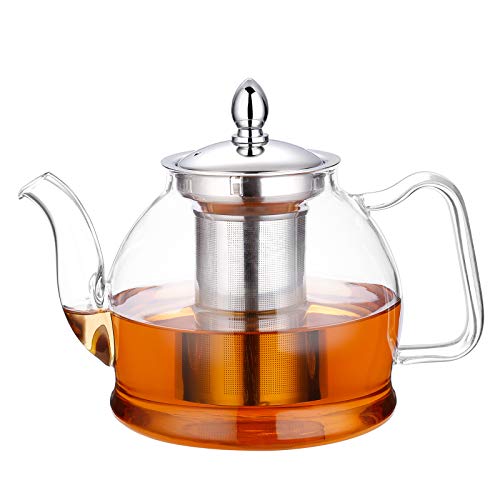
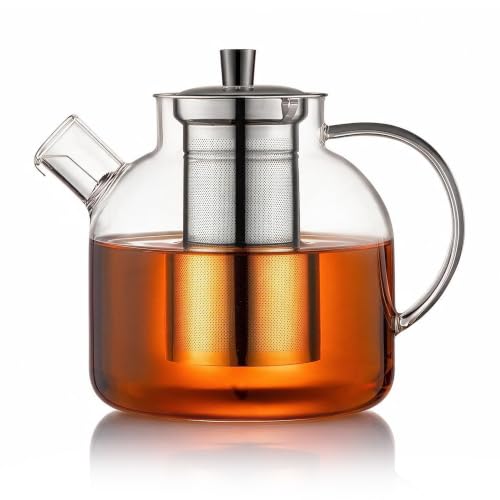
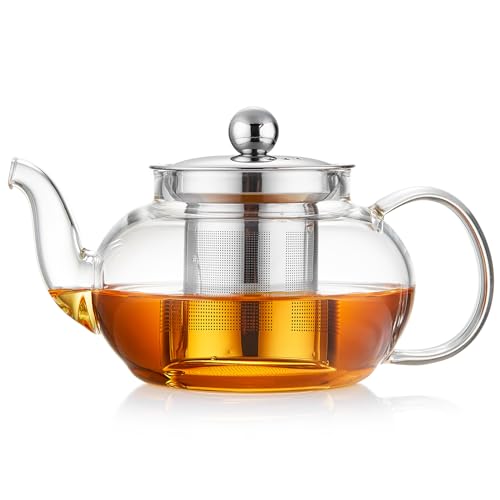
All six pots in this guide to the best teapots for loose leaf tea are sold through Amazon, and every linked pick below goes straight to its product page so you can confirm the current capacity, infuser style, and availability before ordering. Start with the short list, then read the full guide for the sizing, infuser, and brewing guidance that turns a good pot into the right pot for your shelf of teas.
- Enchanti Tea Pot, One Touch Glass Teapot with Infuser, 27 oz — Check on Amazon
- Teabloom Celebration Glass Teapot & Kettle, 27 oz
- CNGLASS Glass Teapot Stovetop Safe, 20.3 oz
- DRNKNSTX Enchanted Tea Pot with Tea Infuser, 20 oz
- HIWARE 1000ml Glass Teapot with Removable Infuser
- PARACITY Glass Teapot Stovetop, 18.6 oz
Read the full guide ↓
Loose leaf tea makes one demand that bagged tea never does: the leaves need somewhere to go. Dry leaf is compact, but wet leaf expands — rolled teas dramatically — and it needs to be held in the water for a controlled time and then taken out again. The best teapots for loose leaf tea are built around that single mechanical fact: a removable infuser basket with room to expand, a body sized to the amount you actually drink, and a pour that does not dribble leaf fragments into the cup. Every pot in this guide is a glass infuser pot whose listing is built around loose leaf brewing, which makes comparison honest: the differences that matter are capacity, infuser construction, heating options, and how each pot fits a particular drinking routine.
Glass deserves a word of its own here. For loose leaf drinkers, glass is not just an aesthetic choice — it is diagnostic equipment. You can watch a rolled oolong unfurl, see whether a black tea has coloured fully, and spot the moment a delicate green begins to look over-steeped. Glass is also flavour-neutral and rinses completely clean between teas, which matters when the same pot brews a smoky lapsang on Saturday and a floral white tea on Sunday. The six picks below run from an 18.6 oz solo brewer to a 1000ml household pot, and each review explains which teas and which drinkers it serves best. If your shelf leans toward one tradition, our focused guide to Best Teapots For Japanese Tea shows how the same fundamentals tighten for that style, while this page covers the whole loose leaf landscape.
Key Takeaways
- The Enchanti 27 oz tea pot is our first choice for most loose leaf drinkers: a versatile mid-size glass pot with an infuser, sized for two to three drinkers and nearly any tea style.
- A removable infuser is the defining feature of a loose leaf pot — it controls the steep and makes leaf disposal a ten-second job.
- Match capacity to your session: 18–20 oz for solo brewing, 27 oz for pairs, 1000ml for households.
- Where a listing states a steel infuser, expect the finest filtration for small-leaf teas; glass infusers trade a little fineness for a fully visible brew.
- Stovetop-safe listings let the pot heat its own water; other pots pair with a kettle, which suits temperature-sensitive teas anyway.
In this guide
Quick Picks
| Pick | Badge | Capacity from listing | Infuser noted in listing | Link |
|---|---|---|---|---|
| Enchanti Tea Pot, One Touch | Best Overall | 27 oz / 800ml | Glass teapot with infuser | Check on Amazon |
| Teabloom Celebration | Best for Blooming and Bagged Tea Too | 27 oz | Removable glass infuser | Check on Amazon |
| CNGLASS Glass Teapot | Best Stovetop Option | 20.3 oz | Removable infuser | Check on Amazon |
| DRNKNSTX Enchanted Tea Pot | Best Gift Pick | 20 oz | Tea infuser / steeper | Check on Amazon |
| HIWARE Glass Teapot | Best for Households | 1000ml | Removable infuser | Check on Amazon |
| PARACITY Glass Teapot | Best for Solo Brewing | 18.6 oz / 550ml | Removable 18/8 stainless steel infuser | Check on Amazon |
Badges reflect fit for loose leaf routines — session size, leaf types, and serving style — rather than any abstract ranking of glass teapots.
How These Picks Were Chosen
This is a research-led guide. We compared the verified listings in this glass teapot group and checked every specification quoted here against the listing title itself. The criteria, in order, were: a removable infuser genuinely designed for loose leaf (every pick states one), capacity spread across real session sizes, infuser construction where a listing states it, heating options where a listing states them, and clarity of glass for watching the brew. Where a listing is silent about a detail — the Enchanti and HIWARE listings, for instance, do not name their infuser material — we report the silence instead of filling it with a guess, and we tell you in the review what that means for your decision.
We deliberately kept the set to one format. Loose leaf tea can also be brewed in clay, porcelain, cast iron, and steel pots, and each material has devoted advocates; but a mixed-material ranking would compare traditions rather than pots. Within the glass infuser format, the choice becomes practical and answerable: which size, which basket, which heating routine. Readers who already know their tradition is Japanese will find the tighter focus in Best Teapots For Oolong useful too, since rolled oolongs stress-test a basket’s expansion room in a way no other tea does.
We also weighed cleaning reality. Loose leaf brewing happens daily in most of these households, and a pot whose basket is miserable to empty will quietly push its owner back to tea bags. Every pick here has a lift-out infuser that can be emptied with a tap and a rinse — a humble criterion that decides long-term satisfaction more reliably than any aesthetic feature.
The 6 Best Teapots for Loose Leaf Tea

Enchanti Tea Pot, One Touch Glass Teapot with Infuser, 27 oz
Badge: Best Overall
Strengths
- 27 oz / 800ml capacity is the most versatile session size in this guide — a round for two or three, or a generous solo pot with a top-up.
- Listing is built explicitly around loose leaf tea, with a one-touch serving format.
- Glass body keeps every tea’s colour and leaf movement visible.
Trade-offs
- The listing does not state the infuser material or stovetop safety, so check the product page for basket details and heat water separately.
- Sold as a gifts set, so part of the proposition is presentation.
- Mid-size means it is neither the smallest solo pot nor a true family pot.
Mini spec box: Capacity 27 oz / 800ml · One touch glass teapot with infuser · For loose leaf tea · Sold as a tea gifts set.
The Enchanti leads because most loose leaf drinking happens at exactly its scale. A 27 oz pot brews two proper mugs or three modest cups, which covers the couple-at-breakfast and the solo-drinker-with-a-second-cup patterns that dominate real routines. Its listing is unambiguous about purpose — a tea maker for loose leaf tea — and the one-touch format points at easy serving, which matters more than it sounds: when a steep ends, you want the pour to be immediate and clean, not a negotiation with a dripping basket. Through glass, you can judge a black tea’s colour, watch a green tea’s leaves settle, and learn each new tea’s timing visually.
Who it suits: the generalist loose leaf drinker whose shelf holds several tea families and whose sessions usually involve one to three people. The honest limitation is specification depth — the listing confirms the format and size but leaves the infuser’s material unstated, so a buyer whose teas are very fine-cut should inspect the product page basket photos before committing, or choose the PARACITY below, whose steel infuser is stated outright. As an all-round first loose leaf pot, though, the Enchanti’s balance of size, purpose, and simplicity is the strongest in this set.
Best for: most loose leaf drinkers and most tea styles / Not suited for: large households or buyers who need a fully specified basket.
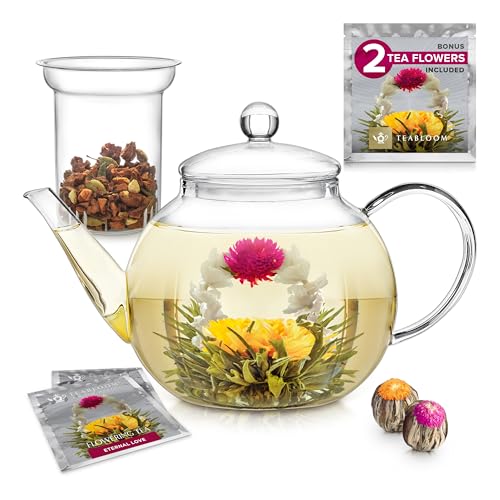
Teabloom Celebration Glass Teapot & Kettle, 27 oz
Badge: Best for Blooming and Bagged Tea Too
Strengths
- Listing covers loose leaf, bagged, and blooming tea — the widest brief of any pot here.
- Removable glass infuser keeps the entire brew transparent.
- Stovetop and microwave safe per listing, with heat-resistant glass, and 2 blooming teas included.
Trade-offs
- Glass infuser slots are typically less fine than steel mesh; the finest small-leaf teas may shed light sediment.
- Glass infuser components need careful handling in the sink.
- Versatility means it is a generalist rather than a specialist for any single tea.
Mini spec box: Capacity 27 oz · Removable glass infuser · Stovetop and microwave safe per listing · Heat-resistant glass · Includes 2 blooming teas · For loose leaf, bagged, and blooming tea.
The Celebration is the pot for a household whose tea drinking refuses to stay in one lane. On weekdays it brews loose leaf in its glass basket; when a guest prefers a familiar bagged tea, the same pot serves it gracefully; on a slow evening, one of the included blooming teas turns the pot into a centrepiece. The all-glass construction is the enabler — nothing hides, nothing flavours the next brew — and the stated stovetop and microwave safety makes it the most flexible heating proposition in this guide as well.
Who it suits: mixed-tea households, hosts, and gift buyers who want one pot to cover every occasion. The honest limitation is filtration fineness: drinkers of very small-leaf teas who demand a perfectly clear cup should weight the steel-infuser picks more heavily. For everyone else, the Celebration’s breadth is real value — it is the pot least likely to be made redundant by a change in the household’s tea habits. Our wider survey of Best Teapots For Sale shows how it sits among presentational picks in this category.
Best for: households that brew loose, bagged, and blooming teas / Not suited for: specialists in very fine-cut leaf.

CNGLASS Glass Teapot Stovetop Safe, 20.3 oz
Badge: Best Stovetop Option
Strengths
- Listing states stovetop safe — the pot heats its own water, removing a vessel from the routine.
- 20.3 oz size suits one or two drinkers, the most common loose leaf session.
- Removable infuser covers loose leaf and blooming tea per the listing.
Trade-offs
- The listing does not state the infuser material.
- Compact capacity means a second brew for three or more drinkers.
- Direct stovetop heating is best for robust teas; delicate greens still want cooled water from a kettle routine.
Mini spec box: Capacity 20.3 oz · Stovetop safe per listing · Removable infuser · For loose leaf and blooming tea.
The CNGLASS argues for simplicity: water in, heat on, leaves in, tea out — one vessel from start to finish. For the robust majority of loose leaf drinking — black teas, roasted oolongs, most herbal blends — that routine is not a shortcut but a sensible default, and it makes the pot a strong candidate for small kitchens, offices, and anywhere a kettle-plus-pot arrangement feels like clutter. The 20.3 oz size keeps the proposition honest: this is a pot for one or two drinkers, brewed fresh each time.
Who it suits: minimalists and small-space drinkers whose teas are mostly robust. The honest limitation is range: a household that regularly serves four will outgrow it quickly, and a drinker of delicate greens will still cool their water first, kettle or no kettle. Within its intended routine, though, it is the most straightforward loose leaf pot in this guide — the one with the fewest moving parts between you and the cup.
Best for: one-vessel brewing for one or two / Not suited for: family-size serving.

DRNKNSTX Enchanted Tea Pot with Tea Infuser, 20 oz
Badge: Best Gift Pick
Strengths
- 20 oz size is a friendly, unintimidating scale for a new loose leaf drinker.
- Listing describes a steeper format with infuser, made for loose leaf diffusing.
- Gift positioning in the listing — designed to be given to tea lovers.
Trade-offs
- The listing states no stovetop claim and no infuser material, so heat water separately.
- Presentation-led design may not match a purely utilitarian kitchen.
- Solo-to-pair capacity only.
Mini spec box: Capacity 20 oz · Tea infuser / loose leaf steeper · Glass tea maker per listing · Gift positioning.
Loose leaf tea has a recruitment problem: people who would love it never start because the equipment looks like a hobby. The DRNKNSTX is the counter-argument in pot form — a 20 oz glass steeper whose listing aims squarely at gift-giving, with a presentation designed to make a first brew feel like an occasion rather than homework. The fundamentals underneath are correct for the job: an infuser to hold the leaf, a size that brews one or two cups without waste, and glass that shows the new drinker what steeping actually looks like.
Who it suits: gift buyers, and beginners who respond to an inviting object. The honest limitation is depth of specification — the listing tells you format and size and little more, so an experienced drinker comparing baskets should start with the Enchanti or PARACITY. But as the pot that converts a bagged-tea drinker into a loose leaf drinker, it has a role none of the others plays as well.
Best for: gifts and first loose leaf experiences / Not suited for: specification-led comparisons.
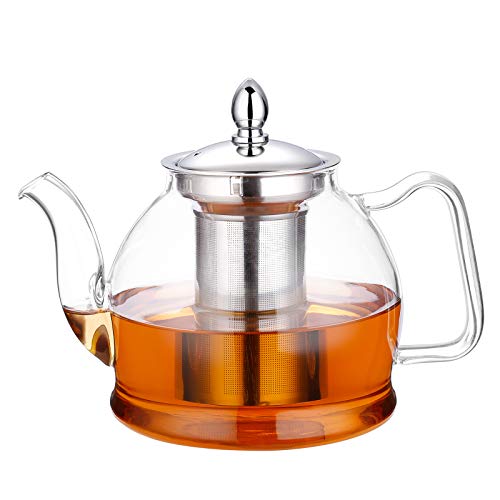
HIWARE 1000ml Glass Teapot with Removable Infuser
Badge: Best for Households
Strengths
- 1000ml capacity brews a full household round of loose leaf in one steep.
- Removable infuser, and the listing states stovetop-safe glass.
- Listing covers blooming and loose leaf tea — a broad household brief.
Trade-offs
- The listing does not state the infuser material.
- Oversized for a solo session; small brews in a big pot steep unevenly if the basket sits above the waterline.
- A full litre of glass is the heaviest pour in this guide.
Mini spec box: Capacity 1000ml · Removable infuser · Stovetop safe per listing · Made for blooming and loose leaf tea.
When loose leaf is a household habit rather than a personal ritual, the HIWARE is the sensible centre of the kitchen. A litre covers three to four mugs from a single steep, which changes the economics of the morning: one brew, one basket to empty, and everyone served at the same strength — provided the basket is lifted when the steep ends, because the last cup poured from a pot with the leaves still in it is always the bitter one. Stovetop-safe glass per the listing keeps the heating in the same vessel, and the clear body makes it easy to brew to a colour the household agrees on.
Who it suits: families and shared houses brewing black teas, blends, and everyday greens at volume. The honest limitation is the solo case — a single drinker will habitually half-fill it, and half-filled baskets brew unevenly. Households that also contain a solo drinker often pair this with one of the 18–20 oz pots, and the category’s accessible end makes that pairing realistic. For the wider everyday picture, see Best Teapots For Loose Tea.
Best for: household rounds from one steep / Not suited for: dedicated solo brewing.

PARACITY Glass Teapot Stovetop, 18.6 oz
Badge: Best for Solo Brewing
Strengths
- Removable 18/8 stainless steel infuser stated in the listing — the finest stated filtration in this guide.
- Compact 18.6 oz / 550ml borosilicate pot brews one generous mug, fresh each time.
- Listing also pitches it for camping and travel — a second-pot candidate.
Trade-offs
- One mug per brew; guests mean a second round.
- The small basket crowds very bulky leaves and large rolled teas.
- Small pots shed heat quickly during long steeps.
Mini spec box: Capacity 18.6 oz / 550ml · Borosilicate glass · Removable 18/8 stainless steel infuser · For blooming and loose leaf tea · Camping and travel positioning.
The PARACITY is the connoisseur’s solo pot in this set, for one specific reason: its listing states an 18/8 stainless steel infuser, and steel mesh is the finest common basket construction. Small-leaf teas — a broken-leaf black, a deep-steamed green, a fine herbal blend — stay in the basket instead of drifting into the cup, and the cup pours clean to the last sip. At 18.6 oz it brews exactly one generous mug, which suits the way solo loose leaf drinkers actually behave: fresh leaf, fresh water, no reheated leftovers.
Who it suits: solo drinkers with fine-leaf teas on the shelf, and anyone wanting a capable travel or desk pot. The honest limitation is hospitality — this pot cannot serve a guest without starting over, and its basket is not the place for a big, dramatically expanding rolled tea. For the solo fine-leaf case, though, it is the most precisely specified pick in this guide.
Best for: solo brewing of fine-leaf teas / Not suited for: serving guests or very bulky leaf.
Comparison Table
| Pick | Capacity | Filtration from listing | Heating noted in listing | Link |
|---|---|---|---|---|
| Enchanti | 27 oz / 800ml | Infuser (material unstated) | Heat water separately | Check on Amazon |
| Teabloom Celebration | 27 oz | Glass infuser | Stovetop and microwave safe | Check on Amazon |
| CNGLASS | 20.3 oz | Removable infuser | Stovetop safe | Check on Amazon |
| DRNKNSTX | 20 oz | Infuser / steeper | Heat water separately | Check on Amazon |
| HIWARE | 1000ml | Removable infuser | Stovetop safe | Check on Amazon |
| PARACITY | 18.6 oz / 550ml | 18/8 stainless steel infuser | Stovetop format | Check on Amazon |
How to Choose a Teapot for Loose Leaf Tea
Start with the infuser, because it is the working part. The basket must be removable, roomy enough for your leaves to expand, and fine enough for the smallest leaf you drink. Whole-leaf teas forgive almost any basket; broken and fine teas demand mesh. If a listing states the basket material, use that information — steel mesh is the fine end of the range, glass infusers the visual end. If it does not, look at the product page photographs with your finest tea in mind.
Then be honest about session size. Count the mugs in your typical session, not your biggest one. One mug points to 18–20 oz, two to three mugs to the 27 oz class, and a household round to 1000ml. Oversized pots brew small sessions badly — leaves floating above a shallow waterline extract unevenly — and undersized pots turn hospitality into relay brewing. Most disappointed buyers made this one decision wrong.
Decide your heating routine. A stated stovetop-safe pot collapses the routine into one vessel and suits robust teas. A kettle routine gives you temperature control, which delicate greens and whites require, at the cost of a second vessel. Microwave-safe glass, stated on the Celebration listing, is a pragmatic middle path for small volumes. None is superior in the abstract; each fits a different shelf of teas.
Weigh glass honestly. Glass shows the brew, stays neutral between teas, and cleans completely — and it is breakable in a way steel and ceramic are not. In a careful kitchen that trade is easily worth it; in a chaotic one, handle any glass pot as the deliberate object it is, and keep it out of the crowded sink pile.
Think in tiers qualitatively. Simple compact pots with steel infusers sit at the accessible end; versatile mid-size pots in the middle; gift sets and presentation designs at the premium end. The sensible spend order is: right size first, right basket second, heating fit third, presentation last.
How to Brew Loose Leaf Tea Well
The routine that works across nearly all loose leaf teas:
- Warm the pot with hot water and discard it, so the brew temperature stays where you set it.
- Measure leaf into the infuser — a teaspoon per mug is the conventional starting point; adjust by tea and taste over sessions, not by guesswork in a single cup.
- Add water at the right heat for the tea: freshly boiled for black teas and most herbals, noticeably cooled for greens and whites.
- Steep to the tea’s timing, watching the colour through the glass as your cross-check.
- Lift the infuser out and drain it briefly over the pot. Serve the whole round now, at one strength.
- Set the basket aside for a second steep if the tea supports one; many oolongs and greens improve on the second pour.
- Empty the basket while the leaves are still warm and pliable — dried leaf is far harder to clear from mesh.
Troubleshooting. Problem: tea tastes bitter → the steep ran long or the water was too hot for the leaf; shorten the time first, cool the water second. Problem: tea tastes weak → add leaf rather than time; more leaf at the right steep beats the same leaf stewed. Problem: leaves in the cup → the basket is too coarse for that tea or was overfilled; leave headroom for expansion and pour gently.
Matching the Pot to the Tea Families on Your Shelf
Black teas are the easiest citizens: boiling water, a few minutes, any basket in this guide. Green teas want cooler water and shorter steeps, which makes the lift-out basket and a smaller pot the natural pairing — the PARACITY and CNGLASS patterns. Oolongs divide by shape: rolled oolongs need basket headroom to unfurl, so mid-size pots with roomy baskets serve them best, and they reward multiple steeps from the same leaves. White teas are delicate and leafy; a mid-size pot and gentle handling keep their subtlety intact. Herbal infusions range from bulky flowers to needle-fine rooibos; the fine end needs the finest basket you can get, which is the stated steel mesh of the PARACITY pattern. Blooming teas are glass’s home turf — the Celebration, with its included blooming teas, is built for them.
The general principle: the pot should be chosen for the most demanding tea you drink regularly, not the easiest. A pot that handles your finest leaf and your most delicate green will handle everything else on the shelf without complaint, while a pot bought for easy black teas may strand the rest of your collection. Our timing-focused companion, Best Teapots For Steeping Tea, goes deeper on the steep discipline each family needs.
Infuser Baskets in Detail: Room, Mesh, and the Lift-Out Moment
Three basket properties decide cup quality. Room first: leaves that cannot expand cannot extract evenly, and a basket filled to the brim with dry leaf will be a compressed plug when wet. As a working rule, dry leaf should occupy no more than about a third of the basket for teas that expand strongly. Mesh second: the finer the leaf, the finer the barrier required, and the trade-off for very fine mesh is slower draining — a few patient seconds over the pot solves it. The lift-out third: the basket should come out cleanly, drip briefly, and land somewhere sensible — a small dish kept by the pot is the unglamorous accessory that makes the whole system tidy. Judge any pot in this guide by imagining that sequence twice a day; the one that makes it effortless is the one you will still be using next year.
Care and Cleaning for Glass Loose Leaf Pots
Daily care is brief: empty the basket warm, rinse pot and basket in hot water, and air-dry with the lid off. Tea films glass gradually — black teas fastest — and a weekly soak in hot water with a spoonful of bicarbonate of soda lifts the film without abrasives. A soft brush keeps basket mesh clear; never use scouring pads on glass or mesh. Protect the pot from thermal shock by warming it before brewing (already part of the routine) and by never setting a hot pot into cold water. Store with the lid ajar so the interior stays fresh. Treated this way, a glass pot remains flavour-neutral indefinitely, which is the entire reason loose leaf drinkers choose the material: the pot contributes nothing but heat, water, and a clear view of the leaves doing their work.
From Tea Bags to Loose Leaf: Making the Switch Without the Fuss
Most loose leaf drinkers started with bags, and the switch fails for predictable reasons that a good pot quietly solves. The first fear is mess: dry leaf looks unruly compared to a tidy bag. In practice, a basket infuser contains the entire process — leaf goes in dry, comes out as one damp clump that taps into the compost, and the pot rinses clean. The whole disposal takes less time than fishing a dripping bag out of a mug. The second fear is inconsistency: bags dose themselves, while loose leaf asks you to measure. A teaspoon measure kept with the tea caddy removes the guesswork within a week, and the glass pot teaches you the rest, because you can see the liquor’s colour and connect it to the dose you used.
The third fear is cost and commitment — the sense that loose leaf requires a shelf of equipment. It does not. One right-sized infuser pot, a kettle you already own, and a single good tea you enjoy are a complete setup; everything else in this guide is refinement. Start with a forgiving tea — a black tea or a roasted oolong — in a pot like the Enchanti or CNGLASS, and let the routine prove itself before expanding the shelf. Drinkers who make the switch this way rarely go back, because the improvement in the cup is immediate and the ritual, honestly assessed, takes about a minute longer than a bag.
Loose Leaf for More People: Scaling, Iced Tea, and Second Pots
Loose leaf scales gracefully if you respect one rule: brew at the strength you intend to serve, in the pot that matches the round. For a table of guests, the HIWARE’s litre is the honest tool — one steep, basket lifted, everyone poured at the same strength. Stretching a small pot by topping it up with hot water produces a weak second round that satisfies nobody; a second fresh brew is always better than a diluted one. Announce the tea and its character when you serve — guests who drink mostly bagged tea often find a properly brewed loose leaf startlingly good, and the glass pot’s visible leaves start the conversation by themselves.
Iced loose leaf tea follows the batch logic: brew double-strength in the largest pot you have, lift the basket, sweeten while warm if you sweeten at all, and chill promptly. Black teas and herbals are the reliable iced performers; delicate greens are better drunk hot and fresh. Finally, consider the second-pot pattern: many households end with a household pot plus a solo pot — the HIWARE and PARACITY pairing in this guide is the template — because weekday and weekend drinking are genuinely different activities. Two right pots, each used constantly, beat one compromise pot used reluctantly.
Storing Loose Leaf and Keeping Flavours True
Loose leaf tea’s enemies are air, light, moisture, and neighbouring aromas, in roughly that order. Keep each tea in a sealed container, in a dark cupboard away from the stove’s steam and the spice rack’s ambitions. Buy in quantities you will finish while the tea is lively — greens fastest, blacks and roasted teas more patiently — and write the tea’s name and opening date on the container, because a shelf of anonymous tins guarantees that the best tea gets forgotten at the back. When a tea disappoints, check its age and storage before blaming the pot; stale leaf brewed perfectly is still stale.
The pot’s side of flavour honesty is simpler, and it is glass’s quiet superpower: it contributes nothing. Porous materials can hold a memory of strong teas — a smoky or spiced tea can ghost the next delicate brew — while glass rinses back to neutral with hot water. The basket is the exception that needs attention: aromatic oils cling to mesh after spiced or flavoured teas, so give it a proper wash before brewing something delicate, and let it dry fully. Households that alternate between loud and quiet teas sometimes keep the small PARACITY basket for the loud ones; the principle matters more than the arrangement — the pot should never be an ingredient.
Learning Your Teas: A Simple Tasting Routine
A glass infuser pot is also a learning instrument, and a fortnight of deliberate tasting will teach you more than a year of casual drinking. Choose one tea and brew it four ways across four sessions: standard dose and time; a little more leaf; a little less time; water a touch cooler or hotter as the tea allows. Taste each cup against a one-line note — strength, sweetness, any harshness — and by the fourth session you will know that tea’s preferences in your pot with your water. Repeat the exercise when a new tea joins the shelf, and keep the notes with the caddy. This is how drinkers develop the intuition that looks like expertise: not from equipment, but from controlled variation, honestly recorded. The visibility of glass accelerates every step, because colour and leaf behaviour become part of the data rather than a mystery inside an opaque pot.
Reading a Teapot: Lids, Spouts, and Handles
Specifications tell you capacity and materials; the parts tell you how the pot behaves. A lid should sit securely while pouring and lift easily when the steep ends — you will perform that action with a timer running, often with one hand. A spout should pour in a clean stream that stops when you level the pot; dribbling spouts are a daily tax on every session, and while listings rarely describe pour quality, the product page photographs of spout shape — a defined lip rather than a blunt opening — are a reasonable clue. A handle must keep fingers clear of hot glass when the pot is full, and the full weight matters: a litre of water plus glass is a serious pour by the third cup, which is one more reason solo drinkers should resist household sizes.
None of these judgements requires expertise — they require imagining the routine. Picture the pot at your sink, your counter, your table: basket out, leaves tapped into the bin, rinse, refill. The pots in this guide were chosen because their formats support that loop without awkwardness. When two picks otherwise tie, choose by the routine you can picture most smoothly; daily equipment is won or lost on exactly those unglamorous repetitions.
Seasonal Drinking: One Pot Across the Year
A loose leaf pot earns its keep across seasons, and the routine shifts with the calendar in ways worth planning for. Winter is the season of black teas, spiced blends, and long evenings — the household pots and their full rounds come into their own, and warming the pot stops being a nicety and becomes essential against cold kitchens. Spring brings the fresh greens, when smaller pots, cooler water, and shorter steeps take over and the solo brewers shine. Summer moves the big pots to batch duty for iced tea, brewed strong in the morning and chilled for the afternoon. Autumn is oolong season in many households — rolled leaves, repeated steeps, and the mid-size pots working hardest. A pot chosen for your real session size handles all four seasons without strain, which is the final argument for sizing honestly: the calendar will test every corner of the pot’s range, and the right size never becomes the wrong one.
Common Buying Mistakes
- Buying by looks before size. A beautiful pot in the wrong capacity will be avoided daily. Session size first, always.
- Ignoring the basket. The pot body gets the attention, but the infuser decides filtration, expansion room, and cleaning effort.
- Leaving leaves in the pot between cups. The brew keeps extracting and the last cup turns bitter. Lift the basket out when the steep ends.
- Using one steep time for every tea. Greens, blacks, and oolongs live on different clocks; the pot gives you control, but you have to use it.
- Heating a glass pot that makes no stovetop claim. Only listings that state stovetop safe earn direct heat. Others get kettle water.
Final Recommendation
For most loose leaf drinkers, start with the Enchanti 27 oz tea pot: the size covers the commonest sessions and the format is purpose-built for loose leaf. And whichever pot you bring home, give it a month of honest use before forming a verdict — learn its basket’s rhythm, settle your doses for your two favourite teas, and let the routine bed in. Loose leaf brewing rewards familiarity more than novelty, and the pot that feels ordinary in the best way after a month is the one that was right. Choose the PARACITY if you brew solo and your teas run fine; the HIWARE if you brew for a household; the CNGLASS if you want one vessel that heats its own water; the Celebration if your household also drinks bagged and blooming teas; and the DRNKNSTX when the pot is a gift meant to start someone’s loose leaf habit. Judge the choice after a fortnight of real sessions — loose leaf brewing is a routine, and the right pot is the one the routine loves.
Frequently Asked Questions
What makes a teapot good for loose leaf tea specifically?
A removable infuser basket with room for leaves to expand, a size matched to your session, and a clean pour. The basket controls the steep and makes disposal easy; without it you are decanting through a separate strainer and still drinking fragments.
How much loose leaf should I use?
Start with roughly a teaspoon per mug and adjust across sessions: more leaf for a stronger cup rather than a longer steep, less for delicate teas you find overpowering. Keep notes for a week and your personal ratios will settle quickly.
Can I brew bagged tea in a loose leaf teapot?
Yes — remove or ignore the basket and brew bags directly in the pot, or use a pot like the Celebration whose listing explicitly covers bagged tea as well. The pot does not care; only the steep timing matters.
Is glass a good material for loose leaf tea?
It is an excellent one for most drinkers: neutral in flavour, completely rinsable between teas, and transparent so you can judge the brew by eye. Its cost is fragility, managed by ordinary care — warm it before brewing and keep it out of the sink pile.
Why does my loose leaf tea taste bitter?
Usually a steep that ran long, water too hot for the leaf type, or leaves left in the liquor after pouring. The removable infuser exists to solve the first and third causes; cooling the water solves the second for greens and whites.
How many steeps can loose leaf tea give?
It depends on the tea: many oolongs give several excellent infusions, greens two or three, blacks usually one strong steep plus a lighter second, and herbals one or two. Re-steeping is where a good basket earns its keep, since the leaves must drain and rest between rounds.
What size teapot should a beginner buy?
The size of your actual session: 18–20 oz for solo drinking, 27 oz if a partner usually joins. Beginners do better with a right-sized pot and fresh leaf than with a large pot and good intentions.
Do I need a separate kettle with a glass teapot?
Only if your pot makes no stovetop claim. Pots whose listings state stovetop safe — the CNGLASS and HIWARE in this guide — can heat their own water. All other glass pots should be filled from a kettle, which has a hidden advantage: a kettle makes it easy to cool water deliberately for green and white teas before it ever reaches the leaves.