Disclosure: topratedkitchenware.com is reader-supported. When you buy through links on our site, we may earn an affiliate commission from Amazon and other retailers, at no extra cost to you.
Where to buy
These are the six verified picks for this guide to best easiest to use electric counter top can openers. Linked names take you to the Amazon listing, where you can check the latest price on Amazon, confirm the current configuration, and read recent owner feedback. Two picks in this counter-top guide are cordless handheld designs; they are reviewed in full for comparison but are prose-only here, because this keyword is specifically about counter top models.
- bella Electric Can Opener (Oatmilk)
- Famawo USB-C Rechargeable Automatic Can Opener — covered in full below as a prose-only pick for this keyword (no link for this angle; see the review for why)
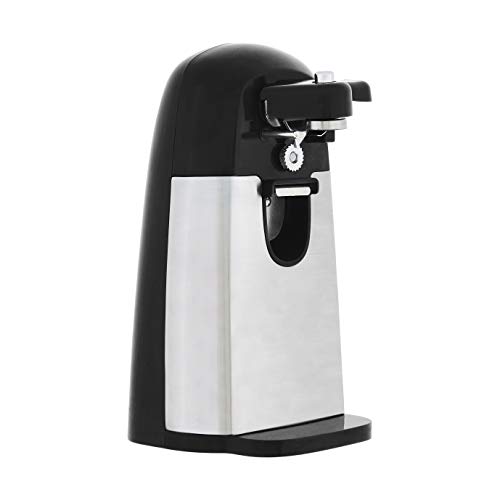
- Amazon Basics 3-In-1 Electric Can Opener
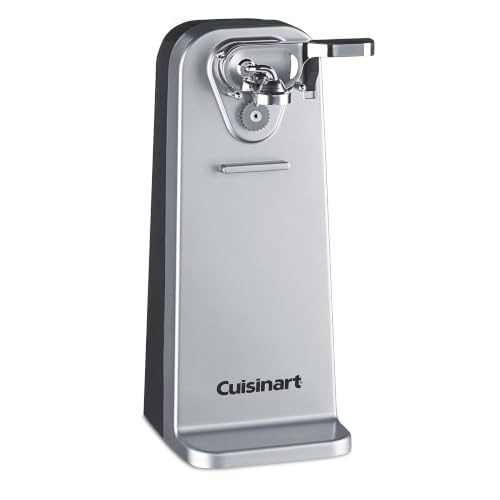
- Cuisinart Deluxe Electric Automatic Can Opener CCO-50BKN
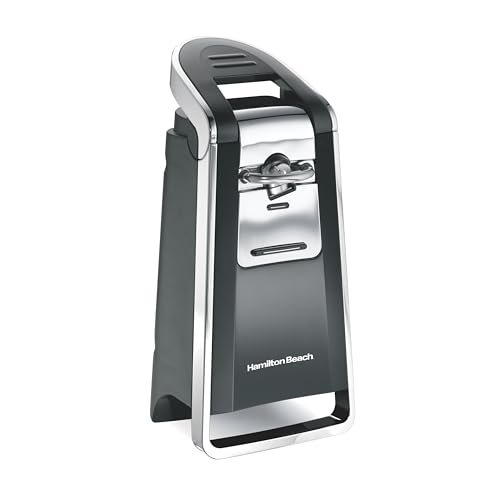
- Hamilton Beach Smooth Touch Electric Can Opener (76606AG)
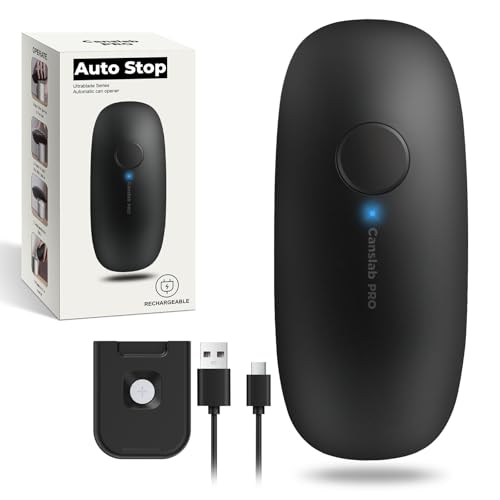
- Canslab Ultrablade PRO Electric Can Opener — covered in full below as a prose-only pick for this keyword (no link for this angle; see the review for why)
Read the full guide ↓ for how each pick was chosen, who it suits, and the honest limitation that might rule it out for you.
Finding the best easiest to use electric counter top can openers means judging two things at once: how little the machine asks of your hands, and how gracefully it lives on the counter it will occupy every day. A countertop opener is furniture as much as tool. It sits in view, plugged in, taking a small permanent territory, and in exchange it offers the most stable, always-ready way to open cans that exists. For cooks whose hands tire quickly, that stability is the ease: the machine is anchored by its own weight, the can is guided rather than held, and there is no drawer rummaging or battery roulette before dinner.
This guide compares the countertop designs that genuinely minimise effort, and it also reviews two popular cordless handhelds in full, clearly marked as prose-only, so you can see exactly what you would gain and give up by leaving the countertop format. If the handheld route turns out to suit your kitchen better, you will know precisely why. If you are comparing neighbouring questions at the same time, our guide to Best Easy To Use Electric Can Openers covers the closest variation of this search.
Key Takeaways
- Countertop ease comes from stability: the machine’s weight does the holding while the motor does the cutting.
- One-touch and press-and-release controls ask the least of sore or tired hands; levers ask for one deliberate push.
- A removable lever or cutting head is the feature that keeps a countertop opener pleasant in month twelve.
- Two cordless handhelds are reviewed prose-only in this guide because this keyword is specifically about counter top models.
- Magnetic lid holders are a small feature with an outsized effect on how finished the task feels.
- Measure your counter patch and outlet distance before choosing; the best opener is the one that fits the spot.
In this guide
Quick Picks
| Pick | Badge | Why it earns its place | Listing |
|---|---|---|---|
| bella Electric Can Opener (Oatmilk) | Best Overall | Automatic one-touch operation; oatmilk finish. | Check on Amazon |
| Famawo USB-C Rechargeable Automatic Can Opener | Best USB-C Rechargeable | USB-C rechargeable; smooth edge cut. | Prose-only for this keyword — see review |
| Amazon Basics 3-In-1 Electric Can Opener | Best 3-in-1 Countertop Station | 3-in-1: can opener, bottle opener and knife sharpener; stainless steel blade. | Check on Amazon |
| Cuisinart Deluxe Electric Automatic Can Opener CCO-50BKN | Best for Easy Cleaning | Single-touch automatic operation; magnetic lid holder. | Check on Amazon |
| Hamilton Beach Smooth Touch Electric Can Opener (76606AG) | Best for Tall and Pop-Top Cans | Easy push down lever; opens standard, extra-tall and pop-top cans. | Check on Amazon |
| Canslab Ultrablade PRO Electric Can Opener | Best for Arthritis-Aware Design | USB rechargeable; smart auto stop. | Prose-only for this keyword — see review |
The table is a shortcut, not the whole story. Badges summarise the single job each pick does best, and the detailed reviews below explain the trade-offs behind every badge, because the best easiest to use electric counter top can openers question is really a question about which compromises fit your hands, your cans and your counter.
How These Picks Were Chosen
For this keyword we applied a strict format test first: a pick had to be a countertop electric opener to earn a link in this guide. Four picks passed that test on their verified listings. Two further picks, both excellent cordless handhelds, failed the countertop test specifically, so they appear as prose-only reviews: you get their full strengths, trade-offs and verdicts, but no link and no image, because sending a counter-top shopper to a handheld product would be a bait-and-switch.
Every pick in this guide was cross-checked against its verified Amazon listing data before it was included: the product name, brand, power format and headline features in each review come from that listing information, checked on 2026-11-20, not from memory or from other roundups. Where a listing states a feature, we say so; where it does not, we do not invent it, which is why some spec boxes are shorter than others. That honesty matters more than a tidy table. You will also notice that this guide prints no fixed prices and no fixed scores. Prices move, and scores printed in an article go stale while the product stays the same, so we point you to the listing to check the latest price on Amazon and to read current owner feedback alongside the trade-offs described here. Readers weighing a more evidence-led angle often look at Best Elecgtric Can Openers alongside this guide.
This is research-led guidance, not a claim of laboratory testing. We compared the verified feature sets against the jobs this keyword describes, weighted countertop stability, one-touch effort, cleanability of the cutting head, and lid control at the end of the cut, and demoted designs that solved the wrong problem, however impressive their listings sounded. Six picks survived. Each one is the right answer for somebody in this guide’s audience, and the reviews say plainly who that somebody is and who should look elsewhere.
The 6 Best Picks for Best easiest to use electric counter top can openers

bella Electric Can Opener (Oatmilk)
Badge: Best Overall
Strengths
- One-touch start means you press once and the machine does the turning, gripping and cutting for you
- Countertop format stays in place, so there is no hunting through a drawer before every meal
- Soft Oatmilk finish suits lighter, calmer kitchen schemes better than stark black plastic
Trade-offs
- Corded design needs a nearby outlet and a permanent patch of counter
- Title lists no smooth-edge or side-cut claim, so expect a conventional top cut and handle lids with care
- No battery or rechargeable option, so it cannot travel to a picnic table or RV as easily as cordless rivals
At a glance
- Format: countertop corded
- Power: Corded countertop design
- Automatic one-touch operation
- Oatmilk finish
- Countertop format that stays plugged in and ready
The bella is the straightforward answer for anyone who wants the opener living on the counter, plugged in and ready. One-touch automatic operation removes the two hardest parts of manual opening: the squeeze to pierce the lid and the sustained grip to turn the handle. You position the can, start the cycle, and the machine walks itself around the rim. That matters most on days when hands are tired, because the effort shifts from your fingers to the motor. The Oatmilk colour is a small thing that turns out to matter daily: an appliance you see every day should look like it belongs in your kitchen, and this softer finish blends into pale counters and light cabinetry instead of shouting for attention. The honest limitation is flexibility. A corded countertop unit is a commitment to one spot, and the listing makes no smooth-edge claim, so the cut is a conventional one and the removed lid deserves the usual care. If your priority is a calm, always-ready station for everyday cans, this is a strong place to start; if you open cans in several places, a cordless pick below will travel better. In a counter-top shortlist, judge the bella Electric Can Opener by the patch of counter it needs and the outlet it ties up, as much as by the cut itself.
Best for: cooks who want an opener permanently ready on the counter with one-touch ease / Not suited for: cooks who need to open cans away from a fixed counter spot
Famawo USB-C Rechargeable Automatic Can Opener
Badge: Best USB-C Rechargeable
Strengths
- USB-C charging uses the same cable family as modern phones, so there are no proprietary chargers to lose
- Smooth edge cut leaves a rim you can run a finger along with far less worry than a jagged top cut
- Magnetic lid hold keeps the cut lid attached to the opener instead of dropping it into the food
Trade-offs
- Rechargeable means the battery eventually needs a charge, usually discovered at the worst moment
- Handheld format sits on top of the can, so very tall or heavy cans need a steady supporting hand nearby
- Fits most can sizes is not the same as every can size, so unusual rims can still defeat it
At a glance
- Format: handheld rechargeable
- Power: USB-C rechargeable, cordless
- USB-C rechargeable
- Smooth edge cut
- One-touch operation
- Magnetic lid hold
- Fits most can sizes
- Aimed at senior users
The Famawo takes the handheld route: it sits on top of the can, locks on, and travels around the rim under its own power after a single touch. For easy use, the details line up well. One-touch operation means there is no lever to hold down for the whole cut. The smooth edge finish addresses the safety worry that puts many people off canned food in the first place, and the magnetic lid hold means the sharp disc of metal stays with the opener rather than sinking into soup or beans. USB-C recharging is the practical highlight. Instead of a drawer of mismatched batteries or a unique charging brick, it tops up from the cable most households already own several of. The trade-off is planning: a rechargeable tool is only easy when it is charged, so it rewards a simple habit of plugging it in after a few uses rather than waiting for it to fade mid-can. It fits most can sizes according to its listing, which covers the standard soup, vegetable and tuna cans that make up most weekly cooking. In a counter-top shortlist, judge the Famawo USB-C Rechargeable Can Opener by the patch of counter it needs and the outlet it ties up, as much as by the cut itself.
Best for: cooks who want cordless freedom, a smooth edge and modern USB-C charging / Not suited for: cooks who know a rechargeable battery will always be flat when they need it
Prose-only for this keyword: this pick is a cordless handheld design rather than a countertop model, so it is reviewed in full for comparison but carries no link or image in this counter-top guide. Check the latest price on Amazon by searching the product name if the handheld format suits you better.
Amazon Basics 3-In-1 Electric Can Opener
Badge: Best 3-in-1 Countertop Station
Strengths
- Three tools in one footprint: can opener, bottle opener and knife sharpener share a single counter spot
- Magnetic lid holder catches the lid at the end of the cut so it does not fall into the can
- Stainless steel blade is the part that does the work, and it is the right material for a wet kitchen task
Trade-offs
- The knife sharpener adds bulk and a learning curve if all you wanted was a can opener
- Corded 50W design is fixed to wherever your outlet and counter space allow
- Black finish shows flour dust and water spots more readily than lighter colours
At a glance
- Format: countertop corded
- Power: 50W corded countertop
- 3-in-1: can opener, bottle opener and knife sharpener
- Stainless steel blade
- Magnetic lid holder
- 50W motor
- Black finish
The Amazon Basics unit is the multi-tool of this group. Alongside the electric can opener you get a bottle opener and a knife sharpener built into the same housing, which makes sense for smaller kitchens where three separate gadgets would never all find a home. In daily use the can-opening side is conventional in the best way: a magnetic lid holder keeps the severed lid under control, and the stainless steel blade handles the cutting. The listing describes it as safe, easy to use and powerful, and the 50W motor rating is the one hard number attached to any pick in this guide. The honest limitation is that versatility is not free. The sharpener section makes the unit larger than a pure can opener, and if your knives are sharpened elsewhere you are storing a feature you rarely touch. Judge it as a countertop station: if the bottle opener gets weekly use in your house and a quick knife touch-up appeals, the combined footprint earns its place; if you only ever open cans, a simpler single-purpose model below may suit you better. In a counter-top shortlist, judge the Amazon Basics 3-In-1 Electric Can Opener by the patch of counter it needs and the outlet it ties up, as much as by the cut itself.
Best for: small kitchens that will genuinely use a can opener, bottle opener and sharpener in one unit / Not suited for: purists who want the smallest, simplest single-purpose opener

Cuisinart Deluxe Electric Automatic Can Opener CCO-50BKN
Badge: Best for Easy Cleaning
Strengths
- Single-touch operation starts the cut without a sustained squeeze or hold
- Removable activation lever lifts off for cleaning, which is where many openers quietly fail over time
- Magnetic lid holder keeps the lid captive at the end of the cut
Trade-offs
- Countertop corded format claims permanent counter space and an outlet
- No smooth-edge claim in the listing, so plan on a conventional cut and careful lid handling
- Single-purpose design: no bottle opener or sharpener extras
At a glance
- Format: countertop corded
- Power: Corded countertop design
- Single-touch automatic operation
- Magnetic lid holder
- Removable activation lever
- Black finish
- Listed as suitable for seniors
Cuisinart builds this Deluxe model around two ideas that matter more than they first appear: single-touch operation and a removable activation lever. The single touch is about effort. Instead of holding a lever down while the machine works, you start it and let go, which is exactly the change that helps anyone whose grip tires quickly. The removable lever is about month six rather than day one. The lever and cutting area are where splashes of tomato, tuna oil and bean liquid collect, and a part that lifts off can be washed properly instead of wiped around. The magnetic lid holder finishes the job neatly by keeping the lid attached until you are ready to drop it in the bin. The limitation is the familiar countertop one: it needs its own spot and an outlet, and the listing makes no smooth-edge promise. Within those bounds it is one of the most considered designs here, and its explicit suitability for seniors in the listing reflects the low-effort controls rather than any styling gimmick. In a counter-top shortlist, judge the Cuisinart Deluxe Electric Can Opener CCO-50BKN by the patch of counter it needs and the outlet it ties up, as much as by the cut itself.
Best for: anyone who values a removable, washable lever and true single-touch starting / Not suited for: cooks with no spare counter space for a corded appliance

Hamilton Beach Smooth Touch Electric Can Opener (76606AG)
Badge: Best for Tall and Pop-Top Cans
Strengths
- Push down lever spreads the starting effort across the palm instead of concentrating it in fingertips
- Handles extra-tall cans that tip or jam smaller openers, plus pop-top cans when the tab has snapped
- Smooth Touch action is designed to leave an edge that is kinder to fingers than a raw cut
Trade-offs
- Lever must be pushed to start, so it asks slightly more of the hand than a true one-touch button
- Larger countertop body is the price of extra-tall can clearance
- Chrome trim shows fingerprints and needs a wipe to stay smart
At a glance
- Format: countertop corded
- Power: Corded countertop design
- Easy push down lever
- Opens standard, extra-tall and pop-top cans
- Smooth Touch cutting action
- Black and chrome finish
- Model 76606AG
The Hamilton Beach Smooth Touch is built for the cans other openers struggle with. Its listing is explicit that it opens all standard sizes, extra-tall cans and pop-top cans, and that breadth is its reason to exist. Tall cans of tomatoes or stock are where lighter openers tip, stall or need a second hand to steady everything; a countertop unit with the clearance and weight to handle them removes that small daily friction. Starting the cut uses an easy push down lever, which spreads force through the heel of the hand rather than asking fingertips to pinch and hold. The Smooth Touch name refers to its cutting approach, aimed at an edge that is less threatening than the razor rim a basic top-cut can leave. The honest limitation is that the lever still asks for a deliberate push, so someone seeking the absolute minimum of hand involvement may prefer a one-touch handheld. For mixed pantries with tall cans in regular rotation, though, this is the most capable countertop option in the group. In a counter-top shortlist, judge the Hamilton Beach Smooth Touch Electric Can Opener by the patch of counter it needs and the outlet it ties up, as much as by the cut itself.
Best for: households opening extra-tall cans and snapped pop-top cans regularly / Not suited for: anyone seeking the absolute minimum hand involvement of a one-touch handheld
Canslab Ultrablade PRO Electric Can Opener
Badge: Best for Arthritis-Aware Design
Strengths
- Smart Auto Stop ends the cycle when the cut is done, so there is no guessing or over-running the rim
- Side cut with smooth edge separates the lid at the side, leaving an edge designed to be safe to touch
- Wall mountable storage keeps it off the counter and out of the drawer tangle
Trade-offs
- Cordless convenience depends on keeping the USB charge topped up
- Side-cut style can feel unfamiliar the first few times if you grew up with top-cut openers
- Handheld format still needs the can on a flat, stable surface to walk around cleanly
At a glance
- Format: handheld rechargeable
- Power: USB rechargeable, cordless
- USB rechargeable
- Smart Auto Stop
- Handsfree side cut with smooth edge
- Made for seniors with arthritis
- Cordless and wall mountable
- Black finish
The Canslab Ultrablade PRO is the most explicitly arthritis-aware design in this pool: its listing names seniors with arthritis directly, and the feature set backs that up. The cut is handsfree and happens at the side of the lid, leaving a smooth edge, which removes both the gripping effort and the sharp-rim worry in one move. Smart Auto Stop is the detail that quietly matters. Judging when a cut is complete, and stopping a machine at the right moment, is a small cognitive and physical load; automating the stop removes it. Being USB rechargeable and cordless means it works wherever the can is, and the wall mountable design gives it a home that is neither counter nor drawer. The limitation is the side-cut learning curve: the first can feels odd if you expect the lid to lift from the top, and the rechargeable battery rewards a regular top-up habit. For hands that hurt, this combination of handsfree cutting, smooth edges and automatic stopping is the strongest specialist package here. In a counter-top shortlist, judge the Canslab Ultrablade PRO Electric Can Opener by the patch of counter it needs and the outlet it ties up, as much as by the cut itself.
Best for: seniors with arthritis who want handsfree side cutting, a smooth edge and automatic stopping / Not suited for: cooks who dislike the unfamiliar feel of a side-cut lid
Prose-only for this keyword: this pick is a cordless handheld design rather than a countertop model, so it is reviewed in full for comparison but carries no link or image in this counter-top guide. Check the latest price on Amazon by searching the product name if the handheld format suits you better.
Comparison Table
| Pick | Format | Power | Standout feature from its listing | Listing |
|---|---|---|---|---|
| bella Electric Can Opener (Oatmilk) | countertop corded | Corded countertop design | Automatic one-touch operation | Check on Amazon |
| Famawo USB-C Rechargeable Automatic Can Opener | handheld rechargeable | USB-C rechargeable, cordless | USB-C rechargeable | Prose-only here |
| Amazon Basics 3-In-1 Electric Can Opener | countertop corded | 50W corded countertop | 3-in-1: can opener, bottle opener and knife sharpener | Check on Amazon |
| Cuisinart Deluxe Electric Automatic Can Opener CCO-50BKN | countertop corded | Corded countertop design | Single-touch automatic operation | Check on Amazon |
| Hamilton Beach Smooth Touch Electric Can Opener (76606AG) | countertop corded | Corded countertop design | Easy push down lever | Check on Amazon |
| Canslab Ultrablade PRO Electric Can Opener | handheld rechargeable | USB rechargeable, cordless | USB rechargeable | Prose-only here |
Read the format column first. It decides where the opener lives and how much of the work your hands still do, and it explains most of the real difference between these six. Power comes second: corded countertop models are always ready, battery and rechargeable handhelds are ready only if you keep them fed. The standout feature column is a tiebreaker, not a starting point. Shoppers comparing the smooth-edge question specifically will find Best Electric Can Openers Arthriti a useful companion read.
How to Choose the Right Electric Can Opener for Best easiest to use electric counter top can openers
Start with the control, because the control is where ease is won or lost. A true one-touch design asks you to press once and then supervises itself; a press-and-hold lever asks your hand to stay involved for the whole cut. Neither is automatically better. One-touch suits hands that tire or ache, because involvement ends the moment the cut begins. A lever suits cooks who like to feel the machine engage and who open cans in quick batches, because starting the next can is instant. Be honest about which description sounds like your hands on an ordinary tired evening, not on your best morning.
Next, decide where the opener lives. Countertop corded models trade counter space for permanent readiness: no batteries, no charging, no drawer. Handheld cordless models trade that readiness for freedom: they work at any counter, any table, and store in a drawer or on a wall mount. The right trade depends on your kitchen’s scarcest resource. If counter space is precious and outlets are few, cordless wins. If your household forgets to charge things, corded wins, and it is not close.
Then consider the cut itself. Smooth-edge and side-cut designs separate the lid so the remaining rim is far less sharp, which changes both safety and feel: lids lift away cleanly and bins are safer to press down. Conventional top cuts are familiar and work on the widest range of rims, but the removed lid is a sharp disc that deserves tongs or a magnet, never fingertips. If children help in the kitchen, or if a sharp lid is the part of can opening you genuinely dread, weight the smooth-edge picks heavily.
For countertop models specifically, add one more test: clearance. Tall cans need vertical room under the cutting head and, in many kitchens, room under the wall cabinets above. Measure the tallest can in your pantry, measure the space where the opener will sit, and leave a margin. An opener that must be pulled out from under a cabinet for every tall can quietly stops being the easiest option, whatever its controls promise.
Finally, match the opener to your actual cans for a week before you buy. Count how many are standard, how many are tall, how many are small paste cans, and whether pop-top tabs regularly snap on you. That one-week audit, written on the back of a shopping list, predicts satisfaction better than any feature list, because best easiest to use electric counter top can openers is ultimately a question about your pantry, not about motors in the abstract. Readers whose week turns out to be dominated by small cans often end up reading Best Electric Can Openers By Consumer Reports before deciding.
How to Use, Clean and Look After an Electric Can Opener
Using any electric opener well starts before the motor does. Wipe the top of the can, because dust and dried drips from storage end up exactly where the cutter travels. Set the can on a flat, dry surface; a can rocking on crumbs defeats even a good machine. Engage the cutter squarely on the rim, start the cut, and then let the machine work at its own pace. Forcing a handheld around faster than its motor wants to go, or dragging a countertop can sideways, is how ragged cuts and stalls happen. When the cut completes, lift the lid away with the magnet, a utensil or the smooth-edge rim itself, and drop it straight into the bin.
Cleaning is a two-minute habit, not a project. After messy cans such as tomatoes, tuna or beans, wipe the cutting area with a damp cloth while residue is fresh. Weekly, if you open cans most days, wash any removable lever or head in warm soapy water, dry it fully, and check the cutting wheel for a trapped sliver of metal, which is the hidden cause of many sudden failures. Never immerse a motor body in water. A dry machine stored in a dry place will reward you with years of unremarkable, reliable service, which is exactly what you want from a tool like this.
Troubleshooting. Problem: the opener stalls halfway round the rim → check for a dent at the stall point, reseat the cutter just past it, and support the can so the machine is not dragging its weight. Problem: the lid drops into the food → the magnet was not engaged or was coated in residue; clean the magnet face, and on the next can hold the lid tab area for the last moment of the cut until you trust the hold. Problem: a rechargeable or battery model sounds slower week by week → that is the power source fading, not the motor failing; recharge or replace the batteries before judging the machine. Problem: cuts get ragged on a countertop model → wash the removable lever or cutting head first, because dried residue on the wheel is the most common cause.
Countertop vs Handheld: An Honest Side-by-Side for This Keyword
Because this guide reviews both formats, the comparison deserves plain words. A countertop machine wins on readiness and stability: it is plugged in, weighted, and waiting, and it handles tall cans with the least supervision. A handheld wins on geography and storage: it opens cans wherever they are and disappears into a drawer. What a handheld cannot do is be a countertop appliance, which is why the two cordless picks here are prose-only. That is not a judgement on their quality; the Canslab and Famawo designs reviewed below are genuinely strong. It is a judgement about fit for this specific search.
If you arrived here unsure which format you want, decide by watching your own routine for two days. If cans are always opened in the same prep spot, near an outlet, the countertop format will feel like an upgrade every single time. If cans are opened at the stove, at the table, or in more than one kitchen zone, the handheld’s freedom will matter more than the countertop’s stability, and you should follow the prose-only reviews toward the cordless guides linked in this article instead.
Setting Up a Counter Station That Stays Easy
Place the opener where cans are opened, with the outlet behind it rather than beside it, so the cord drops out of the work zone. Keep a small bin or recycling caddy within one step, because lid disposal is part of the task and a long walk with a sharp lid is how accidents happen. If the counter patch is tight, choose the pick whose footprint you measured, not the one you hoped would fit, and keep the area in front of the machine clear of the knife block and oil bottles that migrate into every spare corner.
Lighting matters more than people expect. A counter spot under a cabinet shadow makes it harder to see the cutter seat on the rim, and that visual check is part of easy use. If your only available patch is dim, a lighter-finished pick such as the bella in Oatmilk is easier to read at a glance than a black unit in a dark corner. Small environmental decisions like these are why two households can own the same opener and report completely different experiences of it.
For a wider view of the manual alternative and when it still makes sense, see Best Electric Can Openers Consumer Reports.
Think about the full journey of a single can in your kitchen, because ease of use is decided at every step of it, not just the cutting step. The can comes out of a cupboard or pantry, it needs a stable surface, the opener has to engage the rim without a fight, the cut has to complete without stalls, the lid has to go somewhere safe, and the opener has to be cleaned and put away. A design that is effortless at the cutting step but fiddly to engage, messy to clean or awkward to store will slowly stop being used, and an opener that stops being used is worse than a simpler one that stays in daily rotation. When you compare the picks in this guide, walk each one through that whole journey in your imagination and notice where your own hands, eyes or patience would be taxed.
Cleaning rhythm is the hidden half of ease of use. A quick wipe of the cutting area after messy cans, a proper wash of any removable lever or head weekly if you open cans daily, and a dry storage spot will keep any of these machines pleasant for years. Residue left on a cutter does not just look bad; it adds friction to the next cut and can make a good opener feel weak. When a previously happy opener starts struggling, cleaning the cutting wheel and checking for a trapped sliver of lid fixes the problem surprisingly often, long before the motor is actually at fault.
Dented cans are the stress test nobody plans for. A dent on the rim can stall a handheld or make a countertop machine labour, and the safe response is patience rather than force: reseat the opener just past the dent, support the can, and let the motor work. If a can is bulging, leaking or badly rusted, do not open it at all; discard it unopened, because no opener fixes a food safety problem. Building this judgement into your routine matters more for easy use than any single feature, because confidence comes from knowing what to do when the standard process meets a non-standard can.
Common Buying Mistakes
The classic countertop mistake is buying the machine before measuring the space, then discovering the wall cabinet above the only free patch leaves too little clearance for tall cans. The second is forgetting the outlet: a cord that must cross the sink or the hob to reach power turns an easy appliance into a daily annoyance. The third is treating the two formats as interchangeable. A handheld bought to do a countertop job will feel underpowered and fiddly, and a countertop machine bought for a tiny kitchen will feel like an occupying army.
Three further mistakes show up repeatedly. The first is buying for the cans you wish you opened instead of the cans in your cupboard today. The second is ignoring cleaning until the cutter is coated and the machine seems weak, when a wash would have restored it. The third is treating the cheapest moment as the decision: within this category, the difference between a frustrating opener and a satisfying one is usually design fit, not a small gap in cost, so use the listing to check the latest price on Amazon only after you have decided which design fits your hands.
Final Recommendation
If you want the easiest countertop experience overall, start with the bella Electric Can Opener: it lives on the counter, starts with one touch, and asks almost nothing of your hands. If cleaning is your deciding factor, the Cuisinart CCO-50BKN and its removable lever are the thoughtful choice. If tall cans and snapped pop-top tabs are your recurring problem, the Hamilton Beach Smooth Touch is built for exactly that week of cooking. The Amazon Basics 3-in-1 earns its place when the bottle opener and sharpener will genuinely share the workload on the same patch of counter.
Start your shortlist here: bella Electric Can Opener, Amazon Basics 3-In-1 Electric Can Opener, Cuisinart Deluxe Electric Can Opener CCO-50BKN. Those three cover the main shapes of this category between them, and the detailed reviews above will tell you quickly which shape matches your kitchen. Whichever you choose, check the latest price on Amazon on the day you buy, confirm the format and power type one last time, and give the new routine a full week of ordinary cooking before you judge it; new habits around an everyday tool always feel stranger on day one than they do on day seven.
One last cross-check for readers still torn between two neighbouring searches: Best Electric Can Openers For Arthritic Hands frames the same decision from the adjacent angle, and reading both final sections side by side usually settles it.
Frequently Asked Questions
Are electric can openers really easier than manual ones?
For most people, yes, and the difference is where the effort goes. A manual opener asks for a hard squeeze to pierce the lid and a sustained turning grip for the whole cut. An electric design replaces both with a motor: you position the can and start the cycle. The effort that remains is placement and, on lever models, a single push. People whose grip is strong may notice little difference; people whose hands tire, ache or cramp usually notice it on the very first can.
What is the difference between a top cut and a smooth-edge side cut?
A top cut slices through the top of the lid just inside the rim, leaving a sharp edge on the removed lid. A side cut or smooth-edge design separates the lid at the side seam, so the lid lifts off with a much smoother rim and the can edge is less sharp too. Side cuts can feel strange at first because the lid comes away as a complete disc, and they can struggle on unusual rims, but for safety-focused households they are usually the preferred style once the habit forms.
Do electric can openers work on pop-top cans?
They can, and sometimes they should. Pop-top tabs snap off, bend, or demand a fingertip pull that is genuinely hard for sore hands. A countertop model whose listing says it opens pop-top cans, such as the Hamilton Beach pick in this guide, handles them by cutting the lid the conventional way. Handhelds vary more, so if snapped tabs are a recurring frustration in your house, treat that listing claim as a deciding feature rather than a bonus.
How long do batteries or charges last in handheld models?
Listings in this guide do not promise a fixed number of cans, and you should be suspicious of any source that states one as a fact, because can size, rim condition and battery age all change the answer. The practical approach is rhythm rather than counting: recharge USB models after a run of heavy use, keep spare batteries for battery models in the same drawer, and treat a slowing motor as a power reminder, not a product failure.
Can an electric opener handle very tall or large cans?
Countertop models with explicit extra-tall clearance, like the Hamilton Beach in this guide, are the safest bet for tall stock and tomato cans. Handhelds sit on top of the can, so height matters less to them, but a very heavy can still needs a stable surface and sometimes a steadying hand nearby. Very wide catering cans are the hardest case for every design here; if you open those weekly, say so in your shortlist criteria and favour the countertop machine with the most clearance.
Why are two picks in this guide prose-only with no link?
Because this keyword asks specifically for counter top can openers, and those two picks are cordless handheld designs according to their verified listings. They are reviewed in full so you can compare formats honestly, but they carry no link or image in this guide. If the handheld format suits your kitchen better, the internal links in this article lead to the companion guides where those same products are linked picks.
How do I know when to replace an electric can opener?
Replace it when cleaning no longer restores a clean cut, when the motor labours on ordinary cans with fresh power, or when the cutter starts leaving metal slivers. A gradual decline is usually residue or a fading battery, both fixable. A sudden change after a drop can mean a bent cutter, which is not worth forcing. Because these are relatively simple machines, a well-kept pick should give years of service; treat replacement as a response to behaviour, not to age alone.