Disclosure: topratedkitchenware.com is reader-supported. When you buy through links on our site, we may earn an affiliate commission from Amazon and other retailers, at no extra cost to you.
Where to buy
The fastest way to act on this guide is to start with the three genuinely cordless picks below — each one was verified against Amazon’s own catalog data before it earned a link. The three corded countertop models that follow them are reviewed in full as alternatives, but they are covered in prose only, because a plug-in opener is not a cordless opener no matter how good it is. If you already know which style you want, jump straight to a pick; if you are still deciding, the full guide below explains how the two families differ and who should buy which.
- Canslab Ultrablade PRO Electric Can Opener — Check on Amazon
- Kitchen Mama Auto Electric Can Opener — Check on Amazon
- KITCHENMUH One Touch Electric Can Opener — Check on Amazon
- Amazon Basics 3-In-1 Electric Can Opener (corded alternative — covered in prose below)
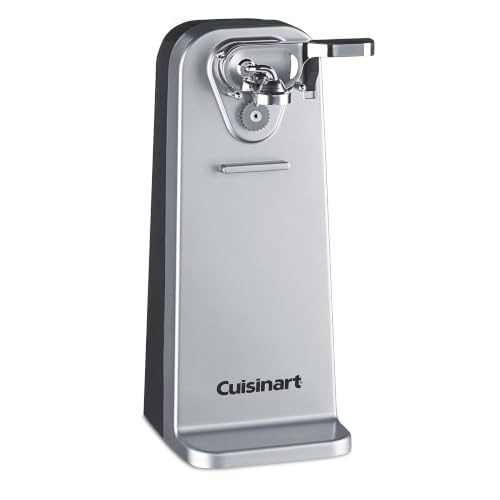
- Cuisinart Deluxe Electric Can Opener CCO-50BKN (corded alternative — covered in prose below)
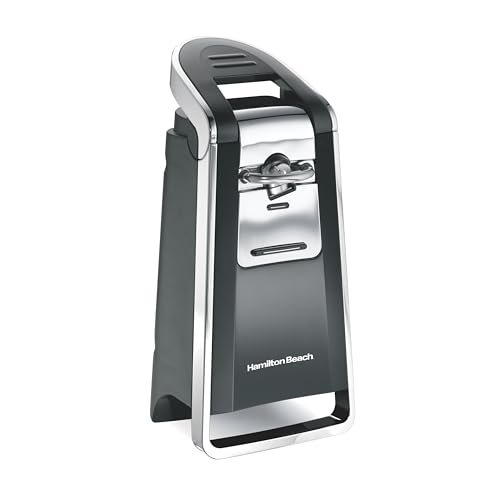
- Hamilton Beach Smooth Touch Electric Can Opener (corded alternative — covered in prose below)
Read the full guide ↓
Finding the best cordless can openers sounds simple until you start shopping and discover that “electric” and “cordless” are treated as if they were the same word. They are not. Most electric can openers sold today are countertop appliances with a power cord that has to live within reach of an outlet. A true cordless can opener runs on batteries or a rechargeable cell, sits on top of the can instead of standing on the counter, travels in a drawer, and works during a power outage, at a campsite, or on the far side of a kitchen where no outlet exists. This guide separates the two families honestly: three verified cordless models get full linked reviews, and three well-known corded models are reviewed in prose as the alternatives they actually are.
The cordless format has real advantages that go beyond novelty. A handheld cordless opener asks almost nothing of your hands — you set it on the rim, press a button, and it walks itself around the can. That makes it one of the most practical upgrades for anyone with arthritis, reduced grip strength, or one hand occupied. It also frees counter space, because the whole tool disappears into a cutlery drawer when the job is done. The trade-offs are equally real: you depend on batteries or a charge, the motor is smaller than a countertop unit’s, and very large or oddly shaped cans can challenge a tool that balances on the rim. The picks and the buying guide below are organized around exactly those tensions, so you can match the tool to the way you actually cook.
Key Takeaways
- Only three of the six products in this guide are truly cordless: the Canslab Ultrablade PRO (USB rechargeable), the Kitchen Mama Auto (battery operated), and the KITCHENMUH One Touch (battery operated). The other three are corded countertop models reviewed as alternatives.
- Cordless openers cut from the side on these picks, leaving a smooth edge on both the can and the lid — a genuine safety and cleanliness advantage over top-cutting designs.
- Rechargeable (USB) and replaceable-battery models suit different households: rechargeables avoid battery purchases, while battery models are always ready if you keep spares.
- Hands-free operation is the headline benefit for anyone with arthritis or limited hand strength, and all three cordless picks here are automatic.
- If you open tall or heavy cans daily and have a free outlet, a corded countertop opener is still the steadier tool — which is why three of them are reviewed honestly below.
In this guide
Quick Picks
Six picks, two families. The badges below are used again in the detailed reviews, so you can move between this summary and the full reviews without losing track of which product does which job. Cordless picks carry links; corded alternatives are listed without links on purpose, because they do not meet this guide’s core requirement. Readers comparing the two families side by side may also want our roundup of the Best Counter Top Electric Can Openers, which covers the plug-in category on its own terms.
| Pick | Badge | Power source | Cut style | Link |
|---|---|---|---|---|
| Canslab Ultrablade PRO | Best Overall | USB rechargeable | Side cut, smooth edge | Check on Amazon |
| Kitchen Mama Auto | Best for Simple Everyday Use | Battery operated | Smooth edge | Check on Amazon |
| KITCHENMUH One Touch | Best for Arthritis and Weak Grip | Battery operated | Smooth edge | Check on Amazon |
| Amazon Basics 3-In-1 | Best Corded Alternative | Corded electric, 50W | Top cut (3-in-1 tool) | Prose only |
| Cuisinart Deluxe CCO-50BKN | Best Countertop Alternative | Corded electric | Top cut, single-touch | Prose only |
| Hamilton Beach Smooth Touch | Best for Tall Cans (Corded) | Corded electric | Smooth-touch side cut | Prose only |
A note on how to read this table: “power source” is the deciding column for this keyword. Everything else — cut style, extra tools, lid handling — is secondary to whether the opener can work away from an outlet. If your kitchen has exactly one accessible outlet and it is already claimed by a kettle and a toaster, the cordless column is not a luxury; it is the difference between a tool you use daily and a tool that migrates to the back of a cupboard.
How These Picks Were Chosen
Every product in this guide was checked against Amazon’s catalog data through the Creators API before it was written up, and the specifications quoted in the mini spec boxes come from those verified listings — nothing here is copied from a manufacturer’s marketing page or reconstructed from memory. That verification step mattered more for this keyword than for most, because the single most common failure in can opener roundups is category drift: corded countertop appliances quietly listed under “cordless” headings. We applied a strict rule. A pick only earns a link in a cordless guide if its verified listing states a battery or rechargeable power source. Models whose listings describe a corded electric appliance — however excellent — are covered in prose, clearly labeled as corded alternatives, with no link and no image.
Beyond the power-source rule, we compared the verified picks on the factors that decide daily satisfaction with a handheld opener: whether the cut is a side cut that leaves smooth edges, whether operation is genuinely one-touch and hands-free, whether the tool stops on its own or must be watched, how it handles different can sizes, and what happens when the power source runs down mid-can. We also weighed the countertop alternatives on the strengths that keep them relevant — stability with tall cans, magnetic lid holders, removable levers for washing, and multi-tool extras such as bottle openers and knife sharpeners.
One honesty note: this is a research-led guide, not a lab test. We did not run timed trials or torque measurements, and we will not pretend otherwise. What we can do — and did — is verify every claim in this article against the product’s own catalog record, refuse to print prices or ratings that would be stale within weeks, and be explicit about the limitations of each design, including the cordless models we recommend most strongly. Where a listing is silent about a specification, the spec box simply omits it rather than guessing.
The 6 Best Cordless Can Openers and Corded Alternatives
The three cordless picks come first, in the order we would buy them. The three corded alternatives follow, each labeled clearly, because for some kitchens they remain the right answer — just not a cordless one.

Canslab Ultrablade PRO Electric Can Opener
Badge: Best Overall
Strengths
- USB rechargeable, so there are no disposable batteries to buy, store, or find dead at the wrong moment.
- Handsfree side cut leaves a smooth edge on the can, and the Smart Auto Stop ends the cycle without you hovering over it.
- Wall mountable as well as drawer-friendly, which gives small kitchens two storage options instead of one.
Trade-offs
- A rechargeable tool is only ready if you charge it; a forgotten charge means a manual opener or a wait.
- Like all rim-riding handhelds, it balances on the can, so very large catering cans are not its natural territory.
- Side-cut lids lift off whole, which some people find less convenient for straining liquid than a top-cut lid you can press down.
Mini spec box
- Power: USB rechargeable, cordless
- Cut: side cut, smooth edge, handsfree
- Feature: Smart Auto Stop
- Storage: wall mountable
- Color: black
The Canslab Ultrablade PRO is the most complete expression of what a cordless can opener should be in this group. The listing describes a USB rechargeable, cordless, wall-mountable unit with a handsfree side cut and a Smart Auto Stop, and that combination answers the three questions cordless buyers actually ask. How does it get power? From a USB charge, not a drawer full of batteries. How much work do my hands do? Almost none — you position it on the rim, start it, and it travels around the can by itself. How does it end? On its own, thanks to the auto stop, rather than grinding on until you intervene.
The side cut deserves emphasis because it changes the safety profile of the whole task. A side-cutting opener separates the lid just below the rim, so neither the can nor the lid presents the thin, sharp edge a top cut leaves behind. The lid also comes away without having been pushed down into the food, which is the cleaner outcome for soups, sauces, and anything you would rather not have a dipped lid touch. For households with children helping in the kitchen, or anyone who has ever fished a sharp lid out of a can of tomatoes, that is not a cosmetic difference.
Who should buy it? Anyone making a first cordless purchase who wants the fewest compromises: renters who cannot dedicate counter space, cooks who move between an indoor kitchen and a patio or RV, and anyone whose hands tire quickly. The honest limitation is the flip side of its power source — a rechargeable battery rewards a routine. If the opener lives in a vacation home that sits empty for months, a replaceable-battery model below may be the safer bet, because it can be revived instantly with fresh cells.
Best for: most buyers who want one cordless opener that handles daily cans with no cord and no batteries to buy / Not suited for: households that would never remember to recharge it, or anyone regularly opening oversized catering cans.

Kitchen Mama Auto Electric Can Opener
Badge: Best for Simple Everyday Use
Strengths
- Battery operated and fully automatic — set it on the can, press once, and it does the circuit hands free.
- Smooth-edge cut keeps both lid and can rim safe to handle, and the design is described as food-safe.
- Instantly revivable with fresh batteries; there is no charging downtime, ever.
Trade-offs
- Batteries are an ongoing consumable you must keep in the house.
- No auto-stop is claimed in the listing, so you stay nearby to end the cycle.
- The red finish is cheerful but will not disappear into every kitchen’s color scheme.
Mini spec box
- Power: battery operated
- Operation: automatic, hands free
- Cut: smooth edge
- Design note: food-safe
- Color: red
The Kitchen Mama Auto is the pick for people who want the cordless idea without any new habits. Its verified listing keeps the promise short: battery operated, automatic, hands free, smooth edge, food-safe. There is nothing to plug in, nothing to pair, nothing to configure. You put batteries in, and from that moment the tool works exactly the same way every time — place it on the rim, press the button, let it walk the can, lift the lid away.
That simplicity is a feature with real weight behind it. Battery operation means the opener’s readiness never depends on whether someone remembered a cable. In a household where the opener might sit unused for two weeks and then face six cans on a Sunday sauce day, replaceable cells are arguably the more forgiving system: performance does not fade with a forgotten charge, and a weak battery is a thirty-second fix rather than a paused recipe. The smooth-edge cut matches the safety story of the Canslab, keeping rims and lids blunt.
The honest limitation is the running cost and waste of disposable batteries, plus the absence of a claimed auto-stop — you are the stop button, so this is a “stay in the kitchen” tool rather than a “walk away” one. For cooks who open a can or two at a time as part of a meal they are actively making, that is no hardship at all. It is also a kind, low-effort gift for a parent or grandparent, a use case we return to in the section on Best Disabled Persons Can Openers, because one-button automatic operation is exactly what reduced grip strength calls for.
Best for: everyday cooks who want automatic, hands-free opening with zero charging routine / Not suited for: buyers who dislike buying batteries, or anyone who wants a set-and-walk-away auto stop.

KITCHENMUH One Touch Electric Can Opener
Badge: Best for Arthritis and Weak Grip
Strengths
- One-touch, battery operated automatic opening aimed squarely at seniors with arthritis, per its verified listing.
- Fits all can sizes, which removes the guesswork of matching tool to can.
- Smooth-edge, food-safe cut, so the result is as gentle as the process.
Trade-offs
- Shares the battery consumable cost of every replaceable-cell design.
- A one-touch handheld still has to be positioned on the rim correctly; the first use has a small learning curve.
- Black and grey finish only, if color coordination matters to you.
Mini spec box
- Power: battery operated
- Operation: one touch, automatic
- Compatibility: fits all can sizes
- Cut: smooth edge, food safe
- Color: black and grey
The KITCHENMUH One Touch states its mission in its own listing: an electric can opener that fits all can sizes, made for seniors with arthritis, with a smooth edge and food-safe automatic operation. That positioning earns it the arthritis badge in this guide, because the combination it offers — one touch to start, no squeezing, no twisting, no lever to force down — is precisely the sequence that painful hands struggle with on a manual opener. A manual opener demands grip, torque, and sustained pressure at the same time. This tool demands a button press.
“Fits all can sizes” is the second half of its appeal. Handheld openers live or die on rim compatibility, and a household that buys everything from small tomato paste cans to family-size bean cans does not want to think about which tool fits which tin. The KITCHENMUH’s claim to cover the range makes it the least fussy of the three cordless picks to own, and its smooth-edge cut means the opened can is safe to reach into and the lid safe to handle — important when dexterity is limited and a sharp edge is a genuine hazard rather than an annoyance.
The limitations mirror the Kitchen Mama’s: batteries are a recurring purchase, and there is no auto-stop in the verified description, so the user ends the cycle. Positioning also matters — the tool must sit squarely on the rim before it starts, which takes one or two practice cans. After that, it is about as close to effortless as can opening gets without a cord. Readers whose main concern is accessibility across the whole kitchen may also want the broader view in our guide to the Best Easy To Use Electric Can Openers.
Best for: anyone with arthritis, weak grip, or limited hand mobility who wants one-touch automatic opening / Not suited for: buyers who prefer rechargeable power, or high-volume can opening where a countertop unit’s stability wins.
Amazon Basics 3-In-1 Electric Can Opener (Corded Alternative)
Badge: Best Corded Alternative
Strengths
- Three tools in one body: electric can opener, bottle opener, and knife sharpener.
- Magnetic lid holder keeps the cut lid from dropping into the food.
- A 50W corded motor never needs charging and never fades mid-can.
Trade-offs
- It is corded. It cannot be a cordless pick, and it needs an outlet and counter space permanently.
- A countertop footprint is a real cost in a small kitchen.
- Multi-tool designs ask you to clean around more features.
Mini spec box
- Power: corded electric, 50W
- Functions: can opener, bottle opener, knife sharpener
- Blade: stainless steel
- Feature: magnetic lid holder
- Color: black
We include the Amazon Basics 3-In-1 in prose because plenty of readers land on a “cordless” search while actually wanting a dependable electric opener, and this is the kind of machine they end up picturing: a sleek black countertop unit with a stainless steel blade, a magnetic lid holder, and two bonus tools built in. As a corded appliance it is genuinely capable. The 50W motor does not care how many cans are in the queue, the magnetic holder solves the dropped-lid problem neatly, and the knife sharpener and bottle opener consolidate three drawer-and-counter items into one footprint.
But the rule of this guide is the rule: its verified listing describes a corded electric appliance, and no reading of “50W” makes it cordless. It stays where the outlet is. If your counter has a permanent home for an opener and your can opening happens in one place, that may be no sacrifice at all — and the comparison with the cordless picks above is then a fair fight about convenience versus stability. If you wanted cordless because the outlet situation is the problem, this is not your product, and we would rather say so plainly than take the click.
Best for: cooks with a free outlet and permanent counter spot who want a 3-in-1 corded station / Not suited for: anyone who actually needs cordless operation — choose one of the three linked picks above.
Cuisinart Deluxe Electric Can Opener CCO-50BKN (Corded Alternative)
Badge: Best Countertop Alternative
Strengths
- Single-touch automatic operation: press the lever and the machine handles the can.
- Removable activation lever makes the cutting assembly easy to clean properly.
- Magnetic lid holder, and a design explicitly positioned for seniors.
Trade-offs
- Corded countertop appliance — not cordless, whatever the search results imply.
- Takes permanent counter space like every standing opener.
- Top-cut style leaves the familiar lid edge to handle with care.
Mini spec box
- Power: corded electric
- Operation: single-touch automatic
- Feature: magnetic lid holder
- Cleaning: removable activation lever
- Color: black
The Cuisinart Deluxe CCO-50BKN is the countertop alternative we would point to first for an older cook who has counter space and an outlet to spare. Its verified listing emphasizes single-touch automatic operation with a magnetic lid holder and a removable activation lever, and it is positioned for seniors — a sensible match, because a standing machine does the holding as well as the cutting. The can locks in, one touch starts the cut, the magnet keeps the lid out of the food, and the lever comes off for a real wash instead of a wipe.
Why is it prose-only here? Because it plugs in. In a guide to cordless openers, that is the whole story, and dressing it up with a link would mislead exactly the readers — people shopping around an outlet problem, or buying for a relative’s small kitchen — who can least afford the mistake. As a corded machine it competes in a different guide, and readers weighing that category directly should see the Best Countertop Electric Can Openers roundup, where this style of opener is judged on its own terms.
Best for: seniors and steady-volume cooks with counter space who want single-touch corded reliability / Not suited for: cordless shoppers, small kitchens without spare counter, or anyone opening cans away from an outlet.
Hamilton Beach Smooth Touch Electric Can Opener 76606AG (Corded Alternative)
Badge: Best for Tall Cans (Corded)
Strengths
- Opens all standard-size, extra-tall, and pop-top cans, per its verified listing — the widest can claim in this group.
- Easy push-down lever suits users who find squeeze-grip tools painful.
- Smooth Touch design aims at the smooth-edge result cordless buyers also want.
Trade-offs
- Corded, and a standing countertop unit — the opposite of drawer-stored cordless.
- Its tall-can talent is wasted if you only open standard cans.
- Black and chrome finish shows splashes and fingerprints readily.
Mini spec box
- Power: corded electric
- Compatibility: standard, extra-tall, and pop-top cans
- Operation: easy push-down lever
- Model: 76606AG
- Finish: black and chrome
The Hamilton Beach Smooth Touch earns its prose place on one verified claim the cordless picks cannot match: it opens all standard-size, extra-tall, and pop-top cans. Tall cans are where rim-riding handhelds are at their least happy — the taller and heavier the can, the more a standing machine’s leverage and stability matter. If your pantry runs to big cans of tomatoes, broth, and beans, and your opening happens at one counter with an outlet, this is a rational, capable choice, and its push-down lever is kinder to sore hands than a manual opener’s handles.
It is still a corded countertop appliance, so in this guide it is an alternative, not a pick, and it gets no link. That is the honest structure of the whole page: the word “cordless” is a promise, and promises in a buying guide should survive contact with the product listing. Readers who decide the corded route is right for them will find this machine and its peers compared properly in our coverage of the Best Easiest To Use Electric Counter Top Can Openers.
Best for: households opening extra-tall cans regularly, with a permanent counter spot / Not suited for: anyone who needs battery freedom, drawer storage, or off-grid use.
Comparison Table
One view of all six products, with the cordless line drawn where it belongs. Only the first three rows are cordless; the table keeps the corded alternatives visible because their strengths — tall cans, multi-tool extras, standing stability — are the honest counterweights in this decision.
| Product | Cordless? | Power | Standout trait | Link |
|---|---|---|---|---|
| Canslab Ultrablade PRO | Yes | USB rechargeable | Smart Auto Stop, wall mountable | Check on Amazon |
| Kitchen Mama Auto | Yes | Battery operated | Automatic, hands free, food-safe | Check on Amazon |
| KITCHENMUH One Touch | Yes | Battery operated | Fits all can sizes, arthritis-focused | Check on Amazon |
| Amazon Basics 3-In-1 | No | Corded, 50W | Bottle opener and knife sharpener built in | Prose only |
| Cuisinart Deluxe CCO-50BKN | No | Corded | Single-touch, removable lever for cleaning | Prose only |
| Hamilton Beach Smooth Touch | No | Corded | Standard, extra-tall, and pop-top cans | Prose only |
How to Choose a Cordless Can Opener
Start with the power source, because it shapes your routine. The cordless market splits into USB rechargeable tools like the Canslab Ultrablade PRO and replaceable-battery tools like the Kitchen Mama Auto and the KITCHENMUH One Touch. Rechargeable suits a cook who uses the opener weekly and can fold charging into the same habit as a phone or a headlamp: plug it in after a big cooking day and forget it. Battery operation suits irregular use — a cabin, a rarely used second kitchen, a gift for someone who will not adopt a charging routine — because fresh cells restore full power instantly, months later, with no planning. Neither system is better in the abstract; the right one is the one that matches how the tool will actually live.
Next, decide how much your hands should do. All three cordless picks here are automatic and effectively hands-free once positioned, but the details differ. An auto stop, like the Canslab’s Smart Auto Stop, removes the last bit of supervision. A one-touch start aimed at arthritis, like the KITCHENMUH’s, minimizes the force needed to begin. If you are buying for someone else, watch them open a can with their current tool: the step they struggle with — gripping, squeezing, twisting, lifting a sharp lid — is the step your purchase must eliminate.
Then think about cut style. These cordless picks cut from the side and leave smooth edges. That means lids that are safe to touch, rims that are safe to reach past, and lids that lift away clean instead of dipping into the food. The cost of a side cut is that the lid cannot be used as a press to strain liquid from tuna or beans, a trick top-cut users rely on. If straining-in-the-can is a daily habit, either keep a manual top-cut opener in the drawer for those cans or choose a corded top-cut alternative deliberately, knowing the trade.
Finally, be honest about can size and volume. A handheld cordless opener balances on the rim and walks around it; that is elegant for standard cans and adequate for most family sizes, but a standing countertop machine is the steadier tool for extra-tall cans and for opening many cans in a row. Church kitchens, big-batch canners, and stock-up cooks may be better served by a corded unit — see the Best Elecgtric Can Openers coverage for that category, typo’d search term and all, since many readers find it exactly that way — while everyday households opening one to three cans per meal are the cordless format’s home ground.
How to Use, Clean, and Troubleshoot a Cordless Can Opener
Using a rim-riding cordless opener is a short sequence, and getting it right once makes it automatic forever after. First, wipe the top of the can — grit on the rim is the enemy of a clean cut and a happy cutting wheel. Second, seat the opener flat on the lid so its cutting wheel engages the rim; it should sit level, not tilted. Third, press the start button once and let go: the tool grips, travels around the rim under its own power, and cuts as it goes. Fourth, when the circuit is complete — or the auto stop ends it — lift the opener away with the lid held to it, and drop the lid straight into the bin without touching its edge. Fifth, give the cutting head a quick wipe before it goes back in the drawer.
Cleaning is where cordless handhelds quietly beat countertop machines. There is no cord to work around and no standing body to wipe down; a damp cloth over the cutting wheel and housing after use keeps dried food from building up where the tool meets the can. Do not submerge a battery or rechargeable opener unless its own instructions say you may — water and battery compartments are poor companions. For the corded countertop alternatives, the removable lever on models like the Cuisinart is the feature to use: take the cutting assembly off and wash it properly rather than wiping around it.
Troubleshooting follows the same short list for almost every cordless opener. Problem: the tool starts, walks a short distance, and stalls → the power source is low; recharge it or fit fresh batteries, and check that the rim is clean and undented, because a crushed rim can stop a small motor. Problem: the cut is ragged or the wheel skates on the rim → the opener was seated at a tilt, or the rim is damaged; lift it off, reseat it flat on an undamaged section, and start again. Problem: the lid stays attached at one small point after a full circuit → run the tool for a few more seconds past the start point, since overlapping the cut slightly is normal technique, then lift the lid away with the opener rather than your fingers.
Cordless Openers for Arthritis and Limited Grip
Can opening is a small task that concentrates several hard movements into thirty seconds: a sustained squeeze, a twisting torque, and a sharp lid at the end. For someone with arthritis, that combination can turn a can of soup into a reason to skip lunch. This is why the cordless automatic format matters beyond convenience. The KITCHENMUH One Touch is positioned by its own listing for seniors with arthritis, the Kitchen Mama removes squeezing and twisting entirely, and even among the corded alternatives, single-touch and push-down-lever designs exist precisely because lever force and grip are the pain points. When you shop this category for accessibility, the checklist is short: one button or one light press to start, no grip strength required during the cut, a smooth-edge result so the lid is safe for unsteady hands, and a tool light enough to lift with one hand. Every cordless pick in this guide meets that list, which is more than can be said for most manual openers at any price.
Cordless Beyond the Kitchen Counter
The second life of a cordless opener is everywhere a cord cannot go. RV and boat galleys have outlets, but they are few and contested; a drawer-sized battery tool sidesteps the negotiation. Power outages turn electric countertop appliances into counter ornaments while a charged or battery-fed opener keeps working — a small thing until the night it is the only thing. Outdoor kitchens, picnic kits, and emergency preparedness bins all reward the same traits: no cord, no footprint, no setup. If any of those settings sounds like your life, weight the rechargeable-versus-battery decision toward your setting: rechargeable for the RV that returns to shore power, replaceable batteries for the emergency bin that must work after a year untouched.
Cordless vs. Corded: An Honest Side-by-Side
Because this guide deliberately reviews both families, it owes you a direct comparison rather than a verdict smuggled into individual reviews. On convenience, cordless wins plainly: no outlet negotiation, no permanent footprint, no cord trailing across a worktop, and a tool that lives in a drawer and works anywhere in the house — or out of it. On raw stamina, corded wins just as plainly: a countertop motor draws mains power indefinitely, does not fade, does not need charging, and brings a standing machine’s leverage to tall and heavy cans. On hand effort, the best of both families converge — automatic cordless handhelds and single-touch countertop machines both reduce the job to positioning a can and pressing once — while the worst manual openers, which neither family here includes, remain the real enemy of sore hands.
On safety, the cordless picks in this guide hold an edge for a specific reason: all three cut from the side and leave smooth edges, while corded countertop models split between top-cut designs with a sharp lid and smooth-touch designs that aim for the same blunt result. On cleaning, the families trade blows: a handheld wipes down in seconds but should not be submerged, while a countertop machine with a removable lever — the Cuisinart’s party trick — lets its cutting assembly be washed properly at the cost of a bulkier body to wipe around. On cost of ownership, neither side is free: cordless asks for batteries or charging discipline, corded asks for counter space, which in a small kitchen is the most expensive currency there is.
The deciding question is therefore not “which is better” but “which constraint is real in my kitchen.” If the constraint is outlets, space, mobility, or painful hands, cordless answers it directly and the three linked picks above are where to start. If the constraint is volume — many cans, tall cans, every day, at one station — a corded machine answers it, and the three prose alternatives are honest representatives of that family. What we would not do is blur the line between them, because a buyer who needed cordless and received corded has not bought a slightly different product; they have bought a product that does not solve their problem at all.
Common Buying Mistakes
Buying a corded opener from a cordless search. The most common mistake in this category is the one this guide is built to prevent: assuming “electric” means “cordless.” Check the power source in the listing before anything else. Ignoring the power routine. A rechargeable opener bought for a person who will never charge it, or a battery opener bought without spare batteries in the house, both fail the same way — at the moment of need. Expecting a handheld to love giant cans. Rim-riding tools are brilliant at standard sizes; if your cooking leans on extra-tall cans, buy for that reality. Forgetting the straining trade-off. Side-cut lids cannot press-strain tuna; if that matters, plan for it rather than discovering it. Judging by the first can. Every handheld opener has a one-can learning curve in seating it flat; judge it on the fifth can, not the first.
Final Recommendation
For most people, the Canslab Ultrablade PRO is the cordless can opener to buy first: USB rechargeable power, a handsfree side cut with smooth edges, an auto stop that ends the cycle for you, and wall-mountable storage make it the most complete package in this group. Choose the Kitchen Mama Auto if you prefer the certainty of replaceable batteries and the simplest possible automatic operation, and choose the KITCHENMUH One Touch when arthritis or weak grip is the deciding factor, because its one-touch, all-sizes design is aimed exactly there. If your honest self-assessment says you open tall cans daily at a counter with a spare outlet, skip cordless without guilt and take one of the corded alternatives — the Hamilton Beach for tall cans, the Cuisinart for single-touch countertop ease, the Amazon Basics for its 3-in-1 extras — knowing you chose the category with open eyes.
Frequently Asked Questions
What makes a can opener truly cordless?
Its power source. A cordless opener runs on replaceable batteries or a rechargeable cell and has no power cord in use. If a listing describes wattage and a plug-in countertop body — like the 50W Amazon Basics in this guide — it is a corded electric opener, whatever the page title around it claims.
Are cordless can openers strong enough for everyday cans?
For standard and family-size cans, yes — that is the job all three cordless picks here are built and verified for. Their limit is at the extremes: very large, heavy, or extra-tall cans are where a standing countertop machine’s leverage wins, which is why the Hamilton Beach alternative is noted for exactly that case.
Which is better, USB rechargeable or battery operated?
It depends on your routine. Rechargeable, like the Canslab, removes battery purchases and suits regular use with a charging habit. Battery operated, like the Kitchen Mama and KITCHENMUH, is always revivable instantly with fresh cells and suits irregular use, gifts, cabins, and emergency kits. Pick the system your household will actually maintain.
Do cordless openers leave sharp edges?
The picks in this guide cut from the side and are described as smooth-edge designs, so both the lid and the can rim are left blunt and safe to handle. That is one of the format’s genuine advantages over traditional top-cut openers, whose lids demand care.
Can a cordless opener help someone with arthritis?
Yes — it is one of the best reasons to buy one. Automatic one-touch operation removes the squeeze-and-twist sequence that makes manual openers painful. The KITCHENMUH One Touch is positioned by its own listing for seniors with arthritis, and all three cordless picks here work hands-free once seated on the rim.
How do I clean a cordless can opener?
Wipe the cutting wheel and housing with a damp cloth after use, keep food from drying around the cutter, and do not submerge a battery or rechargeable unit unless its own instructions permit it. A clean rim on the can before opening also keeps the cutter cleaner over time.
How long do the batteries or a charge last?
Listings for this category rarely promise a fixed number of cans, and we will not invent one. What decides real-world endurance is how often you open cans and how the tool is stored: a rechargeable model used weekly and charged after big cooking days effectively never runs dry, while a battery model with fresh cells is the most predictable performer after long storage. The practical rule is to treat the power source like any other kitchen consumable — check it before the big cooking day, not during it.
Will a cordless opener work during a power outage?
Yes, as long as its batteries are fresh or its charge is topped up — which is one of the format’s underappreciated virtues. A rechargeable model stored flat for months may need a charge first; a battery model with fresh cells works immediately.