Disclosure: topratedkitchenware.com is reader-supported. When you buy through links on our site, we may earn an affiliate commission from Amazon and other retailers, at no extra cost to you.
Where to buy
Two of the six products in this guide are true counter top electric can openers — standing appliances that hold the can, power the cut from the mains, and live on your counter — and those two carry the links below. The other four are handheld battery models: good tools, reviewed in full further down, but covered in prose only because a drawer-stored handheld is not a countertop appliance, and this guide will not pretend otherwise. Start here if you know a standing opener is what you want; read the full guide if you are still weighing countertop stability against handheld freedom.
- Hamilton Beach Smooth Touch Electric Can Opener — Check on Amazon
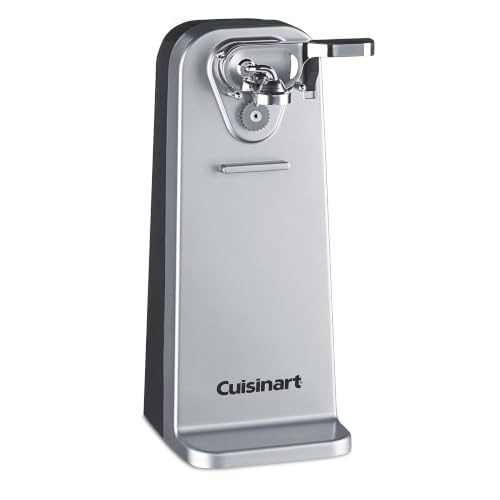
- Cuisinart CCO-55 Deluxe Electric Can Opener — Check on Amazon
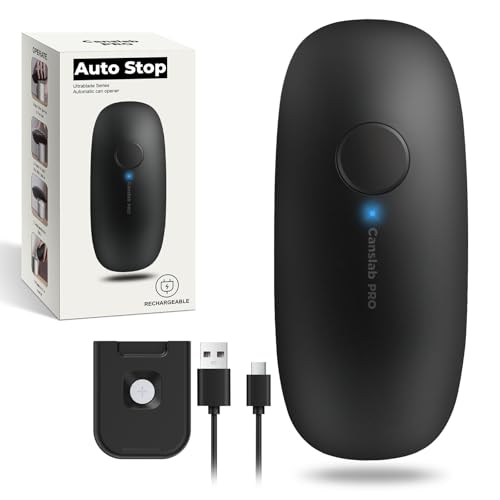
- Canslab Ultrablade PRO Electric Can Opener (handheld cordless alternative — covered in prose below)
- Kitchen Mama Auto Electric Can Opener (handheld battery alternative — covered in prose below)
- KITCHENMUH One Touch Electric Can Opener (handheld battery alternative — covered in prose below)
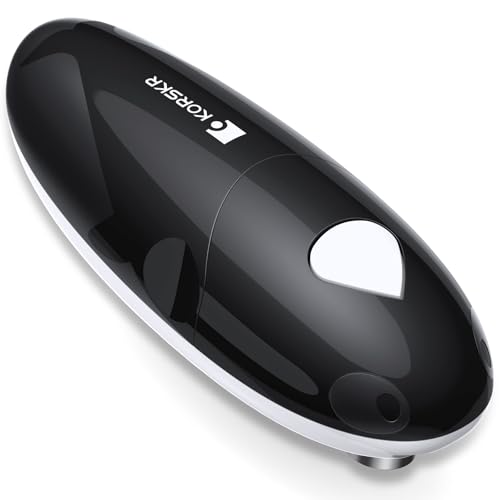
- KORSKR Electric Can Opener (handheld battery alternative — covered in prose below)
Read the full guide ↓
The best counter top electric can openers earn their counter space by doing one job with total reliability: you set a can in place, press a lever or a button, and the machine — not your wrist — supplies the grip, the torque, and the patience. That division of labor is why the countertop format has survived every kitchen gadget trend of the last fifty years. A standing electric opener holds tall cans steady, works through a whole case of tomatoes without a battery fading, and asks so little of your hands that it becomes the default tool for anyone with arthritis, a weak grip, or simply a lot of cans. This guide reviews the format honestly: two verified countertop machines get linked reviews, and four popular handheld battery openers are reviewed in prose as the alternatives they are, so you can see exactly what you gain and give up on each side of the counter.
Choosing a countertop opener is really choosing a small permanent resident for your kitchen. It will sit beside the toaster through thousands of meals, so the questions that matter are unglamorous: Does it handle the can sizes your pantry actually contains, including the tall ones? Does the cutting assembly come off for a proper wash? Does it hold the lid when the cut is done, or drop it into the soup? And is its one control — a lever, a touch pad — easy for the least dexterous person in the house? The reviews and buying guide below are organized around those questions, with specifications taken only from each product’s verified catalog listing.
Key Takeaways
- Two picks here are genuine counter top electric can openers: the Hamilton Beach Smooth Touch and the Cuisinart CCO-55 Deluxe. Both are corded, standing appliances with magnetic lid holders.
- The Hamilton Beach opens standard, extra-tall, and pop-top cans — the broadest can compatibility in this group — with an easy push-down lever.
- The Cuisinart CCO-55 works by one-touch press and release and has a removable lever, which makes real cleaning simple.
- Four handheld battery openers (Canslab, Kitchen Mama, KITCHENMUH, KORSKR) are reviewed in prose as alternatives: they free the counter but ride the rim, depend on batteries or a charge, and are less steady on very tall cans.
- Countertop openers trade permanent counter space for unlimited mains power and standing stability — the right trade for high-volume or tall-can kitchens, the wrong one for tiny counters.
In this guide
Quick Picks
Six products, two categories, one honest table. The badges carry through to the detailed reviews. Countertop picks carry links; handheld alternatives are marked prose only, on purpose. If your search started with the one-word spelling, our companion roundup of the Best Countertop Electric Can Openers covers the same buying questions from that angle.
| Pick | Badge | Type | Standout trait | Link |
|---|---|---|---|---|
| Hamilton Beach Smooth Touch 76606AG | Best Overall | Countertop, corded | Standard, extra-tall, and pop-top cans | Check on Amazon |
| Cuisinart CCO-55 Deluxe | Best Premium Countertop | Countertop, corded | One-touch press and release, removable lever | Check on Amazon |
| Canslab Ultrablade PRO | Best Cordless Alternative | Handheld, USB rechargeable | Smart Auto Stop, wall mountable | Prose only |
| Kitchen Mama Auto | Best Drawer-Stored Alternative | Handheld, battery | Automatic, hands free, smooth edge | Prose only |
| KITCHENMUH One Touch | Best One-Touch Handheld Alternative | Handheld, battery | Fits all can sizes, arthritis-focused | Prose only |
| KORSKR Electric Can Opener | Best Hands-Free Handheld Alternative | Handheld, battery | Hands free, suits left-handed users | Prose only |
Read the table by the “type” column first. If your kitchen opens cans at one station, in quantity, and your cans run tall, the countertop rows are your shortlist. If your counter is already a negotiation between a kettle, a toaster, and a coffee maker, the handheld rows describe the tools that give the counter back — with their own compromises, spelled out in their reviews rather than hidden.
How These Picks Were Chosen
Every product in this guide was verified against Amazon’s catalog data through the Creators API before a word was written, and the specifications in the mini spec boxes come from those verified listings alone. Verification mattered here because “counter top” is a form factor, not a marketing adjective, and the category is routinely padded with handheld tools that never stand on a counter at all. Our rule was strict: a pick earns a link in this guide only if its verified listing describes a standing electric countertop appliance. Handheld battery openers — several of them excellent — are covered in prose, labeled as handheld alternatives, with no link and no image.
Within the countertop family, we compared the verified machines on the factors that decide long-term satisfaction: the range of can sizes they accept, how the cut is started and how much hand force it takes, whether the lid is held magnetically after the cut, whether the cutting assembly removes for washing, and what the machine asks of your counter in return. For the handheld alternatives, we weighed the mirror-image factors: power source and readiness, whether operation is one-touch and hands-free, whether the cut leaves a smooth edge, and how the tool behaves on the tall cans that are the countertop format’s home ground.
This is a research-led guide, not a laboratory test, and it does not claim hands-on trials it did not perform. It also refuses two common shortcuts: no prices are printed, because they drift and a stale price helps no one — check the current figure on Amazon through the links — and no star ratings or review counts appear, for the same reason. What the guide does promise is that every factual claim traces back to the product’s own verified listing, and that category labels mean what they say.
The 6 Best Counter Top Electric Can Openers and Handheld Alternatives
The two countertop machines come first, in the order we would buy them. The four handheld alternatives follow, each labeled for what it is, because for a small or crowded kitchen they may be the smarter purchase — just not a countertop one.

Hamilton Beach Smooth Touch Electric Can Opener 76606AG
Badge: Best Overall
Strengths
- Opens all standard-size, extra-tall, and pop-top cans, per its verified listing — the widest stated can range in this guide.
- Easy push-down lever replaces squeezing and twisting with one downward press.
- Smooth Touch design aims for a smooth-edge result rather than a jagged top cut.
Trade-offs
- A standing countertop body claims permanent counter space and needs an outlet within cord reach.
- Black and chrome shows splashes and fingerprints, so it asks for a wipe now and then.
- Its tall-can talent is wasted in a household that only ever opens small standard cans.
Mini spec box
- Type: countertop electric, corded
- Compatibility: standard, extra-tall, and pop-top cans
- Operation: easy push-down lever
- Model: 76606AG
- Finish: black and chrome
The Hamilton Beach Smooth Touch takes the top badge because its verified listing makes the claim a countertop opener lives or dies by: it opens all standard-size, extra-tall, and pop-top cans. Can compatibility sounds dull until the day a recipe calls for the big can of crushed tomatoes and your opener balks at the height. A standing machine earns its keep precisely there — the can sits on the counter, the body provides the leverage, and height stops being a negotiation. Pop-top compatibility matters too, because pull-tab cans still sometimes need a tool when a tab snaps or a hand cannot manage the pull.
The push-down lever is the second half of the appeal. Instead of the squeeze-and-hold of older designs, you press down and the machine takes over, which is why this style of opener shows up so often in conversations about the Best Easiest To Use Electric Counter Top Can Openers: the control asks for a press, not a grip. The Smooth Touch name reflects the design’s aim of a smoother, safer edge than a traditional jagged top cut, and the black and chrome finish is the classic countertop look — handsome, and honest about splashes.
The limitations are the format’s own. It lives on your counter full time, it works only within reach of an outlet, and it is more appliance than most single-can households need. If your can opening is one small can twice a week, a drawer handheld below will serve you with less furniture. But for a family kitchen that opens cans daily and buys them tall, this is the machine the rest of the guide is measured against.
Best for: households that open standard and extra-tall cans regularly and want one press-down countertop machine / Not suited for: tiny counters, outlet-poor kitchens, or anyone who wants drawer storage.

Cuisinart CCO-55 Deluxe Electric Can Opener
Badge: Best Premium Countertop
Strengths
- One-touch press and release operation — the lightest possible demand on hands and grip.
- Magnetic lid holder keeps the severed lid out of the food and off your fingers.
- Removable lever lets the cutting assembly come away for a proper wash.
Trade-offs
- Chrome finish is a fingerprint magnet and needs a wipe to stay smart.
- Same countertop footprint and outlet dependence as every standing opener.
- A premium presentation is wasted if the machine will live hidden in a pantry.
Mini spec box
- Type: countertop electric, corded
- Operation: one-touch press and release
- Feature: magnetic lid holder
- Cleaning: removable lever
- Finish: chrome
The Cuisinart CCO-55 Deluxe is the countertop opener for buyers who care how the machine feels to use every single day. Its verified listing describes one-touch press and release operation with a magnetic lid holder and a removable lever, in chrome. Each of those phrases maps to a daily friction removed. Press and release means the control is a touch, not a sustained hold — the difference between an opener anyone can use and one that quietly excludes the person with the sorest hands. The magnetic holder means the lid’s story ends at the magnet, not in the soup and not on your fingertips. And the removable lever means the part that touches food can be taken to the sink and washed like a utensil instead of wiped in place like a fixture.
That cleaning point deserves weight, because it is where countertop openers age worst. The cutting area of a standing opener meets every can you open, and dried tomato and tuna residue in a fixed cutting head is the standard end-of-life complaint for the category. A design that lets the lever assembly come off attacks the category’s weakest point directly. The chrome finish cuts both ways: it is the most appliance-proud look in this guide and the least forgiving of fingerprints, so it suits a kitchen that wipes its counters as a habit.
Choose the Cuisinart over the Hamilton Beach if your cans are standard sizes, your hands value the lightest touch, and easy cleaning ranks high. Choose the Hamilton Beach if extra-tall cans are routine. Both are honest countertop machines; the difference is which daily friction you would rather delete. Readers whose priority is accessibility above all should also see our guide to the Best Disabled Persons Can Openers, where one-touch operation is the whole point.
Best for: buyers who want the lightest one-touch operation and a cutting assembly that removes for washing / Not suited for: kitchens dominated by extra-tall cans, or anyone unwilling to give counter space to a standing appliance.
Canslab Ultrablade PRO Electric Can Opener (Handheld Alternative)
Badge: Best Cordless Alternative
Strengths
- USB rechargeable and cordless, with a handsfree side cut that leaves a smooth edge.
- Smart Auto Stop ends the cycle on its own — no hovering, no holding.
- Wall mountable or drawer-stored, so it claims no counter at all.
Trade-offs
- It is a handheld, not a countertop appliance — it rides the rim instead of standing on the counter.
- It balances on the can, so extra-tall cans are not its strength.
- Readiness depends on remembering to recharge it.
Mini spec box
- Type: handheld electric, cordless
- Power: USB rechargeable
- Cut: side cut, smooth edge, handsfree
- Feature: Smart Auto Stop
- Color: black
The Canslab Ultrablade PRO is the strongest argument against buying a countertop opener at all, which is exactly why it is reviewed here in prose. Its verified listing describes a USB rechargeable, cordless, wall-mountable handheld with a handsfree side cut, a smooth edge, and a Smart Auto Stop. For a small kitchen, that list deletes the countertop format’s two costs — space and outlet — while keeping the electric benefit: the motor does the work, your hands just supervise. The side cut also leaves the lid and rim blunt, a safety detail countertop top-cutters do not always match.
Why no link? Because this guide’s promise is in its title. A reader shopping for a counter top opener wants a standing appliance, and the Canslab is a different, legitimate category. Its weaknesses are the mirror of the countertop strengths: it balances on the rim rather than anchoring to the counter, a small rechargeable motor is not the tool for a queue of tall cans, and a forgotten charge is a dead tool. If those weaknesses do not touch your cooking, the Canslab may be your best opener — in a cordless guide, where it belongs, rather than dressed up as a countertop machine here.
Best for: small kitchens and cordless fans who open standard cans and want auto-stop convenience / Not suited for: buyers who specifically want a standing countertop appliance or open tall cans daily.
Kitchen Mama Auto Electric Can Opener (Handheld Alternative)
Badge: Best Drawer-Stored Alternative
Strengths
- Battery operated and fully automatic — press once and it opens the can hands free.
- Smooth-edge, food-safe cut keeps lids and rims safe to touch.
- Lives in a drawer; the counter never knows it exists.
Trade-offs
- Handheld, not countertop — no standing stability for tall cans.
- Batteries are an ongoing consumable.
- No auto-stop is claimed, so you stay nearby to end the cycle.
Mini spec box
- Type: handheld electric
- Power: battery operated
- Operation: automatic, hands free
- Cut: smooth edge, food-safe design
- Color: red
The Kitchen Mama Auto is the minimalist’s answer to the countertop question: why dedicate counter to a single-task appliance when a battery handheld does the same cut from a drawer? Its verified listing promises automatic, hands-free, smooth-edge, food-safe operation, and that is the whole product — no cord, no footprint, no setup. For one or two cans at a time, which is how most home cooking actually uses cans, the experience is genuinely comparable to a countertop machine: position, press, lift the lid.
It is prose-only here for the same principled reason as the Canslab: it is not a counter top opener, and a guide that blurs that line teaches readers to distrust every other label on the page. Its real limits are battery dependence and rim-riding balance on big cans. If your household’s can opening is light and your counter is precious, those limits may never appear in practice — and the broader category view in our Best Easy To Use Electric Can Openers roundup will help you weigh it against other simple-to-use designs.
Best for: light-volume cooks who want automatic opening with zero counter footprint / Not suited for: countertop shoppers, tall-can households, or high-volume batch cooking.
KITCHENMUH One Touch Electric Can Opener (Handheld Alternative)
Badge: Best One-Touch Handheld Alternative
Strengths
- One-touch automatic operation positioned by its listing for seniors with arthritis.
- Fits all can sizes, which removes fit guesswork.
- Smooth-edge, food-safe cut.
Trade-offs
- Handheld format — no countertop anchor or mains power.
- Battery operated, so spares must live in the house.
- Must be seated squarely on the rim; the first can is a practice can.
Mini spec box
- Type: handheld electric
- Power: battery operated
- Operation: one touch, automatic
- Compatibility: fits all can sizes
- Color: black and grey
The KITCHENMUH One Touch is the handheld in this group aimed most directly at the reader who finds manual openers painful. Its verified listing describes a battery operated, one-touch automatic opener that fits all can sizes, with a smooth edge, positioned for seniors with arthritis. One touch is the operative phrase: no grip to sustain, no torque to apply, no lever to force. For the accessibility-minded buyer who cannot spare counter space for the Cuisinart above, this is the closest handheld equivalent — a point we develop further in the context of Best Electric Can Openers Arthriti shopping, where hand effort is the deciding metric.
It remains a handheld, so it is an alternative in this guide rather than a pick: it rides the rim, runs on batteries, and asks to be seated carefully. “Fits all can sizes” softens the rim-riding concern across normal pantry cans, but a standing machine still wins the physics argument on the tallest tins. Buy it knowingly and it is an excellent tool; buy it expecting countertop behavior and it will feel like a compromise — the difference is entirely in the honesty of the label, which is why it is labeled here.
Best for: arthritis and weak-grip users who need one-touch opening without a countertop appliance / Not suited for: buyers who want mains power, standing stability, or a true counter top opener.
KORSKR Electric Can Opener (Handheld Alternative)
Badge: Best Hands-Free Handheld Alternative
Strengths
- Battery powered, automatic, and hands free, with a smooth-edge cut.
- Sized for any can, per its verified listing.
- Explicitly suitable for left-handed users — a rare and welcome note in this category.
Trade-offs
- Handheld, not countertop; rim-riding balance applies.
- Battery dependence, like every cordless handheld here.
- A newer, lesser-known brand name than the countertop incumbents.
Mini spec box
- Type: handheld electric
- Power: battery powered
- Operation: automatic, hands free
- Cut: smooth edge
- Color: black
The KORSKR handheld closes the alternative set with two claims worth noticing: its verified listing describes a battery powered, automatic, hands-free opener with a smooth edge, suitable for any size cans, and it specifically names left-handed people among those it suits. Handedness is a real ergonomic fault line in kitchen tools — most openers quietly assume a right-handed world — and a hands-free automatic design sidesteps the issue entirely, because the machine’s orientation matters far less when the machine does the traveling.
As with the other three handhelds, the prose-only treatment is about category truth, not quality. This is a capable cordless tool being sold in a category it does not belong to by the standards of this guide’s title, and the guide’s job is to say so while still telling you what the tool genuinely offers. If hands-free operation and left-handed comfort top your list and counter space is scarce, the KORSKR deserves a look in its proper category; if you came for a counter top appliance, your picks are the Hamilton Beach and the Cuisinart at the top of this page.
Best for: left-handed users and anyone wanting hands-free automatic opening in a drawer-sized tool / Not suited for: countertop shoppers or high-volume, tall-can kitchens.
Comparison Table
All six products in one view. The type column is the honest divider in this guide: the first two rows stand on your counter and plug in; the last four ride the rim and run on batteries or a charge.
| Product | Type | Power | Standout trait | Link |
|---|---|---|---|---|
| Hamilton Beach Smooth Touch | Countertop | Corded | Standard, extra-tall, pop-top cans; push-down lever | Check on Amazon |
| Cuisinart CCO-55 Deluxe | Countertop | Corded | One-touch press and release; removable lever | Check on Amazon |
| Canslab Ultrablade PRO | Handheld | USB rechargeable | Smart Auto Stop; wall mountable | Prose only |
| Kitchen Mama Auto | Handheld | Battery | Automatic, hands free, food-safe | Prose only |
| KITCHENMUH One Touch | Handheld | Battery | Fits all can sizes; arthritis-focused | Prose only |
| KORSKR Electric Can Opener | Handheld | Battery | Hands free; suits left-handed users | Prose only |
How to Choose a Counter Top Electric Can Opener
Start with your cans, not with the machines. List what your pantry actually holds. If extra-tall cans of tomatoes, broth, or beans are weekly items, can height compatibility is your first filter, and in this guide it points to the Hamilton Beach, whose verified listing covers standard, extra-tall, and pop-top cans. If your cans are uniformly standard, height drops away as a criterion and the decision shifts to touch and cleaning, where the Cuisinart’s press-and-release control and removable lever lead. Buying for cans you do not own is the most common way this category disappoints.
Next, audit the hands that will use it. A countertop opener’s control is its accessibility story. A push-down lever asks for one downward press with the heel of the hand; a one-touch press and release asks for even less. Both are dramatically kinder than a manual opener’s squeeze-and-twist, and both are reasons this format is recommended so often for older cooks and anyone with arthritis. If several people will use the machine, choose for the least dexterous pair of hands in the house — everyone else will manage fine with whatever those hands can operate.
Then price the counter space honestly. A standing opener’s footprint is small but permanent, and it also needs an outlet within cord reach and enough vertical clearance under wall cabinets for tall cans. Measure the spot before you buy, including the cabinet clearance with your tallest can in place. If the audit fails — no spot, no outlet, no clearance — the honest answer is not a smaller countertop machine but a different format, and the handheld alternatives in this guide exist for exactly that kitchen.
Finally, think about cleaning and lids. The cutting assembly touches every can; a removable lever or cutter head is the difference between washing the part and wiping around it. A magnetic lid holder is the other quiet quality-of-life feature: it keeps the severed lid out of the food and off your fingers, and once you have lived with one, an opener that drops lids feels unfinished. Both countertop picks here hold lids magnetically, and the Cuisinart adds the removable lever — weigh those two features above finish and styling, which you will stop noticing in a month.
How to Use, Clean, and Troubleshoot a Countertop Electric Can Opener
Daily use is a four-beat rhythm. Place the can against the cutting head so the rim engages the wheel, with the can standing flat on the counter — never held in the air. Press the lever or touch control once and let the machine draw the can around; keep a light hand nearby for tall cans, not to power the cut but to steady the tin. When the cut completes and the motor stops or releases, lift the lid away with the magnetic holder doing the holding. Then check the rim: a properly cut can should have no metal slivers and no uncut segment; if a small bridge remains, a quarter-turn re-run over that spot finishes it.
Cleaning decides how long the machine stays pleasant. Wipe the body with a damp cloth and never immerse a corded countertop unit. The cutting area deserves the real attention: on the Cuisinart, remove the lever assembly and wash it at the sink; on any model, a cloth worked around the wheel after tomato or fish cans prevents the dried residue that eventually makes cuts ragged. Keep the cord dry and unknotted, and store nothing on top of the machine — the lever is a control, not a shelf.
Troubleshooting covers a short, familiar list. Problem: the can turns but the lid does not cut → the rim is dented or the wheel is dirty; clean the wheel, and start the cut on an undamaged section of rim. Problem: the machine strains or stalls on a tall can → the can is not standing flat or is being held at an angle; set it squarely on the counter and let the machine’s leverage work. Problem: the lid falls into the food → the magnetic holder missed because the cut was stopped early; run the cut to completion so the magnet engages the fully severed lid, and lift straight up rather than tilting the can.
Counter Space, Outlets, and Cabinet Clearance: The Practical Audit
More countertop openers are returned for fit than for failure, so the audit deserves its own section. Measure three things before ordering. First, the footprint: a clear patch of counter where the machine can live permanently, because an opener that must be fetched from a cupboard and plugged in each time will quietly stop being used. Second, the outlet: it must be within the cord’s natural reach without the cord crossing the stove or the sink, both for safety and for sanity. Third, the vertical: the space between counter and wall cabinet must fit the machine plus your tallest can with room to maneuver the lever. Pass all three and a countertop opener will feel inevitable within a week. Fail any one and the handheld alternatives above stop being compromises and start being the correct answer — a conclusion this guide is happy to reach, since the goal is the right tool in your kitchen, not the defense of a category.
Countertop vs. Handheld: Which Format Fits Your Cooking?
Strip the marketing away and the formats differ on four axes. Power: mains versus battery or charge — unlimited stamina versus total freedom of placement. Stability: a standing machine anchors the can; a handheld balances on the rim, which is fine for standard cans and less fine for the tallest. Footprint: permanent counter residence versus a drawer. Cleaning: a countertop body to wipe, sometimes with a removable cutter, versus a small handheld to wipe, never to immerse. High-volume, tall-can, single-station cooking leans countertop. Light-volume, space-poor, multi-location cooking leans handheld. Most households know which one they are within ten seconds of honest thought — and if yours is genuinely both, the countertop machine plus a cheap manual backup covers more life than either format alone.
What a Countertop Opener Does Better Than Any Handheld
It is worth stating the countertop case at full strength, because this guide’s prose-only handhelds might leave the impression that the formats are interchangeable. They are not, and the differences compound in a busy kitchen. First, leverage: a standing machine is anchored to the counter by its own weight and the can’s, so the cutting force comes from the appliance’s structure rather than from a small tool’s balance on a rim. That is why tall cans, dented rims, and high volumes all tilt countertop. Second, stamina: mains power does not fade across a case of cans, does not need a charging habit, and does not die in a drawer between uses. The opener you use twice a year works exactly as well as the one you use twice a day, which is not true of any battery device ever made.
Third, the workflow around the cut is more forgiving. A standing machine holds the can, powers the cut, and — with a magnetic holder, as both picks here have — holds the lid afterward. The user’s job shrinks to placing and pressing, which is why occupational therapists and older cooks keep landing on this format. Fourth, durability of habit: a tool that lives in plain sight gets used, maintained, and wiped; a tool that lives in a drawer gets forgotten until the day its batteries are dead. None of this makes handhelds bad tools. It makes them different tools, optimized for space and mobility instead of for the anchored, repeatable, high-certainty performance a countertop station provides. Knowing which optimization your kitchen needs is the entire decision, and it is a kitchen question, not a product question.
Setting Up a Countertop Can Opening Station
A countertop opener works best as a small station rather than a lone appliance, and five minutes of setup pays off for years. Put the machine where cans naturally arrive — near the pantry side of the counter, not across the kitchen — with its outlet reached directly, not through an extension cord draped past the sink. Leave a clear patch of counter in front of it large enough for your biggest mixing bowl, because opened cans get emptied immediately and a station without landing space creates a juggling act. Keep a small trash or recycling point within one step: lids and empty cans should leave the workspace in the same motion that created them, which is both tidier and safer than carrying sharp lids across the room.
Two habits keep the station pleasant. Wipe the cutting area after messy cans — tomato, tuna, pet food — rather than on a schedule, because residue is easiest to remove in the minute it appears and hardest a week later. And store the cans you open most at the height that suits the least mobile person in the house, since the opener removes the hand effort but not the reaching. Set up this way, the countertop opener stops being an appliance you own and becomes infrastructure you rely on — which, for a tool used at the start of a thousand recipes, is exactly the right status.
A Word on Pop-Top Cans and Pull Tabs
A reasonable question hangs over this whole category: in the age of the pull tab, why own an electric opener at all? Three answers keep the category alive. First, plenty of cans still have no tab — many tomatoes, beans, broths, and imported lines among them — and they are often the biggest cans in the pantry. Second, tabs fail and tabs exclude: a snapped ring leaves a sealed can and a problem, and a pull tab demands exactly the pinch-and-pull force that arthritic hands cannot supply, which is why the Hamilton Beach’s verified listing makes a point of covering pop-top cans alongside standard and extra-tall ones. Third, even a working tab leaves a lid hinged by a sharp flap that bends back into the food’s path; a clean machine cut and a magnet-held lid is simply the tidier ending. A countertop opener, in other words, is not competing with the pull tab on the cans where the tab works. It is covering the cans — and the hands — where the tab does not.
Common Buying Mistakes
Buying a handheld while shopping for a countertop. The categories are routinely mixed in search results; check the type before the features, as this guide does. Ignoring cabinet clearance. The machine fits the counter but the tall can does not fit the machine under your cabinets — measure vertically, not just the footprint. Choosing by finish. Chrome and black look different for a month and work identically for years; controls, lid holders, and removable cutters are what you will actually live with. Forgetting the cleaning question. A fixed cutting head that can only be wiped is the category’s slow failure; a removable assembly is worth prioritizing. Assuming electric means effortless for every hand. Lever force varies; for the sorest hands, one-touch press and release is the safer specification to shop for.
Final Recommendation
For most kitchens, the Hamilton Beach Smooth Touch is the counter top electric can opener to buy first: it covers standard, extra-tall, and pop-top cans, its push-down lever is easy on hands, and it behaves like the permanent counter appliance it is. Choose the Cuisinart CCO-55 Deluxe if your cans are standard sizes and you value the lightest one-touch operation and a removable lever for real washing — it is the refinement pick. And if the practical audit says your counter cannot host a standing machine, take the hint gracefully: the Canslab, Kitchen Mama, KITCHENMUH, and KORSKR handhelds reviewed above are capable tools in their own category, and a drawer-stored opener you use beats a countertop opener you had to return.
Frequently Asked Questions
What is the difference between a counter top and a handheld electric can opener?
A countertop model is a standing, corded appliance: the can sits on the counter, the machine supplies leverage and power, and the tool lives in one place. A handheld model is a battery or rechargeable tool that sits on the can’s rim and travels around it, then goes back in a drawer. Both are electric; the difference is form factor, power source, and stability on tall cans.
Can a countertop electric can opener handle extra-tall cans?
Some can and some cannot — it is a per-model specification, not a category promise. In this guide, the Hamilton Beach Smooth Touch’s verified listing explicitly covers standard, extra-tall, and pop-top cans. Whatever model you consider, confirm the tall-can claim in its listing and check your under-cabinet clearance with your tallest can.
Are countertop electric can openers good for arthritis?
They are among the best options, because the machine replaces grip and torque with a lever press or a touch. The Cuisinart CCO-55’s one-touch press and release is the lightest control in this guide. Buyers focused on accessibility across all kitchen tasks may also want our dedicated accessibility roundup linked earlier in this guide.
How do I clean a countertop electric can opener?
Unplug it, wipe the body with a damp cloth, and never immerse it. Give the cutting area the real attention: if the lever or cutter assembly removes — as on the Cuisinart CCO-55 — wash that part at the sink; otherwise work a cloth around the wheel after messy cans so residue never dries in place.
Do countertop openers hold the lid after cutting?
Models with a magnetic lid holder do, and both countertop picks in this guide have one. The magnet keeps the severed lid out of the food and lets you lift it away without touching its edge — a small feature that feels essential once you have lived with it. It also keeps the lid accounted for: instead of sinking into the can or sliding off the counter, it stays on the machine until you drop it in the bin, which is the safest possible journey for the sharpest object in the process.
Should I keep a manual opener as a backup?
Yes — every format in this guide has a failure mode a simple manual opener covers: a power outage for the corded machines, a dead battery or forgotten charge for the handhelds, and the occasional oddly shaped can that defeats any electric design. A basic manual opener costs little, lives in the same drawer as the handhelds, and turns a potential dead end into a thirty-second detour. Think of it as the spare tire of the can-opening drawer: rarely used, deeply appreciated exactly once.
Is a countertop opener worth the counter space?
If you open cans daily, open tall cans, or cook for hands that cannot manage a manual opener, yes — it converts a fiddly task into a press. If you open a can a week and your counter is crowded, a handheld battery opener gives you the same electric cut with no permanent footprint, and this guide reviews four of them honestly for exactly that case.