Disclosure: topratedkitchenware.com is reader-supported. When you buy through links on our site, we may earn an affiliate commission from Amazon and other retailers, at no extra cost to you.
Where to buy
These are the six verified picks for this guide to best electric can openers for elderly. Linked names take you to the Amazon listing, where you can check the latest price on Amazon, confirm the current configuration, and read recent owner feedback. Selected for elderly users: simple controls, hands-free options, smooth edges and designs whose listings name seniors explicitly.
- Kitchen Mama Auto Electric Can Opener (Red)
- KITCHENMUH One Touch Electric Can Opener (Black+Grey)
- KORSKR Automatic Electric Can Opener (Black)
- Cuisinart CCO-55 Deluxe Electric Can Opener (Chrome)
- bella Electric Can Opener (Oatmilk)
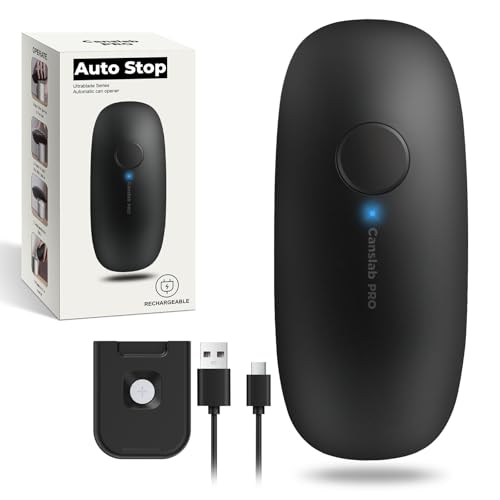
- Famawo USB-C Rechargeable Automatic Can Opener
Read the full guide ↓ for how each pick was chosen, who it suits, and the honest limitation that might rule it out for you.
Looking for the best electric can openers for elderly cooks is really a search for independence that lasts. The goal is not a gadget; it is a kitchen that keeps working the way it always has, with one hard little task quietly made easy. Elderly hands may be dealing with arthritis, reduced grip, thinner skin that cuts more easily, or simply less patience for tools that demand force and fuss. The openers in this guide were chosen to respect all of that: minimal force, minimal steps, safe edges, and controls that never require a manual to be re-read.
Three of the six picks are handhelds that sit on the can and do the travelling themselves, including two whose listings speak directly to seniors. The other three include a chrome countertop Cuisinart with press-and-release control and a washable lever, a one-touch bella for an always-ready counter spot, and a USB-C rechargeable Famawo with a magnetic lid hold. Each review keeps the language plain and the limitations honest, because a recommendation for an elderly parent, partner or self deserves exactly that. If you are comparing neighbouring questions at the same time, our guide to Best Electric Can Openers For Seniors covers the closest variation of this search.
Key Takeaways
- Independence is the criterion: the opener must work without help, every time, on ordinary cans.
- Hands-free handhelds minimise steps most; countertop machines minimise aiming and lifting decisions.
- Smooth edges protect thinner skin, which cuts more easily and heals more slowly.
- One control, clearly felt, beats clever features; auto-stop removes the last judgement call.
- Keep the routine in one place: opener, cans and bin within a step of each other.
- Buy for the person’s actual cans and counter, not for an imagined average kitchen.
In this guide
Quick Picks
| Pick | Badge | Why it earns its place | Listing |
|---|---|---|---|
| Kitchen Mama Auto Electric Can Opener (Red) | Best Overall | Battery operated; automatic hands free operation. | Check on Amazon |
| KITCHENMUH One Touch Electric Can Opener (Black+Grey) | Best One-Touch Simplicity | One touch operation; fits all can sizes. | Check on Amazon |
| KORSKR Automatic Electric Can Opener (Black) | Best for Left-Handed Cooks | Automatic operation; suitable for any size cans. | Check on Amazon |
| Cuisinart CCO-55 Deluxe Electric Can Opener (Chrome) | Best Chrome Countertop Finish | One-touch press and release operation; magnetic lid holder. | Check on Amazon |
| bella Electric Can Opener (Oatmilk) | Best for an Always-Ready Counter | Automatic one-touch operation; oatmilk finish. | Check on Amazon |
| Famawo USB-C Rechargeable Automatic Can Opener | Best USB-C Rechargeable | USB-C rechargeable; smooth edge cut. | Check on Amazon |
The table is a shortcut, not the whole story. Badges summarise the single job each pick does best, and the detailed reviews below explain the trade-offs behind every badge, because the best electric can openers for elderly question is really a question about which compromises fit your hands, your cans and your counter.
How These Picks Were Chosen
Selection for this keyword weighted dignity alongside mechanics. Every pick had to be operable without assistance, understandable without instructions after the first use, and forgiving of the small errors — a slightly off-centre placement, a dented rim — that any cook makes. Verified listings were checked for senior suitability statements, one-touch or hands-free operation, smooth-edge cutting and lid control, and the six below cover the realistic formats an elderly household might choose.
Every pick in this guide was cross-checked against its verified Amazon listing data before it was included: the product name, brand, power format and headline features in each review come from that listing information, checked on 2026-11-20, not from memory or from other roundups. Where a listing states a feature, we say so; where it does not, we do not invent it, which is why some spec boxes are shorter than others. That honesty matters more than a tidy table. You will also notice that this guide prints no fixed prices and no fixed scores. Prices move, and scores printed in an article go stale while the product stays the same, so we point you to the listing to check the latest price on Amazon and to read current owner feedback alongside the trade-offs described here. Readers weighing a more evidence-led angle often look at Best Electric Can Openers For Small Cans alongside this guide.
This is research-led guidance, not a claim of laboratory testing. We compared the verified feature sets against the jobs this keyword describes, weighted unaided operation, forgiving controls, edge safety for thinner skin, and a routine that stays in one place, and demoted designs that solved the wrong problem, however impressive their listings sounded. Six picks survived. Each one is the right answer for somebody in this guide’s audience, and the reviews say plainly who that somebody is and who should look elsewhere.
The 6 Best Picks for Best electric can openers for elderly

Kitchen Mama Auto Electric Can Opener (Red)
Badge: Best Overall
Strengths
- Truly hands free: set it on the can, start it, and it walks the rim by itself
- Smooth edge cut addresses the sharp-lid problem that makes people avoid cans
- Battery operation means no cord, no outlet hunt and no counter commitment
Trade-offs
- Batteries are an ongoing consumable and a flat set stops play until replaced
- Handheld units can struggle to start on dented rims where a countertop machine would power through
- Red finish is a love-it or leave-it choice in a neutral kitchen
At a glance
- Format: handheld battery
- Power: Battery operated, cordless
- Battery operated
- Automatic hands free operation
- Smooth edge cut
- Food-safe design
- Red finish
Kitchen Mama built its reputation on a simple promise: put the opener on the can, press the button, and take your hand away. The listing describes it as automatic, hands free and food-safe, with a smooth edge cut, and that combination explains its following among cooks whose hands no longer cooperate with manual openers. There is no lever to hold, no handle to squeeze and no cord to manage, because it runs on batteries and travels around the rim under its own power. The smooth edge matters beyond comfort: a lid that is not razor sharp is safer to lift away and safer in the bin. The honest limitation is power management. Batteries fade gradually, so cuts get slower before they stop, and keeping a spare set in the drawer becomes part of ownership. Dented rims can also challenge a small handheld where a heavy countertop machine would simply force its way through. If your cans are standard and your priority is the least physical involvement possible, this is a compelling, proven pattern. For an elderly cook, the Kitchen Mama Auto Electric Can Opener succeeds if it can be used correctly the tenth time without thinking about the first; its review judges that standard.
Best for: anyone who wants the proven set-it-on-the-can, hands-free pattern with no cord at all / Not suited for: cooks who hate managing batteries or who open many dented cans

KITCHENMUH One Touch Electric Can Opener (Black+Grey)
Badge: Best One-Touch Simplicity
Strengths
- One touch start is the simplest control scheme in this entire group
- Listing states it fits all can sizes, the broadest sizing claim of any handheld here
- Smooth edge, food safe cut keeps the blade path and the rim on the safer side
Trade-offs
- Battery operated, so running costs and readiness depend on your spare battery habit
- Less established brand than the countertop names, so long-term parts support is less certain
- Handheld format gives less leverage on damaged or dented rims than a fixed countertop unit
At a glance
- Format: handheld battery
- Power: Battery operated, cordless
- One touch operation
- Fits all can sizes
- Made for seniors with arthritis
- Battery operated
- Smooth edge, food safe cut
- Black and grey finish
The KITCHENMUH is aimed squarely at the arthritis use case, and its listing says so directly: it is a one touch, battery operated opener for seniors with arthritis that fits all can sizes and leaves a smooth, food safe edge. One touch is not a marketing flourish here; it is the whole point. Every control beyond a single press is a small tax on sore hands, and this design tries to charge that tax only once. The fits-all-sizes claim is the broadest of any handheld in this guide, which matters if your pantry mixes small tomato paste cans with family-size bean cans. Battery operation keeps it cordless and drawer-friendly. The trade-offs are the standing handheld ones: batteries to keep in reserve, and less brute leverage on a dented rim than a countertop machine bolted to its own weight. The brand is also less established than Cuisinart or Hamilton Beach, which some buyers weigh heavily. On pure ease-of-use specification for arthritic hands, though, few listings state their case as directly as this one does. For an elderly cook, the KITCHENMUH One Touch Electric Can Opener succeeds if it can be used correctly the tenth time without thinking about the first; its review judges that standard.
Best for: seniors with arthritis who want one touch, all can sizes and a smooth food safe edge / Not suited for: buyers who only trust long-established appliance brands

KORSKR Automatic Electric Can Opener (Black)
Badge: Best for Left-Handed Cooks
Strengths
- Explicitly listed as suitable for left handed people, a group most opener designs quietly ignore
- Hands free automatic travel around the rim after a single start
- Any-size-can claim covers the mixed sizes most pantries actually hold
Trade-offs
- Battery powered, so readiness depends on charge discipline and spares
- Left handed suitability depends on your technique; the listing claim is a starting point, not a guarantee for every user
- Newer brand name with a shorter track record than the legacy countertop makers
At a glance
- Format: handheld battery
- Power: Battery powered, cordless
- Automatic operation
- Suitable for any size cans
- Battery powered, hands free
- Smooth edge cut
- Listed for seniors, women and left handed people
- Black finish
The KORSKR earns its place with one claim nobody else in this pool makes: its listing names left handed people explicitly, alongside seniors and women, as the users it suits. Anyone left handed knows how many kitchen tools assume a right-handed world, from the orientation of a manual opener handle to where a lever sits. An automatic handheld that sits on top of the can and travels by itself sidesteps much of that handedness entirely, because the machine does the turning. It is battery powered and hands free, leaves a smooth edge, and is listed as suitable for any size of can. The limitations mirror its handheld peers: batteries to manage, and a brand history shorter than the household names. If you are left handed, or buying for someone who is, this is the pick whose listing actually speaks to you rather than assuming you will adapt. That kind of direct fit is worth more than a longer feature list aimed at somebody else. For an elderly cook, the KORSKR Automatic Electric Can Opener succeeds if it can be used correctly the tenth time without thinking about the first; its review judges that standard.
Best for: left handed cooks and seniors who want hands free automatic opening for any size can / Not suited for: cooks who prefer a corded countertop station that is always ready

Cuisinart CCO-55 Deluxe Electric Can Opener (Chrome)
Badge: Best Chrome Countertop Finish
Strengths
- Press and release one-touch control: press to start, and the machine handles the rest of the cycle
- Removable lever washes properly, tackling the hygiene spot where openers age worst
- Magnetic lid holder keeps the lid from dropping into food at the end of the cut
Trade-offs
- Chrome finish is the most fingerprint-hungry surface in this group
- Countertop corded format needs a permanent home and an outlet
- No smooth-edge claim in the listing, so expect a conventional cut
At a glance
- Format: countertop corded
- Power: Corded countertop design
- One-touch press and release operation
- Magnetic lid holder
- Removable lever
- Chrome finish
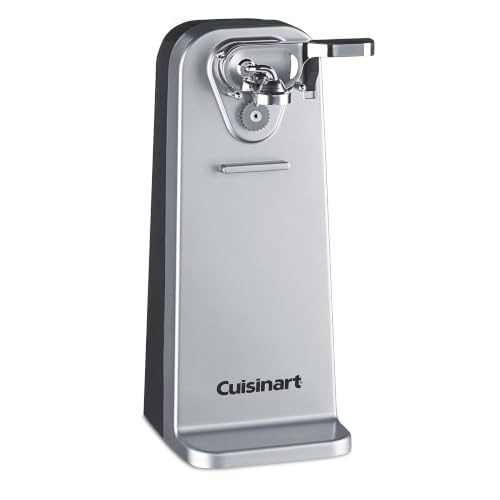
The CCO-55 is Cuisinart’s chrome-finished take on the same low-effort idea as its black CCO-50 sibling: one-touch press and release operation, a magnetic lid holder, and a lever that removes for washing. Press and release deserves emphasis, because it describes the whole interaction. There is no holding, squeezing or guiding; you press, release, and collect a lid that the magnet is holding for you. The removable lever remains one of the most practical features any countertop opener can offer, because the cutting head is where food residue builds up and where a fixed design slowly becomes unpleasant. The honest limitations are cosmetic and spatial. Chrome looks superb on day one and shows every fingerprint by day three, and any countertop unit trades counter space for readiness. The listing makes no smooth-edge claim, so treat the cut as conventional. If you want a countertop opener that looks like a deliberate appliance rather than a gadget, and cleans up properly, this is the polished option. For an elderly cook, the Cuisinart CCO-55 Deluxe Electric Can Opener succeeds if it can be used correctly the tenth time without thinking about the first; its review judges that standard.
Best for: cooks who want press-and-release ease, a washable lever and a polished chrome appliance / Not suited for: kitchens where fingerprints on chrome would be a daily irritation

bella Electric Can Opener (Oatmilk)
Badge: Best for an Always-Ready Counter
Strengths
- One-touch start means you press once and the machine does the turning, gripping and cutting for you
- Countertop format stays in place, so there is no hunting through a drawer before every meal
- Soft Oatmilk finish suits lighter, calmer kitchen schemes better than stark black plastic
Trade-offs
- Corded design needs a nearby outlet and a permanent patch of counter
- Title lists no smooth-edge or side-cut claim, so expect a conventional top cut and handle lids with care
- No battery or rechargeable option, so it cannot travel to a picnic table or RV as easily as cordless rivals
At a glance
- Format: countertop corded
- Power: Corded countertop design
- Automatic one-touch operation
- Oatmilk finish
- Countertop format that stays plugged in and ready
The bella is the straightforward answer for anyone who wants the opener living on the counter, plugged in and ready. One-touch automatic operation removes the two hardest parts of manual opening: the squeeze to pierce the lid and the sustained grip to turn the handle. You position the can, start the cycle, and the machine walks itself around the rim. That matters most on days when hands are tired, because the effort shifts from your fingers to the motor. The Oatmilk colour is a small thing that turns out to matter daily: an appliance you see every day should look like it belongs in your kitchen, and this softer finish blends into pale counters and light cabinetry instead of shouting for attention. The honest limitation is flexibility. A corded countertop unit is a commitment to one spot, and the listing makes no smooth-edge claim, so the cut is a conventional one and the removed lid deserves the usual care. If your priority is a calm, always-ready station for everyday cans, this is a strong place to start; if you open cans in several places, a cordless pick below will travel better. For an elderly cook, the bella Electric Can Opener succeeds if it can be used correctly the tenth time without thinking about the first; its review judges that standard.
Best for: cooks who want an opener permanently ready on the counter with one-touch ease / Not suited for: cooks who need to open cans away from a fixed counter spot

Famawo USB-C Rechargeable Automatic Can Opener
Badge: Best USB-C Rechargeable
Strengths
- USB-C charging uses the same cable family as modern phones, so there are no proprietary chargers to lose
- Smooth edge cut leaves a rim you can run a finger along with far less worry than a jagged top cut
- Magnetic lid hold keeps the cut lid attached to the opener instead of dropping it into the food
Trade-offs
- Rechargeable means the battery eventually needs a charge, usually discovered at the worst moment
- Handheld format sits on top of the can, so very tall or heavy cans need a steady supporting hand nearby
- Fits most can sizes is not the same as every can size, so unusual rims can still defeat it
At a glance
- Format: handheld rechargeable
- Power: USB-C rechargeable, cordless
- USB-C rechargeable
- Smooth edge cut
- One-touch operation
- Magnetic lid hold
- Fits most can sizes
- Aimed at senior users
The Famawo takes the handheld route: it sits on top of the can, locks on, and travels around the rim under its own power after a single touch. For easy use, the details line up well. One-touch operation means there is no lever to hold down for the whole cut. The smooth edge finish addresses the safety worry that puts many people off canned food in the first place, and the magnetic lid hold means the sharp disc of metal stays with the opener rather than sinking into soup or beans. USB-C recharging is the practical highlight. Instead of a drawer of mismatched batteries or a unique charging brick, it tops up from the cable most households already own several of. The trade-off is planning: a rechargeable tool is only easy when it is charged, so it rewards a simple habit of plugging it in after a few uses rather than waiting for it to fade mid-can. It fits most can sizes according to its listing, which covers the standard soup, vegetable and tuna cans that make up most weekly cooking. For an elderly cook, the Famawo USB-C Rechargeable Can Opener succeeds if it can be used correctly the tenth time without thinking about the first; its review judges that standard.
Best for: cooks who want cordless freedom, a smooth edge and modern USB-C charging / Not suited for: cooks who know a rechargeable battery will always be flat when they need it
Comparison Table
| Pick | Format | Power | Standout feature from its listing | Listing |
|---|---|---|---|---|
| Kitchen Mama Auto Electric Can Opener (Red) | handheld battery | Battery operated, cordless | Battery operated | Check on Amazon |
| KITCHENMUH One Touch Electric Can Opener (Black+Grey) | handheld battery | Battery operated, cordless | One touch operation | Check on Amazon |
| KORSKR Automatic Electric Can Opener (Black) | handheld battery | Battery powered, cordless | Automatic operation | Check on Amazon |
| Cuisinart CCO-55 Deluxe Electric Can Opener (Chrome) | countertop corded | Corded countertop design | One-touch press and release operation | Check on Amazon |
| bella Electric Can Opener (Oatmilk) | countertop corded | Corded countertop design | Automatic one-touch operation | Check on Amazon |
| Famawo USB-C Rechargeable Automatic Can Opener | handheld rechargeable | USB-C rechargeable, cordless | USB-C rechargeable | Check on Amazon |
Read the format column first. It decides where the opener lives and how much of the work your hands still do, and it explains most of the real difference between these six. Power comes second: corded countertop models are always ready, battery and rechargeable handhelds are ready only if you keep them fed. The standout feature column is a tiebreaker, not a starting point. Shoppers comparing the smooth-edge question specifically will find Best Electric Small Smooth Edge Can Openers a useful companion read.
How to Choose the Right Electric Can Opener for Best electric can openers for elderly
Start with the control, because the control is where ease is won or lost. A true one-touch design asks you to press once and then supervises itself; a press-and-hold lever asks your hand to stay involved for the whole cut. Neither is automatically better. One-touch suits hands that tire or ache, because involvement ends the moment the cut begins. A lever suits cooks who like to feel the machine engage and who open cans in quick batches, because starting the next can is instant. Be honest about which description sounds like your hands on an ordinary tired evening, not on your best morning.
Next, decide where the opener lives. Countertop corded models trade counter space for permanent readiness: no batteries, no charging, no drawer. Handheld cordless models trade that readiness for freedom: they work at any counter, any table, and store in a drawer or on a wall mount. The right trade depends on your kitchen’s scarcest resource. If counter space is precious and outlets are few, cordless wins. If your household forgets to charge things, corded wins, and it is not close.
Then consider the cut itself. Smooth-edge and side-cut designs separate the lid so the remaining rim is far less sharp, which changes both safety and feel: lids lift away cleanly and bins are safer to press down. Conventional top cuts are familiar and work on the widest range of rims, but the removed lid is a sharp disc that deserves tongs or a magnet, never fingertips. If children help in the kitchen, or if a sharp lid is the part of can opening you genuinely dread, weight the smooth-edge picks heavily.
If you are choosing for an elderly parent rather than yourself, add the teachability test. Can you show the whole routine in one visit, in under two minutes, and will it still make sense a month later without you? One-touch and hands-free designs pass this test almost by definition. Multi-function machines pass only if the extra functions do not crowd the main control. And leave the spare batteries or charging cable set up, not explained: readiness arranged in advance is the real gift.
Finally, match the opener to your actual cans for a week before you buy. Count how many are standard, how many are tall, how many are small paste cans, and whether pop-top tabs regularly snap on you. That one-week audit, written on the back of a shopping list, predicts satisfaction better than any feature list, because best electric can openers for elderly is ultimately a question about your pantry, not about motors in the abstract. Readers whose week turns out to be dominated by small cans often end up reading Best Hand Can Openers before deciding.
How to Use, Clean and Look After an Electric Can Opener
Using any electric opener well starts before the motor does. Wipe the top of the can, because dust and dried drips from storage end up exactly where the cutter travels. Set the can on a flat, dry surface; a can rocking on crumbs defeats even a good machine. Engage the cutter squarely on the rim, start the cut, and then let the machine work at its own pace. Forcing a handheld around faster than its motor wants to go, or dragging a countertop can sideways, is how ragged cuts and stalls happen. When the cut completes, lift the lid away with the magnet, a utensil or the smooth-edge rim itself, and drop it straight into the bin.
Cleaning is a two-minute habit, not a project. After messy cans such as tomatoes, tuna or beans, wipe the cutting area with a damp cloth while residue is fresh. Weekly, if you open cans most days, wash any removable lever or head in warm soapy water, dry it fully, and check the cutting wheel for a trapped sliver of metal, which is the hidden cause of many sudden failures. Never immerse a motor body in water. A dry machine stored in a dry place will reward you with years of unremarkable, reliable service, which is exactly what you want from a tool like this.
Troubleshooting. Problem: the opener stalls halfway round the rim → check for a dent at the stall point, reseat the cutter just past it, and support the can so the machine is not dragging its weight. Problem: the lid drops into the food → the magnet was not engaged or was coated in residue; clean the magnet face, and on the next can hold the lid tab area for the last moment of the cut until you trust the hold. Problem: a rechargeable or battery model sounds slower week by week → that is the power source fading, not the motor failing; recharge or replace the batteries before judging the machine. Problem: cuts get ragged on a countertop model → wash the removable lever or cutting head first, because dried residue on the wheel is the most common cause.
Safety First: Skin, Lids and Steady Cans
Thinner skin changes the safety maths of can opening. A rim that would scratch a younger hand can cut an older one, and cuts heal more slowly, so the smooth-edge and side-cut designs in this guide are not indulgences; they are the safety equipment. Pair them with habits: let magnets and utensils handle lids, keep a small towel under the can to stop it skating on a smooth counter, and open cans seated if balance is ever in question, with a handheld working happily at table height.
Stability deserves equal billing. A countertop machine’s weight steadies the whole operation, which is one reason the format remains popular with elderly cooks despite its footprint. A handheld shifts the steadiness job to the surface, so a dry, flat, uncluttered spot matters. Whichever format you choose, clear the stage before the performance: the accidents in this task almost never come from the cutter, and almost always come from a crowded, wet or rushed workspace.
Keeping the Kitchen Familiar While Making It Easier
The best adaptive purchases do not make a kitchen feel medical. A chrome countertop opener looks like an appliance, a red handheld looks like a cheerful gadget, and both preserve the feeling of a normal, personal kitchen while quietly removing the force from a daily task. That normality matters for whether the tool gets used. Equipment that announces frailty gets resisted; equipment that simply works gets adopted. Choose finishes and formats the cook would have enjoyed at fifty, with controls their hands can manage at eighty.
Introduce the change as an upgrade, because it is one. Electric opening is faster, cleaner and less messy for cooks of every age; the elderly cook is not receiving a concession, just the modern version of the tool. Set it up, open the first few cans together, and let the machine’s ordinariness do the persuading. Within a fortnight, in most households, the manual opener’s absence from the drawer’s front is simply never discussed again.
For a wider view of the manual alternative and when it still makes sense, see Best Hand Can Openers That Dont Quit.
Lids deserve a moment of respect in any easy-use discussion. A freshly cut lid is a thin disc of metal with an edge that can bite, and the safest habit is to let the opener’s magnet or your tongs handle it, never your fingertips. Drop it straight into the bin or recycling rather than balancing it on the counter, and if a lid falls into the food, lift it out with a utensil and check the contents calmly rather than fishing with fingers. Smooth-edge designs reduce this risk substantially, which is a large part of their appeal, but good habits protect you with every design, including the conventional top-cut models in this guide.
If you cook for someone else whose hands are struggling, watch them open a can before you buy. Notice whether the hard moment is the initial squeeze to pierce the lid, the sustained turning, the lifting of a heavy can, or the disposal of the sharp lid. Different electric designs solve different moments: one-touch handhelds remove squeezing and turning, countertop machines remove holding and aiming, and smooth-edge cutters remove the dangerous lid. Matching the machine to the actual hard moment is the difference between a thoughtful purchase and an expensive drawer ornament. The best gift in this category is the one that disappears into the routine within a week.
Grip is only one part of hand comfort. Vision matters too: you need to see that the cutter has seated on the rim, see whether the cut is progressing, and see the lid at the end. High-contrast finishes, clear on and off behaviour, and a machine that stops decisively all reduce the squinting and second-guessing that make a simple task feel tiring. Sound is another quiet signal. A steady motor note that changes pitch when the cut completes tells you the job is done without watching every second. The easiest openers in this guide tend to give you several of these signals at once, which is why two machines with similar motors can feel completely different in daily use.
Cleaning rhythm is the hidden half of ease of use. A quick wipe of the cutting area after messy cans, a proper wash of any removable lever or head weekly if you open cans daily, and a dry storage spot will keep any of these machines pleasant for years. Residue left on a cutter does not just look bad; it adds friction to the next cut and can make a good opener feel weak. When a previously happy opener starts struggling, cleaning the cutting wheel and checking for a trapped sliver of lid fixes the problem surprisingly often, long before the motor is actually at fault.
Consider keeping a simple manual opener as a backup even after you choose an electric model. Power cuts, flat batteries and the one oddly shaped can that defeats every machine are rare, but they happen, and a basic manual opener in the drawer costs almost nothing and takes almost no space. The electric opener then handles the ninety-nine percent of cans that make up real life, and the manual one covers the exceptions without drama. This is not a failure of the electric approach; it is the same belt-and-braces logic that keeps a torch in a house with electric lights. Your daily experience improves, and the edge cases stop being emergencies.
Think about the full journey of a single can in your kitchen, because ease of use is decided at every step of it, not just the cutting step. The can comes out of a cupboard or pantry, it needs a stable surface, the opener has to engage the rim without a fight, the cut has to complete without stalls, the lid has to go somewhere safe, and the opener has to be cleaned and put away. A design that is effortless at the cutting step but fiddly to engage, messy to clean or awkward to store will slowly stop being used, and an opener that stops being used is worse than a simpler one that stays in daily rotation. When you compare the picks in this guide, walk each one through that whole journey in your imagination and notice where your own hands, eyes or patience would be taxed.
Common Buying Mistakes
Buying for an elderly cook most often goes wrong through kindness misapplied: a complicated multi-function machine chosen for its impressive box, which then needs a younger relative to operate it. The second error is ignoring skin safety and choosing a sharp top-cut design when smooth-edge options exist at the same effort level. The third is setting nothing up — batteries in a packet in another room, cable still in the box — so the first solo attempt fails and confidence in the whole idea goes with it.
Three further mistakes show up repeatedly. The first is buying for the cans you wish you opened instead of the cans in your cupboard today. The second is ignoring cleaning until the cutter is coated and the machine seems weak, when a wash would have restored it. The third is treating the cheapest moment as the decision: within this category, the difference between a frustrating opener and a satisfying one is usually design fit, not a small gap in cost, so use the listing to check the latest price on Amazon only after you have decided which design fits your hands.
Final Recommendation
For most elderly cooks, the Kitchen Mama and KITCHENMUH handhelds offer the simplest complete routine: place, press, lift a smooth-edged lid away. The KORSKR adds explicit suitability for left handed users to that same pattern. If a fixed station feels safer and more familiar, the Cuisinart CCO-55’s press-and-release control and washable lever are exemplary, the bella keeps one-touch opening permanently ready on the counter, and the Famawo brings the handheld idea up to date with USB-C charging and a magnetic lid hold.
Start your shortlist here: Kitchen Mama Auto Electric Can Opener, KITCHENMUH One Touch Electric Can Opener, KORSKR Automatic Electric Can Opener. Those three cover the main shapes of this category between them, and the detailed reviews above will tell you quickly which shape matches your kitchen. Whichever you choose, check the latest price on Amazon on the day you buy, confirm the format and power type one last time, and give the new routine a full week of ordinary cooking before you judge it; new habits around an everyday tool always feel stranger on day one than they do on day seven.
One last cross-check for readers still torn between two neighbouring searches: Best Hand Held Can Openers frames the same decision from the adjacent angle, and reading both final sections side by side usually settles it.
Frequently Asked Questions
Are electric can openers really easier than manual ones?
For most people, yes, and the difference is where the effort goes. A manual opener asks for a hard squeeze to pierce the lid and a sustained turning grip for the whole cut. An electric design replaces both with a motor: you position the can and start the cycle. The effort that remains is placement and, on lever models, a single push. People whose grip is strong may notice little difference; people whose hands tire, ache or cramp usually notice it on the very first can.
What is the difference between a top cut and a smooth-edge side cut?
A top cut slices through the top of the lid just inside the rim, leaving a sharp edge on the removed lid. A side cut or smooth-edge design separates the lid at the side seam, so the lid lifts off with a much smoother rim and the can edge is less sharp too. Side cuts can feel strange at first because the lid comes away as a complete disc, and they can struggle on unusual rims, but for safety-focused households they are usually the preferred style once the habit forms.
Do electric can openers work on pop-top cans?
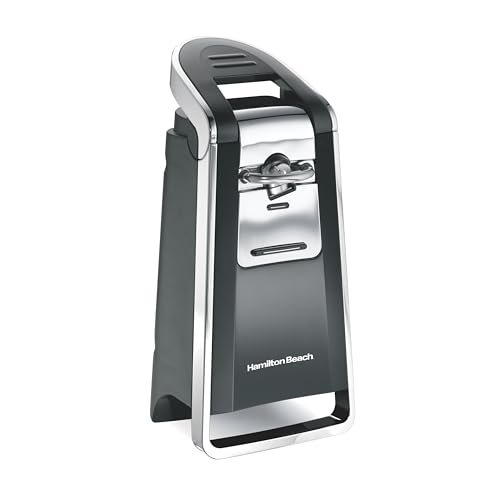
They can, and sometimes they should. Pop-top tabs snap off, bend, or demand a fingertip pull that is genuinely hard for sore hands. A countertop model whose listing says it opens pop-top cans, such as the Hamilton Beach pick in this guide, handles them by cutting the lid the conventional way. Handhelds vary more, so if snapped tabs are a recurring frustration in your house, treat that listing claim as a deciding feature rather than a bonus.
How long do batteries or charges last in handheld models?
Listings in this guide do not promise a fixed number of cans, and you should be suspicious of any source that states one as a fact, because can size, rim condition and battery age all change the answer. The practical approach is rhythm rather than counting: recharge USB models after a run of heavy use, keep spare batteries for battery models in the same drawer, and treat a slowing motor as a power reminder, not a product failure.
Can an electric opener handle very tall or large cans?
Countertop models with explicit extra-tall clearance, like the Hamilton Beach in this guide, are the safest bet for tall stock and tomato cans. Handhelds sit on top of the can, so height matters less to them, but a very heavy can still needs a stable surface and sometimes a steadying hand nearby. Very wide catering cans are the hardest case for every design here; if you open those weekly, say so in your shortlist criteria and favour the countertop machine with the most clearance.
What is the simplest type of electric opener for an elderly person to learn?
A one-touch handheld. The whole routine is three steps: set it on the can, press the button, lift it away with the lid. There is no aiming at a fixed machine, no lever timing, and no cord. The Kitchen Mama, KITCHENMUH and KORSKR picks in this guide all follow that pattern, and two of them state senior suitability in their listings. Countertop models suit elderly cooks who prefer a fixed station and mostly open cans in one spot.
How do I know when to replace an electric can opener?
Replace it when cleaning no longer restores a clean cut, when the motor labours on ordinary cans with fresh power, or when the cutter starts leaving metal slivers. A gradual decline is usually residue or a fading battery, both fixable. A sudden change after a drop can mean a bent cutter, which is not worth forcing. Because these are relatively simple machines, a well-kept pick should give years of service; treat replacement as a response to behaviour, not to age alone.