Disclosure: topratedkitchenware.com is reader-supported. When you buy through links on our site, we may earn an affiliate commission from Amazon and other retailers, at no extra cost to you.
Where to buy
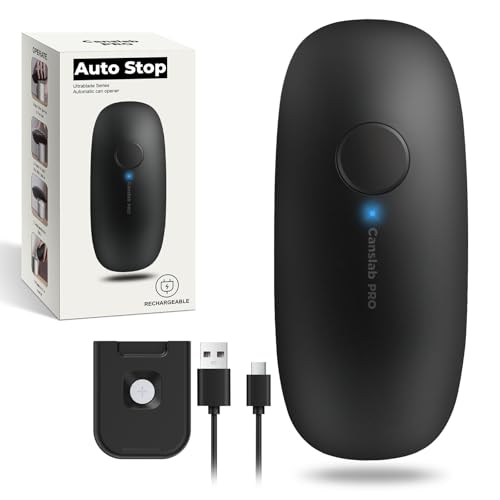
This guide to the best inexpensive battery operated can openers keeps two promises. First, “battery operated” is enforced literally: a pick is linked only if its verified listing states battery power, battery operation, or — in the Famawo’s case — a rechargeable cell you charge over USB-C. Second, “inexpensive” is handled honestly: this guide prints no prices, because prices change constantly, and instead judges value the way an owner experiences it — a mainstream gadget tier at purchase, and a running-cost routine afterwards that either stays near zero or quietly adds up. Four picks meet the battery bar and are linked below; two corded countertop models are profiled in prose, because whatever their merits, a cord is not a battery.
- Kitchen Mama Auto Electric Can Opener, Battery Operated, Red — Check on Amazon
- KITCHENMUH One Touch Electric Can Opener, Battery Operated, Fits All Can Sizes
- KORSKR Electric Can Opener, Battery Powered, Hands Free, Smooth Edge
- Famawo Electric Can Opener, USB-C Rechargeable, Smooth Edge, Magnetic Lid Hold
- Cuisinart CCO-55 Deluxe, Chrome Electric Can Opener — profiled in prose below (corded countertop model, not battery operated)
- bella Electric Can Opener, Automatic One-Touch, Oatmilk — profiled in prose below (countertop model; its listing states no battery power)
Read the full guide ↓ for the running-cost arithmetic that separates these four, and for the honest cases where a corded prose-profile model is the cheaper tool over five years.
The best inexpensive battery operated can openers live at the friendliest corner of the kitchen gadget world: mainstream tools, sold in huge numbers, that ask for no installation, no counter space, and no outlet. But “inexpensive” in this category has a trap built into it, and the trap is the battery itself. A battery operated opener’s purchase is only the first payment; the second payment arrives in instalments, every time a set of cells fades, for as long as you own the tool. A rechargeable model reverses the trap: the same purchase, then nothing but the electricity you already buy, at the price of a charging habit. Neither is automatically the better value — that depends on how many cans you open, how your household treats routines, and whether the tool will serve one kitchen or be lent, travelled with, and used hard. This guide works through that arithmetic in the open, without printing a single price, because the shape of the costs matters more than this week’s figures.
Four verified picks qualify as battery powered in their own listings: the Kitchen Mama, the KITCHENMUH, and the KORSKR on replaceable batteries, and the Famawo on a USB-C rechargeable cell. All four are handheld rim-riders, all four state a smooth edge, and all four are positioned by their makers as everyday or senior-friendly gadgets rather than specialist equipment — which is precisely where inexpensive lives. The two prose profiles, both countertop Cuisinart-family and bella designs, are included because a value guide that hid the corded alternative would be steering you: for a high-volume household, a corded tool with zero running cost can be the genuinely cheaper answer, and you deserve to see it priced in honesty even inside a battery guide. The wider budget landscape is covered in Best Inexpensive Can Openers, and the arthritis-first view of these same battery designs is in Best Made American Made Can Openers Arthritis.
Key Takeaways
- Battery operated is enforced from the listing: Kitchen Mama (battery operated), KITCHENMUH (battery operated), KORSKR (battery powered), and Famawo (USB-C rechargeable) qualify; the corded Cuisinart CCO-55 and the bella, whose listing states no battery, are profiled in prose.
- Value in this category is a running-cost story: replaceable batteries cost a little, forever; a rechargeable cell costs a routine, once learned, and then nothing.
- All four linked picks state a smooth edge, so the inexpensive tier does not force a sharp-lid compromise.
- The cheapest opener is the one matched to your volume: a few cans a week forgives batteries; a dozen cans a day argues for rechargeable or corded.
- No prices are printed in this guide because they change constantly; the listing carries today’s figure, and the profiles carry the five-year logic.
In this guide
Quick Picks
| Pick | Badge | Battery evidence in listing | Link |
|---|---|---|---|
| Kitchen Mama Auto Electric Can Opener, Red | Best Classic Battery Value | Battery operated stated; automatic, hands free, smooth edge | Check on Amazon |
| KITCHENMUH One Touch Electric Can Opener | Best Battery Value for All Sizes | Battery operated stated; one touch, smooth edge, fits all can sizes | Check on Amazon |
| KORSKR Electric Can Opener | Best Battery Value for Any Hand | Battery powered stated; hands free, smooth edge, any size cans, left handed friendly | Check on Amazon |
| Famawo Electric Can Opener | Best Rechargeable Value | USB-C rechargeable stated; smooth edge, magnetic lid hold, fits most can sizes | Check on Amazon |
| Cuisinart CCO-55 Deluxe, Chrome | Prose-Only: Corded Station | None — corded countertop model with one-touch press and release | Profiled in prose |
| bella Electric Can Opener, Oatmilk | Prose-Only: Countertop Model | None stated — countertop electric, automatic one-touch | Profiled in prose |
The badges divide the four linked picks by the kind of value they offer rather than by a single ranking, because in this category the ranking genuinely depends on your can count. A household opening three cans a week and a household opening thirty are shopping in the same aisle with opposite arithmetic, and the profiles below are written to let each household find itself.
Keep that five-year lens on while you read the profiles: every pick below is inexpensive this week, and the profiles exist to tell you which ones are still inexpensive in year five for a household like yours.
How These Picks Were Chosen
This is a research-led guide built from verified Amazon listing data, not a hands-on lab test. Eligibility for a link required the listing title to state the power source in battery terms: “battery operated”, “battery powered”, or a rechargeable format. Four picks pass on their own words. The Cuisinart CCO-55’s listing describes a corded countertop appliance, and the bella’s listing states electric one-touch operation with no battery claim at all — under this guide’s rule that silence is not evidence, both are profiled in prose without links or images. Value judgements are qualitative and structural: the guide compares power routines, stated fit claims, stated edge and lid features, and the number of jobs a tool consolidates, and it does not print prices or fixed ratings, which change too often to be honest in a static article.
Within the four, ranking weighs total cost of ownership in the broad sense: the consumables a design commits you to, the features it states that prevent second purchases (an all-sizes fit means no second opener; a smooth edge means no separate safety workaround), and the likelihood the tool is still in service in five years. Specifications in the mini spec boxes come only from the listing titles; where a title is silent, the review says so.
The 4 Best Inexpensive Battery Operated Can Openers — and 2 Corded Models Profiled in Prose

Kitchen Mama Auto Electric Can Opener, Battery Operated, Red
Badge: Best Classic Battery Value
Strengths
- Battery operated, automatic, and hands free per the listing: the simplest powered ritual in the category.
- Smooth edge and food-safe positioning stated, so the budget tier keeps the finger-safe lid.
- A single-purpose mainstream gadget: nothing to install, nothing to configure, nothing extra to pay for.
Trade-offs
- Its value leaks away in batteries if your can volume is high; the instalment plan is real.
- No auto stop and no size-range claim are stated in the listing title.
- Power fades gradually with cell age, so late-life cuts slow before they stop.
Mini spec box
- Type: Auto electric can opener, handheld
- Power: Battery operated
- Edge: Smooth edge
- Operation: Automatic, hands free
- Colour: Red
The Kitchen Mama is the reference inexpensive battery opener: a single-purpose, battery operated, hands free tool whose listing promises an automatic smooth-edge cut and nothing it cannot deliver. Its value case is the low-volume household’s case. If your kitchen opens a handful of cans a week — pet food, a soup, a tin of beans — a set of batteries lasts a long, uneventful stretch, the instalments stay trivial, and the tool’s simplicity means there is almost nothing to break, mis-set, or outgrow. The red body, easy to spot in a drawer, quietly protects the investment too: tools that get found get used, and tools that get used earn their place.
Who it suits: low-to-medium volume households, first flats, caravans and second kitchens, and gift buyers who want a complete solution in one box. The honest limitation is arithmetic, not quality: multiply the cans and you multiply the battery swaps, and at high volume the rechargeable Famawo below — or even a corded prose-profile station — becomes the cheaper tool over any five-year window. The Kitchen Mama also asks for the spares habit; a household that keeps batteries for remotes and torches already has the infrastructure, and one that does not should count a stocked spares drawer as part of the purchase. Shoppers comparing retail channels for this class of gadget will find the shelf-side view in Best Manual Can Openers At Bed Bath And Beyond useful for the manual alternatives at the same tier.
Best for: low-volume households and simple, complete value / Not suited for: high-volume opening, where battery instalments add up

KITCHENMUH One Touch Electric Can Opener, Battery Operated
Badge: Best Battery Value for All Sizes
Strengths
- Stated fit for all can sizes: one inexpensive tool genuinely replaces the rotation of openers.
- One touch, battery operated, smooth edge, food safe — the full feature set at a mainstream tier.
- Positioned for seniors with arthritis in its listing, so its low effort is a stated commitment.
Trade-offs
- Shares the battery instalment plan with every replaceable-cell design.
- No auto stop and no magnetic lid hold are stated in the listing title.
- Store it button-protected; an exposed one-touch start can trigger in a jostled drawer.
Mini spec box
- Type: Electric can opener, handheld
- Power: Battery operated
- Edge: Smooth edge
- Operation: One touch, automatic
- Fit: Fits all can sizes
- Colour: Black and grey
The KITCHENMUH’s value argument is consolidation. Its listing states a fit for all can sizes, and that single claim, if it matches your cupboard, deletes a whole category of spending: no second opener for the big tins, no manual backup bought in frustration, no station purchased later when the little tool meets a can it cannot handle. Add one-touch operation, a stated smooth edge, food-safe positioning, and a stated audience of seniors with arthritis, and you have the rare budget tool whose spec sheet reads like the expensive one’s. Inexpensive here does not mean stripped; it means the money went to the mechanism rather than to a brand’s advertising.
Who it suits: mixed-size households standardising on one tool, buyers equipping a parent’s kitchen on a budget, and anyone whose value calculation prizes never buying the second opener. The honest limitations are the class limitations — battery instalments, unstated auto stop and lid magnet — plus the small storage discipline of protecting its button. None of these costs money to solve; they cost a drawer habit. For households weighing this against heritage-branded equivalents, Best Made American Made Can Openers lays out the brand-first view, though no listing in this pool states a country of origin, and this guide ranks on stated function alone.
Best for: one battery tool for every can size / Not suited for: high-volume users counting battery swaps

KORSKR Electric Can Opener, Battery Powered, Hands Free
Badge: Best Battery Value for Any Hand
Strengths
- Battery powered and hands free per the listing, with a stated smooth edge.
- Stated to suit any size cans — the same consolidation value as the KITCHENMUH.
- Listing addresses seniors, women, and left handed people: one inexpensive tool serves the whole household’s hands.
Trade-offs
- The battery instalment plan applies, as with all replaceable-cell picks.
- No auto stop and no magnetic lid hold are stated in the listing title.
- Rim-riding geometry shares the category’s dented-rim limitation.
Mini spec box
- Type: Electric can opener, handheld
- Power: Battery powered
- Edge: Smooth edge
- Operation: Automatic, hands free
- Fit: Suitable for any size cans
- Colour: Black
The KORSKR competes with the KITCHENMUH on nearly identical stated ground — battery power, hands free travel, smooth edge, any-size fit — and differentiates itself on audience. Its listing names seniors, women, and left handed people as its intended users, and in value terms that breadth is a feature: a household tool that every hand in the house can use is a tool that never needs a companion purchase for the person it excluded. Left handed cooks in particular are used to paying a quiet tax in adapted or premium tools; a mainstream battery gadget that welcomes them at the standard tier is genuine value, not marketing garnish.
Choosing between the KORSKR and the KITCHENMUH honestly comes down to the start: the KITCHENMUH’s stated one touch against the KORSKR’s stated hands free automatic operation, which in practice are cousins. Households with a left handed daily cook should take the KORSKR’s explicit welcome seriously; households standardising on one-touch language across their gadgets may prefer the KITCHENMUH. Both share the battery routine, both state the smooth edge, and both make the same promise that one inexpensive tool covers the cupboard. The accessibility-first comparison of the pair lives in Best Manual Can Openers For Arthritis territory — manual in name, but the effort analysis there is the right lens for these two as well.
Best for: left-handed and mixed-hand households on a budget / Not suited for: high-volume users counting battery swaps

Famawo Electric Can Opener, USB-C Rechargeable
Badge: Best Rechargeable Value
Strengths
- USB-C rechargeable: after the purchase, the running cost is effectively the household’s existing electricity and a cable it already owns.
- Smooth edge plus a stated magnetic lid hold — the only linked pick here whose lid leaves with the tool.
- One-touch operation, a stated fit for most can sizes, and senior-friendly positioning in the listing.
Trade-offs
- A forgotten charge cannot be rescued in seconds the way a battery swap can; the routine is the price.
- No auto stop is stated in the listing title.
- A rechargeable cell ages over years in a way replaceable cells do not; heavy users should weigh that horizon.
Mini spec box
- Type: Electric can opener, handheld
- Power: USB-C rechargeable
- Edge: Smooth edge
- Operation: One-touch, automatic
- Lid: Magnetic lid hold
- Fit: Fits most can sizes
The Famawo is the value pick for anyone who has done the battery arithmetic and disliked the answer. Its rechargeable cell converts the category’s instalment plan into a one-time purchase plus a habit: charge it where the phones charge, top it up when you think of it, and the marginal cost of every can after the first approaches zero. It does not ask you to accept a stripped tool for that economy, either — its listing states the smooth edge the whole linked set shares, adds the magnetic lid hold none of the battery three states, and claims a fit for most can sizes with one-touch operation. On stated features per tier, it is arguably the richest listing in this guide.
Who it suits: medium-to-high volume households, anyone whose battery drawer is a source of low-grade chaos, and cooks who open cans over bowls and pans, where the magnetic lid earns its keep daily. The honest limitations are the rechargeable mirror image: no instant rescue when flat, and a cell that will age across years of service. Households that run on charging routines will never meet the first; households that improvise should choose a battery pick and keep spares. Either way, the decision is about your household’s habits, and this guide’s position is that the cheapest tool is the one whose routine you will actually keep.
Best for: ending the battery instalment plan / Not suited for: forgetful chargers or decades-long service expectations
Cuisinart CCO-55 Deluxe, Chrome Electric Can Opener — Profiled in Prose
Badge: Prose-Only: Corded Station
Strengths
- One-touch press and release operation with a stated magnetic lid holder.
- Removable lever stated, so the cutting head washes like a utensil.
- Corded power: zero running cost, full strength on every can, forever.
Trade-offs
- It is not battery operated — the disqualifying fact for this guide’s links, stated plainly.
- A standing station needs a counter corner and an outlet.
- No smooth-edge claim is stated in the listing title.
Mini spec box
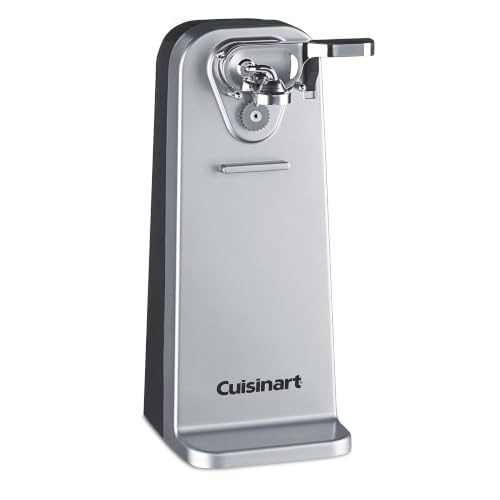
- Type: Electric can opener, countertop
- Operation: One-touch press and release
- Lid: Magnetic lid holder
- Lever: Removable
- Finish: Chrome, silver
The CCO-55 is profiled because a value guide owes you the corded comparison. Its running cost is zero — not near zero, zero — and its press-and-release operation, magnetic lid holder, and washable removable lever make it a genuinely refined tool. A household opening cans in long daily runs at one station could rationally conclude that this prose-profiled model is its cheapest five-year answer, battery guides notwithstanding. It is unlinked here for one reason only: this article’s title promises battery operated openers, and a corded station is not one. If your real brief is “inexpensive to own” rather than “battery operated”, this profile is your permission to widen the search — with the cord, the counter corner, and the unstated edge all counted honestly in the decision.
Best for: zero running cost at a fixed station / Not suited for: the battery operated brief itself
bella Electric Can Opener, Automatic One-Touch, Oatmilk — Profiled in Prose
Badge: Prose-Only: Countertop Model
Strengths
- Automatic one-touch operation stated: a simple, learnable routine.
- A standing countertop format that is always in place and always ready.
- The Oatmilk finish suits open shelving and calm kitchens.
Trade-offs
- Its listing states no battery power, so it cannot be linked in a battery operated guide.
- No magnetic lid holder and no smooth-edge claim are stated in the listing title.
- Light cans benefit from a steadying fingertip while the cutter bites.
Mini spec box
- Type: Electric can opener, countertop
- Operation: Automatic, one-touch
- Finish: Oatmilk
The bella closes the prose profiles as the gentlest of the stations: one-touch automatic operation in a soft finish, parked and ready. Its value story, like the Cuisinart’s, is the zero-running-cost story, told at a simpler feature level — no stated lid magnet, no stated smooth edge, no stated extras at all, which for some households is exactly the point. It is here, unlinked, because honesty about categories is what lets a reader trust the linked four: a guide that quietly linked a non-battery model in a battery guide would be spending your trust to make its table look fuller. The bella deserves consideration on its own terms, in a countertop guide, by a household whose cans live beside its corner.
Best for: a simple zero-running-cost station / Not suited for: the battery operated brief itself
Comparison Table
| Pick | Power stated | Running cost shape | Edge stated | Status here | Link |
|---|---|---|---|---|---|
| Kitchen Mama Auto | Battery operated | Small instalments, forever | Smooth edge | Linked | Check on Amazon |
| KITCHENMUH One Touch | Battery operated | Small instalments, forever | Smooth edge | Linked | Check on Amazon |
| KORSKR Electric | Battery powered | Small instalments, forever | Smooth edge | Linked | Check on Amazon |
| Famawo Electric | USB-C rechargeable | Near zero after purchase | Smooth edge | Linked | Check on Amazon |
| Cuisinart CCO-55 | Corded | Zero | Not stated | Prose only | — |
| bella Electric | Electric, no battery stated | Zero | Not stated | Prose only | — |
Read the running-cost column twice and the status column once: together they tell you both what each tool will ask of your household over the years and whether it was honest enough about its power source to earn a link in a battery guide at all.
The running-cost column is the one to read twice. It does not declare a winner; it describes three different financial shapes — instalments, near-zero, and zero-with-a-cord — and your household’s volume and habits decide which shape is cheapest for you.
Finally, consider who else the tool must serve. An inexpensive opener in a family kitchen is used by the confident and the nervous, the strong-handed and the stiff-handed, the tall and the seated. The linked picks were chosen partly because their listings keep widening that circle — hands free travel, one-touch starts, a stated welcome to left handed users — without widening the price tier. A tool that only the household’s strongest member can use is not inexpensive; it is a down payment on the second tool you will buy for everyone else.
How to Choose an Inexpensive Battery Operated Can Opener
Start with an honest can count. Tally a normal week: pet cans count double if there are two feedings, batch cooking counts in bursts, and the holiday season counts at its peak, not its average. At a few cans a week, any of the four linked picks is inexpensive in every sense that matters, and you should choose on ritual and fit. At a few cans a day, the battery instalments become a real line in the household budget, and the Famawo’s rechargeable shape — or a corded station — wins the five-year comparison comfortably. Volume is the master variable of this entire category; every other difference is a refinement.
Next, audit your household’s routines rather than its intentions. A spares drawer that actually exists — stocked, findable, shared with the remotes and torches — makes the battery three as reliable as any tool in the house. A charging corner that already serves phones and tablets makes the Famawo invisible to maintain. A household with neither should be honest that its cheapest reliable option might be the corded prose profile, and that choosing it is not a failure of the battery brief but a success of self-knowledge.
Then spend the savings where they matter: on the stated claims that prevent second purchases. An all-sizes fit (KITCHENMUH, KORSKR) prevents the second opener. A smooth edge, stated by all four linked picks, prevents the safety workaround and the cut fingers. A magnetic lid hold (Famawo) prevents the dropped-lid fishing that wears households down. Inexpensive, done properly, is not the absence of features; it is the presence of exactly the features that stop you buying again. The retail and brand angles on the same discipline are explored in Best Manual Can Openers At Bet Bath And Beyond, misspelling and all, because that is how real shoppers search.
How to Use a Battery Operated Can Opener: Technique, Battery Care, and Troubleshooting
Technique is the handheld ritual, with one battery-specific addition: listen to your tool. Seat the unit squarely on a dry rim, press the control once, and let it walk the circuit without steering. A healthy, well-powered unit walks at a steady pace with a steady note. A unit that slows, labours, or changes pitch mid-circuit is telling you its power is fading — finish the can if it will, then swap the batteries or charge it before the next one, rather than nursing it through a week of worsening cuts. Most “my opener went bad” stories in this category are battery stories that were misread as motor stories.
- Stand the can on a dry, flat surface and wipe the rim.
- Seat the tool squarely; a tilted start wastes power and rim alike.
- Press once and let the tool travel alone, cupping a light can loosely.
- Listen for a steady pace; a slowing note means power first, blame later.
- Lift the lid by its face, wipe the wheels, and return the tool to its drawer.
- Keep the routine with the tool: spares in the same drawer, or the charging cable in the same corner.
Battery care is where inexpensive is protected. For replaceable-cell models, fit fresh batteries as a full set rather than topping up with one new cell among old ones, since a mixed set performs like its weakest member. Swap at the first sustained slowing, not at the first failure; a tool swapped early never strands a half-cut lid. If the opener will sit unused for months — the caravan over winter — store the batteries separately so a leaking cell cannot write the tool off. For the rechargeable Famawo, store it with some charge rather than none, top it up on a rhythm tied to something else you already do, and treat a forgotten-flat unit as a planning problem, not a product defect.
Troubleshooting, in the pattern that covers most battery-opener problems:
- Problem: the cut slows or stalls halfway → power, almost always. Fit a fresh set or charge fully, clean the wheels, and retry on a clean arc of rim before concluding anything about the motor.
- Problem: the tool walks but does not bite → it was seated tilted, or residue has glazed the traction wheel. Reseat squarely and clean both wheels with a damp cloth.
- Problem: the lid drops into the food → the cycle was interrupted early, or the model has no stated lid magnet. Let the cut complete, lift by the face, and retrieve with a fork, never fingers.
There is also a resale-of-attention point that budget guides rarely make: a tool this simple should disappear from your thoughts. If you find yourself thinking about your can opener weekly — nursing its batteries, forgiving its stalls, remembering its quirks — it is costing you the one currency the inexpensive tier is supposed to save alongside money, which is attention. The routines in this guide are deliberately boring: spares in the drawer, a charge on a rhythm, wheels wiped without ceremony. Boring is the goal. The right inexpensive battery opener is the one you stop noticing by the second week.
The Five-Year View: What Inexpensive Actually Costs
Stretch the timeline and the category’s economics come into focus. In year one, all four linked picks feel identical: a mainstream purchase, a drawer slot, a solved problem. By year three, the households have diverged. The low-volume battery household has replaced a few sets of cells and thought nothing of it. The high-volume battery household has replaced many, and has either made peace with the instalments as the price of cordlessness or quietly migrated the heavy work to a station. The rechargeable household has spent nothing but attention, and its only risk is the slow ageing of a cell that will, one year, hold noticeably less. The corded household has spent nothing at all and surrendered a counter corner for the privilege.
None of these stories is a cautionary tale; they are simply different shapes of cheap. The mistake is not choosing any one of them — it is choosing one while imagining another. If you can see your household in one of the four stories above, you already know your pick, and the profiles in this guide exist to confirm the details: fit claims, edges, lids, and the small disciplines that keep each shape inexpensive for the full five years rather than the first five weeks.
Inexpensive Workhorses: Dorms, First Kitchens, Rentals, and Offices
The natural habitats of this category deserve a section of their own, because they explain why battery operated and inexpensive belong in the same title. A dorm room or a first flat has no spare outlet, no spare counter, and no budget for appliances that need either; a drawer-sized battery tool is not the cheap compromise there, it is the only format that fits the life. A rental kitchen argues the same way from the landlord’s side: nothing to install, nothing to mount permanently, nothing to leave behind or be charged for. An office kitchenette, a workshop, a site cabin — all the semi-kitchens where cans get opened far from a proper counter — reward a tool that travels in a drawer and asks the building for nothing.
These habitats share one more trait: the tool will be used by many hands, some of them careless. That argues for the simplest rituals in the linked set and against anything with modes to mis-set. It also argues for the smooth edge all four linked picks state, because in a shared kitchen the person who meets the lid is often not the person who chose the opener, and a blunt lid is a courtesy to strangers. When equipping a shared or temporary kitchen, buy the tool whose worst user can still operate it safely at midnight, and this category — mainstream, single-purpose, low-effort — is exactly where that tool lives.
Replaceable Cells or a Rechargeable Cell: The Only Real Fork in This Guide
Strip the category down and one decision remains: how the tool’s battery life is renewed. Replaceable cells renew instantly, anywhere, at any hour, for a small recurring cost and a small recurring errand; they suit irregular use beautifully, because a tool that sat for three months wakes up the moment fresh cells go in. A rechargeable cell renews slowly, at a socket, for effectively nothing; it suits regular use beautifully, because the top-up merges into the household’s existing charging rhythm and the per-can cost dissolves. The failure modes are mirror images — the battery tool fails when the spares drawer is empty, the rechargeable fails when it was left flat — and both failures are about households, not products.
There is a middle habit worth naming for households that cannot decide: buy the rechargeable tool for the main kitchen, where use is daily and the routine will hold, and a replaceable-cell tool for the second location, where use is rare and instant revival matters more than running cost. That pairing, which several of this guide’s readers will recognise as their actual life, is inexpensive in the only sense that survives scrutiny: each tool’s costs land where they are smallest. What does not work is the reverse pairing — a rechargeable abandoned in a caravan for a season, and a battery tool ground through instalments at a busy family counter. Match the renewal method to the rhythm of the place, and the whole category becomes as cheap as its title promises.
One more value test, the one experienced buyers apply instinctively: the cost of the tool’s absence. A household whose opener fails mid-recipe does not experience a small inconvenience; it experiences a stranded can, a delayed meal, and occasionally an improvised opening attempt with a knife that everyone present wishes had not happened. Reliability, in a tool used daily, is an economic property. The linked four protect it in different ways — fresh-cell instant revival, all-sizes fit that never sends you shopping mid-recipe, a rechargeable routine that keeps the tool permanently near full — and the discipline sections of this guide protect it further. When you compare two inexpensive tools and one states the claims that keep it working while the other merely opens cans, the first is the cheaper tool even before its routine is counted.
Common Buying Mistakes
- Judging inexpensive by the ticket alone. The battery is part of the price; a tool’s five-year cost is its purchase plus its routine.
- Buying battery power for a marathon workload. High daily volume belongs to rechargeable or corded designs; instalments punish volume.
- Mixing old and new batteries. A set performs like its weakest cell; swap the set, not the one that looks tiredest.
- Nursing a fading tool. Slowing is a power message; swapping early prevents the half-cut lids that make people hate good tools.
- Assuming a corded model sneaks into a battery brief. If the listing states no battery, it is a different product, however inexpensive — as the two prose profiles here show honestly.
- Skipping the fit claim to save a little. A tool that cannot open the big tin creates a second purchase; the all-sizes claim is the saving.
Final Recommendation
For most budget-minded households, start with the Famawo Electric Can Opener (Check on Amazon): its USB-C rechargeable design ends the battery instalment plan entirely, and its stated smooth edge, magnetic lid hold, and one-touch operation mean the savings cost you nothing in features. If your household runs on a healthy spares drawer and opens cans at low-to-medium volume, the Kitchen Mama Auto (Check on Amazon) is the classic inexpensive answer, with the KITCHENMUH and KORSKR as the all-sizes alternatives for mixed cupboards and mixed hands. And if the profiles have shown you that your volume is really station volume, take the hint the prose models offer: a corded tool’s zero running cost is a legitimate form of inexpensive, even if it could not be linked under this title.
Frequently Asked Questions
Is a rechargeable can opener still “battery operated”?
In every way that matters to the user, yes: it runs on a battery — a rechargeable one — rather than on mains power, so it is cordless in use, portable, and drawer-stored. This guide includes the Famawo on exactly that basis, and says so openly. What it does not include is any model whose listing states no battery at all, because a cord is not a battery of any kind.
How much do batteries add to the cost of owning one of these?
That depends entirely on your can volume, which is why this guide prints no figures: prices and cell life vary too much for a static number to stay honest. The shape of the answer is reliable, though — at a few cans a week the instalments are trivial for years; at a few cans a day they become the dominant cost of the tool, and a rechargeable or corded design wins. Count your cans before you count your savings.
Which pick is best for a second kitchen or caravan?
A battery model with its batteries stored separately between seasons, or a rechargeable model you charge on arrival. The Kitchen Mama is the common choice for this job: simple, single-purpose, and indifferent to outlets. Fit fresh batteries when the season starts and the tool will behave like new, because in every way that matters, its power source is new.
Do inexpensive battery openers leave sharp edges?
These four do not, on their own stated claims: every linked pick in this guide states a smooth edge. That is worth pausing on, because it shows the inexpensive tier has absorbed the safety feature that used to cost more. Always verify the claim in the listing itself rather than assuming the tier provides it — the two prose-profiled models here state no such edge, at similar tiers.
Why are two models in this guide not linked?
Because their listings state no battery power. The Cuisinart CCO-55 is a corded countertop station, and the bella’s listing describes a countertop electric model without a battery claim. Both are profiled in prose so you can weigh the corded alternative honestly, but linking them under a battery operated title would misdescribe them — and a value guide that misdescribes its picks is not saving you money, it is spending your trust.
Are battery operated openers a good choice for elderly parents on a budget?
They are often the best choice, because the category’s mainstream tier and its low-effort tier are the same tier. The KITCHENMUH and KORSKR in this guide are positioned for seniors with arthritis in their own listings, run on batteries any family member can swap during a visit, and state smooth edges that keep lids safe in stiff fingers. Set the spares routine up with the gift — batteries fitted, spares in the drawer, one practice can together — and the inexpensive tool becomes an independence tool at a gadget price.
How do I make an inexpensive battery opener last?
Three habits: keep the wheels clean, because residue is the hidden cause of stalls and strained motors; manage power early, swapping batteries at the first slowing or charging on a rhythm, because laboured cuts wear mechanisms; and store the tool dry in its drawer, with its routine attached. Inexpensive tools rarely die of cheapness; they die of neglect, and neglect is free to fix.