Disclosure: topratedkitchenware.com is reader-supported. When you buy through links on our site, we may earn an affiliate commission from Amazon and other retailers, at no extra cost to you.
Where to buy
The six models below are the verified picks for this guide to the best inexpensive can openers. “Inexpensive” is handled the honest way throughout: this guide prints no prices, because prices change constantly, and instead ranks value the way owners actually experience it — a mainstream tier at purchase, a running-cost shape afterwards, and a feature set complete enough that you never buy the second tool. All six picks are linked; each name leads to its Amazon listing, where you can check the latest price on Amazon and confirm the current configuration before you decide.
- KORSKR Electric Can Opener, Battery Powered, Hands Free, Smooth Edge — Check on Amazon
- Cuisinart CCO-55 Deluxe, Chrome Electric Can Opener, One-Touch Press and Release
- bella Electric Can Opener, Automatic One-Touch, Oatmilk
- Famawo Electric Can Opener, USB-C Rechargeable, Smooth Edge, Magnetic Lid Hold
- Amazon Basics 3-In-1 Electric Can Opener, Bottle Opener and Knife Sharpener
- Cuisinart Deluxe Electric Automatic Can Opener, CCO-50BKN
Read the full guide ↓ for the five-year arithmetic behind each badge, and for the features that inexpensive buyers should never surrender.
The best inexpensive can openers are not the cheapest objects in the aisle; they are the ones whose total story stays inexpensive. A can opener is a decade-scale purchase used in a ten-second ritual, and its real cost is spread across everything that follows the till: the batteries or the electricity, the second opener bought when the first meets a can it cannot handle, the replacement bought when a flimsy mechanism gives up, and the small daily tax of a tool that is annoying to clean, to store, or to hand to a grandparent. Judged on that full story, the inexpensive tier turns out to be generous. The six verified picks in this guide are all mainstream electric designs — battery, rechargeable, and corded — whose listings state the features that used to cost a tier more: smooth edges, magnetic lid holders, one-touch starts, all-sizes fits, washable levers, and in one case two extra tools in the same body.
This guide compares all six on total value, format by format, and is explicit about the trade each price of admission carries. You will find a buying guide that starts with your can volume rather than with products, a how-to section on the care habits that keep a budget tool alive for years, and straight answers about what inexpensive should never mean. Readers arriving with a specific constraint will find the neighbouring briefs useful too: Best Manual Can Openers For Arthritis for the effort-first view, and Best New Can Openers for what the current generation of designs has standardised.
Key Takeaways
- Inexpensive is a five-year property, not a till property: running costs, second purchases, and replacements decide it, and this guide ranks on that basis without printing prices.
- Consolidation is the deepest saving in the pool: the Amazon Basics 3-In-1 folds a bottle opener and knife sharpener into the opener’s body, and the all-sizes fit claims on the KORSKR prevent a second opener entirely.
- Corded stations (both Cuisinarts, the bella, the Amazon Basics) carry zero running cost; battery models carry small instalments; the Famawo’s USB-C rechargeable design sits between, at near zero.
- The safety features are no longer premium: smooth edges and magnetic lid holders appear in this tier’s listings, and no buyer should accept a sharp-lid, no-magnet tool to save a little.
- Every pick here is a mainstream electric design with a stated low-effort start — inexpensive and arthritis-friendly are the same aisle in this generation.
In this guide
Quick Picks
| Pick | Badge | Value logic | Link |
|---|---|---|---|
| KORSKR Electric Can Opener | Best Portable Value | Battery powered, hands free, smooth edge, stated for any size cans and left handed users | Check on Amazon |
| Cuisinart CCO-55 Deluxe, Chrome | Best Long-Term Station Value | Corded zero running cost, one-touch press and release, magnetic lid holder, removable lever | Check on Amazon |
| bella Electric Can Opener, Oatmilk | Best Simple Station Value | Automatic one-touch countertop design; nothing extra to pay for or maintain | Check on Amazon |
| Famawo Electric Can Opener | Best No-Consumables Value | USB-C rechargeable, smooth edge, magnetic lid hold, fits most can sizes | Check on Amazon |
| Amazon Basics 3-In-1 Electric Can Opener | Best Multi-Tool Value | Can opener, bottle opener and knife sharpener in one corded body; magnetic lid holder | Check on Amazon |
| Cuisinart Deluxe CCO-50BKN | Best Washable Station Value | Single-touch, magnetic lid holder, removable activation lever for proper washing | Check on Amazon |
Six badges, six different definitions of value — that is deliberate. The right inexpensive opener for a caravan drawer, a family counter, and a parent’s kitchen are three different tools, and a guide that forced them into one ranking would be saving you reading time at the cost of your money. Find your situation in the badge column, then test it against the detailed profile.
How These Picks Were Chosen
This is a research-led guide built from verified Amazon listing data, not a hands-on lab test. All six pool picks are electric can openers from mainstream lines, and all six were eligible for this keyword because “inexpensive” is a tier judgement rather than a format: the guide assesses each on the structural markers of value that a listing can honestly evidence — consolidation of tools, stated fit range, stated lid and edge features, washable parts, and the running-cost shape implied by its stated power source. No prices are printed, because a price in a static article is a false promise within weeks; the listing carries today’s figure, and the profiles carry the logic that outlives it. No fixed ratings are printed for the same reason.
Ranking weighs, in order: whether the tool prevents a second purchase, what its power routine costs across years, how completely its stated features cover the daily ritual (start, cut, lid, clean, store), and how many kinds of hands in a household can use it. Specifications in the mini spec boxes come only from the listing titles, and where a title is silent — about an edge, a magnet, a size range — the review says so plainly, because an inexpensive tool bought on an imagined feature is the most expensive kind there is.
The 6 Best Inexpensive Can Openers

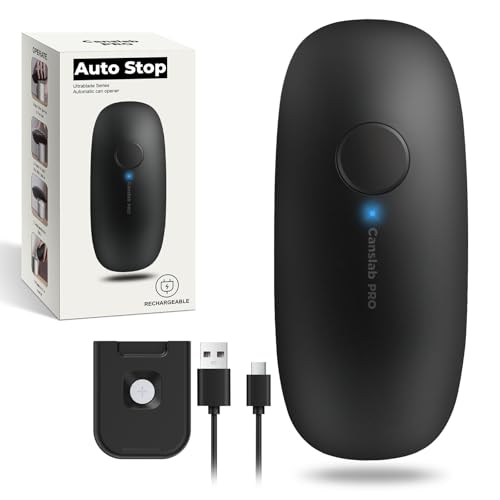
KORSKR Electric Can Opener, Battery Powered, Hands Free
Badge: Best Portable Value
Strengths
- Battery powered and hands free per the listing, with a stated smooth edge — the full modern feature set at a mainstream tier.
- Stated to suit any size cans, which deletes the second-opener purchase from your future.
- Listing addresses seniors, women, and left handed people: one inexpensive tool serves every hand in the house.
Trade-offs
- Batteries are the running cost, small but perpetual; volume decides whether they matter.
- No auto stop and no magnetic lid hold are stated in the listing title.
- Rim-riding designs share the category’s dented-rim limitation.
Mini spec box
- Type: Electric can opener, handheld
- Power: Battery powered
- Edge: Smooth edge
- Operation: Automatic, hands free
- Fit: Suitable for any size cans
- Colour: Black
The KORSKR is portable value in its purest form: a battery powered, hands free opener that goes to the can, states a smooth edge, states a fit for any size, and names an unusually wide circle of intended users. Its economics are the economics of the single tool. Because it travels, it serves the kitchen, the feeding corner, and the caravan without duplication. Because it claims any size, it does not trigger the second purchase when the big tin arrives. Because its operation asks nothing of grip, it does not trigger the adapted-tool purchase when hands change. Each of those avoided purchases is worth more than any plausible saving at the till, and together they are why a mainstream gadget can honestly carry a value badge.
Who it suits: households buying one opener to do everything, left handed cooks tired of paying the adaptation tax, and anyone equipping a second location. The honest limitation is the battery line in the budget — small, perpetual, and worth counting if your cans number in the dozens per week, in which case the Famawo’s rechargeable shape or a corded station undercuts it over five years. Within ordinary volumes, the KORSKR is the inexpensive tier doing exactly what it should. Brand-heritage shoppers can compare the philosophy in Best Made American Made Can Openers, though no listing in this pool states an origin, and this guide ranks stated function over stated heritage every time.
Best for: one portable tool for every can and every hand / Not suited for: very high daily volume, where battery instalments accumulate

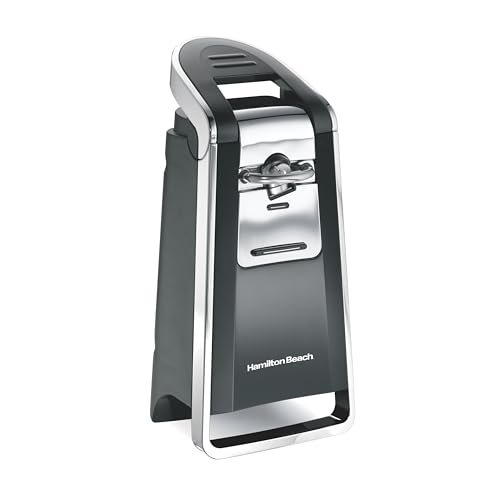
Cuisinart CCO-55 Deluxe, Chrome Electric Can Opener
Badge: Best Long-Term Station Value
Strengths
- Corded power: a running cost of zero, at full strength, for the life of the tool.
- One-touch press and release with a stated magnetic lid holder — the lid problem solved without a second purchase.
- Removable lever stated, so the cutting head washes properly and the tool’s hygiene does not decay.
Trade-offs
- A standing station claims a counter corner and an outlet permanently.
- No smooth-edge claim is stated in the listing title; lids are handled as sharp.
- Chrome is a finish that shows splashes and rewards wiping.
Mini spec box
- Type: Electric can opener, countertop
- Operation: One-touch press and release
- Lid: Magnetic lid holder
- Lever: Removable
- Finish: Chrome, silver
The CCO-55 makes the long-term argument: over a decade at a fixed station, the cheapest power is the power you never buy again, and the cheapest features are the ones built in from the start. Its press-and-release one-touch action asks a single deliberate press rather than sustained pressure, which keeps it friendly to weakening hands across the years it will serve. Its stated magnetic lid holder removes the daily lid annoyance without accessories. Its removable lever removes the hygiene decay that quietly kills cheaper stations, whose fixed heads gunk up until the cuts go ragged and the replacement conversation begins. A tool that can be kept clean is a tool that gets kept, and keeping is the whole of long-term value.
Who it suits: settled kitchens, batch openers, and buyers who think in decades and have the counter corner to prove it. The honest limitations are the corner itself — a real cost in a small kitchen — and the unstated edge, which means its lids, though magnet-held, should be treated as sharp and binned without finger contact. If your kitchen’s geography is fixed and your volume is real, this is the inexpensive pick whose arithmetic improves every year you own it. The store-shelf comparison for shoppers who like to handle a station before buying is sketched in Best Manual Can Openers At Bed Bath And Beyond.
Best for: a decade of zero-running-cost opening at one station / Not suited for: small counters or smooth-edge seekers

bella Electric Can Opener, Automatic One-Touch, Oatmilk
Badge: Best Simple Station Value
Strengths
- Automatic one-touch operation stated: the simplest routine a station can offer, with nothing to mis-set.
- Corded countertop format with zero running cost and permanent readiness.
- A soft Oatmilk finish that suits open shelving, where a budget tool still has to be looked at daily.
Trade-offs
- No magnetic lid holder and no smooth-edge claim are stated in the listing title.
- Light cans benefit from a steadying fingertip at the start of the cut.
- It does one job; households wanting consolidation should look at the 3-In-1 below.
Mini spec box
- Type: Electric can opener, countertop
- Operation: Automatic, one-touch
- Finish: Oatmilk
The bella’s value is the value of enough. Its listing promises an electric can opener with automatic one-touch operation, and the tool’s whole pitch is that the daily can becomes a non-event at a mainstream price of admission, with corded power keeping the running cost at zero and a finish that does not make a small kitchen look like an appliance showroom. There is a real economic virtue in a tool with no extras: nothing surplus to break, nothing to configure wrongly, nothing whose absence you will discover in month three. For the household whose cans are ordinary, whose counter has a corner, and whose budget prefers honesty to garnish, enough is the correct specification.
Who it suits: simple households, first kitchens with a spare corner, and buyers who distrust feature lists. The honest limitations are its two silences — no stated lid magnet, no stated smooth edge — which mean lids are retrieved by hand and treated as sharp, and its single-purpose nature. If either silence matters to your routine, the Cuisinarts flank it with the magnet and the washable lever at the same station format; if neither matters, the bella is the inexpensive tier at its most straightforward, and there is no shame in straightforward.
Best for: simple, zero-running-cost daily opening / Not suited for: buyers who need a stated lid magnet or smooth edge

Famawo Electric Can Opener, USB-C Rechargeable
Badge: Best No-Consumables Value
Strengths
- USB-C rechargeable: the running cost collapses to a habit and the electricity you already buy.
- Smooth edge plus a stated magnetic lid hold — the richest stated feature set among the portable picks.
- One-touch operation and a stated fit for most can sizes, positioned for seniors in the listing.
Trade-offs
- A forgotten charge has no instant rescue; the routine must be kept.
- No auto stop is stated in the listing title.
- A rechargeable cell ages across years in a way a corded tool’s power never does.
Mini spec box
- Type: Electric can opener, handheld
- Power: USB-C rechargeable
- Edge: Smooth edge
- Operation: One-touch, automatic
- Lid: Magnetic lid hold
- Fit: Fits most can sizes
The Famawo is the value pick for the household that has run the battery numbers and wants out of the instalment plan without giving up portability. Recharging over USB-C — the cable the household already owns, at the corner where the phones already charge — makes each can after the first effectively free, while the stated feature set refuses to behave like a compromise: smooth edge, magnetic lid hold, one-touch start, most-sizes fit. In stated features per tier it is the richest portable listing in this guide, and its senior-friendly positioning means the low price of admission does not exclude the hands that most need low effort.
Who it suits: medium-to-high volume portable users, charging-routine households, and cooks who open cans over bowls and pans where the magnetic lid earns its keep. The honest limitations are the rechargeable pair: no seconds-fast rescue when flat, and a cell whose capacity will fade across a long service life. Both are manageable by exactly the households this tool suits — the ones with a charging corner and a rhythm — and both are reasons for improvisational households to choose a battery or corded sibling instead. Value, again, is a match, not a ranking.
Best for: portable opening with no consumables / Not suited for: forgetful chargers or decades-long horizons
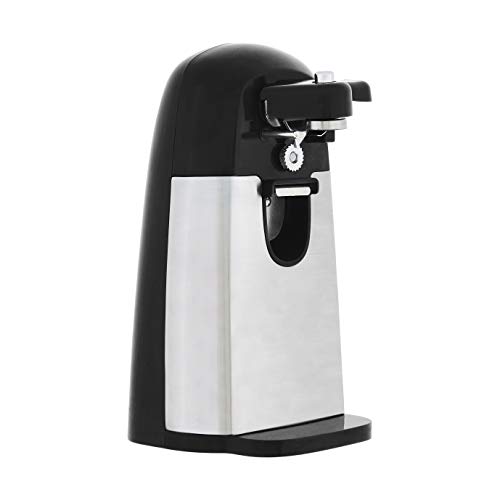
Amazon Basics 3-In-1 Electric Can Opener, Bottle Opener and Knife Sharpener
Badge: Best Multi-Tool Value
Strengths
- Three stated tools in one body — can opener, bottle opener, knife sharpener — at one mainstream admission.
- Magnetic lid holder and stainless steel blade stated in the listing.
- Stated 50W corded power: zero running cost and identical strength on every can of a long run.
Trade-offs
- No smooth-edge claim is stated in the listing title.
- The bulkiest body here; it must earn a real counter corner.
- Households that never sharpen knives or open bottles are paying for consolidation they will not use.
Mini spec box
- Type: 3-in-1 electric can opener, bottle opener, knife sharpener
- Blade: Stainless steel
- Lid: Magnetic lid holder
- Power: 50W, corded
- Colour: Black
Consolidation is the oldest value trick in the kitchen, and the Amazon Basics 3-In-1 is its cleanest current example: one body, one cord, one counter corner, three jobs. Counted properly, its competition is not the other five openers in this guide; it is the opener plus the bottle opener plus the sharpener a household would otherwise buy, store, and eventually replace separately. Against that bundle it wins on admission, on storage, and on the zero running cost of corded power, while its stated magnetic lid holder and stainless steel blade keep the core job properly equipped. For a small kitchen, the counter-space saving alone can be the deciding economy: three tools’ worth of function in one tool’s footprint.
Who it suits: small kitchens, batch cooks who sharpen as they go, and households furnishing a kitchen from scratch on a budget. The honest limitations are the mirror of its strengths: no stated smooth edge, so lids are sharp and magnet-managed, and a bulk that must be justified by actually using the extra tools — a household that never opens a bottle or sharpens a knife is buying two features it will never touch, and for that household the bella’s simplicity is the better value. Consolidation only saves money when the consolidated jobs are real.
Best for: furnishing a small kitchen with three tools in one / Not suited for: households that will never use the extra tools

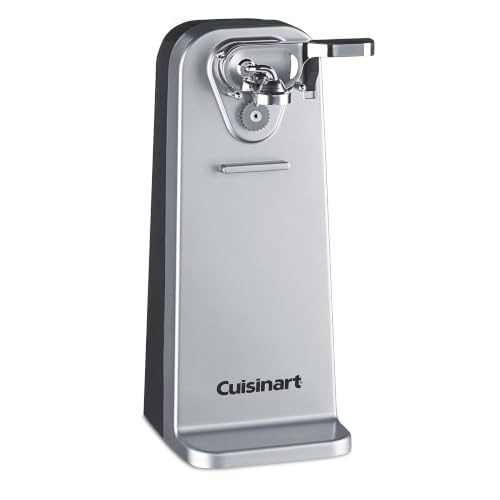
Cuisinart Deluxe Electric Automatic Can Opener, CCO-50BKN
Badge: Best Washable Station Value
Strengths
- Removable activation lever stated: the cutting head washes properly, protecting the tool’s whole service life.
- Single-touch automatic operation with a stated magnetic lid holder.
- Positioned for seniors in its listing, and corded, so its running cost is zero.
Trade-offs
- No smooth-edge claim is stated in the listing title.
- A standing station format with a permanent counter claim.
- Very light cans still benefit from a steadying hand at the start.
Mini spec box
- Type: Electric automatic can opener, countertop
- Operation: Single-touch
- Lid: Magnetic lid holder
- Lever: Removable activation lever
- Colour: Black
The CCO-50BKN’s value hides in a laundry detail: its activation lever is removable, so the part of the tool that meets every can can be washed like a utensil. Cheap tools rarely die dramatically; they die by accumulation — residue in a fixed cutting head, cuts going ragged, a household concluding the opener is “worn out” when it is only dirty. A washable head interrupts that story at the first chapter, and a tool whose fifth year cuts like its first is inexpensive in the way that compounds. Add single-touch operation, a stated magnetic lid holder, a stated senior audience, and corded zero running cost, and the profile is the quiet overachiever of this pool: no garnish, every stated feature pointed at longevity.
Who it suits: hygiene-minded households, carers maintaining a parent’s kitchen, and anyone whose previous opener died of gunk rather than honest wear. The honest limitations are the unstated edge — lids are sharp, though magnet-managed — and the station format’s standing claim on the counter. Between this and its chrome sibling above, the choice is finish and detail rather than philosophy: both are Cuisinart’s argument that a washable, magnet-equipped, corded station is the inexpensive tier’s longest game. The current-generation context for that argument is rounded up in Best New Can Openers.
Best for: longevity through washability, at zero running cost / Not suited for: smooth-edge seekers or portable briefs
Comparison Table
| Pick | Format | Running cost shape | Edge stated | Lid stated | Link |
|---|---|---|---|---|---|
| KORSKR Electric | Handheld | Battery instalments | Smooth edge | Not stated | Check on Amazon |
| Cuisinart CCO-55 | Countertop | Zero (corded) | Not stated | Magnetic lid holder | Check on Amazon |
| bella Electric | Countertop | Zero (corded) | Not stated | Not stated | Check on Amazon |
| Famawo Electric | Handheld | Near zero (rechargeable) | Smooth edge | Magnetic lid hold | Check on Amazon |
| Amazon Basics 3-In-1 | Countertop | Zero (corded) | Not stated | Magnetic lid holder | Check on Amazon |
| Cuisinart CCO-50BKN | Countertop | Zero (corded) | Not stated | Magnetic lid holder | Check on Amazon |
Read the table as three decisions stacked, and take them in order rather than all at once, because each decision narrows the next: where the tool will live, what its years will cost, and whether its daily details — the lid, the edge, the cleaning — will be pleasures, neutral, or a small recurring tax on everyone who cooks.
Read the table as three decisions stacked: format first, because it decides where the tool lives; running cost second, because it decides what the years ask of you; and the stated edge and lid columns last, because they decide whether the inexpensive tier is asking you to accept a daily annoyance in exchange for its admission — in this pool, largely, it is not.
There is a final, unfashionable test to apply before buying: imagine the tool in its third year, on an ordinary Tuesday, in the hands of the household member who cares least about it. The right inexpensive opener survives that imagination easily — its routine is boring, its storage is obvious, its lid behaviour is safe without supervision, and its cleaning needs no manual. The wrong one, however attractive its first week looked, is already migrating toward the back of a drawer in your mind’s eye. Buy for the third-year Tuesday; the first week takes care of itself.
How to Choose an Inexpensive Can Opener
Begin with volume, because volume reprices everything. Count a real week of cans, including pet feedings and the batch-cooking bursts, and be honest about the holiday peak. At low volume, every pick in this guide is inexpensive in practice, and you should choose on format and ritual alone. At high daily volume, the corded stations’ zero running cost and unfading power pull ahead over any multi-year window, and the battery picks should be chosen only where portability is genuinely used. In between sits the Famawo’s rechargeable compromise, which is why it exists.
Next, count the jobs, not the tools. If your kitchen needs a bottle opener and a knife sharpener anyway, the Amazon Basics 3-In-1’s consolidation is the single largest saving in this guide, larger than any difference between rival openers. If your cupboard mixes small tins with family cans, an all-sizes fit claim — the KORSKR states one — prevents the second-opener purchase that quietly doubles many households’ spending. If your household includes arthritic, left handed, or one-handed cooks, the stated audiences in these listings are value features, because a tool everyone can use is a tool bought once. The arthritis-specific shortlist logic is developed in Best Made American Made Can Openers Arthritis.
Finally, refuse the false economies. An inexpensive opener that cannot be cleaned will be replaced early; one with a sharp lid and no magnet will be resented daily; one whose power routine your household will not keep will fail theatrically and be replaced in annoyance. The genuinely inexpensive tool is the one whose stated claims cover the whole ritual — start, cut, lid, clean, store — at a mainstream tier. Every pick in this guide was chosen because its listing makes that coverage plausible in writing.
How to Keep an Inexpensive Can Opener Alive: Use, Cleaning, and Troubleshooting
Longevity in this tier is a care story, and the care is neither long nor hard. Use the tool as its format intends: seat rim-riders squarely and let them walk without steering; seat cans fully at stations and let the cycle finish before lifting anything. The two habits that kill budget openers are forcing — pushing a rim-rider along, levering a station’s arm — and residue. Wipe cutting wheels and heads after messy cans, wash removable levers like utensils, and never immerse a powered body. A tool kept clean cuts at full efficiency, which means its motor works less, which means it lives longer: hygiene is the cheapest extended warranty in the kitchen.
- Seat squarely — tool on rim, or can under cutter — before starting anything.
- Let the cycle complete fully; early lifting tears rims and strains mechanisms.
- Wipe the cutting parts after any can that spilled, before residue dries.
- Wash removable levers at the sink; brush fixed heads with a damp cloth and a soft brush.
- Keep the power routine boring: fresh battery sets, a charging rhythm, or a cord left peacefully plugged.
- Store the tool dry and findable; a tool that can be found gets maintained, and a tool that gets maintained gets old.
Troubleshooting, in the pattern that covers most budget-opener problems — which are usually care problems wearing a disguise:
- Problem: cuts have gone ragged → residue on the wheel or head, nine times in ten. Clean thoroughly before shopping for a replacement; most “worn out” inexpensive openers are dirty ones.
- Problem: the tool stalls or slows → power first. Swap the battery set as a set, charge the rechargeable fully, or check the station’s seating; a starved or mis-seated tool mimics a broken one.
- Problem: lids keep dropping into food → the cycle is being lifted early, or the model states no magnet. Let the cut finish, lift by the face, and build the fork into the routine for magnet-less models.
What Inexpensive Should Never Mean
A short manifesto, because this tier attracts three specific false economies. Inexpensive should never mean a lid you cannot handle safely: if a listing states neither a smooth edge nor a magnetic holder, the saving is being taken out of your fingers, daily. It should never mean a head you cannot clean: an unwashable cutter in the splash zone is a replacement scheduled at purchase. And it should never mean a routine your household cannot keep: the cheapest tool on the shelf becomes the dearest when it is flat, lost, or resented. The six picks in this guide were filtered against exactly those three traps, which is why the tier, read carefully, is not a compromise at all — it is where the mature, standardised designs have landed, and where a careful buyer gets a decade of ten-second rituals for a mainstream admission. Shoppers who like to verify that maturity in person will find the bricks-and-mortar version of the hunt in Best Manual Can Openers At Bet Bath And Beyond.
Inexpensive in Practice: Three Households, Three Right Answers
Abstract value logic settles nothing until it meets a kitchen, so walk the shortlist through three ordinary ones. The first is a young family’s kitchen: cans daily, in variety — pet food at dawn, beans and tomatoes at dinner, the occasional catering tin when grandparents visit. Their binding constraint is that the tool must never be the reason a meal stalls, and must serve two adults, a grandparent on weekends, and eventually a child learning to help. That household’s answer is breadth with no routine fragility: the KORSKR’s any-size, any-hand portability, or the Famawo’s rechargeable version of the same breadth if their charging corner is real. What they should not buy is a station that strands the feeding-corner cans at the wrong end of the house.
The second household is one person, cooking seriously, in a small flat with one good counter corner. Their cans are fewer but their standards are higher, and their binding constraint is space that must be earned. The Amazon Basics 3-In-1 speaks directly to them — three tools, one footprint — unless they never sharpen or open bottles, in which case the bella’s simplicity or a Cuisinart’s washable longevity takes the corner instead. The third household is a parent’s kitchen being gently modernised by an adult child: cans a few times a week, hands that are stiffening, a deep suspicion of gadgets. Their answer is the tool with the fewest steps and the kindest lid — a one-touch station like the CCO-50BKN if the counter allows, a handheld like the KORSKR if it does not — bought with its routine set up and its first can opened together. Three households, three different “inexpensive” answers, and not one of them decided by the number on a ticket.
The Second Purchase: Where Inexpensive Budgets Actually Die
Ask a room of cooks what their inexpensive opener cost and most will name the first purchase. Ask what the category cost them across a decade and a different ledger appears: the opener bought for the caravan because the home one was a station; the adapted opener bought when a parent’s hands changed; the replacement bought when the first tool’s head gummed beyond wiping; the manual backup bought in irritation after a flat battery stranded a Sunday roast. None of these is a scandal. All of them were avoidable at the first purchase by exactly the questions this guide has been asking — where will cans be opened, whose hands, what sizes, what routine, what cleaning. The second purchase is the true price of a careless first one, and it is almost always larger than the saving that caused it.
That is the deepest reason this guide refuses to print prices even where it could gesture at tiers. A price invites comparison of the wrong ledger. The right ledger is the decade: one tool, or a tool and its successors; one routine kept, or three routines resented; lids handled safely ten thousand times, or a small daily hazard accepted to save a little once. Read the six profiles above against that ledger and the badges stop looking like marketing and start looking like what they are — six different ways to spend once, each honest about the household it fits.
One more consideration belongs in an honest value guide: repairability’s modest cousin, consumable honesty. None of the tools in this pool asks for proprietary refills, branded cartridges, or maker-locked parts; their consumables are the universal ones — standard batteries, a standard USB-C cable, mains electricity — or nothing at all. That universality is a long-term saving that never appears in a feature list, because it means the tool’s running costs are set by the open market rather than by a single maker’s pricing decisions, and its power sources will be findable in any shop, in any town, for the whole of its service life. When two tools tie on everything else, choose the one whose consumables are boring.
It should also never mean a tool that only one person in the house can operate. A saving that excludes the grandparent, the left handed teenager, or the partner with the injured wrist is not a saving; it is a down payment on the second tool, as the second-purchase ledger above makes plain. The reason this guide keeps returning to stated audiences and one-touch starts is economic as much as humane: universality is the cheapest feature a household tool can have, because it is the feature that keeps the tool singular. When a listing bothers to name the hands it welcomes, it is making a value claim — and in this pool, reassuringly, several of them do.
Common Buying Mistakes
- Judging by the ticket. Running costs, second purchases, and early replacements are the real budget; the ticket is merely the first line.
- Buying consolidation you will not use. A 3-in-1 saves money only if all three jobs are real in your kitchen.
- Accepting a sharp lid and no magnet to save a little. The daily annoyance compounds faster than the saving does.
- Ignoring cleanability. An unwashable cutting head is a replacement with a date on it; removable levers are longevity features.
- Mismatching the power routine. Batteries for a marathon, a rechargeable for a forgetful house, a station for a travelling life — each mismatch converts cheap into dear.
- Skipping the stated claims. If the fit, the edge, or the magnet is not stated in the listing, it is not in the box, whatever the photographs suggest.
Final Recommendation
For most households, the value sweet spot in this pool is the Famawo Electric Can Opener (Check on Amazon): rechargeable power that ends consumable costs, a stated smooth edge and magnetic lid hold, and one-touch portable operation at a mainstream tier. If your kitchen is a settled station kitchen, take the Cuisinart CCO-55 (Check on Amazon) for its press-and-release ease, magnet, and washable lever at zero running cost — or its CCO-50BKN sibling on the same logic. Choose the Amazon Basics 3-In-1 when consolidation is real, the KORSKR when one portable tool must serve every can and every hand, and the bella when simple and enough are the whole brief. Inexpensive, chosen this way, is not the art of spending less; it is the art of spending once.
Frequently Asked Questions
Are inexpensive electric can openers reliable enough for daily use?
The mainstream designs in this guide are built for exactly that, and their listings state the features daily use actually tests: one-touch starts, magnetic lid holders, washable levers, all-sizes fits. What daily use punishes is neglect, not tier — a clean, correctly powered budget opener will out-serve a neglected premium one. Buy the stated claims, keep the small routines, and the tier will not be your problem.
Which format is cheapest to own over five years?
Corded stations ask nothing after purchase, so on pure running cost they win; the rechargeable Famawo runs a close second at near zero. Battery models cost small instalments that stay trivial at low volume and grow real at high volume. But five-year cost includes the second purchases a tool prevents — fit, consolidation, usability by every hand — and on that fuller accounting the answer depends on your household, which is why this guide badges six kinds of value instead of one.
Is a 3-in-1 opener actually a saving?
Only if the other two tools are jobs your kitchen really has. If you open bottles and sharpen knives, the Amazon Basics 3-In-1 replaces three purchases, three storage spots, and three eventual replacements with one of each — a genuine, countable saving. If you do neither, it is bulk you paid for and will store forever, and a simple single-purpose pick is the better value. Consolidation is arithmetic, not a slogan.
Do inexpensive openers leave sharp lids?
Some do and some state otherwise, which is why the claim must be read, not assumed. In this pool, the KORSKR and the Famawo state a smooth edge; the stations state magnetic lid holders, which manage the sharp lid safely even though the edge itself is conventional; the bella states neither, and its profile says so. At this tier you no longer have to accept a sharp, unmanaged lid — but you do have to check.
What is the best inexpensive opener for a parent with arthritis?
Look for the stated audience and the one-touch start. The KORSKR and the Famawo both position themselves for seniors in their listings, with hands free or one-touch operation and stated smooth edges; the Cuisinart stations offer press-based starts at a fixed counter. Set the power routine up as part of the gift — batteries fitted and spares stocked, or the first charge done — and the inexpensive tool will serve as an independence tool, which is the best value in this entire guide.
Is an inexpensive opener a false economy for a keen cook?
Only if the keen cook’s workload is genuinely a station workload — long daily batch runs — and even then the answer is a format answer, not a tier answer: the corded Cuisinart stations in this guide are inexpensive tools that batch cooks can run for years. Keen cooking punishes fragility and filth, not mainstream pricing. A washable, magnet-equipped, corded tool from this tier will out-serve a neglected design from any tier, because the variable that decides service life in a busy kitchen is the care routine, and care is free.
When should an inexpensive opener be replaced rather than cleaned or re-powered?
After the honest sequence has failed: a thorough clean of the wheels or head, a fresh battery set or a full charge, and a retry on a clean, undamaged rim. If cuts are still ragged across several good cans, the cutting parts themselves are worn, and replacement is the economical answer — a worn tool strains its motor and your patience on every can. Most tools that reach this point have earned their retirement; the care habits in this guide exist to make sure they reach it late.