Disclosure: topratedkitchenware.com is reader-supported. When you buy through links on our site, we may earn an affiliate commission from Amazon and other retailers, at no extra cost to you.
Where to buy
All six of the best vacuum sealers for fish below are sold through Amazon, where the live listing confirms each one’s modes and box contents before you order. Our top recommendation for fish is the UPRUBE Vacuum Sealer, 95kPa, 9-in-1 with Pulse Mode and Digital Timer — Check on Amazon — with the full shortlist here:
- Chef Preserve Compact Vacuum Sealer with 30 Reusable Bags
- VACLER Vacuum Sealer Machine, 6-in-1 Smart Modes
- FoodSaver Mini Handheld Vacuum Sealer, Cordless
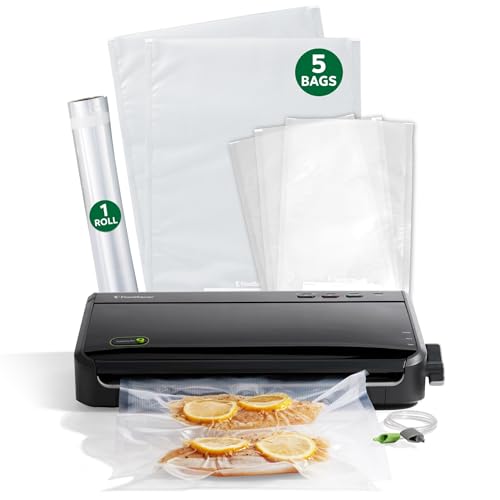
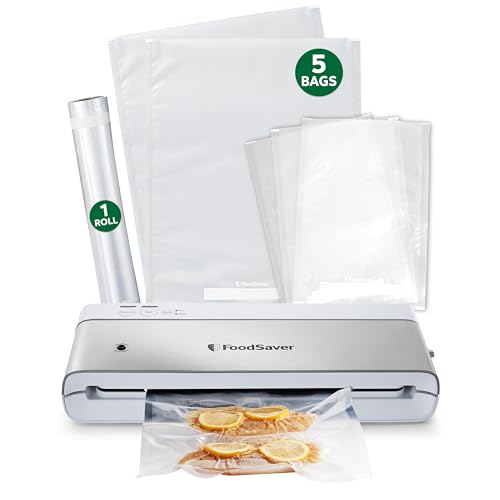
- FoodSaver FM2100 Vacuum Sealer Machine
- FoodSaver V4400 2-in-1 Vacuum Sealer Machine
Read the full guide ↓ before the next catch comes home — fish punishes sloppy sealing faster than any other food, and the pat-dry, pulse-or-chill routine below is the whole craft. Learn it on one modest evening’s catch and it will serve every season that follows, on every machine in this guide, without costing you a single ruined fillet in the learning.
The best vacuum sealers for fish have to master the hardest combination in home food storage: a food that is wet, delicate, perishable, and armed with bones. A fillet weeps moisture toward every seal; a strong vacuum crushes the flesh it is meant to protect; a pin bone works through film in a crowded freezer; and fish, more than any protein, announces every hour of delay between the water and the freezer. The best vacuum sealers for fish are therefore not simply the strongest machines, but the most controllable ones — pulse modes that stop the draw before a fillet flattens, moist programs that weld through the damp, drip management for a counter covered in the day’s catch — backed by the handling discipline this guide teaches: chill hard, pat dry, portion flat, seal once and seal right.
We verified all six picks against their current listings and invented nothing: stated figures are printed as stated, modes are claimed only where named, and the one machine here with a stated pulse mode is identified as such. The field spans the angler’s whole reality — the UPRUBE’s precision station for the big processing evening, the FM2100’s roll-fed workflow for a freezer season, handhelds for the single fish that becomes tonight’s dinner. Readers whose catch shares the freezer with game will find the companion logic in Best Vacuum Sealers For Hunters; the proteins differ, but the religion — cold, dry surfaces, honest seals — is the same.
Key Takeaways
- Pulse control is the fish feature: the UPRUBE’s pulse mode stops the vacuum before a delicate fillet crushes or its juices flood the seal.
- Moist and wet modes exist for exactly this food — the FM2100’s moist setting and the VACLER’s Wet mode adjust the seal for damp fillets.
- Chill and pat dry before sealing: cold, surface-dry fish seals stronger, freezes faster, and keeps its texture.
- Pad the bones or remove them: a folded piece of bag film over a pin bone prevents the pinhole that silently kills a month of storage.
- The FM2100 is the freezer-season workhorse — roll storage for catch-sized bags, one-touch consistency across a long evening.
- Freeze flat, label with species and date, and eat the oldest first: fish rewards rotation more than any other protein.
- The hours before sealing decide more than the machine: an iced, promptly processed catch sealed on a modest machine will out-eat a neglected catch sealed on the finest one in this guide.
- Keep a fish-only habit of wiping the machine down the same evening: the session’s last five minutes of cleaning are what the next session’s first seal silently depends on.
- Freeze every portion flat on a tray before stacking: flat fish freezes in a fraction of the time, thaws in minutes, and turns a chaotic freezer into a filed library of dinners.
In this guide
Quick Picks
| Pick | Badge | Standout detail from the listing | Link |
|---|---|---|---|
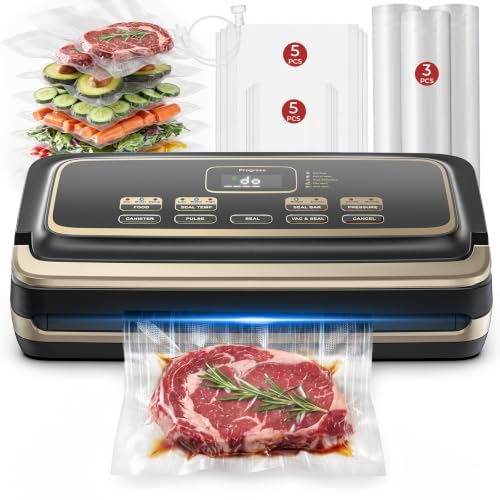
| UPRUBE Vacuum Sealer 95kPa | Best Overall for Fish | 9-in-1 with pulse, moist and dry modes, 12L/min, digital timer, cutter and bag storage, 10 ft roll | Check on Amazon |
| Chef Preserve Compact | Best Handheld Portions | Handheld portable sealer with 30 reusable vacuum bags included | Check on Amazon |
| VACLER Vacuum Sealer | Best Mode Variety | 6-in-1 smart modes including Wet and Dry; bag cutter; 20 bags and vacuum hose included | Check on Amazon |
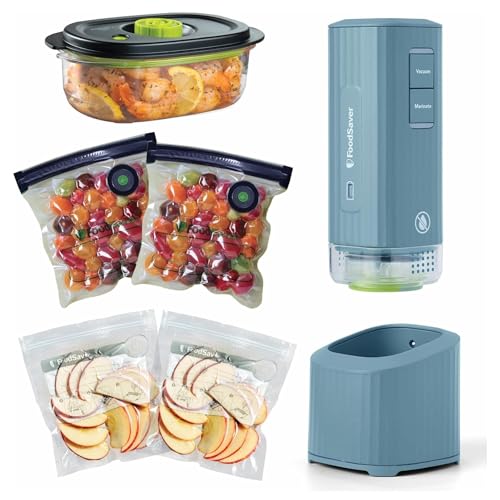
| FoodSaver Mini Handheld | Best for Tonight’s Catch | Cordless handheld with marinate setting and charging dock | Check on Amazon |
| FoodSaver FM2100 | Best for Freezer Seasons | One-touch sealing, roll storage and cutter, dry and moist modes, accessory port and hose | Check on Amazon |
| FoodSaver V4400 2-in-1 | Best Premium | 2-in-1 design with automatic bag detection and starter kit | Check on Amazon |
How These Picks Were Chosen
This is a research-led guide. Each machine was verified against its current listing data — exact name, stated figures where given, named modes, box contents — and then ranked for fish specifically, on four criteria in order. First, vacuum control: can the operator stop the draw at the fillet’s limit rather than the machine’s? Only the UPRUBE states a pulse mode in this field, and it leads for that verifiable reason. Second, wet-seal competence: named moist or wet programs (FM2100, VACLER) that adjust sealing for damp food. Third, session design: roll storage and cutters for catch-sized bags, detection systems that keep seals consistent across a long processing evening, and cleanable paths for the inevitable moisture. Fourth, format fit: handhelds for the single-fish, same-day rhythm that is most anglers’ most common catch.
We did not reward raw vacuum strength for its own sake anywhere in this ranking — on fish, strength unmanaged is a texture problem — and we did not claim features the listings do not state. A final filter deserves naming: every machine here had to make sense at a fish-cleaning table, not just a showroom counter. That means controls operable with damp hands, surfaces that wipe down without a forensic kit, and a footprint that survives sharing a counter with a cooler, a board, and a knife roll. Fish work is wet, cold, and hurried at the edges; equipment that respects that reality earned its ranking as surely as any specification did. Where a machine’s fish method depends on technique rather than a named feature, the review says so and the how-to section teaches the technique. The same machines serve the marinade-heavy kitchen in Best Vacuum Sealers For Marinades, where the liquid management learned on fish becomes the main event.
The 6 Best Vacuum Sealers for Fish

UPRUBE Vacuum Sealer, 95kPa, 9-in-1
Badge: Best Overall for Fish
Strengths
- Pulse mode — the only stated pulse in this guide — stops the draw before fillets crush or juices migrate.
- Moist mode for the standard damp fillet, dry mode for smoked and cured fish, all in one station.
- Digital timer repeats a proven gentle cycle across a whole catch, and the stated 12L/min draw keeps sessions moving.
Trade-offs
- Nine functions require one learning session before the first big evening feels fluent.
- Stated power (135W) trails the category’s biggest figures, though its 95kPa vacuum class does not.
- Feature depth is wasted on the angler who freezes two fish a year.
Mini spec box
- Type: external countertop vacuum sealer
- Vacuum: 95kPa (as stated in listing)
- Speed: 12L/min (as stated in listing)
- Power: 135W (as stated in listing)
- Modes: dry / moist / pulse, 9-in-1 functions
- Features: digital timer, easy-tear cutter, bag storage
- Included: 10 ft bag roll
Fish sealing is a stopping problem: the perfect bag is evacuated to the precise point where the fillet is snug, the juices are still in the flesh, and the seal zone is dry — and that point arrives at a different moment for a trout than for a salmon steak. The UPRUBE is the only machine here that hands that moment to the cook, through its pulse mode, and then lets the cook keep it, through a digital timer that repeats the found cycle across the evening’s remaining bags. That combination — judgment, then repeatability — is exactly what a processing session needs, and it is why this machine leads a category where control outranks power.
The supporting cast is complete: moist mode for the routine damp fillet when pulse attention is spent, a fast stated draw that shortens each bag’s exposure, cutter and storage for catch-sized bags, and a full roll in the box. Its honest costs are the learning curve and the truth that a two-fish-a-year household will never touch most of it. For the angler who comes home with a cooler and a plan — or the market buyer who portions a whole fish weekly — the UPRUBE is the most capable fish tool in this guide, and its gentle repeatability extends naturally to the bath work in Best Vacuum Sealers For Sous Vide, where fish is the least forgiving protein of all.
Best for: regular anglers and whole-fish buyers who process in sessions / Not suited for: occasional fish cooks or one-button minimalists

Chef Preserve Compact Vacuum Sealer
Badge: Best Handheld Portions
Strengths
- Stop-anytime handheld draw: watch the fillet, end the vacuum at snug — gentleness without a mode menu.
- Thirty reusable bags included: portion the week’s fish with no film stream at all.
- Portable to the dock, the camp, or the cleaning table — seal where the fish are.
Trade-offs
- No welded seal: a season of freezer storage belongs to countertop machines.
- Not a volume tool for a boat-limit evening.
- Closed reusable-bag format.
Mini spec box
- Type: handheld vacuum sealer
- Included: 30 reusable vacuum bags
- Format: compact, portable
Most fish, in most households, is not a season’s catch — it is tonight’s fillets and tomorrow’s leftovers, and the Chef Preserve is built for that honest scale. Its handheld draw is inherently fish-friendly: the operator watches the bag settle onto the fillet and stops, which is the same judgment a pulse button formalizes, delivered by the simplest possible tool. Portions ride in reusable bags that return to service after a wash, and the unit travels — to the fish-cleaning station, the lakeside cabin, the camper — in a way no countertop machine pretends to.
The boundary is storage depth. A valve-bag seal is excellent for the fridge week and respectable for short freezer stays, but the angler banking a season of salmon should weld those bags on a countertop machine and let the Chef Preserve run the daily rhythm. Used within its brief, it is the lowest-cost, lowest-fuss fish sealer in this guide — and the one most likely to be within arm’s reach when a single perfect fish comes home on a Tuesday.
Best for: daily fish portions, small households, dock and camp use / Not suited for: season-long freezer banking or volume processing

VACLER Vacuum Sealer Machine, 6-in-1 Smart Modes
Badge: Best Mode Variety
Strengths
- A named Wet mode — a program built for the exact condition fish presents at the seal bar.
- Six smart modes span the rest of the catch-day kitchen, from rice to freezer portions.
- Vacuum hose and twenty bags included: container marinating and a real starter supply.
Trade-offs
- Programs, not pulse: the softest fresh fillets still deserve a pre-chill until firm.
- Compact body and standard pace for the longest sessions.
- Mode mapping takes a few fish to learn.
Mini spec box
- Type: external countertop vacuum sealer
- Modes: 6-in-1 smart modes (Rice, Wet, Dry named in listing)
- Included: bag cutter, 20 bags, vacuum hose
- Operation: automatic
The VACLER approaches fish the way a thoughtful program should: it names the problem. Its Wet mode exists because damp food defeats naive seal cycles, and fish is the dampest food in the kitchen — a dedicated program that adjusts for moisture at the seal is a direct answer to the fillet’s first challenge. For the second challenge, delicacy, the VACLER asks the cook to meet it halfway with the pre-chill: firm the fillets in the freezer until just stiff, and the program’s cycle seals them without deformation. That division of labor — machine handles moisture, cook handles temperature — produces reliably excellent results once it becomes habit.
The hose adds the marinade chapter: fish takes marinade faster under vacuum in a compatible container, and the same machine that sealed the catch can prep tonight’s portion. Twenty included bags start the system honestly. Where the VACLER concedes to the UPRUBE is manual command — there is no pulse to feather a truly soft, fresh fillet — and to the FM2100 in roll-fed session flow. For the mixed kitchen whose fish arrives weekly rather than by the cooler-load, it is a versatile, well-judged middle path.
Best for: weekly fish households wanting a Wet program and container options / Not suited for: fresh-soft fillet purists who want pulse control
FoodSaver Mini Handheld Vacuum Sealer
Badge: Best for Tonight’s Catch
Strengths
- Cordless, dock-kept, instant: the single fish gets sealed in seconds, at the counter where it was filleted.
- Marinate setting turns the same tool to tonight’s preparation — vacuum-marinated fish in a fraction of the passive time.
- Gentle handheld draw suits small, delicate portions by design.
Trade-offs
- Reusable valve-bag format only — no welded seals for the deep freezer season.
- Not a session tool for a full cooler.
- Per-bag format cost is recovered only through genuine reuse.
Mini spec box
- Type: handheld vacuum sealer
- Power: cordless, rechargeable, with charging dock
- Special feature: marinate setting
- Color: blue
The Mini’s fish story is about the fish that is not a project: the single trout, the market fillet bought for tonight, the two portions left from a larger cook. For those, a countertop session is overkill that quietly discourages sealing at all — and unsealed fish is where quality goes to die. The Mini removes the excuse. It lives charged in its dock, draws a reusable bag down gently over a portion, and returns to its dock, in less time than it takes to describe. The fish that gets sealed is the fish that tastes right on Thursday.
Its marinate setting gives tonight’s catch a second act, pulling marinade into the flesh actively instead of waiting on osmosis and optimism. The limits are the handheld limits — format, scale, and a valve seal that should not be asked to guard a season — and within them the Mini is complete. Many serious fish households will run exactly this pairing: a Mini for the daily rhythm, a countertop welder for the season’s banking, and no fish in the house ever stored badly again. Home-use generalists can see that two-tool logic in its wider form in Best Vacuum Sealers For Home Use.
Best for: single fish, daily portions, marinating, small kitchens / Not suited for: cooler-load processing or season banking

FoodSaver FM2100 Vacuum Sealer Machine
Badge: Best for Freezer Seasons
Strengths
- Moist mode answers the damp fillet directly, adjusting the seal where fish seals usually fail.
- Roll storage and cutter size bags to the catch — a whole side, a pair of fillets, a single steak — with no wasted film.
- One-touch consistency across a long processing evening, plus a hose for containers and marinades.
Trade-offs
- No pulse mode: the softest fresh fillets need the pre-chill discipline.
- Full countertop footprint.
- Automation trades manual command for consistency.
Mini spec box
- Type: external countertop vacuum sealer
- Modes: dry and moist food settings, one-touch sealing
- Storage: built-in roll storage with cutter
- Included: accessory port and hose, starter bags and roll
When the catch is a season — the salmon run, the charter trip, the market’s whole-fish bargain — the FM2100 is the production answer. Its workflow is built for volume with quality held constant: bags cut from the roll to each portion’s true size, one-touch cycles that do not drift as the evening lengthens, and a moist mode that keeps welding through the damp reality of fish work. A processing evening is a test of consistency more than peak performance, and the FM2100 is the consistency machine in this guide — the one whose fiftieth seal looks like its fifth.
The hose extends it to the marinade containers and canister storage around the catch, and the brand’s long ecosystem means film is never a research project. Its one real concession to the UPRUBE is the absence of pulse: fresh, soft fillets should be pre-chilled until firm before their cycle, a step most season-processors build into the workflow anyway, since fish bound for months in the freezer benefits from entering it already cold and hard. Run that discipline and the FM2100 will bank a season of fish that thaws like it was caught last week. Butcher-scale readers pushing beyond home volume will find the next rung discussed in Best Vacuum Sealers For Small Butcher Shop.
Best for: season banking, whole-fish portioning, long processing evenings / Not suited for: unfrozen soft fillets sealed without a pre-chill
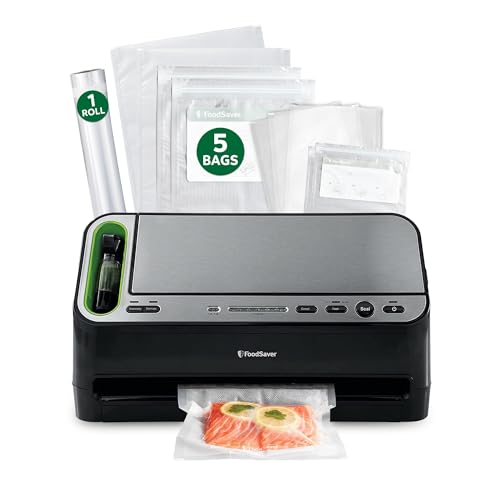
FoodSaver V4400 2-in-1 Vacuum Sealer Machine
Badge: Best Premium
Strengths
- Two rhythms in one appliance: welded seals for the season’s banking, integrated handheld for tonight’s portions.
- Automatic bag detection defends seal quality when a long evening erodes the operator’s care.
- Starter kit included across both systems.
Trade-offs
- Premium tier, justified only when both halves work weekly.
- No pulse mode named for the most delicate fresh work.
- The most complex machine here to keep clean after wet sessions.
Mini spec box
- Type: 2-in-1 external sealer with integrated handheld function
- Automation: automatic vacuum sealer bag detection
- Included: starter kit
The V4400 is the fish household’s consolidated station. Its countertop half banks the season with welded seals and bag detection standing guard over the operator’s fading attention; its handheld half runs the daily rhythm of portions and reseals without a second device, charger, or drawer. For a household that genuinely fishes, buys whole fish, and cooks fish weekly, that consolidation is not luxury — it is the difference between a system and a pile of gadgets, and systems are what actually get used in February.
The premium discipline applies: both halves must work for their living, or the money belongs in the FM2100 and a separate handheld bought later if the need proves real. Delicate fresh work still leans on pre-chilling, since no pulse is named. But as the single-appliance answer to a serious fish kitchen — market, season, and Tuesday all covered — the V4400 has no rival in this list, and its detection-guarded consistency is a quiet safety net under every bag it seals.
Best for: serious fish households wanting one station for daily and seasonal work / Not suited for: single-rhythm kitchens or pulse seekers
Comparison Table
| Pick | Type | Fish-relevant features | Included extras | Link |
|---|---|---|---|---|
| UPRUBE | External countertop | Pulse + timer, moist mode, 95kPa, 12L/min | 10 ft roll | Check on Amazon |
| Chef Preserve | Handheld | Stop-anytime draw, reusable bags | 30 reusable bags | Check on Amazon |
| VACLER | External countertop | 6-in-1 modes incl. Wet; hose | 20 bags, vacuum hose | Check on Amazon |
| FoodSaver Mini | Handheld, cordless | Marinate setting, dock-kept | Charging dock | Check on Amazon |
| FoodSaver FM2100 | External countertop | Moist mode, roll storage + cutter, hose | Accessory hose, starter bags & roll | Check on Amazon |
| FoodSaver V4400 | 2-in-1 | Bag detection; countertop + handheld | Starter kit | Check on Amazon |
How to Choose a Vacuum Sealer for Fish
Decide your dominant catch. Daily single fish point to handhelds or a 2-in-1; weekly whole-fish portioning points to a mode-rich countertop machine; seasonal volume points to roll-fed consistency or pulse precision. The dominant pattern, not the biggest day of the year, should choose the machine — the biggest day can borrow technique, but the weekly rhythm cannot borrow convenience.
Insist on a wet answer. Every fish is a wet seal waiting to fail. Your machine should answer with a named moist or wet program, a pulse mode that stops the draw early, or — at minimum — your own committed pre-chill routine. If none of the three is in place, the freezer will conduct the lesson expensively.
Protect texture as a first-class goal. Fish flesh is the easiest protein to ruin with kindness: too much vacuum, too warm a start, too slow a freeze. Pulse control, pre-chilling, and flat freezing are texture tools. A buyer who eats their catch with pride should rank them above every headline specification.
Think about who eats the fish. A household feeding children and guests from its catch has a labeling and rotation duty a solo angler can relax: species identification matters for allergies and preferences, and the date matters for everyone. Machines that produce consistent, inspectable seals — and cooks who label like they mean it — turn a freezer of fish into a menu the whole household can trust, which is the social end of all this technique.
Plan the odor and hygiene side. Fish sessions are messy and aromatic. Cleanable channels, hoses and trays that rinse, and a machine that wipes down without crevices hoarding the day’s work will still be pleasant in month six. The best fish sealer is partly a cleaning decision.
How to Seal Fish Perfectly, Step by Step
- Chill hard and early. The clock starts at the catch. Ice immediately, refrigerate on return, and process cold — quality is decided before the sealer is switched on.
- Portion and pat dry. Cut portions to meal size, remove or pad pin bones, and pat every surface dry. A dry seal zone is the difference between a weld and a wish.
- Pre-chill soft fillets until firm. A short spell on a freezer tray firms delicate flesh so the cycle cannot crush it — mandatory on machines without pulse.
- Choose control appropriate to the fish. Pulse and stop at snug for fresh delicate work; moist or wet mode for the standard damp fillet; dry mode for smoked and cured fish.
- Seal with headspace, inspect the band. Keep juices below the seal line, then read the seal: even, clear, channel-free. Reseal any doubt in a clean section — the bath and the freezer will find what you forgive.
- Freeze flat, label fully. Species, cut, date, and weight if you track it. Flat packages freeze fast, stack tight, and thaw in minutes under cold water.
Troubleshooting. Problem: the bag puffs in the freezer within weeks → a pin bone pinholed the film or a channel crossed the seal; pad bones, double-bag the sharpest portions, and inspect seals before freezing. Problem: liquid floods the seal area → the fish was too warm and wet; pat drier, pre-chill longer, pulse earlier, and add headspace. Problem: texture turns mushy after thawing → the fish froze too slowly or was crushed fresh; freeze portions flat and cold, and never seal a soft fresh fillet on a full automatic cycle.
Whole Fish, Fillets, and Steaks: Portioning Notes
Different cuts ask slightly different things of the same machine. Fillets are the delicate standard: skin-on portions protect flesh in the freezer and portion cleanly; skinless fillets are the pulse-and-pre-chill aristocracy, rewarding every gram of care. Steaks and cross-cut portions are sturdier and carry bone — pad the bone ends and give them the freezer’s calm corner, away from the bags they might puncture. Whole cleaned fish freeze beautifully for baking whole, sealed in a roll-cut bag sized with headspace to spare; they are the strongest argument for roll-fed machines, since no pre-cut bag anticipates a whole fish. Smoked and cured fish are the easy aristocrats — dry, firm, and tolerant of a standard cycle — but their oils are potent, so seal them in their own bags and store them away from the delicate white fish whose flavor they would happily colonize. Across all cuts, one rule never changes: the fish you seal cold, dry, and flat is the fish you will be proud to thaw.
From Water to Freezer: The Timeline That Decides Quality
Ask a fishmonger what ruins fish and they will not mention freezers; they will mention hours. The quality of a sealed fillet is largely written before the sealer is unboxed: how fast the catch was iced, how cold it stayed, how gently it was handled. The home processor’s version of that discipline is a timeline with no warm gaps — cooler to fridge, fridge to portioning board, board to pre-chill, pre-chill to sealer, sealer to the freezer’s coldest shelf — executed as one continuous errand rather than a series of intentions separated by phone calls and side quests. Market buyers run the same clock from the fish counter instead of the dock, and it is just as unforgiving: buy fish last, drive it home cold, and portion it before anything else in the bag warms up.
There is a second, quieter timeline inside the freezer itself. Fish is the protein least tolerant of the slow fade — its fats oxidize toward stale flavors even in good storage, lean fish drying as fatty fish turns. Vacuum sealing slows that clock more than any other home method, which is precisely why the labeling and rotation discipline in this guide is written so strictly for fish: species and date on every bag, oldest eaten first, fatty species given priority in the meal plan. A household that seals brilliantly and rotates carelessly will still eat mediocre fish in month four; a household that does both will eat fish in month four that tastes like the week it was caught. The machine provides the possibility. The timelines provide the result.
Smoked, Cured, and Cooked Fish: The Easy Cases Done Right
Not all fish arrives at the sealer raw and weeping. Smoked fish is the sealer’s friend — firm, surface-dry, and built for storage — and a standard dry cycle serves it perfectly; its one demand is isolation, since smoke perfume migrates through a shared freezer’s micro-leaks and colonizes innocent butter and white fish alike. Cured and marinated raw preparations sit at the wet end: seal them with the moist program or a pulse stop, keep their liquids below the seal line, and treat their storage life with the respect due to any ready-to-eat food. Cooked fish — the leftover fillet, the poached salmon for tomorrow’s salad — seals well once fully chilled, and benefits from the gentlest draw in the house, since cooked flesh is the most fragile state of all. Across the three, the pattern is the guide’s refrain in new clothes: match the cycle to the fish’s actual condition, not to the word “fish” — the listings’ mode menus exist because condition, not category, is what a seal responds to.
Thawing and Cooking: The Sealed Bag’s Second Shift
A well-sealed bag keeps working after the freezer. Thaw in the bag, in the fridge or under cold running water, and the fillet never sits in its own meltwater or picks up the fridge’s odors on its last journey. For sous vide cooks, the sealed portion can travel from freezer discipline to bath discipline with the same seal integrity this guide has been preaching — which is why the double-seal habit pays twice for fish that will be cooked in the bag. At the stove, dry the surface thoroughly before any sear; the crispest skin starts with the driest fillet, and the vacuum bag, having excluded air for weeks, now owes the fish one dry minute on a towel. Serve, and notice what the whole system bought: a fish whose texture and flavor survived its storage intact. That outcome — not the gadget, not the specification — is what the best vacuum sealers for fish are actually for, and every technique in this article exists to deliver it reliably, catch after catch, season after season.
Common Buying Mistakes
- Sealing warm, wet fish on a full cycle. The founding error of fish storage. Chill, dry, then seal.
- Ignoring pin bones. One unpadded bone can silently void a month of storage. Pad or remove, every time.
- Buying strength without control. On fish, an unstoppable vacuum is a texture hazard. Pulse and moist modes are the specifications that matter.
- Freezing in a pile. Bags frozen in a heap freeze slowly and thaw worse. Flat, always flat.
- Vague labels. “Fish, March” is a riddle. Species, cut, and date are the label.
- Letting the catch wait. Hours at room temperature cannot be sealed away. The sealer preserves quality; it cannot create it retroactively.
The Cleaning Station: Hygiene After a Fish Session
Fish is the session that tests a kitchen’s hygiene, and the sealer sits at its center. Work on a board you can sanitize, keep raw fish and its tools on one side of the sink and finished bags on the other, and wipe the machine’s channel and seal area between the messy middle of the session and its end — fish moisture in a warm channel is tomorrow’s off-flavor delivered to innocent food. Rinse hoses and trays the same evening, not the same week. Wash hands and boards before the labeling step, so the marker work that finishes each bag is done with clean hands on clean film. None of this is exotic; it is the ordinary discipline of a fish kitchen, applied to the one appliance that touches every portion. Households that build the cleaning into the session’s rhythm — wipe, rinse, sanitize as stations, not as an aftermath — find the machine stays neutral-smelling and the next session starts clean, which is a quality feature no listing can sell you and every fish cook eventually learns to prize.
A last word of calibration before the verdict: if your fish life is a market fillet twice a month, the handhelds and mid-list machines in this guide will serve you completely, and the leaders’ control systems are insurance you may never claim. If your fish life is a season — a freezer that must perform from the autumn run to the spring thaw — buy the control, the moist competence, and the session consistency without a second thought, because the cost of the machine disappears into the value of the catch it protects. Know which angler you are, and the list ranks itself.
Final Recommendation
Buy the UPRUBE 95kPa Vacuum Sealer — Check on Amazon. Its pulse mode is the single most valuable fish feature in this guide, its timer makes gentle sealing repeatable across a whole catch, and its moist mode covers the routine work in between. Choose the FM2100 if your pattern is seasonal volume and roll-fed consistency, the VACLER if you want a Wet program with container versatility, and a handheld if your fish life is one perfect portion at a time. Whichever machine you choose, learn the cold-dry-flat discipline in your first session — on fish, the cook’s hands are half the specification.
Frequently Asked Questions
Should I rinse fish before vacuum sealing?
A brief cold rinse to remove scales and debris is fine — then pat the fish thoroughly dry, because surface water is the enemy of the seal and of texture. The goal at the sealer is a cold, clean, dry-surfaced portion. Excess handling and soaking only work against all three.
How long does vacuum-sealed fish keep in the freezer?
Far longer than wrapped fish, because the sealed bag blocks the drying and oxidation behind freezer burn and stale flavors. The real limits are how fresh and cold the fish was at sealing and how well rotation is kept. Seal promptly, freeze flat, label with species and date, and eat the oldest first — fatty fish sooner than lean.
Can I vacuum seal a whole fish?
Yes — cleaned, chilled, patted dry, and placed in a bag cut to size with generous headspace, which is why roll-fed machines suit whole-fish households. Pad any fin or bone points that press the film, freeze the package flat, and give it a calm corner of the freezer where heavier items will not grind against it.
Why does my fish taste mushy after freezing?
Usually slow freezing or crushing before freezing: large ice crystals and compressed flesh both wreck texture. Portion the fish, pre-chill until firm, seal without crushing (pulse, or a firmed fillet on a standard cycle), and freeze flat in the coldest part of the freezer. Thaw in the fridge or under cold water, still sealed.
Is it better to freeze fish before or after sealing?
Seal first, then freeze, for most fish — the bag protects the surface through freezing. The exception is technique, not order: soft fillets get a brief pre-chill to firm them before the sealing cycle, then the sealed bag goes straight into the freezer. That is chilling for the sealer’s benefit, not freezing before sealing.
Should I leave the skin on when sealing fish?
For freezer storage, usually yes: skin protects the flesh from drying and handling, holds delicate fillets together, and can be removed after thawing if the dish wants it gone. The exception is fish you will cook skinless in a delicate preparation, where portioning skinless from the start saves a fiddly step later. Either way, scales should be fully removed and the surface patted dry before the bag.
How do I keep fish odor out of the rest of the freezer?
Sealed properly, fish odor largely stays in the bag — that is one of vacuum sealing’s quiet gifts. Help it by sealing fish in its own bags (never mixed with other foods), double-bagging the most aromatic smoked fish, and keeping the freezer’s fish in one zone. A bag that puffs or leaks should be resealed promptly; odor escape is usually a failed seal announcing itself.
What is the best way to thaw vacuum-sealed fish?
Overnight in the fridge, still sealed, for the gentlest result — or under cold running water, still sealed, when time is short; a flat portion thaws remarkably fast. Never thaw at room temperature, and never in warm water. Once thawed, open the bag, pat the fish dry, and cook it that day; the bag’s protection ends at the thaw, and the clock resumes.
Do I need to scale and gut fish before sealing?
Yes — seal only cleaned fish: gutted, gilled where appropriate, and scaled if it will be cooked with skin. Sealing an uncleaned fish preserves everything you meant to remove and makes the eventual preparation miserable. Portioning before sealing is usually wiser than sealing whole for home freezers, since portions thaw evenly and the freezer files them flat.
What about shellfish and shrimp?
The same rules, with one addition: shells are armor against the fish and a weapon against the bag. Peel shrimp for the cleanest storage, or seal shell-on shrimp frozen firm in a double bag. Scallops, being shell-free and delicate, are pulse-and-pre-chill aristocracy like skinless fillets. Crab and lobster in shell should be cooked, picked, and sealed as meat whenever the freezer is the destination.
Is vacuum sealing worth it for store-bought fish?
Yes — arguably more predictably than for caught fish, since the starting quality is consistent and the enemy is purely time. Retail fillets are typically packed for a day or two of fridge life; portioned and vacuum sealed the day of purchase, they hold their quality far longer in the fridge and freeze beautifully for the weeks when the market’s prices or your schedule turn. The same pat-dry, chill, and seal discipline applies, minus the dock.
How do I stop fillets from curling in the bag?
Curling comes from uneven contraction as the vacuum tightens, worst on thin, skinless fillets sealed warm and soft. Pre-chill until firm and lay the fillet flat with the bag smoothed beneath it before the cycle; the film then sets the shape the fish already holds. A fillet sealed flat also freezes and thaws evenly, so the fix pays twice.
Can I reseal fish after opening a bag?
For fridge use within the food’s safe life, a handheld reusable bag is ideal for open-take-reseal rhythms. With heat-seal bags, resealing is possible if enough clean bag length remains, but treat thawed fish with normal perishable discipline — sealing extends quality, it does not reset the clock, and fish that has been thawed should be cooked rather than refrozen raw.