Disclosure: topratedkitchenware.com is reader-supported. When you buy through links on our site, we may earn an affiliate commission from Amazon and other retailers, at no extra cost to you.
Where to buy
This guide to the best vacuum sealers for marinades favours machines with moist or pulse control and easy cleaning, because marinating is the wettest job in vacuum sealing. All six picks are verified and linked so you can check the latest price on Amazon; one is a handheld for small batches, and the other five are countertop external machines for bag-based marinating.
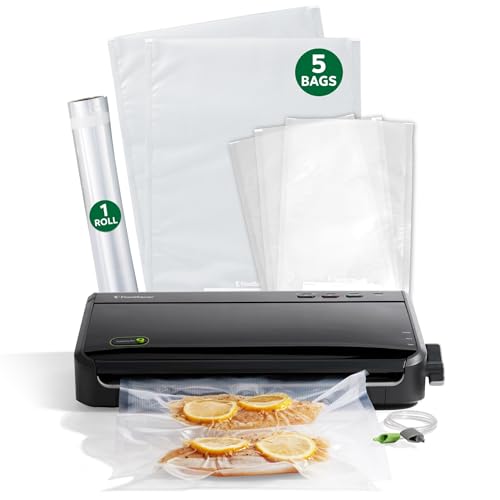
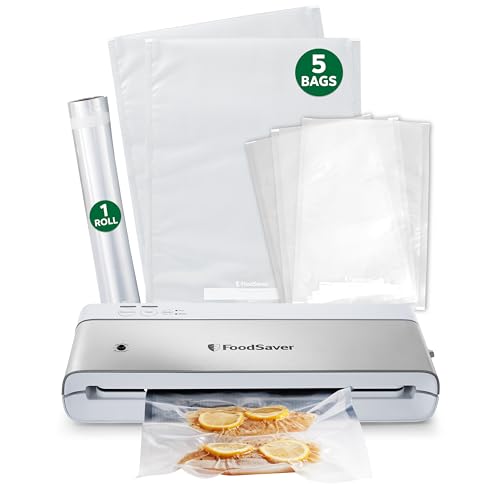
- FoodSaver Compact Vacuum Sealer Machine — Best Compact. A small external machine supplied with bags and a roll.
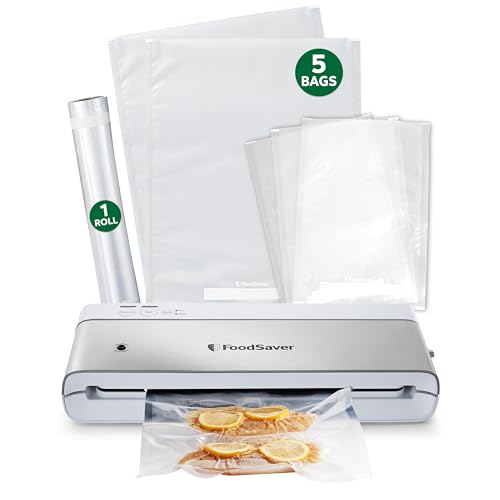
- FoodSaver PowerVac Compact VS0150 — Best for Everyday Wet and Dry. A vertical-storage compact stated for both dry and wet food.
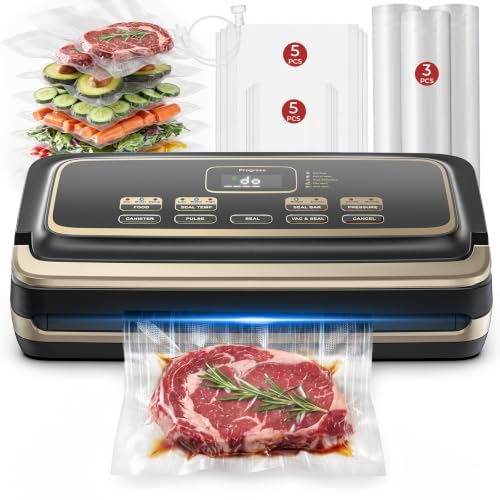
- ROUUO Vacuum Sealer 95kpa — Best Overall for Marinades. Pulse mode, a removable drip tray and moist sealing for liquid control.
- Bonsenkitchen Vacuum Sealer Machine — Best Simple External. A straightforward compact external system with multiple modes.
- UPRUBE Vacuum Sealer 95kPa — Best for Speed and Control. Fast stated draw, pulse mode and a digital timer.
- Chef Preserve Compact Vacuum Sealer — Best Handheld for Small Batches. A portable handheld supplied with thirty reusable bags.
Read the full guide ↓ for badges, trade-offs, a comparison table and the wet-sealing technique that keeps marinade in the bag and out of the machine.
The best vacuum sealers for marinades solve a problem ordinary sealing never meets: the food is deliberately wet. A marinade only works in contact with the meat, yet every drop of it wants to travel up the bag toward the seal the moment the vacuum starts, and liquid crossing the seal zone is the single most reliable way to produce a weak, leaking seam. So this category is not really about vacuum strength. It is about control — the ability to draw air out, watch the liquid climb, and stop the cycle at the moment the bag is tight but the seal zone is still dry. Pulse modes, moist settings and drip trays are the features that matter here, and this guide weights them above everything else.
Vacuum marinating also changes the cooking itself. With air removed, the marinade is held against every surface of the food instead of pooling at the bottom of a dish, and the contact is even across folds and crevices that a zip bag in the fridge never reaches. Cooks use the method to shorten marinating time and, just as often, to freeze meat already in its marinade, so a weeknight meal thaws ready-seasoned. Both uses place the same demand on the machine: seal liquid-adjacent food, cleanly, again and again, without drama. The six picks below were chosen for exactly that demand, at scales from a single chicken breast in a handheld’s reusable bag to a full batch of chops on a countertop machine. If your marinating is mostly a prelude to water-bath cooking, our Best Vacuum Sealers For Sous Vide guide covers the overlap in more depth.
Key Takeaways
- The ROUUO is the best marinade pick overall: pulse mode lets you stop the draw before liquid reaches the seal, and its removable drip tray makes wet work easy to clean.
- The UPRUBE matches it on pulse control and adds a fast stated draw and a digital timer for repeatable batches.
- Technique matters as much as hardware: chill the marinade, leave generous headroom, hang the bag edge over the counter if needed, and seal twice for bags that will be frozen.
- The Chef Preserve handheld suits small, fridge-bound marinade batches in its reusable bags; countertop machines suit freezer-bound batches from rolls.
- Never fill a bag with marinade like a soup pouch — a few spoonfuls per portion flavours the food; excess liquid only fights the seal.
- Label marinated bags with the marinade and the date; thawed, they all look identical and cook very differently.
- Freeze marinated bags flat in a single layer first, then stack them; a thin, even marinade layer thaws faster and cooks more evenly than a frozen lump.
In this guide
Quick Picks
| Pick | Badge | Format | Marinade-relevant feature |
|---|---|---|---|
| FoodSaver Compact | Best Compact | Compact external | Bags and roll included |
| FoodSaver PowerVac VS0150 | Best for Everyday Wet and Dry | Compact external | Stated for dry and wet food, stores vertically |
| ROUUO Vacuum Sealer 95kpa | Best Overall for Marinades | External | Pulse mode, removable drip tray, moist mode |
| Bonsenkitchen Vacuum Sealer | Best Simple External | Compact external | Multiple modes, external system |
| UPRUBE Vacuum Sealer 95kPa | Best for Speed and Control | External | Pulse mode, digital timer, fast stated draw |
| Chef Preserve Compact | Best Handheld for Small Batches | Handheld | Thirty reusable bags included |
How These Picks Were Chosen
This is a research-led guide. We verified each pick’s format, stated modes and included supplies against its current listing, then re-weighted the field for wet work: pulse or moist control first, cleanability second, bag system third, and everything else after. Only products whose identity and core features could be confirmed are listed and linked. Two honest notes belong here. First, no home external sealer loves liquid; the winners are the machines that give the operator control and forgive the occasional escape, not machines that make technique unnecessary. Second, chamber sealers — a different class, discussed in our Best Vacuum Sealers For Small Butcher Shop guide — seal liquids more easily by design, but they are a heavy, fixed purchase that most home marinating never justifies. This list stays with the machines a home kitchen can actually own.
The 6 Best Vacuum Sealers for Marinades
FoodSaver Compact Vacuum Sealer Machine
Badge: Best Compact
Strengths
- Compact body suits the small, frequent marinade batches most home cooks actually make.
- Supplied with bags and a roll, so you can cut long bags with the extra headroom marinades demand.
- The listing names sous vide among its uses, so marinated bags can go straight from fridge to water bath.
Trade-offs
- No pulse mode is stated, so liquid control depends on headroom, chilling and using modest marinade quantities.
- No drip tray is stated; an escaped spoonful of marinade means a careful wipe-down of the seal area.
- Its compact pace suits batches of a few bags, not a dozen portions at once.
Spec box — verified from listing: Format: compact external sealer. Colour: white. Included: airtight bags and roll. Stated uses: sous vide and airtight food storage.
The Compact earns its place for the cook who marinates twice a week in small quantities and has no counter to spare. Its roll supply is quietly important for this job: marinating bags want to be cut long, because the extra inches between food and seal are your liquid safety margin, and a machine supplied with a roll lets you build that margin without rationing pre-cut bags. Used with a chilled marinade and a restrained hand — a few spoonfuls per portion, not a ladleful — it seals marinated portions cleanly and stores away in the space a hardback book would take.
Its honesty box is control. Without a stated pulse mode, you are the control system: watch the liquid, and if your machine allows the cycle to be stopped and sealed manually, learn that move before the first expensive cut is in the bag. Cooks who marinate large, juicy batches weekly will be happier with the pulse-equipped machines below; cooks who marinate modestly will find this little machine entirely sufficient and much easier to live with.
Best for: small, frequent marinade batches in small kitchens / Not suited for: large liquid-heavy batches needing pulse control
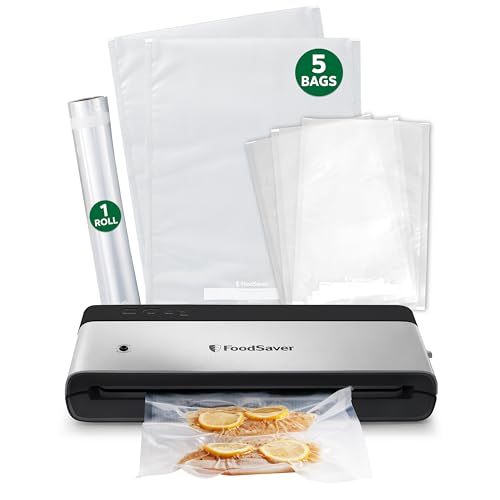
FoodSaver PowerVac Compact Vacuum Sealing Machine VS0150
Badge: Best for Everyday Wet and Dry
Strengths
- The listing explicitly covers both dry and wet food, which is the marinade brief in one line.
- Vertical storage keeps the machine in the kitchen, ready for the spontaneous marinade, not stored away from it.
- The listing states it reduces bag waste, which pairs well with portion-sized marinade bags cut to need.
Trade-offs
- No pulse mode or drip tray is stated, so very liquid marinades still need the chill-and-headroom technique.
- Compact working size limits the largest family-sized portions.
- Roll storage is not built in, so supplies live beside the machine.
Spec box — verified from listing: Model: VS0150. Format: compact external sealer with vertical storage. Finish: stainless steel and black. Stated foods: dry and wet.
Most marinating is not an event; it is a Tuesday decision — chicken in a spiced yoghurt mix tonight, pork in a citrus rub tomorrow. The PowerVac suits that pattern because it is present: stored upright in a narrow gap, it comes out in seconds, seals a wet portion with a cycle its listing explicitly rates for wet food, and goes back without a counter negotiation. That presence changes behaviour. Cooks marinate more, and waste less meat to indecision, when the tool is this easy to reach.
Treat it as an everyday wet-food machine rather than a precision instrument. It states no pulse control, so the liquid discipline in this guide — chilled marinade, modest quantity, generous headroom, seal zone kept dry — is part of the purchase. Observed, that discipline makes the PowerVac a thoroughly capable marinade sealer for family-sized work.
Best for: everyday wet-and-dry sealing in small kitchens / Not suited for: precision liquid control on very juicy batches

ROUUO Vacuum Sealer 95kpa Food Sealer
Badge: Best Overall for Marinades
Strengths
- Pulse mode is the marinade feature: draw air in short bursts, watch the liquid climb, and seal before it arrives.
- A removable drip tray catches the escapes that wet work eventually produces, and lifts out to be washed.
- Built-in bag storage and cutter, dry and moist modes, and three rolls plus ten bags included make it batch-ready from the box.
Trade-offs
- Its stated 95kpa draw is strong, so unattended full cycles can pull liquid fast; pulse is a habit, not an option, with marinades.
- It is a full working machine that wants a station, not a drawer.
- Attentive operation is required; this is the least set-and-forget machine in the list.
Spec box — verified from listing: Stated vacuum: 95kpa. Stated power: 230W. Modes: Dry/Moist and Pulse. Features: built-in bag storage and cutter, removable drip tray. Included: 3 bag rolls and 10 bags.
Everything about this machine’s listing reads like an answer to the marinade problem. Pulse mode gives the operator the stop button that wet sealing demands. The moist mode times the cycle for juicy food. The drip tray admits that even good operators occasionally lose a race with a runny marinade, and makes the consequence a washable tray rather than a gummed machine. Add roll storage and a cutter — long bags, cut on the spot, with the headroom liquid needs — and you have the most complete marinade workstation a home counter can hold. Marinated portions sealed here freeze beautifully, which connects this guide to the portioning discipline in our Best Vacuum Sealers For Meat article: season, seal, freeze flat, and dinner is half-made on the day you shop.
The single caution is respect for its strength. A powerful draw moves liquid quickly, so the pulse habit must be real: short bursts, eyes on the bag, seal early. Operators who want to press one button and walk away should choose a gentler machine and drier marinades. Operators who marinate often, in quantity, and sometimes for the freezer will find no better tool in this list.
Best for: frequent, batch and freezer-bound marinating / Not suited for: hands-off users who will not pulse and watch
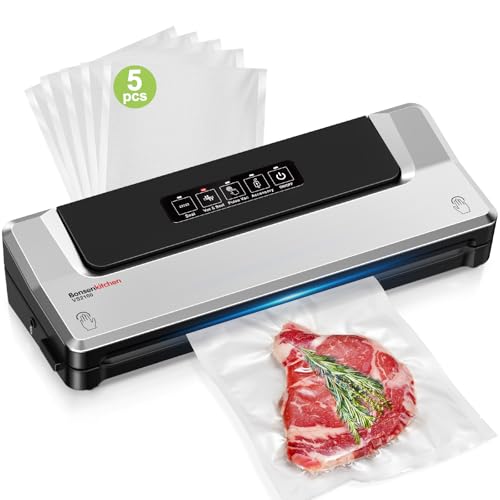
Bonsenkitchen Vacuum Sealer Machine
Badge: Best Simple External
Strengths
- Multiple modes in a simple compact external system, without the learning curve of the feature-heavy machines.
- The listing names meal prep and sous-vide among its work, which is exactly where marinated portions end up.
- Compact silver body stores between uses, suiting occasional marinators.
Trade-offs
- No pulse mode or drip tray is stated, so liquid control is technique-only.
- Only five bags are included; marinating from rolls or a stocked bag supply needs a separate order.
- Its external system is compact-class, so the largest portions need trimming to fit.
Spec box — verified from listing: Format: compact external vacuum system. Finish: silver. Modes: multiple modes for meal prep. Included: 5 vacuum bags. Stated uses: kitchen food storage and sous-vide.
The Bonsenkitchen is for the cook who marinates occasionally and wants a real external machine — real bags, real seals, freezer-capable results — without buying into the full feature ladder. Its multiple modes cover the ordinary run of prep work, and its compact body keeps the purchase honest for a small kitchen. For marinades specifically, it performs well with the drier end of the family: rubs with a little oil, pastes, yoghurt-thick mixtures and any marinade used sparingly, where liquid travel is slow and a standard cycle ends before the seal zone is threatened.
Stock it properly and respect its limits. Order bags or a roll before the first marinating session, because five included bags vanish in one batch, and use the freeze-first trick for genuinely runny mixtures: freeze the portion in its marinade until just firm, then seal, and the liquid problem disappears entirely. Within those habits, it is a sound, simple tool.
Best for: occasional marinating and meal prep in a compact format / Not suited for: runny, high-volume marinade batches without pulse control

UPRUBE Vacuum Sealer for Food, 95kPa
Badge: Best for Speed and Control
Strengths
- Pulse mode joins the ROUUO in giving the operator a true stop-and-seal control for liquids.
- A fast stated draw of 12L/min at 135W keeps batch sessions moving, and a digital timer makes cycles repeatable bag after bag.
- Cutter and bag storage are built in, with a ten-foot roll included, so long marinade bags are always available.
Trade-offs
- Speed cuts both ways with liquid: a fast draw reaches the seal zone sooner, so pulse discipline matters from the first bag.
- No removable drip tray is stated, so escapes need immediate wiping.
- The nine-in-one feature set takes a session or two to learn properly.
Spec box — verified from listing: Stated vacuum: 95kPa. Stated speed: 12L/min. Stated power: 135W. Modes: dry, moist and pulse, 9-in-1. Features: easy-tear cutter, bag storage, digital timer. Included: 10 ft bag roll.
If the ROUUO is the marinade workstation, the UPRUBE is the marinade production line. Its pulse mode provides the same essential liquid control, while the fast stated draw and digital timer serve the cook who seals the same portion ten times in a row — a tray of chops for the freezer, a batch of chicken for the week’s water-bath cooking — and wants every bag to behave identically. Repeatability is an underrated marinade virtue: bags sealed to the same point hold the same contact between food and marinade, so a batch cooks evenly later. The built-in storage and cutter keep the long-bag supply at hand, which, as this guide keeps insisting, is where wet sealing is won.
Learn it on dry food first. A machine this responsive rewards an operator who has practised the pulse rhythm before a bag of citrus marinade is at stake. Once the rhythm is yours, it is arguably the most efficient home marinating tool here, and a natural partner to the workflow in our Best Vacuum Sealers For Sous Vide Cooking guide.
Best for: repeatable batches and freezer meal prep with marinades / Not suited for: first-time users unwilling to practise pulse control

Chef Preserve Compact Vacuum Sealer for Food
Badge: Best Handheld for Small Batches
Strengths
- A portable handheld that seals reusable bags — thirty are included — which suits small marinade batches you open, use and reseal.
- No counter space and no roll management: the tool lives in a drawer and works at the fridge door.
- Reusable bags make experimental, single-portion marinades cheap in materials and quick to clean up.
Trade-offs
- Handheld vacuum is gentler than countertop machines; for long freezer storage of marinated meat, an external machine’s seal is the safer choice.
- Liquid must be kept away from the bag’s valve area, so very runny marinades in quantity belong on a pulse machine.
- Batch size is one small bag at a time; a family freezer session would be slow work.
Spec box — verified from listing: Format: handheld, portable. System: reusable vacuum bags. Included: machine plus 30 reusable vacuum bags.
The Chef Preserve reframes marinating at the smallest scale. One chicken breast in a chilli-lime mix for tonight, two salmon fillets in miso for tomorrow — jobs too small to justify unrolling a countertop machine happen happily with a handheld and a reusable bag, and the bag can be opened, the food cooked, the bag washed and the cycle repeated all week. For apartment cooks and single-portion households, that loop is not a compromise; it is the correct tool at the correct scale, and the generous supply of thirty bags means the loop never stalls.
Keep its boundaries in view. It is a fridge-and-tonight tool first; freezer-bound marinades in quantity deserve the ROUUO or UPRUBE, whose seals and pulse control were built for that work. And keep liquid below the valve, with the bag held so marinade pools at the food, not at the seal. Within those lines, it is the most convenient small-batch marinator in this list.
Best for: single portions and small fridge-bound marinade batches / Not suited for: freezer-bound batches or very runny marinades at volume
Comparison Table
| Pick | Badge | Liquid control | Cleaning help | Check |
|---|---|---|---|---|
| FoodSaver Compact | Best Compact | Technique-based | Wipe-down | Check on Amazon |
| FoodSaver PowerVac VS0150 | Best for Everyday Wet and Dry | Wet-food cycle stated | Wipe-down | Check on Amazon |
| ROUUO 95kpa | Best Overall for Marinades | Pulse plus moist mode | Removable drip tray | Check on Amazon |
| Bonsenkitchen | Best Simple External | Technique-based | Wipe-down | Check on Amazon |
| UPRUBE 95kPa | Best for Speed and Control | Pulse plus timer | Wipe-down | Check on Amazon |
| Chef Preserve | Best Handheld for Small Batches | Small-bag control | Washable reusable bags | Check on Amazon |
How to Choose a Vacuum Sealer for Marinades
Decide first where your marinated food goes next. Fridge-bound portions eaten within days need convenience above all, and either a compact external machine or the handheld will serve. Freezer-bound portions need the strongest practical seal and flat, durable bags, which points to the roll-fed pulse machines. Water-bath-bound portions need bags and seals you trust under heat and time, and the machines whose listings name sous vide work deserve a closer look. The same chicken portion is three different purchases depending on its destination, and honest answers here prevent the most common marinade mistake: buying a fridge tool for a freezer job.
Decide second how wet your marinades run. Thick pastes, rubs and yoghurt-based mixtures barely travel in the bag; almost any machine here seals them comfortably. Thin, watery mixtures — citrus, soy-based, wine-based — travel fast and far, and they are the argument for pulse control in its purest form. If your cooking leans thin and frequent, the ROUUO and UPRUBE are not upgrades; they are the correct class. If your cooking leans thick and occasional, the simpler machines will never make you wish for more.
Decide third how much cleaning you will honestly do. Wet sealing eventually puts marinade somewhere it should not be, on every machine, for every cook. A removable drip tray turns that moment into a rinse; a smooth, accessible seal channel turns it into a wipe; a fiddly machine turns it into residue that flavours the next seal and weakens it. Cleanability is a marinade specification. Finally, count your batch: two portions and twelve portions are different sports, and the comparison table’s session styles are written to keep you in the right one.
How to Vacuum Seal a Marinade Without Ruining the Seal
Work through this sequence and wet sealing becomes routine. First, chill everything: cold marinade moves slowly, cold meat weeps less, and the whole race to the seal bar slows in your favour. Second, use less marinade than instinct suggests — enough to coat every surface generously, which for most portions is a few spoonfuls, not a bath. Third, choose a long bag and place the food low in it, leaving the top third empty as a liquid runway and keeping the seal zone completely dry; blot the inner edge with a paper towel if a splash lands there. Fourth, if your machine has pulse, draw in short bursts with your eyes on the climbing liquid, and seal the moment the bag hugs the food and the liquid is still well short of the top. On a moist cycle without pulse, let the machine’s timing work, having bought it time with chill and headroom. Fifth, inspect the seal for any channel or moisture line; if the bag will be frozen, run a second seal just above the first. Sixth, label with the marinade’s name and the date — memory will not survive the freezer. Seventh, lay the bag flat so the marinade spreads in a thin, even layer around the food, which is both the best contact and the fastest, most even thaw.
Before the sequence, set the workspace for wet work specifically: a tray under the bagging area to catch drips, paper towels torn and stacked in advance, a small bowl for the measured marinade so bottles are not tipped over open bags, and the marker ready for labelling while bags are still on the counter. Wet sealing fails socially as often as technically — a cook working alone, holding a slippery bag with one hand and reaching for a towel with the other, is a spill arranging itself. A helper changes the odds completely on batch days: one person portions and fills, the other runs the machine with clean, dry hands, and the seal zone stays dry because the hands that touch it never touched the marinade. Solo cooks can borrow the same advantage by filling all the bags first, washing and drying their hands, and only then sealing the row.
Two advanced tricks rescue difficult bags. The counter-edge trick: let the filled lower part of the bag hang over the counter’s edge while the seal zone lies flat in the machine, so gravity holds the liquid down while air leaves from the top. The freeze-first trick: freeze the portion in its marinade, in the open bag or a container, until firm, then seal the solid block with no liquid able to move at all. Between pulse control and these two techniques, there is no home marinade that cannot be sealed cleanly — only marinades sealed in a hurry.
Troubleshooting wet seals
Problem: marinade reaches the seal and the seam looks cloudy or weak → too much liquid, too little headroom or too warm a bag; chill, reduce the marinade, cut a longer bag, blot the seal zone and reseal on a clean section.
Problem: the bag seals but inflates slightly in the fridge within a day → air remained around folded or uneven food, or the seal has a micro-channel; reseal with the food arranged flatter, and double-seal bags that will travel or freeze.
Problem: marinade flavour seems weak despite vacuum sealing → the mixture was too dilute or the contact time too short for thick cuts; score very thick pieces lightly, give dense cuts an overnight rest even under vacuum, and remember that vacuum improves contact, not chemistry — salt and acid still need their time.
Marinating Under Vacuum: What It Changes and What It Does Not
Vacuum marinating is surrounded by confident claims, and a buying guide should separate the true ones from the enthusiastic ones. What vacuum genuinely does is contact. In an ordinary dish, marinade touches the surfaces it happens to pool against, and air pockets in folds and under overlapping pieces stay dry. In a sealed bag, the film presses the mixture against every surface the bag can reach, and that evenness is real: food marinates more uniformly, with fewer pale, unmarinated patches. Vacuum also makes storage tidier and freezing cleaner, and it lets a cook marinate in the same bag the food will freeze or enter a water bath in, removing transfers and washing-up.
What vacuum does not do is repeal time and chemistry. Salt still needs time to move into a thick cut; acid still works at its own pace and will still turn a delicate surface mushy if a fish fillet sits in citrus for hours, vacuum or not. Claims that a machine marinates in minutes what ordinarily takes a day should be read as “improves surface contact quickly”, which is valuable and also different. The practical consequence for buyers is liberating: you do not need a special marinating miracle, you need a machine that seals wet food reliably, because the marinating itself is done by your mixture and your patience. That is why this guide’s top badges went to pulse control and cleanability rather than to any marinating claim printed on a box — with one exception worth noting from our home-use research: a dedicated marinate setting exists on some handhelds in the wider market, and readers who marinate single portions nightly may enjoy comparing that approach in our Best Vacuum Sealers For Sous Vides notes on small-batch sealing.
Freezing Marinated Portions: the Weeknight System
The highest use of a marinade sealer is not tonight’s dinner; it is the freezer drawer of dinners already seasoned. Build it deliberately. Choose three or four marinades your household genuinely repeats — repetition is what turns a system into a habit — and on one weekly session, portion the proteins, add a measured few spoonfuls of mixture per bag, seal with the technique above, label with marinade and date, and freeze flat in a single layer before stacking. A month of this produces a small library: different proteins, different flavours, each thawing in its marinade and arriving at the pan or the water bath already seasoned. The cook’s weeknight work shrinks to choosing a bag in the morning.
Two rules keep the library honest. Rotate strictly, oldest first, because a marinated bag’s quality is set by its total frozen life, not by the day it was seasoned. And keep acidic marinades on a shorter leash: portions in citrus or vinegar mixtures are best cooked within the earlier part of their freezer life and given shorter fridge time after thawing, since acid keeps working whenever the food is unfrozen. Follow those rules and the system tastes planned rather than preserved — which is the entire promise of marinating under vacuum, delivered without a single miracle claim.
Marinades by Protein: Adjusting the Seal to the Food
Different proteins ask different things of the same machine, and a marinator who learns the adjustments stops fighting the equipment. Poultry takes marinade eagerly and evenly, and its portions are usually thin enough that a standard moist cycle with modest liquid is all that is required; the main poultry discipline is tidiness, since its juices are the ones you least want wandering into the vacuum channel, so wipe the bag’s inner edge as a reflex. Red meat is forgiving in the opposite way: dense, relatively dry at the surface, and happy with thicker mixtures — pastes, herb oils, spice rubs loosened with a little liquid — that barely travel in the bag at all. Thick steaks benefit most from time rather than technique; seal them cleanly and let the fridge do the slow work.
Fish and seafood are the delicate case in both directions. Their flesh is fragile, so a hard vacuum can compress and tear it, which is why pulse control earns its keep most visibly here: draw until the bag just settles, then stop. Their marinades are often acidic, and acid works fast on fish, so marinated fish portions should be cooked soon after thawing and given the shortest fridge rests in your system. Shellfish in the shell should not be vacuum sealed in marinade at all in a home bag; the shells puncture film and the shape defeats the seal — marinate shelled prawns instead, which seal beautifully. Vegetables and tofu, the quiet fourth category, marinate wonderfully under vacuum because their porous structures take on flavour evenly; firmer vegetables can take a full cycle, while soft ones — mushrooms, courgettes, aubergine slices — deserve the fish treatment of a gentle, watched draw. One machine, four tempos: that is the real skill this category teaches, and it is why the guide ranks control features above raw draw strength.
Choosing Bags and Portion Sizes for Marinated Food
Bag choice is a marinade decision, not an afterthought. For countertop machines, cut bags longer than the same food would need dry — the extra length is your liquid runway, your clean seal zone and your room to reseal if the first seam disappoints. Width matters too: a bag slightly wider than the portion lets marinade spread into a thin layer around the food when the sealed bag is laid flat, and thin, even contact is the entire flavour mechanism. Crowding two large portions into one bag to save film produces thick, uneven contact and a slower, less even thaw; one portion per bag, or portions separated and laid side by side in a wide bag, is the professional habit at home scale.
Portion size should be set by the meal, not by the shop pack. A marinated bag that must be opened, partly used and resealed has lost the system’s main advantage, so portion as you actually eat: two chicken thighs where two are eaten, a single steak where one is eaten, a family tray only where the family tray is genuinely one meal. For the handheld’s reusable bags, the same logic applies at fridge scale — fill to the meal, keep liquid below the valve line, and wash bags promptly after use so flavours do not ghost from one marinade into the next. Keep one spare roll and one spare set of bags in the kitchen at all times; a marinating session postponed for want of a bag usually becomes a dish of food marinating unevenly in a bowl, which is the outcome the machine was bought to replace.
Common Buying Mistakes
The first mistake is buying a dry-food machine for a wet-food life and blaming the seals. The second is filling bags like soup pouches; marinade is a coating, not a bath, and excess liquid is the enemy of every seal in this guide. The third is ignoring cleanability until the third session, when residue from the first two is seasoning your seals and weakening them. The fourth is choosing a handheld for freezer-bound batch work, or a production machine for two chicken breasts, when the list contains the right scale for each. The fifth is forgetting to label, which turns a freezer of carefully marinated portions into a lottery. The sixth is believing any claim that a machine abolishes marinating time; buy control and cleanability, and bring your own patience.
One habit ties the whole category together: taste the system before you scale it. Marinate one portion each way — one on a simple cycle, one pulsed, one frozen first and then sealed — and cook them side by side when you can. The differences are small but real, they are specific to your marinades and your machine, and an hour of that kind of attention teaches more than any feature list, including this one. After that, the right machine mostly disappears, and what remains is a freezer of seasoned dinners and a fridge that smells of intention rather than accident.
Final Recommendation
Whichever machine you choose, judge it after a month of real marinades rather than on its first afternoon. Wet sealing is a learned coordination between cook, mixture and machine, and the pairing that looks merely adequate in week one often feels inevitable by week six, once quantities, bag lengths and pulse timing have become habits your hands remember without supervision.
For most marinators, buy the ROUUO Vacuum Sealer 95kpa: pulse control, a moist mode and a removable drip tray are the three features wet sealing actually rewards, and it carries all three. If your batches are larger and more repetitive, the UPRUBE Vacuum Sealer 95kPa adds speed and a timer to the same pulse logic. For small fridge-bound batches, the Chef Preserve Compact handheld and its thirty reusable bags are the convenient, proportionate choice.
Frequently Asked Questions
Can you vacuum seal meat in a liquid marinade?
Yes, and it is one of the best uses of a home sealer, provided the liquid is managed: chill the mixture, use a few spoonfuls rather than a bath, leave the top third of a long bag empty, keep the seal zone dry, and use pulse control or a moist cycle to stop the draw before liquid arrives. Freeze-first sealing removes the risk entirely for very thin marinades.
Does vacuum sealing make marinade work faster?
It makes contact faster and more even, which improves how uniformly a marinade works and can shorten the time needed for surface flavours, especially on thinner cuts. It does not speed up the deeper movement of salt into a thick cut to the same degree, so plan overnight for thick pieces and treat any promise of instant marinating as enthusiasm rather than physics.
How much marinade should go in each bag?
Enough to coat every surface generously once the bag is pressed flat — for a typical portion, a few spoonfuls. More than that pools, travels toward the seal and adds nothing to flavour, because only the marinade touching the food can work on it. If you like a sauce for serving, make extra and keep it separately in the fridge, unsealed.
Can marinated meat be frozen in the same bag?
Yes — it is one of the system’s best tricks. Seal with a double seam, freeze flat, label with the marinade and date, and thaw in the fridge in a tray. The food marinates further as it thaws, so for strongly acidic mixtures, shorten the fridge time after thawing and cook promptly; for oil, herb, yoghurt and spice mixtures, the thaw-and-cook rhythm is straightforward.
What if my sealer has no pulse or moist mode?
Use technique as the substitute control: chill everything, cut longer bags, reduce the marinade, blot the seal zone, try the counter-edge hang so gravity holds liquid down, and freeze very wet portions solid before sealing. Many cooks marinate happily for years on simple machines with those habits; pulse and moist modes buy convenience and forgiveness, not permission.
Is a handheld sealer good for marinating?
For small, fridge-bound batches, genuinely yes: a reusable bag, a spoonful of marinade and a handheld produce an easy single-portion marinade with almost no washing-up, as the Chef Preserve in this list shows. For freezer storage or larger, thinner marinades, a countertop machine’s seal strength and pulse control are the safer tools. Match the tool to the batch size and destination, as with every pick here.
Should marinated food be sealed with the marinade or drained first?
Seal it with a measured amount of the marinade, not drained dry and not swimming. Drained food loses the contact that makes vacuum marinating worthwhile, while excess liquid fights the seal and adds nothing, because only the layer touching the food can flavour it. The working compromise used throughout this guide — chill the mixture, add a few spoonfuls per portion, spread the sealed bag flat so that amount coats everything — gives full contact with a clean seal. If a recipe’s marinade is mostly a brine you intend to discard, drain and pat the food, then seal with just a spoonful for contact; the bag’s job in that case is storage, and a drier bag seals more safely.
How do I stop marinade flavour from lingering in the machine?
Prevention first — keep liquid out of the vacuum channel with headroom and pulse control — then prompt cleaning: wipe the seal area and channel after every wet session, wash any removable drip tray, and let parts dry fully before storage. Residue left in a warm, closed machine is what lingers; a machine cleaned in the minute after sealing smells of nothing by the next session.