Disclosure: topratedkitchenware.com is reader-supported. When you buy through links on our site, we may earn an affiliate commission from Amazon and other retailers, at no extra cost to you.
Where to buy
This guide to the best vacuum sealers for small butcher shop work starts from a simple fact: a small shop seals all day, with several hands, under hygiene rules a home kitchen never faces. Four of the picks below are countertop external machines verified for this guide and linked so you can check the latest price on Amazon. Two further products from the verified pool are handhelds; they are reviewed honestly as prose-only entries because a handheld is not a counter production tool, and this guide will not pretend otherwise.
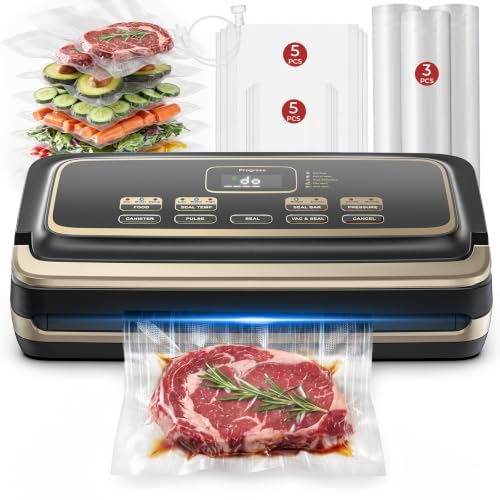
- UPRUBE Vacuum Sealer 95kPa — Best Overall for a Small Shop. Fast stated draw, a digital timer and pulse control for consistent counter work.
- Chef Preserve Compact Vacuum Sealer — prose-only. A portable handheld with reusable bags; not a production machine, discussed for completeness below.
- VACLER Vacuum Sealer Machine — Best Second Station. A compact automatic machine with smart wet and dry modes for a backup or specials counter.
- FoodSaver Mini Handheld Vacuum Sealer — prose-only. A cordless handheld with a marinate setting; a staff-room convenience, not a shop sealer.
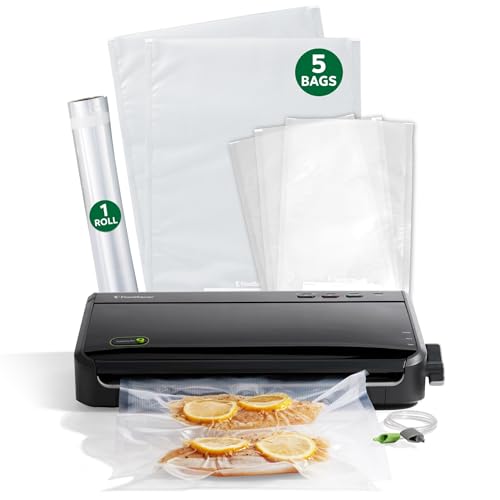
- FoodSaver FM2100 Vacuum Sealer Machine — Best Roll Workhorse. Roll storage, a cutter and one-touch moist sealing for steady daily volume.
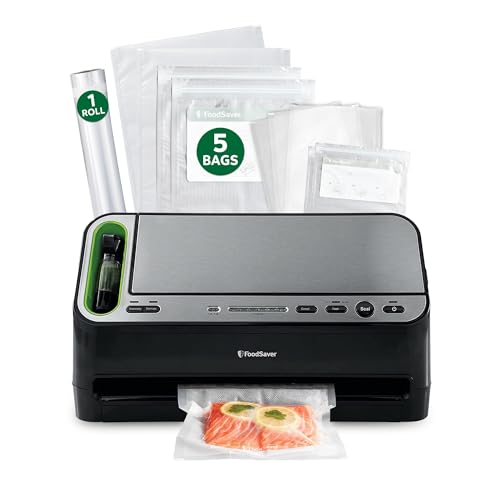
- FoodSaver V4400 2-in-1 Vacuum Sealer Machine — Best for Rotating Staff. Automatic bag detection keeps seals consistent across different operators.
Read the full guide ↓ for badges, trade-offs, a comparison table, a hygiene-first workflow and an honest discussion of where external machines end and chamber machines begin.
The best vacuum sealers for small butcher shop work are not simply bigger home machines, and this guide begins with the honesty the trade deserves. A small shop seals for customers, not for itself: packs must look professional, seals must hold through transport and a customer’s freezer, portions must be consistent enough to price fairly, and the whole process must survive a hygiene inspection of the workspace, the machine and the routine. Volume is moderate but relentless — not one heroic session a month, but bags every hour of every trading day. The machines below were chosen for that rhythm: repeatable cycles, roll logistics, controls that different staff members can run identically, and surfaces that can be cleaned properly, properly, at the end of every day.
One boundary must be stated before any badge is awarded. None of the verified pool for this guide is a chamber machine, and a shop whose core work is liquid-heavy — marinated trays, sauced ready meals, large wet joints at high volume — should budget for a chamber unit as its main engine, as our Best Professional Vacuum Sealers guide discusses in trade depth. What the external machines here do superbly is the small shop’s other eighty per cent: portioning primals into retail cuts, sealing mince and sausage packs, preparing sous-vide-ready portions for customers who cook that way, and handling the specials counter without a five-figure equipment conversation. Judge this list on that work, and it is a strong one.
Key Takeaways
- The UPRUBE is the best small-shop pick overall: a fast stated draw and digital timer keep retail packs consistent across a full day and across different operators.
- The FM2100 is the roll-fed workhorse, with in-body storage and a cutter that keep the counter moving without a separate bag station.
- The V4400’s automatic bag detection is a staff-training feature as much as a convenience: it flattens the difference between your best and newest operator.
- The two handhelds in the pool are prose-only in this guide: useful for tiny front-counter reseals, never for production, and this guide links nothing it would not put on a shop counter.
- Hygiene decides shop sealing as much as machinery: a cleanable seal area, a daily cleaning routine and dated, labelled packs are part of the purchase.
- Plan the chamber question honestly — external machines for portioning and retail packs now, a chamber unit when wet, high-volume work justifies it.
- Write the station routine down and train every operator to it; in a shop, sealing quality is a training outcome before it is a machinery outcome, and the failure log is how you prove it.
In this guide
Quick Picks
| Pick | Badge | Status | Shop-relevant feature |
|---|---|---|---|
| UPRUBE Vacuum Sealer 95kPa | Best Overall for a Small Shop | Linked | Digital timer, pulse, fast stated draw |
| Chef Preserve Compact | Not a Production Tool | Prose-only — handheld | Reusable bags for tiny reseals only |
| VACLER Vacuum Sealer Machine | Best Second Station | Linked | Smart wet and dry modes, automatic |
| FoodSaver Mini Handheld | Not a Production Tool | Prose-only — handheld | Marinate setting, cordless |
| FoodSaver FM2100 | Best Roll Workhorse | Linked | Roll storage, cutter, moist mode |
| FoodSaver V4400 2-in-1 | Best for Rotating Staff | Linked | Automatic bag detection |
How These Picks Were Chosen
This is a research-led guide. Every product’s format, stated modes and included supplies were verified against its current listing, and the field was then weighted for small-shop work: cycle repeatability, roll and bag logistics, cleanability, operator-proofing and honest scale. Only verified products appear. Two verified products — both handhelds — failed the shop’s core requirement, which is counter production from cut-to-size bags at all-day volume; rather than link them under a shop heading, this guide reviews them prose-only with their real, narrow uses stated, and reduces the link count accordingly. That decision is recorded in the sources file, and it is the same standard this programme applies everywhere: a pick that fails the keyword’s core job does not carry a buying link under that keyword.
The 6 Best Vacuum Sealers for Small Butcher Shop Work

UPRUBE Vacuum Sealer for Food, 95kPa
Badge: Best Overall for a Small Shop
Strengths
- A digital timer and fast stated draw of 12L/min at 135W make cycles repeatable — the foundation of retail packs that look and keep identically.
- Dry, moist and pulse modes cover the shop’s range from dry-cured lines to fresh mince and marinated specials.
- Built-in cutter and bag storage with a ten-foot roll included keep bag-making at the machine, where the work is.
Trade-offs
- No removable drip tray is stated, so the cleaning routine must be disciplined and scheduled, not occasional.
- It is a high-end home-class machine, not a chamber unit; liquid-heavy production still belongs to the chamber conversation.
- The nine-in-one controls need proper staff training at the start, not a handover shrug.
Spec box — verified from listing: Stated vacuum: 95kPa. Stated speed: 12L/min. Stated power: 135W. Modes: dry, moist and pulse, 9-in-1. Features: easy-tear cutter, bag storage, digital timer. Included: 10 ft bag roll.
A small shop sells consistency. The customer who buys mince packs on three different Saturdays, from three different staff members, should open three identical packs — same evacuation, same seal, same keeping quality — and the UPRUBE’s timer-led repeatability is the closest any machine here comes to guaranteeing that from an external format. Pulse control earns its counter space on the specials board: marinated portions and juicy primals can be sealed by eye, stopping the draw before liquid reaches the seam, while the moist cycle handles the ordinary run of fresh cuts without supervision. Built-in roll storage keeps the station self-contained, which matters in a small shop where every surface is already spoken for.
Its professional limit is class, and the guide states it rather than discovering it for you later: sustained, liquid-heavy or very high-volume production will eventually argue for a chamber machine beside it. As the external station of a small shop — portioning, retail packs, sous-vide-ready cuts of the kind our Best Vacuum Sealers For Sous Vide guide details — it is the strongest tool in this list, and the one to build the counter around.
Best for: the main external station of a small shop / Not suited for: liquid-heavy chamber production as the only machine
Chef Preserve Compact Vacuum Sealer for Food
Badge: Not a Production Tool (Prose-Only)
Strengths
- As a handheld with thirty reusable bags, it can reseal a small opened pack at the front counter in seconds.
- Portable and counter-free, it suits staff-side tasks: samples, small leftovers, a customer’s part-used purchase.
- Its reusable-bag system avoids consuming roll film on trivial jobs.
Trade-offs
- It cannot cut bags to size, cannot sustain counter volume, and its gentle handheld draw is not a retail seal for long storage.
- Reusable bags raise hygiene questions in a trade setting that single-use film does not; keep it away from raw production entirely.
- Presenting it as a shop sealer would mislead buyers, which is why it carries no link in this guide.
Spec box — verified from listing: Format: handheld, portable. System: reusable vacuum bags. Included: machine plus 30 reusable vacuum bags. Status in this guide: prose-only, no link, no image, by the core-attribute rule.
This entry exists because the verified pool contained the product, and a trustworthy guide accounts for its pool rather than quietly dropping an inconvenient item. The Chef Preserve is a competent home handheld. A butcher shop’s counter, however, runs on cut-to-size film, repeatable seals and single-use hygiene, and a handheld with reusable zip bags meets none of those requirements. Its honest shop role is peripheral: resealing a small dry item at the till, or staff use away from production. Shops should buy it, if at all, as that peripheral convenience — never as sealing capacity — and home readers who landed here will find it properly recommended, with a link, in this programme’s home and small-batch guides where its format fits the keyword.
Best for: tiny front-counter or staff-side reseals only / Not suited for: any production sealing in a shop

VACLER Vacuum Sealer Machine for Food
Badge: Best Second Station
Strengths
- Smart modes, including wet and dry settings, let a second station handle mixed specials without retraining staff on a new logic.
- Automatic, compact operation suits a specials counter, a farmers-market stall setup or a backup role when the main station is busy.
- Twenty bags and a vacuum hose are included, extending it to containers for marinades and prep.
Trade-offs
- Compact class: not the machine for the main primal-portioning run.
- No pulse mode or in-body roll storage is stated, so wet specials need technique and staged supplies.
- As with all external machines here, chamber work is outside its format.
Spec box — verified from listing: Format: compact external sealer, automatic. Modes: 6-in-1 smart modes including Rice, Wet and Dry. Included: bag cutter, 20 bags, vacuum hose.
Small shops rarely need two identical stations; they need a main station and a flexible second one. The VACLER fits the second role with unusual neatness. Its named modes make it the machine a relief operator can run correctly within minutes, its compact body lets it live on the specials counter or travel to a market stall, and the included hose makes it the natural station for marinade containers and prep work that would otherwise interrupt the main counter’s rhythm. During the week’s peak — Saturday morning, when the main station portions primals — a second station quietly clearing the specials and small orders is the difference between a queue that moves and a queue that photographs badly.
Do not promote it beyond its class. It is a compact, and a shop that tries to run its whole production through it will wear out both the machine and the staff’s patience. Bought as the second station it genuinely is, it earns its counter space every week.
Best for: second station, specials counter and market stalls / Not suited for: sole production machine for a whole shop
FoodSaver Mini Handheld Vacuum Sealer
Badge: Not a Production Tool (Prose-Only)
Strengths
- Cordless, dock-charged and genuinely pocketable for the shop’s smallest tasks.
- Its marinate setting can serve a tasting or sample portion prepared for a customer conversation.
- As a home-grade tool it is well specified, with stated uses across freezer, storage and meal prep.
Trade-offs
- A handheld cannot produce retail packs: no roll, no cutter, no production seal, no counter volume.
- Its reusable-bag format does not belong in raw-meat production hygiene.
- It carries no link in this guide, by the same core-attribute rule as the other handheld.
Spec box — verified from listing: Format: cordless handheld. Features: marinate setting, charging dock. Colour: blue. Status in this guide: prose-only, no link, no image, by the core-attribute rule.
The Mini is the second handheld in the pool, and the same professional judgement applies. In a home kitchen it is a delightful tool, and its marinate setting is a real feature there. On a butcher’s counter it can, at most, seal a sample or a staff item. A shop’s reputation is built on packs that hold for weeks in a customer’s freezer, and no handheld in this class is built or bagged for that promise. This guide therefore describes it honestly, links it nowhere, and directs the shop reader to the four countertop machines that carry the actual work of this list. Home readers will find the Mini linked and recommended in the home-use and meat guides of this programme, where its format matches the keyword.
Best for: samples and staff-side micro-tasks only / Not suited for: retail packs or any production role

FoodSaver FM2100 Vacuum Sealer Machine
Badge: Best Roll Workhorse
Strengths
- Roll storage and a cutter inside the machine make it a self-contained portioning station — the classic shop-counter layout.
- One-touch dry and moist sealing keeps a steady daily rhythm across primals, mince and poultry.
- An accessory port and hose are included for containers, and starter bags and a roll come in the box.
Trade-offs
- No pulse mode, so the wettest specials need chilling, headroom and a careful operator.
- Home-class construction means a very busy shop should treat it as a station among stations, not immortal equipment.
- No automatic detection; new staff need supervised practice before they seal for customers.
Spec box — verified from listing: Format: external sealer. Controls: one-touch. Storage: roll storage with cutter. Modes: Dry and Moist. Included: accessory port and hose, starter bags and roll.
If the UPRUBE is the shop’s precision instrument, the FM2100 is its reliable line worker. The layout is the one small shops have standardised on for years: roll inside, cutter on top, one-touch cycle, moist setting for fresh meat. A station set up this way can be run by any trained member of staff at a steady pace all day, producing the flat, tight, presentable packs that customers judge a shop by before they ever taste the meat. Its listing’s mention of sous vide cooking is commercially relevant too: a growing share of small-shop customers cook that way, and retail packs sealed for the water bath — portioned, seasoned on request, labelled with cooking guidance — are a service a shop can actually sell, as our Best Vacuum Sealers For Sous Vide Cooking guide outlines.
Run it with trade discipline: wipe the seal area between bloody batches, rest it sensibly during marathon runs, and keep film stock ahead of demand. So treated, it is the machine most small shops in this guide’s audience will get the most hours from, at the least fuss, and it pairs naturally with the UPRUBE as the two-station answer.
Best for: daily portioning and retail packs as a main or paired station / Not suited for: unsupervised use by untrained staff on wet specials
FoodSaver V4400 2-in-1 Vacuum Sealer Machine
Badge: Best for Rotating Staff
Strengths
- Automatic bag detection removes the most common operator error, which in a shop means fewer failed retail seals across rotating staff.
- The 2-in-1 design adds container flexibility for marinades and prep beyond flat packs.
- A starter kit is included, so a new station can be commissioned the day it arrives.
Trade-offs
- No in-body roll storage is stated, so the station needs film stored alongside.
- Automation does not clean: the hygiene routine remains manual and mandatory.
- It is one station’s answer; a busy shop still plans stations in pairs.
Spec box — verified from listing: Format: external sealer, 2-in-1 design. Feature: automatic vacuum sealer bag detection. Included: starter kit.
Every small shop owner knows the seal that failed was made by the newest pair of hands, at the busiest moment, on the order that mattered. The V4400’s automatic bag detection is a direct control on that risk: the machine confirms the bag’s placement and runs its cycle as designed, narrowing the quality gap between your most experienced butcher and your Saturday assistant. In trade terms, that is not a convenience feature; it is a consistency and training feature, and it can be the difference between a shop whose packs are trusted and a shop whose packs are checked at home with suspicion.
Place it where rotation is highest — the main retail counter — and keep the film supply beside it, since roll storage is not built in. Combined with a written sealing routine that any operator can follow, it gives a small shop something larger operations buy with supervision: the same seal, from every pair of hands, on every pack, every day.
Best for: the main retail counter with rotating staff / Not suited for: stations where in-body roll storage is essential
Comparison Table
| Pick | Badge | Status | Standout verified feature | Check |
|---|---|---|---|---|
| UPRUBE 95kPa | Best Overall for a Small Shop | Linked | Timer, pulse, fast stated draw | Check on Amazon |
| Chef Preserve | Not a Production Tool | Prose-only | Handheld, reusable bags | — |
| VACLER | Best Second Station | Linked | Smart wet and dry modes, hose | Check on Amazon |
| FoodSaver Mini | Not a Production Tool | Prose-only | Handheld, marinate setting | — |
| FoodSaver FM2100 | Best Roll Workhorse | Linked | Roll storage, cutter, moist mode | Check on Amazon |
| FoodSaver V4400 2-in-1 | Best for Rotating Staff | Linked | Automatic bag detection | Check on Amazon |
How to Choose a Vacuum Sealer for a Small Butcher Shop
Choose by station, not by machine. Map the shop’s sealing work first: primal portioning, mince and sausage packing, specials and marinades, front-counter customer requests. Each station has a different hero feature — repeatability at portioning, roll logistics at packing, pulse control at specials, detection at a rotating counter — and the strongest small shops in this guide’s audience will pair two of the linked machines rather than stretch one across every job. The UPRUBE plus FM2100 pairing covers precision and volume; the V4400 anchors whichever counter has the most hands on it; the VACLER floats to specials, markets and backup.
Choose by cleanability next, because in a shop it outranks almost everything. Inspect how the seal area and vacuum channel can be wiped, whether any tray removes, and how the machine will look after a month of daily bloody work under your actual cleaning routine, not your intended one. Choose by film logistics third: in-body roll storage keeps a station independent, while external storage demands counter discipline a busy shop may not sustain. Choose by operator-proofing fourth: the more hands, the more automation earns. And keep the chamber question on the business plan, reviewed whenever wet or high-volume work grows: the day marinated and sauced lines become a third of turnover, the chamber machine stops being a luxury and becomes the correct tool, with these external stations continuing at the work they do best.
How to Run a Shop Sealing Station: Workflow and Hygiene
Set the station as a one-way street. Raw product enters from the cutting side, film and labels live at the machine, finished packs leave to the scale and the display or cold store, and nothing crosses back. Work in this order. First, portion and trim a full batch of one product before sealing it, so packs are uniform and priceable. Second, chill portions well; cold meat seals cleaner and starts its retail life at the right temperature. Third, load with a dry seal zone, using the moist cycle for fresh cuts and pulse for marinated specials, and inspect every seal as it leaves the machine — in a shop, inspection is not optional, because the customer performs the second inspection at home. Fourth, label every pack with product, weight, price information as your practice requires, and the date; a shop’s label is its signature and its memory. Fifth, at defined intervals through the day — and always when moving between species — wipe the seal area and channel, and wash hands and surfaces as your hygiene plan requires. Sixth, close the day with a full clean of the station: seal bar, channel, drip areas, cutter and surrounding counter, dried before covers or storage.
Build the station’s physical details with the same care as its sequence. The machine should sit at a height where loading is a level, two-handed job, with the cutter’s path clear of the queue’s elbows and the finished-pack tray on the exit side only. Keep a small, defined landing zone for the next batch so raw product never waits on the same surface as finished packs. Lighting matters more than shops expect: a seal inspected under the counter’s actual light, at the angle customers will see it, is inspected honestly, while a seal glanced at in shadow is a hope rather than a check. And keep the marker, labels and date system at the machine itself — a label written three steps away is a label written from memory, and a shop’s memory, like a hunter’s, is the least reliable instrument in the building.
Keep two shop records that home guides never mention. A film and bag stock count, checked weekly, so a Saturday never discovers an empty roll cupboard. And a seal-failure note: any pack returned, remade or found relaxed in the display, logged with its product and operator, because patterns in that little book are how a good shop finds a training need, a tired machine or a bad batch of film before its customers find them repeatedly. The machines in this guide will do their part; the routine is what makes a shop’s sealing a reputation rather than a risk. Shops adding a cooked or water-bath line for customers will find the pack discipline in our Best Vacuum Sealers For Sous Vides notes a useful extension of this workflow.
Troubleshooting at the counter
Problem: occasional packs relax in the display within a day → audit the seal zone for moisture at busy moments, retrain loading, double-seal bone-in lines, and check that packs are not being stacked under weight while still warm from the counter.
Problem: seals vary between staff members → move that counter to the detection-equipped machine, post the written routine at the station, and have each operator seal a supervised practice batch on offcuts.
Problem: the station slows the whole counter at peak → the bottleneck is bag-making or labelling, not vacuum; switch the peak station to in-body roll storage, pre-print or pre-stage labels by product, and batch portioning ahead of the rush.
Retail Packs That Sell: Presentation and Portioning
In a shop, the vacuum pack is packaging, display and promise at once. Flat, even packs stack in the display without toppling, show the meat’s colour honestly through the film, and let a customer judge a cut the way they would at the block. Portion with that display in mind: mince pressed to an even thickness, chops laid in a neat row rather than a heap, sausages parallel, joints centred in a bag made to their measure rather than folded into a standard one. A roll-fed station earns its money here, because the right-sized bag is a presentation tool as much as a storage one, and a pack with two inches of empty film flapping at the end looks like what it is — a shortcut.
Consistency is the second half of presentation. Packs of a line should match each other closely enough that a customer choosing between two is choosing on the meat, not on the packing. That is the commercial argument for the timer-led repeatability of this list’s top pick and for the written station routine: not fussiness, but the visible sameness that tells a customer the shop is run by people who notice things. Shops that sell cooking-ready lines — seasoned, marinated or water-bath-ready portions — should treat the seal as part of the product’s instructions: a pack that will be cooked from sealed must be sealed flawlessly, labelled with its cooking path, and portioned so the customer never needs to open and divide it. Presentation, in short, is not decoration added after the work; in a small shop it is a large part of the work, and the right sealer is the one that makes it repeatable on a wet Saturday with a queue at the counter.
When a Small Shop Should Add a Chamber Machine
The chamber decision deserves its own section because every successful small shop eventually faces it. Add a chamber machine when one of three signals appears. First, when liquid-heavy lines — marinated trays, brined products, sauced ready meals — grow from occasional specials into a standing share of turnover, because chamber sealing handles free liquid without technique, trays or apology. Second, when daily pack counts climb to the point where external stations, however well run, are queuing work and wearing visibly, because chamber machines are built for that duty cycle. Third, when you begin supplying other businesses, whose specifications and volumes will simply assume chamber-grade sealing. Until one of those signals is real, a chamber machine is capital sitting in the corner doing an external machine’s job more slowly, and the sensible sequence is the one this guide recommends: external stations first, run professionally, and the chamber bought with the profits of the lines that demand it. Shops at that decision point should also weigh counter space and power honestly — a chamber unit is furniture, not an appliance, and the small shop that buys one before its work justifies it will feel the space it takes every single day.
Costing the Sealing Station Honestly
A shop, unlike a home, should know what a sealed pack costs it, because the answer decides portion sizes, film choices and whether a product line earns its counter space. The components are plain: film per pack, which falls as bags are cut closer to measure and rises sharply when standard bags are used for everything; labour per pack, which is where roll storage, detection and timers quietly pay, since seconds saved at the counter are saved hundreds of times a week; and failure cost, the remade packs, returned packs and discounted tired stock that a failure log makes visible for the first time. Most small shops that do this arithmetic once discover the same two things: film waste, not film price, is the controllable cost, and the cheapest machine is rarely the cheapest station once labour and failures are counted. That is the commercial logic behind this guide’s ordering — repeatability and logistics first, purchase deliberation second — and it is why a second station often pays for itself faster than a single grander machine: two stations halve queues, cover breakdowns and let each job run on the machine that does it cheapest.
Price the packs you sell with the seal included in your thinking. A vacuum pack is not wrapping; it is keeping quality the customer can verify at home, display life for the shop, and, for ready-to-cook lines, a preparation service. Shops that treat it as a cost to minimise tend to under-invest in exactly the features their customers can see — ragged bags, tired seals, anonymous labels — while shops that treat it as part of the product tend to be forgiven a great deal else. The middle path is discipline: cost it, control the waste, and never let the saving come out of the seal itself.
Training Every Pair of Hands: the Station Routine
Write the routine down, post it at the station, and train to it — a shop’s sealing quality is a training outcome before it is a machinery outcome. A workable routine fits on one page: the station layout and its one-way flow; the settings for each product line, named by product rather than by theory; the loading rules — dry seal zone, headroom, bone padding, double seals where the line requires them; the inspection standard, described in words a new starter can apply, with a good seal and a failed seal kept as physical examples if your hygiene plan permits; the cleaning intervals and the end-of-day clean, itemised; and the two logs, stock and failures, with who fills them and when. New operators seal a supervised practice batch on offcuts or staff purchases before they seal for a customer, and the supervisor signs the routine sheet when the standard is met. That sounds formal for a small shop until the first returned pack is traced to an untrained Saturday, after which it sounds like the cheapest insurance in the building.
Refresh the routine whenever anything changes — new film, new machine, new product line — and review the failure log monthly with the whole team, without blame, because the log’s value is in what it teaches about stations and habits, not in naming the hands. Shops that run this small discipline find that the question “which sealer should we buy?” gradually becomes the easier question, answered by the routine’s demands; shops that skip it keep buying machines to solve training problems, which is the most expensive way to own a counter.
Common Buying Mistakes
The first mistake is equipping a shop counter with a handheld because it was inexpensive; this guide’s prose-only entries exist to mark that boundary in public. The second is buying one machine for every station and discovering at peak that portioning, specials and front-counter work needed different strengths. The third is ignoring cleanability until the first hygiene conversation, when the seal area’s condition becomes the topic. The fourth is under-stocking film, the cheapest component in the building, and losing a Saturday to it. The fifth is skipping staff training and a written routine, then blaming machines for operator variance that detection and supervision exist to prevent. The sixth is buying a chamber machine on ambition rather than on the three signals above, and paying for the ambition in counter space all year.
A closing word on ambition. A small shop’s sealing should grow the way its reputation grows: one reliable station, then a second, then — when the work itself demands it — the chamber conversation, taken with a clear head and a full order book. Shops that equip in that order rarely waste money, because every purchase answers a queue, a failure log or a product line that already exists. Shops that equip for the business they hope to have next year spend this year working around the equipment. The four linked machines in this guide are sized for the real first steps of that journey, and run professionally, they will carry a small shop a long way along it.
Final Recommendation
Commission each station on a quiet day, with a practice batch, a posted routine and the failure log opened at page one, and the counter will be ready for the loud days that pay for it. Keep the retiring machine, if the shop is upgrading, as sealed emergency cover for one full season before it leaves the building; counters, like freezers, fail on the day you can least afford the lesson.
And keep one spare roll, one spare set of labels and one printed copy of the station routine in the building at all times; a shop’s sealing should never be stopped by a stationery problem.
Build the counter around the UPRUBE Vacuum Sealer 95kPa for repeatable retail packs, pair it with the FoodSaver FM2100 where roll-fed daily volume runs, and put the FoodSaver V4400 2-in-1 where the most hands rotate. Keep the VACLER as the floating second station. Do not buy a handheld as shop capacity, whatever the listing photographs suggest — the two prose-only entries in this guide are the honest boundary of that idea.
Frequently Asked Questions
Can a small butcher shop use home-class external sealers?
Yes, for the work this guide defines: portioning, retail packs, specials and water-bath-ready lines at small-shop volume, run with trade discipline. External machines in this class are not built for chamber-style liquid production or industrial duty cycles, and a shop honest about its volumes will find them capable, economical stations — especially in pairs — while a shop outgrowing them will see the chamber signals described above.
Why are the handheld sealers in this guide not linked?
Because they fail the keyword’s core job. A shop counter needs cut-to-size film, repeatable production seals and single-use hygiene at all-day volume; a handheld with reusable bags offers none of those, however good it is at home. Rather than drop the products silently or link them misleadingly, this guide reviews them prose-only, states their narrow peripheral uses, and links only the machines it would put on a counter.
How many sealing stations does a small shop need?
Most small shops settle on two working stations plus, ideally, a compact backup: a main portioning and packing station, a second station for specials, marinades and front-counter work, and cover for the day a machine is down. A single station is a single point of failure in a business that seals every hour it trades, which is why this guide’s recommendations are written as pairings rather than as one winner.
What hygiene routine should a shop sealing station follow?
Follow your local food-hygiene requirements and your own hygiene plan first; this guide’s workflow adds the sealing-specific habits: a one-way station layout, seal-area wiping between species and at defined intervals, a full end-of-day clean of seal bar, channel, cutter and counter, dated labels on every pack, and a failure log that turns returned or relaxed packs into training and maintenance information. The machine is only ever as hygienic as the routine around it.
Should a small shop offer vacuum-sealed sous-vide-ready packs?
It is one of the better growth lines available to a small shop, because the sealer you already own is the main equipment. Portion and, where your practice allows, season the cut, seal it flawlessly, and label it with clear cooking guidance for the customer. The packs display well, keep well and give customers a reason to return to a shop that does the preparation properly. Start with a few popular cuts and let demand, not enthusiasm, set the range.
How does a shop keep seals consistent across different staff?
Standardise everything that can be standardised: one written routine posted at the station, the same film stock, defined settings per product line, supervised practice for new operators, and, where rotation is highest, a machine with automatic bag detection to narrow the placement variable. Then audit the output — a manager who opens the display each morning and checks packs teaches the standard better than any memo.
What bag sizes should a small shop stock?
Stock around your lines, not around the catalogue. Most small shops settle on a roll for cut-to-measure work at the portioning station — joints, specials and anything irregular — plus a small range of pre-cut bags in the two or three sizes their standard retail packs actually use, because pre-cuts are faster at peak for uniform lines like chops and mince portions. Audit the range quarterly against the failure and waste notes: a bag size that generates offcuts and remakes is a size your portions have outgrown, and a roll station quietly absorbing every job is a sign the pre-cut range no longer matches the counter’s real work.
When should a shop replace an external sealer?
When seals slow or weaken despite clean technique and fresh film, when the failure log starts naming the same machine, or when volume makes its duty cycle the counter’s bottleneck. Replace by station, not in a panic: move the strongest remaining machine to the main counter, commission the new station on a quiet day, and keep the retiring machine, if it still seals at all, as emergency cover rather than discovering your backup plan during a Saturday rush.