Disclosure: topratedkitchenware.com is reader-supported. When you buy through links on our site, we may earn an affiliate commission from Amazon and other retailers, at no extra cost to you.
Where to buy
The six machines below are the strongest all-round bread makers we could verify for lifters who bake in batches: full-size loaves for a week of sandwiches, whole-wheat and gluten-free programs for the way you actually eat, and delay timers that fit around early and late training sessions. Each linked name takes you to its Amazon listing, where you can check the latest price on Amazon for the exact model.
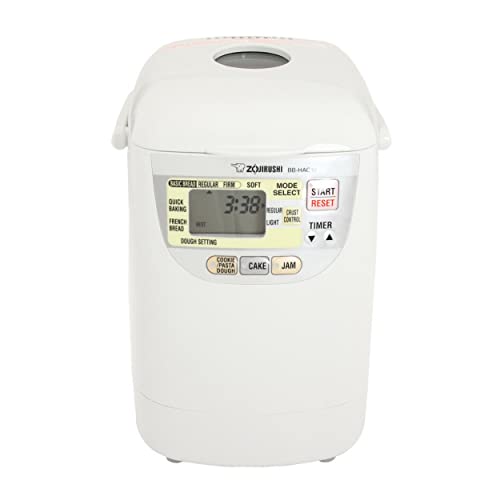
- Zojirushi BB-PDC20BA Virtuoso Plus 2 Lb Breadmaker — Best Overall. Dual heaters, a 2 lb loaf and dedicated whole-wheat and gluten-free programs in one premium machine.
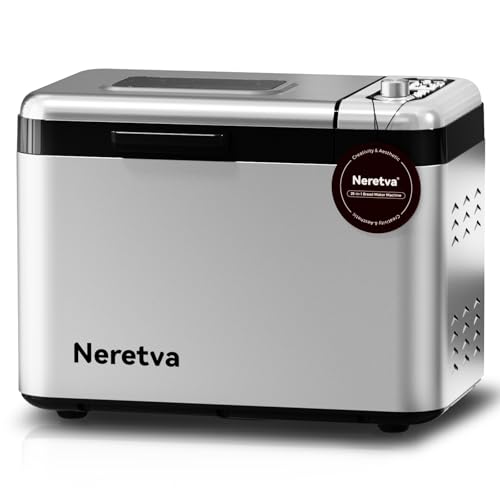
- Neretva 3.3LB 15-in-1 Bread Maker with Dual Heaters — Best for Big Batches. The largest loaf in this guide at 3.3 lb, with an automatic nut dispenser for seeded batch loaves.
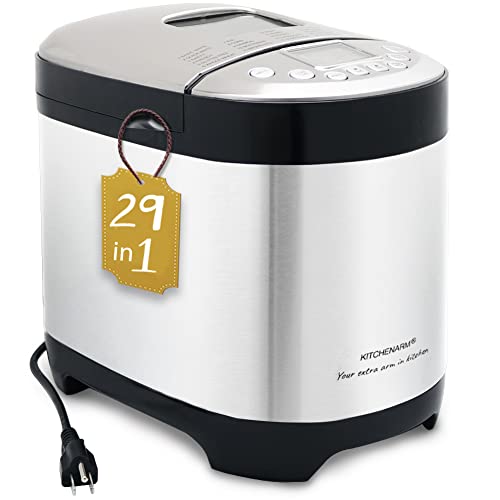
- KITCHENARM 29-in-1 SMART Bread Machine — Most Versatile. 29 programs, three loaf sizes and a homemade cycle for lifters who rotate recipes every week.
- Zojirushi BB-CEC20 Home Bakery Supreme Breadmaker Bundle — Best for Sourdough and Variety. Dual kneading blades, a named sourdough menu and jam and quick-bake menus for prep-day variety.
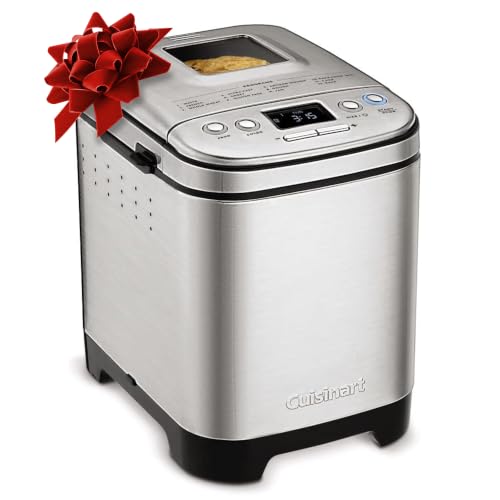
- Breville BBM800XL Custom Loaf Bread Maker — Best Custom Control. Custom crust settings and a collapsible paddle for bakers who tune every loaf.
- Zojirushi BB-PPC20BA Home Bakery Virtuoso Plus Breadmaker — Best Premium PFAS-Free Pick. The Virtuoso Plus line in a listing that states PFAS free construction.
Read the full guide ↓ for badges, honest trade-offs, a comparison table and the buying advice that helps you choose between them.
If you searched for best kick ass bread machines for bodybuilders, you probably do not need another gentle introduction to home baking. You need a machine that keeps up: a full-size loaf that slices into a week of sandwiches, programs that handle dense whole-wheat dough without stalling, and a timer that has bread ready when you get home from the gym rather than when the machine feels like it. This guide is written for that practical brief. No machine here is promised to change your physique, and bread on its own does not do that. What a serious bread maker does is remove friction from a routine you already follow, so the loaves you rely on for packed meals, breakfasts and post-session sandwiches are consistent, affordable to produce at home, and ready on your schedule.
Three practical needs drove every choice below. The first is loaf size. A 2 lb loaf is the working standard for batch baking because it slices into enough sandwiches and toast to cover several days, and the largest pick here goes further, to a stated 3.3 lb capacity for households that bake for more than one lifter. The second is program range: whole-wheat cycles that give dense dough the longer knead and rise it needs, and gluten-free programs for lifters whose households avoid gluten for preference or household reasons. The third is scheduling. A 13-hour or longer delay timer means you can load the pan after an evening session and wake to a finished loaf, or set a loaf to finish as you walk in from a morning workout. If your household is split between training styles, our companion guide on Best Kick Ass Bread Machines For Weight Lifters weights the same pool slightly differently.
A quick honesty note before the picks. This is a research-led guide built from verified listing data and manufacturer information, not a claim that we baked with all six machines side by side in a test kitchen. Every specification quoted below comes from the verified listing title for that model, and where a title does not state a figure, we say so instead of filling the gap. Where a machine has a real limitation for this use case, the trade-offs list in its review names it plainly.
Key Takeaways
- For most lifters, a 2 lb loaf is the batch-baking sweet spot: big enough for several days of sandwiches, small enough to stay fresh before it is finished.
- The Zojirushi Virtuoso Plus BB-PDC20BA is our first choice: dual heaters, dedicated whole-wheat and gluten-free programs and a 13-hour timer in one machine.
- The Neretva 3.3 lb model is the batch outlier — the largest stated capacity here, with an automatic nut dispenser for seeded loaves.
- Whole-wheat and gluten-free programs matter more for this audience than novelty menus: dense doughs need the longer, stronger cycles those programs provide.
- A long delay timer is a training-schedule feature, not a luxury: it is what makes fresh bread land at breakfast or straight after an evening session.
- No bread machine changes training outcomes. These picks earn their place on batch size, program fit and scheduling — practical kitchen grounds only.
In this guide
Quick Picks
All six picks are full reviews below. Badges are used consistently in the Quick Picks table, the detailed headings and the comparison table, so you can track one machine through the whole guide.
| Pick | Badge | Best for |
|---|---|---|
| Zojirushi Virtuoso Plus BB-PDC20BA | Best Overall | Dual heaters, a 2 lb loaf and dedicated whole-wheat and gluten-free programs in one premium machine. |
| Neretva 3.3LB 15-in-1 Bread Maker | Best for Big Batches | The largest loaf in this guide at 3.3 lb, with an automatic nut dispenser for seeded batch loaves. |
| KITCHENARM 29-in-1 SMART Bread Machine | Most Versatile | 29 programs, three loaf sizes and a homemade cycle for lifters who rotate recipes every week. |
| Zojirushi BB-CEC20 Home Bakery Supreme | Best for Sourdough and Variety | Dual kneading blades, a named sourdough menu and jam and quick-bake menus for prep-day variety. |
| Breville BBM800XL Custom Loaf | Best Custom Control | Custom crust settings and a collapsible paddle for bakers who tune every loaf. |
| Zojirushi Virtuoso Plus BB-PPC20BA | Best Premium PFAS-Free Pick | The Virtuoso Plus line in a listing that states PFAS free construction. |
How These Picks Were Chosen
We started from the verified bread machine pool for this program and filtered it through the bodybuilding kitchen brief first, and general bread-making quality second. Capacity came first: five of the six picks bake a stated 2 lb loaf or larger, because a machine that produces a small loaf every day loses to a machine that produces a big loaf twice a week on both time and washing-up. Program fit came next. Dedicated whole-wheat programs were weighted heavily, because whole-wheat dough is denser, absorbs more water and needs a longer rise than white dough; a basic cycle that rushes it produces the heavy, under-risen loaves that give home whole-wheat baking a bad name. Gluten-free programs were weighted for households that need them, with the caveat explained in the buying guide: a program helps, but the flour blend still does most of the work.
Scheduling and build rounded out the scoring. Delay timers of 13 hours or more appear on most picks here, because a lifter’s day rarely centres on the kitchen. Dual heaters and dual kneading blades were treated as consistency features: they are the hardware differences most likely to show up as an even bake and a well-developed crumb on dense doughs, loaf after loaf. Finally, we checked each model’s verified listing title line by line. Anything not stated there — a dimension, a wattage, a program count beyond the headline — is not claimed in this guide. That discipline is why one premium pick below carries a deliberately short spec list: its title states the model and its PFAS free construction, and nothing more, so neither do we.
The 6 Best Kick Ass Bread Machines for Bodybuilders

Zojirushi BB-PDC20BA Virtuoso Plus 2 Lb Breadmaker
Badge: Best Overall
Strengths
- Dedicated whole-wheat and gluten-free programs, both stated in the verified title
- Dual heaters for an even bake on dense, heavy doughs
- Full 2 lb loaf size that suits twice-a-week batch baking
Trade-offs
- Premium-tier machine; the largest commitment in this guide alongside its Virtuoso Plus sibling
- Black finish only in this listing, which will not suit every kitchen
- No automatic ingredient dispenser is stated in the title, so seeds and nuts are added by hand at the signal
Key specs from the verified listing title
- Loaf size stated in listing title: 2 lb
- Gluten-free and whole-wheat programs
- Dual heaters
- 13-hour timer
- Black finish, model BB-PDC20BA
The Virtuoso Plus BB-PDC20BA takes first place because it is the only pick here that states, in its own listing title, the exact trio this audience asks for: a 2 lb loaf, dedicated gluten-free and whole-wheat programs, and dual heaters. Dual heaters matter on exactly the doughs lifters bake most. A whole-wheat loaf carries more fibre and less free water than a white loaf, and it punishes uneven heat with a pale side or a dense band at the base. Heating from more than one zone is the hardware answer, and it is why this machine’s whole-wheat results are the ones this guide trusts most for a weekly sandwich loaf.
The 13-hour timer completes the training-day picture. Load the pan at night and the loaf finishes for breakfast; load it before a morning session and it is ready for lunch. The gluten-free program is there for households that need it, and it is a real program rather than a workaround cycle, which means the knead and rise profile is built for batters and low-gluten doughs instead of borrowing a white-bread timetable. If you only buy one machine from this page, buy the one whose title promises the programs you will actually run every week — and that is this one. Readers comparing premium Zojirushi models should also read the BB-PPC20BA review below before deciding, because the two listings state different things.
Best for: Lifters who bake a 2 lb whole-wheat or gluten-free loaf twice a week and want it on a timer / Not suited for: Bakers who want an automatic nut dispenser, or who only ever bake small white loaves
Check on Amazon — check the latest price on Amazon for this exact model before you decide.
Neretva 3.3LB 15-in-1 Bread Maker with Dual Heaters
Badge: Best for Big Batches
Strengths
- Largest stated capacity in this guide at 3.3 lb — genuine batch scale
- Automatic nut dispenser folds seeds and nuts in without opening the lid mid-cycle
- Dual heaters, a ceramic nonstick pan and the longest timer here at 15 hours
Trade-offs
- A 3.3 lb loaf is more bread than a solo lifter will finish fresh; this is a household or heavy-batch pick
- Touch-panel controls divide opinion; there are no physical dials to fall back on
- Ceramic pan coating needs the usual nonstick care — no metal utensils when slicing in the pan
Key specs from the verified listing title
- Loaf capacity stated in listing title: 3.3 lb
- 15-in-1 program format with dual heaters
- Automatic nut dispenser
- Stainless steel body with nonstick ceramic pan
- Full touch panel, 15-hour timer and 1-hour keep warm
The Neretva is the batch baker’s pick, and its headline number is the reason: a stated 3.3 lb capacity, well beyond the 2 lb standard. For a household with two people training, or for a lifter who genuinely works through a lot of bread — sandwiches for work, toast at breakfast, a loaf shared across a family — one cycle replaces two. The 15-hour timer is the longest in this guide, which stretches the scheduling window further still: set it in the evening and a very large loaf can be timed to a late breakfast the next day, with a 1-hour keep warm behind it.
The automatic nut dispenser is more relevant here than it sounds. Seeded whole-wheat loaves are a staple of the training kitchen, and a dispenser adds the seeds at the right point in the knead instead of you hovering for a beep. Added too early, seeds get ground down; added by dispenser, they stay distinct through the crumb. The trade-off is honest: a loaf this size goes stale before one person finishes it unless you slice and freeze, which is why the how-to section below covers freezing a batch loaf properly. Treat this machine as the high-volume option, not the default.
Best for: Households with more than one lifter, or anyone who slices and freezes a big weekly loaf / Not suited for: Solo bakers who will not finish a 3.3 lb loaf while it is fresh
Check on Amazon — check the latest price on Amazon for this exact model before you decide.
KITCHENARM 29-in-1 SMART Bread Machine
Badge: Most Versatile
Strengths
- 29-in-1 program range, the widest stated in this guide
- Three stated loaf sizes — 2 lb, 1.5 lb and 1 lb — for scaling batches up or down
- A homemade cycle for saving a custom program once you have dialled in your loaf
Trade-offs
- A 29-program menu takes longer to learn than a basic machine’s controls
- The title does not state a delay-timer length, so check the listing if all-day scheduling is essential
- Stainless finish shows fingerprints and needs a wipe-down to stay smart
Key specs from the verified listing title
- 29-in-1 program format with a dedicated gluten free setting
- Loaf sizes stated in listing title: 2 lb, 1.5 lb and 1 lb
- Homemade cycle for custom programs
- Stainless steel breadmaker, supplied with recipes
- Positioned in the title as a whole wheat bread making machine
The KITCHENARM is the flexible pick: 29 programs, three loaf sizes and a homemade cycle that lets you save your own timetable. That last feature is quietly the most valuable for this audience. Once you have a whole-wheat recipe that works with your flour, your water and your kitchen temperature, a homemade cycle stores the knead, rise and bake times that produced it, so the loaf is repeatable on a tired weekday instead of depending on your memory. Repeatability is the whole game in a training kitchen: the loaf you bake in a busy week should match the loaf you baked when you had time to pay attention.
The three loaf sizes also solve a real problem. A 2 lb loaf for the main weekly bake, a 1 lb loaf for a fresh weekend bread, and the middle size when the household is half away — the machine scales instead of forcing one batch size on every situation. The title positions it as a whole wheat bread making machine and states a dedicated gluten free setting, so both of this audience’s core programs are present. It loses the top spot only because the Virtuoso Plus states dual heaters and this listing does not; on program range alone, nothing else here touches it. If your shortlist is really about menu depth, this is your machine.
Best for: Bakers who rotate recipes and want a saved custom cycle plus three batch sizes / Not suited for: Anyone who wants the simplest possible controls, or who needs a stated dual-heater specification
Check on Amazon — check the latest price on Amazon for this exact model before you decide.

Zojirushi BB-CEC20 Home Bakery Supreme Breadmaker Bundle
Badge: Best for Sourdough and Variety
Strengths
- A named sourdough menu, stated in the title — rare in this pool
- Dual kneading blades for thorough work on dense doughs
- Jam and quick-bake menus plus Home Made menus for prep-day variety
Trade-offs
- Sold as a bundle, which may include extras you did not ask for
- No gluten-free program is named in the title, unlike the Virtuoso Plus picks
- The 13-hour delay matches rivals rather than beating them
Key specs from the verified listing title
- Loaf size stated in listing title: 2-lb loaf
- Dual kneading blades
- 13-hour delay timer
- Menus named in the title: sourdough, jam, quick bake and Home Made menus
- Sold as a bundle package
The BB-CEC20 Home Bakery Supreme earns its place on two stated features: dual kneading blades and a named sourdough menu. Dual blades work the full length of a 2 lb pan, which matters on the stiff, low-hydration doughs that whole-grain baking often produces; a single small paddle can leave an unkneaded pocket in a corner, and you only find out when you slice. The sourdough menu gives lifters who keep a starter a machine cycle built for that slower ferment style, instead of improvising with a dough setting and a separate bake. Readers who want to go deeper on that angle will find our dedicated guide on Best Sourdough Bread Making Machines useful alongside this one.
Around those headlines sits a practical prep-day toolkit: a quick-bake menu for the days the plan falls apart, a jam menu that turns cheap seasonal fruit into sandwich spreads, and Home Made menus for saving adjusted cycles. The honest limitation is program naming: unlike the PDC20BA above, this title does not name a gluten-free program, so households that need one should treat the Virtuoso Plus as the safer verified choice. As an all-round 2 lb machine with a sourdough speciality, though, this is the most characterful pick in the guide.
Best for: Starter-keepers and prep-day bakers who want dual blades and a named sourdough menu / Not suited for: Households that need a verified, named gluten-free program
Check on Amazon — check the latest price on Amazon for this exact model before you decide.

Breville BBM800XL Custom Loaf Bread Maker
Badge: Best Custom Control
Strengths
- Custom crust settings for bakers who have a firm preference and stick to it
- Collapsible kneading paddle, designed to prevent the hole a fixed paddle leaves in the loaf base
- Automatic fruit and nut dispenser for hands-off seeded and fruited loaves
Trade-offs
- The title does not state a loaf size or a timer length — verify both on the listing before ordering
- No whole-wheat or gluten-free program is named in the title
- Premium stainless machine with a footprint to match; measure your counter run first
Key specs from the verified listing title
- Brushed stainless steel finish
- Collapsible kneading paddle, designed to prevent holes in the finished loaf
- Custom crust settings
- Automatic fruit and nut dispenser
- Custom Loaf format: control over cycle details stated in the title
The Breville BBM800XL Custom Loaf is the control pick. Its title leads with control over detail, custom crust settings and a collapsible kneading paddle, and that combination suits a particular kind of lifter-baker: the one who has a house loaf, makes it every week, and wants the crust the same shade and the base free of the torn hole a fixed paddle leaves behind. That paddle detail sounds cosmetic until you are slicing sandwich bread daily; a collapsed paddle means cleaner slices to the end of the loaf, which is exactly where meal-prep sandwiches are cut from.
The automatic fruit and nut dispenser covers the seeded-loaf routine without lid-opening, and the brushed stainless build is the most kitchen-serious finish here. The limitations are about verification, not quality: this verified title does not state a loaf capacity, a delay timer, or named whole-wheat and gluten-free programs, so this guide cannot promise them. Check the listing for those three figures if they are on your must-have list. What is stated — custom control, crust choice, dispenser, collapsible paddle — is stated clearly, and for a baker who values those things over program headlines, this is a defensible premium choice.
Best for: Repeat-recipe bakers who want custom crust control and clean, hole-free slices / Not suited for: Buyers who need a stated loaf size, timer length or named dietary programs before they commit
Check on Amazon — check the latest price on Amazon for this exact model before you decide.
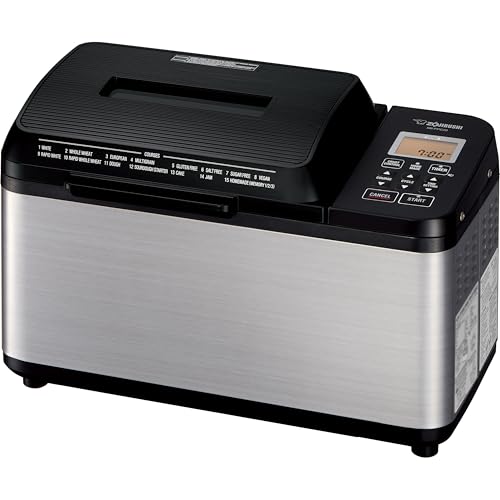
Zojirushi BB-PPC20BA Home Bakery Virtuoso Plus Breadmaker
Badge: Best Premium PFAS-Free Pick
Strengths
- From the Virtuoso Plus line, the premium tier of this pool
- The listing title states PFAS free construction — a clear, checkable claim
- A current-model alternative for buyers who prefer the newest version of a proven line
Trade-offs
- The verified title states no loaf size, no programs and no timer — the shortest spec sheet in this guide
- You are paying a premium-tier price position for a listing you must research further before ordering
- No dispenser, heater or blade detail is stated in the title
Key specs from the verified listing title
- Model stated in listing title: BB-PPC20BA
- Virtuoso Plus line
- Stated in the title as PFAS free
- Loaf size and program list are not stated in the verified title — confirm them on the listing before ordering
The BB-PPC20BA is included with its eyes open. It sits in the Virtuoso Plus line — the same family as our first pick — and its verified listing title states one thing clearly: PFAS free construction. For buyers who actively avoid PFAS coatings and have been waiting for a premium bread maker whose listing says so in plain words, that single stated line is the reason to shortlist it. Everything else about this pick must be verified on the listing itself, because the title we checked does not state a loaf size, a program list or a timer length, and this guide does not invent specifications to fill a review.
That honesty cuts both ways. If you need the documented whole-wheat and gluten-free programs, dual heaters and 13-hour timer that the PDC20BA title states outright, that machine is the evidence-based choice and it sits at the top of this guide for a reason. If the PFAS free statement is your deciding factor and you are happy to confirm the remaining specifications on the product page — where you can check the latest price on Amazon at the same time — the PPC20BA is the pick that respects that priority. Either way, you are choosing between two clearly labelled options rather than a guess.
Best for: Buyers whose first filter is a stated PFAS free construction in a premium line / Not suited for: Anyone who wants every key specification verified in the listing title before buying
Check on Amazon — check the latest price on Amazon for this exact model before you decide.
Comparison Table
Capacities and programs below are only those stated in each verified listing title. Where a title does not state a figure, the table says so — use the listing link to confirm it.
| Pick | What stands out for this guide | Listing |
|---|---|---|
| Zojirushi Virtuoso Plus BB-PDC20BA | 2 lb loaf; whole-wheat and gluten-free programs; dual heaters; 13-hour timer | Check on Amazon |
| Neretva 3.3LB 15-in-1 Bread Maker | 3.3 lb loaf; 15-in-1 programs; dual heaters; auto nut dispenser; 15-hour timer | Check on Amazon |
| KITCHENARM 29-in-1 SMART Bread Machine | 2 / 1.5 / 1 lb loaves; 29-in-1 programs; gluten free setting; homemade cycle | Check on Amazon |
| Zojirushi BB-CEC20 Home Bakery Supreme | 2 lb loaf; dual kneading blades; sourdough, jam and quick-bake menus; 13-hour delay | Check on Amazon |
| Breville BBM800XL Custom Loaf | Custom crust settings; collapsible paddle; auto fruit and nut dispenser; size not stated in title | Check on Amazon |
| Zojirushi Virtuoso Plus BB-PPC20BA | Virtuoso Plus line; PFAS free stated; size and programs not stated in title | Check on Amazon |
How to Choose a Bread Machine for a Training Kitchen
Start with weekly volume, not with features. Count the bread your household actually gets through in a week — sandwiches for work, breakfast toast, the loaf that disappears into weekend cooking — and be honest about it. A household eating a loaf and a half a week is served best by a 2 lb machine run twice, with the second bake timed for midweek freshness. A household eating three loaves a week, or feeding several training appetites, should look hard at the 3.3 lb Neretva or accept a twice-weekly routine on a 2 lb machine. Buying too small is the classic error: the machine runs constantly, the pan and paddle wear faster, and you end up supplementing with shop bread anyway, which defeats the point of the purchase.
Next, match programs to dough, not to marketing. Whole-wheat flour needs more kneading, more water and a longer rise than white flour, and a dedicated whole-wheat program builds that timetable in. If your house loaf is whole-wheat — as it is in many training kitchens — treat a named whole-wheat program as close to non-negotiable, which is why the PDC20BA and the KITCHENARM, whose titles both centre whole wheat, rank where they do. Gluten-free baking is a different discipline again: the dough is closer to a batter, it usually gets one rise, and a dedicated program stops the machine from punching it down like a wheat dough. If anyone in the household eats gluten-free, buy a machine whose title names the program, and read the flour blend’s own instructions as carefully as the machine’s.
Then take the timer seriously, because it is the feature that decides whether the machine fits your life. A 13-hour delay covers the standard patterns: load at 9pm for a 7am loaf with time to spare, or load before a dawn session for bread at lunch. The Neretva’s 15-hour window adds flexibility for irregular shifts. Two cautions apply to every timer in this guide. First, delay cycles and perishable ingredients do not mix: a loaf loaded with milk, eggs or fresh butter should not sit at room temperature for hours, so timed loaves are best built on water, flour, salt, yeast and oil. Second, yeast and water should be kept apart in the pan when a long delay is set — flour between them — so the rise does not start in the middle of the night.
Finally, weigh the hardware that shows up in the crumb. Dual heaters even out the bake on dense loaves. Dual kneading blades work a full-size pan properly. A collapsible paddle protects your slices. An automatic dispenser protects your timing on seeded loaves. None of these is a gimmick, but none is essential either: a single-heater, single-paddle machine in the right size, with the right programs, will out-bake a flagship used on the wrong cycle. If counter space is the binding constraint, our guide on Best Small Bread Machines covers the compact end of the market, and Best Compact Bread Machines looks at footprint-first choices in more depth.
How to Run a Weekly Bread Routine Around Training
A bread machine earns its keep in a training kitchen when it runs on a routine, not on inspiration. The routine that works for most households is a two-bake week. Bake one: the main whole-wheat loaf, loaded the night before your biggest food-prep block so it is cool, sliceable and ready when you are building sandwiches. Bake two: a midweek loaf on the delay timer, loaded before you leave for a session and finished when you get home. Between bakes, the machine rests, the pan gets a proper wash and dry, and no loaf is asked to survive a full week on the counter.
Loading order matters more than most manuals admit. Liquids first, then flour covering the liquid completely, then salt and any seeds in separate corners, and yeast last, in a small well in the flour, dry and untouched by water until the cycle starts. On a delay bake this order is not fussiness, it is the difference between a loaf and a collapsed experiment: yeast that touches liquid hours early will start working, exhaust itself, and leave nothing for the actual rise. Weigh flour rather than scooping it if you can. A scoop can vary by enough to swing a dense whole-wheat dough from perfect to brick, and consistency — the thing a training kitchen runs on — starts with the scale.
Slicing and storage decide how much of your batch you actually enjoy. Let a loaf cool fully before slicing; a warm loaf compresses under the knife and the crumb turns gummy, however good the bake was. Slice the whole loaf in one session, keep two days’ worth in a bread box or a cloth bag, and freeze the rest in slices with a sheet of baking paper between portions. Frozen slices go straight into the toaster or a sandwich press, which is the entire point of batch baking: weekday effort near zero. The pan and paddle should be soaked, not scrubbed — a soft sponge and warm water lift baked-on dough, while abrasive pads shorten the nonstick pan’s life. Problem: a loaf that rises well then sinks in the middle → usually too much liquid or yeast for the flour; reduce the liquid slightly next bake before changing anything else. Problem: a dense, tight crumb on whole-wheat → the dough was too dry or the wrong cycle was used; add liquid a spoonful at a time and use the whole-wheat program. Problem: seeds all sitting on top of the loaf → they were added too late or by hand after the knead; use the dispenser if your machine has one, or add at the first knead signal.
Batch Size, Explained Honestly: What 2 lb and 3.3 lb Really Mean
Loaf weight labels confuse buyers because they describe the finished loaf the pan is built for, not the amount of flour. A 2 lb loaf typically starts from roughly three and a half to four cups of flour and yields around twelve to sixteen slices depending on how thick you cut — enough for four to six days of sandwiches for one person, or a long weekend for two. A 3.3 lb loaf is a genuinely different scale: it suits a household, a shared house of lifters, or a deliberate slice-and-freeze strategy, and it will defeat a solo baker who tries to eat it fresh. Neither size is better. The right size is the one whose output matches your week, because bread quality is a freshness game and every machine in this guide loses to the calendar if its loaf outlives its welcome.
There is also a middle path, and the KITCHENARM’s three stated sizes exist for it: bake the big loaf when the week demands it and the 1 lb loaf when it does not, in the same machine. Households whose training schedules swing — heavy weeks, deload weeks, travel weeks — often get more from that flexibility than from a single fixed capacity. If your household size is genuinely small and likely to stay that way, the compact machines in Best Small Bread Machines will serve you better than any pick here, and there is no virtue in a big pan run half-empty: under-filled pans knead poorly and bake unevenly.
Whole-Wheat and Gluten-Free Programs: What They Actually Change
A named program is not a label, it is a timetable. A whole-wheat cycle typically adds a rest after mixing so the bran can hydrate, kneads for longer to build structure in a dough that develops more slowly, and allows a longer rise before baking. Run whole-wheat dough on a basic white cycle and you get the loaf that puts people off home baking: tight, heavy and under-risen, through no fault of the flour. A gluten-free cycle does almost the opposite — a thorough mix, minimal or no knock-back, and a single rise — because a rice-and-starch batter has no gluten network to rebuild and punishing it like wheat dough ruins the texture.
Two honest limits belong here. First, a program cannot rescue a bad recipe ratio: whole-wheat dough still needs enough water, and gluten-free results still depend heavily on the blend. Second, this guide makes no health claims for either style of loaf. Whole-wheat and gluten-free programs are covered because lifters ask for them — for taste, for household needs and for the way they already eat — not because a bread machine is a piece of health equipment. Choose the programs that match your kitchen’s real habits, and let the machine do the scheduling and kneading work it is actually good at. Bakers who want to push customisation further, with saved cycles and adjusted timetables, should look at Best Custom Bread Machines next.
Common Buying Mistakes
Mistake one: buying on program count alone. A 29-program machine is wonderful if you will use the range; it is wasted on a household that bakes one loaf type, where a focused machine with the right two programs wins. Mistake two: ignoring the timer until after purchase. The delay window is the feature that integrates the machine into a training schedule, and discovering your cheap pick only delays a few hours is a frustrating way to learn it. Mistake three: running whole-wheat dough on a white cycle and blaming the machine. Dense doughs need their named programs — that is what they are for.
Mistake four: loading perishable ingredients on a long delay. Milk- and egg-rich doughs sitting warm for ten hours are a food-safety problem and a flavour problem; timed loaves should be lean loaves. Mistake five: slicing hot bread. It feels efficient and it ruins the crumb for the whole loaf; cool it fully, then slice once. Mistake six: treating the largest loaf as the default ambition. A 3.3 lb loaf you cannot finish is not batch efficiency, it is waste with extra steps — size the machine to the household, freeze deliberately, and the routine will still be running happily a year from now.
Final Recommendation
For most readers, the first choice is the Zojirushi Virtuoso Plus BB-PDC20BA: Zojirushi Virtuoso Plus BB-PDC20BA Its title states the exact combination this audience needs — a 2 lb loaf, whole-wheat and gluten-free programs, dual heaters and a 13-hour timer — and no other pick matches that documented spread. If your household’s volume is genuinely large, step up to the Neretva 3.3LB 15-in-1 and its 3.3 lb batch capacity. If you would rather have program range and a saved homemade cycle than dual heaters, the KITCHENARM 29-in-1 is the most versatile machine here.
Whichever you choose, choose it against your real week: the loaves you eat, the sessions you train, and the mornings you need bread without thinking about it. A machine matched to that week will be used hundreds of times. A machine matched to an imaginary week will be sold within the year.
Frequently Asked Questions
How big a loaf does a bodybuilder’s household actually need?
For one lifter, a 2 lb loaf baked twice a week covers sandwiches and toast comfortably, with the second bake keeping things fresh. For two or more people training, or a household that eats a lot of bread generally, the 3.3 lb Neretva reduces baking to one big batch plus freezing. The honest test is your current shop-bought bread: count loaves per week, and size the machine to that number rather than to an aspiration.
Do whole-wheat programs really make a difference?
Yes, and the difference is mechanical, not marketing. Whole-wheat dough hydrates slowly and rises slowly, so its program adds rest time, kneading time and rise time that a white cycle does not allow. The same recipe on a white program usually comes out tighter and lower. If whole-wheat is your house loaf, a named whole-wheat program — stated on the PDC20BA and central to the KITCHENARM listing — is one of the few features worth prioritising outright.
Can I set a loaf before an early training session and eat it afterwards?
That is exactly what the delay timers here are for. Load a lean dough — water, flour, salt, yeast, a little oil — the night before, set the timer so the bake finishes as you return, and keep yeast dry on top of the flour so it does not activate early. Avoid milk, eggs and butter in delayed loaves, because perishable ingredients should not sit at room temperature for hours. The 13-hour windows on most picks, and 15 hours on the Neretva, cover overnight-plus-session timing easily.
Is a gluten-free program worth it if only one person in the house needs it?
If that person eats bread regularly, yes. Gluten-free dough behaves like a batter and needs a single rise with no knock-back; a wheat program will handle it badly. A machine with a named gluten-free program, like the PDC20BA or the KITCHENARM, lets one machine serve the whole household: gluten-free bake first, a thorough pan clean, then the wheat loaf. Cross-contact matters in households managing coeliac needs, so in that situation a dedicated pan or a second machine is the cautious route — a household decision, not a machine feature.
Will baking my own bread improve my training results?
This guide makes no such promise, and you should distrust any appliance guide that does. What home baking changes is practical: you control the recipe, the loaf is there when the plan says it should be, batch baking is usually cheaper per loaf than premium shop bread, and a timer removes one daily decision. Those are real benefits for a structured routine. They are kitchen benefits, and they are enough to justify the machine on their own.
How should I store a big batch loaf so it stays worth eating?
Cool it completely, slice it in one session, keep two days’ slices at room temperature in a breathable bag or bread box, and freeze the remainder in slices separated by baking paper. Frozen slices toast straight from the freezer and make weekday sandwiches a two-minute job. Do not refrigerate bread: the fridge dries crumb faster than the counter does. A 3.3 lb loaf is only a batch success if the freezing step actually happens, so build it into the routine from the first bake.