Disclosure: topratedkitchenware.com is reader-supported. When you buy through links on our site, we may earn an affiliate commission from Amazon and other retailers, at no extra cost to you.
Where to buy
Small bread machines are not one category but two: true mini machines that bake a small loaf, and compact machines that keep a small footprint while still baking a full-size one. This guide separates them honestly. Only two picks below state a small or compact format in their verified listing titles, and only those two carry purchase links and photos here. The other four are well-known machines covered in full, in prose, with an explicit note on why their size could not be verified as small from the title we checked — including two that state full-size or extra-large loaves and are included as size-up contrasts, clearly labelled.
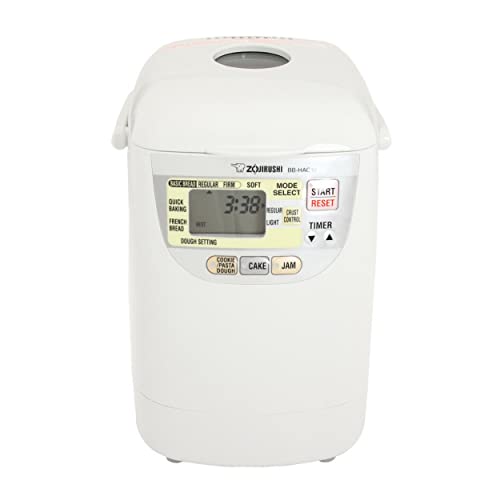
- Zojirushi BB-HAC10 Home Bakery Mini Breadmaker, 1 Lb — Best True Small Machine. A stated 1 lb mini with a full feature set: timer, quick-bake and dough, jam and cake settings.
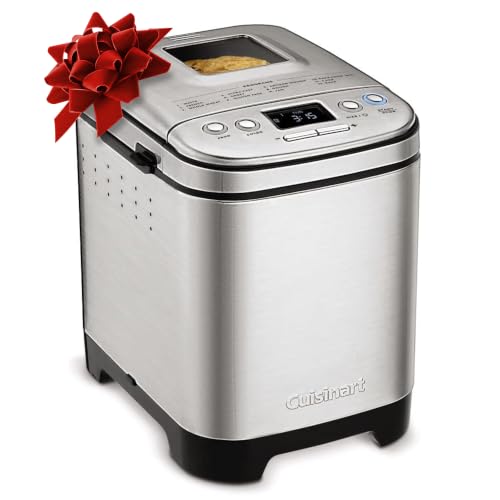
- Cuisinart Compact 2 Lb Automatic Bread Maker CBK-110NAS — Best Compact Full-Loaf Machine. Described as Compact in its title while still baking up to 2 lb, with 12 programs and three loaf sizes.
- Zojirushi BB-SSC10WZ Home Bakery Maestro Breadmaker — Prose-Only: Size Not Stated in Verified Title. A premium white Zojirushi Maestro whose checked title states no loaf size — verify it on the listing before treating it as a small machine.
- Zojirushi Home Bakery Supreme Breadmaker — Prose-Only: Size Not Stated in Verified Title. The Home Bakery Supreme, covered for its dough, cake and jam settings; its checked title states no loaf size.
- Zojirushi BB-CEC20 Home Bakery Supreme Breadmaker Bundle — Prose-Only: A Size-Up Contrast, Not a Small Machine. States a full 2 lb loaf in its title. Included so you can judge whether small is really what you need.
- Neretva 3.3LB 15-in-1 Bread Maker with Dual Heaters — Prose-Only: The Opposite End of the Scale. States a 3.3 lb capacity — the largest loaf here. A deliberate contrast, not a small pick.
Read the full guide ↓ for badges, honest trade-offs, a comparison table and the buying advice that helps you choose between them.
Shoppers searching for best small bread machines usually mean one of two different things, and confusing them is how the wrong machine gets bought. Some want a small loaf: one or two people, fresh bread every couple of days, nothing ageing in the bread box. Others want a small footprint: a full-size loaf, but from a machine that fits a narrow counter, a small apartment kitchen or the corner of a rental galley. The honest answer is that these are different machines, and this guide is organised around that distinction from the first pick to the last.
It is also organised around verification, more strictly than most. A machine only earns a purchase link in this guide if its verified listing title actually states a small, mini or compact format. Two picks pass that test: a true 1 lb mini, and a machine whose title calls it Compact while still baking up to 2 lb. The other four are covered in full prose reviews — no link, no photo — because their titles either state no size at all, which means small cannot be honestly claimed for them, or state a full-size or extra-large loaf, which means they are not small by any definition. Those last two are here deliberately, as contrasts: sometimes the most useful thing a small-machine guide can do is show you the size-up option clearly labelled, so you can be sure small is what you want. If footprint is your primary filter across the whole market, Best Compact Bread Machines is the natural companion read.
Everything else follows the usual rules of this series. This is a research-led guide; specifications come only from verified listing titles; where a title is silent, the review says so and tells you what to check. Prices are never printed — follow a link to check the latest price on Amazon for the exact model — and no machine is credited with a size its paperwork does not state.
Key Takeaways
- Decide which small you mean first: a small loaf (mini machine) or a small footprint (compact machine). They are different purchases.
- Only two picks state a small format in their verified titles: the 1 lb Zojirushi BB-HAC10 Mini and the Cuisinart Compact CBK-110NAS.
- The HAC10 Mini is the true small pick — 1 lb loaves, a 13-hour delay timer and a quick-bake stated at under two hours.
- The Cuisinart Compact is the footprint pick — compact by description, yet it still bakes up to 2 lb across three stated loaf sizes.
- Four familiar machines are covered prose-only because their titles state no size, or state full and extra-large loaves. Their reviews say which, and why.
- A small machine run often beats a big machine run rarely: freshness, not capacity, is the point of going small.
In this guide
Quick Picks
The table below is deliberately blunt about verification status. A pick marked prose-only is still reviewed in full — it simply does not carry a link or photo in a guide whose entire subject is a size claim we could not verify for it.
| Pick | Badge | Best for |
|---|---|---|
| Zojirushi Home Bakery Mini BB-HAC10 | Best True Small Machine | A stated 1 lb mini with a full feature set: timer, quick-bake and dough, jam and cake settings. |
| Cuisinart Compact CBK-110NAS | Best Compact Full-Loaf Machine | Described as Compact in its title while still baking up to 2 lb, with 12 programs and three loaf sizes. |
| Zojirushi Home Bakery Maestro BB-SSC10WZ | Prose-Only: Size Not Stated in Verified Title | A premium white Zojirushi Maestro whose checked title states no loaf size — verify it on the listing before treating it as a small machine. |
| Zojirushi Home Bakery Supreme | Prose-Only: Size Not Stated in Verified Title | The Home Bakery Supreme, covered for its dough, cake and jam settings; its checked title states no loaf size. |
| Zojirushi BB-CEC20 Home Bakery Supreme | Prose-Only: A Size-Up Contrast, Not a Small Machine | States a full 2 lb loaf in its title. Included so you can judge whether small is really what you need. |
| Neretva 3.3LB 15-in-1 Bread Maker | Prose-Only: The Opposite End of the Scale | States a 3.3 lb capacity — the largest loaf here. A deliberate contrast, not a small pick. |
How These Picks Were Chosen
The selection rule for this guide was stated up front and applied without exceptions: to be linked as a small bread machine, a model’s verified listing title had to state a small format — a mini designation, a 1 lb loaf, or the word compact. Two models passed. The Zojirushi BB-HAC10 title states Mini and 1 lb four different ways; the Cuisinart CBK-110NAS title leads with the word Compact. Every other model in the pool was then sorted into one of two prose-only groups: titles that state no loaf size at all (the Maestro and the Home Bakery Supreme), where calling the machine small would be an assumption, and titles that state a full-size or larger loaf (the BB-CEC20 at 2 lb and the Neretva at 3.3 lb), where calling it small would be a contradiction.
Why include the contradictions at all? Because a buying guide that only shows you what fits your search term can hide the comparison you actually need. A reader torn between a mini and a standard machine is better served by seeing the standard machine reviewed honestly, labelled as a size-up contrast, than by never seeing it. What we would not do is link or photograph those machines under a small-machine banner — the link is the recommendation, and the recommendation must match the claim. Within the two linked picks, ranking followed usefulness: the true mini first, because most small-machine shoppers mean loaf size, and the compact full-loaf machine second, because footprint shoppers are the minority — but a well-served one.
The 6 Best Small Bread Machines — 2 Verified Small, 4 Covered Honestly

Zojirushi BB-HAC10 Home Bakery Mini Breadmaker, 1 Lb
Badge: Best True Small Machine
Strengths
- A stated 1 lb loaf and Mini designation — the only unambiguous small-loaf claim in this guide
- Full-size feature set despite the size: 13-hour delay timer and quick-bake under two hours
- Dough, jam and cake settings, so the mini still covers pizza night and preserves
Trade-offs
- Small slices: a 1 lb loaf cuts smaller sandwich slices than a standard loaf
- No whole-wheat or gluten-free program is named in the title
- One loaf at a time, every time — there is no batch option when guests arrive
Key specs from the verified listing title
- Loaf size stated in listing title: 1-lb loaves — a true mini format
- 13-hour delay timer
- Quick-bake cycle stated at under two hours
- Dough, jam and cake settings
- Nonstick pan and kneader, white finish
The BB-HAC10 Home Bakery Mini is what most people typing this search actually want. Its verified title states 1 lb loaves and calls the machine a Mini, and everything about the format follows from that: a loaf sized for one person or a couple, finished in two days while it is still worth eating, from a machine that sits in the corner of a counter instead of annexing it. Small-loaf baking changes the rhythm of home bread from a weekly project to an every-other-day habit, and habit — not capacity — is what makes a bread machine pay for itself.
Zojirushi has not stripped the machine to hit the size. The title states a 13-hour delay timer, so the overnight pattern works exactly as it does on full-size machines; a quick-bake at under two hours for same-evening bread; and dough, jam and cake settings, so the mini still proves pizza dough and handles a small batch of jam. The nonstick pan and kneader suit the scale: at this size, washing up is a one-minute soak-and-rinse, which is precisely why owners keep using it daily. If your household is one or two people and your current bread goes stale before you finish it, this is the most honest recommendation in the guide.
Best for: One- and two-person households who want fresh bread every couple of days with no leftovers problem / Not suited for: Families, batch bakers, or anyone whose sandwiches need full-size slices
Check on Amazon — check the latest price on Amazon for this exact model before you decide.

Cuisinart Compact 2 Lb Automatic Bread Maker CBK-110NAS
Badge: Best Compact Full-Loaf Machine
Strengths
- Compact stated in the title, with a full 2 lb maximum loaf — footprint and capacity together
- Three stated loaf sizes, so the compact machine can still bake small when you want it to
- 12 programs, three crust shades and a paddle-removal alert for cleaner slices
Trade-offs
- Compact is a footprint claim, not a mini-loaf claim — check the counter space you have against the listing
- A 2 lb pan in a compact body still needs lid clearance like any full-size machine
- No sourdough or gluten-free program is named in the title
Key specs from the verified listing title
- Described in the listing title as Compact, with a 2 lb maximum loaf
- 12 programs, 3 loaf sizes and 3 crust shades
- 13-hour delay start
- Paddle-removal alert
- Model CBK-110NAS
The Cuisinart CBK-110NAS answers the other meaning of small. Its title calls it Compact, and for apartment kitchens, narrow counters and anyone whose worktop is shared with three other appliances, footprint is the binding constraint — while appetite is not. This machine still bakes up to a stated 2 lb loaf, across three stated loaf sizes, which makes it the flexible end of the small category: bake the 1 lb setting on quiet weeks and the full loaf when the house is full, from a machine designed to take less room doing it.
The supporting details are the thoughtful kind. Twelve programs and three crust shades cover the standard repertoire, a 13-hour delay start runs the overnight pattern, and the paddle-removal alert tells you when to pull the kneading paddle before baking so the finished loaf does not carry the usual torn hole in its base — a small feature that matters disproportionately when you are slicing for sandwiches. Verify the physical dimensions on the listing against your counter run before ordering, because compact is a relative term; but as the footprint-first pick with a verified claim in its title, this is the one to beat.
Best for: Small kitchens that still need full-size loaves and flexible batch sizes / Not suited for: Shoppers who want a true mini loaf, or who need named dietary programs verified
Check on Amazon — check the latest price on Amazon for this exact model before you decide.
Zojirushi BB-SSC10WZ Home Bakery Maestro Breadmaker
Badge: Prose-Only: Size Not Stated in Verified Title
Strengths
- A named, current Zojirushi line — the Home Bakery Maestro, in a Premium White finish
- A clean, minimal listing from a maker whose other models anchor this guide
- Worth checking on the listing: models in this class often suit smaller households
Trade-offs
- The verified title states no loaf size and no programs — nothing about it can be confirmed as small from the title
- No link or photo in this guide, by the verification rule explained above
- Every practical detail must be confirmed on the product page before it can be shortlisted as a small machine
Key specs from the verified listing title
- Model stated in listing title: BB-SSC10WZ
- Premium White finish
- Loaf size and program list are not stated in the verified title — confirm them on the listing before ordering
The Maestro is the guide’s clearest lesson in reading listings carefully. It is a Zojirushi Home Bakery model with a tidy Premium White finish, from the same maker as our first pick — and its verified listing title states a model number, a colour, and nothing else. No loaf size. No program list. No timer. On a guide about small machines, that silence is decisive: we cannot call it small, however plausible that might seem, because the evidence in front of us does not say so. It is therefore reviewed here in prose, without a link or photograph, as a check-first option.
The practical advice is simple. If the Maestro’s look and lineage appeal to you, open its product page and confirm the three figures that matter for this category — loaf size, dimensions and timer — before it joins your shortlist. If those figures confirm a small format, it may well be a fine choice; this guide simply will not assert on a listing’s behalf what the listing does not assert itself. Readers who want a small Zojirushi with everything stated up front already have one: it is the HAC10 Mini at the top of this page.
Best for: Patient shoppers happy to verify size and programs on the listing before shortlisting it / Not suited for: Anyone who wants a small format confirmed before they click
Covered prose-only in this guide: see the sources note at the end of this article file set for why this pick carries no link and no photo here.
Zojirushi Home Bakery Supreme Breadmaker
Badge: Prose-Only: Size Not Stated in Verified Title
Strengths
- Dough, cake and jam settings stated in the title — real versatility for a small household’s cooking
- Quick-bake mode and a 13-hour timer cover rushed and planned baking alike
- From the Home Bakery line that also produces this guide’s verified mini
Trade-offs
- Loaf size is not stated in the verified title, so it cannot be recommended here as a small machine
- No link or photo in this guide, by the same verification rule as the Maestro
- No whole-wheat or gluten-free program is named in the title
Key specs from the verified listing title
- Settings named in listing title: cake, jam and dough
- 13-hour timer
- Quick-bake mode
- Loaf size is not stated in the verified title
The Home Bakery Supreme is a familiar, well-liked all-rounder — and, on the evidence of its verified title, an unclassified one for size. The title states its settings (cake, jam and dough), its 13-hour timer and its quick-bake mode, but no loaf size, which is why it appears in this guide as a prose-only review rather than a linked pick. That is not a judgement on the machine. It is a judgement on what a small-machine guide is allowed to claim, and the claim requires a number the title does not provide.
What can be said on the evidence is still useful. A stated dough setting makes any machine a kneading station for pizza and flatbread nights, which suits small households that cook varied meals from one appliance; the jam and cake settings widen the job further; and the timer supports the overnight routine. If you are comparing it against the verified picks, do so on the listing page, where its loaf size can be confirmed in seconds — and if footprint is your real question, the compact comparison in Best Compact Bread Machines will help you judge whatever figure you find there.
Best for: Shoppers who value the stated dough, jam and cake versatility and will verify size on the listing / Not suited for: Anyone shortlisting strictly on a confirmed small format
Covered prose-only in this guide: see the sources note at the end of this article file set for why this pick carries no link and no photo here.
Zojirushi BB-CEC20 Home Bakery Supreme Breadmaker Bundle
Badge: Prose-Only: A Size-Up Contrast, Not a Small Machine
Strengths
- A stated 2 lb loaf with dual kneading blades — a complete full-size specification
- Named sourdough, jam and quick-bake menus plus Home Made menus
- A 13-hour delay timer, matching the best scheduling in this guide
Trade-offs
- It is not a small machine: its title states a full 2 lb loaf, and it is included only as a contrast
- Full-size footprint and batch — the opposite of the mini format most readers here want
- No gluten-free program is named in the title
Key specs from the verified listing title
- Loaf size stated in listing title: 2-lb loaf
- Dual kneading blades
- 13-hour delay timer
- Menus named in the title: sourdough, jam, quick bake and Home Made menus
- Sold as a bundle package
This pick is in the guide to be argued with. The BB-CEC20 Home Bakery Supreme Bundle states a 2 lb loaf in its title, so by the rule this guide set itself, it is not a small bread machine and it carries no link or photo here. It is included because a meaningful number of small-machine shoppers are actually undecided — living in a small kitchen but feeding more people than a mini can serve — and that reader deserves to see the standard-size alternative described plainly rather than discover it in another guide with another agenda.
On its own full-size terms, the stated specification is strong: dual kneading blades that work a big pan evenly, a named sourdough menu, jam and quick-bake menus, Home Made menus for saved cycles and a 13-hour delay. If that list reads like your actual needs, then your search was never really for a small machine — it was for a capable one that fits your counter, and the Cuisinart Compact above is the bridge pick to compare it against. If, on the other hand, the 2 lb batch would outstay its welcome in your kitchen, you have your answer too: stay with the mini. Either way, the contrast has done its job.
Best for: Undecided shoppers who suspect they need a full-size machine after all / Not suited for: Anyone committed to a small loaf or a mini footprint — this is neither
Covered prose-only in this guide: see the sources note at the end of this article file set for why this pick carries no link and no photo here.
Neretva 3.3LB 15-in-1 Bread Maker with Dual Heaters
Badge: Prose-Only: The Opposite End of the Scale
Strengths
- The largest stated capacity in the guide at 3.3 lb, with dual heaters
- An automatic nut dispenser and a 15-hour timer — a complete batch-baking specification
- A nonstick ceramic pan and touch-panel controls
Trade-offs
- The opposite of small by every measure: loaf, batch and presence
- A 3.3 lb loaf defeats a small household unless a slice-and-freeze routine is certain
- No link or photo here — it is a contrast entry, not a recommendation for this search
Key specs from the verified listing title
- Loaf capacity stated in listing title: 3.3 lb
- 15-in-1 program format with dual heaters
- Automatic nut dispenser
- Stainless steel body with nonstick ceramic pan
- Full touch panel, 15-hour timer and 1-hour keep warm
The Neretva closes the guide as the far end of the scale: a stated 3.3 lb capacity, dual heaters, an automatic nut dispenser, a 15-hour timer and a keep-warm function. Nothing about it is small, and it is labelled accordingly — prose-only, no link, no photo, present purely so the size spectrum in this guide is complete and honest. A reader who arrived here searching for small machines and finds this specification exciting has learned something useful about what they actually want, which is batch capacity, and they should go and read a batch-baking guide with our blessing.
For everyone else, the Neretva is the reference point that makes the mini’s case. A 3.3 lb loaf is a household event: it needs eaters, a freezer routine, or both. The HAC10’s 1 lb loaf needs neither — it needs one or two people and a toaster. Neither machine is better in the abstract; they are answers to different kitchens. This guide’s loyalty is to the small end of that spectrum, and to describing the big end accurately enough that you can walk away from it with confidence. More on the wider feature landscape, for readers still orienting themselves, is in Best Features Of Bread Making Machines.
Best for: Nobody searching for a small machine — included as the honest top end of the size scale / Not suited for: Small households, small kitchens and small appetites, entirely
Covered prose-only in this guide: see the sources note at the end of this article file set for why this pick carries no link and no photo here.
Comparison Table
The table states what each verified title states about size — including, for four picks, that it states nothing or states the opposite of small. That transparency is the point of this guide.
| Pick | What stands out for this guide | Listing |
|---|---|---|
| Zojirushi Home Bakery Mini BB-HAC10 | Stated 1 lb Mini loaves; 13-hour delay; quick-bake under two hours; dough, jam and cake settings | Check on Amazon |
| Cuisinart Compact CBK-110NAS | Stated Compact with up to 2 lb; 3 loaf sizes; 12 programs; 13-hour delay start | Check on Amazon |
| Zojirushi Home Bakery Maestro BB-SSC10WZ | Size not stated in verified title — prose-only, verify on listing | Prose-only in this guide |
| Zojirushi Home Bakery Supreme | Size not stated in verified title — prose-only; dough, cake and jam settings stated | Prose-only in this guide |
| Zojirushi BB-CEC20 Home Bakery Supreme | States a full 2 lb loaf — size-up contrast, prose-only | Prose-only in this guide |
| Neretva 3.3LB 15-in-1 Bread Maker | States a 3.3 lb loaf — largest here, contrast entry, prose-only | Prose-only in this guide |
How to Choose the Right Small Bread Machine
Begin by naming your constraint precisely, because the two meanings of small lead to different machines. If your constraint is people — one or two eaters, bread that goes stale, a dislike of freezing — your constraint is loaf size, and the answer is a true mini: a stated 1 lb machine like the HAC10. If your constraint is space — a narrow counter, a small kitchen, appliances competing for a single run of worktop — your constraint is footprint, and the answer is a compact full-size machine like the Cuisinart, which still needs its dimensions checked against your counter before ordering. Many shoppers have both constraints; in that case loaf size wins, because a mini also solves the footprint problem, while a compact machine does not solve the stale-loaf problem.
Then do the slice arithmetic. A 1 lb loaf gives roughly eight to ten modest slices. At four slices a day — toast at breakfast, a sandwich at lunch — that is a bake every other day, which is the freshest sustainable rhythm in home baking. A 2 lb loaf doubles the slices and halves the baking, at the cost of the last two days’ freshness or a freezer routine. There is no virtue in either pattern; there is only the pattern your household will actually keep. Choose the machine whose rhythm matches the life you already live, not the life a January resolution describes, and the appliance will still be earning its place next year. The broader home-baking picture, beyond the small category, is covered in Best Home Bread Machines.
Features deserve a colder eye at this scale than at full size. A mini machine’s job is a short list done well: a delay timer so the every-other-day rhythm runs itself, a quick-bake for the days the rhythm breaks, and — if your cooking includes them — dough and jam settings, both of which the HAC10 states. Program counts in the high twenties are largely wasted at 1 lb scale. What is not wasted is pan quality and ease of cleaning: a small machine is used constantly, washed constantly, and lives or dies by whether that wash is a one-minute soak or a ten-minute excavation. Nonstick pans should be treated gently — soak, soft sponge, no abrasives — whatever size machine you buy.
Finally, verify before you buy, especially in this category. As this guide demonstrates, well-known machines are sold under titles that state no size at all, and the difference between a 1 lb and a 2 lb pan is the difference between two different appliances. If a listing does not state loaf size and dimensions where you can find them, treat that as a reason to pause, not a detail to assume. The two linked picks in this guide state their formats in their titles; that is not a coincidence, it is the standard the whole category should be held to.
How to Get the Best From a Small Bread Machine
Small machines reward rhythm over ambition. The routine that works is a bake every other day on the delay timer: load the pan in the evening in the standard order — liquids first, flour over them, salt and yeast kept apart, yeast dry on top — and set the timer so the loaf finishes as the kitchen wakes up. Because the loaf is small, it cools fast, slices cleanly by breakfast, and is gone before staleness is a question. Keep a simple house recipe, weighed rather than scooped, and change one variable at a time when you adjust it; small pans are less forgiving of guesswork than big ones, because there is less dough mass to absorb an error.
Use the whole machine, not just the loaf program. The dough setting on a mini is a weeknight asset: pizza dough for one or two, a small batch of flatbreads, roll dough for a weekend lunch — all kneaded and proved while you do something else, in quantities a small household will actually eat. The jam setting, where stated, turns a punnet of soft fruit into a jar instead of a compost entry. And the quick-bake exists for rhythm failures: the evening you forgot to load the timer is not a bread emergency if a fresh small loaf is under two hours away, as the HAC10’s title states for its quick cycle.
Care is quick but not optional. Soak the pan and kneader in warm water as soon as the loaf is out; dried dough is the only genuinely annoying cleaning job in bread making, and it is entirely avoidable. Wipe the lid and the baking chamber crumb-free, dry the pan before it goes back, and never use abrasive pads or metal tools on a nonstick pan. Problem: a small loaf that rises unevenly, higher on one side → the pan was not seated fully, or the machine sits on a slope; reseat the pan and check the counter. Problem: a dense mini loaf → the dough was too dry for the small batch; add liquid a teaspoon at a time across bakes, because small batches swing faster than large ones. Problem: crust softer than you like → the loaf rested in the closed machine; remove it promptly and cool it on a rack so steam escapes instead of settling back into the crust.
Small Loaf vs Small Footprint: The Distinction That Decides This Purchase
It is worth dwelling on the distinction once more, because it is the single most useful idea in this guide. Loaf size is about people and freshness. Footprint is about furniture and floor plans. A mini machine optimises the first and happens to help the second; a compact machine optimises the second and leaves the first exactly where it was. Shoppers who buy a compact machine to solve a staleness problem discover, two weeks in, that they own a smaller box that makes the same too-large loaf. Shoppers who buy a mini to solve a counter problem in a four-person household discover a machine that cannot keep up. Both are good machines bought against the wrong constraint.
The diagnostic is one question: what goes wrong with bread in your kitchen now? If the answer involves waste, staleness or a freezer full of forgotten slices, you need a smaller loaf. If the answer involves nowhere to put an appliance, you need a smaller footprint. If the answer is both, the mini answers both. And if the honest answer is that nothing goes wrong — you just like the idea of small — read the two contrast reviews in this guide again and consider whether a full-size machine with more programs is the purchase you actually want to make.
Apartments, Rentals and Shared Kitchens: Living With a Small Machine
Small machines suit rented and shared kitchens for reasons beyond size. A mini is light enough to store in a cupboard and lift out without ceremony, which matters when counter space is negotiated rather than owned. It is quiet in the ways that matter to thin walls — the knead cycle of a 1 lb machine is a modest sound, and the delay timer lets you schedule it for sociable hours rather than the small hours. It also lowers the stakes of every experiment: a failed 1 lb loaf wastes a fraction of the flour a failed full-size loaf does, so renters and beginners iterate faster and learn the craft sooner.
Two practical notes for shared spaces. First, label your routine, not your machine: a loaf on a timer in a shared kitchen needs housemates who know the beeping at 7am is bread, not a fire drill. Second, keep the pan with the machine and the machine with its manual; small appliances in shared houses drift apart from their parts, and a bread machine without its kneader is a warm box. None of this is complicated — it is simply the difference between a small machine that integrates into a household and one that becomes a source of low-level friction. Chosen well and run on a rhythm, the mini is the least frictional appliance in most kitchens it joins.
Common Buying Mistakes
Mistake one: assuming a familiar model is small because it looks small in a photograph. Product photos have no scale; titles and dimensions do. Two machines in this guide are sold under titles stating no size at all — verify, every time. Mistake two: buying a compact full-size machine to solve a staleness problem. Footprint and loaf size are different constraints, and only one of them affects how much bread you have to eat. Mistake three: judging a mini by full-size standards. A 1 lb machine is not a failed 2 lb machine; it is a different rhythm of baking, and it should be judged on freshness and frequency, not capacity.
Mistake four: overfilling a small pan with a scaled-down recipe that was not scaled carefully. Small batches swing faster — a tablespoon of liquid is a bigger percentage of a mini dough — so weigh ingredients and adjust in teaspoons. Mistake five: abandoning the timer. The delay timer is what turns a small machine into an every-other-day habit instead of a weekend hobby; a small machine used only on Sundays is a large amount of cupboard for a small amount of bread. Mistake six: slicing the loaf hot because it is small and tempting. It still needs to cool, or the crumb compresses — size changes the timing of everything except patience.
Final Recommendation
The first choice for most readers is the Zojirushi BB-HAC10 Home Bakery Mini: the only pick whose title states a true mini format, with the timer, quick-bake and extra settings that make a 1 lb rhythm effortless. If your constraint is counter space rather than loaf size, choose the Cuisinart Compact CBK-110NAS instead — a verified compact claim with full-size capacity behind it. Every other machine in this guide is covered honestly and deliberately without a link, and the right response to those reviews is to verify their sizes on their listings, not to take this guide’s word for anything it has not claimed.
Small, chosen properly, is not a compromise category. It is the freshest, most sustainable way most small households will ever bake — a loaf at a time, finished at its best, from a machine that fits the kitchen and the life around it.
Frequently Asked Questions
What is the difference between a mini and a compact bread machine?
A mini machine bakes a small loaf — in this guide, a stated 1 lb loaf from the Zojirushi BB-HAC10. A compact machine is built to take less counter space while still baking a full-size loaf — the Cuisinart CBK-110NAS states Compact and up to 2 lb. Choose a mini if your problem is waste and staleness; choose a compact if your problem is worktop space. If both are problems, the mini solves both.
Is a 1 lb loaf big enough for sandwiches?
For one or two people, yes, with a rhythm adjustment: you bake every other day instead of twice a week. A 1 lb loaf yields roughly eight to ten modest slices, which covers a couple of days of toast and sandwiches. The slices are somewhat smaller than full-size loaf slices, which most people stop noticing within a week. Households of three or more regular sandwich eaters will outrun a mini and should look at the compact or a full-size machine instead.
Why do some well-known machines in this guide have no purchase link?
Because this guide only links a machine as a small bread machine when its verified listing title states a small, mini or compact format. Two respected models here are sold under titles that state no loaf size at all, and two more state full-size or extra-large loaves. Rather than guess, we reviewed all four in prose, without links or photos, and labelled each one’s status plainly. Their sizes can be confirmed on their product pages in seconds.
Can a small machine make dough for pizza, or only loaves?
The verified mini in this guide states a dough setting in its title, so yes — a small machine can knead and prove pizza, flatbread and roll dough, in quantities that suit a small household. That setting is one of the strongest arguments for a mini in a cooking household: the machine works on dinner nights, not just baking days. If a dough setting matters to you, check that the title or listing states one before buying.
How often will I actually bake with a small machine?
Most mini owners settle into every other day, usually on the delay timer so the loaf lands at breakfast. That frequency is the point of the format: small loaves stay fresh because they are finished quickly, and the machine stays in use because the routine is light. If you realistically bake once a week, a mini will leave you short midweek — be honest about the rhythm before choosing the size.
Does a small machine use less power than a full-size one?
A smaller loaf and a smaller pan generally mean a shorter, lighter bake, but this guide does not quote power figures, because none of the verified titles state them. If running cost is a deciding factor for you, compare the wattage and cycle times on the product pages of your shortlisted models. In practice, the bigger saving of a small machine is ingredients: you stop throwing away the stale third of a large loaf.