Disclosure: topratedkitchenware.com is reader-supported. When you buy through links on our site, we may earn an affiliate commission from Amazon and other retailers, at no extra cost to you.
Where to buy
Choosing the best battery for trolling motors 12 volt is an endurance decision: the motor will draw on the battery for hours, at varying thrust, far from any charger, and the day ends when the battery says so. All six picks below state 12V or 12.8V in their titles and are linked, spanning the honest range of the category, from 100Ah deep-cycle units that run a motor all day, through a 300Ah bank-class battery for the biggest setups, down to small packs whose real job is electronics and the lightest duty. Each review states plainly which end of that range it belongs to.
- SUPER EMPOWER 12.8V 100Ah LiFePO4 Battery, Group 31 — A 12.8V 100Ah Group 31 LiFePO4 battery that names trolling motors in its title. Check on Amazon — check the latest price on Amazon
- yeagulch 12.8V 100Ah LiFePO4 Battery, Group 31 — A 12.8V 100Ah Group 31 LiFePO4 battery stating 15000+ cycles.
- SUPER EMPOWER 12V 100Ah LiFePO4 Battery, Group 24 (2 Pack) — A matched two-pack of 12V 100Ah Group 24 LiFePO4 batteries.
- VATRER POWER 12V 300Ah LiFePO4 Battery — A 12V 300Ah LiFePO4 battery with self-heating and app monitoring.
- ABKPOWER 12V 20Ah LiFePO4 Battery — A compact 12V 20Ah LiFePO4 battery for small boats and electronics.
- Nermak 2 Pack 12V 10Ah LiFePO4 Battery — A two-pack of small 12V 10Ah LiFePO4 batteries for electronics and light duty.
Read the full guide ↓ for the research method, the detailed reviews, the sizing math, and the mistakes that waste the most money in this category.
A trolling motor is the purest deep-cycle load in recreational life. It asks for moderate current, sustained for hours, with the throttle hand constantly changing the demand, and it asks in a place, the middle of a lake, where a flat battery is not an inconvenience but the end of the day and possibly a long paddle home. The best battery for trolling motors 12 volt is therefore the battery whose stated energy, protection, and cycle evidence match the way you actually fish: the hours you stay out, the thrust you run, and the wind you refuse to go home for.
The arithmetic is friendly once you see it. A 12 volt trolling motor at moderate thrust draws current in the rough range of twenty to thirty amps, less at a crawl, far more at full thrust against weather. A battery stating 1280Wh, like the leaders of this guide, holds about 100 amp-hours at 12 volts, which translates, at those moderate draws, to a long morning or a full day depending on how hard you lean on the pedal. The reviews below keep returning to that division because it, and not any headline, decides whether you fish the evening rise or watch it from the ramp. Anglers running the bigger 24 volt motors will find the same discipline applied at that voltage in the Best Battery For Minn Kota 24 Volt Trolling Motor guide.
All six picks here state 12 volt class power, so the voltage argument that dominates other guides in this series is settled before it starts. What remains is the more interesting argument: capacity against weight of effort, cycle evidence against seasons of use, and the small packs’ honest place at the electronics end of the boat.
Key Takeaways
- All six picks state 12V or 12.8V and are linked; the ranking is decided by trolling evidence, stated energy, and cycle figures, not by voltage disputes.
- Run the endurance division before buying: stated watt-hours divided by your motor’s average draw is your day on the water, and full-thrust habits shrink it dramatically.
- The two leading picks state 1280Wh and trolling duty in their titles; one adds the strongest cycle figure in the set, the other the clearest expansion story.
- A matched two-pack is the clean way to double endurance or split bow and stern duties without mixing ages or models.
- The 300Ah pick is bank-class endurance for big boats and multi-day trips; its 200A BMS and self-heating are stated, its place is the largest setups.
- Small packs, 20Ah and 10Ah, are electronics and light-duty batteries; the reviews refuse to dress them as all-day trolling power.
In this guide
Quick Picks
Badges follow the water: all-day thrust at the top, specialized endurance and pair value in the middle, and small-water and electronics roles, honestly labeled, at the end.
| Pick | Badge | Why it is here |
|---|---|---|
| SUPER EMPOWER 12.8V 100Ah LiFePO4 Battery, Group 31 | Best Overall | The complete trolling specification: 1280Wh stated, trolling named in the title, low-temperature cutoff, and expansion support for a second unit when one stops being enough. |
| yeagulch 12.8V 100Ah LiFePO4 Battery, Group 31 | Best Stated Cycle Life | Matches the leader on stated energy and BMS class while publishing the strongest cycle figure in the set; the seasons-long pick for anglers who fish every week. |
| SUPER EMPOWER 12V 100Ah LiFePO4 Battery, Group 24 (2 Pack) | Best Matched Pair | Two matched 100Ah units for anglers who want double endurance in parallel, or a bow-and-stern split, without mixing models or ages. |
| VATRER POWER 12V 300Ah LiFePO4 Battery | Best for Multi-Day Endurance | Triple-capacity endurance with a 200A BMS, self-heating, and app monitoring stated; the pick for big boats, multi-day trips, and anglers who also live off the same bank. |
| ABKPOWER 12V 20Ah LiFePO4 Battery | Best for Small Boats and Kayaks | A 256Wh stated, 6000+ cycle small battery: right for a kayak or jon boat’s light motor use and electronics, wrong for a full day of bass-boat thrust. |
| Nermak 2 Pack 12V 10Ah LiFePO4 Battery | Best for Electronics | A fish finder and electronics pair with 2000+ cycles stated; included and linked for the electronics job, with propulsion explicitly outside its brief. |
How These Picks Were Chosen
The pool for this keyword arrived pre-filtered by voltage in the best possible way: every pick states 12V or 12.8V, the two expressions of the same nominal class, so all six are linked and the research could spend itself on the questions that actually separate trolling batteries. Those questions were, in order: does the title name trolling or marine duty; what energy does it state; what cycle figure does it publish; what protection does it carry for a life of vibration, spray, and temperature swings at the dock.
Two picks answered all four questions and lead the guide. The SUPER EMPOWER Group 31 states 1280Wh, a 100A BMS, low-temperature cutoff, and 4P4S expansion; the yeagulch Group 31 states the same energy and BMS class with a 15000+ cycle figure and low-temperature protection. Behind them, the set widens honestly: a matched two-pack of the Group 24 sibling for anglers who want paired endurance, a 300Ah self-heating bank battery for the biggest boats, and two small packs whose titles aim them at fish finders and light duty, included with their limits stated rather than their hopes inflated. That spread mirrors how the Best Dc 12 Volt Marine Battery guide reads the wider marine category: match the battery’s stated class to the load’s real appetite.
The method is title-evidence research, checked 2026-11-20, plus established trolling practice for the rigging and care sections. No motor was run on six batteries for a season to write this; what research can do is compare stated specifications without inventing runtime, and flag where a title’s own application list disagrees with a shopper’s ambition, which in this set is the small packs’ whole story.
Best Battery for Trolling Motors 12 Volt: The 6 Picks
All six picks state 12V-class voltage and carry links and images. They are ranked by trolling evidence in their titles first, stated energy, stated cycle figures, and stated protection, and the small packs are badged for the jobs they can actually do on a boat.
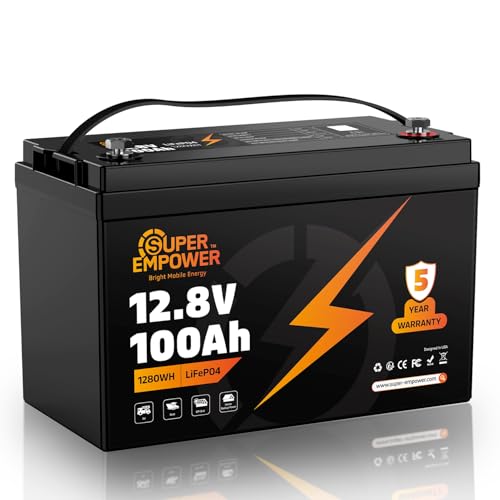
SUPER EMPOWER 12.8V 100Ah LiFePO4 Battery, Group 31
Badge: Best Overall
Strengths
- Trolling motors named in the title, so the maker designed and warrants toward this exact duty
- 1280Wh stated, the energy figure honest runtime arithmetic starts from
- Supports 4P4S expansion up to 20.48kWh per the title, the cleanest growth path on the water
Trade-offs
- No cycle figure is stated in the title, so longevity evidence rests on its sibling rival’s number
- Group 31 is the larger case; small bow compartments should be measured before ordering
- One unit is a day-class battery, not a weekend-class one, for anglers who run high thrust
| Voltage (title) | 12.8V |
| Capacity (title) | 100Ah |
| Stored energy (title) | 1280Wh |
| Chemistry (title) | LiFePO4 |
| BMS (title) | 100A |
| Cycle figure (title) | Not stated in title |
| Protection (title) | Low-temp cutoff |
| Expansion (title) | 4P4S, up to 20.48kWh |
| Form factor (title) | Group 31 |
Start with the title’s own words: this battery names trolling motors in its headline, and in a category full of general-purpose batteries hoping to be invited aboard, that naming matters. Behind the name sits the right specification: 12.8 volts, 100 amp-hours, a stated 1280Wh, a 100A BMS with headroom far above any 12 volt trolling motor’s draw, and a low-temperature cutoff for the early-season mornings when the dock is frosty and the fish are already moving. Run the endurance division with your own motor: at a moderate average draw, 1280Wh is a full day of ordinary fishing; at sustained high thrust into wind, it is a long morning, and the title’s stated expansion support exists for anglers who live in the second sentence.
The Group 31 case is the traditional trolling footprint, which means it fits the battery trays and boxes that boats already have, and its deep-cycle design brief covers the RV and marine double life many of these batteries lead, weekdays in a camper, weekends on the bow. The 4P4S expansion language, up to 20.48kWh, is written for stationary systems, but its practical meaning on a boat is simpler: the maker contemplates multiple units working together, so a second matched battery for parallel endurance is a supported idea rather than a forum experiment.
Its one evidence gap is the missing cycle figure, and the next pick exists to exploit it. If your buying religion is stated longevity, read on. If your religion is the complete stated package for the stated job, trolling named, energy stated, protection stated, growth stated, this is the most coherent specification in the pool, and it leads the guide on exactly that coherence.
Best for: most 12 volt trolling anglers: full-day power with a supported path to a second unit. / Not suited for: buyers who require a published cycle figure as their deciding evidence.
Check on Amazon — check the latest price on Amazon before you decide, because listings, included accessories, and availability change over time.
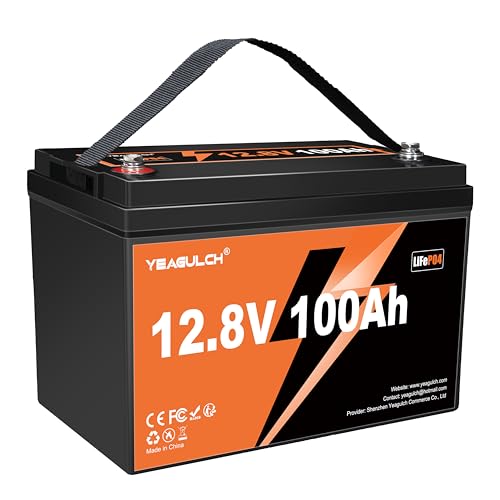
yeagulch 12.8V 100Ah LiFePO4 Battery, Group 31
Badge: Best Stated Cycle Life
Strengths
- 15000+ deep cycles stated, the longevity evidence every weekly angler should want
- 1280Wh and a 100A BMS stated, the same endurance class as the leader
- Marine named in the title, with low-temperature protection stated
Trade-offs
- No expansion architecture is stated in the title, so multi-unit plans need verification
- The title says low-temperature protection without the word cutoff, leaving the precise behavior to confirm
- Trolling is not named in the title, though marine and RV duty are
| Voltage (title) | 12.8V |
| Capacity (title) | 100Ah |
| Stored energy (title) | 1280Wh |
| Chemistry (title) | LiFePO4 |
| BMS (title) | 100A |
| Cycle figure (title) | 15000+ deep cycles |
| Protection (title) | Low temp protection |
| Form factor (title) | Group 31 (BIC) |
A trolling battery’s life is measured in seasons of weekends, and this yeagulch title is the only one in the leading group that puts a number on that life: 15000+ deep cycles. Set beside its other stated figures, 1280Wh, a 100A BMS, low-temperature protection, the package reads like a battery specified by someone who expects to be asked hard questions in year five. For the angler who fishes forty weekends a year, that stated cycle class is not a vanity metric; it is the difference between a battery that ages with the boat and one that becomes next spring’s expense.
On the water, its behavior class matches the leader’s: the same energy for the same endurance division, the same BMS headroom over a trolling motor’s modest draw, the same Group 31 footprint for existing trays. Its title names marine and RV duty rather than trolling specifically, which this guide counts as a small demerit in a trolling guide, while noting that the underlying duty, sustained moderate discharge, vibration, spray, temperature swings, is the same physical life either way. The Best Deep Cycle 12 Volt Battery For Dry Camping guide makes the same point from the campsite side: deep-cycle evidence travels well between the places deep-cycle batteries live.
Two verification notes complete the review. The title states no expansion architecture, so anglers planning a second unit in parallel should confirm the maker’s guidance on the full listing before building around it. And its low-temperature language says protection rather than cutoff, a small wording difference worth one question to the seller. Neither note dents the central fact: on stated cycle evidence, this is the longest-lived promise in the set, and weekly anglers should weight it accordingly.
Best for: high-frequency anglers who keep gear for many seasons. / Not suited for: buyers who need a stated expansion architecture before committing.
Check on Amazon — check the latest price on Amazon before you decide, because listings, included accessories, and availability change over time.

SUPER EMPOWER 12V 100Ah LiFePO4 Battery, Group 24 (2 Pack)
Badge: Best Matched Pair
Strengths
- Matched pair from one maker removes the mixed-age problem of two separate purchases
- Each unit states 1280Wh, a 100A BMS, and low-temperature cutoff, the leader’s specification in a Group 24 case
- Trolling motor named in the title, with 4P4S expansion support stated behind the pair
Trade-offs
- Two units is double the charging and maintenance routine of one
- Group 24 cases in a pair still need tray space planned, especially in smaller boats
- No cycle figure is stated in the title
| Voltage (title) | 12V |
| Capacity (title) | 100Ah per unit (2 pack) |
| Stored energy (title) | 1280Wh per unit |
| Chemistry (title) | LiFePO4 |
| BMS (title) | 100A |
| Cycle figure (title) | Not stated in title |
| Protection (title) | Low-temp cutoff |
| Expansion (title) | 4P4S, up to 20.48kWh |
| Form factor (title) | Group 24 |
Some boats outgrow one battery honestly: the angler who fishes dawn to dark, the guide who cannot call a day early, the two-motor setup that splits duties between bow and stern. For them, this two-pack is the tidy answer. It pairs two identical Group 24 units of the same specification family as the guide’s leader, each stating 1280Wh, a 100A BMS, and low-temperature cutoff, with trolling motors named in the title and 4P4S expansion support behind the pair. Matched age and matched model are not marketing garnish in parallel systems; they are how the two units share work evenly and age together instead of one carrying the other into an early grave.
Run the pair two ways. In parallel at 12 volts, the endurance division doubles: the same moderate draw that gave you a day now gives you a weekend’s fishing days, with charging between them optional rather than mandatory. Split between two stations, each motor or circuit gets its own stated 1280Wh and its own BMS, and a failure, should one ever come, strands one station instead of the boat. Either layout beats the common alternative, a new battery paralleled with last year’s tired one, which this guide’s mistakes section treats with the seriousness it deserves.
The costs are the honest ones: two units to charge, monitor, and store; tray space to plan in boats where space is the scarcest resource after fish; and a title that states no cycle figure, the same evidence gap as its single-unit sibling. Anglers whose days fit inside one battery should buy one battery, the leader above, and spend the difference on tackle. Anglers whose days do not fit will find this the most orderly way to double up.
Best for: long-day and two-station anglers who want matched endurance. / Not suited for: small boats where a single 100Ah unit already answers the whole question.
Check on Amazon — check the latest price on Amazon before you decide, because listings, included accessories, and availability change over time.

VATRER POWER 12V 300Ah LiFePO4 Battery
Badge: Best for Multi-Day Endurance
Strengths
- 300Ah class is roughly three of the 100Ah picks in one unit, transforming multi-day endurance
- Built-in 200A BMS stated, with low and high temperature cutoffs
- Self-heating and app monitoring stated, features that earn their keep in cold, unattended systems
Trade-offs
- No stored-energy or cycle figure is stated in the title, so two evidence cells stay empty
- A bank-class battery demands bank-class space and mounting in a boat
- Trolling is not named in the title; its stated world is RV, camping, and off-grid
| Voltage (title) | 12V |
| Capacity (title) | 300Ah |
| Stored energy (title) | Not stated in title |
| Chemistry (title) | LiFePO4 |
| BMS (title) | Built-in 200A |
| Cycle figure (title) | Not stated in title |
| Features (title) | Self-heating, app monitoring, low/high temp cutoff |
There is a class of boat for which the 100Ah conversation is simply too small: the big center console that trolls all day and runs electronics all night, the houseboat, the expedition rig that fishes three days from the nearest ramp. This VATRER battery is that class’s answer in this pool. Its title states 300Ah, a built-in 200A BMS, self-heating, app monitoring, and both low and high temperature cutoffs. The capacity class alone rewrites the endurance division: whatever your motor’s average draw, this unit holds roughly three times the 100Ah picks’ charge, and multi-day autonomy stops being a calculation and becomes a packing decision.
The supporting features suit the same scale of ownership. App monitoring matters when the battery is one system among many and its state should be checkable from the helm rather than by opening a hatch with a multimeter. Self-heating matters when the season starts cold and the battery must accept charge on mornings when an unheated bank would refuse. The 200A BMS ceiling, double the other picks’, covers large inverter and accessory loads that gather around a bank this size, though it changes nothing about trolling draw, which never needed it.
The evidence gaps are the counterweight: no watt-hour figure and no cycle figure are stated in the title, and trolling is not among its named applications, which are RV, camping, and off-grid. A buyer at this scale should extract those answers from the full listing before committing, because a battery this size is infrastructure, not an accessory. For the biggest setups that verify well, it is the endurance pick of the guide. For an ordinary bass boat, it is a cathedral where a chapel was asked for, and the leaders above remain the answer.
Best for: big boats and multi-day systems where one bank does everything. / Not suited for: ordinary single-motor boats, or buyers who need stated energy and cycle figures up front.
Check on Amazon — check the latest price on Amazon before you decide, because listings, included accessories, and availability change over time.

ABKPOWER 12V 20Ah LiFePO4 Battery
Badge: Best for Small Boats and Kayaks
Strengths
- 256Wh and 6000+ cycles stated, complete and honest numbers for its class
- 20A BMS stated, appropriately matched to small motors at low thrust and to electronics
- Compact format suits kayaks and small boats where a Group 31 simply does not fit
Trade-offs
- 20Ah is a few hours of light trolling at best; the endurance division is unforgiving at this size
- A 20A BMS ceiling caps the motor draw it can serve; check your motor’s appetite before pairing them
- Fish finders and lighting, not propulsion, lead its title’s application list
| Voltage (title) | 12V |
| Capacity (title) | 20Ah |
| Stored energy (title) | 256Wh |
| Chemistry (title) | LiFePO4 |
| BMS (title) | 20A |
| Cycle figure (title) | 6000+ |
Small watercraft rewrite the battery brief. A kayak or a small jon boat cannot host a Group 31 battery and would not thank you for trying, and their motors, small transom or bow units used at low thrust for positioning rather than travel, sip current the big motors never learn. For that world, this ABKPOWER battery is a well-judged tool: 256Wh stated, a 20A BMS, 6000+ cycles stated, in a compact LiFePO4 package whose title leads with fish finders and lighting and includes marine use without blushing.
The limits must be said in the same paragraph as the praise, because this is where small-battery buyers get hurt. Twenty amp-hours is twenty amp-hours: at a modest continuous draw it is a few hours, at anything ambitious it is a short trip, and the 20A BMS ceiling means a motor that wants more than that at full thrust will be refused by the battery’s own protection. Pair this battery with a small motor, a light hand, and a short leash from the ramp, and it performs exactly as its title promises. Ask it to push a loaded bass boat through a tournament day and it will file its resignation by mid-morning.
Judged at its scale, the specification is admirably complete, the same discipline the Best Camerchal 12 Volt Battery guide rewards in commercial small batteries: energy stated, BMS stated, cycles stated, applications honest. Kayak anglers and small-boat owners have a genuine pick here. Everyone else should read its numbers as the boundary marker they are and step up to the 100Ah class.
Best for: kayaks, jon boats, and electronics-first small craft. / Not suited for: full-size trolling duty or any motor whose draw crowds the 20A ceiling.
Check on Amazon — check the latest price on Amazon before you decide, because listings, included accessories, and availability change over time.
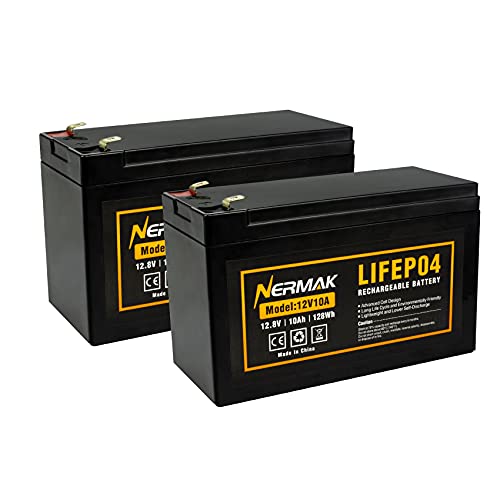
Nermak 2 Pack 12V 10Ah LiFePO4 Battery
Badge: Best for Electronics
Strengths
- Fish finder named in the title: this is the electronics battery the set needed
- 2000+ cycles and a built-in 10A BMS stated, honest figures for light duty
- Two-pack format powers finder and lighting, or one unit plus a charged spare
Trade-offs
- 10Ah per unit cannot sustain a trolling motor beyond the briefest, lightest use
- The 10A BMS ceiling is below most trolling motors’ working draw
- No stored-energy figure is stated in the title
| Voltage (title) | 12V |
| Capacity (title) | 10Ah per unit (2 pack) |
| Stored energy (title) | Not stated in title |
| Chemistry (title) | LiFePO4 |
| BMS (title) | Built-in 10A |
| Cycle figure (title) | 2000+ cycles |
Every trolling boat carries two electrical appetites: the motor’s and everything else’s. This Nermak two-pack belongs entirely to the second appetite. Its title states 12V, 10Ah per unit, a built-in 10A BMS, and 2000+ cycles, and its application list names the fish finder outright, alongside lighting, scooters, and small solar. As the dedicated electronics battery in a boat whose motor runs on one of the 100Ah picks, a unit like this keeps the finder, the lights, and the small accessories off the propulsion budget, and the second unit rides along as a charged spare, which is a genuinely seamanlike arrangement.
The propulsion warning is absolute and this review will not soften it: a 10Ah battery behind a 10A BMS cannot run a trolling motor in any sense an angler would recognize. The motor’s ordinary working draw meets or exceeds the BMS ceiling, the capacity would drain in well under an hour of real use, and the experiment would end with protection disconnects and a paddle. Listings and wishful thinking sometimes blur this line; physics does not, and neither does this guide.
Within its brief, the pack is easy to recommend on its stated evidence, and its presence completes the set honestly: a trolling guide that only listed propulsion batteries would leave the electronics question, which every real boat asks, unanswered. Answer it with this pair, answer propulsion with the 100Ah class, and the boat’s whole electrical day is accounted for, the same complete-system thinking the cold-weather guidance in the Best Cold Weather 12 Volt Trailer Battery guide applies when one battery is asked to do too many jobs.
Best for: fish finders, lighting, and small electronics, with a spare. / Not suited for: propulsion, in any boat, at any thrust, for any duration worth naming.
Check on Amazon — check the latest price on Amazon before you decide, because listings, included accessories, and availability change over time.
Comparison Table
All figures come from the verified titles, checked 2026-11-20. Hours on the water are deliberately not tabulated: they depend on your motor’s draw at the thrust you actually use, and the buying guide gives you the division instead of a promise.
| Pick | Voltage (title) | Capacity (title) | Stored energy (title) | BMS (title) | Cycle figure (title) | Status | Link |
|---|---|---|---|---|---|---|---|
| SUPER EMPOWER 12.8V 100Ah LiFePO4 Battery, Group 31 | 12.8V | 100Ah | 1280Wh | 100A | Not stated in title | Linked | Check on Amazon |
| yeagulch 12.8V 100Ah LiFePO4 Battery, Group 31 | 12.8V | 100Ah | 1280Wh | 100A | 15000+ | Linked | Check on Amazon |
| SUPER EMPOWER 12V 100Ah LiFePO4 Battery, Group 24 (2 Pack) | 12V | 100Ah x2 | 1280Wh per unit | 100A | Not stated in title | Linked | Check on Amazon |
| VATRER POWER 12V 300Ah LiFePO4 Battery | 12V | 300Ah | Not stated in title | 200A built-in | Not stated in title | Linked | Check on Amazon |
| ABKPOWER 12V 20Ah LiFePO4 Battery | 12V | 20Ah | 256Wh | 20A | 6000+ | Linked | Check on Amazon |
| Nermak 2 Pack 12V 10Ah LiFePO4 Battery | 12V | 10Ah x2 | Not stated in title | 10A built-in | 2000+ | Linked | Check on Amazon |
How to Choose a Battery for a 12 Volt Trolling Motor
Start with your motor’s real appetite, not its badge. Find its draw at the thrust settings you actually use, cruising and positioning draws matter more than the full-thrust figure unless your fishing is a fight against current and wind, in which case the full figure is your design case. Multiply the honest average draw by the hours in your longest ordinary day, then compare against stated capacity: the 100Ah class covers most single-day fishing with margin, the pair doubles it, and the 300Ah class removes the question for multi-day systems. Buy for the longest ordinary day, not the longest imaginable one, or you will haul capacity you never use through every launch.
Then weigh the evidence columns. Stated watt-hours let you plan; stated cycle figures let you amortize; stated low-temperature protection lets you fish the cold ends of the season without managing the battery’s feelings. The two leaders split those virtues, one emphasizing expansion, the other cycle life, and either is a defensible first choice, which is what a close decision at the top of a category should look like. What is not defensible is buying down into the small packs for propulsion because the price smiled: the endurance division does not negotiate.
Close with fit and charging. Measure the battery compartment before falling for a group size, plan the tray and strap for a battery that will be lifted in and out or live aboard, and match the charger to LiFePO4 with a profile the maker approves. A battery that fits, charges correctly, and matches its stated energy to your longest day is the whole purchase; everything else, including this guide, is commentary.
How to Rig, Charge, and Care for a Trolling Motor Battery
Step 1: mount and strap. Seat the battery in its tray or box, strap it against the motion of trailering and chop, and keep terminals covered and clear of loose tackle and tools. Step 2: wire with a fuse and a plan. Use the motor maker’s recommended cable gauge, keep runs short, fuse the positive lead near the battery at the maker’s specified rating, and route cables where they cannot chafe on the hull or dangle in bilge water. Step 3: separate the appetites. Where the boat carries a dedicated electronics battery like the small picks here, wire it as its own circuit so the finder never shares the motor’s voltage sag at full thrust.
Step 4: charge like you mean it. Recharge after every trip on a LiFePO4-profile charger, promptly rather than next week, and top up before storage rather than storing empty; lithium prefers a partial charge for long rests, and your charger’s storage guidance governs. Step 5: respect the cold. Early and late in the season, let the stated low-temperature protection do its work; a battery that refuses a freezing charge is protecting itself, and warming the battery space is the fix, not a bypass.
Troubleshooting. Problem: the motor weakens noticeably by midday → run the endurance division with your real thrust habits before blaming the battery; sustained high thrust is the usual confession. Problem: the finder resets when the motor starts or surges → the electronics are sharing the motor’s circuit and its voltage sag; separate the circuits or give electronics their own small battery. Problem: the battery refuses charge on a cold morning → low-temperature protection is active; warm the battery and try again, and never defeat the cutoff to save a fishing day.
Thrust Habits: The Hidden Variable in Every Runtime Story
Two anglers with the same motor and the same battery can honestly report days of different lengths, because the battery does not experience the motor’s rating; it experiences the angler’s hand. Spot-lock hovering against a breeze, long slow trolling passes, and full-thrust runs between spots are three different electrical lives wearing one boat. The first two sip in the moderate ranges this guide’s arithmetic assumes. The third drinks like a winch’s smaller cousin and can halve a day before lunch.
This is why the guide refuses to print a runtime table and keeps handing you the division instead. Log one real trip: note your thrust settings and hours honestly, multiply, and compare with what the battery delivered. That single personal data point is worth more than any review, because every future battery decision you make, including the move to a pair or a bigger bank, will be sized by your hand’s actual habits rather than by a stranger’s.
One Battery or Two: Parallel Endurance and Split Duties
The two-unit question resolves into two different designs that shoppers often confuse. Paralleling two matched 100Ah units, the two-pack pick’s natural layout, doubles the energy behind one motor and one endurance division; it is the choice for longer days on a single circuit. Splitting duties, a propulsion battery for the motor and a small dedicated battery for electronics, protects the finder from voltage sag and keeps the motor’s budget unspent by lights and screens; it is the choice for boats whose electronics have grown serious.
Both designs beat the undisciplined middle, one tired battery asked to do everything while a random second battery of different age and model is paralleled in hope. Matched units, separate circuits, and a charger routine that treats each battery as itself: those are the habits that make multi-battery boats boring in the best way. Decide which design your fishing actually describes, and the product choice follows from the diagram.
Common Buying Mistakes
Mistake 1: buying capacity by price instead of by the division. A cheap small battery that ends the day at noon is the most expensive battery on the lake. Mistake 2: paralleling mismatched batteries. Different ages, models, or capacities share work badly and age worse; matched pairs exist precisely to prevent this. Mistake 3: storing the battery empty or baking it in a hot hull. Charge promptly, store at partial charge, and keep storage temperatures sane. Mistake 4: asking a 10Ah or 20Ah pack to propel the boat. The BMS ceilings and capacities in their own titles say no; believe them. Mistake 5: unfused, undersized wiring. The motor’s draw deserves the maker’s cable gauge and a fuse at the battery, every time, in every boat. Mistake 6: judging the battery by one trip. Wind, thrust habits, and temperature move the numbers; log a few trips before condemning or crowning anything.
Final Recommendation
For most anglers, the first choice is SUPER EMPOWER 12.8V 100Ah LiFePO4 Battery, Group 31: trolling named in its title, 1280Wh stated, protection stated, and expansion support for the season your days outgrow one unit. It is the specification that reads like it was written by someone who has watched a battery die at the far end of a lake.
Choose yeagulch 12.8V 100Ah LiFePO4 Battery, Group 31 instead if you fish constantly and the stated 15000+ cycle figure is the evidence you trust most, or step to the matched pair when one unit’s day is genuinely too short. Keep the small picks in their honest posts, electronics and small craft, and the big VATRER for boats that are practically small houses. Size by the division, match the units, charge with discipline, and the battery will stop being a topic and go back to being what it should be: the reason the motor is still turning at the evening rise.
Frequently Asked Questions
How long will a 100Ah battery run a 12 volt trolling motor?
Divide its stated energy, 1280Wh for the leading picks, by your motor’s average draw in watts. At a moderate draw around 300 watts, roughly four hours; at gentler positioning draws, far longer; at sustained full thrust into weather, far less. Your thrust habits move the answer more than any product difference in this guide, which is why the honest method is the division with your numbers, ideally logged from one real trip.
Is 12.8 volts the same as 12 volts for a trolling motor?
Yes, for this category. LiFePO4 batteries are commonly titled 12.8V because that is the chemistry’s nominal voltage, while the class, the motors, and the chargers all call it 12 volt. Both leading picks here are titled 12.8V and are built for 12 volt trolling duty, one naming trolling motors in its title outright. What must match is the class and the charger profile, not the decimal.
Can I run my fish finder from the trolling battery?
You can, and many boats do, but the finder will share the motor’s voltage sag at high thrust, which can mean resets and noisy readings at the worst moments. The cleaner layout, and the reason the small Nermak pair is in this guide, is a dedicated small battery for electronics. It costs little, weighs little, and keeps the screens steady while the motor works.
Should I buy one 100Ah battery or the two-pack?
Buy one if your longest ordinary day fits inside its endurance division with margin; buy the matched pair if it does not, or if you want a bow-and-stern split with identical units. The pair’s virtue is matching: same model, same age, same specification, which is exactly what parallel systems and long service ask for. Do not simulate the pair later by adding a random second battery to a tired first one.
What charger does a LiFePO4 trolling battery need?
A charger with a LiFePO4 profile at 12 volt class voltage, sized to refill the battery between your trips without rushing it. Confirm the profile in the charger’s documentation rather than assuming a lithium label means the right curve, respect the battery’s low-temperature protection on cold mornings, and make recharging after every trip a habit rather than an intention. The battery you charge promptly is the battery that lasts.
Why does my motor slow down late in the day?
Either the battery is genuinely nearing the end of its charge, in which case your endurance division was optimistic about thrust habits or conditions, or voltage drop in long or undersized cable is starving the motor while charge remains. Measure voltage at the motor under load to separate the two causes. The first is cured by capacity or gentler thrust; the second by cable, and confusing them leads to buying batteries for a wiring problem.
Can these batteries stay in the boat over winter?
They can, stored at partial charge in a cool, dry place, with the season’s last charge done properly and a mid-winter check on the calendar. The stated low-temperature protections on the leading picks guard against charging damage in the cold, but storage discipline is still yours: no battery of any chemistry enjoys being forgotten empty in a freezing hull until spring.