Disclosure: topratedkitchenware.com is reader-supported. When you buy through links on our site, we may earn an affiliate commission from Amazon and other retailers, at no extra cost to you.
Where to buy
All six models below are verified portable toilets suited to camp use, and all six carry Amazon links. They split into three working designs — bag-and-gel toilets, folding or retractable toilets, and cassette toilets with detachable waste tanks — and the reviews explain which design earns its space in which kind of camp.
- LuckyNov Portable Toilet with Urine Gel and Leak-Proof Bags — Check on Amazon for the current configuration and availability
- TRIPTIPS Upgrade Retractable Portable Toilet
- Kohree Portable RV Toilet, 5.8 Gallon
- Hapoon XL Portable Folding Camping Toilet
- Drive Medical Folding Bedside Commode
- Zinyeme Portable Toilet for Camping
Read the full guide ↓ for the ranking logic, the honest limitations of every pick, and the capacity arithmetic that decides how often you will be walking to the disposal point.
The best small portable camp toilets solve a specific problem: sanitation that packs into a car boot, a tent porch or a van cupboard, sets up in moments, and leaves no trace and no plumbing behind. “Small” in this category is a working specification, not a marketing adjective — it means the toilet earns its packed volume every mile of the trip, because camp kit competes for the same space as the tent, the stove and the food. Every pick in this guide was judged against that competition.
The six verified picks divide by how they handle waste, and that division matters more than any single feature. Bag-and-gel designs seal each use into a leak-proof bag, which is the simplest and most disposal-friendly pattern for short trips. Folding and retractable designs provide a real seat structure that collapses flat, pairing with bags or a bucket. Cassette designs carry a detachable waste tank you empty at a disposal point, behaving most like a plumbed toilet and suiting longer stays. Shoppers comparing the near-identical search phrased for camping generally will find the same designs ranked from a slightly different angle under Best Small Portable Camping Toilets, and those planning around a privacy tent should read this guide alongside Best Tent Camping Portable Toilets.
Every pick was checked against the verified pool for this category on 2026-11-20, and every pick carries an Amazon link so you can check the latest price on Amazon. Spec boxes use only details stated in the verified listing titles — capacities, dimensions and load figures appear only where the title itself states them. No prices, star ratings or review counts appear anywhere in this guide.
Key Takeaways
- The LuckyNov leads for short camps and car-based trips: urine gel and leak-proof bags make each use self-sealing, odour-managed and simple to dispose of responsibly.
- The TRIPTIPS retractable design is the pack-size champion’s pattern — adjustable height in a body built to fold down for camping and car travel.
- The Kohree is the long-stay pick: a 5.8-gallon detachable waste tank with a level indicator, the closest thing here to a plumbed toilet’s rhythm.
- The Hapoon XL folding toilet serves adults and kids with a lightweight lidded design that packs flat.
- The Drive Medical commode is the strength pick — a folding steel-frame design titled to support up to 350 pounds with an included 7.5-quart bucket — while the Zinyeme is the simple bucket-style all-rounder for tent, boat, beach and car.
In this guide
Quick Picks
| Pick | Badge | Type | Link |
|---|---|---|---|
| LuckyNov Portable Toilet with Urine Gel | Best Overall | Bag-and-gel portable | Check on Amazon |
| TRIPTIPS Upgrade Retractable Portable Toilet | Best Pack-Down Design | Retractable, adjustable height | Check on Amazon |
| Kohree Portable RV Toilet, 5.8 Gallon | Best for Longer Stays | Cassette, detachable waste tank | Check on Amazon |
| Hapoon XL Portable Folding Camping Toilet | Best Folding Family Pick | Folding, with lid | Check on Amazon |
| Drive Medical Folding Bedside Commode | Best Weight Capacity | Folding commode, bucket included | Check on Amazon |
| Zinyeme Portable Toilet for Camping | Best Simple All-Rounder | Bucket-style portable commode | Check on Amazon |
Six linked picks across three waste-handling designs. Choose the design first — bags, folding frame or cassette tank — and the ranking inside that design follows almost automatically.
How These Picks Were Chosen
This guide is research-led and claims no hands-on testing. Each candidate was assessed from its verified listing title: brand, waste-handling design, stated capacity where published, adjustability, included components and stated applications. The screening standard for a small portable camp toilet was practical. The toilet must be genuinely portable — carried by one person, packed into a vehicle without drama. It must be self-contained, needing no plumbing, power or vehicle modification. It must manage waste in a sealed, carryable form that can be disposed of responsibly at camp facilities. And it must be sized honestly for camp use rather than merely labelled for it. All six picks met that standard on the evidence of their titles and are linked; the ranking separates them by trip length, pack size, user size and the strength of their stated specifications. Where a title publishes a figure — a tank capacity, a load limit, a bucket size — the review uses it; where it does not, the review judges the design pattern and says that is what it is doing.
The 6 Best Small Portable Camp Toilets, Reviewed Honestly
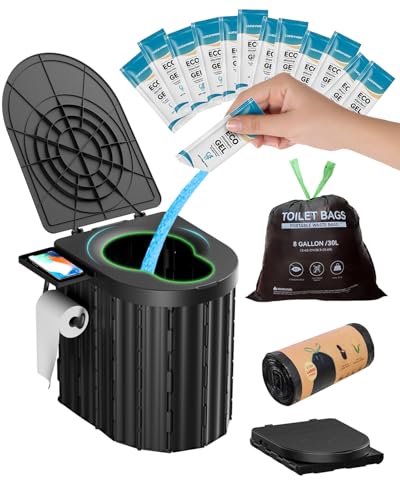
LuckyNov Portable Toilet with Urine Gel and Leak-Proof Bags
Badge: Best Overall
Strengths
- The waste system is the product: urine gel and leak-proof bags turn each use into a sealed, odour-managed unit that can be carried out and disposed of without a cassette to rinse.
- Titled as odourless in operation and designed for adults and kids alike, with an ergonomic design claim aimed at real seated comfort.
- No tank to empty, no water to carry for flushing, no disposal-point hunt for a chemical toilet point — bags go where camp rules allow bagged waste.
Trade-offs
- It is a consumables system: bags and gel are ongoing supplies, and a long trip must pack enough of both.
- Bag-based disposal depends on site and land rules; where bagged human waste is not accepted, a cassette design is the correct tool.
- The title publishes no load capacity or tank figure, because the design has neither — users wanting published strength numbers should read the Drive Medical review.
Mini spec box
- Brand: LuckyNov
- Waste system: urine gel with leak-proof bags
- Odour control: titled as odourless in use
- Users: adults and kids as titled
- Design: ergonomic design as titled
- Stated application: outdoor travel potty, camping
The LuckyNov leads this guide because it understands what most camp toilet use actually looks like: a weekend, a family, a car, and a strong preference for sanitation that never becomes a project. The gel-and-bag pattern removes every chore the other designs retain. There is no cassette to carry to a disposal point and rinse, no tank level to watch, no flush water to budget. Each use seals itself, and the sealed bag is the entire waste system — light going in, contained coming out.
That simplicity has a discipline attached, and the review states it plainly: you are packing a consumables system, so the trip plan must count bags and gel the way it counts fuel and food, and the disposal plan must respect the rules of the land you are on. Many campsites and public lands accept bagged waste in general refuse; some do not, and the camper’s duty is to know before arrival. Where the rules welcome bags, nothing in this pool is easier to live with. Where they do not, the Kohree’s cassette below is the design that keeps you legal and comfortable. The LuckyNov also suits the in-car emergency role — the traffic-jam and long-drive scenario its travel positioning implies — better than any tank design, because a sealed bag asks nothing of the vehicle at all.
Best for: weekend camps, family car camping, festival and event use, and as an in-car emergency toilet / Not suited for: long off-grid stays where bag disposal is restricted, or campers who dislike consumables systems

TRIPTIPS Upgrade Retractable Portable Toilet
Badge: Best Pack-Down Design
Strengths
- Retractable, foldable body: the seat structure collapses for packing, which is the whole point of a small camp toilet.
- Adjustable height, so the same toilet serves adults and kids and adapts to uneven camp routines.
- Titled for camping and car use, for adults and kids — the family travel pattern in one specification.
Trade-offs
- A folding frame is a mechanism: hinges and locks need a moment’s care at set-up and a check before each trip.
- The title publishes no load capacity; larger users who need a stated figure should compare the Drive Medical commode.
- Like other frame designs here, it pairs with bags or a liner system the user supplies and manages.
Mini spec box
- Brand: TRIPTIPS
- Design: retractable, foldable portable toilet
- Height: adjustable height
- Users: adults and kids as titled
- Stated application: camping, car travel
The TRIPTIPS answers the camp toilet’s central tension — a toilet must be chair-like in use and luggage-like in transit — with a retractable frame. Folded, it behaves like kit; opened, it offers an adjustable-height seat that can be set low for a child in the morning and raised for an adult at night, a flexibility fixed-height portables cannot match. For families, that adjustability is not a gimmick: it is the difference between one toilet for the whole tent and a compromise somebody small has to climb.
The honest cautions belong to all folding mechanisms. The frame’s joints are its life, so the pre-trip routine should include opening it fully, confirming every lock engages, and sitting the first sit of the season at home rather than at a dark campsite. The absence of a published load figure in the title is noted rather than filled in; users for whom a stated capacity matters will find one in the Drive Medical review below. Within its pattern, though, the TRIPTIPS is the pack-size pick of this pool, and for car campers whose boot space is the binding constraint, pack size is the specification that decides whether the toilet comes at all — a toilet left at home for space reasons has no features at all.
Best for: families and car campers for whom packed size and adjustable height decide the purchase / Not suited for: users who require a published load capacity, or campers who want a sealed cassette tank
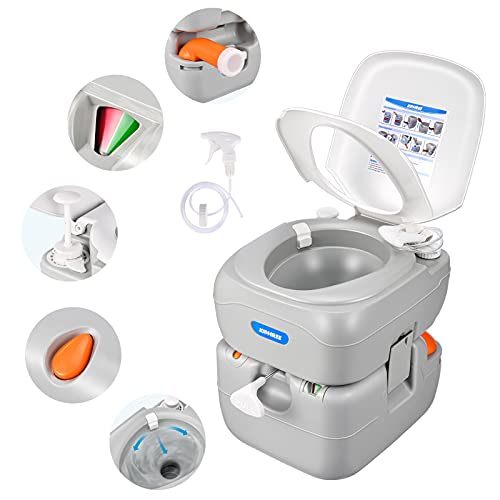
Kohree Portable RV Toilet, 5.8 Gallon
Badge: Best for Longer Stays
Strengths
- A real cassette system: a 5.8-gallon detachable waste tank, titled as leak-proof, with a level indicator so emptying is planned rather than discovered.
- The largest stated waste capacity in this pool — the figure that stretches intervals between disposal trips on longer camps.
- Titled across home use, RV travel, boat and indoor-outdoor trips, reflecting the cassette pattern’s versatility.
Trade-offs
- A full 5.8-gallon tank is a serious carry to the disposal point; the capacity that extends intervals also concentrates the weight when it ends.
- Cassette emptying and rinsing is a genuine chore with a technique to learn, unlike the bag system’s seal-and-carry simplicity.
- It is the least “small” design here in spirit — a compact fixture rather than a fold-flat accessory — so boot-space misers should weigh the folding picks.
Mini spec box
- Brand: Kohree
- Waste tank: 5.8 gallon, detachable
- Sealing: leak-proof as titled
- Monitoring: waste level indicator
- Stated application: RV travel, boat, home use, indoor and outdoor trips
The Kohree is the pick for camps measured in weeks rather than weekends. Its cassette pattern mirrors the plumbed world’s rhythm: use, watch the level indicator, carry the sealed tank to a disposal point, rinse, return. The 5.8-gallon capacity is the pool’s largest stated figure, and capacity is the specification that governs the whole experience of a cassette toilet — every extra gallon is a day or more between disposal walks, multiplied across a long stay into a genuinely different holiday.
The trade-off is written in the same number. Waste weighs what water weighs, and a full tank approaches the limit of a comfortable one-person carry over rough ground; the wise routine is to empty at the indicator’s warning rather than at the tank’s absolute brim, trading a little interval for a manageable load. The level indicator exists precisely to make that routine possible, and its presence in the title is one of the details that separates a considered cassette from a bucket with ambitions. For base camps, seasonal pitches and RV overflow duty, the Kohree is the most grown-up toilet in this guide; for a two-night tent trip, it is more system than the trip needs, and the folding and bag picks above will serve with less ceremony.
Best for: longer stays, base camps, seasonal pitches and anyone who wants a cassette rhythm with a level indicator / Not suited for: ultralight packers, or campers unwilling to carry a full tank to a disposal point
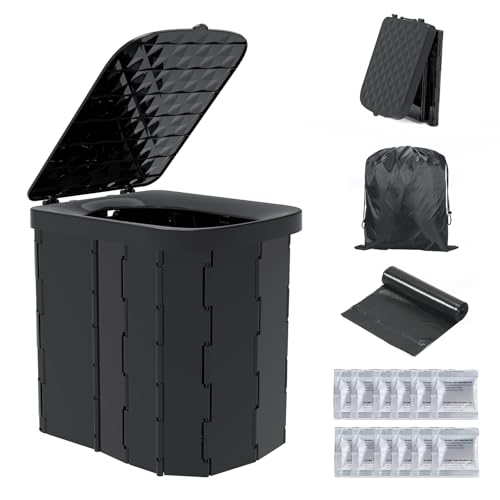
Hapoon XL Portable Folding Camping Toilet
Badge: Best Folding Family Pick
Strengths
- XL folding format with a lid — a generous seat size that still folds for travel, titled for adults and kids.
- Lightweight as titled, which matters when the toilet is carried from car to pitch by whoever drew the short straw.
- Positioned across camping, car and outdoor use — the general family pattern rather than a niche one.
Trade-offs
- XL and folding pull in opposite directions: it packs flatter than a cassette but bulkier than the retractable TRIPTIPS pattern.
- No published load capacity or tank figure in the title; it is a frame-and-bag pattern, judged as a design.
- The lid is a comfort and hygiene plus, but the waste system remains bags or liners the user manages.
Mini spec box
- Brand: Hapoon
- Design: XL portable folding toilet with lid
- Weight character: lightweight as titled
- Users: adults and kids as titled
- Stated application: camping, car toilet, outdoor portable bathroom
The Hapoon occupies the sensible middle of this pool: bigger seated room than the minimalist folders, a lid for hygiene and for the toilet’s second life as a camp stool or step, and a folding frame that still respects the boot. Families will recognise the design brief — a toilet a child can use without acrobatics and an adult can use without apology, that travels without negotiation. The XL in the name should be read as seat generosity rather than overall bulk; the folding pattern keeps the packed shape flat even where the opened shape is roomy.
Its limitations are the folding family’s shared ones, stated without drama: no sealed tank, no published capacity figure, and a dependence on the bag or liner routine the user brings to it. Paired with a good bag system — the LuckyNov review above describes the gel pattern that suits frames like this — the Hapoon is a complete camp sanitation answer for the majority of tent and car trips. It loses to the TRIPTIPS only on packed size, and to the Kohree only on long-stay capacity; against the whole pool it may be the pick with the fewest enemies.
Best for: families wanting a roomy folding toilet with a lid for general camping and car trips / Not suited for: campers needing a sealed cassette, or those minimising packed size above all else

Drive Medical Folding Bedside Commode
Badge: Best Weight Capacity
Strengths
- The only pick whose title publishes a load figure: supports up to 350 pounds, on a durable powder-coated frame.
- Adjustable height and a folding design, with an included 7.5-quart bucket — a complete system in the box.
- A 3-in-1 toilet solution as titled, reflecting commode patterns that serve as raised seat and frame as well as a standalone unit.
Trade-offs
- It is a bedside commode by design heritage: a medical-pattern frame rather than a camp-styled product, with the plain looks to match.
- The bucket is modest at 7.5 quarts, so emptying is frequent on family camps; it suits a primary user rather than a crowd.
- A steel frame folds flat but does not pretend to be luggage; vehicle space planning still applies.
Mini spec box
- Brand: Drive Medical
- Load: supports up to 350 lb as titled
- Frame: powder-coated, folding, adjustable height
- Bucket: 7.5 qt bucket included
- Pattern: 3-in-1 toilet solution as titled
This pick requires the guide’s most careful framing. The Drive Medical commode was designed for the bedside, not the campsite — and it earns its place here because the qualities that make a good bedside commode are precisely the qualities a certain kind of camper needs most: a published, generous load capacity, adjustable height, a rigid frame that does not flex under the user, and a bucket system that is simple to empty and clean. For larger campers, and for anyone whose mobility makes a flimsy folding stool a genuine risk, this is the safest seat in the pool by a wide margin, and safety outranks styling in any honest ranking.
The camp compromises are real and should be weighed openly. The bucket is small, so this is a one-user or night-use toilet rather than a family’s main facility. The frame’s medical appearance will not win a beauty contest at a festival. And while it folds, it folds like furniture, not like the retractable travel designs. None of that diminishes its core case: where the user’s size or mobility is the binding constraint — the same constraint the river and expedition world behind Best River Toilets treats with similar respect — the commode’s published strength and rigid frame make it the responsible recommendation, at camp as surely as at home.
Best for: larger users and anyone with mobility needs who requires a published load capacity and a rigid frame / Not suited for: families needing a high-capacity main toilet, or campers prioritising packed size and camp styling
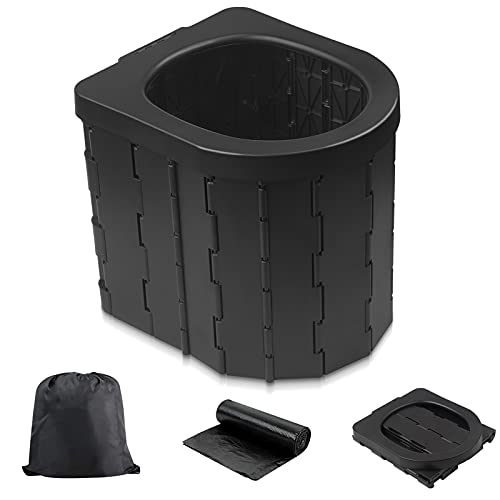
Zinyeme Portable Toilet for Camping
Badge: Best Simple All-Rounder
Strengths
- The bucket-style pattern at its most straightforward: a portable commode bucket design with nothing to assemble, prime or configure.
- Titled across an unusually wide range — car, travel, outdoor, hiking, backpack, trips, tent, boat, beach, traffic jam and home — reflecting a genuinely general tool.
- Bucket systems pair with bags and liners for sealed, carry-out disposal anywhere the rules allow.
Trade-offs
- The title publishes no capacity, load or dimension figures, so the review judges the pattern rather than a specification sheet.
- A bucket seat is the simplest and least chair-like sitting experience in the pool; long-stay comfort belongs to the cassette and XL picks.
- No lid, level indicator or gel system is claimed in the title — the user assembles the routine from bags and discipline.
Mini spec box
- Brand: Zinyeme
- Design: portable commode bucket toilet
- Users: adults as titled
- Stated application: camping, car, tent, boat, beach, hiking, trips and home
The Zinyeme closes the pool as the generalist: a bucket-pattern portable toilet whose title reads like a list of everywhere a person might need one. That breadth is the product’s honest character. It is not the best packer (the TRIPTIPS folds cleverer), not the best long-stay system (the Kohree’s tank outlasts it), not the strongest seat (the Drive Medical publishes the figure) and not the most complete waste system (the LuckyNov’s gel bags are tidier). It is, instead, the simple, inexpensive-pattern answer that lives in a car boot or a garage corner and is ready for the tent trip, the beach day, the boat outing and the motorway standstill alike.
Simplicity at this level is a legitimate engineering choice, and its ownership routine is the simplest in the guide: line the bucket, use, seal, carry out, rinse. Campers building their first kit often overbuy sophistication and underbuy readiness; a bucket toilet that is always in the car beats a cassette system left at home because the trip was short. Judged as the pool’s all-rounder — and with its specification silence noted rather than disguised — the Zinyeme earns its link and its place.
Best for: first portable toilet buyers, car-boot emergency duty and general outdoor use across many settings / Not suited for: long stays, comfort-first campers, or users needing published capacity figures
Comparison Table
| Pick | Waste system | Packing pattern | Published figure | Best use | Link |
|---|---|---|---|---|---|
| LuckyNov Portable Toilet | Urine gel and leak-proof bags | Compact travel format | None in title | Weekends, car, events | Check on Amazon |
| TRIPTIPS Retractable | Bag or liner with frame | Retractable, foldable | Adjustable height | Families, tight boots | Check on Amazon |
| Kohree Portable Toilet | Detachable cassette tank | Compact fixture | 5.8-gallon tank | Longer stays, base camp | Check on Amazon |
| Hapoon XL Folding | Bag or liner with frame | Folding, with lid | XL seat format | Family general use | Check on Amazon |
| Drive Medical Commode | Bucket, 7.5 qt included | Folding steel frame | Supports up to 350 lb | Strength and mobility needs | Check on Amazon |
| Zinyeme Portable Toilet | Bucket, bag-lined | Simple bucket format | None in title | All-round car and camp duty | Check on Amazon |
The waste-system column is the decision; everything else is refinement. Bags for short and simple, cassette for long and settled, bucket and frame for strength and readiness. Buyers in a hurry can stop reading at their row of this table with a clear conscience — the rest of the guide exists to make sure the row they stopped at is the one their trips, their vehicle and their users actually describe.
How to Choose a Small Portable Camp Toilet
Trip length chooses the waste system
Count the nights and the users, and the waste system selects itself. One to three nights for a small group: bags and gel, or a lined bucket, keep the whole affair light and the disposal simple. A week or more at a base camp: the cassette’s capacity and level indicator repay their bulk every day, because the alternative is a daily bag routine that grows old by day four. In between, the folding frames with bags split the difference. Be honest about the trip you actually take most often, and buy for that trip; the exceptional expedition can borrow, rent or adapt when it comes.
Capacity arithmetic, done roughly and honestly
For cassette buyers the arithmetic is tank gallons against users and days, moderated by how far the disposal point is and how much weight one person can carry over that distance. The Kohree’s 5.8 gallons is this pool’s benchmark; smaller tanks and buckets trade interval for a lighter carry. For bag-system buyers the arithmetic is bags per person per day against the packed supply — always pack beyond the estimate, because the middle of a trip is the wrong place to discover the count was optimistic. Neither arithmetic needs false precision; both need to happen before departure rather than at the pitch.
Packed size and the boot test
“Small” must survive contact with your actual vehicle. Folding and retractable designs — the TRIPTIPS above all — exist for boots that also hold a tent, a stove and a family’s luggage. Cassette toilets pack as a single rigid block, predictable but incompressible. Before ordering, measure the space the toilet will really travel in, not the space you wish it travelled in, and remember it travels both ways: full-ish on the return leg of a wild camp, it still has to fit. The travel-trailer owners behind Best Toilets For Travel Trailers run the same test against a trailer’s storage lockers, with the same unforgiving geometry.
The user decides the seat
Seat height, seat size and frame rigidity are comfort for some users and safety for others. Adjustable heights (TRIPTIPS, Drive Medical) serve mixed groups and growing children. Published load capacity matters where the user is large or unsteady — in this pool only the Drive Medical publishes one, and that fact should steer the relevant buyers firmly. For everyone else, an XL seat like the Hapoon’s is the comfort upgrade that costs nothing in system complexity.
Disposal rules are part of the product
A portable toilet is a promise to dispose of waste properly, and the available disposal route is a feature of the trip, not an afterthought. Campsites with chemical disposal points suit cassettes. Sites and lands that accept bagged waste in refuse suit bag systems. Sensitive wild land may require carry-out of everything, which the sealed-bag pattern does best. Check the rules for your destination before choosing the system — the toilet and the rulebook are bought together, or the trip pays for the oversight.
How to Set Up, Use and Clean a Portable Camp Toilet
Set-up begins at home: open folding frames fully and confirm every lock, test the cassette’s seals with clean water, and pack the consumables — bags, gel, liners, gloves, and the paper your system needs — in one grabbable kit. Paper deserves its own sentence: fast-dissolving paper suited to portable systems is a researched topic in its own right under Best Toilet Paper For Portable Toilets, and the short version is that paper which breaks down quickly keeps buckets, bags and cassettes all easier to empty and rinse. At the pitch, site the toilet on level ground inside a privacy tent or screened area, stable enough that a night-time visit needs no thought, and close enough to the sleeping tent that the walk is short and lit.
Use is a routine of sealing and tidiness: bags sealed after each use where the system calls for it, lids down always, the area wiped and the kit restocked before bed rather than after the morning rush. Cleaning at trip’s end is the job that decides whether the toilet is welcome next trip: cassettes rinsed thoroughly at a proper disposal point and left to dry with seals clean, buckets washed and dried fully before storage, frames wiped and their hinges checked. Store everything dry and open-ventilated; a portable toilet put away damp announces itself at the next unpacking, and the announcement is never welcome.
Troubleshooting, in the pattern that matters at camp:
- Problem: odour escapes a bag-based toilet between uses → the bag was not sealed fully or the gel supply has run short; reseal carefully, restock gel, and keep the lid closed as the system’s second barrier.
- Problem: a cassette sloshes or smells before the indicator says full → it was likely overfilled on the previous cycle or the seal needs rinsing; empty earlier, rinse the seal, and let the indicator — not optimism — set the schedule.
- Problem: a folding frame feels unstable on site → the ground, not the frame, is usually at fault; re-site on level ground and re-check that every lock engaged before use.
Privacy, Siting and Camp Etiquette
A portable toilet brings a small piece of infrastructure into shared outdoor space, and using it well is partly etiquette. Site it downwind and out of sightlines, at a respectful distance from water sources and from other pitches, following the land manager’s rules where they exist. A privacy tent is the standard solution and doubles as the changing room every camp secretly needs. At night, a low light at the toilet saves the whole camp from torch beams and tripping guy-lines. In the morning, the disposal walk is done promptly and discreetly, with sealed bags or the cassette carried as the unremarkable chore it should be. None of this is complicated, and all of it is the difference between a camp toilet that neighbours accept as normal and one that becomes the site anecdote. The best small portable camp toilets make the logistics easy; the camper’s siting and routine make them civilised.
Night Use: Where Camp Toilets Earn Their Keep
Ask campers when a portable toilet matters most and the honest answer is rarely the daytime — it is 3 a.m., in the rain, with a child awake or an older traveller unwilling to pick a path across a dark site to a distant block. Night use rewrites the feature ranking. A lid that opens quietly matters. A seat at a height the user can manage half-asleep matters. A frame that does not rock on the tent’s groundsheet edge matters more than any daytime specification, and a small light left at the toilet — a lantern on its lowest setting — is worth more than a capacity gallon. This is also where the designs separate in practice: bag systems ask the least of a sleepy user, because the seal-and-close routine is two motions; cassettes ask nothing at night either, their work being deferred to the morning’s disposal walk; folding frames ask only that they were set up squarely before bed. Whichever design you choose, rehearse its night routine once in daylight. The toilet that can be used correctly by a tired person in the dark is the right toilet, and no specification sheet measures that — your own rehearsal does.
Wild Camping and the Carry-Out Ethic
On land without facilities, the portable toilet stops being a convenience and becomes the mechanism by which camping remains acceptable at all. The carry-out ethic — everything that arrives with you leaves with you — is the rule on an increasing amount of sensitive land, and the systems in this pool divide cleanly by how well they serve it. Sealed-bag systems are the ethic’s natural tool: each use becomes a contained, transportable unit that rides out in the refuse kit without contaminating anything it touches. Cassette systems serve it too, with the caveat that the tank’s contents must be held until a proper disposal point, which on a long wild stretch means carrying the full weight the distance — the Kohree’s capacity is an asset exactly until the carry begins. Bucket systems lined with bags behave like bag systems; unlined, they do not belong in carry-out country at all.
Two disciplines complete the picture. First, know the specific land’s rules before departure, because they vary from welcome to mandatory to — for some systems — prohibited, and the wrong system discovered at the trailhead is a problem with no good solution. Second, pack the margin: extra bags, extra gel, gloves and hand cleaning for the disposal routine, because the ethic fails at the margins, in the moment a camper runs out of the means to do it properly. The best small portable camp toilets make the right thing easy; the camper’s preparation makes it inevitable. Sites, riversides and high ground stay clean because thousands of ordinary campers treat this unglamorous kit with the same seriousness as their tent and stove — which is to say, as equipment the trip genuinely depends on.
Common Buying Mistakes
- Buying capacity without a carry plan. A full tank’s weight arrives at the end of the interval the capacity bought. If one person cannot carry it over your site’s ground, the capacity is theoretical.
- Choosing bags where bags are not accepted. The disposal rules of your destination are part of the specification. Check them first.
- Ignoring the user’s needs for the group’s average. A published load capacity and a rigid frame matter more than packed size when the user is large or unsteady.
- Packing consumables to the estimate. Bags, gel and liners should be packed beyond the count, always. Running out mid-trip converts a system into an improvisation.
- Storing the toilet damp. Every design in this pool stores happily when cleaned and dried, and punishes the opposite. The five minutes at home decide the next trip’s first impression.
Final Recommendation
For most campers the LuckyNov Portable Toilet is the answer: its gel-and-bag system is the simplest complete sanitation in this pool, sealed and odour-managed per use, with no tank to haul and no water to budget — Check on Amazon and then check your destination’s bag rules. Where packed size rules, take the TRIPTIPS retractable; where the stay is long, take the Kohree’s 5.8-gallon cassette; where the family wants a roomy folder, the Hapoon XL; where strength and a published capacity matter, the Drive Medical without hesitation; and where one simple tool must cover car, tent, boat and beach, the Zinyeme. The best small portable camp toilets are small in the boot, serious in use and invisible in the holiday’s memory — choose the waste system first, size it honestly for your longest regular trip, and each of these six can be exactly that, trip after trip.
Frequently Asked Questions
How small is “small” for a portable camp toilet?
Small is a packed measurement, not a promise: the toilet should travel in the space your vehicle genuinely has after the tent and kitchen are loaded. Folding and retractable designs like the TRIPTIPS minimise that footprint; cassette designs like the Kohree occupy a fixed block. Measure your boot or locker, compare it with the packed form of the design you are considering, and remember the toilet makes the return journey too.
Are bag-based toilets hygienic?
Used as designed, yes: the gel contains liquid, the bag seals the use, and the sealed unit is carried out without contact with its contents. Hygiene in this pattern is a routine — seal fully, keep the lid down, wash hands, dispose where rules allow — rather than a property of any chemical. Campers who keep the routine find the system cleaner in practice than a shared site block at the end of a busy weekend.
How often does a cassette toilet need emptying?
It depends on users and days, which is why the level indicator matters more than any published interval. The Kohree’s 5.8-gallon tank is the largest stated capacity in this pool and stretches intervals accordingly, but the wise routine empties on the indicator’s warning rather than at the brim — a slightly shorter interval in exchange for a lighter, cleaner carry to the disposal point.
Can children use these toilets safely?
Yes, with the height question handled. Adjustable-height designs — the TRIPTIPS and the Drive Medical in this pool — can be set low enough for a child to sit with feet supported, and the lidded folding designs like the Hapoon are titled for adults and kids alike. Supervise the first uses, keep the routine simple, and site the toilet where the night walk is short and level.
What paper should I use with a portable camp toilet?
Paper that dissolves quickly, so buckets rinse clean, bags stay compact and cassettes empty completely. It is a genuine sub-topic with its own comparisons, and the dedicated research sits under the portable paper guide named in this article’s links. The rule of thumb for every system in this pool is identical: if the paper would linger in a home system, it will linger worse in a portable one.
Is a bedside commode really suitable for camping?
For the right camper, it is the most suitable pick in this pool. The Drive Medical’s published load capacity, rigid powder-coated frame and adjustable height serve larger users and anyone with mobility needs better than any camp-styled folder, and its bucket system works anywhere a bucket system works. Its costs are camp styling and a modest bucket capacity. Where the user’s safety is the constraint, those costs are trivial — which is why it is ranked and linked here rather than treated as an outsider.
Can one portable toilet serve both the tent and the car?
Yes — several picks here are titled for exactly that double duty, and the folding and bag designs move between the two settings without adaptation. The practical routine is to keep the toilet in the car in its packed form with a small consumables kit, deploy it at the pitch inside a privacy tent or screened corner, and return it to the car for the drive home or the onward journey. The designs that serve both settings best are the ones with sealed waste handling — the LuckyNov’s bags or a lined bucket — because a sealed system is the only kind a driver should be asked to share a cabin with. Cassette toilets can travel the same way, provided the tank is emptied before the drive rather than carried full across a hot afternoon.


