Disclosure: topratedkitchenware.com is reader-supported. When you buy through links on our site, we may earn an affiliate commission from Amazon and other retailers, at no extra cost to you.
Where to buy
The six models below are the picks examined for this guide to the best rv composting toilets. Two of them are true composting toilets, and those two carry the purchase links to their verified Amazon listings, where you can check the latest price on Amazon and confirm the current configuration. The other four are dry flush toilets — a different system that RV shoppers constantly cross-shop against composting — and they are covered in prose only, with no links, because linking them as composting toilets would misdescribe what they do. They appear in the list so you can see the whole field this guide considered, and their reviews explain exactly how their system differs and for whom that difference is actually a virtue.
- MODIWELL LE-310 Compact Dry Flush Toilet — covered in prose only in this guide (dry flush, not composting — see its review)
- Laveo Dry Flush Toilet — covered in prose only in this guide (dry flush, not composting — see its review)
- LOO SEAL R1808 Dry Flush Toilet — covered in prose only in this guide (dry flush, not composting — see its review)
- Modiwell LE-310 Smart Dry Flush Toilet — covered in prose only in this guide (dry flush, not composting — see its review)
- Nature’s Head Self Contained Composting Toilet, Close Quarters Spider Handle — Check on Amazon
- OGO Origin Compact Composting Toilet
Read the full guide ↓ for the ranking logic, the honest difference between composting and dry flush systems, and the venting and medium routines that decide whether a composting toilet delights or disappoints.
Ask a group of full-time RVers what finally freed them from the dump-station circuit and a striking number give the same answer: the best rv composting toilets did. A composting toilet removes the black tank from the equation entirely — no black tank to fill at the worst moment, no dump queue on departure morning, no chemicals sloshing in a holding tank — and replaces it with a slower, drier, surprisingly civilised process in which urine is separated and solid waste is broken down in a medium, inside a self-contained unit, on the RV’s own schedule rather than a campground’s. For boondockers, overlanders, and anyone whose travels are measured in weeks between hookups, that independence is the entire argument.
It is also an argument surrounded by confusion, because the waterless-toilet market sells several different systems under neighbouring language. Dry flush toilets seal each use in a wrap and store it for disposal; they compost nothing. Incinerating toilets burn waste; they are not in this pool at all. True composting toilets — the Nature’s Head and the OGO Origin in this guide — separate liquids from solids and use a medium and aeration to begin breaking solids down. This guide links only the true composting models, reviews the dry flush alternatives honestly in prose, and spends its buying sections on the things that actually decide success with composting: venting, medium management, capacity in people-days, and the discipline of the urine bottle. Readers fitting out a stationary small space as well as a vehicle will find the cabin side of the same decision in Best Toilets For Cabins.
Key Takeaways
- Only two picks in this guide are true composting toilets — the Nature’s Head and the OGO Origin — and only they carry purchase links.
- The four dry flush models are reviewed in prose only: they seal waste for disposal rather than composting it, which suits some RVers better and should be chosen knowingly, not by label confusion.
- Urine separation is the composting system’s foundation; nearly every failure story begins with liquid reaching the solids chamber.
- Venting is not optional decoration — a composting toilet in an RV needs its air path planned like any other appliance.
- Capacity is measured in people and weeks, not in tank gallons: the solids chamber’s rhythm sets your emptying schedule.
- The Nature’s Head’s close-quarters spider handle variant exists specifically for tight RV bathrooms; the OGO Origin counters with a 15-inch footprint.
In this guide
Quick Picks
| Pick | Badge | System | Why it stands out | Link |
|---|---|---|---|---|
| MODIWELL LE-310 Dry Flush Toilet | Dry Flush Alternative (Prose Only) | Dry flush, foldable | Seals waste without water and folds for storage — but composts nothing | Covered in prose only |
| Laveo Dry Flush Toilet | Dry Flush Alternative (Prose Only) | Dry flush, waterless | Self-contained and simple, positioned by its maker against composting | Covered in prose only |
| LOO SEAL R1808 Dry Flush Toilet | Dry Flush Alternative (Prose Only) | Dry flush, rechargeable | Swivel top and no-plumbing design for RVs and boats | Covered in prose only |
| Modiwell LE-310 Smart Dry Flush Toilet | Dry Flush Alternative (Prose Only) | Dry flush, one-click sealing | Waterless sealing at the push of a button for vans and trucks | Covered in prose only |
| Nature’s Head Composting Toilet | Best Overall | Composting, self-contained | The reference RV composting toilet, in a close-quarters handle variant | Check on Amazon |
| OGO Origin Composting Toilet | Best Compact Composting | Composting, compact | A 15-inch footprint made for vans, RVs, and boats | Check on Amazon |
Badges are used consistently through the detailed reviews below, so the pick that wins a badge here carries the same badge in its full review.
How These Picks Were Chosen
This is a research-led guide built from verified listings, and its first act of research was taxonomic. We separated the assigned pool by the system each title actually describes. Two titles say composting, and mean it: the Nature’s Head Self Contained Composting Toilet and the OGO Origin Compact Composting Toilet. Four titles say dry flush — the two MODIWELL LE-310 variants, the Laveo, and the LOO SEAL — and dry flush is a sealing-and-storage system, not a composting one. Under this guide’s rules, a pick whose core system contradicts the keyword is covered in prose only, so the dry flush four are reviewed fully and honestly, with their real virtues intact, but they carry no purchase links and no images, and the article never calls them composting toilets.
That honesty cuts both ways, and it is worth saying plainly: dry flush is not a failed composting toilet. For an RVer who travels between full-hookup sites, who wants zero venting work and zero medium management, and who is happy disposing of sealed waste in ordinary trash where rules allow, a dry flush unit may be the better tool. What it cannot do is deliver composting’s specific freedoms — no consumable wraps to buy and carry, a solids chamber emptied on a long rhythm, and waste that leaves the vehicle substantially broken down. The comparison section below prices that trade in full, and the head-to-head between waterless systems and conventional trailer plumbing is explored further in Best Toilets For Travel Trailers Cemacal Vs Compost.
For the two composting picks, we weighed the evidence their listings provide: self-contained construction, the handle and footprint variants aimed at tight vehicle bathrooms, and the established design language of urine-separating composting. We made no hands-on claims and invented no capacities; where a number matters and a listing states it — the OGO’s 15-inch footprint — we used it, and where it does not, we taught the reader how to judge the variable instead. The macerating alternative for RVs that keep a black tank is a separate category, surveyed in the guide to Best Rv Macerator Toilets.
The 6 Best RV Composting Toilets — and the Dry Flush Alternatives
Each review follows the same pattern: what the verified listing actually states, where the design is strong, where it honestly falls short for a composting brief, and who should buy it. The two composting picks carry links and images; the four dry flush alternatives are reviewed in prose only, clearly labelled, because their system is different — not lesser, different. Specs come only from the pool data.
MODIWELL LE-310 Compact Dry Flush Toilet
Badge: Dry Flush Alternative (Prose Only)
Strengths
- Self-contained and rechargeable, with no plumbing setup — it can be placed in an RV bathroom without touching the vehicle’s systems.
- Foldable design stores flat, a genuine rarity that suits part-time conversions.
- Dry flush sealing means no venting project and no medium to manage.
Trade-offs
- It does not compost: waste is wrapped and stored, then disposed of, so the black-tank freedom it offers is about plumbing, not about processing.
- Its capacity is its consumable supply; a long trip is a logistics exercise in refills.
- A rechargeable appliance in the bathroom needs a charging routine.
Mini spec box
- System: dry flush (not composting)
- Power: rechargeable, self-contained
- Design: foldable, no plumbing setup
- Stated uses: RVs, road trips, cabins, marine
Understand this toilet as the convenience candidate. Where a composting toilet asks its owner to learn a small husbandry — medium, venting, separation discipline — the LE-310 asks only to be charged and fed its sealing consumables, and in return it wraps each use away with no smell in the vehicle and no liquid anywhere. For weekend and holiday RVers, that exchange is often the right one, and its foldable body makes it the easiest unit in this entire guide to carry as an occasional-use toilet rather than a permanent installation.
It is in this guide, unlinked, for one reason: shoppers searching for composting toilets meet it constantly, and they deserve to meet it accurately labelled. If your travels are long, remote, and measured in weeks between trash facilities, its consumable arithmetic will eventually argue against it. If your travels are shorter and serviced, it argues for itself — as a dry flush toilet, chosen on purpose.
Best for: part-time RVers who want waterless convenience without composting’s routines / Not suited for: anyone specifically seeking a composting system
Laveo Dry Flush Toilet
Badge: Dry Flush Alternative (Prose Only)
Strengths
- Waterless and self-contained, with the simplicity its maker emphasises — easier to use, by its own positioning, than composting or incinerating alternatives.
- No venting, no medium, and no separation discipline to learn.
- Stated for a wide range of homes on wheels and off grid: tiny homes, vans, boats, RVs.
Trade-offs
- Its own title concedes the taxonomy: it is presented as an alternative to a composting toilet, not as one.
- Waste leaves as sealed trash on a short rhythm, not as compost on a long one.
- Consumables are a permanent running cost and a permanent packing item.
Mini spec box
- System: dry flush (not composting)
- Construction: LDPE, white (per the listing)
- Design: portable, self-contained, waterless
- Stated uses: tiny homes, vans, boats, camping, RVs, off grid
The Laveo is the most honest product in this guide’s prose-only set, because its maker does the labelling work for us: it is sold as easier to use than a composting toilet, which is a claim about a different system competing for the same bathroom. That competition is legitimate. Composting asks for venting and medium management; the Laveo asks for neither, and for an RVer whose trips are serviced and whose patience for new routines is limited, easier is a real specification.
What it cannot offer is composting’s long emptying rhythm and consumable-free running. Sealed waste accumulates at the rate it is produced, and it leaves the vehicle as trash — which some campgrounds and jurisdictions regulate, and which every owner should verify against their own travel pattern. Chosen knowingly, it is a good dry flush toilet. Chosen under the impression that it composts, it would be a disappointment manufactured by a label, which is exactly what this guide exists to prevent.
Best for: RVers who value zero-routine operation over composting’s independence / Not suited for: boondockers measuring their trips in weeks between facilities
LOO SEAL R1808 Waterless Self-Contained Dry Flush RV Toilet
Badge: Dry Flush Alternative (Prose Only)
Strengths
- Explicitly built as a no-plumbing RV toilet, rechargeable and self-contained, with a swivel top design.
- Its stated range is the widest here: RVs, boats, off-grid, vans, trucks, car travel, tiny homes, and care use.
- Dry flush sealing keeps the vehicle free of liquid waste entirely.
Trade-offs
- Dry flush, not composting — the same taxonomy, stated again because it is the point of this guide.
- Consumable-dependent, with a battery to keep charged.
- Sealed-waste disposal must match local rules wherever you travel.
Mini spec box
- System: dry flush (not composting)
- Power: rechargeable, no-plumbing
- Design: swivel top, self-contained
- Stated uses: RVs, boats, off-grid, vans, trucks, tiny homes, emergency and care use
The R1808’s listing reads like a checklist of vehicle life, and its swivel top is a thoughtful answer to the RV bathroom’s real geometry, where the toilet often sits in a corner that a fixed seat punishes. As a piece of dry flush engineering for vehicles, it is easy to respect: nothing to plumb, nothing liquid to spill in motion, and a sealed output that a moving home can carry without ceremony.
Its place in this guide is the same as its two dry flush siblings above: reviewed fully, linked never, because this is a composting guide and it is not a composting toilet. Readers whose shortlist has narrowed to dry flush designs should compare it against the MODIWELL pair on the honest dry flush criteria — consumable supply, charging, storage — rather than against the composting picks on criteria it never claimed to meet.
Best for: vehicle dwellers who have decided on dry flush and want a purpose-built RV unit / Not suited for: the composting brief this guide is written for
Modiwell LE-310 Smart Dry Flush Toilet
Badge: Dry Flush Alternative (Prose Only)
Strengths
- Waterless one-click sealing — the most automated waste handling in this guide.
- Rechargeable and portable, stated for vans, trucks, car travel, tiny homes, camping, and backup use.
- No venting, no medium, no black tank: the full dry flush convenience case in one unit.
Trade-offs
- Automation is not composting; the output is sealed waste for disposal.
- It depends on both its consumables and its charge, two supply chains a composting toilet does not have.
- Per-use running cost is the highest model of ownership in this guide.
Mini spec box
- System: dry flush with one-click sealing (not composting)
- Power: rechargeable, portable
- Stated uses: RV and off-grid living, vans, trucks, car travel, tiny homes, camping, backup
If the standard LE-310 is the convenience candidate, the Smart version is the convenience candidate with the volume turned up: one click, and the use is sealed. In a van or a truck camper, where the bathroom is a corner and the user’s patience for process is thin, that automation is a genuine quality-of-life feature, and its maker’s stated range — including emergency and backup use — shows a clear understanding of where a toilet like this earns its keep.
None of that changes the system underneath, and this guide’s rule is unbending: dry flush picks are prose-only in a composting guide. The Smart LE-310 is likely the right answer for a meaningful minority of readers of this article — the ones who arrived wanting composting’s plumbing freedom but not its husbandry. They should buy it as what it is, with its consumables budgeted, rather than as what a search result implied.
Best for: van and truck travellers who prize push-button simplicity / Not suited for: anyone whose goal is composting itself
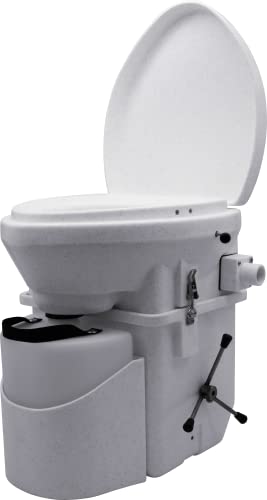
Nature’s Head Self Contained Composting Toilet, Close Quarters Spider Handle
Badge: Best Overall
Strengths
- A true, self-contained composting toilet — urine separation and a solids chamber with a medium, in the design that defined the RV composting category.
- The close quarters spider handle variant is made for tight vehicle bathrooms, where a standard handle’s swing is a real constraint.
- No black tank, no dump station, no water connection: the full independence case.
Trade-offs
- It asks for the composting routines — venting, medium management, urine bottle discipline — that dry flush buyers are avoiding.
- The urine bottle empties far more often than the solids chamber; that rhythm surprises new owners.
- Installation includes a vent path, a small project the dry flush picks never demand.
Mini spec box
- System: composting, self-contained
- Handle: close quarters spider handle design
- Separation: urine-diverting composting design
- Application: RV and small-space composting (per the listing class)
This is the toilet the keyword actually means. The Nature’s Head design separates urine at the bowl — the single act on which all composting success depends — and routes solids into a chamber where a medium and agitation begin the breakdown process, while a vent carries moisture and any odour out of the vehicle. The result, run properly, is a bathroom with no black tank, no chemical smell, and an emptying rhythm measured in weeks for the solids and days for the urine bottle, which any convenient toilet can receive.
The variant in this guide matters. RV bathrooms are measured in centimetres, and the agitator handle’s swing is one of the few moving clearances a composting toilet needs; the close quarters spider handle exists to fold that clearance down for exactly the bathrooms this keyword serves. It is the kind of detail that separates a marine-and-RV-native design from a household unit pressed into vehicle service, and it is why this model, in this variant, anchors the guide.
Its demands are the system’s demands, and they should be chosen knowingly: plan the vent before installation day, keep the medium stocked, and treat the urine bottle as a daily-or-so rhythm rather than an afterthought. Owners who accept those terms consistently report the same thing — that the dump station simply leaves their lives. That is the promise this pick, alone with the OGO below, is actually selling.
Best for: full-time and long-trip RVers who want true composting independence / Not suited for: users who want a toilet with no routines at all
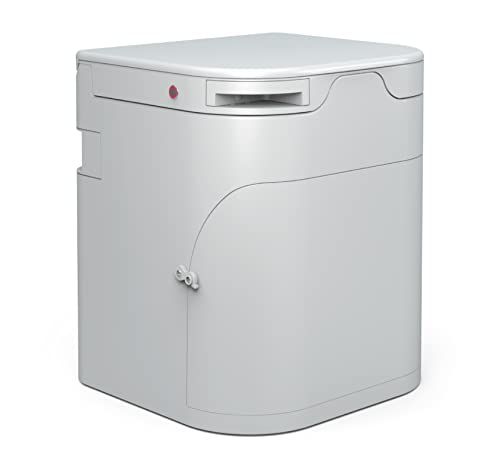
OGO Origin Compact Composting Toilet
Badge: Best Compact Composting
Strengths
- A true composting toilet in a stated 15-inch footprint — the compact end of the composting category.
- Named by its maker for exactly this guide’s vehicles: van, RV, and boat.
- Self-contained composting with urine separation, without a black tank or a water connection.
Trade-offs
- Compact composting means a compact chamber; larger crews will empty on a shorter rhythm.
- The same venting and medium routines as any composting toilet apply — compactness exempts nothing.
- Its footprint virtue is wasted in a large RV bathroom that could take the Nature’s Head’s variant options.
Mini spec box
- System: composting, compact
- Footprint: 15 inches (stated)
- Separation: urine-diverting composting design
- Stated uses: van, RV, boat
The OGO Origin answers the composting question for the vehicles where it is hardest to ask: campervans, small trailers, and boats, where the bathroom is a closet and every centimetre is already employed. A stated 15-inch footprint is a serious piece of engineering intent — composting needs a chamber, a separator, and a vent path, and fitting that system into a van-sized square is the whole design problem. For the vanlifer who assumed composting required a bigger bathroom, this is the pick that reopens the question.
Everything else about it is the honest composting deal, neither softened nor exaggerated: urine separated and emptied on its short rhythm, solids held in medium on their long one, a vent to plan, and a chamber sized for the vehicle’s crew rather than for a crowd. A solo traveller or a couple will find the rhythm relaxed; a family of five in a van has larger problems than this toilet, but should expect to empty more often than the Nature’s Head’s rhythm in a bigger rig.
Choose between the two composting picks on space and crew, not on ideology — they are the same system at two sizes. The Origin is the one that fits the smallest bathrooms; the Nature’s Head is the one with the variant built for close quarters and the longer track record in big rigs. Either delivers the thing the keyword promises: an RV that composts, and a traveller who has left the dump queue behind.
Best for: vans, small trailers, and boats where footprint is the binding constraint / Not suited for: large crews who need maximum chamber capacity
Comparison Table
| Pick | System | Consumables | Venting | Link |
|---|---|---|---|---|
| MODIWELL LE-310 | Dry flush | Sealing refills, charging | None required by design | Covered in prose only |
| Laveo Dry Flush | Dry flush | Sealing refills | None required by design | Covered in prose only |
| LOO SEAL R1808 | Dry flush | Sealing refills, charging | None required by design | Covered in prose only |
| Modiwell LE-310 Smart | Dry flush | Sealing refills, charging | None required by design | Covered in prose only |
| Nature’s Head | Composting | Composting medium | Vent path required | Check on Amazon |
| OGO Origin | Composting | Composting medium | Vent path required | Check on Amazon |
How to Choose an RV Composting Toilet
First, choose the system, because the systems are not interchangeable versions of one another. Composting separates urine, holds solids in a medium, and asks for venting and a modest husbandry; in return it runs without consumable wraps, empties its solids chamber on a long rhythm, and removes the dump station from your life. Dry flush seals each use and asks for nothing but refills and a charge; in return it gives you waste that accumulates as trash and a running cost per use. Neither answer is a compromise — they are different tools, and the most common buying error in this category is choosing one while describing the other. This guide links the composting pair and reviews the dry flush four in prose so that the choice, whichever way it falls, is made with the systems named correctly.
Second, size by crew and by rhythm. A composting toilet’s urine bottle empties every few days for a couple and sooner for a family; its solids chamber runs for weeks for a couple and proportionally less for more users. Match those rhythms to your travel pattern honestly: a boondocker two weeks from the next facility needs the chamber discipline of the Nature’s Head class, while a van couple touring between towns will find the OGO’s compact chamber entirely sufficient. Third, plan the vent before you fall in love. Every composting installation needs an air path out of the vehicle — through a wall, a floor, or an existing vent route — and the feasibility of that path in your specific RV is a genuine selection criterion, not an installation detail.
Finally, consider the bathroom’s geometry with the same care as a household remodel: handle swing in close quarters, footprint on a small floor, and the height at which your household sits. The two linked picks divide that geometry between them — spider handle for tight clearances, 15-inch footprint for tight floors. Readers still deciding whether to keep a conventional system should read the chemical-versus-compost comparison in Best Toilets For Travel Trailers Cemacal Vs Compost before committing, and those outfitting a stationary tiny space alongside the vehicle should cross-check Best Toilets For Cabins.
How to Install and Run a Composting Toilet in an RV
- Choose the position with the vent in mind: the shortest, straightest air path out of the vehicle wins, and the toilet’s footprint and handle swing are checked in place before any fixing.
- Secure the unit to the floor as the maker directs — a composting toilet in a moving vehicle is furniture that must never travel.
- Run the vent hose to its exit, keeping bends gentle and the run sealed; the vent carries moisture out continuously and is the system’s lungs.
- Connect the small electrical supply for the vent fan where the design uses one, fused and switched as the maker specifies.
- Prepare the solids chamber with the maker’s recommended medium before first use — the medium is the process, not an accessory.
- Brief every user on the one rule that matters: urine and solids go in their separate directions, every time, seated, with the separator doing its work only when users cooperate.
- Run the daily rhythm: check the urine bottle before it is full rather than after, agitate the solids chamber as the maker directs, and keep paper choices compatible with the chamber.
- Empty on schedule, not on symptoms: the urine bottle to any ordinary toilet, the solids chamber — after its long rest — according to local rules for composted material and disposal.
Troubleshooting is pattern-based. Problem: odour in the vehicle → check the vent path and fan first, then the separation discipline; odour in a composting toilet is almost always air or liquid in the wrong place, not the concept failing. Problem: the solids chamber seems wet → liquid is reaching it; review user aim and separator use, and let the vent and medium recover the balance. Problem: the urine bottle overflows → the rhythm was optimistic; empty on a schedule tied to days and crew size, not to the bottle’s brim. Each fix is a habit, which is why composting rewards households that enjoy small routines and frustrates those who wanted an appliance that asks nothing.
Composting vs Dry Flush: The Honest Difference
Because this guide reviews both systems, it owes the reader a clean statement of the difference. A composting toilet is a processor: it separates liquid, holds solids in a biologically active medium, moves air through the chamber, and over weeks reduces what it holds toward a dry, earthy material that is emptied infrequently. Its running inputs are medium and a small amount of power for venting; its running demands are user discipline and an honest emptying schedule. A dry flush toilet is a packager: it wraps each use in a sealed liner and stores the packages for disposal as trash. Its running inputs are proprietary refills and a battery charge; its running demands are a supply chain and a disposal plan.
The choice between them is a choice about where a traveller wants their complexity to live. Composting concentrates complexity at installation — the vent, the learning curve — and then runs cheaply and independently for years. Dry flush removes installation complexity entirely and distributes its cost across every use, forever. Long, remote, full-time travel tilts the ledger decisively toward composting; short, serviced, occasional travel can tilt it just as decisively toward dry flush. What neither system tolerates is being bought under the other’s name, which is why this guide’s links and prose are divided exactly where the systems divide. Households weighing a bidet-equipped conventional toilet for a home base alongside the vehicle should note that is a separate category again, covered in Best Toilets Bidet.
Medium, Venting, and the Daily Rhythms of Composting
Ask experienced composting owners what the brochures underplay and they talk about rhythm. The medium — the carbon-rich material the solids chamber is charged with — needs to be stocked like a pantry staple, because a chamber run without enough medium is a chamber whose process stalls. The vent fan runs essentially always, a whisper of power that keeps the air moving in the right direction and the bathroom smelling like nothing at all; owners protect that fan’s supply the way they protect the fridge’s. The urine bottle becomes a background habit, emptied with the morning routine rather than as an event.
None of this is burdensome, but all of it is real, and it explains the personality split in composting reviews: owners who enjoy running a small, well-understood system describe it as the best upgrade they ever made to their RV, while owners who expected a fit-and-forget appliance describe the same routines as chores. This guide’s position is that the routines are the price of the independence, and they are a fair price — provided they are quoted honestly in advance, which is what this section is for. The current offers on the wider bidet and conventional side, for readers comparing total bathroom budgets, are tracked in Best Toilets Bidets Sale.
Winter, Heat, and Motion: Composting on Real Roads
Composting is a biological process riding in a vehicle, and the road tests it in three directions. Cold slows the process: a chamber that cruises through summer at a relaxed rhythm will work more slowly in a winterised rig, and owners in cold climates plan longer rests for the solids and pay closer attention to the vent’s moisture load, because warm moist air meeting cold vent runs is where condensation forms. The toilet does not fail in winter; it changes tempo, and the households that thrive with it are the ones that notice tempo rather than demanding constancy.
Heat works the other side of the same street. A vehicle parked in summer sun is an incubator, and a well-vented chamber handles that by moving air; a chamber whose fan has been left unpowered in a stored, sealed rig can greet its returning owners with the smell of every shortcut they took in spring. Motion is the third test, and it is answered at installation: a composting toilet must be fixed to the floor as its maker directs, its urine bottle seated as designed, and its vent run secured against vibration. Run those three checks — tempo in the cold, air in the heat, fixings for the road — and the system that works in a driveway keeps working at altitude, in August, and three hundred miles from the nearest dump station, which is the entire point of owning one.
Guests, Children, and Crew: Separation as a Social Skill
Every composting owner eventually hosts the conversation: a guest, a grandchild, a friend borrowing the rig, standing in the bathroom doorway needing to know how the toilet works. The households that handle this well treat it as hospitality rather than embarrassment — a thirty-second briefing, delivered lightly, covering the one rule (everything in its separate direction, seated) and the one habit (the agitator handle gets its turns after solid use, as the maker directs). A small, friendly note in the bathroom covers the hours when the owner is asleep or away, and spares everyone the archaeology of a chamber that received a well-meant mistake.
Children, contrary to expectation, are usually the easiest converts: the mechanism is interesting, the rules are simple, and the responsibility flatters them. Adult guests take slightly longer, mostly because the conventional toilet trained them for thirty years to think about nothing at all — which is, in the end, the honest summary of the composting trade. You are exchanging a lifetime of thoughtlessness for a handful of small, learnable attentions, and receiving in return a vehicle that no longer plans its journeys around other people’s plumbing. Most owners who make that exchange knowingly never reverse it; the ones who reverse it almost always bought the wrong system under the right keyword, which is the failure this guide was written to prevent.
What a Composting Toilet Does to Your RV’s Other Systems
Removing the black tank’s toilet duty changes the rest of the vehicle’s water life in ways owners consistently underrate. Fresh water lasts longer, because no flush water is spent dozens of times a day — a saving that compounds on boondocking trips where the fresh tank, not the calendar, sets the itinerary. Grey water becomes the only liquid waste stream to manage, which simplifies dump stops to a single, quick, comparatively pleasant task, or removes them entirely where grey disposal is permitted and practised responsibly. And the bathroom itself gains a strange freedom: with no black tank beneath it dictating position by plumbing, a refit can place the composting toilet where the room wants it, within the vent’s reach — a liberty that van converters, working in the tightest bathrooms of all, exploit to the centimetre. These second-order gains are why composting converts so often describe the change as getting their travels back, rather than merely changing a toilet.
Common Buying Mistakes
- Buying a dry flush toilet under the impression that it composts — the category’s most expensive misunderstanding.
- Falling for a composting toilet without planning the vent path in your specific vehicle.
- Sizing by the solids chamber and forgetting the urine bottle’s much shorter rhythm.
- Letting guests use the toilet unbriefed; separation discipline is a crew skill, not an individual one.
- Running the solids chamber without enough medium, then blaming the concept.
- Choosing compactness for a large crew, or capacity for a solo van, instead of matching chamber to rhythm.
Final Recommendation
For the traveller this keyword actually describes, the Nature’s Head Self Contained Composting Toilet in its close quarters spider handle variant is the reference choice: a true composting system, self-contained, shaped by years of vehicle bathrooms. Where floor space is the binding constraint, the OGO Origin delivers the same composting deal in a stated 15-inch footprint. And if, having read the dry flush reviews honestly, you conclude that sealing-and-disposing suits your travel better than composting does, choose one of the prose-only four with your eyes open and its consumables budgeted — as a dry flush toilet, on purpose. The dump station is optional now; being honest about systems should not be. One practical closing note: whichever system you choose, spend the first trip close to facilities while the crew learns its rhythms. Composting and dry flush both reward a short apprenticeship, and the owners who grant themselves one — a few serviced nights, a checked vent, an emptied-on-schedule bottle — are the ones still praising the decision a year and many thousands of miles later.
Frequently Asked Questions
Do composting toilets smell in an RV?
A correctly vented composting toilet, with urine properly separated, should smell like nothing in particular — the vent moves air continuously from the chamber to outside. Odour is diagnostic: it points to a blocked or unpowered vent, or to liquid reaching the solids chamber, both of which are fixable habits rather than verdicts on the concept.
How often does a composting toilet need emptying?
On two rhythms. The urine bottle empties every few days for a couple — sooner for larger crews — into any ordinary toilet. The solids chamber runs for weeks for a couple before it needs emptying, because the medium and aeration reduce and dry its contents. Crew size divides both rhythms; plan by people, not by hope.
What is the difference between composting and dry flush toilets?
Composting toilets process waste: they separate urine and break solids down in a medium over weeks. Dry flush toilets package waste: they seal each use in a liner for disposal as trash. Dry flush is simpler to install and needs no venting; composting needs no proprietary refills and empties far less often. This guide links only the composting models.
Does a composting toilet need electricity?
Most designs use a small amount of power for a vent fan that runs continuously to move air and moisture out of the chamber. The draw is modest — comparable to other always-on vehicle loads — but it belongs in your power budget alongside the fridge and the lights, especially for off-grid travel.
Can a composting toilet work in a van, or only in large RVs?
It works in vans when the footprint allows it — which is precisely the OGO Origin’s brief, at a stated 15-inch footprint made for vans, RVs, and boats. The vent path still needs planning in a small vehicle, but the category is no longer reserved for big rigs.
What happens to the composted material?
After its long rest in the chamber, the material is emptied according to local rules — which vary by jurisdiction and by where you travel, and which every owner should check rather than assume. The urine, by contrast, is simple: it goes into any ordinary toilet or designated facility, diluted as local guidance suggests.
Why are the dry flush toilets in this guide not linked?
Because this is a composting guide, and dry flush toilets do not compost. They are reviewed in full and in prose only — no links, no images — so that readers can consider them accurately labelled as the different, and for some travellers better, system that they are.


