Disclosure: topratedkitchenware.com is reader-supported. When you buy through links on our site, we may earn an affiliate commission from Amazon and other retailers, at no extra cost to you.
Where to buy
The six models below are the picks for this guide to the best toilets for cabins. Each name links to its verified Amazon listing, where you can check the latest price on Amazon and confirm the current configuration before ordering — worth doing carefully, because a cabin toilet is often bought far from the cabin, and the details that matter (power source, consumables, footprint) are all in the listing. Every pick here is a self-contained, no-plumbing toilet of the kind cabins actually use: composting, urine-diverting, or dry flush systems that ask nothing of a septic field or a water line.
- LOO SEAL R1808 Waterless Self-Contained Dry Flush Toilet — Check on Amazon
- Modiwell LE-310 Smart Dry Flush Toilet
- Nature’s Head Self Contained Composting Toilet, Close Quarters Spider Handle
- OGO Origin Compact Composting Toilet
- Nature’s Head Self Contained Composting Toilet, Foot-Spider Handle
- TROBOLO WandaGO Composting Toilet, Urine Diverting
Read the full guide ↓ for the ranking logic, the honest limitations of every pick, and the seasonal routines that decide whether a cabin toilet is a pleasure in year three or a story told at the hardware store.
A cabin asks its toilet a question no house ever asks: can you work here, where the water may be hauled, the power may be solar or absent, the septic may be a rumour, and the building may stand empty and frozen for months between visits? The best toilets for cabins are the ones that answer yes in different dialects. Some compost, quietly processing waste in a medium while the cabin sleeps. Some divert urine and dry the rest. Some seal each use away and ask only to be fed and charged when the owners arrive. What none of them does is demand a water line, a sewer, or a dump run — because the cabin toilet’s whole reason to exist is that the cabin cannot offer those things, or offers them at a price in effort that defeats the purpose of having a cabin at all.
The six picks in this guide span the three waterless families, chosen from the verified off-grid pool: two Nature’s Head composting variants and an OGO composting toilet for owners who stay long and travel light on consumables; a TROBOLO urine-diverting dry toilet for the portable, guest-cabin end of the market; and two dry flush units — the LOO SEAL and the Modiwell Smart — for cabins whose visits are short, whose users are many, and whose owners want a toilet that asks for nothing between the door closing in October and opening in May. Which family suits a cabin depends on how the cabin is used, and this guide is organised around exactly that question. Readers whose small-space project is a vehicle rather than a building will find the travelling version of the same systems in Best Toilets For Travel Trailers Cemacal Vs Compost.
Key Takeaways
- Cabin toilets divide by visit pattern: long stays reward composting; short, busy visits reward dry flush convenience.
- The Nature’s Head composting variants are the long-stay reference — self-contained, urine-separating, and emptied on a rhythm of weeks.
- The OGO Origin compresses composting into a stated 15-inch footprint for tiny cabins and bunkies.
- The TROBOLO WandaGO diverts urine, adjusts in height, and stays portable — the guest cabin and outhouse-replacement pick.
- The LOO SEAL and Modiwell Smart dry flush units ask for no venting and no medium, at the price of consumables and charging.
- Whatever the system, a cabin toilet must survive the cabin’s calendar: freezing, absence, and the first weekend’s crowd.
In this guide
Quick Picks
| Pick | Badge | System | Why it stands out | Link |
|---|---|---|---|---|
| LOO SEAL R1808 Dry Flush Toilet | Best Low-Maintenance Pick | Dry flush, rechargeable | Swivel top, no plumbing, and a stated range from RVs to tiny homes | Check on Amazon |
| Modiwell LE-310 Smart Dry Flush Toilet | Best for Occasional Use | Dry flush, one-click sealing | Push-button sealing that suits weekend cabins and backup duty | Check on Amazon |
| Nature’s Head Composting Toilet, Spider Handle | Best Overall | Composting, self-contained | The long-stay reference, in a close-quarters handle variant | Check on Amazon |
| OGO Origin Composting Toilet | Best for Tiny Cabins | Composting, compact | A stated 15-inch footprint for the smallest buildings | Check on Amazon |
| Nature’s Head Composting Toilet, Foot-Spider | Best for High-Use Cabins | Composting, self-contained | The second Nature’s Head variant, with the foot-spider handle arrangement | Check on Amazon |
| TROBOLO WandaGO Composting Toilet | Best Portable Pick | Urine-diverting dry toilet | Height adjustment and portability for guest cabins and camps | Check on Amazon |
Badges are used consistently through the detailed reviews below, so the pick that wins a badge here carries the same badge in its full review.
How These Picks Were Chosen
This is a research-led guide built from verified listings. We judged the off-grid pool against the cabin’s actual conditions rather than a showroom’s: no assumed water pressure, no assumed septic, power that may be a battery or a small solar array, buildings that freeze, and users who range from the owner who knows every system by heart to the guest who arrives at midnight. Every pick is self-contained and waterless or effectively so, because that is the cabin category’s entry ticket; within it, we ranked by fit to visit pattern, which is the variable that separates delighted owners from disappointed ones.
Systems are described exactly as their titles describe them. The Nature’s Head pair and the OGO are composting toilets; the TROBOLO is a urine-diverting dry toilet in the composting family, sold as a composting toilet with height adjustment; the LOO SEAL and the Modiwell Smart are dry flush toilets, which seal waste rather than processing it. Unlike a composting-specific brief, a cabin brief is system-neutral — the keyword asks what works at a cabin, and all three families demonstrably do — so all six picks carry links, and the reviews spend their honesty on matching each system to the cabin pattern it serves, including where each one fails.
We made no hands-on claims and invented no specifications: footprints, power arrangements, and stated uses are quoted from the listings, and capacities are discussed as rhythms — days for urine, weeks for solids, visits for consumables — because that is how cabin owners actually experience them. Cabins with conventional plumbing contemplating a macerating installation instead are a different project, surveyed in the guide to Best Self Contained Macerating Toilets, and the RV version of the composting decision is covered in the travel-trailer comparison linked above.
The 6 Best Toilets for Cabins
Each review follows the same pattern: what the verified listing actually states, where the design is strong, where it honestly falls short at a cabin, and who should buy it. Specs come only from the pool data — nothing is invented to fill a box.

LOO SEAL R1808 Waterless Self-Contained Dry Flush Toilet
Badge: Best Low-Maintenance Pick
Strengths
- Waterless dry flush sealing: no vent to install, no medium to manage, no plumbing to winterise.
- Rechargeable and self-contained, with a swivel top that suits the corner placements cabins impose.
- Its maker states a range built for buildings like cabins — tiny homes and emergency use among them.
Trade-offs
- Consumable refills are the capacity and the running cost; a remote cabin must stock them in advance.
- The battery needs a charging plan across a long, cold off-season.
- Sealed waste is disposed of as trash, which the cabin’s local arrangements must accommodate.
Mini spec box
- System: dry flush, waterless
- Power: rechargeable, no-plumbing
- Design: swivel top, self-contained
- Stated uses: RVs, boats, off-grid, vans, trucks, tiny homes, emergency and care use
The weekend cabin has a specific toilet problem: it must work perfectly for forty-eight hours of heavy use by people who did not choose its system, then sit ignored for a month. The R1808 is built for that rhythm. Arrive, and it is simply there — no medium to prepare, no vent fan to coax back to life — and its one-button-class sealing handles a houseful of guests without a single instruction more complicated than courtesy requires. Leave, and there is nothing liquid to freeze, split, or sour in the building while it stands empty.
The swivel top deserves its mention in cabin geometry, where the toilet often lives in a converted closet or a corner of the bunk room: a top that turns to meet the user is a small mercy in a space that was never drawn as a bathroom. The rechargeable design keeps it independent of whatever the cabin’s power happens to be, provided the owners build the battery into their opening and closing routines — charge on arrival, check before departure, and keep the refills stocked beside it like the coffee and the matches.
Its economics are the dry flush bargain stated plainly: money and attention are spent per use, in refills, instead of once, in installation and learning. For a cabin used hard and briefly, that bargain is usually correct.
Best for: weekend and guest-heavy cabins that want zero routine / Not suited for: full-season off-grid living, where refill logistics compound

Modiwell LE-310 Smart Dry Flush Toilet
Badge: Best for Occasional Use
Strengths
- One-click waterless sealing — the simplest user experience in this guide.
- Rechargeable and portable, stated by its maker for off-grid living and backup use, which is cabin duty described exactly.
- No venting project and no medium husbandry between visits.
Trade-offs
- Shares the dry flush economics: refills and charge are permanent companions.
- Portable scale suits occasional and backup duty better than a large full-time household.
- Sealed waste joins the cabin’s trash stream, which must be planned for remote sites.
Mini spec box
- System: dry flush, one-click sealing
- Power: rechargeable, portable
- Stated uses: RV and off-grid living, vans, trucks, tiny homes, camping, backup
Some cabins need a second toilet more than a first one: the bunkhouse overflow, the guest weekend that doubles the building’s population, the hunting season crowd. The Modiwell Smart is the pick for that supporting role, and its maker says so in its own listing, where backup use is a headline application. One click seals each use; the unit is portable enough to be deployed where the crowd is and stored where it is not; and nobody — not the owner at dawn, not the guest at midnight — has to learn a system to use it correctly.
As a primary toilet for a lightly used cabin it makes the same case as its LOO SEAL sibling, with automation in place of the swivel top: choose between them on the room’s geometry and on which interface your household prefers. As a full-season, full-time solution its consumable count grows teeth, and the composting picks below take over the argument.
Treat its battery like the cabin’s other seasonal electrics — the lantern, the radio — charged in the opening routine and rested properly in the closing one, and it will be as ready as the woodpile every time the door opens.
Best for: occasional-use cabins, bunkhouses, and backup duty / Not suited for: high-volume full-time living
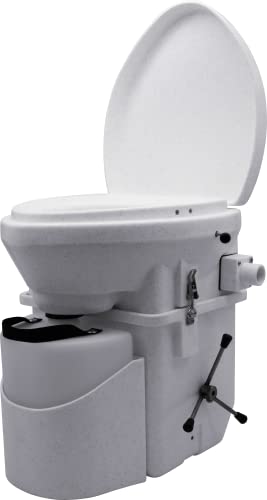
Nature’s Head Self Contained Composting Toilet, Close Quarters Spider Handle
Badge: Best Overall
Strengths
- True self-contained composting: urine separation, a medium-based solids chamber, and an emptying rhythm of weeks.
- The close quarters spider handle variant suits the small bathrooms and converted corners cabins offer.
- No consumable wraps, no water, no septic — the lowest running demands of any system here once installed.
Trade-offs
- It needs a vent path, a modest installation project in a finished cabin.
- Composting slows in an unheated building; a frozen cabin’s chamber works on nature’s schedule, not yours.
- Guests need the thirty-second briefing every composting toilet requires.
Mini spec box
- System: composting, self-contained
- Handle: close quarters spider handle design
- Separation: urine-diverting composting design
- Application: small-space composting (per the listing class)
For the cabin that is lived in — the summer-long stay, the remote homestead-in-progress, the retirement project with a woodstove and a garden — composting is the system whose economics and independence compound in the owner’s favour, and the Nature’s Head is its reference design. Urine is separated at the bowl and emptied on a short rhythm to any convenient spot per local practice; solids enter a medium-charged chamber, are agitated by the handle, and are emptied on a rhythm of weeks, substantially broken down. Nothing is purchased per use. Nothing is hauled except the occasional chamber, on the owner’s schedule.
The spider handle variant is the cabin detail: in the small bathroom or the partitioned corner where a cabin toilet usually lives, the standard agitator handle’s swing can be the difference between fitting and not fitting, and the close quarters design folds that requirement down. Venting is the one real project — a hose run to the outside, planned once and then forgotten — and in a cabin, unlike a vehicle, there is usually a wall or a floor that makes the run easy.
Winter deserves its sentence: in an unheated cabin the process sleeps when the building freezes, which is harmless if the chamber is left in a reasonable state at closing and expected to wake slowly in spring. Owners who understand that rhythm describe the system as the cabin’s most civilised feature. Owners who wanted an appliance that asks nothing should take the dry flush picks above — which is why this guide sells the briefing as hard as the toilet.
Best for: long-stay and full-season cabins, and owners who enjoy a well-run system / Not suited for: cabins whose users will never learn the separation rule
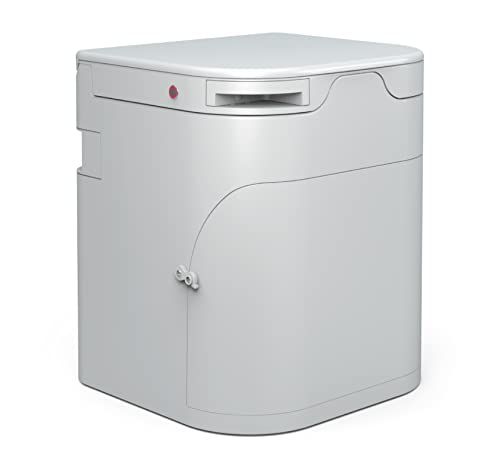
OGO Origin Compact Composting Toilet
Badge: Best for Tiny Cabins
Strengths
- True composting in a stated 15-inch footprint — the smallest buildings keep the full system.
- Urine separation and a medium chamber, with no water or septic connection.
- Named for vans, RVs, and boats, which means its compactness is engineered, not improvised.
Trade-offs
- A compact chamber empties on a shorter rhythm than the Nature’s Head class under the same crew.
- Venting and medium routines apply in full; small size exempts nothing.
- In a large cabin bathroom, its one virtue is wasted and a bigger chamber serves better.
Mini spec box
- System: composting, compact
- Footprint: 15 inches (stated)
- Separation: urine-diverting composting design
- Stated uses: van, RV, boat
The tiny cabin — the bunkie, the shepherd’s hut, the one-room with a loft — is where composting used to fail the tape measure. The OGO Origin exists to end that exclusion: a stated 15-inch footprint carrying the complete composting arrangement of separator, chamber, and vent. For the owner of a very small building, that number is the difference between an indoor toilet and a walk to an outhouse in February, which is to say it is the difference between two kinds of cabin life.
Everything else is the honest composting deal at a smaller scale: the urine rhythm is the urine rhythm, the medium must be stocked, the vent must be run, and a couple will find the chamber’s schedule relaxed while a crowd will find it attentive. In a tiny cabin the crowd problem usually solves itself — the building sets the guest list — and the Origin’s compactness aligns with the building’s own logic.
Choose it where floor area is the binding constraint and composting is the chosen system. Where the floor can take the Nature’s Head, its chamber and handle variants argue for the larger unit; where it cannot, the Origin is not a compromise but the enabling design.
Best for: tiny cabins, bunkies, and one-room buildings / Not suited for: large cabins with high user counts

Nature’s Head Self Contained Composting Toilet, Foot-Spider Handle
Badge: Best for High-Use Cabins
Strengths
- The same self-contained composting system as its sibling, in the foot-spider handle variant — a second configuration of a proven design.
- Urine separation and medium-based processing with an emptying rhythm of weeks.
- Suits cabins where the composting toilet is the main, heavily used fixture.
Trade-offs
- Choosing between the two Nature’s Head variants is a handle-and-fit decision; buyers should confirm which arrangement their space prefers.
- Venting installation and medium husbandry apply as with any composting toilet.
- High use shortens every rhythm — urine bottle first of all.
Mini spec box
- System: composting, self-contained
- Handle: foot-spider handle design
- Separation: urine-diverting composting design
- Application: small-space composting (per the listing class)
Why does this guide carry two Nature’s Head composting toilets? Because cabins divide into those where the toilet is an amenity and those where it is infrastructure, and the high-use cabin — the family compound, the rental cabin, the hunting lodge with a season of guests — deserves its own consideration of the category’s benchmark design. This variant, with its foot-spider handle arrangement, gives the buyer a second configuration of the same urine-separating, medium-based system, and the choice between the siblings should be made on the physical facts of the installation: the space around the unit, the users’ preferences, and the clearances the room allows.
Under high use, the composting virtues scale the right way. There are no per-use consumables to run out of on the season’s busiest weekend; the chamber’s rhythm shortens predictably with headcount and can be planned around changeover days; and the urine bottle — the system’s one short rhythm — becomes a delegated chore as routine as the woodbox. A rental cabin, in particular, should weigh the guest briefing honestly: composting rewards a house whose users are told how it works, and a laminated card in the bathroom is a legitimate part of this toilet’s installation.
Set against its sibling, nothing here is lesser; it is the same promise in a second shape, and for the cabin that will use a composting toilet hardest, having the benchmark design in the configuration that fits is the whole decision.
Best for: family compounds, rental cabins, and other high-use buildings / Not suited for: buyers who want the smallest possible footprint — that is the OGO

TROBOLO WandaGO Composting Toilet, Urine Diverting
Badge: Best Portable Pick
Strengths
- Urine-diverting dry toilet design — separation without a powered system or a venting project.
- Height adjustment adapts the same unit to children, adults, and improvised cabin bathrooms.
- Portable and outdoor-rated by design: it can serve the cabin, the guest tent, or the worksite as the season demands.
Trade-offs
- A simpler, more manual system than the powered or chamber designs — emptying is a hands-on routine.
- Portability means it is a lighter structure than a fixed composting unit; it feels like camp equipment, because it is.
- Best as a cabin’s flexible or secondary toilet, or a small cabin’s first one.
Mini spec box
- System: urine-diverting dry toilet (composting family)
- Height: adjustable
- Design: portable, outdoor camping toilet
- Separation: urine diverting
The WandaGO occupies the honest frontier of cabin sanitation: the place where the building is part camp, part cabin, and the toilet needs to be as movable as the furniture. Its urine-diverting design applies the composting family’s founding insight — keep liquids and solids apart and everything becomes easier — in a portable, height-adjustable unit that can serve inside the cabin this month, in a guest annex next month, and at a building project the month after. For owners phasing a cabin’s development over seasons, that flexibility is not a compromise; it is the plan.
Height adjustment is a more serious feature than it sounds in a cabin context, where the users range from small children to grandparents and the bathroom may be a platform, a porch corner, or a tent annex with its own floor level. A toilet that adapts its height adapts to all of it. The trade is structure and ceremony: this is a lighter, simpler object than the chamber composting units, emptied by hand on a shorter rhythm, and it asks its owner to be the system in a way the powered picks do not.
As a first toilet for a developing cabin, or the second toilet for an established one, it has no real rival in this guide. As the sole fixture for a large full-time household, the chamber designs above it argue louder.
Best for: developing cabins, guest annexes, and portable or secondary duty / Not suited for: buyers wanting a fixed, high-capacity main toilet
Comparison Table
| Pick | System | Running inputs | Cabin pattern | Link |
|---|---|---|---|---|
| LOO SEAL R1808 | Dry flush | Refills, charging | Weekend and guest cabins | Check on Amazon |
| Modiwell LE-310 Smart | Dry flush | Refills, charging | Occasional use and backup | Check on Amazon |
| Nature’s Head, Spider Handle | Composting | Medium, vent power | Long stays | Check on Amazon |
| OGO Origin | Composting | Medium, vent power | Tiny cabins (15-inch footprint) | Check on Amazon |
| Nature’s Head, Foot-Spider | Composting | Medium, vent power | High-use cabins | Check on Amazon |
| TROBOLO WandaGO | Urine-diverting dry toilet | Simple consumables, manual emptying | Portable and secondary duty | Check on Amazon |
How to Choose a Toilet for Your Cabin
Start with the cabin’s calendar, because it eliminates more options than any tape measure. A cabin used on occasional weekends by a rotating cast of guests wants a toilet that is instantly ready, needs no briefing beyond courtesy, and sleeps untroubled for a month: that is the dry flush brief, and the LOO SEAL and Modiwell Smart divide it between them. A cabin lived in for weeks or seasons wants a toilet whose running costs fall as use rises and whose independence matches the building’s: that is the composting brief, divided among the Nature’s Head pair and the OGO by space and headcount. A cabin being built up over time wants a toilet that can move as the building evolves: that is the TROBOLO’s portable brief.
Next, audit the building honestly. Is there a wall or floor for a composting vent run, and a small power supply for its fan — solar, battery, or mains? Is there storage for dry flush refills and a trash arrangement that can receive sealed waste? Does the building freeze, and if so, which systems in this guide shrug that off by having nothing liquid to burst? The answers rarely eliminate the calendar’s winner, but they routinely reorder the runners-up, and they are much cheaper to learn from a checklist than from a first season.
Finally, count people the way the cabin actually hosts them: the quiet couple’s week and the holiday weekend’s crowd are both real, and the right toilet is the one whose rhythms — urine bottle, chamber, or refill supply — survive the crowd without heroics. Cabins that also maintain a plumbed bathroom or a vehicle should treat those as separate categories with their own guides, from the Best Rv Macerator Toilets options for tank-based rigs to the household bidet category in Best Toilets Bidet.
How to Set Up and Season-Proof a Cabin Toilet
- Choose the spot for permanence and privacy: level floor, a door or curtain that works, and — for composting models — the shortest practical vent run to the outside.
- Install to the maker’s directions: fix a composting unit securely, run and seal its vent, connect its small power supply, and charge the chamber with medium before first use; place dry flush units with their charging and refill storage beside them.
- Brief the household and write it down: a card in the bathroom covering the separation rule for composting and diverting models, or the sealing routine for dry flush models, in language a tired guest can follow.
- Stock the system like the pantry: medium, refills, bags, gloves, and cleaning basics stored at the cabin, inventoried at every closing.
- Run the rhythms during the stay: urine bottle checked on schedule, chamber agitated as directed, dry flush charge monitored before the big weekend, not during it.
- Close the cabin deliberately: empty what should be emptied, leave a composting chamber in a clean, medium-covered state, rest or remove batteries as the maker advises, and note the toilet’s state in the cabin log.
- Open the cabin patiently: expect a composting chamber in a frozen building to wake slowly, check vents for insect and weather guests, and run the systems before the first crowd arrives.
Troubleshooting at a cabin follows the same patterns as anywhere, with distance added. Problem: odour on arrival → for composting, check the vent for blockages and confirm the fan’s power before suspecting the chamber; for dry flush, check that the last visit’s closing routine was actually done. Problem: a composting chamber seems sluggish in spring → cold is the usual explanation; give it warmth, medium, and time rather than chemicals. Problem: the dry flush unit is dead on arrival → the battery rested too long or too cold; build its charge into the opening routine and keep a manual backup plan, even if the plan is the TROBOLO in the shed.
The Outhouse Question: Replacing, Keeping, or Combining
Many cabins inherit an outhouse, and the honest options are three. Replace it outright with an indoor waterless toilet from this guide, and gain the midnight-in-February argument in full — the argument that has sold more composting toilets than any other. Keep it as the overflow and the worksite toilet, with an indoor unit for nights and winters, which is the pattern family compounds quietly adopt because crowds are real. Or phase the change: a portable diverting unit like the WandaGO first, serving outdoors or in, while the cabin’s bathroom is built, then a chamber composting unit as the permanent installation. What no longer makes sense, where regulations and neighbours have tightened, is expanding the old pit arrangement itself; the waterless systems in this guide exist precisely because they deliver the outhouse’s independence without its footprint on the land and the water table. Choose among the three honest options by the cabin’s calendar and crowd, as with everything else in this guide.
Cabins With Some Plumbing: Where Waterless Still Wins
Not every cabin is a dry cabin. Many have a well, a pressure tank, and a small septic system — and their owners reasonably ask why a waterless toilet is in the conversation at all. The answers are capacity and resilience. A small septic system sized for a cottage’s sinks and showers can be doubled in effective life by keeping the toilet’s load out of it, which is why composting units appear in plumbed cabins as a deliberate conservation measure. A frozen or failed water system, meanwhile, disables every flush toilet in the building and none of the picks in this guide — a resilience argument that anyone who has arrived at a cabin to a burst pipe understands in their bones. And for the plumbed cabin planning a bathroom addition where the septic cannot grow, a self-contained toilet is often the only lawful way to add the room. Waterless, in other words, is not only the off-grid answer; in the right building it is the upgrade. Owners comparing the plumbed alternative for a cabin addition will find it treated in the guide to Best Toilets For Bidets, where conventional and bidet models are weighed on their own terms.
Cabin Toilets and the Land: Siting, Rules, and Neighbours
A cabin toilet’s responsibilities extend past the bathroom wall, because everything it produces eventually meets the land the cabin stands on — and that land usually has a well, a watercourse, neighbours, and a local rulebook. Urine from separating and composting systems is commonly managed on site in many jurisdictions, diluted and dispersed away from wells and water per local guidance; composted solids are handled under rules that vary by place and by whether the material has fully rested. The owner’s duty is unglamorous and absolute: learn the local rules before the first season, not after the first complaint, because regulations for alternative sanitation differ sharply between counties, provinces, and countries, and a system that is celebrated in one district can be restricted in another.
Siting inside the cabin deserves the same care. Keep the toilet’s room ventilated in its own right, whatever system it houses; keep consumables and medium stored dry, because a damp cabin is a slow assault on everything stored in it; and keep the path to the toilet — at night, in the cold, for a guest in an unfamiliar building — short, lit, and free of the woodpile acrobatics that cabin architecture loves. The best cabin toilet installations share a quality that has nothing to do with brand: they feel inevitable, as if the building had been waiting for exactly that fixture in exactly that corner. That feeling is what the measuring, the vent planning, and the calendar thinking in this guide are all for.
Power at the Cabin: Batteries, Solar, and the Toilets That Need Them
Two of this guide’s systems sip power and one family barely touches it, and a cabin’s electrical reality should be audited before the choice is made. Dry flush units are rechargeable appliances: they ask for a charge on a rhythm set by use, which a cabin with mains power grants without thought and a cabin on a small solar array grants with a little planning — a dedicated charging spot near the cabin’s other batteries, and a closing routine that never leaves a unit stored flat and forgotten through a freezing winter, which is how rechargeable batteries go to die. Composting toilets ask for a small, continuous draw for the vent fan, the load most like a cabin’s refrigerator alarm or router: trivial on mains, a real line item on a minimal solar budget, and worth sizing honestly alongside lights and water pumping.
The urine-diverting TROBOLO, by contrast, asks for no power at all, which is why it keeps appearing in the most austere cabins’ plans — the buildings where every watt is carried in or caught from the sky. None of these demands is a reason to reject a system; all of them are reasons to choose with the cabin’s actual infrastructure in view, rather than discovering in the first dark week of November that the toilet and the lights are competing for the same small battery. Cabins are honest buildings. Their toilets should be chosen the same way.
Renting the Cabin: Toilets for Guests Who Pay
A rental cabin raises the stakes on every judgement in this guide, because the toilet’s users are strangers, its failures become reviews, and its routines must survive being explained by a welcome book rather than by the owner. That environment argues, first, for the systems with the least to learn: a dry flush unit whose entire instruction is its button, or a composting installation paired with a genuinely clear, friendly card that treats the briefing as hospitality. It argues, second, for stocking like a business — refills, medium, and spares inventoried at every changeover, because a toilet that fails on a guest’s second night costs more than any consumable ever will. And it argues, third, for choosing the unit whose emptying rhythm fits the changeover calendar, so servicing happens between guests as a routine rather than during a stay as an emergency.
Owners who rent should also decide, in advance and in writing, what the guest is never asked to do. Emptying a urine bottle might be a reasonable line in a rustic long-let; it is not a reasonable surprise in a weekend rental. The picks in this guide can be configured to either standard — the difference is the owner’s changeover discipline, not the hardware — and the cabins that review well are the ones where that discipline was designed alongside the toilet, not improvised after the first awkward message from a guest.
Common Buying Mistakes
- Buying for the cabin’s quietest weekend instead of its busiest one.
- Choosing composting for a guest cabin whose users will never be briefed, or dry flush for a full-season cabin whose refill bill will be a season-long regret.
- Forgetting the vent run when falling for a composting toilet, or the refill shelf when falling for a dry flush one.
- Closing the cabin in autumn without a toilet routine — and reopening it in spring to the consequences.
- Letting the battery question answer itself: every rechargeable pick needs its charge built into the opening and closing rituals.
- Assuming a tiny cabin cannot have a real toilet, when a stated 15-inch composting footprint exists precisely for it.
Final Recommendation
Match the toilet to the cabin’s calendar. For long stays and full seasons, the Nature’s Head composting toilet in its close quarters variant is this guide’s reference choice, with its foot-spider sibling for high-use buildings and the OGO Origin where the floor is measured in centimetres. For weekend and guest cabins, the LOO SEAL R1808 and the Modiwell Smart trade a modest refill discipline for a toilet that asks nothing of anyone. And for the cabin still becoming itself, the TROBOLO WandaGO is the flexible first answer. Choose by visit pattern, season-proof the installation, and the smallest building you own will have the most civilised room in it. Then do the least glamorous and most valuable thing in this entire guide: write the cabin log’s toilet page while the installation is fresh — model, system, rhythms, closing state — because the person who opens the cabin next spring, possibly you with a winter’s forgetting behind you, deserves to inherit a system that explains itself.
Frequently Asked Questions
What is the best type of toilet for a cabin without plumbing?
A self-contained waterless toilet — composting, urine-diverting, or dry flush — because none of them needs a water line or a sewer. Composting suits long stays and minimal consumables; dry flush suits short, busy visits and zero installation; urine-diverting portables suit developing cabins and secondary duty. The cabin’s visit pattern, not the brochure, should decide.
Can a composting toilet survive a frozen, unheated cabin?
Yes, with expectations set correctly. The composting process slows and effectively sleeps in freezing conditions, which is harmless if the chamber is left in a clean, medium-covered state at closing. It will wake slowly in spring. What freezing cannot harm in these systems is plumbing, because there is none — no water lines or traps full of water to burst.
How do dry flush toilets work at a cabin?
They seal each use in a liner inside the unit, keeping waste contained and odour in, with no water, venting, or plumbing. The sealed waste is disposed of with the cabin’s trash arrangements, and the unit runs on a rechargeable battery. Their running inputs are proprietary refills, which a remote cabin must stock in advance.
Does a cabin composting toilet need electricity?
Generally a small supply for its vent fan, which runs to move air and moisture out of the chamber. Solar-and-battery cabins typically absorb that draw easily, but it belongs in the power budget, and the vent run itself — through a wall or floor — is the one installation project composting asks of a cabin.
What toilet suits a tiny cabin or bunkie?
A compact composting toilet like the OGO Origin, whose stated footprint is 15 inches and whose design targets small vehicles and spaces, or a portable urine-diverting unit like the TROBOLO WandaGO where the bathroom is improvised. Measure the actual floor and door swing before ordering; tiny buildings forgive nothing.
How often will I empty a cabin composting toilet?
The urine container on a rhythm of days, scaled by how many people are in residence; the solids chamber on a rhythm of weeks for a couple, shorter for crowds and longer for solo use. Seasonal cabins often find the chamber’s rhythm aligns naturally with visits — checked each trip, emptied occasionally, and left resting between stays.
Should I keep the outhouse if I install an indoor cabin toilet?
Many cabin owners do, as overflow for crowds and as a worksite facility, and retire it from primary duty. Others remove it once the indoor system proves itself across a full season. Either way, the indoor waterless toilet becomes the building’s real bathroom from the first cold night onward.