Disclosure: topratedkitchenware.com is reader-supported. When you buy through links on our site, we may earn an affiliate commission from Amazon and other retailers, at no extra cost to you.
Where to buy
If you are shopping for the best toilets for basement bathroom projects, the six models below are the pool’s standard-format answers, and all six are linked — with one condition this guide states up front: every pick is a conventional floor-outlet toilet, so it serves the basement whose drain is already roughed in below the floor or whose waste runs through an ejector pit, which describes most finished-basement bathrooms. If your basement has no below-grade drain at all, the pre-check section explains the upflush conversation to have with a plumber before any of these is ordered. Within the roughed-in brief, the picks divide by the basement’s real variables: older drain lines, infrequent use, in-law and guest duty, and the finishing project’s budget of attention.
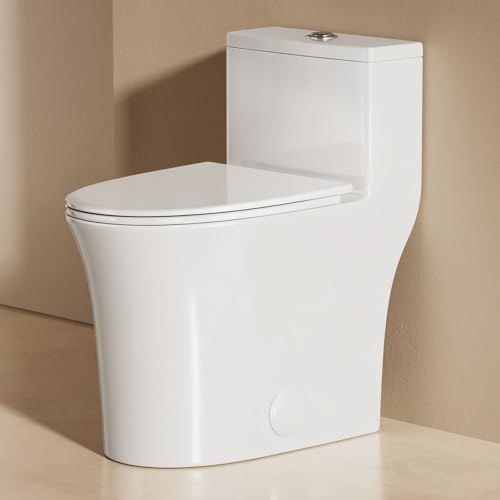
- IDEALHOUSE ADA Compliant 17 Inch Elongated Toilet
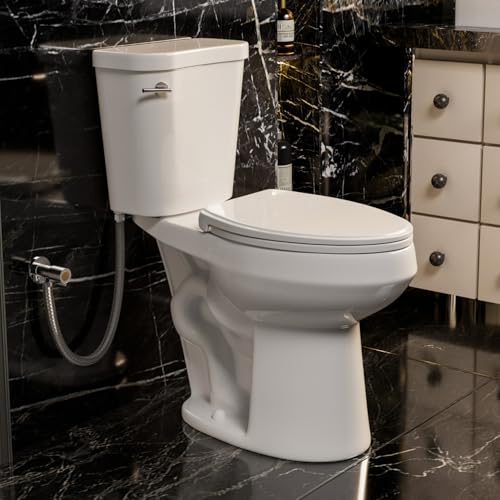
- Garvee Two Piece Elongated Toilet
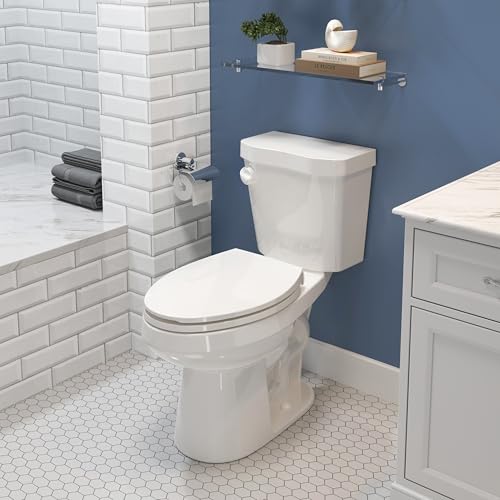
- American Standard Cadet PRO Right Height Toilet
- TOTO Drake Two-Piece Toilet with 10 Inch Rough-In
- HOROW 17 Inch High Elongated Toilet
- Los Flexi 19 Inch Extra Tall Toilet
Read the full guide ↓
A basement bathroom is a plumbing argument before it is a design project. Waste must leave a room that sits below the street’s sewer line, and gravity — the force every other bathroom in the house takes for granted — works only where the builder planned for it: a drain roughed in beneath the slab, falling to the house’s main line, or an ejector pit that lifts waste up to it. The best toilets for basement bathroom installations are therefore chosen in two passes. The first pass is the house’s, not the toilet’s: confirm the drain path exists and what it is, because that fact decides whether a standard toilet is even the category. The second pass is the familiar one — flush, height, format — judged against basement life: cooler rooms, damper air, longer idle stretches between uses, and users who range from the teenager exiled to the basement den to the grandparent installed in the in-law suite.
This guide is honest about the fork in the first pass. Where a below-grade rough-in exists — as it does in the great majority of homes plumbed with a basement bathroom in mind, and in nearly every finished-basement renovation that found the capped flange waiting under the slab — a standard toilet is the correct, economical, serviceable answer, and the six picks below compete for it on merit. Where no drain exists below the sewer line, the answer is an upflush or macerating system, a different category that this pool does not contain; the guide names that fork plainly in its pre-check section rather than selling a gravity toilet into a room that cannot drain it. Nobody’s basement project was ever improved by discovering the category error after the tile was laid.
Within the standard brief, basement life writes its own specification. The toilet may sit idle for weeks in a guest-only basement, then serve a party of thirty in an evening; it lives in the house’s coolest, dampest air, where condensation and slow seals are facts; and it is frequently the finishing project’s last purchase, made when budget and patience are thinnest — which is precisely when a simple, certified, standard-parts toilet earns its keep. The six picks below are ranked with those rhythms in mind, from the no-drama siphonic all-rounder at the top to the extra-tall specialist for the basement suite at the bottom.
Key Takeaways
- Pre-check before purchase: these are standard floor-outlet toilets for basements with a below-grade rough-in or an ejector pit. No drain below the sewer line means an upflush system — a different category, flagged honestly in this guide.
- All six picks are linked; all are two-piece standard-format toilets whose parts any plumber stocks — the right service profile for the room farthest from help.
- The IDEALHOUSE leads on basement logic: simple siphonic-jet clearing, soft-close seat, chair height, nothing proprietary to strand a repair.
- Older basement drains argue for the Cadet PRO’s fuller 1.6 gpf flush or the HOROW’s stated MaP 1000g clearing — decide from the drain’s own record.
- Basement toilets age by idle time as much as by use: a monthly flush-and-check rhythm keeps seals, traps and fill valves honest.
- Measure the rough-in under the slab: older basement conversions hide 10-inch flanges, and the TOTO Drake variant here is built for them.
In this guide
Quick Picks
| Pick | Badge | Flush | Format | Link |
|---|---|---|---|---|
| IDEALHOUSE ADA Compliant 17 Inch Elongated Toilet | Best Overall for Basement Bathrooms | 1.28 GPF siphonic jet | Two-piece, 17 inch | Check on Amazon |
| Garvee Two Piece Elongated Toilet | Best Certified Value | 1.28 GPF side push flush, cUPC certified | Two-piece, 15 inch | Check on Amazon |
| American Standard Cadet PRO Right Height Toilet | Best for Older Basement Drains | 1.6 gpf | Two-piece, Right Height | Check on Amazon |
| TOTO Drake Two-Piece Toilet with 10 Inch Rough-In | Best for Older Basement Conversions | 1.28 GPF TORNADO FLUSH | Two-piece, 10 inch rough-in | Check on Amazon |
| HOROW 17 Inch High Elongated Toilet | Best Clearing Power | 1.28 GPF single flush, stated MaP 1000g | Two-piece, 17 inch | Check on Amazon |
| Los Flexi 19 Inch Extra Tall Toilet | Best for a Basement In-Law Suite | 1.28 GPF siphonic flush | Two-piece, 19 inch | Check on Amazon |
How These Picks Were Chosen
Every model comes from a verified product pool checked against listing data on 2026-11-20; specifications are quoted from that verified data only, and where a listing omits a figure the review flags it. This is a research-led comparison and claims no hands-on testing. The basement lens ranked the pool on: compatibility with the standard below-grade rough-in and ejector arrangements that finished basements actually have; clearing confidence against older drain lines; simplicity of internals, because the basement toilet is serviced least and latest; and tolerance of idle stretches, judged by how conventional each model’s seals, valves and format are. The broader below-grade picture — multiple rooms, rental basements, whole-level finishing — is developed in our companion guide to the Best Toilets For Basements, while this guide stays with the single bathroom project.
The 6 Best Toilets for a Basement Bathroom

IDEALHOUSE ADA Compliant 17 Inch Elongated Toilet
Badge: Best Overall for Basement Bathrooms
Strengths
- Siphonic jet flush at 1.28 GPF: a proven, fully conventional mechanism — the internals least likely to strand a basement repair.
- 17-inch ADA comfort height and soft-close seat suit the basement’s whole user range, from den teenagers to suite grandparents.
- Easy-clean porcelain and a standard 12-inch rough-in keep both the weekly wipe and the installation ordinary.
Trade-offs
- No published MaP score; clearing confidence is mechanism-class rather than certified.
- Single flush only — no light setting for the basement’s many liquid-only visits.
- Exposed two-piece trapway collects basement dust like any standard format.
Key specs
- Format: Two-piece ceramic commode, white porcelain
- Bowl: Elongated, 17 inch ADA comfort height
- Flush: 1.28 GPF water-saving siphonic jet
- Seat: Soft-close seat included
- Rough-in: 12 inch
The IDEALHOUSE leads this guide because a basement bathroom rewards the absence of surprises above every other virtue. Its flush is the industry’s most conventional modern mechanism — a siphonic jet at the efficient 1.28 gallons — which means its behaviour is predictable, its wear parts are universal, and the plumber who services it in year nine has serviced its twins a hundred times. In the room of the house where a problem is discovered latest and fixed slowest, that conventionality is not blandness; it is the specification.
The user-facing details match the basement’s actual population. Chair height serves the in-law suite and the rec room alike; the soft-close seat ends the lid-slam that echoes oddly in low-ceilinged below-grade rooms; the elongated bowl gives the basement’s long-session users — the den reader, the teenager on a phone — proper seating. Easy-clean porcelain matters in a room where dust is construction’s long tail and humidity keeps it damp: the bowl and exterior wipe down without chemistry or ceremony. And the standard 12-inch rough-in matches the flange most roughed-in basements are waiting with.
Its honest limits are evidence and options. There is no published clearing score, so a basement whose drain has a known sluggish history should weigh the certified HOROW or the fuller-flush Cadet PRO below; and there is no light flush, so a high-traffic basement den spends the full 1.28 on every visit — still efficient, never wasteful, but not minimal. For the typical finishing project — roughed-in drain, mixed users, a wish for the bathroom to simply work for a decade — the IDEALHOUSE is the complete, unglamorous, correct answer.
Best for: Standard roughed-in basement bathrooms serving mixed users / Not suited for: Basements with a known sluggish drain history that want certified clearing or a fuller flush

Garvee Two Piece Elongated Toilet
Badge: Best Certified Value
Strengths
- cUPC certification stated in the listing — independent assurance for a fixture that will be inspected least.
- Locking soft-close seat resists the loosening that idle-then-busy basement cycles apply.
- 15-inch height suits shorter users and keeps the fixture’s profile low under basement ceilings and ductwork.
Trade-offs
- 15 inches is below the chair-height mainstream; taller basement users will notice.
- Side-push flush is simple but offers no dual-flush economy.
- No published clearing score.
Key specs
- Format: Two-piece, ceramic
- Bowl: Elongated, 15 inch comfort height
- Flush: 1.28 GPF water-saving side push flush
- Seat: Locking PP soft-close seat included
- Certification: cUPC certified
- Rough-in: 12 inch
Finishing projects end tired, and the Garvee is the pick for the bathroom bought at that stage: certified, complete and simple. The cUPC mark in its listing is the kind of third-party assurance that substitutes for the research nobody has energy left for — performance and materials independently checked. The side-push flush is a single positive action with little to misalign, at the efficient 1.28 gallons, and the locking soft-close seat addresses the basement’s specific seat problem: long idle stretches punctuated by a party’s worth of strangers, a cycle that works ordinary seat bolts loose in a way steady family use does not.
The 15-inch height deserves its basement-specific reading. Below-grade rooms often have the house’s lowest ceilings, bulkheads and duct runs; a lower fixture keeps its proportions in such rooms and serves shorter users — including the children for whom the basement den is headquarters — with their feet properly grounded. In an in-law context the calculus reverses, and the chair-height picks take over; the Garvee’s niche is the den-and-guest basement, the workshop-adjacent half-bath grown full, the teenager’s floor.
Value is a tier judgement, and the Garvee sits at the value-leaning end of this guide’s qualitative range without surrendering the specifications that matter: certification, soft-close, efficient flush, standard rough-in, universal parts. Where the basement project needs its last fixture to be a solved problem rather than a statement, this is the solved problem.
Best for: Guest-and-den basement bathrooms; finishing projects wanting certified simplicity / Not suited for: In-law suites and taller users who need chair height

American Standard Cadet PRO Right Height Toilet
Badge: Best for Older Basement Drains
Strengths
- 1.6 gpf full-volume flush: the strongest drain-line carry in the guide, for the elderly below-grade runs older houses hide.
- Cadet PRO is a professional-channel platform — parts and knowledge in every supply house the basement might ever need.
- Right Height elongated two-piece: the default format of the installed base.
Trade-offs
- Highest water volume here, spent on every flush including the idle-season’s few.
- No soft-close seat or clearing score stated in the listing.
- May not satisfy local high-efficiency requirements for new installations — check the jurisdiction.
Key specs
- Format: Two-piece, white
- Bowl: Elongated, Right Height
- Flush: 1.6 gpf
- Model: 215AA004.020
Basement drains are the oldest plumbing in the house, and they were sized by an era that flushed generously. A below-grade run with a gentle slope and a long path to the stack can be genuinely under-served by a modern efficient flush — the bowl clears, the line accumulates — and the Cadet PRO’s full 1.6 gallons is the conservative answer that plumbers have prescribed for exactly these lines for decades. In a basement, where a line problem means a floor problem, conservatism is not nostalgia; it is risk management, and this pick is the guide’s instrument for it.
The platform argument compounds below grade. The Cadet line’s professional installed base means the basement’s toilet shares its parts with half the commercial washrooms in the county; when the room’s fill valve tires in year eight, the replacement is a shelf item, not a search. Right Height and the elongated bowl keep the user experience mainstream for the basement’s guests and residents alike.
Choose it with the trade stated openly: it is the thirstiest pick here, and in a high-use basement den the annual gallons are real, while in some jurisdictions a 1.6 gpf fixture fails the efficiency rules for new work — verify before the finishing permit closes. Where the drain’s own history is clean and modern, the 1.28 picks serve the line perfectly well and this model’s premium buys nothing. Where the history is doubtful, the fuller flush is the cheapest insurance in the whole project.
Best for: Older homes whose basement drain runs are long, gentle or doubtful / Not suited for: Water-billed households with modern, well-sloped basement drains

TOTO Drake Two-Piece Toilet with 10 Inch Rough-In
Badge: Best for Older Basement Conversions
Strengths
- 10-inch rough-in matches the flange position older homes frequently roughed into their basement slabs.
- TORNADO FLUSH and CEFIONTECT glaze keep the bowl cleaner across the basement’s long idle stretches.
- WASHLET+ ready — a basement suite can grow a bidet seat without new plumbing rough-in.
Trade-offs
- Correct only where the rough-in truly measures 10 inches; a 12-inch basement needs the standard models.
- Single 1.28 GPF flush, no light option.
- Universal Height templating applies in low-ceilinged rooms.
Key specs
- Format: Two-piece, Cotton White
- Bowl: Elongated, Universal Height
- Flush: TORNADO FLUSH, 1.28 GPF
- Surface: CEFIONTECT glaze
- Seat: SoftClose seat included
- Rough-in: 10 inch
- Model: MS776124CEFG.10#01, WASHLET+ ready
Basement conversions inherit the rough-in decisions of builders long gone, and in older housing stock those decisions were often made at ten inches — in the slab, under the finished floor, immovable without a jackhammer. This Drake variant is the pool’s answer to that flange: a top-tier toilet that fits the floor older basements actually have. Discovering a 10-inch rough-in at installation time strands most shortlists; having this model on yours converts the discovery into a shrug.
The specification suits basement rhythms beyond the fit. Idle weeks are the bowl’s enemy — dust, dried splashes, the faint tide-mark of a room unused — and the Drake’s rim-washing flush plus residue-resistant glaze is the strongest self-cleaning-per-flush combination in the guide, so the bathroom recovers its presentability in one flush when guests descend. For a basement built as an in-law or guest suite, the WASHLET+ readiness is the upgrade path that turns a good suite bathroom into the house’s best one, without reopening walls.
The discipline is measurement, as with every rough-in story: confirm ten inches from the finished wall to the bolt centres before ordering, and if the basement measures the standard twelve, take the IDEALHOUSE or the HOROW and their simpler stories. In the right slab, though, the Drake is the pick that makes an older basement feel like it was planned by the same century that finished it.
Best for: Older homes with a 10-inch basement rough-in; basement suites planning a washlet / Not suited for: Standard 12-inch basement rough-ins


HOROW 17 Inch High Elongated Toilet
Badge: Best Clearing Power
Strengths
- Stated MaP 1000g at 1.28 GPF — certified clearing for the basement loads that matter, like the post-party surge.
- Single flush simplicity for a room used by guests who should never need instructions.
- 17-inch chair height serves the basement’s adult population.
Trade-offs
- The listing does not state a soft-close seat — verify, since basement lids echo.
- No light flush for the den’s liquid majority.
- Two-piece trapway cleaning, as with the other standard formats here.
Key specs
- Format: Two-piece
- Bowl: Elongated, 17 inch ADA chair height
- Flush: Single flush 1.28 GPF, stated MaP 1000g
A basement bathroom’s worst hour is predictable: the gathering upstairs ends, and the house’s overflow bathroom takes a season’s worth of use in an evening, from guests who do not know its habits and loads that do not negotiate. The HOROW is the pick for that hour. Its stated MaP score of 1000 grams — the standardized maximum — at an efficient 1.28 gallons is the strongest published clearing evidence in this guide, delivered through a single flush that asks nothing of the user. In a room whose failures become the host’s story, certified clearing is hospitality engineering.
Between surges, the specification is basement-ordinary in the good ways: chair height for adults, a two-piece format with universal parts, an elongated bowl. The listing’s silence on a soft-close seat is the one verification the purchase requires — in a low-ceilinged below-grade room, lid noise carries, and a household that cares should confirm the seat on the product page or plan the replacement. That single check made, the HOROW is the basement pick for households whose below-grade bathroom is really their entertaining bathroom in disguise — the same heavy-load logic that drives the Best Toilets For Big Poops research, applied to the room where the party ends up.
Best for: Basement bathrooms serving gatherings, dens and heavy guest traffic / Not suited for: Buyers who need a confirmed soft-close seat from the listing itself

Los Flexi 19 Inch Extra Tall Toilet
Badge: Best for a Basement In-Law Suite
Strengths
- 19-inch extra-tall bowl: for the senior resident of a basement suite, the sit-to-stand ease is a daily independence feature.
- Efficient 1.28 GPF siphonic flush and soft-close seat keep the suite’s running costs and noise down.
- Standard 12-inch rough-in and two-piece serviceability fit the roughed-in basement norm.
Trade-offs
- Too tall for shorter users and children using the same bathroom.
- No published clearing score.
- Confirm the S-trap configuration against the basement floor outlet.
Key specs
- Format: Two-piece
- Bowl: Elongated, 19 inch extra tall, ADA class
- Flush: Siphonic flush 1.28 GPF, S-trap
- Seat: Soft-close seat included
- Rough-in: 12 inch
The basement’s most demanding brief is the in-law suite: a resident, often a senior, living below grade full-time, for whom the bathroom is not a convenience but the infrastructure of independence. The Los Flexi’s 19-inch bowl — the tallest in the pool, designed for seniors and tall adults — is that brief’s headline specification. Sit-to-stand from 19 inches asks measurably less of ageing knees and hips than from any standard height, repeated at every visit, every day, in the room where help is a staircase away. No other feature in this guide is worth as much to the household that needs it.
The supporting specification respects the suite’s economics: an efficient 1.28 GPF siphonic flush for a full-time resident’s daily count, a soft-close seat for a quiet below-grade room, and conventional two-piece serviceability on the standard rough-in. The cautions are the familiar ones — verify the S-trap against the floor outlet, and accept that visiting grandchildren will climb where grandparent descends, a stool’s job in a suite bathroom — plus one basement-specific note: a full-time below-grade resident deserves the moisture and ventilation checks in this guide’s how-to section performed as a commissioning step, not a complaint response. For the suite brief, this is the pick; for the den-and-guest brief, its height is surplus, and the chair-height models above divide that work.
Best for: Basement in-law suites and senior or tall full-time residents / Not suited for: Guest-and-den basements with shorter users and children
Comparison Table
| Model | Flush | Height | Rough-in | Basement standout | Link |
|---|---|---|---|---|---|
| IDEALHOUSE | 1.28 GPF siphonic jet | 17 inch | 12 inch | No-drama conventional internals | Check on Amazon |
| Garvee | 1.28 GPF side push, cUPC certified | 15 inch | 12 inch | Certified value, locking seat | Check on Amazon |
| American Standard Cadet PRO | 1.6 gpf | Right Height | Not stated | Fullest flush for elderly drains | Check on Amazon |
| TOTO Drake 10 inch | 1.28 GPF TORNADO FLUSH | Universal Height | 10 inch | Fits older basement flanges; washlet path | Check on Amazon |
| HOROW High Elongated | 1.28 GPF single, MaP 1000g stated | 17 inch | Not stated | Certified clearing for party surges | Check on Amazon |
| Los Flexi Extra Tall | 1.28 GPF siphonic | 19 inch | 12 inch | Suite accessibility for seniors | Check on Amazon |
The Basement Pre-Check: Confirm the Drain Before the Toilet
Every basement toilet decision stands on one fact: how waste leaves the room. Establish it before a model is chosen. If the bathroom was roughed in during construction, a capped flange or stub-out below the slab marks a gravity drain falling to the house’s main line, or a line running to an ejector pit whose pump lifts waste to that line — either way, a standard toilet like every pick in this guide is the correct fixture, and the rough-in measurement is the only remaining gate. If the ejector route is yours, confirm the pit and pump are sized and vented for a toilet’s solids, not merely for a sink’s grey water; a plumber’s fifteen-minute assessment at this stage is the cheapest sentence in the project. If there is no below-grade drain — the basement was never plumbed, and the sewer leaves the house above the basement floor — then no gravity toilet serves, whatever its reviews: the honest categories are upflush and macerating systems installed behind or beneath the fixture, or the larger project of cutting the slab for a proper drain and pit. This pool contains none of those systems, and this guide will not pretend otherwise; get the drain decision made by measurement and a plumber’s eye, then return here if the answer is the standard one it usually is in roughed-in homes.
How to Choose a Toilet for a Basement Bathroom
With the drain confirmed, choose on the basement’s own variables. Drain history first: a modern, well-sloped below-grade run takes any 1.28 pick in this guide; a long, gentle, elderly run argues for the Cadet PRO’s fuller flush or the HOROW’s certified clearing, and the house’s own blockage record is the evidence to consult. Users second: chair height for the general population and the suite’s elders at 17 inches or, where independence demands it, the Los Flexi’s 19; the Garvee’s 15 where the room’s users are shorter or its ceiling lower. Idle pattern third: a guest-only basement should weight conventional internals and glaze-or-jet bowl hygiene, because its toilet must recover presentability in one flush after a month of Sundays; a full-time suite should weight seat, height and quiet as a primary residence does. Rough-in last only because it is binary: measure it, and let the 10-inch Drake claim the older slabs it was built for. Throughout, prefer the specification you can verify in a listing over the one you must imagine — below grade, imagination is discovered expensively.
How to Install and Commission a Basement Toilet
- Inspect the flange and floor first. Basement flanges sit in concrete; check the flange height against the finished floor (flush to slightly above is the goal), its bolts’ condition, and the floor’s level. Correct a low flange with a proper extender before the toilet, not with a doubled wax ring and hope.
- Test the drain before the fixture. With the line open, run water and confirm the fall and the ejector’s cycle if one is fitted. Installing the toilet is the wrong way to discover the pit’s pump is undersized.
- Set, level and shim on the slab. Concrete floors are rarely true; shim to level in both axes, tighten evenly, and confirm no rock before sealing — a rocking toilet on concrete destroys its seal and eventually its base.
- Commission for idle duty. Run repeated flushes, confirm the fill valve’s shut-off, set the tank level to its mark, and dry-test the base. Then add the room to a monthly rhythm: one flush, one glance at the base and the valve.
- Ventilate the room honestly. A basement bathroom without an exhaust path will keep its moisture, and the toilet’s tank will sweat for it. Confirm the fan exists, works, and is used — or that the room’s dehumidification covers it.
Troubleshooting. Problem: sewer smell in the basement bathroom → the trap has dried through idle weeks, or the ejector pit’s seal or vent is passing gas; refill the trap with a flush, then inspect the pit’s lid seal if the smell returns — do not mask it with fragrance and call it solved. Problem: the tank sweats and drips in summer → warm humid air on cold supply water; ventilation and dehumidification are the cures, with an insulated tank as the further step if the room cannot be dried. Problem: the ejector cycles long after a flush → the pit’s float or the toilet’s fill valve is misbehaving; check the toilet’s tank level and valve first, because the pit usually reports the toilet’s faults faithfully. Whole-level patterns — rental basements, multiple bathrooms, workshop sinks sharing the pit — are worked through in our Best Toilets For Basements companion guide.
Basement Moisture, Cold and the Toilet That Lives in Them
A basement toilet lives in the house’s most demanding microclimate: the coolest air, the highest humidity, the least sunlight, and the longest intervals between a human noticing anything. Porcelain is indifferent to all of it; everything attached to the porcelain is not. Fill valves and seals age by time in damp air as well as by cycles, supply connections corrode at their leisure, and a slow weep that would announce itself in a week upstairs can work on a below-grade floor for a season. The defences are rhythm and access: the monthly flush-and-look, a shut-off valve that is exercised rather than seized, and an installation that leaves the connections visible to a torch beam. Households finishing a basement for a resident — the suite case — should treat these as commissioning requirements, because the resident’s bathroom is the house’s least inspected room by everyone except the resident. Cold adds its footnote: an unheated basement in a cold climate brings the toilet’s supply and trap into the freeze conversation with the rest of the plumbing, and a house that is winterised must include this fixture in the draining ritual, bowl and tank alike.
Sequencing the Finishing Project Around the Toilet
Basement bathrooms fail at interfaces, and the toilet touches most of them, so its place in the sequence matters. The drain and flange decisions belong to the rough stage, before the floor is finished — the moment when a 10-inch discovery costs a tape measure rather than a demolition. The floor’s finish height then sets the flange’s correct height, which is why the toilet itself is best installed after flooring and before the vanity’s final plumbing trim: the fixture’s footprint is the room’s fixed point, and everything else — vanity depth, mirror centre, the door’s swing clearance — is honestly measured from it. Hosts tempted to install the toilet early, to have a working bathroom during the rest of the finishing, should protect it like the finished object it is: seat down, tank covered, no paint, no plaster, no construction debris anywhere near an open trapway, because a toilet that has served as the site’s convenience has absorbed a year of wear before its first domestic flush. Commission it last, photograph the connections, and record the model and install date with the house’s papers — below-grade rooms outlast memories, and the next owner will bless the folder.
The Second Living Room: How Basement Bathrooms Are Actually Used
Design documents call it a guest bathroom; life calls it the second living room’s annex. The finished basement concentrates the house’s loudest and longest activities — the den’s film nights, the teenagers’ territory, the home gym, the workshop, the holiday overflow — and its bathroom serves them all in bursts, at hours the upstairs bathrooms never see, by users who treat it as semi-public space. That usage writes three specifications this guide has quietly ranked by. Burst capacity: the room must absorb a gathering’s interval rush without a queue forming at a hesitant flush, which is certified clearing’s social form. Recovery speed: after the burst, one flush and one wipe should return the room to presentable, which is glaze, jet and skirted-adjacent simplicity in their working clothes. And forgiveness: the basement bathroom is where the house’s least careful users meet its least supervised fixture, so soft-close seats, locking seat bolts and conventional parts are not prudishness but actuarial sense. Read the six reviews again with the film night in mind and the ordering — conventional all-rounder, certified value, the conservative fuller flush for doubtful drains, fit specialist, certified clearer, suite specialist — explains itself as a casting decision for the house’s most versatile room.
Common Buying Mistakes
- Buying the toilet before confirming the drain. The category question — gravity rough-in, ejector, or no drain at all — precedes every model question. Answer it with a tape and a plumber, not with optimism.
- Assuming the rough-in is twelve inches. Older basement slabs hide 10-inch flanges under finished floors. Measure through the existing toilet or at the stub-out before ordering.
- Ignoring the drain’s own history. A line that has blocked twice in five years is telling you its specification. Buy the fuller flush or the certified clearer it is asking for.
- Forgetting the idle weeks. Seals, traps and valves age by calendar in a guest basement. Conventional parts and a monthly flush are the whole maintenance plan — choose a toilet that fits it.
- Skipping ventilation. A toilet installed in a damp, unvented below-grade room will sweat, smell and corrode its fittings on schedule. The fan is part of the fixture’s environment; commission both.
- Treating the basement toilet as the place to save the last money. It is the room where failures are discovered latest and cost most. Certified, conventional and serviceable outrank cheap at this depth, every time — a rule the rental-basement cases in our Best Toilets For California water-rules research underline from the regulatory side.
Final Recommendation
Confirm the drain, then choose with confidence: for the standard roughed-in basement bathroom, the IDEALHOUSE ADA Compliant Toilet is the no-drama overall pick — conventional siphonic clearing, chair height, soft-close seat, universal parts. Finishing projects wanting certified simplicity at a value tier should take the Garvee Two Piece Elongated Toilet, and older drains with a doubtful record should take the American Standard Cadet PRO and its fuller flush. The 10-inch Drake owns the older slab, the HOROW owns the party surge, and the Los Flexi owns the in-law suite — each the right answer to a basement fact you can verify before you buy.
Frequently Asked Questions
Can I put a regular toilet in my basement?
Yes, if the basement has a below-grade drain: a roughed-in flange under the slab falling to the main line, or a line running to an ejector pit that lifts waste to it. That describes most homes built or renovated with a basement bathroom in mind, and every pick in this guide is a regular toilet for exactly that floor. If the sewer leaves your house above the basement floor and no drain or pit exists, a regular toilet cannot drain — that is upflush or slab-work territory, and a plumber should scope it before any purchase.
What is an ejector pit and does my toilet choice affect it?
An ejector pit is a sealed basin below the basement floor that collects the bathroom’s waste and pumps it up to the house’s main drain. Your toilet choice affects it modestly: any standard toilet in this guide discharges into it normally, but the pit and pump must be rated for toilet solids rather than sink water alone, and the fuller-flush Cadet PRO will cycle the pump slightly more often than the 1.28 picks. Confirm the pit’s rating when you confirm the drain.
Why does my basement toilet smell when it is rarely used?
Almost always a dried trap or a tired seal. The water barrier in the toilet’s trapway evaporates across idle weeks, letting drain air back into the room; a monthly flush restores it. If the smell survives flushing, inspect the wax seal at the base and, in ejector homes, the pit’s lid seal and vent. Persistent sewer gas below grade deserves a plumber rather than a scented candle. While you wait for one, run every fixture in the room — the sink and shower traps dry on the same schedule as the toilet’s — and ventilate the room; a smell that vanishes for a week after a full round of flushing was a trap problem confessing itself, and that confession is useful information to hand the plumber if it returns.
Which toilet is best for a basement in-law suite?
The one matched to the resident. For a senior or tall resident whose independence is the suite’s purpose, the Los Flexi’s 19-inch bowl is this guide’s specialist pick; for a resident of average height, the IDEALHOUSE’s chair height and conventional serviceability is the calmer choice, and the TOTO Drake adds a washlet upgrade path where its 10-inch rough-in fits. Decide by the resident’s body and the floor’s flange, in that order.
Does a basement toilet need a special flush for the below-grade drain?
Not a special type — all six picks use ordinary gravity flush systems that discharge into the below-grade line or pit exactly as an upstairs toilet discharges into its stack. What varies is judgement about volume: long, gentle, elderly below-grade runs are the one case where a fuller flush like the Cadet PRO’s 1.6 gallons earns its water, while modern lines are served perfectly by the 1.28 picks. The drain’s own blockage history is the evidence to follow. One related point belongs to ejector homes: the pump, not the toilet, sets the pace of waste leaving the room, so a toilet’s flush speed never overwhelms a correctly sized pit — and a pit that cycles oddly after a new toilet is installed is reporting a float or level setting, not a toilet fault, as the troubleshooting section sets out.
How much does the toilet choice matter to a basement finishing budget?
Less than the drain decision and more than the mirror. The expensive basement-bathroom outcomes are all plumbing-shaped — discovering the wrong rough-in after flooring, an undersized ejector, a drain that needed the slab opened — and each dwarfs any price difference between the toilets in this guide, which sit within a modest qualitative tier spread of one another. Spend the project’s attention in that order: drain verified, flange correct, then a certified, conventional toilet whose parts will be on a shelf in fifteen years. The households that regret a basement toilet almost never regret the model; they regret the afternoon they skipped the pre-check, which is why this guide put it before the reviews in everything but position.
How do I stop the tank sweating in a basement bathroom?
Reduce the room’s humidity and the air’s contact with the cold tank: run the exhaust fan during and after showers, dehumidify the basement to a sane level, and confirm the fill valve is not overfilling the tank. If condensation persists in a chronically damp room, an insulated tank is the further step. Sweating is a room condition reporting itself on the toilet, so treat the room and the fixture stops dripping. A small drip tray or mat under the tank during the worst summer weeks is a reasonable bridge while ventilation work waits its turn in the project queue.