Disclosure: topratedkitchenware.com is reader-supported. When you buy through links on our site, we may earn an affiliate commission from Amazon and other retailers, at no extra cost to you.
Where to buy
Shoppers comparing the best wood for disposable chopsticks usually want two things at once: an honest shortlist and a clear view of what each option actually is. The six sets below are the verified options for this guide; because the verified pool for this keyword is stainless steel rather than wood, they are presented prose-only, clearly labeled, with no purchase links.
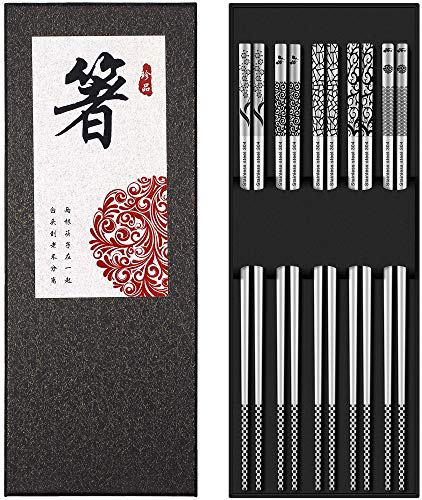
- Greatamzor Metal Chopsticks, 18/8 Stainless Steel, 5 Pairs — Best All-Round Pick; 5 pairs, stainless steel (18/8). Prose-only in this guide (stainless steel, not wood).
- NEWDRIP 8 Pairs Metal Chopsticks, 18/8 Stainless Steel — Best Family Workhorse; 8 pairs, stainless steel (18/8). Prose-only in this guide (stainless steel, not wood).
- Zliutob Metal Chopsticks, Stainless Steel, Non-Slip, 5 Pairs — Best Grip for Beginners; 5 pairs, stainless steel. Prose-only in this guide (stainless steel, not wood).
- LIXTONGR Dragon & Phoenix Black Stainless Steel Chopsticks, 2 Pairs — Best Premium Pick; 2 pairs, stainless steel (18/10). Prose-only in this guide (stainless steel, not wood).
- MUYOS Stainless Steel Chopsticks, 5 Pairs, Silver — Best Lightweight Pick; 5 pairs, stainless steel, hollow-core. Prose-only in this guide (stainless steel, not wood).
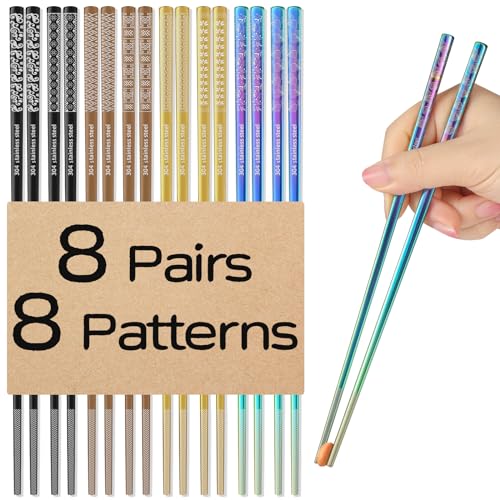
- Greatamzor Metal Chopsticks, Multicolor, Laser Engraved Copper Coin Pattern — Best for Color-Coded Families; Multipack (count per listing), stainless steel. Prose-only in this guide (stainless steel, not wood).
The guide below is organised around the question in the keyword: which woods are actually used for disposable chopsticks, why those species won, and how to judge a disposable pair’s quality before it touches food. The six verified sets above are reviewed afterwards as the reusable alternative — the comparison every high-volume disposable buyer eventually runs.
Read the full guide ↓
The best wood for disposable chopsticks is not an opinion question; the global industry settled it through cost, machinability and splinter behavior, and the answer is a short list: bamboo first, then birch, aspen and poplar, with pine and other fast softwoods in regional roles. Each species earned its place for specific reasons — growth speed, grain straightness, how cleanly it splits and machines, and how it behaves against lips and food — and this guide explains those reasons so you can judge any disposable pair, or any supplier’s claim, on the wood itself.
One transparency note: the verified product pool for this guide contains reusable stainless steel sets only — the opposite end of the lifecycle from disposables — so those six sets are reviewed prose-only, without purchase links, as the reusable alternative. They belong here because the economics of disposables push regular users toward exactly one calculation: how many disposable pairs a household or restaurant burns through before a reusable set is the obvious answer.
Between the species guide and that calculation sits the practical craft of disposables: how waribashi (the joined, split-it-yourself style) are made, what a clean split tells you about the wood, and the quality checks that separate a smooth, safe pair from a splintery one.
Key Takeaways
- Bamboo is the dominant disposable chopstick material worldwide: fast-growing, straight-grained, naturally splinter-resistant along its length.
- Birch is the premium disposable hardwood — smooth, pale, fine-grained and notably splinter-resistant at the tips.
- Aspen and poplar are the light, low-cost softwood options, common in mass-produced joined waribashi pairs.
- A clean, even split and smooth tips are the two quality checks that reveal the wood and the machining at once.
- The verified pool here is reusable stainless steel only, so all six reviewed sets are prose-only — the reusable alternative to the disposable habit.
- For anyone using disposables daily, the crossover to reusables arrives quickly; the guide does that maths in words, not prices.
In this guide
Quick Picks
| Pick | Badge | Pairs | Material |
|---|---|---|---|
| Greatamzor Metal Chopsticks, 18/8 Stainless Steel, 5 Pairs | Best All-Round Pick | 5 pairs | Stainless steel (18/8) |
| NEWDRIP 8 Pairs Metal Chopsticks, 18/8 Stainless Steel | Best Family Workhorse | 8 pairs | Stainless steel (18/8) |
| Zliutob Metal Chopsticks, Stainless Steel, Non-Slip, 5 Pairs | Best Grip for Beginners | 5 pairs | Stainless steel |
| LIXTONGR Dragon & Phoenix Black Stainless Steel Chopsticks, 2 Pairs | Best Premium Pick | 2 pairs | Stainless steel (18/10) |
| MUYOS Stainless Steel Chopsticks, 5 Pairs, Silver | Best Lightweight Pick | 5 pairs | Stainless steel, hollow-core |
| Greatamzor Metal Chopsticks, Multicolor, Laser Engraved Copper Coin Pattern | Best for Color-Coded Families | Multipack (count per listing) | Stainless steel |
The Quick Picks table shows the verified reusable sets — the alternative, not the answer to the species question. The species answer is in the sections below the reviews, and the quality checks apply to any disposable pair you pick up anywhere.
How These Picks Were Chosen
Every product in this guide comes from a verified pick pool checked against Amazon’s own catalog data on 2026-11-21. That check produced an honest complication this guide will not hide: the verified pool for this keyword contains stainless steel chopsticks only, and not one verified wooden set. Rather than present metal products as if they were wood, we kept all six verified sets in the guide as clearly labeled prose-only alternatives — full reviews, no purchase links, no product images — and built the buying guidance itself around the wooden chopsticks the keyword actually asks about, described in general terms with no invented products attached.
The comparison method is the same one we use when the pool matches perfectly. We compared the verified sets on the properties a buyer can verify before ordering: steel grade when stated, pairs per set, stated length, tip and grip treatment, and finish. Where a listing title does not state a specification, this guide says so. The wood discussion, meanwhile, sticks to established material knowledge — how bamboo, birch, cherry, maple and other common chopstick woods differ in grain, weight, hardness and care — without attaching those properties to any specific unverified product.
This is research-led guidance, not a hands-on lab test, and it makes no testing claims. If your decision is firmly for wood, treat the prose-only reviews as the comparison set readers most often cross-shop against wood, and use the wood sections to choose species, finish and format with confidence.
The 6 Verified Reusable Alternatives to Disposable Chopsticks
Each set below is stainless steel and built for years of service — the opposite design brief from a disposable pair. They are reviewed on stated specifications, without purchase links, for readers whose disposable usage is frequent enough that the reusable comparison is the real decision.
Greatamzor Metal Chopsticks, 18/8 Stainless Steel, 5 Pairs
Badge: Best All-Round Pick
The 18/8 Greatamzor multipack is the balanced middle of this pool: five pairs, a stated 18/8 grade, a 9.25 inch length and a laser engraved non-slip pattern in a Japanese and Korean style format, sold as a gift set. Nothing about it is extreme, which is exactly its appeal — it is the set a buyer picks when they want one dependable answer for daily meals without specialising in any single direction.
For a disposable user, this set represents the smallest possible reusable commitment: five pairs of stated 18/8 steel that cover a household’s daily meals. One box replaces the recurring disposable supply entirely, and the engraved tips answer the one thing disposables do well — grip — without the splinters.
The all-round Greatamzor set’s daily character is balance: nothing about a meal makes you wish for a different pair, and nothing about the pair makes you think about it at all. That invisibility is the actual product. Where specialist sets win their category meals — the occasion set at a celebration, the square-grip set in a learner’s hand — this set wins the ordinary Tuesday, which is most of the meals there are. Households replacing a mixed drawer of tired pairs usually find this profile, five honest pairs with stated specs, is the reset they wanted.
Strengths
- Stated 18/8 grade with five pairs covers most households
- Laser engraved non-slip tips help with noodles and dumplings
- 9.25 inch length works across Chinese, Japanese and Korean dishes
Trade-offs
- Five pairs may fall short for large dinner parties
- Engraving needs a quick rinse after oily or sticky food
- Gift set format costs presentation you may not need
| Specification | From listing title |
|---|---|
| Pairs in set | 5 pairs |
| Material | Stainless steel (18/8) |
| Stated length | 9.25 inches (per listing title) |
| Finish / grip | Laser engraved, non-slip, gift set format |
| Care | Dishwasher safe per listing title |
Best for: Most households wanting one all-round metal set / Not suited for: Hosts who regularly seat more than five chopstick users
NEWDRIP 8 Pairs Metal Chopsticks, 18/8 Stainless Steel
Badge: Best Family Workhorse
This NEWDRIP set pairs the family-size count of eight pairs with a stated 18/8 stainless steel grade and a 9.25 inch length, which puts it at the longer, Chinese-leaning end of the pool. The laser engraved non-slip pattern does the grip work, and the gift set format means the box presentation is a step above a plain multipack. For a household that eats with chopsticks daily, the combination of count, grade and length is the practical sweet spot of this group.
Eight pairs is the count at which a household stops rationing reusables the way it rationed disposables. This NEWDRIP set’s stated grade and length make it the direct substitute for the family that currently keeps a bulk sleeve of disposable pairs in a drawer.
In daily service this NEWDRIP set behaves like infrastructure: present at every meal, unremarkable in the best sense, and missed only when the dishwasher is full. The 9.25 inch length quietly becomes the household’s reference length — the size against which any future pair, wooden or metal, gets judged at the shop. That is worth knowing before you buy any family set: the first full-size set a household lives with tends to set its permanent standard, so choosing the length deliberately matters more than choosing it expensively.
Strengths
- Stated 18/8 grade plus eight pairs is a strong household combination
- 9.25 inch length suits shared dishes and family-style serving
- Laser engraved non-slip pattern helps beginners and children
Trade-offs
- Longer length can feel oversized for small hands
- Eight pairs is more than a small household will rotate through
- Engraved grooves need prompt rinsing after sticky sauces
| Specification | From listing title |
|---|---|
| Pairs in set | 8 pairs |
| Material | Stainless steel (18/8) |
| Stated length | 9.25 inches (per listing title) |
| Finish / grip | Laser engraved, non-slip, gift set format |
| Care | Dishwasher safe per listing title |
Best for: Daily chopstick households that want count, grade and length together / Not suited for: Diners who prefer short, Japanese-style pairs
Zliutob Metal Chopsticks, Stainless Steel, Non-Slip, 5 Pairs
Badge: Best Grip for Beginners
The Zliutob set is the grip specialist: its listing describes textured tips and a square grip section, the two geometry choices that matter most to anyone still building chopstick confidence. A square profile does not roll off the table, sits still in the fingers instead of rotating, and gives the thumb and index finger flat faces to brace against. For learners, that geometry is worth more than any finish.
Learners are heavy disposable users, because training pairs get lost and borrowed. The Zliutob square-grip set is the reusable that ends that cycle for a learner: one forgiving geometry, five pairs, and nothing to throw away after a wobbly meal.
The Zliutob set’s square section has a second career after the learning phase: it becomes the pair people grab for slippery food — glossy noodles, dumplings in oil, anything that punishes a smooth round profile. Learners graduate, but the geometry keeps earning its drawer space, which is why this set rarely becomes the abandoned trainer that hinged gadgets become. It also rests on the table without rolling into the soup, a small daily mercy that round-pair owners only appreciate when they visit.
Strengths
- Square grip section stays put in the hand and on the table
- Textured tips grip noodles and slick foods more securely
- Five pairs lets a learner keep the same pair everywhere
Trade-offs
- Steel grade is not stated in the listing title
- Square profile feels unfamiliar to lifelong round-chopstick users
- No stated length in the listing title to compare before buying
| Specification | From listing title |
|---|---|
| Pairs in set | 5 pairs |
| Material | Stainless steel |
| Stated length | Not stated in listing title |
| Finish / grip | Textured tips, square grip section |
| Care | Dishwasher safe per listing title |
Best for: Beginners and anyone whose chopsticks roll or rotate / Not suited for: Experienced users who prefer a traditional round profile
LIXTONGR Dragon & Phoenix Black Stainless Steel Chopsticks, 2 Pairs
Badge: Best Premium Pick
The LIXTONGR pair is the presentation piece of this pool: a black-finished 18/10 stainless steel set of two pairs carrying a Dragon and Phoenix motif, a non-slip grip section and a stated length of 9 inches. The 18/10 grade is the richest nickel blend in this group, which is the spec buyers look at when corrosion resistance and long-term surface stability matter most.
This two-pair occasion set is the opposite pole from disposable culture and is included deliberately: it shows what the material budget of a great many disposable pairs buys when it is spent once, on 18/10 steel and a finish made to be kept.
Living with the LIXTONGR set means treating it as tableware, not cutlery-drawer filler. The two pairs reward being stored in their presentation format and brought out deliberately; used that way, the black finish stays even and the motif stays crisp. Owners of occasion sets in every material report the same pattern: the pairs that are stored with intention are the pairs that still look ceremonial years later, while pairs that migrate into daily drawer service age like daily utensils. Decide which life this set will live before its first meal, and it will keep that life for a long time.
Strengths
- 18/10 stainless steel is the highest grade stated anywhere in this pool
- Non-slip grip section helps with noodles and other smooth foods
- Black Dragon & Phoenix finish makes it the natural gift or occasion pair
Trade-offs
- Only 2 pairs in the set, so it does not outfit a whole table
- Dark finishes can show wear at the tips over years of daily use
- The decorative motif will not suit buyers who want a plain utensil
| Specification | From listing title |
|---|---|
| Pairs in set | 2 pairs |
| Material | Stainless steel (18/10) |
| Stated length | 9 inches |
| Finish / grip | Black finish with Dragon & Phoenix motif |
| Care | Dishwasher safe per listing title |
Best for: Occasion dining, gifts and buyers who want the highest stated steel grade / Not suited for: Large households that need many matching pairs at once
MUYOS Stainless Steel Chopsticks, 5 Pairs, Silver
Badge: Best Lightweight Pick
The MUYOS set is built around weight: the listing describes a hollow-core design, which is why these feel noticeably lighter in the hand than solid metal chopsticks. For eaters who find metal chopsticks fatiguing, or who are transitioning away from wood and bamboo, that lighter balance is the single most helpful property a metal pair can have. The set covers five pairs in a plain silver finish.
Disposable bamboo’s best property is lightness, and the hollow-core MUYOS is the reusable that respects it. If your household’s disposable habit is really a weight preference, this is the set that removes the last reason for it.
Day to day, the MUYOS set’s lightness changes small habits: it is the pair people reach for when eating at a desk, reading, or lingering over a long bowl, because the hand simply forgets it is holding anything. The trade is feedback — some eaters use a pair’s weight to judge pinch pressure, and a hollow pair asks you to judge by sight and feel at the tips instead. After a week of meals most users stop noticing; those who came from bamboo often report they never notice at all, which is the strongest compliment a metal pair can earn.
Strengths
- Hollow-core build keeps the pair light during long meals
- Five pairs covers a small household or a couple with spares
- Plain silver finish matches any table setting
Trade-offs
- Steel grade is not stated in the listing title
- A very light pair gives less of the weighted feedback some experienced users prefer
- No engraved or textured grip feature is stated
| Specification | From listing title |
|---|---|
| Pairs in set | 5 pairs |
| Material | Stainless steel, hollow-core |
| Stated length | Not stated in listing title |
| Finish / grip | Silver, hollow-core build |
| Care | Dishwasher safe per listing title |
Best for: Metal newcomers and anyone who finds solid steel chopsticks heavy / Not suited for: Buyers who want a stated premium steel grade
Greatamzor Metal Chopsticks, Multicolor, Laser Engraved Copper Coin Pattern
Badge: Best for Color-Coded Families
This Greatamzor set leans on two practical ideas: laser engraving and color. The engraved copper coin pattern is not only decorative; engraved texture at the tip and grip zones gives food and fingers something to hold on to, which is where smooth metal chopsticks usually fail. The multicolor finish lets each diner keep the same color at every meal, a small system that households with children tend to adopt quickly.
The engraved multicolor Greatamzor set answers the disposable habit’s other root: anonymity. Disposable pairs are nobody’s, so nobody tracks them; a color-coded personal set gives every diner a pair that is theirs to keep, wash and find again.
The color system on this Greatamzor set proves itself in the unglamorous moments: the dishwasher cycle, the lunch-bag unpack, the guest who asks which pair is clean. A color per person turns all three into non-events. The engraved pattern also changes the washing routine slightly for the better — a quick rinse straight after the meal keeps the grooves clear, and households that adopt the rinse habit find every engraved set in the drawer easier to live with, not just this one.
Strengths
- Laser engraved pattern adds real grip texture, not just decoration
- Multicolor finish lets each person claim a personal pair
- Square-style profile resists rolling off the table
Trade-offs
- Steel grade is not stated in the listing title
- Bright colors will not suit formal or minimalist tables
- Engraving grooves need a rinse soon after saucy meals
| Specification | From listing title |
|---|---|
| Pairs in set | Multipack (count per listing) |
| Material | Stainless steel |
| Stated length | Not stated in listing title |
| Finish / grip | Multicolor, laser engraved copper coin pattern, square profile |
| Care | Dishwasher safe per listing title |
Best for: Families who want color-coded personal pairs and extra tip grip / Not suited for: Formal dining rooms that call for plain, matching utensils
Comparison Table
| Pick | Pairs | Steel grade | Stated length | Finish / grip |
|---|---|---|---|---|
| Greatamzor Metal Chopsticks, 18/8 Stainless Steel, 5 Pairs — prose-only | 5 pairs | 18/8 stainless steel | 9.25 inches (per listing title) | Laser engraved, non-slip, gift set format |
| NEWDRIP 8 Pairs Metal Chopsticks, 18/8 Stainless Steel — prose-only | 8 pairs | 18/8 stainless steel | 9.25 inches (per listing title) | Laser engraved, non-slip, gift set format |
| Zliutob Metal Chopsticks, Stainless Steel, Non-Slip, 5 Pairs — prose-only | 5 pairs | Stainless steel (grade not stated in listing title) | Not stated in listing title | Textured tips, square grip section |
| LIXTONGR Dragon & Phoenix Black Stainless Steel Chopsticks, 2 Pairs — prose-only | 2 pairs | 18/10 stainless steel | 9 inches | Black finish with Dragon & Phoenix motif |
| MUYOS Stainless Steel Chopsticks, 5 Pairs, Silver — prose-only | 5 pairs | Stainless steel (grade not stated in listing title) | Not stated in listing title | Silver, hollow-core build |
| Greatamzor Metal Chopsticks, Multicolor, Laser Engraved Copper Coin Pattern — prose-only | Multipack (count per listing) | Stainless steel (grade not stated in listing title) | Not stated in listing title | Multicolor, laser engraved copper coin pattern, square profile |
Read the table by columns: pairs tells you the household size the set serves, grade tells you what the listing commits to, and finish tells you how the pair behaves in the hand. Where a cell says a specification is not stated, that absence is itself information — prefer the set whose stated facts match your priorities.
How to Choose the Best Wood for Disposable Chopsticks
Read the species claim. Reputable disposable products name their material — bamboo, birch, aspen — because the species is the quality signal. Unspecified ‘wood’ on a bulk sleeve usually means mixed softwood of variable smoothness. When the species is named, judge it by the standards in the species section below.
Judge the split. Joined waribashi should separate with one clean, even break along the groove, leaving two smooth inner faces. A pair that tears, feathers or splits off-centre is telling you the grain was not straight or the machining was rushed — and its tips will behave the same way.
Check the tips before the meal. Run a fingertip lightly along the last inch. Quality disposable pairs — birch and good bamboo especially — feel sanded-smooth. Any fuzz, raised grain or splinter at the tip is a reject: put that pair aside rather than in your mouth. This ten-second check is the whole quality system for disposables, and it works because splinter behavior is a wood property before it is a manufacturing one.
Match the style to the setting. Tensō-style pairs (pointed at one end, the finer restaurant format) suit plated dishes and sushi; the basic joined style suits noodles, takeaway and volume service. Restaurants choosing for thousands of covers weigh machinability and consistency; households choosing for a picnic should weigh tip smoothness above all. The reusable side of this decision is compared in Best Wooden Disposable Chopsticks, and the species reference for keep-forever pairs is at Best Type Of Wood For Chopsticks.
Store disposables dry and sealed. Wood absorbs ambient moisture and odors; a sleeve kept open near a stove or sink degrades before it is used. Dry, sealed, and away from steam is the entire storage specification.
How to Use Disposable Chopsticks Well: Split, Smooth, Serve, Discard
Split with control. Hold the joined pair at the head, tips down, and pull the two sticks apart sideways in one steady motion rather than snapping them. A steady pull follows the groove and leaves clean faces; a snap invites the off-centre tear that creates splinters.
Smooth the pair — carefully. The traditional rub of the two sticks against each other removes loose fibres from the split faces. Do it gently over a bin or plate, a few strokes only, and only on the split faces; aggressive rubbing on a poor pair makes more fibres than it removes, and a pair that needs heavy smoothing was the wrong pair.
Use once, as designed. Disposable pairs are engineered for a single service: the wood is unfinished, absorbs sauces and wash water, and is not made to be cleaned and reused safely or pleasantly. Treating them as single-use is not wastefulness; it is the design brief. Readers whose usage is daily should run the reusable comparison in this guide instead — the discussion at Best Wood Chopsticks Reddit covers how households make that switch.
Discard thoughtfully. Used pairs go with food waste or general waste according to local rules; unused, unopened pairs store indefinitely if kept dry. Never burn treated or lacquered disposables in a cooking fire.
Troubleshooting. Problem: the pair splits unevenly → grain or groove fault; discard and take another pair rather than trimming with a knife near food. Problem: tips feel fuzzy across a whole sleeve → the batch’s finishing is poor; that sleeve is a false economy, and the species claim on its replacement is worth paying attention to. Problem: a pair tastes of wood → very fresh softwood pairs can carry a faint taste; bamboo and birch are the mildest, one more reason they lead the species list.
The Species, One by One: Why These Woods Won
Bamboo won on every axis at once: it is among the fastest-growing plants used as a material, its culms are naturally straight with long fibres that resist cross-splintering, and it machines into smooth pairs at enormous volume. Its hollow, jointed structure also means a disposable pair uses remarkably little material. Birch won the premium tier: a fine, even grain that sands silky, pale color that looks clean on a table, and tip behavior that stays smooth — the reasons birch disposables are a northern-country staple. Aspen and poplar won the value tier: light, soft, abundant softwoods that machine easily and cheaply, at the cost of tips that fuzz sooner and pairs that feel less substantial. Pine serves regionally where it is abundant, with more resin character and more variable smoothness.
The pattern to notice: every winner is fast-growing and straight-grained. Disposable chopsticks are a fibre-direction product — the pair is literally split along the grain — so species whose grain runs true make pairs that split true. That single property explains the whole list, and it is why ‘best wood for disposable chopsticks’ has such a stable answer compared with most buying questions. Makers choosing wood for permanent pairs weigh a different balance, covered at Best Wood To Make Chopsticks.
The Reusable Crossover: When Disposables Stop Making Sense
Disposable pairs make sense for travel, events, guests in number, and any setting where washing is genuinely unavailable. They stop making sense at a frequency, not a price: when a household uses them daily, the recurring supply, the storage, the variable quality and the waste all become standing features of the kitchen, and a single reusable set — any of the six verified steel sets reviewed in this guide, or a wooden household set — removes all four at once.
The honest middle position, and the one many restaurants quietly take, is hybrid: disposables for guests and the road, reusables for the household’s own table. If that is your landing spot, buy disposables by the species standards in this guide — bamboo or birch, clean-splitting, smooth-tipped — and let the reusable set carry the daily load.
How Disposable Chopsticks Are Made — and Why It Explains Quality
A disposable pair begins as a section of culm or a small billet, milled to a blank, shaped, and — for waribashi — left joined at the head with a groove that guides the diner’s split. Bamboo pairs start from culm strips whose natural fibre direction is the product’s skeleton; hardwood pairs are machined from kiln-dried stock whose moisture content decides whether tips stay smooth or fuzz in the packet. At every step, the economics push toward speed, which is why the quality variance between sleeves is real and why the two field checks — split and tip — remain the buyer’s reliable instruments.
Understanding the process also explains the species list’s stability. A production line splitting millions of pairs along the grain needs raw material whose grain is predictable at scale: plantation bamboo, birch, aspen and poplar are not traditions, they are tolerances. When a new material appears in the market, the question the industry asks is the one this guide teaches: does it split clean, and does the tip stay smooth?
Disposables in Restaurants Versus at Home
Restaurants choose disposables with a spreadsheet’s logic: consistency across thousands of pairs, a freshness signal to the diner, no washing infrastructure, and a species — usually bamboo, birch at the premium end — that survives the split test at the table in front of the customer. A pair that feathers in a diner’s hands is a small public failure, which is why serious establishments are more species-conscious than most home buyers.
Home buyers should borrow the restaurant standard without the restaurant volume: buy the species a good restaurant would, in the count your occasions actually need, and apply the same table-side checks. The home failure mode is different — not the public feathering pair but the permanent bulk sleeve serving a family that should own reusables — and this guide’s reviews exist for that household.
Reading a Disposable Listing: The Words That Matter
Disposable listings speak a small vocabulary worth learning. The species word — bamboo, birch, aspen, poplar — is the headline specification, and its absence is the loudest statement a listing can make. The style word — joined, waribashi, tensō — tells you the format and, with it, the service the pair was milled for. The count and the packaging tell you the intended buyer: restaurant cases and household sleeves are packed differently because they are judged differently.
What the vocabulary never contains is a substitute for the two physical checks. No listing language can promise that this pair, in your hand, will split clean — only the grain can promise that, and the grain speaks when you pull the pair apart. Buy by the words, verify by the split, and the disposable category becomes one of the most predictable purchases in the kitchen.
One more consideration that experienced buyers raise: consistency across a set matters more than any single specification. Pairs that match in length, weight and tip behavior disappear into the meal, while a mismatched set keeps reminding you it exists. Whatever material and format you choose from this guide, judge the set as a set — pick up two pairs, compare them side by side, and trust the comparison your hands report.
Storage deserves a sentence of its own. Chopsticks live best dry, separated and reachable — a simple holder by the table or a divided drawer insert in the kitchen. Pairs stored loose in a crowded cutlery drawer collect the small knocks that dull tips and wear finishes, whatever they are made of, and pairs stored damp collect worse. The thirty seconds of storage discipline after washing is the cheapest longevity available in this entire category.
Finally, buy for the eater you are becoming, not only the one you are. Households that eat with chopsticks tend to eat with them more over time, not less, as the skill stops being a skill and becomes simply how dinner works. A set chosen with a little headroom — an extra pair, a slightly better grip, a format that covers the next cuisine you plan to cook — tends to be the purchase that still looks wise several years later.
It is also worth deciding, before the first order, what happens when a pair is lost or damaged — because with chopsticks, unlike most cutlery, the pair is the unit and half a pair is nothing. Multi-pair sets absorb the loss silently; single premium pairs turn it into an event. Households that know their own chaos level choose accordingly, and the honest ones tend to keep one humble spare set in reserve regardless of what their best pairs are.
A last word on mixing materials at one table: it is completely normal, and restaurants do it without thinking. A wooden pair at one setting and a metal pair at another bother nobody, because the meal is the event, not the utensil audit. Choose each person’s pair for that person’s hands and habits, and let the table be as mixed as the family is.
Consider also the second-order benefit of choosing well once: a household that settles its chopstick system stops re-deciding it. The drawer simply works — pairs for the family, a pair for cooking, a pair for the learner, spares for guests — and the small nightly frictions of missing, mismatched or slippery pairs disappear from the meal entirely. Most kitchen purchases promise flavour or speed; this one promises the absence of annoyance, which over a thousand meals is worth more.
When you compare any two options in this guide and find them close, let the tie be broken by the meal you cook most, not the meal you admire most. Aspirational buying fills drawers with specialists for cuisines that happen twice a year, while the everyday pair — the one matched to the real Tuesday — quietly determines whether the whole system feels right. Every recommendation in this guide was made in that spirit, and it is the spirit in which the final choice should be made too.
And if the decision still feels larger than the object, remember what a pair of chopsticks actually is: two sticks, refined by centuries into one of the most efficient eating tools ever made, and cheap enough in every material that a household can afford to be honest about its habits. The guides, threads and reviews exist to make the choice considered — but the considered choice, once made, should be lived with lightly and eaten with daily.
There is a small ritual worth adopting with any new set: eat the first meal slowly, on purpose, with food you know well. Familiar food exposes a pair honestly — how it grips, how it balances, where it wants to rest — without the noise of a new recipe competing for attention. By the end of that meal you will know whether the set is right, and you will know it in your hand rather than in your opinion, which is where chopstick knowledge actually lives.
Replacement, when it eventually comes, should be boring: the same decision, repeated. Households churn through chopstick purchases when the first decision was made on a photograph or a whim; households that chose by count, geometry, length and routine tend to re-order the same profile for years. That boredom is the signature of a system that fits, and it is available in every material this guide covers — the second purchase is simply easier than the first.
Common Buying Mistakes
Buying on appearance alone. Engraving, color and gift boxes are easy to judge from a photo; grip geometry, length and tip texture are what decide whether a pair gets used daily or abandoned in a drawer. Decide the practical properties first and let appearance break ties.
Ignoring length. A pair that is too long feels clumsy with small bowls and too short feels cramped with shared dishes and hot pots. Match the stated length to the cuisine you eat most, not to the cuisine you cook twice a year.
Assuming all metal chopsticks are the same. Stated grades differ, hollow and solid builds feel different, and square and round profiles behave differently in the hand. The listing title usually tells you which you are getting; read it before ordering.
Buying one pair when the household needs a system. Chopsticks get lost, left in lunch bags and held back in the wash. Households that eat with chopsticks daily are almost always happier with a multi-pair set and spares than with a single premium pair.
Skipping the care routine. Any reusable pair lasts longer when it is rinsed promptly, dried fully and stored dry. Neglect shortens the life of wood fastest, but engraved and plated metal also reward basic care.
Final Recommendation
The best wood for disposable chopsticks is bamboo for the general case — fastest-growing, straightest-grained, cleanest-splitting — with birch as the premium smooth option and aspen or poplar as the honest value tier. Judge any pair by its split and its tips, store the sleeve dry, and use each pair once, as designed.
And if your disposable use is daily rather than occasional, take the guide’s other answer seriously: the six verified reusable steel sets reviewed above, prose-only here, exist to end the recurring purchase altogether. Species knowledge still serves you — it is how you will judge the wooden household set you may buy instead — but frequency, in the end, is the variable that decides.
Frequently Asked Questions
What is the best wood for disposable chopsticks?
Bamboo is the general answer: fast-growing, straight-grained and clean-splitting, with smooth tip behavior. Birch is the premium option for the smoothest finish, and aspen and poplar are the common value-tier softwoods.
Why is bamboo used for so many disposable chopsticks?
Because its long, straight fibres split cleanly along the grain, it grows back extremely quickly, and it machines smoothly at volume. A disposable pair is a fibre-direction product, and bamboo’s fibre direction is the most cooperative of any common material.
How can I tell a good disposable pair before using it?
Two checks: it should split from its joined head with one clean, even break, and its tips should feel smooth to a fingertip. Fuzz, feathering or an off-centre split means poor grain or poor machining — discard that pair.
Can disposable chopsticks be washed and reused?
They are not designed for it: the wood is unfinished, absorbs water and sauces, and degrades with washing. Single use is the design brief. Frequent users are better served by a reusable set, several of which are reviewed in this guide.
Are birch disposable chopsticks better than bamboo?
Birch typically feels smoother and looks paler and more premium; bamboo is lighter, at least as splinter-resistant in practice, and the more sustainable growth story. Both are top-tier; the choice is finish feel versus lightness and volume economics.
Why does this guide review metal chopsticks?
The verified pool for this keyword contains reusable stainless steel sets only — the direct alternative for frequent disposable users. They are presented prose-only, without links, and the guide’s substance is the disposable wood guidance in the species sections.