Disclosure: topratedkitchenware.com is reader-supported. When you buy through links on our site, we may earn an affiliate commission from Amazon and other retailers, at no extra cost to you.
Where to buy
Shoppers comparing the best wood to make chopsticks usually want two things at once: an honest shortlist and a clear view of what each option actually is. The six sets below are the verified options for this guide; because the verified pool for this keyword is stainless steel rather than wood, they are presented prose-only, clearly labeled, with no purchase links.
- Greatamzor Metal Chopsticks, Multicolor, Laser Engraved Copper Coin Pattern — Best for Color-Coded Families; Multipack (count per listing), stainless steel. Prose-only in this guide (stainless steel, not wood).
- Greatamzor Stainless Steel Chopsticks, Titanium Plated — Best Finish and Style; Multipack (count per listing), stainless steel, titanium plated. Prose-only in this guide (stainless steel, not wood).
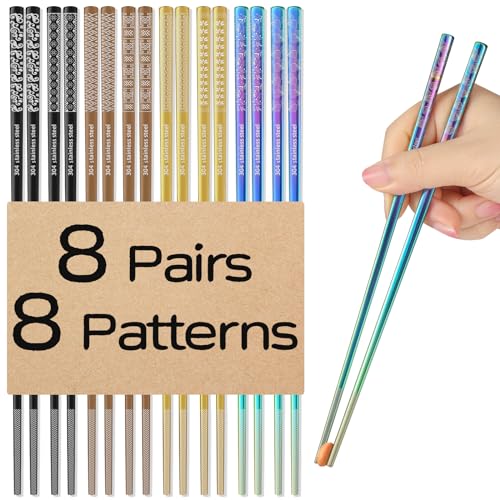
- NEWDRIP 8 Pairs Metal Chopsticks, Multicolor — Best for Big Families; 8 pairs, stainless steel. Prose-only in this guide (stainless steel, not wood).
- Lazycorner 10 Pairs 304 Stainless Steel Chopsticks, Silver — Best Bulk Household Set; 10 pairs, stainless steel (304). Prose-only in this guide (stainless steel, not wood).
- IQCWOOD 304 Stainless Steel Chopsticks, 5 Pairs, Silver — Best Stated-Spec Value; 5 pairs, stainless steel (304). Prose-only in this guide (stainless steel, not wood).
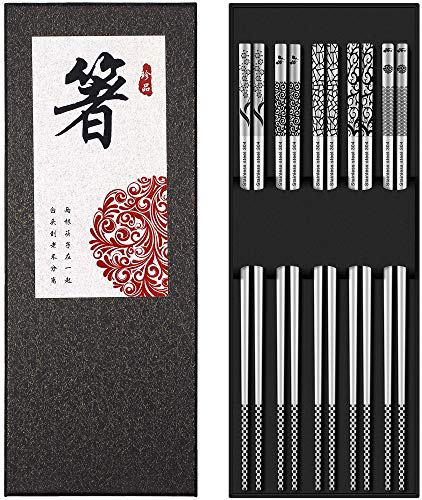
- Greatamzor Metal Chopsticks, 18/8 Stainless Steel, 5 Pairs — Best All-Round Pick; 5 pairs, stainless steel (18/8). Prose-only in this guide (stainless steel, not wood).
The guide below is a maker’s brief: which woods carve cleanly, hold a fine tip and stay food-safe; how blanks are chosen, shaped, tapered and finished; and the mistakes that split first attempts. The six verified sets above are reviewed afterwards as reference pairs — the factory standard your handmade pair will be compared against at the table, which is a genuinely useful benchmark for a maker.
Read the full guide ↓
The best wood to make chopsticks is the wood whose working properties forgive a beginner and reward a craftsman: straight grain that will not run out at the tip, hardness that holds a fine point without snapping, and a surface that finishes smooth and food-safe. On those criteria the craft has converged on a short list — cherry and maple for most makers, bamboo for the traditional laminated route, walnut for beauty, and a handful of species to avoid — and this guide explains the reasoning in workshop terms, from blank selection to final oil.
One transparency note: the verified product pool for this guide contains manufactured stainless steel chopsticks only, so the six sets reviewed are prose-only reference pairs, with no purchase links. They earn their place honestly: a maker needs to know what a good pair feels like — its length, taper, tip and balance — and the verified sets document those targets in stated specifications better than any photograph.
What follows is the full making arc: species selection with working properties, blank and grain rules, shaping and tapering, finishing with food-safe oils and waxes, and the troubleshooting that rescues the pairs that go wrong along the way.
Key Takeaways
- Cherry and maple are the maker’s defaults: straight grain, moderate hardness, fine tips that hold, and forgiving carving behavior.
- Grain direction is the first quality gate: blanks with grain running out at the tip will fail there, whatever the species.
- Bamboo is made by lamination and shaping rather than carving from solid blanks — a different, traditional process.
- Walnut and other dark hardwoods make beautiful pairs but punish dull tools and rushed tapering.
- Food-safe finishing means mineral oil, pure tung oil or beeswax blends — never furniture finishes of unknown composition.
- The verified pool here is manufactured steel only, so all six reviewed sets are prose-only reference pairs for dimensions and feel.
In this guide
Quick Picks
| Pick | Badge | Pairs | Material |
|---|---|---|---|
| Greatamzor Metal Chopsticks, Multicolor, Laser Engraved Copper Coin Pattern | Best for Color-Coded Families | Multipack (count per listing) | Stainless steel |
| Greatamzor Stainless Steel Chopsticks, Titanium Plated | Best Finish and Style | Multipack (count per listing) | Stainless steel, titanium plated |
| NEWDRIP 8 Pairs Metal Chopsticks, Multicolor | Best for Big Families | 8 pairs | Stainless steel |
| Lazycorner 10 Pairs 304 Stainless Steel Chopsticks, Silver | Best Bulk Household Set | 10 pairs | Stainless steel (304) |
| IQCWOOD 304 Stainless Steel Chopsticks, 5 Pairs, Silver | Best Stated-Spec Value | 5 pairs | Stainless steel (304) |
| Greatamzor Metal Chopsticks, 18/8 Stainless Steel, 5 Pairs | Best All-Round Pick | 5 pairs | Stainless steel (18/8) |
The Quick Picks table is the reference shelf: manufactured pairs whose stated lengths, counts and finishes define the targets a handmade pair is measured against. The making guidance itself is in the workshop sections below.
How These Picks Were Chosen
Every product in this guide comes from a verified pick pool checked against Amazon’s own catalog data on 2026-11-21. That check produced an honest complication this guide will not hide: the verified pool for this keyword contains stainless steel chopsticks only, and not one verified wooden set. Rather than present metal products as if they were wood, we kept all six verified sets in the guide as clearly labeled prose-only alternatives — full reviews, no purchase links, no product images — and built the buying guidance itself around the wooden chopsticks the keyword actually asks about, described in general terms with no invented products attached.
The comparison method is the same one we use when the pool matches perfectly. We compared the verified sets on the properties a buyer can verify before ordering: steel grade when stated, pairs per set, stated length, tip and grip treatment, and finish. Where a listing title does not state a specification, this guide says so. The wood discussion, meanwhile, sticks to established material knowledge — how bamboo, birch, cherry, maple and other common chopstick woods differ in grain, weight, hardness and care — without attaching those properties to any specific unverified product.
This is research-led guidance, not a hands-on lab test, and it makes no testing claims. If your decision is firmly for wood, treat the prose-only reviews as the comparison set readers most often cross-shop against wood, and use the wood sections to choose species, finish and format with confidence.
The 6 Verified Reference Pairs for Makers
Each set below is factory-made stainless steel, reviewed on stated specifications, without purchase links. For a maker, their value is dimensional and tactile: these are the lengths, tapers and grip treatments that manufactured pairs converge on, and the standard your handmade pair meets at its first meal.
Greatamzor Metal Chopsticks, Multicolor, Laser Engraved Copper Coin Pattern
Badge: Best for Color-Coded Families
This Greatamzor set leans on two practical ideas: laser engraving and color. The engraved copper coin pattern is not only decorative; engraved texture at the tip and grip zones gives food and fingers something to hold on to, which is where smooth metal chopsticks usually fail. The multicolor finish lets each diner keep the same color at every meal, a small system that households with children tend to adopt quickly.
As a reference, this engraved multicolor set teaches the grip lesson: factory pairs add texture because smooth cylinders are hard to hold. A maker achieves the same end with a subtle square or octagonal section — and this set is the proof on the table that texture is a feature, not a decoration.
The color system on this Greatamzor set proves itself in the unglamorous moments: the dishwasher cycle, the lunch-bag unpack, the guest who asks which pair is clean. A color per person turns all three into non-events. The engraved pattern also changes the washing routine slightly for the better — a quick rinse straight after the meal keeps the grooves clear, and households that adopt the rinse habit find every engraved set in the drawer easier to live with, not just this one.
Strengths
- Laser engraved pattern adds real grip texture, not just decoration
- Multicolor finish lets each person claim a personal pair
- Square-style profile resists rolling off the table
Trade-offs
- Steel grade is not stated in the listing title
- Bright colors will not suit formal or minimalist tables
- Engraving grooves need a rinse soon after saucy meals
| Specification | From listing title |
|---|---|
| Pairs in set | Multipack (count per listing) |
| Material | Stainless steel |
| Stated length | Not stated in listing title |
| Finish / grip | Multicolor, laser engraved copper coin pattern, square profile |
| Care | Dishwasher safe per listing title |
Best for: Families who want color-coded personal pairs and extra tip grip / Not suited for: Formal dining rooms that call for plain, matching utensils
Greatamzor Stainless Steel Chopsticks, Titanium Plated
Badge: Best Finish and Style
The titanium-plated Greatamzor set is the finish specialist of the pool. Titanium plating is the layer that carries the color on metal chopsticks like these, and the listing pairs it with laser engraving in a Japanese and Korean style format. Buyers choosing this set are usually choosing appearance first, so the honest framing is simple: you get a colored, engraved metal pair whose plating, like all plated finishes, should be treated as a surface that can wear at contact points over time.
The titanium-plated set is the finish reference: it shows what a coated pair looks like new, and its known weakness — plating wear at tips — is the strongest argument for the maker’s own route of oil and wax finishes that can be renewed forever at home.
A plated set asks for one habit in exchange for its looks: separation. Stored loose against other metal, any plated finish wears at the contact points first, and the tips — which meet plates, bowls and other pairs — show age before the handles do. A simple holder or divided insert keeps the color even across the set. Buyers who enjoy objects that develop a personal patina will find this charming; buyers who want day-one looks forever should choose bare steel and skip plating in every material, wood lacquer included.
Strengths
- Titanium-plated finish gives color options plain steel cannot
- Laser engraving adds grip texture at the working end
- Japanese and Korean style proportions suit sushi and noodle dishes
Trade-offs
- Plated finishes can wear at the tips with years of hard use
- Steel grade beneath the plating is not stated in the listing title
- Colored metal is a style commitment some tables will not want
| Specification | From listing title |
|---|---|
| Pairs in set | Multipack (count per listing) |
| Material | Stainless steel, titanium plated |
| Stated length | Not stated in listing title |
| Finish / grip | Titanium-plated color finish, laser engraved |
| Care | Dishwasher safe per listing title |
Best for: Buyers who want colored metal chopsticks with engraved grip / Not suited for: Purists who want bare, uncoated steel only
NEWDRIP 8 Pairs Metal Chopsticks, Multicolor
Badge: Best for Big Families
With eight pairs in the box, the multicolor NEWDRIP set is aimed at households rather than couples. The laser engraved, non-slip design follows the same logic as the other engraved sets in this pool — texture where the food is, texture where the fingers are — while the color spread turns the set into a personal-pair system for up to eight diners, or fewer diners with genuine spares when guests arrive.
Eight pairs is a production run, and this multicolor NEWDRIP set is what consistency looks like at that scale. A maker producing a household set faces the same problem the factory solved here: eight pairs that match in length, taper and feel. Measure your set against that standard.
Eight multicolor pairs change a household’s arithmetic: there is always a clean pair, always a spare for a guest, and always one that can live permanently in a lunch bag without the table missing it. The hidden benefit is rotation — with eight pairs in service, each individual pair is washed and used an eighth as often as a single pair would be, which spreads wear so evenly that the set as a whole ages in slow motion. Large sets are not indulgence; they are a wear-management strategy.
Strengths
- Eight pairs is enough for family meals plus guests
- Laser engraved non-slip tips help with slippery foods
- Multicolor finish supports a one-color-per-person system
Trade-offs
- Steel grade is not stated in the listing title
- Eight near-identical pairs need a storage plan in a small drawer
- Colors may not match an existing plain table setting
| Specification | From listing title |
|---|---|
| Pairs in set | 8 pairs |
| Material | Stainless steel |
| Stated length | Not stated in listing title |
| Finish / grip | Multicolor, laser engraved, non-slip |
| Care | Dishwasher safe per listing title |
Best for: Families and regular hosts who need many pairs at once / Not suited for: Singles or couples who only need two pairs
Lazycorner 10 Pairs 304 Stainless Steel Chopsticks, Silver
Badge: Best Bulk Household Set
Ten pairs is the largest count in this pool, and the Lazycorner set pairs that count with a stated 304 stainless steel grade, a non-slip design and a lightweight build described as food grade and dishwasher safe. This is the set aimed at the drawer that serves a big family, a share house, or anyone who hosts noodle nights often enough that running out of clean pairs is a real problem.
Ten pairs of stated 304 steel is the volume benchmark. For a maker, the Lazycorner set frames the honest question: your handmade pairs compete on character, fit and finish — not on count or cost — and knowing the factory’s volume offer clarifies what your craft is actually for.
Ten pairs sounds like a hosting specification until a household lives with it: the set absorbs sleepovers, noodle nights, sick days when dishes pile up, and the pair that vanishes into a sofa. What it asks in return is drawer honesty — a ten-pair set needs a real home, ideally a holder or tray, or it becomes ten loose pairs in a cutlery drawer. Households that give it the tray tend to describe it as the best-value purchase in the kitchen; households that do not, describe clutter. The set is the same either way.
Strengths
- Ten pairs is the biggest household count in this pool
- Stated 304 grade is the familiar food-grade workhorse steel
- Lightweight, non-slip design suits mixed-ability tables
Trade-offs
- Plain silver finish offers no color coding between diners
- Ten pairs needs drawer space a small kitchen may not spare
- No engraved pattern is stated for extra tip texture
| Specification | From listing title |
|---|---|
| Pairs in set | 10 pairs |
| Material | Stainless steel (304) |
| Stated length | Not stated in listing title |
| Finish / grip | Silver, non-slip, lightweight |
| Care | Dishwasher safe per listing title |
Best for: Big households, share houses and frequent hosts / Not suited for: Buyers who want a small, premium two-pair set
IQCWOOD 304 Stainless Steel Chopsticks, 5 Pairs, Silver
Badge: Best Stated-Spec Value
Despite the brand name, the IQCWOOD set in this pool is a metal set: 304 stainless steel, five pairs, a 9.25 inch length and non-slip tips in a Korean and Japanese style format, described as lightweight and dishwasher safe. It is the plain, specification-complete option — grade, count, length and tip treatment are all stated in the listing title, which makes it the easiest set here to compare honestly against the rest of the pool.
Ignore the brand name; the IQCWOOD set is steel, and as a reference it is the specification-complete one: grade, count and a 9.25 inch length all stated. That length is the maker’s most useful number in this pool — the middle format your first pairs should probably adopt.
The IQCWOOD set’s virtue in daily life is that it is exactly what its listing says, meal after meal: the stated length, the stated grade, the stated count, behaving as specified. That predictability makes it the pair households hand to guests without explanation and the pair that travels to rentals and offices. Its plainness is also its honesty test for buyers — if a fully specified, unglamorous set like this one satisfies the brief, the brief was practical all along, and money saved here is better spent on the occasion pair.
Strengths
- Grade, count and length are all stated in the listing title
- Non-slip tips help with smooth and saucy foods
- Lightweight build suits smaller hands and long meals
Trade-offs
- Plain silver finish has no color coding or decoration
- Brand name can confuse buyers expecting a wooden product
- Five pairs is a household set, not a hosting set
| Specification | From listing title |
|---|---|
| Pairs in set | 5 pairs |
| Material | Stainless steel (304) |
| Stated length | 9.25 inches (per listing title) |
| Finish / grip | Silver, non-slip tips, lightweight |
| Care | Dishwasher safe per listing title |
Best for: Buyers who want stated specs and a plain everyday pair / Not suited for: Anyone shopping for actual wooden chopsticks by brand name
Greatamzor Metal Chopsticks, 18/8 Stainless Steel, 5 Pairs
Badge: Best All-Round Pick
The 18/8 Greatamzor multipack is the balanced middle of this pool: five pairs, a stated 18/8 grade, a 9.25 inch length and a laser engraved non-slip pattern in a Japanese and Korean style format, sold as a gift set. Nothing about it is extreme, which is exactly its appeal — it is the set a buyer picks when they want one dependable answer for daily meals without specialising in any single direction.
This 18/8 Greatamzor set is the all-round reference: five pairs, stated grade, 9.25 inches, engraved grip. If a maker’s first set matches this pair’s length and tip behavior while beating it on warmth and individuality, the project has succeeded by any fair standard.
The all-round Greatamzor set’s daily character is balance: nothing about a meal makes you wish for a different pair, and nothing about the pair makes you think about it at all. That invisibility is the actual product. Where specialist sets win their category meals — the occasion set at a celebration, the square-grip set in a learner’s hand — this set wins the ordinary Tuesday, which is most of the meals there are. Households replacing a mixed drawer of tired pairs usually find this profile, five honest pairs with stated specs, is the reset they wanted.
Strengths
- Stated 18/8 grade with five pairs covers most households
- Laser engraved non-slip tips help with noodles and dumplings
- 9.25 inch length works across Chinese, Japanese and Korean dishes
Trade-offs
- Five pairs may fall short for large dinner parties
- Engraving needs a quick rinse after oily or sticky food
- Gift set format costs presentation you may not need
| Specification | From listing title |
|---|---|
| Pairs in set | 5 pairs |
| Material | Stainless steel (18/8) |
| Stated length | 9.25 inches (per listing title) |
| Finish / grip | Laser engraved, non-slip, gift set format |
| Care | Dishwasher safe per listing title |
Best for: Most households wanting one all-round metal set / Not suited for: Hosts who regularly seat more than five chopstick users
Comparison Table
| Pick | Pairs | Steel grade | Stated length | Finish / grip |
|---|---|---|---|---|
| Greatamzor Metal Chopsticks, Multicolor, Laser Engraved Copper Coin Pattern — prose-only | Multipack (count per listing) | Stainless steel (grade not stated in listing title) | Not stated in listing title | Multicolor, laser engraved copper coin pattern, square profile |
| Greatamzor Stainless Steel Chopsticks, Titanium Plated — prose-only | Multipack (count per listing) | Stainless steel, titanium plated | Not stated in listing title | Titanium-plated color finish, laser engraved |
| NEWDRIP 8 Pairs Metal Chopsticks, Multicolor — prose-only | 8 pairs | Stainless steel (grade not stated in listing title) | Not stated in listing title | Multicolor, laser engraved, non-slip |
| Lazycorner 10 Pairs 304 Stainless Steel Chopsticks, Silver — prose-only | 10 pairs | 304 stainless steel | Not stated in listing title | Silver, non-slip, lightweight |
| IQCWOOD 304 Stainless Steel Chopsticks, 5 Pairs, Silver — prose-only | 5 pairs | 304 stainless steel | 9.25 inches (per listing title) | Silver, non-slip tips, lightweight |
| Greatamzor Metal Chopsticks, 18/8 Stainless Steel, 5 Pairs — prose-only | 5 pairs | 18/8 stainless steel | 9.25 inches (per listing title) | Laser engraved, non-slip, gift set format |
Read the table by columns: pairs tells you the household size the set serves, grade tells you what the listing commits to, and finish tells you how the pair behaves in the hand. Where a cell says a specification is not stated, that absence is itself information — prefer the set whose stated facts match your priorities.
How to Choose the Best Wood to Make Chopsticks
Grain first, species second. A chopstick is a long, thin object whose tip is its thinnest, hardest-working part. The blank’s grain must run the full length of the pair and exit nowhere along the sides; grain that runs out at the tip creates a short-grain weak point that will snap or splinter in service. Sight down every blank and reject runout before you consider beauty.
Hardness in the middle band. Very soft woods dent, fuzz and lose their tips; extremely hard woods carve slowly, blunt edges and can be brittle at fine points. The middle band — cherry, maple, birch, beech — holds a crisp tip, sands silky and forgives a learner’s tool work. It is no accident that these species also dominate the table-pair market described at Best Type Of Wood For Chopsticks.
Stability and moisture behavior. Chopsticks live wet-dry cycles. Species known for stability — cherry and maple again — stay straight through them; makers should still seal end grain well, because the tip drinks water fastest. Quartersawn or straight-sawn blanks from the stable heart of a board beat flatsawn edges.
Food safety of the wood itself. Stick to the known food-contact species. Avoid exotic woods with sensitising dust or extractives, avoid spalted wood for utensils, and never use pressure-treated or reclaimed wood of unknown history for anything that touches food. The community’s experience with these species at the table is collected at Best Wood Chopsticks Reddit.
Buy blanks thicker than the pair. Start from stock thick enough to shape a square or octagonal section with material to spare; a pair carved at the edge of its blank inherits every surface defect. Makers’ offcuts and pen-blank-sized stock in the right species are the economical source for first attempts.
How to Make a Pair: From Blank to Finished Chopsticks
Step 1 — Select and mark the blanks. Choose two straight-grained blanks slightly over length, mark the grain direction, and mark a centre line. Decide the target format now — the 9.25 inch middle length documented by the reference pairs in this guide suits most tables — because taper proportions follow length.
Step 2 — Establish the square section. Plane or sand the blanks to an even square section along their whole length. A square section is not a rough stage to rush: it is the reference geometry every later facet is measured from, and several finished styles — including learner-friendly pairs — keep it.
Step 3 — Taper toward the tip. Work the last third of each stick down gradually, keeping the taper smooth and the tip blunt-rounded rather than needle-sharp: eating tips need a small flat or dome to grip food and survive. Check the pair against each other constantly; matched taper matters more than perfect taper.
Step 4 — Facet or round the grip. Knock the square’s corners into an octagon for a hand-friendly feel, or round the grip end fully while keeping some flat near the tip for control. Keep a little texture: a polished-cylinder pair is as slippery in wood as in metal.
Step 5 — Sand through the grits and raise the grain. Sand progressively to a fine finish, then wipe with a damp cloth to raise the grain, let dry, and sand once more. This extra pass is what separates a pair that stays smooth in service from one that fuzzes at its first wash.
Step 6 — Finish with food-safe oil and wax. Apply food-safe mineral oil or pure tung oil in thin coats, let it cure fully per the oil’s nature, and buff with a beeswax blend if you want a soft sheen. Re-oil whenever the pair looks dry; the finish is maintenance, not a one-time event.
Troubleshooting. Problem: a tip snaps during tapering → short grain from runout; the blank was the fault, so return to Step 1 standards rather than blaming technique. Problem: the pair warps after finishing → uneven moisture or one-sided finishing; finish all faces evenly and store pairs flat and dry. Problem: tips feel fuzzy after washing → the grain-raising step was skipped; dry, fine-sand and re-oil. Makers comparing their output with traditional disposable production will find the industrial species logic at Best Wood For Disposable Chopsticks.
Species Notes for Makers: Cherry, Maple, Birch, Walnut, Bamboo
Cherry is the teacher’s choice: it carves cleanly in both directions, holds detail at the tip, and its color deepens with age and light into the warm red-brown of classic table pairs. Maple is harder and paler, the choice for pairs that will work hard — cooking-length pairs especially — and its even grain sands to a notably silky surface. Birch and beech are the economical hardwoods: fine, forgiving, and ideal for a first set or a set for children. Walnut rewards sharp tools with dramatic, dark pairs and punishes dull ones with torn grain; work it with patience and freshly honed edges. Bamboo is not carved from blanks at all: pairs are split, laminated or shaped from culm strips, a distinct traditional process that produces the lightest pairs of all.
What unites the list is predictability. A maker’s first five pairs should be boring wood, beautifully grained only after the geometry is mastered. Save the figured, the exotic and the reclaimed for when your tapers match by eye — the wood will still be there, and so will your standards.
Finishes That Belong on Food Tools
The finish question for utensils is narrower than for furniture. Safe, renewable and repairable is the standard: food-safe mineral oil (inert, never rancid, endlessly renewable), pure tung oil (a curing oil that builds a more water-resistant film over several thin coats and full cure time), and beeswax or oil-wax blends buffed on top for feel. All three can be refreshed in minutes at the kitchen table, which matters because a chopstick’s finish is a maintenance routine, not a coating event.
What to leave in the workshop: film finishes of unknown composition, scented or solvent-heavy products, and anything you would not want described on a menu. Traditional lacquer is a legitimate historical finish in expert hands, but it is a specialist material with its own safety discipline, not a beginner’s shortcut. When in doubt, oil and wax: the pair will look honest, feel warm, and never surprise you. The eating technique for the finished pair is covered at Best Tips For Using Chopsticks.
Tools for the Job: Keeping It Simple
Chopstick making is one of woodworking’s most economical crafts. The essential kit is short: a sharp knife or drawknife for rough shaping, a small plane or spokeshave for controlled tapering, abrasive paper in a progression of grits for finishing, and a straightedge and calipers for keeping the pair matched. Power tools can rough out blanks, but the final taper — the part the mouth judges — is hand work at this scale, and most makers find the hand process is the pleasure of the project rather than its cost.
Tool sharpness matters more than tool count. Hardwoods like walnut tear under a dull edge and cut like fruit under a keen one; cherry forgives, maple reveals. A maker with three sharp tools will out-produce a maker with ten dull ones, and the first investment in this craft is a way to sharpen, not another way to cut.
Your First Set: A Realistic Project Plan
Plan the first project as a set of modest ambitions: two pairs, cherry or maple, middle length, square-to-octagonal section, oil finish. Cut four blanks for the two pairs, because the craft’s first lesson — usually a snapped tip or a mismatched taper — should cost a blank, not the project. Work the pairs together, step by step, rather than finishing one and starting its match: matched pairs are made simultaneously or not at all.
Set the success standard before you start: the pairs should match in length and feel, the tips should be smooth and blunt-rounded, and the finish should be even. Beauty is explicitly not in the first standard. Makers who judge pair one against a lacquered heirloom quit; makers who judge it against the factory reference pairs in this guide — and beat them on warmth — tend to make pair ten.
When a Pair Fails: Reading Your Own Mistakes
Every maker accumulates a small museum of failures, and each type teaches a specific lesson. The snapped tip teaches grain selection: the blank’s runout was visible before the first cut, and the museum’s rule is to sight every blank twice. The mismatched pair teaches process: pairs are shaped together, step alternating with step, or they diverge — the museum’s rule is never finish one stick first. The fuzzy-after-washing pair teaches finishing: the grain-raising pass that felt optional was not. The warped pair teaches storage and even finishing: all faces, both sticks, same coats, flat dry rest.
Keep the museum. Makers who discard their failures repeat them at intervals; makers who keep them on a shelf tend to make each mistake exactly once. Your tenth pair will be better than your first not because your hands changed, but because the shelf taught them.
One more consideration that experienced buyers raise: consistency across a set matters more than any single specification. Pairs that match in length, weight and tip behavior disappear into the meal, while a mismatched set keeps reminding you it exists. Whatever material and format you choose from this guide, judge the set as a set — pick up two pairs, compare them side by side, and trust the comparison your hands report.
Storage deserves a sentence of its own. Chopsticks live best dry, separated and reachable — a simple holder by the table or a divided drawer insert in the kitchen. Pairs stored loose in a crowded cutlery drawer collect the small knocks that dull tips and wear finishes, whatever they are made of, and pairs stored damp collect worse. The thirty seconds of storage discipline after washing is the cheapest longevity available in this entire category.
Finally, buy for the eater you are becoming, not only the one you are. Households that eat with chopsticks tend to eat with them more over time, not less, as the skill stops being a skill and becomes simply how dinner works. A set chosen with a little headroom — an extra pair, a slightly better grip, a format that covers the next cuisine you plan to cook — tends to be the purchase that still looks wise several years later.
It is also worth deciding, before the first order, what happens when a pair is lost or damaged — because with chopsticks, unlike most cutlery, the pair is the unit and half a pair is nothing. Multi-pair sets absorb the loss silently; single premium pairs turn it into an event. Households that know their own chaos level choose accordingly, and the honest ones tend to keep one humble spare set in reserve regardless of what their best pairs are.
A last word on mixing materials at one table: it is completely normal, and restaurants do it without thinking. A wooden pair at one setting and a metal pair at another bother nobody, because the meal is the event, not the utensil audit. Choose each person’s pair for that person’s hands and habits, and let the table be as mixed as the family is.
Consider also the second-order benefit of choosing well once: a household that settles its chopstick system stops re-deciding it. The drawer simply works — pairs for the family, a pair for cooking, a pair for the learner, spares for guests — and the small nightly frictions of missing, mismatched or slippery pairs disappear from the meal entirely. Most kitchen purchases promise flavour or speed; this one promises the absence of annoyance, which over a thousand meals is worth more.
When you compare any two options in this guide and find them close, let the tie be broken by the meal you cook most, not the meal you admire most. Aspirational buying fills drawers with specialists for cuisines that happen twice a year, while the everyday pair — the one matched to the real Tuesday — quietly determines whether the whole system feels right. Every recommendation in this guide was made in that spirit, and it is the spirit in which the final choice should be made too.
And if the decision still feels larger than the object, remember what a pair of chopsticks actually is: two sticks, refined by centuries into one of the most efficient eating tools ever made, and cheap enough in every material that a household can afford to be honest about its habits. The guides, threads and reviews exist to make the choice considered — but the considered choice, once made, should be lived with lightly and eaten with daily.
There is a small ritual worth adopting with any new set: eat the first meal slowly, on purpose, with food you know well. Familiar food exposes a pair honestly — how it grips, how it balances, where it wants to rest — without the noise of a new recipe competing for attention. By the end of that meal you will know whether the set is right, and you will know it in your hand rather than in your opinion, which is where chopstick knowledge actually lives.
Common Buying Mistakes
Buying on appearance alone. Engraving, color and gift boxes are easy to judge from a photo; grip geometry, length and tip texture are what decide whether a pair gets used daily or abandoned in a drawer. Decide the practical properties first and let appearance break ties.
Ignoring length. A pair that is too long feels clumsy with small bowls and too short feels cramped with shared dishes and hot pots. Match the stated length to the cuisine you eat most, not to the cuisine you cook twice a year.
Assuming all metal chopsticks are the same. Stated grades differ, hollow and solid builds feel different, and square and round profiles behave differently in the hand. The listing title usually tells you which you are getting; read it before ordering.
Buying one pair when the household needs a system. Chopsticks get lost, left in lunch bags and held back in the wash. Households that eat with chopsticks daily are almost always happier with a multi-pair set and spares than with a single premium pair.
Skipping the care routine. Any reusable pair lasts longer when it is rinsed promptly, dried fully and stored dry. Neglect shortens the life of wood fastest, but engraved and plated metal also reward basic care.
Final Recommendation
Make your first pairs from cherry or maple blanks with dead-straight grain, at the middle 9.25 inch format, with a gradual taper, a faceted grip and a mineral-oil finish. That specification is achievable by a careful beginner, produces pairs that genuinely work at the table, and teaches every skill the craft contains. Move to walnut for beauty and bamboo’s laminated route for tradition once your pairs match.
The manufactured reference pairs reviewed above, prose-only in this guide, are not your competition; they are your calibration. When a handmade pair matches their length and tip behavior and beats them on warmth and fit, the wood has done its job — and so have you.
Frequently Asked Questions
What is the best wood for a beginner to make chopsticks from?
Cherry, with maple a close second. Both have straight, forgiving grain, hold a fine tip, sand smoothly and tolerate a learner’s tool work. Birch and beech are good economical alternatives for first attempts and children’s pairs.
What grain should I look for in a chopstick blank?
Grain that runs the full length of the blank and exits nowhere along the sides or tip. Runout at the tip creates short grain that snaps or splinters in service, and no species choice can compensate for it.
What finish is food-safe for handmade chopsticks?
Food-safe mineral oil, pure tung oil cured fully, and beeswax or oil-wax blends are the standard choices. They are renewable at home, which matters because a chopstick finish is maintained, not applied once.
Can I make chopsticks from bamboo?
Yes, but by a different process: bamboo pairs are split, laminated or shaped from culm strips rather than carved from solid blanks. It is the traditional route to the lightest pairs, and worth learning after solid-wood basics.
What length should handmade chopsticks be?
Match the cuisine: the middle format around 9.25 inches — the length stated by several reference pairs in this guide — suits mixed tables. Longer for Chinese dishes and cooking, shorter and finer for Japanese dishes.
Why does this guide review metal chopsticks?
The verified pool for this keyword contains manufactured stainless steel sets only. They are presented prose-only, without links, as reference pairs documenting the lengths and grip treatments a handmade pair is measured against.