Disclosure: topratedkitchenware.com is reader-supported. When you buy through links on our site, we may earn an affiliate commission from Amazon and other retailers, at no extra cost to you.
Where to buy
A firm budget ceiling changes the shopping question from “what is the best machine?” to “what is the most machine this tier honestly contains?” The six verified picks below are the models positioned among the best vacuum sealers under 200 dollars as the market currently stands — full countertop machines with pulse modes and timers at one end, simple compacts and handhelds at the other. Prices move constantly, so this guide prints none: use the links to check the latest price on Amazon and confirm your pick sits under your ceiling on the day you buy. What this guide does rank is what each model gives you for the tier — features, bundles and ecosystems, not temporary discounts.
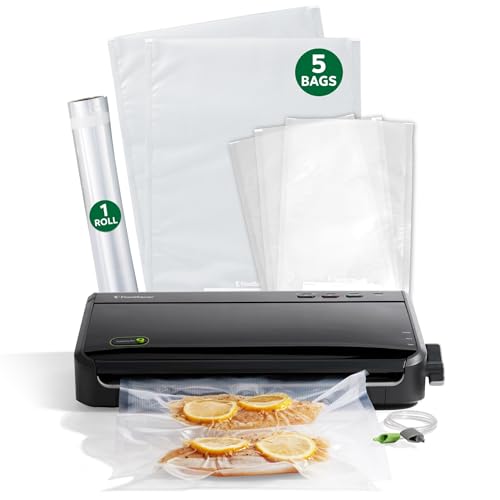
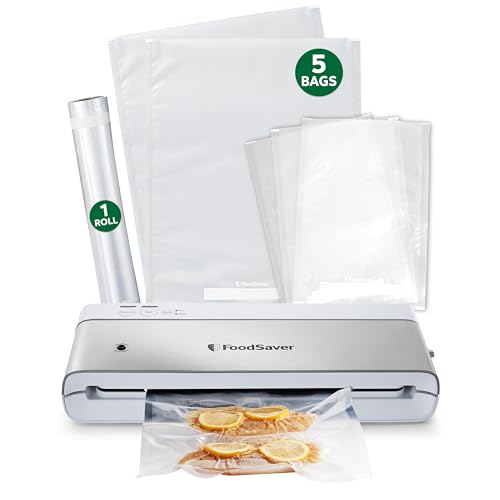
- FoodSaver FM2100 Vacuum Sealer Machine — Best Overall in the Tier. The complete classic feature set — roll storage, cutter, hose, moist mode — inside the accessible tier.
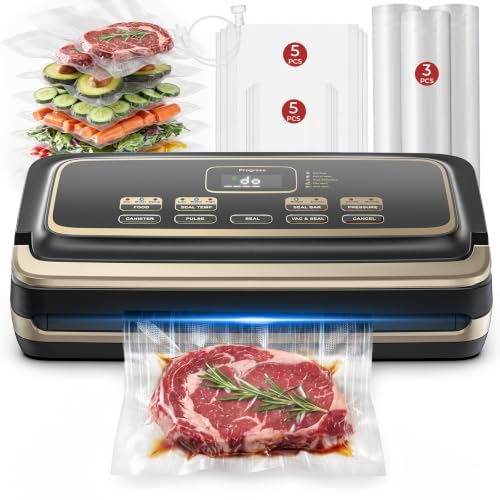
- UPRUBE Vacuum Sealer 95kPa — Best Specifications in the Tier. A 95kPa stated vacuum, fast stated draw, pulse mode and a timer — flagship paper specs in this bracket.
- VACLER Vacuum Sealer Machine — Best Bundle in the Tier. Twenty bags and a hose in the box, with a dedicated wet mode among its smart modes.
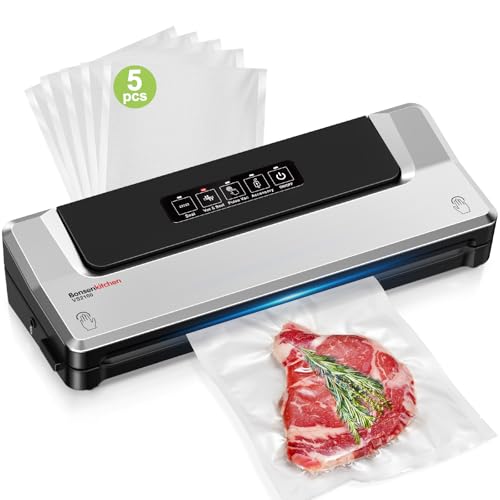
- Bonsenkitchen Vacuum Sealer Machine — Best Simple Value. The straightforward compact: multiple modes, standard bags, minimal ceremony.
- FoodSaver Mini Handheld Vacuum Sealer — Best Handheld in the Tier. Cordless with a charging dock and a marinate setting — the small-job champion of the bracket.
- Chef Preserve Compact Vacuum Sealer — Best Consumable Value. Thirty reusable bags — the pick that nearly abolishes the running cost of sealing.
Read the full guide ↓ for badges, strengths and trade-offs, a side-by-side comparison table, a full buying guide and step-by-step technique sections.
The best vacuum sealers under 200 dollars occupy the most competitive ground in the category, and that competition is the shopper’s friend. This is the tier where manufacturers must include the features that used to be premium — pulse modes, moist cycles, roll storage, cutters, accessory hoses — because the rival across the shelf includes them. It is also the tier where the differences that remain are instructive: not whether a machine seals, since everything here seals competently, but how it handles wet food, how fast and repeatably it works through a session, what it includes in the box, and what its bags will cost you over the years you own it.
This guide is organised around those durable differences rather than around prices, for a principled reason: a price is the least stable fact about a product. Models drift in and out of any fixed band with seasons and sales, and a guide that ranked by a captured price would be lying to you within the month. So the under $200 figure in the keyword is used here the way honest shoppers use it — as the tier label that defines the field — while each pick is justified on documented, lasting traits: the FM2100’s complete classic feature set, the UPRUBE’s published 95kPa specification and timer, the VACLER’s twenty-bag bundle and wet mode, and the handhelds’ consumable economics. Confirm the live price at the link before you commit; that is what the links are for.
One more framing note before the picks: in this tier, the machine’s purchase price is often the smaller half of ownership cost. Bags and rolls are the subscription every sealer charges, and the models below were weighed on that arithmetic too — standard-bag compatibility and reusable systems score heavily here, because a cheap machine that eats expensive proprietary film is not cheap for long. Readers comparing the wider field should also see how this tier’s leaders stack up on pure capability in our guide to Best Vacuum Sealers Performance.
Key Takeaways
- The under $200 tier is the category’s sweet spot: pulse modes, moist cycles, roll storage and hoses all appear here.
- Prices drift, so this guide ranks documented features and bundles — confirm the live price at the Amazon link before buying.
- The strongest published specification in this tier’s pool is the UPRUBE’s 95kPa with a 12L/min stated draw and a digital timer.
- Included consumables are real money: the VACLER’s twenty bags and hose, and the Chef Preserve’s thirty reusable bags, change the first-year arithmetic.
- Bag economics dominate long-term cost — standard textured bags and reusable systems keep the tier’s promise; proprietary lock-in breaks it.
- Technique closes most of the gap between this tier and premium machines: dry channels, headroom and double seals are free, forever, for everyone.
In this guide
Quick Picks
| Pick | Badge | Format | Standout trait | Link |
|---|---|---|---|---|
| FoodSaver FM2100 Vacuum Sealer Machine | Best Overall in the Tier | Countertop external | Roll storage and cutter; accessory hose included; dry and moist | Check on Amazon |
| UPRUBE Vacuum Sealer 95kPa | Best Specifications in the Tier | Countertop external | 95kPa stated vacuum; 12L/min stated draw; digital timer | Check on Amazon |
| VACLER Vacuum Sealer Machine | Best Bundle in the Tier | Compact external | 6-in-1 smart modes including wet; 20 bags and hose included | Check on Amazon |
| Bonsenkitchen Vacuum Sealer Machine | Best Simple Value | Compact external | Multiple meal-prep modes; standard external system | Check on Amazon |
| FoodSaver Mini Handheld Vacuum Sealer | Best Handheld in the Tier | Cordless handheld | Cordless, charging dock; marinate setting | Check on Amazon |
| Chef Preserve Compact Vacuum Sealer | Best Consumable Value | Handheld, reusable bags | 30 reusable bags included; portable handheld | Check on Amazon |
How These Picks Were Chosen
We treated the keyword’s band as a field definition and then ranked within it on evidence. Each model in the verified pool was assessed on its documented feature set — modes, stated specifications where published, storage and cutter design, included bags, rolls and hoses — and on its ownership profile: the availability and type of its consumables, the depth of its brand ecosystem, and the fit between its format and the workloads this tier typically serves. No price is printed for any pick, because a printed price would be a claim this guide cannot keep true; the tier framing comes from the keyword itself and from each model’s market positioning in the accessible bracket.
That method produces a list with a deliberate shape. The top of the ranking is occupied by the machines that import the most premium behaviour into the tier — a complete benchmark design, a high-specification challenger, a bundle-rich mode machine — because shoppers with a firm ceiling deserve to know how far the ceiling stretches. The lower half serves the tier’s other honest purposes: simplicity, handheld convenience, and consumable systems that reduce the ongoing cost to nearly nothing. Each pick is badged for its purpose so no reader mistakes a simplicity pick for a specification pick.
A final methodological honesty: tier membership can shift as prices move, and a model that sits inside the band today may sit outside it in a sale’s aftermath — or a model above the band may dip into it. The rankings here are therefore written to survive price movement: they argue from features and ownership, and they instruct you, at every link, to check the latest price on Amazon. If a pick has drifted above your ceiling when you shop, the guide’s logic still tells you which remaining pick serves your job best.
The 6 Best Vacuum Sealers Under 200 Dollars Worth Shortlisting

FoodSaver FM2100 Vacuum Sealer Machine
Badge: Best Overall in the Tier
Strengths
- Nothing important is missing: roll storage, cutter, one-touch sealing, dry and moist modes
- Accessory port and hose included rather than sold as the inevitable extra
- The deepest consumables ecosystem in the category keeps bag costs competitive forever
Trade-offs
- An established design — no digital timer or novelty automation
- No vacuum-pressure figure is published in the listing
- Full-size footprint, unlike the compacts in this tier
| Spec | Detail |
|---|---|
| Operation | One-touch sealing |
| Storage | Roll storage with cutter |
| Modes | Dry and moist food |
| Accessory | Port and hose included |
| Included | Starter bags and roll |
| Positioning | Sous vide cooking and storage |
The FM2100 is what the top of this tier looks like when a manufacturer competes on completeness. Read its documented feature set slowly: one-touch sealing; roll storage with a built-in cutter, so bags are sized at the machine rather than at a drawer of pre-cuts; distinct dry and moist food handling, which is the wet-seal insurance most budget machines historically skipped; an accessory port with the hose actually included, opening canister and jar work from day one; and starter bags and a roll in the box. In a tier defined by a ceiling, the absence of omissions is the headline — there is no second purchase required to make this machine whole.
The ownership arithmetic reinforces the choice. FoodSaver’s consumables are the category’s most widely stocked, in every width and format, at competitive prices in ordinary supermarkets as well as online — which means the per-bag cost of running this machine stays at the sane end of the market for its entire life. When community discussions tally long-term satisfaction in this tier, this combination — complete features, bottomless bag supply, established design — is the profile that recurs, a pattern our roundup of Best Vacuum Sealers Reddit traces in detail. A machine’s second and fifth years are where tier shoppers are won or lost, and they are decided by exactly these unglamorous logistics.
The compromises are real but bounded. The design is established rather than novel: no digital timer, no automatic bag detection, and the listing publishes no vacuum-pressure figure for the specification-minded. Cooks whose priority is the strongest published numbers should read the UPRUBE review next. But as the complete, no-asterisk answer to what this tier can contain — the machine a careful shopper can buy once and equip fully — the FM2100 sets the standard the rest of this list is measured against, and most readers with a firm ceiling should start, and likely finish, here.
Best for: buyers who want one complete machine with no follow-up purchases / Not suited for: specification hunters who need a published vacuum figure

UPRUBE Vacuum Sealer 95kPa
Badge: Best Specifications in the Tier
Strengths
- 95kPa stated vacuum and 12L/min stated draw are the strongest published figures in this pool
- Pulse mode included — the wet-food control budget tiers used to reserve for flagships
- Digital timer plus roll storage, cutter and a 10 ft roll included
Trade-offs
- Newer brand names carry shorter track records than the benchmark marques
- 135W motor rating is modest on paper
- Nine-in-one labelling inflates the count with minor functions
| Spec | Detail |
|---|---|
| Stated vacuum | 95kPa |
| Stated draw speed | 12L/min |
| Motor power | 135W |
| Modes | Dry / moist / pulse, 9-in-1 functions |
| Display | Digital timer |
| Included | 10 ft bag roll, cutter and bag storage |
The UPRUBE is the evidence that this tier’s centre of gravity has moved. Its published specification — a stated 95kPa vacuum and a stated draw of 12 litres per minute — would not embarrass machines sold as flagships, and it arrives accompanied by the control features specification shoppers actually use: pulse mode for wet and delicate bags, dry and moist cycles, a digital timer for repeatable seals, roll storage with an easy-tear cutter, and a 10 ft roll in the box. For the buyer whose method is to compare documented numbers and buy the strongest set the ceiling allows, this is the tier’s natural summit, and this guide will not pretend otherwise.
The features translate into the two experiences tier shoppers report valuing most: pace and repeatability. A fast draw shortens every cycle, which matters on portioning day; a timer standardises every seal, which matters in month six when a batch of freezer bags is audited by reality. Pulse mode, meanwhile, is the difference between a machine that handles a marinated bag and a machine that merely attempts one — and in this tier, its inclusion signals that the old compromise, power or control but not both at this level, no longer holds. Cooks building a freezer-to-bath pipeline will find its batch virtues match the workflow described in Best Vacuum Sealers Sous Vide.
The honest cautions are about provenance, not performance. The brand’s track record is shorter than the benchmark marques’, so the long-tail questions — gasket availability in year four, seal-bar consistency across thousands of cycles — carry more uncertainty than the FM2100’s. The 135W motor rating is also modest on paper despite the strong stated vacuum. Neither caution erases the value case; they define its shape. This is the tier’s specification champion, bought with eyes open about the difference between a strong first year, which its design credibly promises, and a proven fifth, which only time certifies.
Best for: specification-driven buyers stretching a firm ceiling to its limit / Not suited for: buyers who rank a long brand track record above published numbers

VACLER Vacuum Sealer Machine
Badge: Best Bundle in the Tier
Strengths
- Twenty bags and a vacuum hose included — the bundle defers your first consumable purchase for months
- Dedicated wet mode among 6-in-1 smart modes, aimed at the tier’s classic failure
- Compact automatic design with cutter suits smaller kitchens
Trade-offs
- No vacuum-pressure figure is published in the listing
- Smart-mode vocabulary takes a few practice bags to learn
- Compact stamina is household-scale
| Spec | Detail |
|---|---|
| Modes | 6-in-1 smart modes: rice, wet, dry and more |
| Design | Automatic compact with bag cutter |
| Included | 20 bags and vacuum hose |
Tier shoppers learn to read the “included” line of a listing as part of the price, because it is: a machine that arrives with a token handful of bags presents its second bill within the fortnight. The VACLER’s bundle is the tier’s most generous among countertop machines — twenty bags and a vacuum hose — which means the first months of ownership run on included consumables, and the hose unlocks canister and container work that rival listings monetise as an accessory. Counted honestly, that bundle is a meaningful slice of the machine’s value, and in a guide organised by a budget ceiling it deserves to be weighed as such.
The machine behind the bundle is sensibly aimed. Its 6-in-1 smart modes include a dedicated wet mode alongside dry and rice settings — an explicit cycle for the moist foods whose seals are this tier’s classic failure point — in a compact automatic body with a built-in cutter. Automatic operation lowers the technique threshold for new owners, and the compact footprint suits the smaller kitchens where budget-tier machines disproportionately live. For households whose sealing skews moist, the specialist comparison in Best Wet Food Vacuum Sealers shows how this mode set stacks against the wider wet-food field.
The limitations mirror its class: no published vacuum figure, so numbers-first shoppers should look upward in this list; a smart-mode vocabulary that takes a few sacrificial bags to map onto your regular foods; and compact session stamina. What the VACLER offers the ceiling-conscious buyer is the tier’s best ratio of readiness to outlay — a machine that arrives equipped, handles the wet case by design, and asks for nothing further until its generous starter supply finally runs down.
Best for: budget shoppers who want maximum readiness out of the box / Not suited for: specification-first buyers needing a published vacuum figure
Bonsenkitchen Vacuum Sealer Machine
Badge: Best Simple Value
Strengths
- Simple multiple modes matched to meal-prep reality — nothing to misconfigure
- Standard external system keeps bags and rolls cheap and universally available
- Compact silver design stores anywhere and cleans easily
Trade-offs
- Only five bags included — the tier’s smallest starter supply
- No published vacuum figure, no stated pulse mode or timer
- Basic feature set will not stretch to marathon bulk work
| Spec | Detail |
|---|---|
| Design | Compact, silver |
| System | External vacuum system |
| Modes | Multiple modes for meal prep |
| Included | 5 vacuum bags |
| Positioning | Kitchen food storage and sous-vide |
There is a species of value that has nothing to do with feature counts: the machine so straightforward that every seal it makes is made with correct settings, by an owner who never had to learn anything. The Bonsenkitchen is this tier’s representative of that species. Multiple modes cover the meal-prep jobs that dominate home sealing; the external system consumes standard textured bags and rolls from any maker, keeping consumable costs at the market’s floor; and the compact silver body stores in a drawer and wipes clean in seconds. Its listing positions it for storage and sous-vide and claims freshness multiplied over ordinary storage — the category’s core promise, delivered without theatre.
The arithmetic deserves a fair hearing. A simple machine in this tier leaves more of the ceiling unspent, and the difference buys a great deal of quality film — the input that most determines real-world results once a baseline of competence is reached. Experienced owners make this point often: bag quality and technique move outcomes more than the gap between adequate machines. For the meal-prep household sealing a dozen cooperative bags a week, the Bonsenkitchen’s adequacy is not a compromise position; it is the correct engineering answer to the actual workload, at a position in the tier that respects the ceiling twice over.
The costs of simplicity are stated plainly. Five included bags is a demonstration rather than a supply — order a roll with the machine. No vacuum figure is published and no pulse mode or timer is stated, so wet-food artistry and batch discipline must come from technique rather than controls. And ambitions grow: the household that discovers bulk buying will eventually promote this machine to second duty. Within its brief, though, it is the tier’s honest simplicity pick — the one a friend with your budget and your actual habits would be well advised to buy.
Best for: meal preppers who value simplicity and low running costs / Not suited for: wet-food specialists or marathon portioners
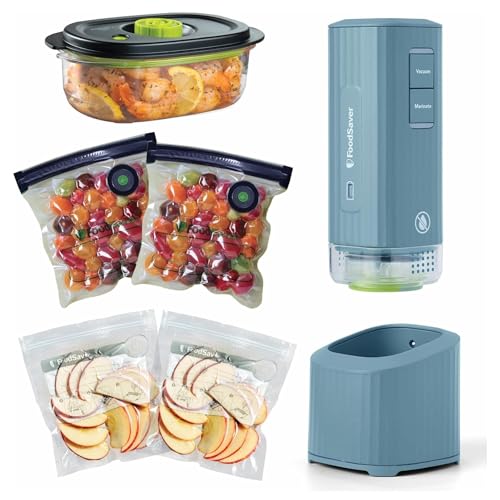
FoodSaver Mini Handheld Vacuum Sealer
Badge: Best Handheld in the Tier
Strengths
- Cordless with its own charging dock — zero setup for the small jobs that dominate real kitchens
- Marinate setting adds a genuine cooking function no countertop pick here matches at this size
- FoodSaver ecosystem backing in a handheld format
Trade-offs
- Handheld draw is shallower than any countertop machine in the tier
- Works in its compatible bag system rather than cut-to-length rolls
- Battery stewardship joins the chore list
| Spec | Detail |
|---|---|
| Format | Handheld, cordless |
| Base | Charging dock included |
| Special mode | Marinate setting |
| Colour | Blue |
| Positioning | Freezer, storage, sous vide and meal prep support |
A budget ceiling buys the most value when it is spent on the sealing you actually do, and for a large class of households the honest answer is small and constant: the resealed cheese, the half bag of coffee, the deli meat, the berries. The FoodSaver Mini is the tier’s handheld champion for that reality. It is cordless, it lives on its charging dock so it is always ready and always findable, and it deploys in the seconds that decide whether a small job gets sealed or gets left to spoil in a folded-over bag. In cost-per-sealed-item terms across a year of daily use, that readiness is a formidable value argument.
Its marinate setting distinguishes it from every other handheld in the bracket: a rapid vacuum cycle that hurries marinade into food, converting the device from storage tool to cooking tool. For small kitchens — dorms, caravans, studio flats, the second sealer in a serious household — that dual citizenship is exactly how a device earns its drawer. The listing positions it across freezer, storage, sous vide support and meal prep, which should be read at portion scale: it supports those routines in its compatible bags, ably, without pretending to a countertop machine’s session stamina or draw depth.
The tier shopper should weigh the format’s standing caveats: a shallower draw than the countertop picks, a defined bag ecosystem instead of rolls, and a battery to keep charged — mitigated, in fairness, by the dock that gives the unit a home. None of these is a defect at this position in the market; they are the known terms of handheld ownership. For the household whose sealing is small, frequent and space-poor, the Mini converts a modest slice of the ceiling into the highest-frequency sealing in this entire list.
Best for: small kitchens and daily small resealing within a tight budget / Not suited for: bulk sessions or shoppers wanting roll-based bags

Chef Preserve Compact Vacuum Sealer
Badge: Best Consumable Value
Strengths
- Thirty reusable bags included — the tier’s richest consumable bundle by a wide margin
- Reusable system drives the marginal cost of each reseal toward zero
- Portable handheld format suits the smallest kitchens and tightest budgets
Trade-offs
- Closed bag system: fixed sizes, no cut-to-length rolls
- Handheld draw cannot match countertop depth for long freezer archives
- Reusable bags need washing and thorough drying to stay hygienic
| Spec | Detail |
|---|---|
| Format | Handheld, portable |
| Included | 30 reusable vacuum bags |
| System | Reusable valve bags |
| Positioning | Meal saving and everyday storage |
Every other pick in this tier charges rent in bags; the Chef Preserve is the one that tries to abolish the rent. It is a portable handheld supplied with thirty reusable vacuum bags — a washable, resealable system in which the hundredth seal costs the same as the first: nothing further. For a budget shopper, that is not a footnote but a thesis, because the arithmetic of this tier is dominated over any realistic ownership span by consumables. A household sealing daily can spend a machine’s price again on single-use film surprisingly quickly; the Chef Preserve household spends it once and then stops thinking about it, which also changes behaviour — sealing becomes the default for every opened ingredient, because there is no per-bag penalty for doing it.
The maker describes the unit as a powerful handheld, and at portion scale that is the right calibration: firm evacuation of ingredient-sized bags for the rhythm of meal saving — the opened cheese, the sliced meats, the prepped vegetables, the coffee. Its natural constituency is the budget-pressed and space-pressed alike: students, small flats, caravan kitchens, and the second-station role in larger households where a countertop machine handles sessions. The thirty-bag supply is sized to that life generously; most households will rotate a fraction of the set while the rest wait clean in a drawer.
The structural caveats are the reusable system’s own. Fixed bag sizes cannot swallow the oversized or awkward item a roll would accommodate; bags ask for washing and complete drying, with valves kept clean, or seals will quietly suffer; and handheld depth is not the tool for the multi-month freezer archive, which remains countertop work. Accept those terms and this is the tier’s most radical value proposition — the pick for the shopper who has done the consumable maths and refuses to keep paying it. It is also, not coincidentally, the pick that appears in discussions collected under Best Views Top 10 Vacuum Sealers, where running-cost arguments draw a crowd.
Best for: daily resealers who want near-zero ongoing bag costs / Not suited for: bulk freezers or anyone needing custom-sized bags
Comparison Table
| Pick | Badge | Format | Key trait | Link |
|---|---|---|---|---|
| FoodSaver FM2100 | Best Overall in the Tier | Countertop external | Most complete feature set in the tier | Check on Amazon |
| UPRUBE 95kPa | Best Specifications in the Tier | Countertop external | Strongest published specifications in the tier | Check on Amazon |
| VACLER | Best Bundle in the Tier | Compact external | Richest included bundle among the countertop picks | Check on Amazon |
| Bonsenkitchen | Best Simple Value | Compact external | Simplest ownership in the tier | Check on Amazon |
| FoodSaver Mini | Best Handheld in the Tier | Cordless handheld | Only cordless pick; unique marinate function | Check on Amazon |
| Chef Preserve | Best Consumable Value | Handheld, reusable bags | Lowest ongoing consumable cost in the tier | Check on Amazon |
The tier divides by strategy. The FM2100 spends the ceiling on completeness — every classic feature, the deepest ecosystem. The UPRUBE spends it on specification — the strongest published numbers and the controls to use them. The VACLER spends it on readiness — modes for wet food and a bundle that defers further spending. The Bonsenkitchen declines to spend it all, answering with simplicity and the cheapest standard-bag running costs. The handhelds change the subject entirely: the Mini buys frequency and a marinating trick, the Chef Preserve buys freedom from consumable costs. All six strategies are legitimate; the table exists so you can pick yours deliberately rather than by accident or by advertisement.
How to Choose Among Vacuum Sealers Under 200 Dollars
Let the ceiling define the field, then ignore price
Once your band is set, the healthiest method is to compare within it on everything except price — because within a band, price differences are small, unstable and the least informative fact available. Compare modes against your foods, formats against your kitchen, bundles against your first year, and ecosystems against your patience. Then, at the very end, use the links to check the latest price on Amazon and confirm your winner still sits inside the band on the day you buy. That order of operations — value first, price as a final gate — is how this tier rewards its shoppers.
Count the first year, not the first box
Add the machine to a realistic year of its consumables before judging cheapness. A model with twenty included bags and a hose starts months ahead of a model with five bags and an accessory sold separately; a reusable system may lap the field entirely for daily sealers. Standard-bag compatibility is the countertop shopper’s protection: it keeps every future roll competitively priced because every maker’s film fits your machine.
Spend on the feature your food demands
In this tier you can afford one or two genuine specialisms, not all of them. Wet-food households should buy the mode — pulse or a dedicated wet cycle. Batch households should buy repeatability — a timer, roll storage, a cutter. Small households should buy presence — vertical storage or a docked handheld. The mistake is buying a specialism your food never uses while the one it needs sits in another row of the table.
How to Make a Budget-Tier Sealer Perform Like a Premium One
Win the seal channel war. Premium machines forgive sloppy presentation; this tier rewards tidy presentation with identical results. Fold bag openings back while filling, keep food and liquid out of the seal zone, leave deep headroom, and smooth wrinkles flat before closing the lid. These habits cost nothing and close most of the real-world gap between tiers.
Double-seal anything precious. A second seal line beyond the first takes seconds and a centimetre of film, and it converts the tier’s adequate seals into archive-grade ones for freezer storage and water baths. Make it the default for anything you would be sorry to lose.
Pre-freeze the wet jobs. Where your machine lacks pulse or a wet mode, a brief pre-freeze — until surfaces firm and juices still — lets an ordinary cycle seal a wet bag cleanly. It is the budget tier’s universal wet-food adapter, and it works on every machine in this list.
Maintain like an owner, not a renter. Wipe channels and gaskets after wet work, store lids unlatched where the maker allows so gaskets rest uncompressed, and keep drip areas clean. Tier machines cared for this way routinely outlast neglected flagships — longevity is the deepest form of value in this bracket.
Problem: seals fail on moist food → what to do. Dry the seal zone, add headroom, pre-freeze briefly, and double-seal. If your machine has a moist or wet mode, this is its moment; if it has pulse, walk the draw up by hand.
Problem: bags lose vacuum over weeks → what to do. Inspect for pinholes from bones or sharp edges, check the seal for channels, and review bag quality — in this tier, upgrading film often outperforms upgrading machines as a first experiment.
Problem: the machine struggles to start a draw → what to do. Confirm the bag end sits flat and fully in the channel, the lid is latched as designed, and the gasket is clean and seated. Presentation faults, not pump faults, explain most failures at every price.
The Total-Cost View: What This Tier Really Charges
A budget ceiling naturally focuses attention on the machine, but the tier’s economics live in the consumables. Consider the two archetypal owners. The bulk shopper seals forty large bags a month: their annual film bill dwarfs any plausible saving on the machine, so their value pick is a standard-bag countertop model with roll storage, bought once and fed cheaply forever. The daily resealer seals three small bags a day: their film bill in single-use bags is similarly dominant, which is why the reusable handheld system can be the tier’s true bargain despite its modest draw. The shopper who prices only the box will choose wrongly for both owners; the shopper who prices their own year will not.
There is a corollary about included bundles: they are best understood as prepaid consumables, and their value depends entirely on whether you would have bought those items anyway. Twenty bags and a hose are worth real money to a household that seals weekly and uses canisters; they are worth little to a handheld household. Read bundles against your own rhythm, not against the listing’s enthusiasm, and the tier’s true prices begin to sort themselves honestly.
Why This Tier Keeps Getting Better
The accessible bracket is where category competition bites hardest, and its recent history is a steady migration of features downward: pulse modes, moist cycles, timers and drip management were flagship vocabulary not long ago and are now documented in this pool’s listings. That migration is structural, not charitable — pumps and seal bars have commoditised, and differentiation moved to controls and bundles. The practical consequence for shoppers is that patience is rewarded and brand nostalgia is expensive: the correct method in this tier is to compare documented feature sets coldly, as this guide has, rather than to assume a famous badge or a higher shelf position guarantees a better machine.
It also means the tier’s honest answer to “how much performance am I giving up?” is: less than the marketing of premium machines implies, provided your technique is sound. The remaining genuine gaps are stamina under marathon use, the deepest published specifications, and the longest track records — real things, worth money to the households that need them, and unnecessary expense to the households that do not. Knowing which household yours is constitutes most of shopping wisdom in this bracket.
A shopper from a decade ago, shown this tier’s current listings, would assume a misprint: modes, timers and bundles that once defined the premium shelf now compete for the accessible buyer, because the underlying pumps and seal bars became commodities and the contest moved to controls, inclusion and ecosystem. That is worth remembering when a salesperson — or an advertisement — suggests that a firm ceiling means a compromised kitchen. In this category, at this moment, it mostly means a well-shopped one, provided the comparison is made on documented features rather than on badges and nostalgia.
Common Buying Mistakes
Ranking by a captured price. Prices in this tier move weekly. A guide — or a shopper — anchored to one day’s figure will misjudge the field; rank features, then check the live price at purchase.
Ignoring the consumable subscription. The machine is the smaller bill for frequent sealers. Price a year of your bags before deciding which machine is cheap.
Paying for a specialism your food never uses. A timer you never set and a mode you never open are not value. Buy the feature your actual menu demands.
Skipping technique because the machine was affordable. Dry channels, headroom and double seals are free and close most of the gap to premium results. The tier punishes sloppy presentation and rewards tidy work at every price.
Assuming the band is a quality verdict. This tier contains the category’s best-selling, longest-serving designs. A ceiling is a budget decision, not a confession — shop it without apology and with full rigour.
Forgetting that bundles expire. An included starter supply feels like abundance and runs out on schedule. Note what your machine consumes, price the refills before the cupboard is bare, and let that refill price — not the launch bundle — confirm that your pick still respects the ceiling in month six.
Final Recommendation
For most shoppers with a firm ceiling, the FM2100 is the first choice in this tier: the complete classic feature set, the accessory hose included, the starter supply in the box and the deepest bag ecosystem in the category — a machine with no second purchase hiding behind it. Check on Amazon
Choose the UPRUBE instead if you shop by documented specification; its stated vacuum, draw speed, pulse mode and timer are the strongest paper package the tier offers here. Check on Amazon Choose the VACLER if readiness matters most — twenty bags, a hose and a wet mode make it the best-equipped arrival in the bracket. Check on Amazon
The Bonsenkitchen serves the simplicity-minded, the FoodSaver Mini the small-and-constant sealer, and the Chef Preserve the shopper who has done the consumable maths and opted out of it. Verify the live price at the link, confirm your pick sits inside your band today, and buy the strategy that matches your kitchen — every strategy on this list is a sound one.
Frequently Asked Questions
Are vacuum sealers in this tier good enough for serious use?
Yes — this bracket contains complete countertop machines with moist modes, pulse control, roll storage and accessory support, plus the category’s most established designs. The genuine gaps versus premium machines are marathon stamina, the very deepest specifications and novelty automation, none of which most households use.
Why does this guide not print the prices?
Because a printed price becomes false quickly and would mislead more than it informs. The keyword’s band defines the tier; each pick is ranked on lasting, documented traits; and every link lets you check the latest price on Amazon at the moment you shop, which is the only price that matters.
What if a pick has drifted above the band when I shop?
Prices move in both directions, and models dip into the band as often as they drift out of it. If your first choice sits above your ceiling on the day, apply the guide’s logic to the remaining picks: completeness, specification, bundle, simplicity or consumable strategy — the ranking rationale still holds.
Which pick has the lowest running costs?
For daily small sealing, the Chef Preserve’s reusable bags drive consumable cost toward zero. Among countertop machines, standard-bag models fed with competitively priced rolls — the FM2100 above all, given its ecosystem — keep the per-bag cost at the market floor.
Is a handheld worth buying in this tier instead of a countertop machine?
If your sealing is small and frequent and your space is minimal, yes — the FoodSaver Mini and Chef Preserve serve that life better than a countertop machine stored out of reach. If you portion in bulk or freeze for months, the countertop picks remain the correct spend.
Do I give up wet-food ability at this level?
No. The tier includes pulse control, moist cycles and a dedicated wet mode among these picks, and the technique fallbacks — pre-freezing, headroom, double seals — work on every machine listed. Wet food is a solved problem in this bracket when the cook participates.
How long will a machine in this tier last?
Longevity in this bracket is governed more by care and ecosystem than by purchase price: machines kept clean, stored with gaskets uncompressed, and fed with readily available bags routinely serve for years. Established designs carry the additional advantage that their consumables and support never depend on a single small seller remaining in business.