Disclosure: topratedkitchenware.com is reader-supported. When you buy through links on our site, we may earn an affiliate commission from Amazon and other retailers, at no extra cost to you.
Where to buy
Sous vide makes unique demands of a sealer: the bag must give up its air completely so food cooks evenly instead of floating, and the seal must hold for hours submerged in warm water without softening or creeping open midway through a long, unattended cook. The six machines below are the verified picks that serve the best vacuum sealers sous vide workload — from a 2-in-1 FoodSaver flagship with automatic bag detection to a handheld honestly scoped to portion prep. Every pick is linked so you can check the latest price on Amazon.
- FoodSaver V4400 2-in-1 Vacuum Sealer Machine — Best Overall for Sous Vide. Automatic bag detection and a starter kit — the low-friction flagship for bath-bound bags.
- ROUUO Vacuum Sealer 95kPa — Best for Juicy and Marinated Proteins. The strongest stated vacuum here, with pulse control and a drip tray for wet bath prep.
- UPRUBE Vacuum Sealer 95kPa — Best for Batch Sous Vide Prep. Fast stated draw, a digital timer and pulse mode — built for portioning day.
- FoodSaver PowerVac Compact VS0150 — Best Compact for Sous Vide Kitchens. A genuine countertop sealer that stores vertically — bath capability without the footprint.
- VACLER Vacuum Sealer Machine — Best Mode Control on a Budget Footprint. A dedicated wet mode among its smart modes, with twenty bags and a hose included.
- Chef Preserve Compact Vacuum Sealer — Best for Prep and Small Portions. Thirty reusable bags for the portioning and resealing that surrounds bath cooking — with honest limits.
Read the full guide ↓ for badges, strengths and trade-offs, a side-by-side comparison table, a full buying guide and step-by-step technique sections.
Of all the jobs a home vacuum sealer does, sous vide is the one that grades it most strictly, and it is why the search for the best vacuum sealers sous vide cooks trust is really a search for two specific virtues. The first is a complete draw: any air left in the bag insulates patches of food from the water, makes the bag buoyant so it floats and cooks unevenly, and leaves room for the bag to billow as it warms. The second is seal integrity under immersion: a seal that looks perfect on the counter can soften, wrinkle open or admit water slowly across a long bath, and the failure announces itself only when you lift out a waterlogged bag hours later.
Those two virtues organise this entire guide. The top picks are countertop machines with the draw strength, modes and design details that produce bath-proof bags repeatedly: an automatic flagship that detects and seals bags with minimal fuss, two high-specification machines whose pulse modes give the cook exact control with juicy proteins, and compacts that keep the capability in smaller kitchens. The list closes with a handheld that is badged honestly — for portion prep and small work around a sous vide routine, not as a substitute for heat-sealed bath bags on long cooks. Readers who want the raw specification comparison behind these judgements will find it in our guide to Best Vacuum Sealers Performance, and those whose sealing extends well beyond the bath should cross-check the community view in Best Vacuum Sealers Reddit.
Technique, as always, shares the credit with machinery. The how-to section below covers the bath-specific craft — double seals, liquid management, displacement checks, labelling — that separates cooks who trust their bags from cooks who hover over the bath. Buy the machine for its draw and its seal; learn the technique to make both count.
A word about expectations for newcomers: the first session with any new machine produces a few imperfect bags, and sous vide magnifies imperfections that storage sealing would forgive. Budget a practice bag or two, test a seal in a sink of water before trusting it to a long cook, and read the failure patterns in the troubleshooting notes below as a checklist rather than a warning. The cooks who love this method are not the ones whose first bags were perfect; they are the ones who learned what their machine and their hands needed to do differently, once, and then stopped thinking about bags altogether.
Key Takeaways
- For sous vide, the two governing virtues are a complete draw (no buoyant, insulating air) and a seal that survives hours of warm immersion.
- Pulse mode is the sous vide cook’s precision tool: it evacuates juicy bags without pulling marinade into the seal.
- Double-sealing bath bags is cheap insurance and standard practice among experienced water-bath cooks.
- Automatic bag detection and one-touch cycles reduce handling errors across the repetitive portioning that precedes a cook.
- Handheld valve bags suit prep and short work, but long immersion cooks belong in heat-sealed bags from a countertop machine.
- Bag quality matters as much as the machine: use bags rated for cooking, with enough length to keep food well clear of the seal and enough width that portions lie flat in a single, even layer for uniform cooking.
In this guide
Quick Picks
| Pick | Badge | Format | Standout trait | Link |
|---|---|---|---|---|
| FoodSaver V4400 2-in-1 Vacuum Sealer Machine | Best Overall for Sous Vide | Countertop 2-in-1 external | Automatic bag detection; 2-in-1 design; starter kit included | Check on Amazon |
| ROUUO Vacuum Sealer 95kPa | Best for Juicy and Marinated Proteins | Countertop external | 95kPa stated vacuum; pulse mode; removable drip tray | Check on Amazon |
| UPRUBE Vacuum Sealer 95kPa | Best for Batch Sous Vide Prep | Countertop external | 95kPa, 12L/min stated draw; digital timer; pulse mode | Check on Amazon |
| FoodSaver PowerVac Compact VS0150 | Best Compact for Sous Vide Kitchens | Compact external, vertical storage | Vertical storage; documented for dry and wet food | Check on Amazon |
| VACLER Vacuum Sealer Machine | Best Mode Control on a Budget Footprint | Compact external | 6-in-1 smart modes including wet; 20 bags and hose included | Check on Amazon |
| Chef Preserve Compact Vacuum Sealer | Best for Prep and Small Portions | Handheld, reusable bags | Handheld format; 30 reusable bags included | Check on Amazon |
How These Picks Were Chosen
Selection began from the demands of the bath itself and worked backwards to the machines. We listed what sous vide actually requires — deep and complete evacuation, seals that tolerate heat and time, control with liquids since so many bath-bound foods are marinated or naturally juicy, and repeatable cycles for the batch portioning that precedes freezing and cooking — then matched the verified pool against those requirements using only documented features: stated vacuum figures where published, pulse and moist modes, drip management, automatic detection, timers, included bags and rolls.
This is a research-led guide and says so plainly: no hands-on testing is claimed, no ratings are printed, and specifications are reported only where the manufacturer’s listing states them. Where a listing is silent on a figure, the pick is justified on its documented design and the gap is flagged in the review. That discipline matters doubly for sous vide, where confident nonsense about bath performance is easy to write and expensive to discover at hour three of a cook.
Format honesty completes the method. A handheld appears on this list because sous vide households do a great deal of small sealing around the main event — portioning, seasoning prep, resealing ingredients — but its review states clearly where its competence ends. The countertop machines carry the bath itself, and they are ranked by how completely their documented feature sets serve immersion cooking rather than by general-purpose versatility.
The 6 Best Vacuum Sealers Sous Vide Cooks Can Rely On
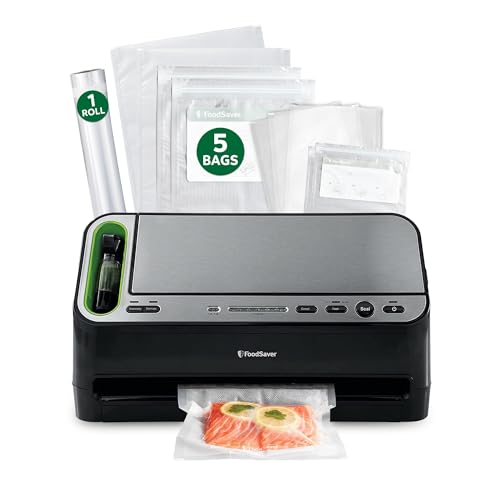
FoodSaver V4400 2-in-1 Vacuum Sealer Machine
Badge: Best Overall for Sous Vide
Strengths
- Automatic bag detection starts the cycle when the bag is inserted — fewer handling errors across long portioning runs
- 2-in-1 design broadens the machine beyond bath bags to everyday storage sealing
- Starter kit included, so bath-ready bags are available from the first day
Trade-offs
- No vacuum-pressure figure is published in the listing
- Flagship format takes full countertop space
- Automation suits standard bags; very wet bags still reward a pulse-equipped machine’s manual control
| Spec | Detail |
|---|---|
| Design | 2-in-1 countertop |
| Operation | Automatic bag detection |
| Included | Starter kit |
The V4400 takes the top badge because sous vide, in a real household, is a volume activity disguised as a precision one. Before any single bag meets the bath, there is the portioning session: a tray of chicken breasts, a run of salmon fillets, vegetables for the week, each bag needing the same complete draw and the same trustworthy seal. Automatic bag detection — the machine senses the inserted bag and runs its cycle — strips the fiddling out of that repetition. Fewer manual steps per bag means fewer bags sealed with a wrinkle, a shifted edge or a half-hearted latch, and across thirty bags that error-rate difference is the performance story.
The 2-in-1 design widens the machine’s usefulness beyond bath duty, which matters because a sealer bought only for sous vide must still justify its counter residency on the six days a week the bath is not running. As a household’s main external sealer it covers the storage workhorse jobs with the same bags and rolls ecosystem that makes FoodSaver consumables the easiest in the category to source, in the widths bath cooking prefers. The included starter kit means the first cooks need no separate consumable order — a small thing that forum threads suggest prevents a surprising amount of day-one improvisation with the wrong bags.
The honest qualifications: the listing publishes no vacuum-pressure figure, so specification-first shoppers cannot rank its draw on paper against the 95kPa machines below, and fully automatic cycles give the cook less manual authority over very wet bags than a pulse mode does. For marinated bath-bound proteins, technique compensates — pat dry, leave headroom, freeze briefly — and the technique section below covers it. But for the mainstream sous vide household whose priority is trustworthy bags produced with minimal fuss, cook after cook, this is the most complete answer in the pool.
Best for: regular sous vide households wanting low-friction, repeatable bath bags / Not suited for: specification shoppers who require a published vacuum figure

ROUUO Vacuum Sealer 95kPa
Badge: Best for Juicy and Marinated Proteins
Strengths
- 95kPa stated vacuum is the strongest published figure in this pool — complete evacuation for buoyant-free bags
- Pulse mode stops the draw before marinade reaches the seal line
- Removable drip tray manages the liquid that wet prep inevitably produces
Trade-offs
- Largest footprint among these picks
- Power and features exceed what dry-goods-only cooks need
- Included rolls and bags are a start, not a season’s supply
| Spec | Detail |
|---|---|
| Stated vacuum | 95kPa |
| Motor power | 230W |
| Modes | Dry / moist, pulse |
| Storage | Built-in bag storage and cutter |
| Included | 3 bag rolls and 10 bags |
| Tray | Removable drip tray |
Ask experienced bath cooks which bags fail and a pattern emerges: the failures are disproportionately the juicy ones — the marinated short ribs, the chicken in its seasoned juices, the fish that wept into the seal as the pump pulled. The ROUUO is badged for exactly that frontier. Its stated 95kPa vacuum, the strongest published figure in this pool, delivers the complete evacuation that keeps bags submerged and cooking evenly; and its pulse mode gives the cook manual command of the draw, so the cycle can be halted at the precise moment liquid begins travelling toward the seal, and the bag closed with a dry, trustworthy channel.
The removable drip tray is the supporting actor that makes the headline features usable. Wet prep produces liquid despite every precaution; a tray that catches it and lifts out for washing keeps the seal channel clean across a session, instead of letting residue accumulate bag after bag until seals begin failing for reasons the cook cannot see. Built-in roll storage and a cutter serve the same session logic — bath portioning is batch work, and a self-contained workstation keeps the rhythm. With three rolls and ten bags included, the machine arrives ready for a serious first session. Cooks whose sealing life is dominated by moist food in general, not just bath prep, will find a kindred analysis in our guide to Best Wet Food Vacuum Sealers.
Reservations are about proportion, not capability. This is the largest commitment of counter space on the list, and a household whose sous vide repertoire is lean proteins and vegetables may never tax its wet-food armoury. It also works, as all external machines do, with textured bags — factor quality bath-rated rolls into the running budget. But for the cook whose bath menu runs to marinades, brines and juicy cuts, this is the machine whose documented design answers the actual failure modes of immersion cooking, and that earns it the specialist badge over more automated rivals.
Best for: sous vide cooks working with marinades, brines and juicy proteins / Not suited for: small kitchens or dry-goods-only sealers

UPRUBE Vacuum Sealer 95kPa
Badge: Best for Batch Sous Vide Prep
Strengths
- Stated 12L/min draw is the fastest published here — portioning sessions move quickly
- Digital timer makes seal cycles repeatable from the first bag to the last
- Pulse mode included for the wet and delicate bags in every batch
Trade-offs
- 135W motor rating is lower on paper than the ROUUO’s
- No drip tray is stated, so wet sessions need tidier technique
- Nine-in-one labelling pads the feature list with minor modes
| Spec | Detail |
|---|---|
| Stated vacuum | 95kPa |
| Stated draw speed | 12L/min |
| Motor power | 135W |
| Modes | Dry / moist / pulse, 9-in-1 functions |
| Display | Digital timer |
| Included | 10 ft bag roll, cutter and bag storage |
Sous vide households tend to cook in a rhythm of big prep and small cooks: one substantial portioning session fills the freezer with bath-ready bags, and the weeks that follow draw them out a few at a time. The UPRUBE is the pick engineered for the big day. Its stated draw speed of 12 litres per minute is the fastest published in this pool, which means each bag collapses and seals quickly; multiplied across a whole session, that pace is the difference between a task finished before lunch and a chore that colonises the afternoon. The stated 95kPa vacuum matches the strongest figure here, so speed is not visibly purchased at the cost of evacuation depth.
The digital timer is the feature batch cooks will appreciate most by the third session. Sous vide rewards consistency — bags sealed to the same standard behave the same in the bath — and a visible, repeatable seal time turns an artisanal guess into a process. Settle on the timing that produces your cleanest seals, and every subsequent bag inherits it. Pulse mode covers the batch’s inevitable difficult members, the marinated and delicate bags, and the cutter plus built-in storage for the included 10 ft roll keeps the workstation compact. Grill cooks who portion for both bath and freezer may recognise this workflow from discussions around Best Vacuum Sealers Steven Raichlen, where batch prep for cooking days is a standing topic.
Two honest notes. The motor’s 135W rating is lower on paper than the ROUUO’s 230W, which may matter to cooks running the longest, densest sessions; and no drip tray is stated, so wet work demands tidier presentation — patting dry, headroom, pulsing early — rather than hardware forgiveness. Neither undermines the batch case. For the household whose sous vide life is organised around portioning day, the combination of pace, repeatability and pulse control is the most purpose-fit package in this list.
Best for: batch portioners who freeze bath-ready bags in quantity / Not suited for: very wet sessions where a drip tray would earn its keep
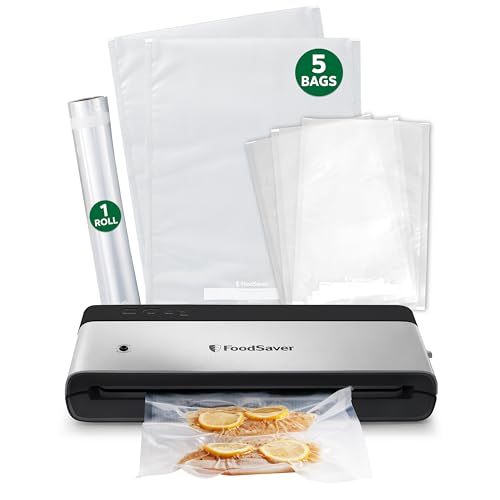
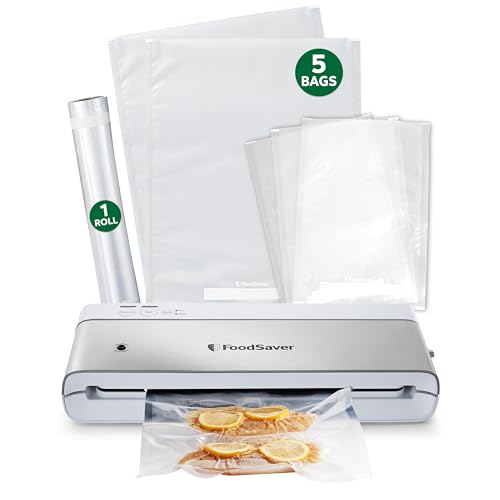
FoodSaver PowerVac Compact VS0150
Badge: Best Compact for Sous Vide Kitchens
Strengths
- Vertical storage lets a real heat-sealing machine live in a small kitchen
- Documented for both dry and wet food — covers marinated bath prep at household scale
- FoodSaver ecosystem keeps bath-rated bags and rolls easy to source
Trade-offs
- No vacuum-pressure figure is published in the listing
- Compact stamina suits household sessions rather than marathon portioning days
- No pulse mode is stated for the wettest bags
| Spec | Detail |
|---|---|
| Design | Compact, vertical storage |
| Finish | Stainless steel and black |
| Food types | Dry and wet food |
| Model | VS0150 PowerVac Compact |
Small kitchens face a sous vide dilemma: the cooking method itself is compact — a tub and a stick — but its sealing partner traditionally is not. The PowerVac Compact resolves the dilemma by storing vertically, standing in the footprint of a paperback while remaining a genuine countertop heat sealer, fully capable of producing the sealed, evacuated bags the bath requires. That presence matters more than it might seem: the household that must excavate a machine from a cupboard seals less readily, preps less willingly, and drifts toward zip bags and the water-displacement workaround for jobs a real sealer would do better.
Capability is documented where it counts for bath work: the listing covers both dry and wet food, which spans the realistic sous vide menu from seasoned vegetables to marinated proteins at household scale. The FoodSaver ecosystem is a practical bath advantage — cooking-rated bags and rolls in useful widths are stocked everywhere, so a cook mid-session never improvises with unsuitable film. Stainless and black finishing suits the machine’s intended life on display rather than in storage, which is precisely where a compact sealer delivers its value.
The limits are the familiar compact ones, stated plainly. No vacuum figure is published, so its draw cannot be ranked on paper against the 95kPa pair; no pulse mode is stated, so the wettest bags need technique — a brief pre-freeze firms surfaces and stills liquids admirably; and session stamina is household-scale. None of this disqualifies it from serious bath work; it defines the scale at which it works best. For the apartment cook running regular but modest sous vide sessions, it is the most sensible route to real sealed bags in this list.
Best for: small kitchens running regular household-scale sous vide / Not suited for: marathon portioners or buyers needing a published vacuum figure

VACLER Vacuum Sealer Machine
Badge: Best Mode Control on a Budget Footprint
Strengths
- Dedicated wet mode among 6-in-1 smart modes — cycle choice for juicy bath-bound food
- Twenty bags and a vacuum hose included; the hose extends it to canisters for prep work
- Compact automatic design with built-in cutter keeps sessions tidy
Trade-offs
- No vacuum-pressure figure is published in the listing
- Smart-mode naming requires a short learning curve
- Compact class: household sessions, not bulk marathons
| Spec | Detail |
|---|---|
| Modes | 6-in-1 smart modes: rice, wet, dry and more |
| Design | Automatic compact with bag cutter |
| Included | 20 bags and vacuum hose |
Mode control is a modest-sounding virtue until a bag of soy-marinated chicken is on the counter. A single automatic cycle treats that bag exactly like a bag of rice, pulling until liquid reaches the seal; a machine with a dedicated wet mode at least acknowledges the physics and adjusts its cycle accordingly. The VACLER’s 6-in-1 smart modes — rice, wet and dry among them — put that acknowledgement on the control panel, which is why it earns the mode-control badge for sous vide cooks whose menus run juicy. Choosing the wet cycle for bath-bound marinades, then double-sealing as the technique section advises, is a belt-and-braces approach assembled from documented features rather than hope.
The supporting package suits the prep-heavy reality of bath cooking. Twenty included bags is a genuine starter stock for a first month of cooks, and the vacuum hose extends the machine sideways into canisters — useful for the seasoned, rested and marinated stages that surround the bath itself, and for the dry goods a cooking household seals between sessions. The compact automatic format with a built-in cutter keeps the whole operation in a small footprint, and automatic cycling lowers the technique threshold for cooks new to sealing for immersion.
Qualifications mirror the other compacts: no published vacuum figure, a mode vocabulary that takes a few practice bags to map onto your regular foods, and household-scale session stamina. Cooks working to a firm budget ceiling will find this machine’s tier discussed in Best Vacuum Sealers Under $200, and it competes there on the strength of its bundle as much as its modes. For the juicier end of the sous vide repertoire in a compact footprint, it is the most thoughtfully equipped option here.
Best for: sous vide cooks with juicy menus in compact kitchens / Not suited for: buyers who want a published maximum vacuum specification

Chef Preserve Compact Vacuum Sealer
Badge: Best for Prep and Small Portions
Strengths
- Thirty reusable bags make portion prep and ingredient resealing effectively cost-free per use
- Handheld format deploys in seconds for the small jobs scattered through a cooking day
- Reusable bags suit seasoned portions waiting their turn for the countertop sealer and bath
Trade-offs
- Valve-style reusable bags are not the right tool for long immersion cooks — heat-sealed bags are
- Handheld draw is shallower than countertop machines
- Fixed bag sizes cannot swallow large or awkward cuts
| Spec | Detail |
|---|---|
| Format | Handheld, portable |
| Included | 30 reusable vacuum bags |
| System | Reusable valve bags |
| Positioning | Meal saving and everyday storage |
Honesty first, because this pick’s badge depends on it: the Chef Preserve is not the machine to seal bags for a long immersion cook. Valve-style reusable bags and a handheld draw serve a different station in the sous vide kitchen — the wide territory of prep that surrounds the bath. Portions are seasoned and held; ingredients are opened, partly used and resealed; vegetables are prepped for blanching; the cook’s own lunch gets sealed between sessions. That work is constant, small and ill-served by dragging out a countertop machine, and it is exactly the work this handheld, with thirty reusable bags, was built to absorb.
Within that station, its virtues are real. Reusable bags erase the per-seal cost that makes cooks hesitate over small jobs, so sealing becomes the default rather than the exception; the handheld lives in a drawer and works in seconds; and the maker’s description of it as a powerful handheld sets the right expectation for portion-scale bags. A household running a countertop sealer for the bath and this handheld for everything around it has, in effect, staffed its kitchen properly — each tool at the work it does best, neither resented for the other’s limitations. The most-researched roundups in Best Views Top 10 Vacuum Sealers show the same two-format pattern recurring in serious kitchens.
The boundaries deserve the same clarity as the virtues. For the bath itself — and especially for long cooks — heat-sealed bags from the countertop picks above are the correct tool: their seals are melted shut, their evacuation is deeper, and their behaviour over hours of warm immersion is the known quantity. Nor do fixed reusable sizes accommodate the large joint or the whole fish. Buy the Chef Preserve as the sous vide kitchen’s indispensable support act and it will earn its drawer every day; ask it to headline the bath and you will have misread this review, which has tried to be unmistakable on the point.
Best for: prep, portioning and daily resealing around a sous vide routine / Not suited for: sealing bags for long immersion cooks
Comparison Table
| Pick | Badge | Format | Key trait | Link |
|---|---|---|---|---|
| FoodSaver V4400 | Best Overall for Sous Vide | Countertop 2-in-1 external | Most automated sealing cycle in this list | Check on Amazon |
| ROUUO 95kPa | Best for Juicy and Marinated Proteins | Countertop external | Deepest stated draw plus the best wet-prep hardware here | Check on Amazon |
| UPRUBE 95kPa | Best for Batch Sous Vide Prep | Countertop external | Fastest stated draw; timer supports identical repeat seals | Check on Amazon |
| FoodSaver PowerVac | Best Compact for Sous Vide Kitchens | Compact external, vertical storage | Smallest footprint among the countertop picks | Check on Amazon |
| VACLER | Best Mode Control on a Budget Footprint | Compact external | Dedicated wet mode; richest compact bundle here | Check on Amazon |
| Chef Preserve | Best for Prep and Small Portions | Handheld, reusable bags | Reusable system; scoped to prep, not long immersion | Check on Amazon |
The table separates the bath machines from the support act. The V4400 leads on automation and all-round completeness; the ROUUO and UPRUBE share the strongest stated vacuum, divided between wet-prep hardware and batch pace; the PowerVac and VACLER carry genuine bath capability into compact footprints, one by presence and ecosystem, the other by its wet mode and bundle. The Chef Preserve’s row is deliberately different in kind — a prep tool whose inclusion is justified by how much sealing a sous vide kitchen does away from the bath, and whose limits this guide states rather than hides, because a bath cook who knows exactly which tool seals the bath and which seals the prep will never lose a long cook to a category error.
How to Choose a Vacuum Sealer for Sous Vide Cooking
Prioritise the draw — and the seal behind it
A sous vide bag fails in two ways: air left inside, and a seal that gives up underwater. When comparing machines, weight a strong stated vacuum where published, pulse or moist control for wet foods, and a seal cycle you can repeat identically — a timer or automatic detection both serve repeatability. Then plan to double-seal bath bags regardless of machine; the second seal line is the cheapest reliability in the entire method, and experienced cooks treat it as part of the recipe rather than an optional extra.
Decide how wet your cooking is
Lean proteins and vegetables forgive almost any competent machine. Marinades, brines and juicy cuts do not: they need pulse control or a wet mode, headroom discipline, and ideally drip management, because liquid in the seal is the bath’s classic failure. Audit your actual menu honestly — the cook who marinades weekly should buy for the wet case even if it costs footprint, while the lean-and-clean cook can happily choose compact convenience.
Respect the bag as part of the system
Use bags rated for cooking, in widths that suit your proteins, with length to spare: cramped bags put food against the seal and invite failure. Rolls let you size bags to a whole fish or a single fillet with equal ease, which is why roll-storage machines dominate serious bath kitchens. Handheld valve bags have their place in prep, but the bath itself deserves heat-sealed film — treat that as a rule of the method, not a preference of this guide.
Plan for your session pattern
Finally, match the machine to how your cooking actually unfolds. The cook who portions monthly in bulk needs session stamina, roll storage and a cutter; the cook who seals two bags twice a week needs presence and simplicity more than pace. Bath cooking amplifies the mismatch penalty — a machine that makes portioning day miserable will quietly end the freezer-to-bath pipeline that makes sous vide worthwhile — so be honest about your rhythm before weighting any single specification. The best machine is the one whose strengths align with your busiest sealing day, not your lightest one.
How to Seal for the Water Bath: A Sous Vide Technique Guide
Portion with the bath in mind. Seal proteins in single-layer portions of even thickness — even thickness is even cooking. Season before sealing if the recipe allows; the vacuum marries seasoning to surface during the wait. Keep the bag’s opening folded back while filling so the seal zone stays pristine.
Manage liquid deliberately. Pat proteins dry. For marinated items, either drain and reserve the marinade for a sauce, or pulse the draw and stop the moment liquid moves. A short pre-freeze — just until the surface firms — tames the juiciest bags and is standard practice among careful cooks.
Seal, then seal again. Run the seal, then run a second seal line a few millimetres beyond the first. Check each bag: no wrinkles crossing the seal, no moisture in the channel, food clear of the seal zone. Label with contents, weight and date — a bag in a bath or freezer without a label is a future mystery.
Check buoyancy before the cook. A properly evacuated bag should sit low in the water, not bob. If a bag floats at the start, air remains: re-open, re-seal, or weigh the bag down with a rack or clips as a workaround for that cook and fix the sealing before the next one.
Problem: the bag floats during the cook → what to do. Air was left in, or the food is producing gas. Clip or rack the bag under for this cook; next time, draw longer, pulse out pockets around irregular shapes, and arrange food flatter in the bag.
Problem: water inside the bag after the cook → what to do. The seal admitted water — usually a wrinkle, moisture in the channel or a single tired seal line. Review seal presentation, adopt the double seal, and dry the channel religiously before sealing.
Problem: the seal opens as the bath warms → what to do. Suspect a contaminated or incomplete seal. Reseal a fresh bag with a dry channel and double line; if failures repeat across bags, clean the seal area of the machine and check gaskets for residue or damage.
Freezer-to-Bath: The Workflow That Changes Everything
The deepest convenience in sous vide is not the cooking but the pipeline: portion, season, seal and freeze in one session, then move bags directly from freezer to bath on busy nights, adding extra bath time for the frozen start. That pipeline places specific demands on a sealer — session stamina, repeatable seals, freezer-worthy bags — and it is why the batch-oriented picks score so highly in this guide. A bag sealed for the pipeline must survive weeks frozen and hours bathed, the two hardest services in domestic sealing, back to back.
Building the pipeline also changes shopping: proteins bought in quantity at their best price, portioned to your household’s actual servings, become a standing inventory of ready cooks. The sealer that enables it pays for its counter space in reclaimed weeknight effort. Cooks adopting the pipeline should label with unusual care — contents, portion, date and bath plan — because a freezer of identical frosted bags is a library without a catalogue.
The pipeline also explains why this guide refuses to treat the handheld pick as a bath machine and yet insists on including it. A pipeline kitchen seals constantly at the edges — the herbs for tonight’s bag, the opened stock, the leftover aromatics — and friction at the edges is what makes pipelines collapse into takeaway menus. The support tool that keeps the small sealing effortless protects the big system’s rhythm, which is a contribution to sous vide success that never appears in a specification table.
What Not to Seal for the Bath
Vacuum enthusiasm should stop at a few known borders. Very delicate items — soft berries, fragile fish — can be crushed by a full draw and are better pulsed gently or sealed with minimal evacuation. High-fat, strongly flavoured additions such as raw garlic in oil carry food-safety considerations in low-oxygen environments that cooks should research from authoritative sources rather than improvising. Alcohol in marinades can vaporise oddly under vacuum and is often better added after the bath. None of this indicts the method; it defines the technique layer that separates a careful bath cook from a bag-stuffer, and it is why this guide treats the how-to section as seriously as the picks.
A final border is time and temperature discipline itself: the sealer’s job ends at a sound bag, but safe baths depend on the cook’s time-and-temperature practice. Vacuum sealing supports food safety by limiting oxidation and cross-contamination; it does not sterilise, and chilled storage of sealed cooked food still demands prompt refrigeration and sensible holding times. The machine is one link in the chain, and this guide’s respect for the whole chain is deliberate.
Common Buying Mistakes
Sealing wet bags on a dry automatic cycle. The marinade will reach the seal. Pulse it, drain it or pre-freeze it — but do not simply press the button and hope.
Skipping the double seal. A second seal line costs seconds. A failed seal costs the cook, the protein and your trust in the method.
Using bags that are too small. Food pressed against the seal zone contaminates it and cramps the draw. Cut bags generously; film is cheaper than failure.
Floating bags ignored. A floating bag is cooking unevenly by definition. Treat buoyancy as a defect report on your sealing, not a quirk of the food.
Asking handheld valve bags to do long immersions. They are prep tools. The bath deserves heat-sealed bags, and the distinction protects both your dinner and the handheld’s reputation.
Final Recommendation
For most sous vide households, the FoodSaver V4400 is the first choice: automatic bag detection that keeps long portioning sessions error-light, a 2-in-1 design that earns its counter space daily, and a starter kit that has you cooking immediately. Check on Amazon
Choose the ROUUO if your menu runs marinated and juicy — its stated vacuum, pulse control and drip tray answer the bath’s real failure modes. Check on Amazon Choose the UPRUBE if your rhythm is freezer-to-bath batch prep, where its stated draw speed and timer discipline shine across long sessions. Check on Amazon
Compact kitchens should take the PowerVac for presence or the VACLER for its wet mode and bundle, and every serious bath kitchen will find daily use for the Chef Preserve in the prep work around the cooks. Match the machine to the menu and the rhythm, and the bags will simply stop being something you think about — which is the entire point.
Frequently Asked Questions
Can I use any vacuum sealer for sous vide?
Most countertop external sealers can produce bath-suitable bags, provided the bags are rated for cooking and the seals are sound. The machines differ in how easily they handle wet foods, how repeatable their seals are, and how completely they evacuate — which is why sous vide shoppers should weight pulse control, modes and seal consistency over general versatility.
Why does my bag float in the bath?
Residual air. Either the draw was incomplete, the food was arranged with air pockets, or air entered through a marginal seal. Arrange food flat, draw fully, pulse out pockets around irregular shapes, and double-seal. A rack or clips can submerge a floater for one cook, but fix the sealing before the next.
Should I double-seal sous vide bags?
Yes — it is the cheapest reliability upgrade in the method. A second seal line just beyond the first guards against a single wrinkle or speck of moisture compromising hours of cooking, and experienced bath cooks treat it as routine.
How do I seal marinated meat without ruining the seal?
Drain or reserve the marinade, pat the surface, leave generous headroom, and use pulse mode to stop the draw before liquid travels. Alternatively, freeze the portion briefly until the surface firms and liquids still, then seal on a normal cycle.
Are handheld sealers suitable for sous vide?
For prep — portioning, seasoning holds, resealing ingredients — yes. For the immersion itself, especially long cooks, heat-sealed bags from a countertop machine are the right tool; valve-style reusable bags are not designed for hours submerged in warm water.
What bags should I use in the bath?
Bags or rolls rated by their maker for cooking, in a width that suits the food, cut long enough to keep food well clear of the seal. Textured bags are required for external machines. When in doubt about a bag’s cooking rating, do not immerse it.
Can I cook from frozen in a sealed bag?
Yes — the freezer-to-bath pipeline is one of the method’s great conveniences. Add extra time to the bath for the frozen start, following your recipe’s guidance, and rely on the labelling you did at sealing time to know what is in the bag and how long it should cook.