Disclosure: topratedkitchenware.com is reader-supported. When you buy through links on our site, we may earn an affiliate commission from Amazon and other retailers, at no extra cost to you.
Where to buy
Readers arrive at the best vacuum sealers steven raichlen search from the grilling world, where a sealer does specific heavy work: pulling marinades into thick cuts, portioning whole briskets and rib racks bought in bulk, freezing smoked meat without freezer burn, and keeping rubs and spices dry. The six verified picks below are matched to that barbecue workload — no product here is endorsed by anyone’s television show, and this guide claims no such thing; it simply ranks the machines by the jobs a grilling kitchen actually gives them. Every pick is linked so you can check the latest price on Amazon.
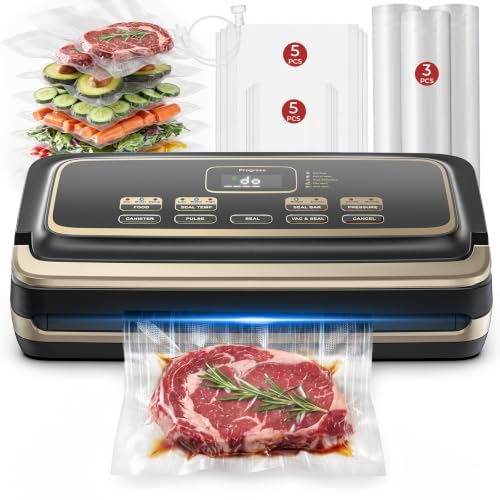
- ROUUO Vacuum Sealer 95kPa — Best Overall for Grill Cooks. Pulse control, a drip tray and the strongest stated vacuum — the marinade machine.
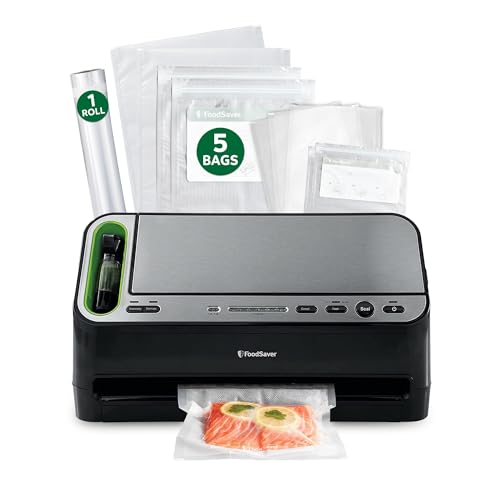
- FoodSaver V4400 2-in-1 Vacuum Sealer Machine — Best for Bulk Meat Days. Automatic bag detection keeps big portioning sessions moving with messy hands.
- UPRUBE Vacuum Sealer 95kPa — Best for Prep-Day Pace. Fast stated draw, pulse mode and a digital timer for cooks who prep in quantity.
- FoodSaver PowerVac Compact VS0150 — Best Compact at the Cook Station. Stores vertically beside the grill tools; handles dry and wet food.
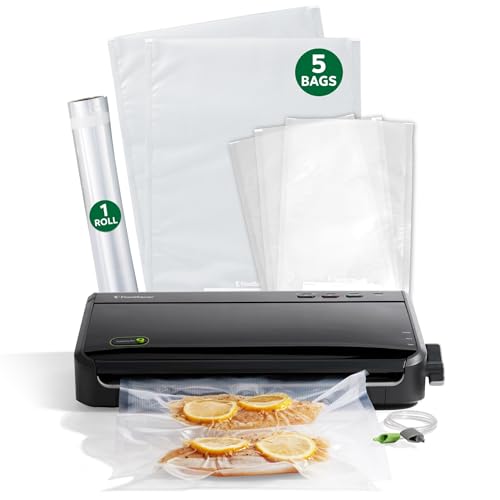
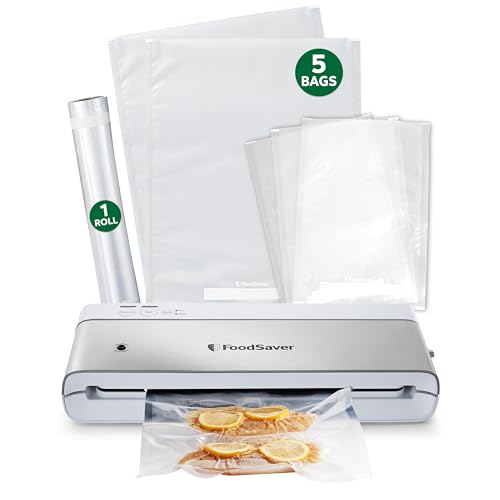
- FoodSaver Compact Vacuum Sealer — Best for Marinade-and-Store Routines. Bags and a roll in the box, positioned for airtight storage — the weeknight griller’s sealer.
- Bonsenkitchen Vacuum Sealer Machine — Best Simple Pick for Weekend Grillers. Multiple modes, standard bags, no ceremony — the straightforward weekend machine.
Read the full guide ↓ for badges, strengths and trade-offs, a side-by-side comparison table, a full buying guide and step-by-step technique sections.
Steven Raichlen has spent a career teaching live-fire cooking — the books, the shows, the endless variations on smoke, marinade and rub — and his audience shares a distinctive kitchen profile. They buy meat the way grillers buy meat: whole packer briskets, multi-rack packs of ribs, pork shoulders by the pair, chicken in family quantities when it is cheap. They marinate ambitiously, because marinating is half the Raichlen method. And they cook in batches that produce glorious surpluses — pulled pork for a crowd, brisket flat sliced for the week, smoked salmon for the freezer. The best vacuum sealers steven raichlen readers need are therefore not generic sealers with a grilling paragraph stapled on; they are machines judged against the barbecue workflow itself.
That workflow makes four demands. First, marinade control: vacuum hurries marinade into meat, but marinade is liquid, and liquid is the natural enemy of the heat seal — so pulse control or a wet mode is not a luxury here, it is the main event. Second, bulk stamina: a grill cook’s sealing happens in sessions after a big shop or a big cook, and the machine must keep its seal quality from the first bag to the thirtieth. Third, size honesty: brisket flats and rib racks are long, so roll-based bags cut to length matter more than pre-cut convenience. Fourth, freezer integrity: smoked meat is an investment of hours, and a seal that creeps open in month two wastes fire as well as food.
The picks below are badged against those four demands, from a pulse-equipped powerhouse that treats marinades as its home ground to a simple compact for the weekend griller whose sealing is modest but real. Along the way, this guide covers the barbecue-specific technique — vacuum marinating without drowned seals, portioning cooked brisket, freezing smoked meat properly, and keeping the rub shelf dry — that turns any of these machines into a genuine member of the grilling team. Readers whose sealing extends to the water bath will find the natural companion in our guide to Best Vacuum Sealers Sous Vide, since so many grill cooks now finish or reheat with immersion cooking.
Key Takeaways
- For grilling kitchens, the sealer’s headline job is marinade management: pulse control or a wet mode is the feature that matters most.
- Vacuum dramatically speeds marinating, but the same draw pulls liquid toward the seal — headroom, patting dry and pulsing are the countermeasures.
- Bulk meat buying means session sealing: roll storage, cutters and repeatable cycles outrank novelty features.
- Smoked meat deserves double seals and quality bags; hours of fire should not be lost to a creeping seal in the freezer.
- Rolls beat pre-cut bags for barbecue geometry — brisket flats and rib racks need cut-to-length film.
- A sealer also guards the dry side of the grill station: rubs, spices, wood-adjacent supplies and leftover sauces all keep better sealed, portioned and protected from the humid air that quietly flattens a signature blend.
In this guide
Quick Picks
| Pick | Badge | Format | Standout trait | Link |
|---|---|---|---|---|
| ROUUO Vacuum Sealer 95kPa | Best Overall for Grill Cooks | Countertop external | 95kPa stated vacuum; pulse mode; removable drip tray | Check on Amazon |
| FoodSaver V4400 2-in-1 Vacuum Sealer Machine | Best for Bulk Meat Days | Countertop 2-in-1 external | Automatic bag detection; 2-in-1 design; starter kit | Check on Amazon |
| UPRUBE Vacuum Sealer 95kPa | Best for Prep-Day Pace | Countertop external | 95kPa; 12L/min stated draw; timer and pulse | Check on Amazon |
| FoodSaver PowerVac Compact VS0150 | Best Compact at the Cook Station | Compact external, vertical storage | Vertical storage; dry and wet food capability | Check on Amazon |
| FoodSaver Compact Vacuum Sealer | Best for Marinade-and-Store Routines | Compact external | Bags and roll included; airtight storage positioning | Check on Amazon |
| Bonsenkitchen Vacuum Sealer Machine | Best Simple Pick for Weekend Grillers | Compact external | Multiple modes; external system; 5 bags included | Check on Amazon |
How These Picks Were Chosen
The selection method was to write down the barbecue workflow first and shop second. We listed the sealing jobs a Raichlen-style kitchen actually performs — vacuum marinating, raw bulk portioning, cooked-meat freezing, rub and spice storage, leftover management after big cooks — and scored the verified pool against them using documented features only: stated vacuum figures where published, pulse and moist modes, drip trays, roll storage and cutters, automatic cycles for gloved or messy hands, included consumables and format.
Two honesty commitments govern this guide. It does not claim that Steven Raichlen endorses, uses or has reviewed any product here — the keyword reflects the audience’s route to the topic, not a celebrity recommendation, and inventing one would be exactly the kind of claim this site does not print. It also prints no prices and no ratings, because both change constantly; the links exist so you can check the latest price on Amazon when you shop. What remains is a defensible, evidence-based matching of machines to the grilling jobs their documented designs serve best.
Format balance follows the audience’s spread. Serious pit cooks portioning whole primals need the heavy countertop machines at the top of the list; weekend grillers sealing a few racks and a marinade need reliability without ceremony; and everyone benefits from the observation, developed in the topical sections, that a sealer’s second career — freezer organisation for a household that cooks big — is where it quietly earns its keep.
One further filter deserves naming: consumables geography. Barbecue sealing consumes wide rolls at a rate ordinary kitchens never approach, so a machine whose bags and rolls are stocked in ordinary supermarkets holds a practical advantage on the Sunday evening when the roll runs out mid-session. That is part of why established-ecosystem machines sit so high in this ranking — not brand sentiment, but the logistics of a working cook station, weighed exactly as a working cook would weigh them.
The 6 Best Vacuum Sealers Steven Raichlen Fans Will Actually Use

ROUUO Vacuum Sealer 95kPa
Badge: Best Overall for Grill Cooks
Strengths
- Pulse mode gives the cook manual command of the draw — the marinade feature that matters most
- Removable drip tray catches the liquid barbecue prep inevitably produces
- Strongest stated vacuum in the pool at 95kPa, with roll storage and cutter for long cuts
Trade-offs
- Largest footprint here — a commitment for a crowded cook station
- Power is surplus for the griller who seals twice a month
- Included rolls and bags start the habit; long cuts consume film quickly
| Spec | Detail |
|---|---|
| Stated vacuum | 95kPa |
| Motor power | 230W |
| Modes | Dry / moist, pulse |
| Storage | Built-in bag storage and cutter |
| Included | 3 bag rolls and 10 bags |
| Tray | Removable drip tray |
Every grilling kitchen that marinates — which is to say, every kitchen formed by the Raichlen method — eventually meets the same sealing disaster: a beautiful bag of chicken in jerk marinade, a confident automatic cycle, and liquid racing up the bag into the seal channel, leaving a closure that fails in the fridge overnight. The ROUUO is badged Best Overall for Grill Cooks because its documented design attacks that exact moment from three directions. Pulse mode lets you walk the draw forward in short bursts and stop the instant the marinade begins to travel. The removable drip tray catches whatever escapes and lifts out to be washed rather than seasoning the machine’s channel. And the stated 95kPa vacuum — the strongest published figure in this pool — delivers the tight evacuation that makes vacuum marinating worth doing in the first place, pressing liquid against every surface of the meat.
The supporting cast suits barbecue geometry and rhythm. Built-in roll storage with a cutter means bags cut to the length of a brisket flat or a rack of ribs, not pre-cut compromises; three rolls and ten bags in the box start the habit properly. For the cooked side of the workflow — portioning pulled pork, slicing and freezing brisket — the same draw strength and a dry, disciplined seal protect hours of smoke from freezer burn, and the machine’s session-friendly design holds its standard across the long post-cook portioning run when the cook is tired and the bags keep coming.
The caveats are about scale and space. This is the biggest footprint on the list, and a griller whose sealing amounts to a rack of ribs and a marinade each fortnight will find its power surplus to requirements — the compact picks below exist for that cook. External machines also mean textured bags only, and barbecue-length bags consume film generously, so rolls are a running cost to budget honestly. But for the kitchen where marinating is a method and bulk buying is a habit, no other pick here combines this control, this draw and this liquid management — the complete grilling specification.
Best for: grill cooks who marinate often and portion bulk meat in sessions / Not suited for: occasional grillers with limited counter space
FoodSaver V4400 2-in-1 Vacuum Sealer Machine
Badge: Best for Bulk Meat Days
Strengths
- Automatic bag detection starts cycles on insertion — invaluable with seasoned, messy hands mid-session
- 2-in-1 design covers the household’s everyday sealing beyond barbecue days
- FoodSaver ecosystem: rolls and bags in every width a brisket could ask for, everywhere
Trade-offs
- No vacuum-pressure figure is published in the listing
- Fully automatic cycle offers less manual control over very wet marinades than pulse machines
- Flagship footprint on the counter
| Spec | Detail |
|---|---|
| Design | 2-in-1 countertop |
| Operation | Automatic bag detection |
| Included | Starter kit |
Picture the actual moment of bulk sealing in a grilling household: the cryovac packs are open, the rub is out, your hands are seasoned and slick, and twenty portions need bagging before the meat warms. In that moment, the V4400’s automatic bag detection stops sounding like a convenience and starts sounding like the feature the session was designed around — slide the bag in, and the machine takes the cycle from there, minimising the buttons, latches and adjustments that messy hands make miserable. Across a long portioning run, that friction reduction is a genuine performance characteristic, and it is why this machine takes the bulk-day badge.
The 2-in-1 design and the FoodSaver ecosystem complete the case. A grilling household’s sealer also seals the household’s everything else — the cheese, the coffee, the week’s vegetables — and a machine that handles the daily work as fluently as the barbecue sessions justifies its flagship footprint. Rolls and bags for this brand are the category’s most available, in widths that accommodate long barbecue cuts, which matters when a session runs long on a Sunday evening and the nearest replacement roll is a supermarket trip rather than a delivery wait. The included starter kit means the machine works from the day it lands.
The trade-off to weigh is control at the wet end. A fully automatic cycle is a blessing with dry and merely seasoned meat, but the juiciest marinades reward the manual authority of a pulse mode, which this listing does not state; the countermeasures are technique — drain, pat, headroom, brief pre-freeze — all covered in the how-to section. The listing also publishes no vacuum figure, so numbers-first shoppers should compare the ROUUO and UPRUBE. For the bulk-buying grill household that wants sessions to flow, though, the V4400 is the most frictionless serious machine here. Its all-round strength is also why it anchors our broader ranking in Best Vacuum Sealers Performance.
Best for: bulk-buying households that portion whole primals and family packs / Not suited for: marinade-heavy cooks who want manual pulse control above all

UPRUBE Vacuum Sealer 95kPa
Badge: Best for Prep-Day Pace
Strengths
- Stated 12L/min draw — the fastest published here — keeps prep-day lines moving
- Digital timer standardises seals across a whole session of portions
- Pulse mode included, so marinades are manageable as well as dry rubs
Trade-offs
- 135W motor rating is modest on paper beside the ROUUO’s 230W
- No drip tray is stated for the messiest wet work
- Nine-in-one mode list includes minor functions few grillers will open
| Spec | Detail |
|---|---|
| Stated vacuum | 95kPa |
| Stated draw speed | 12L/min |
| Motor power | 135W |
| Modes | Dry / moist / pulse, 9-in-1 functions |
| Display | Digital timer |
| Included | 10 ft bag roll, cutter and bag storage |
Competition-style and catering-style grill cooks share a prep philosophy: everything portioned, seasoned and staged before fire is lit, so that cook day is execution rather than improvisation. The UPRUBE is built for that philosophy. Its stated 12 litres per minute draw is the fastest published in this pool, so bags collapse and seal in seconds; across the dozens of portions a serious prep day produces — ribs cut to serving size, chicken parts rubbed and staged, sausages batched — that pace compounds into real time returned. The stated 95kPa vacuum matches the pool’s strongest figure, so the speed does not come at the visible cost of evacuation depth.
The digital timer is the quiet professional feature. Prep-day discipline means the fiftieth bag sealed exactly like the first, and a visible timer turns seal quality from a mood into a setting. When a batch of portions is destined partly for the freezer and partly for a water-bath finish — an increasingly common pattern in serious barbecue, where smoked meats are reheated gently to order — that consistency is the difference between a system and a scramble. Pulse mode covers the marinade bags within the same session, and the cutter plus storage for the included 10 ft roll keeps the workstation self-contained at the side of the cutting board.
Balance: the 135W motor rating reads modestly beside the ROUUO’s 230W, and no drip tray is stated, so the wettest work demands tidier presentation from the cook. Neither point displaces it for its stated constituency. If your grilling runs on prep days and portion discipline — the mise en place school of barbecue that Raichlen’s own teaching, with its rubs made ahead and meats staged, exemplifies — this is the machine whose documented design speaks your language most fluently.
Best for: organised grill cooks who portion and stage in quantity / Not suited for: cooks wanting drip-tray forgiveness for very wet sessions
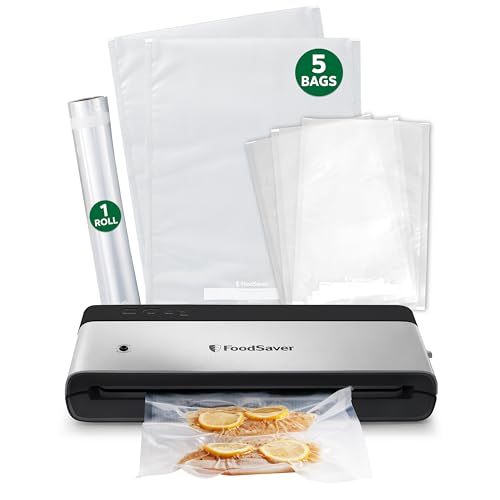
FoodSaver PowerVac Compact VS0150
Badge: Best Compact at the Cook Station
Strengths
- Vertical storage keeps a genuine sealer within reach of the cook station
- Documented for dry and wet food — rubs at one end, marinated cuts at the other
- FoodSaver bags and rolls are available everywhere, in barbecue-friendly widths
Trade-offs
- No vacuum-pressure figure is published in the listing
- Compact session stamina suits household cooks, not primal-breaking marathons
- No pulse mode is stated for the wettest marinades
| Spec | Detail |
|---|---|
| Design | Compact, vertical storage |
| Finish | Stainless steel and black |
| Food types | Dry and wet food |
| Model | VS0150 PowerVac Compact |
Not every grilling kitchen is a smokehouse with a prep room. For the apartment griller, the balcony cook, the household whose barbecue lives on a modest patio, the sealer must earn a small footprint — and the PowerVac’s vertical storage design is precisely that earning: a real countertop heat sealer that stands upright in a sliver of space, present at the cook station rather than exiled to a cupboard. Presence changes behaviour. The rack of ribs gets portioned because the machine is there; the leftover smoked chicken gets sealed tonight because sealing takes a minute, not an excavation.
Capability, within its scale, is properly documented: the listing covers both dry and wet food, which spans the grill station’s realistic range — rubs and dry-brined cuts at one end, marinated portions at the other. The FoodSaver consumables ecosystem is a genuine barbecue advantage, because wide rolls for long cuts are a supermarket item for this brand rather than a special order. Stainless and black finishing suits a machine meant to live visibly among the tools rather than hide from them.
The limits are scale limits, honestly stated. No vacuum figure is published; no pulse mode is stated, so heavy marinades need the drain-pat-pulse-by-technique routine described later; and session stamina is household-class. The cook who breaks down whole primals monthly should be reading the top of this list. But the far larger tribe — grillers whose sealing is weekly, moderate and space-constrained — will get more actual sealing done with this present, capable compact than with a powerhouse stored in the garage. Community threads make the same point from experience, as our roundup of Best Vacuum Sealers Reddit documents.
Best for: space-conscious grillers with weekly, moderate sealing / Not suited for: bulk primal portioners running marathon sessions
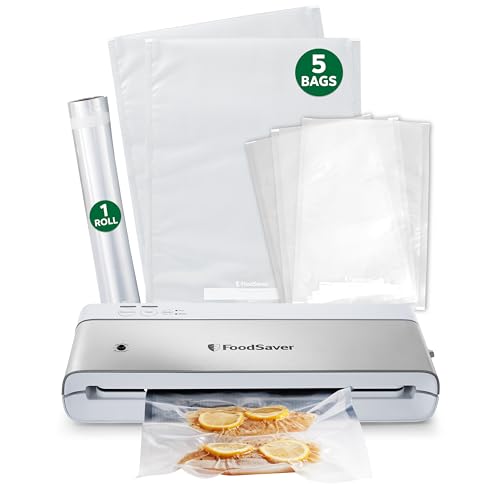
FoodSaver Compact Vacuum Sealer
Badge: Best for Marinade-and-Store Routines
Strengths
- Includes airtight bags and a roll — working from day one with no extra order
- Compact format suits the weeknight rhythm of marinate-today, grill-tomorrow
- Maker positions it for sous vide too, covering the grill-to-bath finishing route
Trade-offs
- No vacuum-pressure or speed figure is published in the listing
- Compact class means moderate sessions only
- Wet marinades need technique; no pulse mode is stated
| Spec | Detail |
|---|---|
| Design | Compact |
| Colour | White |
| Included | Airtight bags and roll |
| Positioning | Sous vide and airtight food storage |
The weeknight grilling routine has its own sealing signature: chicken thighs into a marinade bag on Tuesday, steaks sealed with a rub on Thursday, the weekend’s vegetables portioned as they are bought. Volumes are small; frequency is everything; and the machine that serves it must be ready instantly and put away invisibly. This FoodSaver Compact is badged for that routine. It arrives with airtight bags and a roll in the box — no accessory order standing between the machine and its first marinade — and its compact white design suits the smaller kitchens where weeknight grilling actually happens.
Its maker positions it for sous vide as well as airtight storage, which maps neatly onto a modern grilling pattern: proteins sealed and rested, some grilled directly, some finished or reheated in the bath, leftovers sealed again for the freezer. A compact machine that follows the food through that whole circuit, at household scale, covers more of a real griller’s week than its modest specification suggests. Marinade work at this scale is manageable with technique — the bags here are small, the liquid volumes modest, and the drain-and-pat discipline in the how-to section keeps seals dry without needing flagship hardware.
The qualifications are the compact class’s own: no published vacuum figure, session stamina sized for households rather than events, and no stated pulse mode for the wettest work. A cook whose barbecue ambitions grow toward bulk buying will outgrow it toward the top of this list, and should regard it as a first sealer rather than a final one. Judged on its own brief — frequent, small, marinade-centred sealing in a compact kitchen — it is complete, ready and honestly priced in effort, which is why it holds a place here rather than yielding to a second heavyweight.
Best for: weeknight grillers with marinate-and-store routines / Not suited for: bulk buyers or cooks wanting published maximum specifications
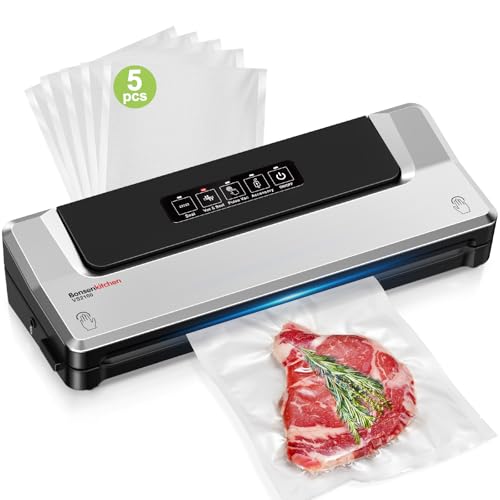
Bonsenkitchen Vacuum Sealer Machine
Badge: Best Simple Pick for Weekend Grillers
Strengths
- Simple multiple modes matched to ordinary prep without a learning curve
- Standard external system — textured bags and rolls from any maker
- Compact silver unit stores anywhere and wipes clean after messy sessions
Trade-offs
- Only five bags included — buy a roll with the machine
- No published vacuum figure and no stated pulse mode
- Basic feature set will not grow with expanding barbecue ambitions
| Spec | Detail |
|---|---|
| Design | Compact, silver |
| System | External vacuum system |
| Modes | Multiple modes for meal prep |
| Included | 5 vacuum bags |
| Positioning | Kitchen food storage and sous-vide |
The weekend griller’s sealing is honest, modest work: a couple of racks portioned, a pork shoulder divided for two cooks, burgers formed and frozen, the rub shelf kept dry. The Bonsenkitchen is the pick for that cook precisely because it refuses to overcomplicate the assignment. Multiple modes cover the standard jobs, the external system takes standard textured bags and rolls from any source, and the compact silver body stores in a drawer and wipes clean after the session — an underrated virtue when the session involved barbecue sauce.
Its listing positions it for kitchen food storage and sous-vide alongside meal prep, and claims freshness extended several times over ordinary storage, which is the category’s basic promise competently delivered. For the weekend workload, the performance questions are modest and this machine answers them: consistent seals on cooperative foods, sane cycle times, no proprietary consumable trap. There is a real argument — made often by experienced owners — that a simple machine fully understood seals better in practice than a complex one half-learned, because the operator’s settings are right every time. Shoppers weighing this tier of the market will find the framing in Best Vacuum Sealers Under $200 a useful companion, since simple compacts anchor that accessible bracket.
The caveats complete the honesty: five included bags is a sample, so order a roll alongside; no vacuum figure is published and no pulse mode is stated, which bounds the wet-marinade work to careful technique; and a growing barbecue practice — bulk buys, big cooks, freezer pipelines — will eventually promote this machine to backup duty. None of that diminishes it for the cook it describes. Weekend grilling is most of grilling, and a machine matched to it without pretension earns its badge the straightforward way.
Best for: weekend grillers with modest, regular sealing / Not suited for: bulk buyers or marinade specialists needing pulse control
Comparison Table
| Pick | Badge | Format | Key trait | Link |
|---|---|---|---|---|
| ROUUO 95kPa | Best Overall for Grill Cooks | Countertop external | Best wet-work hardware in this list | Check on Amazon |
| FoodSaver V4400 | Best for Bulk Meat Days | Countertop 2-in-1 external | Least handling per bag across long sessions | Check on Amazon |
| UPRUBE 95kPa | Best for Prep-Day Pace | Countertop external | Fastest stated draw; most repeatable cycles here | Check on Amazon |
| FoodSaver PowerVac | Best Compact at the Cook Station | Compact external, vertical storage | Smallest countertop footprint in this list | Check on Amazon |
| FoodSaver Compact | Best for Marinade-and-Store Routines | Compact external | Ready to work out of the box | Check on Amazon |
| Bonsenkitchen | Best Simple Pick for Weekend Grillers | Compact external | Simplest controls among the countertop picks | Check on Amazon |
Read the table through the barbecue workflow. The ROUUO owns the wet end — marinades, juices, drip management — with the strongest stated draw behind it. The V4400 owns the long session, where automatic detection keeps messy hands moving; the UPRUBE owns the disciplined prep day, where pace and a timer standardise fifty portions. The two FoodSaver compacts and the Bonsenkitchen divide the smaller kitchens by rhythm: station presence, marinade-and-store frequency, and weekend simplicity respectively. The right choice is the row that matches your grill calendar, not the row with the longest feature list or the loudest specification printed on the box.
How to Choose a Vacuum Sealer for a Grilling Kitchen
Buy for the marinade first
In a grilling kitchen, liquid management is the purchasing question. If your cooking marinates weekly, prioritise pulse mode or a stated wet/moist mode, and value a drip tray as working equipment rather than garnish. If your sealing is mostly dry — rubbed cuts, portioned raw meat, cooked leftovers — almost any competent machine serves, and your decision should move to session design and size. Decide this first; it eliminates half the field honestly.
Size bags to barbecue geometry
Grilling cuts are long and irregular. Roll-based machines with built-in storage and cutters let you size film to a brisket flat or a full rack instead of folding meat to fit a pre-cut bag — folding that traps air and stresses seals. Check roll widths available for any machine you consider, and remember that wide rolls are a consumable ecosystem question as much as a machine question.
Match stamina to your biggest day
Your sealer must survive your largest session, not your average one: the post-shop portioning marathon, the after-cook freeze-down. Session-oriented designs — roll storage, cutters, timers, automatic cycles — exist for those days. If your biggest day is six bags, compact stamina is genuinely sufficient and the money saved buys a great deal of quality meat.
How to Use a Vacuum Sealer in a Barbecue Workflow
Vacuum-marinate with discipline. Vacuum speeds marinating dramatically because the draw presses liquid against the meat and into its surface texture — but the same draw pulls liquid toward the seal. Use a generous bag, leave deep headroom, keep the opening folded back while filling, and pulse the draw, stopping before liquid travels. Alternatively, freeze the marinated portion briefly until the liquid stills, then seal fully. A dry seal channel is the whole game.
Portion raw bulk like a butcher. Work cold, portion to your household’s serving logic, pat surfaces dry, and seal in a steady rhythm: fill all bags first, then seal them in sequence. Label every bag with cut, weight, seasoning and date before it leaves the board — freezer amnesia is the portioner’s tax.
Freeze cooked smoked meat properly. Cool cooked meat promptly, portion it in the size you will actually reheat, seal with a double line for long storage, and freeze flat so bags stack and thaw evenly. Sliced brisket and pulled pork keep their dignity for months in a sound bag; in a creeping one, they dry and grey within weeks.
Guard the dry shelf. Rubs, spice blends, coffee and even wood pellets in opened sacks all degrade with air and humidity. Sealed storage — bags for rubs, canisters via an accessory hose where fitted — keeps the grill station’s flavour arsenal at strength between cooks.
Problem: marinade floods the seal → what to do. Stop the cycle, dry the channel, and change tactics: more headroom, pulse mode, or a brief pre-freeze. Re-running the same automatic cycle will flood it again identically.
Problem: freezer-burned edges on smoked meat → what to do. Air remained or entered. Check seals for channels, adopt double seals for long storage, pad sharp bone ends, and confirm bags are heavy enough film for freezer duty.
Problem: bags will not draw down around a big cut → what to do. The bag is too small or the meat is folded. Cut a longer bag from the roll, lay the cut flat, and smooth air pockets toward the opening with your hands as the draw proceeds.
Vacuum Marinating: What the Sealer Actually Does to Flavour
Vacuum marinating works by pressure and contact rather than magic. Removing air collapses the bag onto the meat, holding marinade against every surface with nowhere else to go; when the bag is opened, the release of pressure is often said to draw liquid into the surface texture. The practical result grillers care about is time: marinades that want an overnight rest in a dish can achieve a comparable seasoning in a fraction of the time under vacuum, which rescues weeknight grilling from planning failure. It is not a complete substitute for long, slow flavour development in every recipe — some marinades are doing enzymatic or acidic work that time alone performs — but as a scheduling tool it is transformative, and it is the single most Raichlen-adjacent use a sealer has.
The technique caveats are the ones this guide repeats deliberately: vacuum intensifies contact, so aggressive acids and salts act faster too, and a marinade timed for a dish can overshoot in a bag. Shorten times, taste, adjust — and keep the liquid-management discipline from the how-to section, because the same intimacy between liquid and meat that flavours so well is what floods careless seals. Cooks who also seal for the bath will find the overlap explored in our wet-food coverage under Best Wet Food Vacuum Sealers, where liquid control is the entire subject.
The Freezer as the Grill Cook’s Second Pantry
Serious grilling is seasonal and opportunistic: briskets when they are cheap, ribs when they are on offer, whole birds when the farm shop has them. A sealer converts those opportunities into inventory. Portioned, labelled and properly sealed, raw primals wait for the right weekend and cooked surpluses wait for the busy weeknight, and the household eats barbecue on its own schedule rather than the supermarket’s. This is the sealer’s least glamorous and most valuable service, and it reframes the purchase: the machine is not an accessory to the grill but the infrastructure that makes ambitious grilling economical.
Running that pantry well is a labelling discipline more than a sealing one. Contents, cut, weight, date and intended use, on every bag, in marker that survives the freezer — because the difference between a pantry and a frosty archaeological site is whether you can identify dinner at a glance. Rotate stock forward as new sessions are sealed, and let the oldest bags meet the fire first. The cooks who speak of their freezer as an asset have a sealer and a marker; the cooks who speak of it as a mystery have only the sealer.
Rubs, Sauces and the Dry Side of the Station
A grilling kitchen’s flavour arsenal is perishable in slow motion. Rubs cake as they drink humidity; ground spices surrender their aromatics to air month by month; opened sauces and glazes occupy fridge doors long past their best. The sealer’s dry-side service — portioning bulk rub into session-sized bags, sealing spice refills, keeping a competition blend at strength between events — rarely headlines a review, yet it protects the exact inputs that distinguish a cook’s signature from the generic. A signature rub that has gone flat in a humid cupboard is a quiet tragedy no grill skill can reverse.
There is also a competition and gifting dimension: cooks who blend their own rubs in quantity, or who portion smoked salt, jerky and snack sticks for friends, find the sealer turning a hobby into a presentable product. Portioned, sealed and labelled bags travel, store and present in a way zip bags never will. It is fitting that the machine bought for brisket ends up serving the whole station — that breadth of quiet usefulness is what separates infrastructure from gadget, and it is the standard this guide has applied to every pick above.
Common Buying Mistakes
Sealing marinades on a full automatic cycle. Liquid reaches the seal, the seal fails quietly, and the fridge shelf learns about it first. Pulse, drain or pre-freeze.
Buying pre-cut bags for primal work. Barbecue cuts are long. Rolls cut to length are the format the food demands; folding meat to fit film traps air and stresses seals.
Freezing smoked meat in a single casual seal. Hours of fire deserve a double seal line and quality film. The freezer always collects on weak seals eventually.
Skipping labels in the portioning rush. Unlabelled bags become unidentified frozen objects. Thirty seconds with a marker at the board saves the whole system.
Assuming a celebrity keyword means an endorsement. No product here is endorsed by Steven Raichlen or anyone else’s show; buy the machine whose documented design fits your grilling, which is what this guide ranked.
Letting the rub shelf go stale while protecting the meat. Cooks seal their briskets religiously and leave signature rubs open to humid air. The dry side of the station deserves the same discipline — portion rubs into session bags and seal spice refills, or the flavour the meat was protected for will not be there when it cooks.
Final Recommendation
For the grilling kitchen as a whole, the ROUUO is the first choice: pulse control for the marinades that define the method, a drip tray for the mess that accompanies them, the strongest stated vacuum in the pool, and roll storage for barbecue-length bags. Check on Amazon
Choose the V4400 instead if your sealing life is bulk meat days, where automatic bag detection keeps messy hands and long sessions moving. Check on Amazon Choose the UPRUBE if your barbecue runs on disciplined prep days — its stated draw speed and timer standardise portion after portion. Check on Amazon
Smaller stations are well served: the PowerVac for vertical-storage presence, the FoodSaver Compact for marinade-and-store weeknights, and the Bonsenkitchen for uncomplicated weekend work. A sealer earns its place in a grilling kitchen by protecting marinades, meat and smoke — match the machine to those three, and it will earn its counter space across every season of the grilling year.
Frequently Asked Questions
Does Steven Raichlen endorse any of these sealers?
This guide makes no such claim, and shoppers should distrust any that does without evidence. The keyword reflects the audience — grillers formed by Raichlen’s books and shows — and the picks are ranked by how their documented designs serve a grilling kitchen’s work: marinating, bulk portioning and freezing smoked meat.
How does vacuum sealing speed up marinating?
The draw collapses the bag onto the meat so marinade contacts every surface under gentle pressure, achieving in a short rest much of what a long soak in a dish does. Watch acidic or salty marinades, though: the intensified contact means they also act faster, so shorten times accordingly.
Can I seal a whole brisket or full racks of ribs?
With roll-based machines, yes — cut the bag to the length the cut demands, lay the meat flat, and leave generous headroom. Pre-cut bags are the limiting format for barbecue geometry, which is why roll storage and cutters feature so prominently in the top picks.
How should I freeze leftover smoked meat?
Cool it promptly, portion it to reheating size, seal with a double line in quality freezer-grade bags, label with contents and date, and freeze flat. Sound seals keep smoked meat in good condition for months; weak seals surrender it to freezer burn in weeks.
What is the best way to seal marinated meat without ruining the seal?
Leave deep headroom, keep the bag opening clean, and use pulse mode to stop the draw before liquid travels — or pre-freeze the portion briefly until the marinade stills, then seal fully. A dry seal channel is non-negotiable either way.
Do I need a sealer if I mostly grill fresh?
Fresh-only cooks still benefit: bulk buying becomes practical, rubs and spices keep their strength sealed, and the occasional surplus — the cook that feeds eight when six came — freezes properly instead of deteriorating. The machine’s value scales with how much food moves through your kitchen, not only with cook day.