Disclosure: topratedkitchenware.com is reader-supported. When you buy through links on our site, we may earn an affiliate commission from Amazon and other retailers, at no extra cost to you.
Where to buy
If you are shopping for the best most durable stand up mixers, the six models below are the shortlist this guide is built around. Listings and availability change often on Amazon, so use the links to check the current listing before you buy. Picks that do not match this search’s core ask are covered in full below but deliberately carry no purchase link.
- Best Overall: Cuisinart 5.5 Quart Stand Mixer (Periwinkle Blue, SM-50) — Check on Amazon
- Best Colour Alternative: Cuisinart 5.5 Quart Stand Mixer (Ruby Red, SM-50) — Check on Amazon
- Reference Pick — Hand Format: Hamilton Beach 6-Speed Hand Mixer with QuickBurst (62682G) (covered prose-only below — no link, by design)
- Reference Pick — Hand Format: KitchenAid 5 Ultra Power Speed Hand Mixer (Empire Red) (covered prose-only below — no link, by design)
- Reference Pick — Hand Format: LILPARTNER 7-Speed Hand Mixer with 5 Stainless Steel Accessories (covered prose-only below — no link, by design)
- Reference Pick — Hand Format: KitchenAid 5 Ultra Power Speed Hand Mixer (Contour Silver) (covered prose-only below — no link, by design)
Read the full guide ↓
If you searched for the best most durable stand up mixers, you already know the shape of the problem: too many mixers look alike on a listing page, and the differences that matter only appear in use. This guide is built around stand-up mixing built to last for years — not mixing in the abstract, but the real work of weekly batters, doughs, whipped work and the long service life a family kitchen asks of a stand mixer. Best Most Durable Standup Mixers
Durability in a stand mixer is mostly architecture: a heavy body that does not walk across the counter, a bowl that locks down, attachments that survive the dishwasher, and a speed range that never forces the motor to labour at the wrong gear. Only two picks in this verified pool are actually stand mixers — the Cuisinart SM-50 in Periwinkle Blue and in Ruby Red, mechanically the same machine — so those two carry the links and the full buying advice. The four hand mixers in the pool are covered honestly as prose-only reference points: good tools, but they are not stand-up mixers, and no amount of enthusiasm changes what they are.
Every product below was checked against the verified pool for this category on 2026-11-20: the name, brand and image in each review come from that check, and only picks that genuinely match this search carry Amazon links and images. Where a pool pick does not match — a different format, or the very brand this search rules out — it is still reviewed in full, but prose-only. That honesty is the point of the guide: you should be able to see the whole pool and exactly why each pick is treated the way it is.
Key Takeaways
- For most readers, the first name to look at is the Cuisinart 5.5 Quart Stand Mixer (Periwinkle Blue, SM-50) — it leads the linked picks for stand-up mixing built to last for years.
- Speed behaviour matters more than speed count: a gentle low speed protects flour, mash and batters alike.
- Attachments decide the real job list — beaters for batters, a whisk for aeration, dough hooks for soft doughs.
- Prose-only picks in this guide are a deliberate honesty signal: they are in the pool, but they do not match this search, so they carry no link and no image.
- Buy for your actual weekly pattern — weekly batters, doughs, whipped work and the long service life a family kitchen asks of a stand mixer — not for the biggest batch you can imagine.
In this guide
Quick Picks
Six picks, six badges. The badges match the detailed reviews below, so you can follow any pick from this table to its full write-up.
| Pick | Badge | Why it earns its place |
|---|---|---|
| Cuisinart 5.5 Quart Stand Mixer (Periwinkle Blue, SM-50) | Best Overall | Listed with twelve speeds, a 5.5 quart stainless steel bowl, a chef’s whisk, a mixing paddle and a dough hook, and a splash guard with a pour spout, finished in Periwinkle Blue. |
| Cuisinart 5.5 Quart Stand Mixer (Ruby Red, SM-50) | Best Colour Alternative | Listed with twelve speeds, a 5.5 quart stainless steel bowl, a chef’s whisk, a mixing paddle and a dough hook, and a splash guard with a pour spout, finished in Ruby Red. |
| Hamilton Beach 6-Speed Hand Mixer with QuickBurst (62682G) (prose-only) | Reference Pick — Hand Format | Listed with six speeds plus a QuickBurst burst-of-power button, a 250 watt motor as listed, traditional beaters, a bowl rest so the mixer can sit on the bowl edge between additions, and a snap-on storage case. |
| KitchenAid 5 Ultra Power Speed Hand Mixer (Empire Red) (prose-only) | Reference Pick — Hand Format | Listed with five speeds, Turbo Beaters, a lockable swivel cord, an easy-release button, and dishwasher-safe beaters, finished in Empire Red. |
| LILPARTNER 7-Speed Hand Mixer with 5 Stainless Steel Accessories (prose-only) | Reference Pick — Hand Format | Listed with seven speeds and five stainless steel accessories, listed by the maker for whipping dough, cream and cake, with dishwasher-safe accessories and a light pink finish. |
| KitchenAid 5 Ultra Power Speed Hand Mixer (Contour Silver) (prose-only) | Reference Pick — Hand Format | Listed with five speeds, Turbo Beaters, a lockable swivel cord that can sit on either side of the body, an easy-release button for the beaters, and beaters that go in the dishwasher. |
How These Picks Were Chosen
This is a research-led guide, not a hands-on lab test, and it does not pretend otherwise. The shortlist comes from a verified product pool for the mixers category: each pick’s brand, model identity and image were cross-checked on 2026-11-20, and only those verified details are used for specifications in this article. Where a listing states a figure — a speed count, a motor figure, a bowl size — the spec boxes below repeat only that. Where a listing is silent, this guide is silent too, rather than filling gaps with plausible inventions. Best Multitask Stand Mixers
The ranking lens is this search itself: stand-up mixing built to last for years. Picks were weighed on how their verified feature sets serve weekly batters, doughs, whipped work and the long service life a family kitchen asks of a stand mixer — control at low speed, the attachments actually included, storage and pause features that change daily use, and the format honesty that separates a stand mixer from a hand mixer. Colour variants of one model are treated as one machine in several finishes, because that is what they are. Picks that failed the search’s core test were not quietly dropped; they are reviewed prose-only so the reasoning stays visible.
One more discipline note: this guide contains no prices and no fixed scores, on purpose. Prices move, and a number printed here would mislead within weeks; the links exist so you can check the live listing. What does not move is the analysis — which features serve which jobs, and where each machine’s honest limits sit.
Best most durable stand up mixers — the six picks in detail
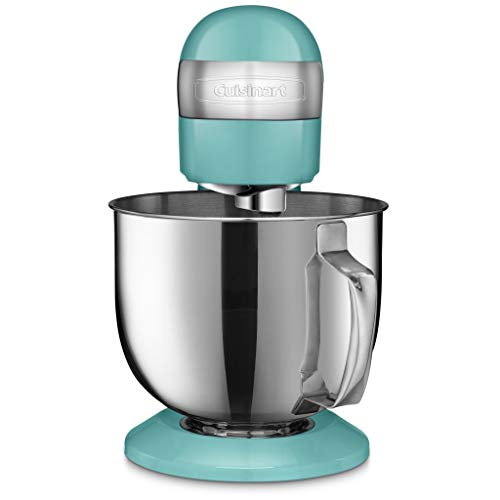
Cuisinart 5.5 Quart Stand Mixer (Periwinkle Blue, SM-50)
Badge: Best Overall
Strengths
- A true stand mixer: the bowl stays put while the head does the work
- 5.5 quart bowl handles family-size batches in one go
- Whisk, paddle and dough hook cover whipping, creaming and kneading
Trade-offs
- Takes permanent counter or cupboard space a hand mixer never asks for
- Heavier to move, clean around and put away than any hand mixer here
- Colour is the only difference between the SM-50 finishes — pick on looks, not performance
At a glance: 12 speeds; 5.5 quart stainless steel bowl; Chef’s whisk, mixing paddle and dough hook; Splash guard with pour spout; Finish: Periwinkle Blue.
Start with what the listing itself tells you, because that is the honest ground: this model offers twelve speeds, a 5.5 quart stainless steel bowl, a chef’s whisk, a mixing paddle and a dough hook, and a splash guard with a pour spout, finished in Periwinkle Blue.
For stand-up mixing built to last for years, that combination lands well. Weekly batters, doughs, whipped work and the long service life a family kitchen asks of a stand mixer is the workload this guide keeps coming back to, and the machine’s layout matches it: nothing you need is buried, and nothing you do not need gets in the way.
The honest limitation is commitment: a stand mixer asks for counter or cupboard space every day, including the 360 days a year it is not the best tool in the room, and very small jobs sit low in a 5.5 quart bowl where a hand mixer in a small bowl can do better. In daily use the pattern that suits this model best is short, deliberate sessions: stage the ingredients, start slow, let the machine work in its comfortable speed band, and clean the attachments while they are still easy to rinse. Cooks who work that way tend to keep a mixer for years; cooks who treat every job as a maximum-load event tend to shop again sooner, whatever they bought.
Best for: cooks focused on stand-up mixing built to last for years, who want a verified, link-checked pick that covers weekly batters, doughs, whipped work and the long service life a family kitchen asks of a stand mixer. / Not suited for: anyone whose real need is a different format or a much larger batch than this design serves.
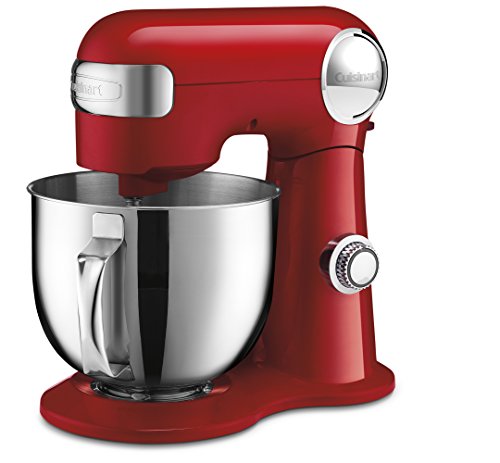
Cuisinart 5.5 Quart Stand Mixer (Ruby Red, SM-50)
Badge: Best Colour Alternative
Strengths
- A true stand mixer: the bowl stays put while the head does the work
- 5.5 quart bowl handles family-size batches in one go
- Whisk, paddle and dough hook cover whipping, creaming and kneading
Trade-offs
- Takes permanent counter or cupboard space a hand mixer never asks for
- Heavier to move, clean around and put away than any hand mixer here
- Colour is the only difference between the SM-50 finishes — pick on looks, not performance
At a glance: 12 speeds; 5.5 quart stainless steel bowl; Chef’s whisk, mixing paddle and dough hook; Splash guard with pour spout; Finish: Ruby Red.
The verified listing for this model is specific about its kit: twelve speeds, a 5.5 quart stainless steel bowl, a chef’s whisk, a mixing paddle and a dough hook, and a splash guard with a pour spout, finished in Ruby Red.
That feature set earns its keep when the job is stand-up mixing built to last for years. The workload — weekly batters, doughs, whipped work and the long service life a family kitchen asks of a stand mixer — rewards control and quick pauses more than brute force, and this design leans that way.
The honest limitation is commitment: a stand mixer asks for counter or cupboard space every day, including the 360 days a year it is not the best tool in the room, and very small jobs sit low in a 5.5 quart bowl where a hand mixer in a small bowl can do better. In daily use the pattern that suits this model best is short, deliberate sessions: stage the ingredients, start slow, let the machine work in its comfortable speed band, and clean the attachments while they are still easy to rinse. Cooks who work that way tend to keep a mixer for years; cooks who treat every job as a maximum-load event tend to shop again sooner, whatever they bought.
Best for: cooks focused on stand-up mixing built to last for years, who want a verified, link-checked pick that covers weekly batters, doughs, whipped work and the long service life a family kitchen asks of a stand mixer. / Not suited for: anyone whose real need is a different format or a much larger batch than this design serves.
Hamilton Beach 6-Speed Hand Mixer with QuickBurst (62682G)
Badge: Reference Pick — Hand Format
Strengths
- QuickBurst adds a short burst of power for stubborn pockets of batter
- Bowl rest lets you pause without laying a messy mixer on the counter
- Snap-on case stores beaters with the body
Trade-offs
- No whisk or dough hooks are named in the listing title
- QuickBurst is a burst, not a sustained higher gear
- Hand format: thick, low-hydration dough will strain both mixer and wrist
At a glance: 6 speeds plus QuickBurst; 250 watt motor (as listed); Traditional beaters; Bowl rest; Snap-on storage case; Finish: White.
On paper — which here means on its verified listing — the offer is six speeds plus a QuickBurst burst-of-power button, a 250 watt motor as listed, traditional beaters, a bowl rest so the mixer can sit on the bowl edge between additions, and a snap-on storage case.
Judged against this guide’s job — stand-up mixing built to last for years — the design makes sense. The everyday workload of weekly batters, doughs, whipped work and the long service life a family kitchen asks of a stand mixer asks for exactly this balance of control, included kit and easy cleanup.
It is covered here without a purchase link or image because it does not match this search’s core ask, and linking it as if it did would mislead. Judged on its own terms, as the tool it actually is, the listing is a respectable one. In this guide it serves as the comparison point that sharpens the linked picks: read its strengths honestly, note exactly where the mismatch lies, and the recommendation for the picks that do match this search should make complete sense.
Best for: readers comparing the full pool before deciding. / Not suited for: anyone who wants this search’s exact ask with a purchase link — choose a linked pick above instead.
KitchenAid 5 Ultra Power Speed Hand Mixer (Empire Red)
Badge: Reference Pick — Hand Format
Strengths
- Simple five-speed layout that is hard to get wrong mid-recipe
- Lockable swivel cord suits left- and right-handed cooks and awkward outlets
- Dishwasher-safe beaters keep cleanup short
Trade-offs
- Only five speeds, so fine low-speed control is limited
- No storage case is listed, so beaters live loose in a drawer
- Still a hand mixer: you hold it for the whole job, and stiff dough is hard work
At a glance: 5 speeds; Turbo Beaters; Lockable swivel cord; Easy-release beater button; Dishwasher-safe beaters; Finish: Empire Red.
What you are buying, per the maker’s own listing, is a package built around five speeds, Turbo Beaters, a lockable swivel cord, an easy-release button, and dishwasher-safe beaters, finished in Empire Red.
Where this model fits the brief of stand-up mixing built to last for years is in the details. A week built around weekly batters, doughs, whipped work and the long service life a family kitchen asks of a stand mixer exposes weak controls and missing attachments quickly; this package covers the bases without drama.
It is covered here without a purchase link or image because it does not match this search’s core ask, and linking it as if it did would mislead. Judged on its own terms, as the tool it actually is, the listing is a respectable one. In this guide it serves as the comparison point that sharpens the linked picks: read its strengths honestly, note exactly where the mismatch lies, and the recommendation for the picks that do match this search should make complete sense.
Best for: readers comparing the full pool before deciding. / Not suited for: anyone who wants this search’s exact ask with a purchase link — choose a linked pick above instead.
LILPARTNER 7-Speed Hand Mixer with 5 Stainless Steel Accessories
Badge: Reference Pick — Hand Format
Strengths
- Seven speeds and five stainless steel accessories in one box
- Accessories are dishwasher safe, which shortens cleanup
- Listed by the maker for dough, cream and cake work
Trade-offs
- A newer, less established name than the legacy brands in this list
- Seven speeds sit between the five- and nine-speed rivals rather than beating either
- Light pink finish will not suit every kitchen
At a glance: 7 speeds; 5 stainless steel accessories; Listed for whipping dough, cream and cake; Dishwasher-safe accessories; Finish: Light Pink.
The listing leads with its hardware: seven speeds and five stainless steel accessories, listed by the maker for whipping dough, cream and cake, with dishwasher-safe accessories and a light pink finish.
For the cook whose week involves stand-up mixing built to last for years, the appeal is practical. The recurring jobs — weekly batters, doughs, whipped work and the long service life a family kitchen asks of a stand mixer — are handled with the attachments in the box and a control layout that stays calm under load.
It is covered here without a purchase link or image because it does not match this search’s core ask, and linking it as if it did would mislead. Judged on its own terms, as the tool it actually is, the listing is a respectable one. In this guide it serves as the comparison point that sharpens the linked picks: read its strengths honestly, note exactly where the mismatch lies, and the recommendation for the picks that do match this search should make complete sense.
Best for: readers comparing the full pool before deciding. / Not suited for: anyone who wants this search’s exact ask with a purchase link — choose a linked pick above instead.
KitchenAid 5 Ultra Power Speed Hand Mixer (Contour Silver)
Badge: Reference Pick — Hand Format
Strengths
- Simple five-speed layout that is hard to get wrong mid-recipe
- Lockable swivel cord suits left- and right-handed cooks and awkward outlets
- Dishwasher-safe beaters keep cleanup short
Trade-offs
- Only five speeds, so fine low-speed control is limited
- No storage case is listed, so beaters live loose in a drawer
- Still a hand mixer: you hold it for the whole job, and stiff dough is hard work
At a glance: 5 speeds; Turbo Beaters; Lockable swivel cord; Easy-release beater button; Dishwasher-safe beaters; Finish: Contour Silver.
Strip away the marketing and the substance is five speeds, Turbo Beaters, a lockable swivel cord that can sit on either side of the body, an easy-release button for the beaters, and beaters that go in the dishwasher.
This is a machine shaped by the jobs in this guide: stand-up mixing built to last for years, with weekly batters, doughs, whipped work and the long service life a family kitchen asks of a stand mixer as the weekly reality. Its listing reads like it was written for that workload.
It is covered here without a purchase link or image because it does not match this search’s core ask, and linking it as if it did would mislead. Judged on its own terms, as the tool it actually is, the listing is a respectable one. In this guide it serves as the comparison point that sharpens the linked picks: read its strengths honestly, note exactly where the mismatch lies, and the recommendation for the picks that do match this search should make complete sense.
Best for: readers comparing the full pool before deciding. / Not suited for: anyone who wants this search’s exact ask with a purchase link — choose a linked pick above instead.
Comparison Table
| Pick | Format | Headline verified features | Badge | Link |
|---|---|---|---|---|
| Cuisinart 5.5 Quart Stand Mixer (Periwinkle Blue, SM-50) | Stand mixer | 12 speeds; 5.5 quart stainless steel bowl | Best Overall | Check on Amazon |
| Cuisinart 5.5 Quart Stand Mixer (Ruby Red, SM-50) | Stand mixer | 12 speeds; 5.5 quart stainless steel bowl | Best Colour Alternative | Check on Amazon |
| Hamilton Beach 6-Speed Hand Mixer with QuickBurst (62682G) | Hand mixer | 6 speeds plus QuickBurst; 250 watt motor (as listed) | Reference Pick — Hand Format | Prose-only |
| KitchenAid 5 Ultra Power Speed Hand Mixer (Empire Red) | Hand mixer | 5 speeds; Turbo Beaters | Reference Pick — Hand Format | Prose-only |
| LILPARTNER 7-Speed Hand Mixer with 5 Stainless Steel Accessories | Hand mixer | 7 speeds; 5 stainless steel accessories | Reference Pick — Hand Format | Prose-only |
| KitchenAid 5 Ultra Power Speed Hand Mixer (Contour Silver) | Hand mixer | 5 speeds; Turbo Beaters | Reference Pick — Hand Format | Prose-only |
Read the table by format first, features second. Format decides the class of job — a stand mixer works hands-free at the counter, a hand mixer goes to the bowl or the pan — and only then do speed counts and attachment sets separate the picks inside each format. Best Non Kithen Aid Home Stand Mixers
How to Choose the Right Mixer for Stand-up mixing built to last for years
Start with the job list, not the product list. Write down the five things you mixed in the last month. If the list is batters, creams and mashing, a hand mixer with a gentle low speed covers it, and your decision narrows to attachments and storage. If the list includes weekly dough or double batches, the stand format stops being a luxury. The expensive mistake is buying for an imaginary baker; the cheap success is buying for the documented one. Best Quality Stand Mixers
Next, speeds. Count them, then discount the count: what matters is a genuinely slow start for flour and mash, a comfortable middle for creaming and batters, and enough top end for whipping. Anti-splatter starts and burst buttons are real quality-of-life features, not garnish. Then attachments: beaters are universal, a whisk transforms cream and egg whites, and dough hooks calm soft dough work. A storage case sounds boring until the third time a beater goes missing — then it sounds like wisdom.
Finally, the ownership details. Where will it live? How will the cord behave at your outlets? Can the attachments go in your dishwasher? Is the finish one you will happily wipe down? None of these questions appear in a headline, and all of them decide whether the mixer is still in weekly use next year. Answer them honestly and the right pick from this shortlist usually names itself.
How to Use, Clean and Look After Your Mixer
Set up. Stage every ingredient before the mixer comes out — with a hand mixer, one of your hands is committed. Use a deep bowl, set it on a damp cloth so it cannot skate, and fit the right attachment before plugging in: beaters for batters and mashing, whisk for aeration, hooks for soft dough.
Mix. Always start at the lowest speed and let the mixture come together before moving up. Move the mixer slowly through the bowl rather than holding it in one spot, scrape down the sides during a pause — on the bowl rest if your model has one — and work in short, deliberate bursts on anything stiff. For stand mixers, use the splash guard when adding flour, and add it in stages at low speed.
Clean and store. Eject the attachments straight into warm soapy water or the dishwasher where the listing allows it, wipe the body with a damp cloth, and never submerge a mixer body. Brush flour from the vents. Store hand mixers with their attachments — in the snap-on case where one is provided — and cover a stand mixer’s bowl so nothing falls into it between bakes. Targets4}]
Troubleshooting. Problem: flour erupts across the counter at startup → start at the lowest speed, add flour in stages, and use the splash guard or a towel over the bowl for the first seconds. Problem: dough climbs the beaters toward the body → stop, push the dough down with a spatula, switch to hooks if you have them, and finish stiff batches by hand. Problem: the motor smells warm on a heavy job → you are at the format’s limit; rest the mixer, split the batch, and let time and folds do the remaining work.
What actually makes a stand mixer durable
Start with the load path. In a stand mixer the motor drives the attachment while the frame absorbs the reaction, so stiff dough pushes against the machine’s weight instead of your wrist. A stainless steel bowl tolerates decades of scraping, chilling and washing that would mark plastic. Twelve speeds matter for longevity too: the right gear for the load is gentler than forcing one speed to do everything. Finally, look at the attachment set — a whisk, paddle and dough hook in metal-friendly finishes will outlast novelty attachments you never use, and a splash guard with a pour spout prevents the flour-dust-into-the-vents problem that ages motors quietly.
Stand mixer or hand mixer for the long term?
If you bake weekly, the stand mixer is the durable choice in both senses: it lasts, and it makes the habit last, because heavy jobs stop being a chore. Hand mixers earn their keep as the second tool — quick creams, small batters, mashing in the pan — and the four prose-only models here are respectable examples. The mistake is asking a hand mixer to live a stand mixer’s life: weekly stiff dough through a hand-held motor is the fastest route to a short service life, whichever brand you choose.
Storage deserves a thought before you buy, not after. A hand mixer with a snap-on case can live in a drawer without its beaters migrating to the back, while a stand mixer needs either permanent counter space or a cupboard shelf tall enough for the head. Measure the shelf, not just the mixer: bowl height plus head clearance is the number that decides whether a stand mixer comes out willingly or stays buried behind the slow cooker.
Cord management sounds trivial until you are holding a running mixer with one hand and a bowl with the other. A cord that locks to either side of the body keeps it out of the batter and out of the way of your working hand, and a bowl rest lets you park the mixer on the bowl rim while you scrape down the sides. Small details like these decide whether a mixer feels helpful or faintly annoying on its fiftieth use.
Think about batch size honestly. Most home baking failures with small mixers come from doubling a recipe the bowl or the motor was never sized for. Creaming butter and sugar for one cake, whipping cream for one pie, or mixing one loaf worth of soft dough is the natural territory of the hand mixers here. The 5.5 quart stand mixer bowl is the step up for double batches, layered cakes and doughs you make every week rather than every month.
Cleaning is part of the real cost of any mixer. Beaters and accessories that can go in the dishwasher turn a ten-minute wash-up into a two-minute one, and smooth beater designs release batter instead of trapping it in wire cages. The mixer body itself should only ever be wiped, never submerged, and flour dust in the vents is worth brushing out before it builds up into a paste with kitchen steam.
Speed ranges matter less than speed behaviour. A mixer that starts gently will not throw flour across the counter, and a mixer whose lowest speed is genuinely slow can fold in chocolate chips or nuts without smashing them. At the other end, the top speed only matters for whipping — cream and egg whites — where a minute of patience at the right speed beats raw power applied at the wrong one.
Attachments decide what a mixer actually does all year. Beaters handle batters and mashing, a whisk handles cream and egg whites properly, and dough hooks handle soft doughs without wrapping them around the beaters. Before choosing, list the three things you mixed most often last year and match the attachment set to that list, not to the longest feature list on the page.
Noise and vibration are worth a mention because they decide whether early-morning baking feels civilised. Smaller hand mixers transmit more vibration to your hand on stiff mixtures, while a heavy stand mixer body absorbs it on the counter. Neither is silent, and if a listing promises whisper-quiet dough kneading, treat the claim kindly and sceptically in equal measure.
Finally, buy for the baker you are this year. A first mixer that gets used weekly teaches you more than a flagship that waits for special occasions. If you later outgrow it — bigger batches, weekly bread, layered celebration cakes — the upgrade path is obvious, and the humble first mixer still earns its drawer as the quick-job tool for whipped cream and small batters.
Consider the bowl you already own before blaming the mixer. A shallow, wide bowl throws mixture up the walls and out; a deep, narrower bowl keeps everything in the working zone and makes a modest mixer feel stronger. If your current bowl is a salad bowl pressed into service, upgrading the bowl is the cheapest performance upgrade in this entire guide, and it improves every mixer on this page equally.
Temperature is an invisible ingredient in mixing. Butter creams properly only in a fairly narrow band — cool enough to hold structure, warm enough to yield — and no mixer, at any speed, fixes butter that is fridge-hard or half-melted. Cream whips fastest cold, egg whites whip fullest at room temperature, and dough develops best when the liquid is lukewarm rather than hot. Ten minutes of temperature patience outperforms any feature on any listing here.
Learn your mixer’s sounds. A healthy mixer changes pitch smoothly as load changes; a mixer that suddenly strains, slows or smells warm is giving you information, not failing you. Ease off, scrape down, rest it for a moment, or split the batch. Bakers who listen to their machines keep them for years, because most small-motor damage happens in the sixty seconds after the first warning sign was ignored.
Recipes written for stand mixers translate to hand mixers with two adjustments: time and batch discipline. Expect creaming and mixing stages to take a little longer, move the mixer constantly so all of the bowl gets worked, and resist doubling. The ingredient ratios do not change — only the choreography does — and the results, for the great majority of cakes, batters and soft doughs, are indistinguishable.
If two bakers cook in your kitchen, controls matter socially as well as mechanically. A simple five-speed layout is a mixer a second person can pick up mid-recipe without a briefing; a nine- or twelve-speed range rewards the regular user who learns its bands. Neither is better in the abstract — match the control complexity to the household that will actually share the tool.
Replacement beaters and attachments are the long game of mixer ownership. Before buying, it is worth a moment’s thought about the brand’s retail footprint: established names keep spares findable for years, while a little-known import may be a single bent beater away from retirement. That consideration is built into this guide’s rankings, quietly, in the background of every badge.
A word on flour discipline, because it decides more bakes than any motor: add flour in two or three stages, start slow after each addition, and let each stage incorporate before adding the next. The cloud of flour that escapes a rushed start is not just mess — it is measurement leaving the recipe, and it slightly changes the bake you end up with.
Whipping deserves its own note. Cream and egg whites reward clean, dry, grease-free attachments and a bowl with room to grow — the mixture can triple in volume. Chill the bowl for cream if your kitchen is warm, wipe attachments with a little vinegar if they feel greasy, and stop at soft peaks first to look, because the distance from soft peaks to overwhipped is shorter than the distance you just travelled.
Think about where the finished mixture goes next. Batters that must be scraped into a narrow pan, doughs that move to a floured board, and mashes that stay in the cooking pan each favour a slightly different workflow around the same mixer. Planning the landing spot before you start mixing — pan greased, board floured, trivet ready — is the unglamorous habit that separates calm baking sessions from chaotic ones, and no product feature substitutes for it.
Altitude, humidity and flour age quietly change mixing. A batter that behaved last month may need a spoon more liquid in a dry winter kitchen, and dough hydration shifts with the flour’s mood. A mixer with a genuinely gentle low speed and several steps above it lets you adjust by feel — a little longer here, a touch slower there — which is why experienced bakers talk about speed behaviour more than speed counts.
There is a simple test for whether a mixer suits your kitchen: the Tuesday test. Not the birthday cake, not the holiday marathon — an ordinary Tuesday, when you want whipped cream, a quick batter or mashed potatoes with minimal fuss and minimal washing up. The mixer that wins Tuesdays is the mixer that earns its storage space, and it is the standard this guide quietly applies to every pick.
If you bake with children or beginners, add supervision-friendliness to your criteria. Simple controls, a mixer that stops the moment you release or switch it off, and attachments that eject without finger traps all matter. Several picks here keep their layouts deliberately simple, and that simplicity is a feature to value rather than a specification to apologise for.
Glass, metal and plastic bowls each change the mixing experience. Metal is light, chillable and nearly indestructible; glass lets you see unmixed pockets at the bottom but is heavy and breakable; plastic is light and cheap but holds odours and scratches. The mixers here work with whatever you own — except that a stand mixer’s own bowl is part of the machine, which is one more reason the 5.5 quart stainless bowl in this pool is such a practical default.
Common Buying Mistakes
- Buying by speed count alone. Nine speeds used badly lose to five speeds used well; behaviour at the low end matters more.
- Ignoring what is in the box. A whisk or dough hooks bought later cost more and match worse than a set included from the start.
- Asking a hand mixer to live a stand mixer’s life. Weekly stiff dough through a hand-held motor shortens its life, whichever brand it is.
- Doubling recipes in small bowls. Two sequential batches beat one strained, uneven doubled batch every time.
- Choosing colour before format. Finishes of one model are the same machine; decide the format and features first, then enjoy the colour choice.
- Skipping the storage question. A mixer that is annoying to store becomes a mixer that is rarely used.
Final Recommendation
For most readers searching for the best most durable stand up mixers, start with the Cuisinart 5.5 Quart Stand Mixer (Periwinkle Blue, SM-50). It leads the linked picks because its verified feature set serves stand-up mixing built to last for years with the fewest compromises. Check on Amazon for the Cuisinart 5.5 Quart Stand Mixer (Periwinkle Blue, SM-50). Check on Amazon for the Cuisinart 5.5 Quart Stand Mixer (Ruby Red, SM-50).
Choose differently if your pattern differs: frequent bakers should weight speed range and storage, dough-focused cooks should weight hooks and low-speed calm, and anyone whose real format need differs from this search should follow the prose-only discussion honestly rather than forcing a mismatch. The right mixer is the one matched to your documented week — and this shortlist contains that match. Best Selling Stand Mixers
Related guides
- Best Stand Mixers Sole At Walm
- Best Stand Mixers Consumer Reporsts
- Best Stand Mixers Consumer Reports
- Best Stand Mixers Heavy Com
Frequently Asked Questions
Are the two linked Cuisinart mixers actually different?
Mechanically, no — the Periwinkle Blue and Ruby Red listings are the same SM-50 stand mixer: twelve speeds, a 5.5 quart stainless steel bowl, whisk, paddle, dough hook and splash guard with pour spout. Choose between them on colour and on which listing suits you at the time you buy; the baking performance is identical.
Why are four picks prose-only in this guide?
Because they are hand mixers, and this search is for stand-up mixers. They are covered so you can see the full verified pool and understand the distinction, but recommending a hand mixer as a durable stand-up mixer would be dishonest. If your jobs are light and occasional, one of them may still suit you — as a hand mixer.
How long should a stand mixer last?
With sensible use — right speed for the load, no forcing through stalled dough, vents kept clear of flour — a stand mixer of this class should serve for many years of weekly baking. Longevity is mostly behaviour: the machine that is never overloaded rarely gives you a reason to replace it.
Is a 5.5 quart bowl big enough for family baking?
For most families, yes. It covers double cake batches, a large loaf’s worth of dough and party-size whipped work in one go. Bakers who routinely make two loaves at once or very large enriched batches are the ones who outgrow it; everyone else finds it the comfortable middle size.
Does colour affect durability or price positioning?
Colour affects neither the mechanics nor, in any lasting way, the value. Finishes differ in how they show flour dust and fingerprints — lighter finishes hide dust, darker and brighter finishes show it — so pick the one you will happily wipe down and leave out, because a mixer that lives on the counter gets used.
What maintenance keeps a stand mixer durable?
Wipe the body after use, keep the vents free of flour, wash attachments promptly, and store the bowl locked or covered so nothing falls into it. Run the mixer at the speed the task needs rather than the fastest it has, and let stiff dough rest rather than forcing the paddle through it.


