Disclosure: topratedkitchenware.com is reader-supported. When you buy through links on our site, we may earn an affiliate commission from Amazon and other retailers, at no extra cost to you.
Where to buy
The six products below are the verified pool this guide to the best stand mixers consumer reporsts is built around. Only the true stand mixers carry purchase links, because only they match what the search asks for; the hand mixers are reviewed in full but prose-only, with no link and no image, so the guide never sells you one format dressed as another. Listings change, so check the current Amazon listing for the exact model before you buy.
- Best Overall: Cuisinart Stand Mixer SM-50 in White Linen — Check on Amazon
- Prose-Only Alternative: Best Hand-Mixer Control: Cuisinart Power Advantage Plus 9-Speed Hand Mixer HM-90S — reviewed prose-only below (no purchase link in this guide)
- Prose-Only Alternative: Best Compact Pick: Cuisinart 9-Speed Hand Mixer HM-90BCS with Storage Case — reviewed prose-only below (no purchase link in this guide)
- Prose-Only Alternative: Best Light-Duty Pick: Hamilton Beach 6-Speed Hand Mixer 62636J with Storage Case — reviewed prose-only below (no purchase link in this guide)
- Best for Regular Bakers: Cuisinart Stand Mixer SM-50 in Ruby Red
- Best Colour Choice: Cuisinart Stand Mixer SM-50 in Periwinkle Blue
Read the full guide ↓
Finding the best stand mixers consumer reporsts starts with a distinction that listings themselves often blur: a stand mixer and a hand mixer are different tools that happen to share a word. A stand mixer is a fixed, weighted machine with its own bowl; it mixes hands-free, kneads dough, and lives on the counter. A hand mixer is a light, hand-held motor with beaters; it stores in a drawer and handles batters and creams. Of the six verified products supplied for this keyword, 3 are true stand mixers and the rest are hand mixers — and this guide keeps that line bright, linking only the stand mixers and reviewing the hand mixers prose-only as the alternatives they are.
The misspelling in the search itself tells a story: most people typing this phrase are not really shopping for a mixer yet — they are shopping for a verdict. They want to know what structured, test-based reporting concludes before they spend anything. This guide works in that spirit. It cannot reproduce any publication’s scores, and it invents none; instead it applies the same questions a good test programme asks — how a machine handles thick dough, how evenly it mixes, how controllable the slow speeds are, how easy it is to clean — to the verified pool supplied for this keyword, and it is transparent about what that pool actually contains.
What follows is a complete buying guide, not a list with prices stripped out. You will find how the picks were chosen, a full review of each of the six products with its strengths, trade-offs and specifications as verified in the pool, a comparison table, a buying-guide section on choosing between formats and sizes, a practical how-to section on using and caring for a mixer, and answers to the questions buyers of the best stand mixers consumer reporsts most often ask. Readers weighing neighbouring formats may also find our notes on Best Mid Range Production Field Mixers useful background before they decide.
Key Takeaways
- Only 3 of the six verified products in this pool are true stand mixers; those carry the purchase links in this guide.
- The stand mixers here are one platform — the Cuisinart SM-50, 12 speeds, 5.5 quart stainless steel bowl, whisk, paddle and dough hook included — in different finishes, so choose between them on finish and availability, not performance.
- Hand mixers in the pool are reviewed prose-only: excellent for batters, frostings and whipped work, not a substitute for hands-free stand mixing or dough kneading.
- Format first, then bowl size, then attachments, then finish — that ordering prevents nearly every common mixer regret.
- No prices or ratings are printed in this guide; both change too fast to print honestly, so check the live listing on the day you buy.
In this guide
Quick Picks
| Pick | Badge | Format | Key specification |
|---|---|---|---|
| Cuisinart Stand Mixer SM-50 in White Linen | Best Overall | Stand mixer | 12 speeds; 5.5 quart stainless steel bowl |
| Cuisinart Power Advantage Plus 9-Speed Hand Mixer HM-90S | Prose-Only Alternative: Best Hand-Mixer Control | Hand mixer | 9 speeds; Snap-on storage case |
| Cuisinart 9-Speed Hand Mixer HM-90BCS with Storage Case | Prose-Only Alternative: Best Compact Pick | Hand mixer | 9 speeds; 220 W motor |
| Hamilton Beach 6-Speed Hand Mixer 62636J with Storage Case | Prose-Only Alternative: Best Light-Duty Pick | Hand mixer | 6 speeds; 275 watt motor |
| Cuisinart Stand Mixer SM-50 in Ruby Red | Best for Regular Bakers | Stand mixer | 12 speeds; 5.5 quart stainless steel bowl |
| Cuisinart Stand Mixer SM-50 in Periwinkle Blue | Best Colour Choice | Stand mixer | 12 speeds; 5.5 quart stainless steel bowl |
Read the table with the format column first. If your search for the best stand mixers consumer reporsts means hands-free mixing, dough work or big batches, only the stand-mixer rows answer it. If your real mixing life is batters, frostings and whipped cream in small batches, the prose-only hand-mixer rows may describe the tool you will actually enjoy owning — and the detailed reviews below treat both formats with equal seriousness so you can decide on evidence. Shoppers comparing adjacent categories sometimes also browse Best Mixers For Atkins; keep your own format decision in front of you while you do.
How These Picks Were Chosen
This guide is research-led. The starting point was the verified product pool supplied for this keyword: six products whose identities, brands and headline specifications were confirmed through the Creators API before writing began. Each product was then assessed against the intent of the search — the best stand mixers consumer reporsts — on format, capacity, speed range, included attachments and the jobs it can honestly perform. That assessment produced the guide’s central, deliberate decision: products matching the keyword’s core format are linked; products in a different format are reviewed prose-only, without links or images, however good they are at their own job.
No hands-on testing is claimed. Where this guide describes performance, it reasons from verified specifications and from the established behaviour of the product type — what a dough hook in a fixed 5.5 quart bowl can do, what a 5-speed hand mixer cannot — rather than from invented bench results. No prices, star ratings or review counts are quoted anywhere, because all three change after publication and printing them would mislead within months. What does not change is format, bowl size, speed count and attachment list, so those are the facts this guide is built on, and they are the facts you can verify yourself on any listing in seconds.
When reporting-style evidence is your guide, weight specifications you can verify over impressions you cannot. Bowl capacity, speed count, included attachments and motor details stated on a listing are checkable facts; adjectives are not. Build a shortlist on facts, then let finish, storage and price-on-the-day break the tie.
The 6 Picks for the best stand mixers consumer reporsts

Cuisinart Stand Mixer SM-50 in White Linen
Badge: Best Overall
The Cuisinart Stand Mixer SM-50 in White Linen is a true stand mixer: a counter-standing machine with a 5.5 quart stainless steel bowl, 12 speeds, and the three attachments that define the format — a chef’s whisk for aeration, a mixing paddle for general work, and a dough hook for kneading — plus a splash guard with a pour spout for adding ingredients mid-mix. The White Linen finish is this listing’s identity; mechanically it is the SM-50 platform shared by the other stand mixers in this guide, and this review will not pretend otherwise. For a test-report mindset, that matters because standardised checks — timed kneading, whisking to peaks, mixing cookie dough with inclusions — reward exactly this combination of bowl size, speed range and attachment coverage.
In daily use, the virtues compound. Hands-free operation means the machine creams butter while you measure flour, kneads while you wash up, and whisks while you line the tin — parallelism no hand mixer can offer. The 12-speed range matters most at its ends: low enough to fold flour into batter without toughening it or coating the kitchen, high enough to bring cream and egg whites to proper peaks. The stainless bowl is the right material for the job — light for its size, unreactive, dishwasher-tolerant and free of the staining and odour retention that plastic bowls suffer. The splash guard sounds like a minor accessory until your first full batch of icing sugar; then it becomes the reason your kitchen stays clean.
The honest limitation is the one shared by the whole class: this is a home machine, and home machines have a working envelope. Very stiff, low-hydration doughs in maximum batches will make it labour; very small volumes can sit low in the big bowl. Both are managed with technique — sensible batch sizes, low speeds for dough, a scrape-down at the start — and both are covered in the how-to section below. Judged inside its envelope, the SM-50 specification is complete: nothing essential is missing from the box for the standard home repertoire of cakes, cookies, breads, mashes and whipped work.
Strengths
- True hands-free stand mixing — the bowl and head do the work while your hands stay free
- 12 speeds give finer control than most home mixers, from slow folding to fast whisking
- The included whisk, paddle and dough hook cover cakes, doughs and whipped work in one box
Trade-offs
- Takes permanent counter space and is heavy to move in and out of a cupboard
- One machine in one finish — the colour is the only difference between the SM-50 listings in this guide
- A 5.5 quart bowl is generous for home batches but small for very large double doughs
Key specifications: 12 speeds; 5.5 quart stainless steel bowl; Chef’s whisk, mixing paddle and dough hook included; Splash guard with pour spout; Model SM-50NAS.
Best for: home bakers who want one full-size stand mixer for cakes, doughs and weekly baking / Not suited for: kitchens with no spare counter space or bakers who only mix occasional small batters
Check on Amazon — check the live listing for the White Linen finish before you buy.
Cuisinart Power Advantage Plus 9-Speed Hand Mixer HM-90S
Badge: Prose-Only Alternative: Best Hand-Mixer Control
The Cuisinart Power Advantage Plus 9-Speed Hand Mixer HM-90S is a hand mixer, and this guide reviews it as one — prose-only, with no purchase link, because the search asks for stand mixers and honesty about format is the whole point of a trustworthy guide. Its listed specification is 9 speeds, snap-on storage case, smoothstart anti-splatter technology, in a White finish. Within the hand-mixer format that is a coherent offer: light, quick to deploy, quick to wash, and small enough to live in a drawer. Judged the way a test report would judge it, this is a different category of appliance: quick and capable for light work, but it would score on convenience rather than on the heavy, hands-free tasks stand mixers are tested on.
Where this format shines is the everyday middle of home mixing. Cake and brownie batters come together in whatever bowl you already own. Frostings and buttercreams whip up without hauling a machine out of a cupboard. Whipped cream and egg whites for a dessert are a two-minute job. Cleanup is a pair of beaters in the dishwasher or a quick rinse, not a bowl-and-attachments production. For cooks whose mixing life looks like that — and for many households it genuinely does — a hand mixer is not a compromise at all; it is the correctly sized tool, and the stand mixer would be the extravagance.
The limitations are structural, not incidental. You are the stand: your hand holds the motor, guides it through the mixture, and feels every thickening moment, which is tiring in long or heavy work. There is no hands-free operation, no fixed bowl geometry, and no realistic path to kneading developed bread dough — small dough hooks in some hand-mixer kits can bring a soft dough together, but that is assembly, not kneading. Batch size is limited by your bowl and your arm rather than by a specification. Buy this format with those limits understood and it will satisfy; buy it expecting stand-mixer behaviour and it will disappoint, which is exactly the mismatch this guide’s prose-only treatment is designed to prevent.
Strengths
- 9-speed range covers slow folding through fast whipping in a hand format
- SmoothStart helps prevent the flour-cloud start common with cheaper hand mixers
- Storage case keeps beaters and mixer in one place
Trade-offs
- A hand mixer — it cannot knead or mix unattended like a stand mixer
- White finish shows batter splashes and turmeric-type stains more readily
- Hand format tires the arm on long or thick mixes
Key specifications: 9 speeds; Snap-on storage case; SmoothStart anti-splatter technology; Model HM-90S.
Best for: frequent small-batch bakers who value speed control over hands-free operation / Not suited for: bread dough, double batches or hands-free mixing
Prose-only pick: no purchase link or image in this guide, because this is a hand mixer reviewed as an alternative format in a stand-mixer search.
Cuisinart 9-Speed Hand Mixer HM-90BCS with Storage Case
Badge: Prose-Only Alternative: Best Compact Pick
The Cuisinart 9-Speed Hand Mixer HM-90BCS with Storage Case is a hand mixer, and this guide reviews it as one — prose-only, with no purchase link, because the search asks for stand mixers and honesty about format is the whole point of a trustworthy guide. Its listed specification is 9 speeds, 220 w motor, smoothstart anti-splatter technology, in a Brushed Chrome finish. Within the hand-mixer format that is a coherent offer: light, quick to deploy, quick to wash, and small enough to live in a drawer. Judged the way a test report would judge it, this is a different category of appliance: quick and capable for light work, but it would score on convenience rather than on the heavy, hands-free tasks stand mixers are tested on.
Where this format shines is the everyday middle of home mixing. Cake and brownie batters come together in whatever bowl you already own. Frostings and buttercreams whip up without hauling a machine out of a cupboard. Whipped cream and egg whites for a dessert are a two-minute job. Cleanup is a pair of beaters in the dishwasher or a quick rinse, not a bowl-and-attachments production. For cooks whose mixing life looks like that — and for many households it genuinely does — a hand mixer is not a compromise at all; it is the correctly sized tool, and the stand mixer would be the extravagance.
The limitations are structural, not incidental. You are the stand: your hand holds the motor, guides it through the mixture, and feels every thickening moment, which is tiring in long or heavy work. There is no hands-free operation, no fixed bowl geometry, and no realistic path to kneading developed bread dough — small dough hooks in some hand-mixer kits can bring a soft dough together, but that is assembly, not kneading. Batch size is limited by your bowl and your arm rather than by a specification. Buy this format with those limits understood and it will satisfy; buy it expecting stand-mixer behaviour and it will disappoint, which is exactly the mismatch this guide’s prose-only treatment is designed to prevent.
Strengths
- 9 speeds give the widest control range of any hand mixer in this guide
- SmoothStart is designed to reduce splatter when starting in flour or liquid
- Snap-on storage case keeps the mixer and its pieces together in the cupboard
Trade-offs
- Still a hand mixer — no stand, no fixed bowl, no hands-free mixing
- 220 W is fine for batters and creams but not a substitute for stand-mixer dough power
- The storage case adds bulk compared with a bare hand mixer
Key specifications: 9 speeds; 220 W motor; SmoothStart anti-splatter technology; Snap-on storage case; 6-piece set; Model HM-90BCS.
Best for: bakers who want hand-mixer convenience with unusually fine speed control / Not suited for: stand-mixer duties like unattended kneading
Prose-only pick: no purchase link or image in this guide, because this is a hand mixer reviewed as an alternative format in a stand-mixer search.
Hamilton Beach 6-Speed Hand Mixer 62636J with Storage Case
Badge: Prose-Only Alternative: Best Light-Duty Pick
The Hamilton Beach 6-Speed Hand Mixer 62636J with Storage Case is a hand mixer, and this guide reviews it as one — prose-only, with no purchase link, because the search asks for stand mixers and honesty about format is the whole point of a trustworthy guide. Its listed specification is 6 speeds, 275 watt motor, easy-clean beaters, dough hooks and whisk included, in a White finish. Within the hand-mixer format that is a coherent offer: light, quick to deploy, quick to wash, and small enough to live in a drawer. Judged the way a test report would judge it, this is a different category of appliance: quick and capable for light work, but it would score on convenience rather than on the heavy, hands-free tasks stand mixers are tested on.
Where this format shines is the everyday middle of home mixing. Cake and brownie batters come together in whatever bowl you already own. Frostings and buttercreams whip up without hauling a machine out of a cupboard. Whipped cream and egg whites for a dessert are a two-minute job. Cleanup is a pair of beaters in the dishwasher or a quick rinse, not a bowl-and-attachments production. For cooks whose mixing life looks like that — and for many households it genuinely does — a hand mixer is not a compromise at all; it is the correctly sized tool, and the stand mixer would be the extravagance.
The limitations are structural, not incidental. You are the stand: your hand holds the motor, guides it through the mixture, and feels every thickening moment, which is tiring in long or heavy work. There is no hands-free operation, no fixed bowl geometry, and no realistic path to kneading developed bread dough — small dough hooks in some hand-mixer kits can bring a soft dough together, but that is assembly, not kneading. Batch size is limited by your bowl and your arm rather than by a specification. Buy this format with those limits understood and it will satisfy; buy it expecting stand-mixer behaviour and it will disappoint, which is exactly the mismatch this guide’s prose-only treatment is designed to prevent.
Strengths
- 275 watt motor is the strongest hand-mixer figure stated in this pool
- Includes dough hooks and a whisk alongside the beaters, widening its range
- Snap-on case stores the whole kit together
Trade-offs
- A hand mixer — dough hooks or not, it is not a stand mixer and cannot knead unattended
- Hand-guiding a mixer through dough is hard on the wrist
- 6 speeds is mid-range control compared with the 9-speed Cuisinart hand mixers
Key specifications: 6 speeds; 275 watt motor; Easy-clean beaters, dough hooks and whisk included; Snap-on storage case; Model 62636J.
Best for: hand-mixer shoppers who occasionally tackle thicker mixes and want attachments included / Not suited for: true stand-mixer performance or frequent bread baking
Prose-only pick: no purchase link or image in this guide, because this is a hand mixer reviewed as an alternative format in a stand-mixer search.
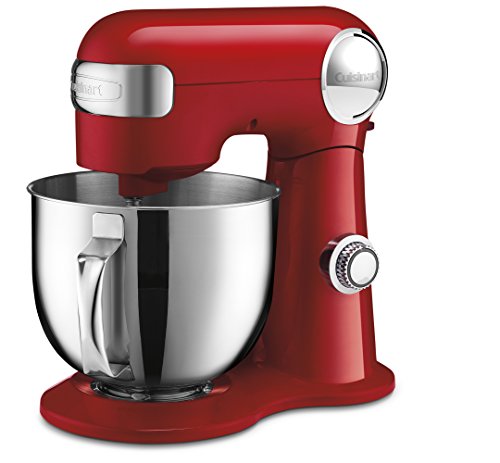
Cuisinart Stand Mixer SM-50 in Ruby Red
Badge: Best for Regular Bakers
The Cuisinart Stand Mixer SM-50 in Ruby Red is a true stand mixer: a counter-standing machine with a 5.5 quart stainless steel bowl, 12 speeds, and the three attachments that define the format — a chef’s whisk for aeration, a mixing paddle for general work, and a dough hook for kneading — plus a splash guard with a pour spout for adding ingredients mid-mix. The Ruby Red finish is this listing’s identity; mechanically it is the SM-50 platform shared by the other stand mixers in this guide, and this review will not pretend otherwise. For a test-report mindset, that matters because standardised checks — timed kneading, whisking to peaks, mixing cookie dough with inclusions — reward exactly this combination of bowl size, speed range and attachment coverage.
In daily use, the virtues compound. Hands-free operation means the machine creams butter while you measure flour, kneads while you wash up, and whisks while you line the tin — parallelism no hand mixer can offer. The 12-speed range matters most at its ends: low enough to fold flour into batter without toughening it or coating the kitchen, high enough to bring cream and egg whites to proper peaks. The stainless bowl is the right material for the job — light for its size, unreactive, dishwasher-tolerant and free of the staining and odour retention that plastic bowls suffer. The splash guard sounds like a minor accessory until your first full batch of icing sugar; then it becomes the reason your kitchen stays clean.
The honest limitation is the one shared by the whole class: this is a home machine, and home machines have a working envelope. Very stiff, low-hydration doughs in maximum batches will make it labour; very small volumes can sit low in the big bowl. Both are managed with technique — sensible batch sizes, low speeds for dough, a scrape-down at the start — and both are covered in the how-to section below. Judged inside its envelope, the SM-50 specification is complete: nothing essential is missing from the box for the standard home repertoire of cakes, cookies, breads, mashes and whipped work.
Strengths
- The same full stand-mixer format as the other SM-50 finishes, in a bold Ruby Red
- 12-speed control handles delicate folding and firm dough kneading in one machine
- Splash guard with pour spout makes adding flour or liquid mid-mix far less messy
Trade-offs
- Mechanically identical to the other SM-50 finishes — you are choosing a colour, not an upgrade
- Full-size footprint demands a permanent counter home
- Serious bread bakers working very stiff doughs daily may want a heavier-duty class of machine
Key specifications: 12 speeds; 5.5 quart stainless steel bowl; Chef’s whisk, mixing paddle and dough hook included; Splash guard with pour spout; Model SM-50R.
Best for: bakers who want a true stand mixer and prefer a red finish that stays out on the counter / Not suited for: anyone expecting different performance from the other SM-50 colours
Check on Amazon — check the live listing for the Ruby Red finish before you buy.
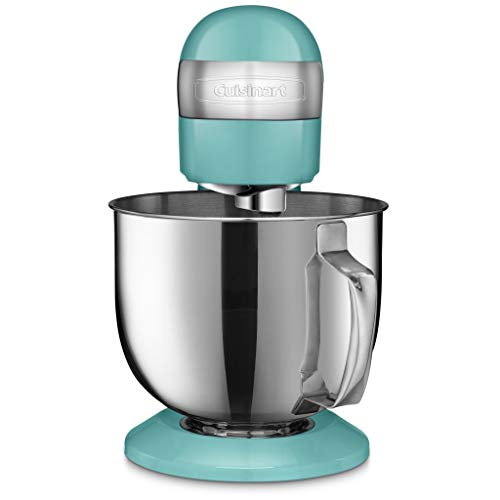
Cuisinart Stand Mixer SM-50 in Periwinkle Blue
Badge: Best Colour Choice
The Cuisinart Stand Mixer SM-50 in Periwinkle Blue is a true stand mixer: a counter-standing machine with a 5.5 quart stainless steel bowl, 12 speeds, and the three attachments that define the format — a chef’s whisk for aeration, a mixing paddle for general work, and a dough hook for kneading — plus a splash guard with a pour spout for adding ingredients mid-mix. The Periwinkle Blue finish is this listing’s identity; mechanically it is the SM-50 platform shared by the other stand mixers in this guide, and this review will not pretend otherwise. For a test-report mindset, that matters because standardised checks — timed kneading, whisking to peaks, mixing cookie dough with inclusions — reward exactly this combination of bowl size, speed range and attachment coverage.
In daily use, the virtues compound. Hands-free operation means the machine creams butter while you measure flour, kneads while you wash up, and whisks while you line the tin — parallelism no hand mixer can offer. The 12-speed range matters most at its ends: low enough to fold flour into batter without toughening it or coating the kitchen, high enough to bring cream and egg whites to proper peaks. The stainless bowl is the right material for the job — light for its size, unreactive, dishwasher-tolerant and free of the staining and odour retention that plastic bowls suffer. The splash guard sounds like a minor accessory until your first full batch of icing sugar; then it becomes the reason your kitchen stays clean.
The honest limitation is the one shared by the whole class: this is a home machine, and home machines have a working envelope. Very stiff, low-hydration doughs in maximum batches will make it labour; very small volumes can sit low in the big bowl. Both are managed with technique — sensible batch sizes, low speeds for dough, a scrape-down at the start — and both are covered in the how-to section below. Judged inside its envelope, the SM-50 specification is complete: nothing essential is missing from the box for the standard home repertoire of cakes, cookies, breads, mashes and whipped work.
Strengths
- Full stand-mixer capability — hands-free mixing, kneading and whisking — in the Periwinkle Blue finish
- 5.5 quart stainless bowl suits family-size cake batters and bread doughs
- Three included attachments mean no immediate extra purchases for standard baking
Trade-offs
- Identical mechanics to the other SM-50 finishes; the finish is the only variable
- Large and heavy compared with any hand mixer in this guide
- The bowl size can feel oversized for a single small batch of whipped cream
Key specifications: 12 speeds; 5.5 quart stainless steel bowl; Chef’s whisk, mixing paddle and dough hook included; Splash guard with pour spout; Model SM-50TQNAS.
Best for: home bakers choosing the SM-50 platform who like the blue finish / Not suited for: small-batch-only cooks who rarely mix more than a cup or two at a time
Check on Amazon — check the live listing for the Periwinkle Blue finish before you buy.
Comparison Table
| Product | Format | Speeds | Bowl / kit | Attachments noted in listing | Link |
|---|---|---|---|---|---|
| Cuisinart Stand Mixer SM-50 in White Linen | Stand | 12 speeds | 5.5 quart stainless bowl | Whisk, paddle, dough hook | Check on Amazon |
| Cuisinart Power Advantage Plus 9-Speed Hand Mixer HM-90S | Hand | 9 speeds | Use your own bowl | Beaters, storage case | Prose-only |
| Cuisinart 9-Speed Hand Mixer HM-90BCS with Storage Case | Hand | 9 speeds | Use your own bowl | Beaters, storage case | Prose-only |
| Hamilton Beach 6-Speed Hand Mixer 62636J with Storage Case | Hand | 6 speeds | Use your own bowl | Beaters, whisk and dough hooks | Prose-only |
| Cuisinart Stand Mixer SM-50 in Ruby Red | Stand | 12 speeds | 5.5 quart stainless bowl | Whisk, paddle, dough hook | Check on Amazon |
| Cuisinart Stand Mixer SM-50 in Periwinkle Blue | Stand | 12 speeds | 5.5 quart stainless bowl | Whisk, paddle, dough hook | Check on Amazon |
The table compresses the guide’s argument into one screen: format is the dividing line, and everything else is refinement. Among the stand mixers, the rows are mechanically identical — same speeds, same bowl, same attachments — because they are one platform in different finishes; among the hand mixers, the differences that matter are speed count, motor figure where stated, and whether a storage case or extra attachments are included. Readers who started by browsing Best Mixers Kitchen Aid will find the same lesson applies across the category: compare format and specification, not adjectives.
How to Choose the Right Mixer for Your Kitchen
Step one: settle the format question honestly. List the mixing jobs of your last month. If dough, double batches, or anything you would rather not hold a motor through appear on it, you are a stand-mixer buyer. If the list is batters, frostings, whipped cream and the occasional cake, a hand mixer covers it at a fraction of the storage cost. Most mixer regret is born right here, in a format decision made by price or by photograph instead of by job list.
Step two: size the bowl to your batches. A 5.5 quart bowl is the home sweet spot — family cakes, holiday mashes, a standard loaf’s worth of dough — with headroom to fold without spilling. Bigger is not better for small households: tiny volumes get lost under the paddle in an oversized bowl. Smaller is not thriftier for batch bakers: a bowl you must split every recipe into is a tax on every bake. Match the bowl to the batch you make most, not the largest you can imagine.
Step three: read the attachment list, not the marketing. Whisk, paddle and dough hook in the box means the machine covers aeration, general mixing and kneading from day one. For hand mixers, check whether beaters are joined by a whisk or dough hooks and whether a storage case keeps the kit together. Attachments you must buy separately are part of the real price, and attachments that do not exist for a format — there is no kneading solution for a hand mixer — are part of the real specification.
Step four: treat speed count as control, not power. More speeds mean finer steps, most valuable at the slow end: folding, starting dry ingredients, and gentle combining. Judge a mixer’s low-speed manners as carefully as its top speed. Then step five: plan the machine’s home. A stand mixer needs a permanent counter position with cabinet clearance and a nearby socket; a hand mixer needs a drawer. The machine that fits your kitchen’s geography is the machine that gets used.
Finally, a note on tiers. Within a format, price tiers buy control, capacity and kit rather than a different kind of mixing: more speeds, a bigger bowl, more attachments in the box, a storage case. Across formats, the tier jump is functional — hands-free operation and kneading exist only on the stand side. Spend across that line deliberately, and within a line on the specifications you will feel weekly. It is also worth a look at Best Mixers For Tullamore Dew if your baking runs toward celebration-scale projects, where capacity planning matters even more.
How to Use, Clean and Maintain Your Mixer
Setup. Place a stand mixer on a clear, dry counter with room to raise the head or tilt it back, lock the bowl in place, and fit the attachment for the job — paddle for general mixing, whisk for aeration, hook for dough. For a hand mixer, choose a bowl with high sides and enough depth that the beaters stay submerged in the mixture; a bowl that is too wide and shallow invites splashing.
Mixing, step by step. (1) Bring ingredients to the state the recipe assumes — butter softened for creaming, eggs at room temperature for whisking. (2) Add dry ingredients in stages, starting the mixer at its lowest speed each time. (3) Scrape down the bowl sides and bottom once mid-mix; every mixer leaves a margin, and one scrape is the difference between even and almost-even. (4) Watch the mixture, not the clock: stop at the visual signs described in the guidance below. (5) For dough, knead at low speed and judge by smoothness and elasticity, not by minutes alone.
Cleaning. Detach attachments and wash them promptly; bowls and stainless attachments tolerate the dishwasher in most households’ practice, but check the manual for your model and finish. Wipe the body and head with a damp cloth, paying attention to the underside where splashes land. Never immerse a motor body. Dry attachments fully before storing them, and coil cords loosely.
Troubleshooting. Problem: flour erupts when starting → the speed was too high or all the flour went in at once; start at the lowest speed and add dry ingredients in stages, using the splash guard. Problem: mixture clings unmixed to the bowl bottom → stop and scrape down, and check the attachment is fully seated. Problem: dough climbs the hook → the batch is large or the speed high; pause, push the dough down, continue at low speed, and split future batches. Problem: a hand mixer labours and slows in a thick mixture → the job is beyond the format; thin the mixture if the recipe allows, work in smaller amounts, or move the job to a stand mixer.
How Test-Based Rankings Usually Judge Stand Mixers
Serious comparative testing tends to break a stand mixer into measurable jobs: how quickly and evenly it whisks egg whites, whether the paddle leaves an unmixed layer at the bottom of the bowl, how the machine behaves when a stiff dough climbs the hook, and how much the head flexes or the body walks under load. Ease-of-use scoring looks at controls, attachment changes, bowl handling and cleaning. None of that requires believing a single headline score; it requires knowing which jobs matter in your kitchen. If you bake bread weekly, dough performance dominates. If you mostly make cakes, even mixing and gentle low speeds matter more. Reading any ranking — including this one — through your own job list is the skill that makes test reporting useful rather than decorative.
Why This Guide Does Not Quote Scores or Star Ratings
Scores and ratings move. A figure printed in an article can be out of date within a season as more owners report back, models are revised, and test programmes re-run their benches. That is why this guide describes performance in words — what each machine is built to do, what its listed specifications support, and where its honest limits sit — and leaves the live numbers on the listing page, where they are current on the day you read them. It is a slower way to shop, but it is the way that survives contact with reality: specifications and format do not change after publication; scores do.
Practical Guidance for Everyday Mixing
Common Buying Mistakes
- Buying the wrong format for the heaviest job. A hand mixer bought for bread dough, or a stand mixer bought for twice-a-year whipped cream, both end as regrets; let your heaviest regular job set the format.
- Judging by headline power or speed count alone. Neither tells you about bowl geometry, low-speed control or attachments — the things you feel in every batch.
- Ignoring the attachment list. A machine without a dough hook is not a kneading machine, whatever the photographs imply; check the box contents, not the lifestyle images.
- Forgetting the machine’s home. No counter plan means a cupboard, and a cupboard means a mixer that rarely gets used.
- Chasing a printed price or score. Both move; buy on format and specification, and confirm the live figure on the day — a lesson that also applies when browsing Best Mixers To Have and similar roundups.
Final Recommendation
Start with the Cuisinart Stand Mixer SM-50 in White Linen: it is a true stand mixer on the SM-50 platform — 12 speeds, 5.5 quart stainless bowl, whisk, paddle and dough hook in the box — and it answers the search directly. If its finish is not for you, the Cuisinart Stand Mixer SM-50 in Ruby Red is the same machine in Ruby Red, so the choice between them is purely about which you would rather see on your counter every day. Choose a prose-only hand mixer instead only if your honest job list is light — batters, frostings, whipped work — and drawer storage matters more than hands-free power. Choose nothing until you have measured your counter and your typical batch; those two measurements, plus the format decision, are the whole purchase in miniature.
Related guides
Frequently Asked Questions
What is the difference between a stand mixer and a hand mixer?
A stand mixer is a fixed machine with its own bowl that mixes hands-free and can knead dough with a hook attachment. A hand mixer is a light motor you hold, fitted with beaters, used in your own bowl. Stand mixers suit frequent, heavy or large-batch work; hand mixers suit light, occasional work and small kitchens.
Is a 5.5 quart bowl big enough for a family?
For the standard home repertoire — family cakes, cookie batches, holiday mashing, a loaf of bread dough — yes, it is the size most households settle on. It becomes limiting only for doubled stiff doughs or very large catering batches, which are better split into two mixes.
Can a hand mixer knead bread dough?
Not in any developed sense. Some hand mixers include small dough hooks that can bring a soft dough together, but kneading — sustained development of gluten in a resistant dough — needs the fixed geometry, weight and hook of a stand mixer. Expecting it of a hand mixer is the most common disappointment in this category.
Why does this guide print no prices or ratings?
Because both change constantly — by finish, by season and by retailer — and a printed figure becomes misinformation. The guide fixes what does not change (format, bowl, speeds, attachments) and directs you to the live listing for the figures of the day.
Does the colour of an SM-50 change anything?
No. The White Linen, Ruby Red, Periwinkle Blue and Onyx listings in this category are one machine — same speeds, bowl and attachments — in different finishes. Choose the finish you will enjoy leaving on the counter, because a mixer that lives on the counter is a mixer that gets used.
How should I use consumer-test style reporting when buying a stand mixer?
Use it to build a checklist, not to outsource the decision. Note which tasks the testing weighted most heavily, check whether those match your baking, then verify the specifications of the specific model in front of you — bowl size, speeds, included attachments — because those are the parts of a test result that stay true after the headline score is forgotten.


