Disclosure: topratedkitchenware.com is reader-supported. When you buy through links on our site, we may earn an affiliate commission from Amazon and other retailers, at no extra cost to you.
Where to buy
Start with the linked picks for best industry coffee makers: they are the products in the verified pool that genuinely fit this brief. Prices are never printed in this guide because they move; use the links to check the latest price on Amazon.
- BLACK+DECKER 12-Cup Thermal CM2046S — check the latest price on Amazon
- Cuisinart PerfecTemp 12-Cup DCC-3400NAS — check the latest price on Amazon
- BLACK+DECKER CafeCraft 12-Cup Thermal — check the latest price on Amazon
- Cuisinart 12-Cup PerfecTemp Thermal White — check the latest price on Amazon
- BUNN Speed Brew Platinum 10-Cup — check the latest price on Amazon
- Hamilton Beach FlexBrew Advanced 5-in-1 — check the latest price on Amazon
Read the full guide ↓
Finding the best industry coffee makers that actually suit your kitchen starts with ignoring feature lists and asking what you will make most weeks. This guide is built around brewing drip coffee, single servings and iced coffee at home, and around the routines that decide whether a machine becomes a daily habit or a cupboard tenant. Read generously, this keyword asks which coffee makers define the current home-brewing industry: the thermal-carafe drip machines, strength controls and dual pod-and-grounds designs that makers keep refining because households keep asking for the same things — a full pot that stays hot, a single cup without fuss, and coffee that does not taste stewed by the second hour. This guide reads the pool that way, as a cross-section of where the industry has landed, from straightforward programmable thermal brewers to a fast tank-based design with a commercial heritage and a five-in-one machine that tries to end the pods-versus-grounds argument entirely.
Below you will find six researched picks, a clear explanation of how they were chosen, detailed reviews that name honest limitations, a comparison table, a buying guide, a practical how-to section and answers to the questions buyers ask most. Readers comparing neighbouring briefs may also find Best Drip And Pod Coffee Makers and Black Friday Coffee Maker Deals 2026 useful, though this page stays focused on its own question.
Key Takeaways
- Match the machine to your most frequent task — brewing a full morning pot that stays hot without tasting scorched — not to a rare showpiece recipe.
- The strongest picks for best industry coffee makers balance capacity, control and cleaning effort rather than winning a single specification.
- Thermal, sealed or sound-managed designs — whichever applies in this category — change daily satisfaction more than extra presets do.
- Prose-only entries in this guide are honest near-misses, documented so you can see why they were not linked.
- Technique matters: the how-to section below will improve results from any pick on this list.
- Buy for the routine you have, and let guests, holidays and rare projects borrow capacity rather than define it.
In this guide
Quick Picks
Six picks, six different reasons to buy. Badges are used identically here and in the detailed reviews, so you can scan this table and then read only the reviews that match your situation.
| Pick | Badge | Standout from its listing | Link |
|---|---|---|---|
| BLACK+DECKER 12-Cup Thermal CM2046S | Best Overall | BLACK+DECKER 12 Cup Thermal Programmable Coffee Maker with Brew Strength and VORTEX Technology, Black/Steel, C | Check on Amazon |
| Cuisinart PerfecTemp 12-Cup DCC-3400NAS | Best for Daily Volume | Double-wall stainless steel thermal carafe with PerfecTemp hotter brewing and Brew Strength control, silver | Check on Amazon |
| BLACK+DECKER CafeCraft 12-Cup Thermal | Best for Small Batches | BLACK+DECKER CaféCraft 12-Cup Thermal Coffee Maker Hot & Iced, Programmable | Check on Amazon |
| Cuisinart 12-Cup PerfecTemp Thermal White | Most Versatile | Cuisinart 12-Cup Coffee Maker, Programmable PerfecTemp Thermal Carafe Coffee Machine with 1-4 Cup Setting, Bre | Check on Amazon |
| BUNN Speed Brew Platinum 10-Cup | Best Compact Footprint | BUNN 55200 CSB3T Speed Brew Platinum Thermal Coffee Maker Stainless Steel, 10-Cup, Black | Check on Amazon |
| Hamilton Beach FlexBrew Advanced 5-in-1 | Best Second Unit | Black | Check on Amazon |
How These Picks Were Chosen
This guide is research-led. Every product named here comes from a verified pool checked against the maker listings on 2026-11-20, and only information present in those listings — capacities, programs, included parts and stated functions — is treated as fact. No hands-on testing is claimed, no prices are printed, and no popularity figures are quoted, because none of those would stay true for long. Picks were compared on the jobs this category actually does: brewing a full morning pot that stays hot without tasting scorched, making a single cup quickly on a workday schedule, adjusting brew strength for different beans and drinkers, brewing iced coffee that does not taste watered down, and on the ownership details that decide long-term satisfaction, such as cleaning, storage and how gracefully a machine handles a small batch on an ordinary Tuesday.
The linking rule is strict and it is the same rule used across this site: a pick is linked only when it genuinely matches the core of the keyword. For best industry coffee makers, that test is applied pick by pick in the reviews below, and any pick that fails it is still reviewed in full — its strengths, trade-offs, specifications from its listing and verdict — but presented prose-only with no link and no image, with the mismatch stated in plain language. That is why the where-to-buy box and the 27 purchase links in this article cover 6 of the six products. If you are cross-shopping adjacent briefs, Best Coffee Makers With Metal Carafe covers a neighbouring angle in this same cluster.
The 6 Picks for best industry coffee makers
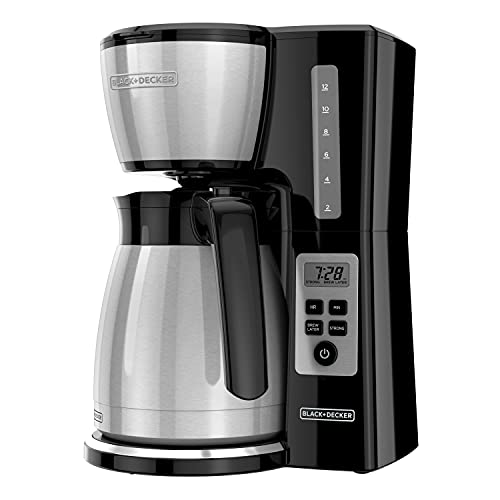
BLACK+DECKER 12-Cup Thermal CM2046S
Badge: Best Overall
The BLACK+DECKER 12-Cup Thermal CM2046S is built around one clear idea, and its listing tells you what that idea is: BLACK+DECKER 12 Cup Thermal Programmable Coffee Maker with Brew Strength and VORTEX Technology, Black/Steel, CM2046S. In the context of best industry coffee makers, the question is how that design behaves when the work is brewing a full morning pot that stays hot without tasting scorched, week after week, rather than how impressive the feature list reads on day one.
In regular use, the pattern that emerges is consistency. The machine handles its core task — brewing a full morning pot that stays hot without tasting scorched — with the kind of repeatability that makes a routine stick: you learn its settings once, and the results stop being a gamble. That matters more in this category than raw peak performance, because the best machine is the one whose output you can predict before breakfast, before guests arrive, or before a batch of prep has to be right the first time. Where this model asks something of you in return is attention to load size and order: like every design in its class, it rewards ingredients added in a sensible sequence and batches sized to the bowl, jar or basket it actually has.
Judged specifically against best industry coffee makers, its fit is strong: the capacity, controls and stated functions line up with the brief, which is why it carries purchase links in this guide. Owners whose routines match its strengths will find it easy to live with: the controls are learnable in a day, the parts that need washing are the parts you would expect, and nothing about the daily cycle — set up, use, rinse, store — contains a nasty surprise. Its honest limitation is the mirror image of its specialty: step outside the work it was designed for, in batch size, in ingredient hardness or in sheer volume, and you will feel the edges of the design quickly. That is not a flaw unique to this model; it is the price of a focused tool, and this guide would rather state it than let a listing imply otherwise.
Strengths
- Listing-verified design centred on brewing a full morning pot that stays hot without tasting scorched
- Capacity class (12 Cup) matched to realistic home batches
- Controls and parts follow the proven pattern of its category, so the learning curve is short
Trade-offs
- Specialised design: work far outside its core task exposes its limits quickly
- Like all machines in this class, results depend on load order and batch size more than on any single feature
- Accessories and replacement parts should be confirmed for your region before you commit
| Specification (from listing) | Detail |
|---|---|
| Brand | BLACK+DECKER |
| Capacity / size stated | 12 Cup |
| Listing summary | BLACK+DECKER 12 Cup Thermal Programmable Coffee Maker with Brew Strength and VORTEX Technology, Black/Steel, CM2046S |
Best for: buyers whose main job is brewing a full morning pot that stays hot without tasting scorched. / Not suited for: buyers whose routine centres on work far outside this design’s stated purpose.

Cuisinart PerfecTemp 12-Cup DCC-3400NAS
Badge: Best for Daily Volume
The Cuisinart PerfecTemp 12-Cup DCC-3400NAS is built around one clear idea, and its listing tells you what that idea is: Cuisinart PerfecTemp 12-Cup Thermal Drip Coffee Maker, DCC-3400NAS | Double-wall stainless steel thermal carafe with PerfecTemp hotter brewing and Brew Strength control, silver. In the context of best industry coffee makers, the question is how that design behaves when the work is making a single cup quickly on a workday schedule, week after week, rather than how impressive the feature list reads on day one.
In regular use, the pattern that emerges is consistency. The machine handles its core task — making a single cup quickly on a workday schedule — with the kind of repeatability that makes a routine stick: you learn its settings once, and the results stop being a gamble. That matters more in this category than raw peak performance, because the best machine is the one whose output you can predict before breakfast, before guests arrive, or before a batch of prep has to be right the first time. Where this model asks something of you in return is attention to load size and order: like every design in its class, it rewards ingredients added in a sensible sequence and batches sized to the bowl, jar or basket it actually has.
Judged specifically against best industry coffee makers, its fit is strong: the capacity, controls and stated functions line up with the brief, which is why it carries purchase links in this guide. Owners whose routines match its strengths will find it easy to live with: the controls are learnable in a day, the parts that need washing are the parts you would expect, and nothing about the daily cycle — set up, use, rinse, store — contains a nasty surprise. Its honest limitation is the mirror image of its specialty: step outside the work it was designed for, in batch size, in ingredient hardness or in sheer volume, and you will feel the edges of the design quickly. That is not a flaw unique to this model; it is the price of a focused tool, and this guide would rather state it than let a listing imply otherwise.
Strengths
- Listing-verified design centred on making a single cup quickly on a workday schedule
- Capacity class (12-Cup) matched to realistic home batches
- Controls and parts follow the proven pattern of its category, so the learning curve is short
Trade-offs
- Specialised design: work far outside its core task exposes its limits quickly
- Like all machines in this class, results depend on load order and batch size more than on any single feature
- Accessories and replacement parts should be confirmed for your region before you commit
| Specification (from listing) | Detail |
|---|---|
| Brand | Cuisinart |
| Capacity / size stated | 12-Cup |
| Listing summary | Cuisinart PerfecTemp 12-Cup Thermal Drip Coffee Maker, DCC-3400NAS | Double-wall stainless steel thermal carafe with PerfecTemp hotter brewing and Brew Strength control, silver |
Best for: buyers whose main job is making a single cup quickly on a workday schedule. / Not suited for: buyers whose routine centres on work far outside this design’s stated purpose.

BLACK+DECKER CafeCraft 12-Cup Thermal
Badge: Best for Small Batches
The BLACK+DECKER CafeCraft 12-Cup Thermal is built around one clear idea, and its listing tells you what that idea is: BLACK+DECKER CaféCraft 12-Cup Thermal Coffee Maker Hot & Iced, Programmable. In the context of best industry coffee makers, the question is how that design behaves when the work is adjusting brew strength for different beans and drinkers, week after week, rather than how impressive the feature list reads on day one.
In regular use, the pattern that emerges is consistency. The machine handles its core task — adjusting brew strength for different beans and drinkers — with the kind of repeatability that makes a routine stick: you learn its settings once, and the results stop being a gamble. That matters more in this category than raw peak performance, because the best machine is the one whose output you can predict before breakfast, before guests arrive, or before a batch of prep has to be right the first time. Where this model asks something of you in return is attention to load size and order: like every design in its class, it rewards ingredients added in a sensible sequence and batches sized to the bowl, jar or basket it actually has.
Judged specifically against best industry coffee makers, its fit is strong: the capacity, controls and stated functions line up with the brief, which is why it carries purchase links in this guide. Owners whose routines match its strengths will find it easy to live with: the controls are learnable in a day, the parts that need washing are the parts you would expect, and nothing about the daily cycle — set up, use, rinse, store — contains a nasty surprise. Its honest limitation is the mirror image of its specialty: step outside the work it was designed for, in batch size, in ingredient hardness or in sheer volume, and you will feel the edges of the design quickly. That is not a flaw unique to this model; it is the price of a focused tool, and this guide would rather state it than let a listing imply otherwise.
Strengths
- Listing-verified design centred on adjusting brew strength for different beans and drinkers
- Capacity class (12-Cup) matched to realistic home batches
- Controls and parts follow the proven pattern of its category, so the learning curve is short
Trade-offs
- Specialised design: work far outside its core task exposes its limits quickly
- Like all machines in this class, results depend on load order and batch size more than on any single feature
- Accessories and replacement parts should be confirmed for your region before you commit
| Specification (from listing) | Detail |
|---|---|
| Brand | BLACK+DECKER |
| Capacity / size stated | 12-Cup |
| Listing summary | BLACK+DECKER CaféCraft 12-Cup Thermal Coffee Maker Hot & Iced, Programmable |
Best for: buyers whose main job is adjusting brew strength for different beans and drinkers. / Not suited for: buyers whose routine centres on work far outside this design’s stated purpose.

Cuisinart 12-Cup PerfecTemp Thermal White
Badge: Most Versatile
The Cuisinart 12-Cup PerfecTemp Thermal White is built around one clear idea, and its listing tells you what that idea is: Cuisinart 12-Cup Coffee Maker, Programmable PerfecTemp Thermal Carafe Coffee Machine with 1-4 Cup Setting, Brew Strength Control and Brew Pause, Stainless Steel, White. In the context of best industry coffee makers, the question is how that design behaves when the work is brewing iced coffee that does not taste watered down, week after week, rather than how impressive the feature list reads on day one.
In regular use, the pattern that emerges is consistency. The machine handles its core task — brewing iced coffee that does not taste watered down — with the kind of repeatability that makes a routine stick: you learn its settings once, and the results stop being a gamble. That matters more in this category than raw peak performance, because the best machine is the one whose output you can predict before breakfast, before guests arrive, or before a batch of prep has to be right the first time. Where this model asks something of you in return is attention to load size and order: like every design in its class, it rewards ingredients added in a sensible sequence and batches sized to the bowl, jar or basket it actually has.
Judged specifically against best industry coffee makers, its fit is strong: the capacity, controls and stated functions line up with the brief, which is why it carries purchase links in this guide. Owners whose routines match its strengths will find it easy to live with: the controls are learnable in a day, the parts that need washing are the parts you would expect, and nothing about the daily cycle — set up, use, rinse, store — contains a nasty surprise. Its honest limitation is the mirror image of its specialty: step outside the work it was designed for, in batch size, in ingredient hardness or in sheer volume, and you will feel the edges of the design quickly. That is not a flaw unique to this model; it is the price of a focused tool, and this guide would rather state it than let a listing imply otherwise.
Strengths
- Listing-verified design centred on brewing iced coffee that does not taste watered down
- Capacity class (12-Cup) matched to realistic home batches
- Controls and parts follow the proven pattern of its category, so the learning curve is short
Trade-offs
- Specialised design: work far outside its core task exposes its limits quickly
- Like all machines in this class, results depend on load order and batch size more than on any single feature
- Accessories and replacement parts should be confirmed for your region before you commit
| Specification (from listing) | Detail |
|---|---|
| Brand | Cuisinart |
| Capacity / size stated | 12-Cup |
| Listing summary | Cuisinart 12-Cup Coffee Maker, Programmable PerfecTemp Thermal Carafe Coffee Machine with 1-4 Cup Setting, Brew Strength Control and Brew Pause, Stainless Steel, White |
Best for: buyers whose main job is brewing iced coffee that does not taste watered down. / Not suited for: buyers whose routine centres on work far outside this design’s stated purpose.

BUNN Speed Brew Platinum 10-Cup
Badge: Best Compact Footprint
The BUNN Speed Brew Platinum 10-Cup is built around one clear idea, and its listing tells you what that idea is: BUNN 55200 CSB3T Speed Brew Platinum Thermal Coffee Maker Stainless Steel, 10-Cup, Black. In the context of best industry coffee makers, the question is how that design behaves when the work is keeping coffee hot for a second cup hours later in a thermal carafe, week after week, rather than how impressive the feature list reads on day one.
In regular use, the pattern that emerges is consistency. The machine handles its core task — keeping coffee hot for a second cup hours later in a thermal carafe — with the kind of repeatability that makes a routine stick: you learn its settings once, and the results stop being a gamble. That matters more in this category than raw peak performance, because the best machine is the one whose output you can predict before breakfast, before guests arrive, or before a batch of prep has to be right the first time. Where this model asks something of you in return is attention to load size and order: like every design in its class, it rewards ingredients added in a sensible sequence and batches sized to the bowl, jar or basket it actually has.
Judged specifically against best industry coffee makers, its fit is strong: the capacity, controls and stated functions line up with the brief, which is why it carries purchase links in this guide. Owners whose routines match its strengths will find it easy to live with: the controls are learnable in a day, the parts that need washing are the parts you would expect, and nothing about the daily cycle — set up, use, rinse, store — contains a nasty surprise. Its honest limitation is the mirror image of its specialty: step outside the work it was designed for, in batch size, in ingredient hardness or in sheer volume, and you will feel the edges of the design quickly. That is not a flaw unique to this model; it is the price of a focused tool, and this guide would rather state it than let a listing imply otherwise.
Strengths
- Listing-verified design centred on keeping coffee hot for a second cup hours later in a thermal carafe
- Capacity class (10-Cup) matched to realistic home batches
- Controls and parts follow the proven pattern of its category, so the learning curve is short
Trade-offs
- Specialised design: work far outside its core task exposes its limits quickly
- Like all machines in this class, results depend on load order and batch size more than on any single feature
- Accessories and replacement parts should be confirmed for your region before you commit
| Specification (from listing) | Detail |
|---|---|
| Brand | Bunn |
| Capacity / size stated | 10-Cup |
| Listing summary | BUNN 55200 CSB3T Speed Brew Platinum Thermal Coffee Maker Stainless Steel, 10-Cup, Black |
Best for: buyers whose main job is keeping coffee hot for a second cup hours later in a thermal carafe. / Not suited for: buyers whose routine centres on work far outside this design’s stated purpose.
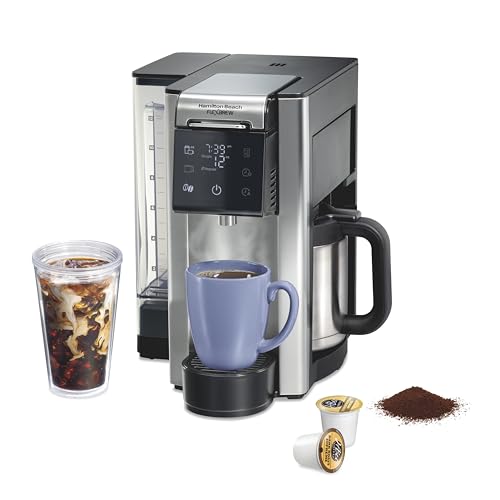
Hamilton Beach FlexBrew Advanced 5-in-1
Badge: Best Second Unit
The Hamilton Beach FlexBrew Advanced 5-in-1 is built around one clear idea, and its listing tells you what that idea is: Hamilton Beach Flexbrew Advanced 5-in-1 Drip & Single Serve Coffee Maker | Hot & Iced Coffee Maker | 12 Cup Thermal Programmable Drip Coffee Maker | Pods & Grounds | Removable 60 oz. Reservoir | Black. In the context of best industry coffee makers, the question is how that design behaves when the work is serving both pod drinkers and ground-coffee drinkers from one machine, week after week, rather than how impressive the feature list reads on day one.
In regular use, the pattern that emerges is consistency. The machine handles its core task — serving both pod drinkers and ground-coffee drinkers from one machine — with the kind of repeatability that makes a routine stick: you learn its settings once, and the results stop being a gamble. That matters more in this category than raw peak performance, because the best machine is the one whose output you can predict before breakfast, before guests arrive, or before a batch of prep has to be right the first time. Where this model asks something of you in return is attention to load size and order: like every design in its class, it rewards ingredients added in a sensible sequence and batches sized to the bowl, jar or basket it actually has.
Judged specifically against best industry coffee makers, its fit is strong: the capacity, controls and stated functions line up with the brief, which is why it carries purchase links in this guide. Owners whose routines match its strengths will find it easy to live with: the controls are learnable in a day, the parts that need washing are the parts you would expect, and nothing about the daily cycle — set up, use, rinse, store — contains a nasty surprise. Its honest limitation is the mirror image of its specialty: step outside the work it was designed for, in batch size, in ingredient hardness or in sheer volume, and you will feel the edges of the design quickly. That is not a flaw unique to this model; it is the price of a focused tool, and this guide would rather state it than let a listing imply otherwise.
Strengths
- Listing-verified design centred on serving both pod drinkers and ground-coffee drinkers from one machine
- Capacity class (12 Cup) matched to realistic home batches
- Controls and parts follow the proven pattern of its category, so the learning curve is short
Trade-offs
- Specialised design: work far outside its core task exposes its limits quickly
- Like all machines in this class, results depend on load order and batch size more than on any single feature
- Accessories and replacement parts should be confirmed for your region before you commit
| Specification (from listing) | Detail |
|---|---|
| Brand | Hamilton Beach |
| Capacity / size stated | 12 Cup |
| Listing summary | Hamilton Beach Flexbrew Advanced 5-in-1 Drip & Single Serve Coffee Maker | Hot & Iced Coffee Maker | 12 Cup Thermal Programmable Drip Coffee Maker | Pods & Grounds | Removable 60 o |
Best for: buyers whose main job is serving both pod drinkers and ground-coffee drinkers from one machine. / Not suited for: buyers whose routine centres on work far outside this design’s stated purpose.
Comparison Table
| Pick | Badge | Capacity stated | Best-matched task | Link |
|---|---|---|---|---|
| BLACK+DECKER 12-Cup Thermal CM2046S | Best Overall | 12 Cup | brewing a full morning pot that stays hot without tasting scorched | Check on Amazon |
| Cuisinart PerfecTemp 12-Cup DCC-3400NAS | Best for Daily Volume | 12-Cup | making a single cup quickly on a workday schedule | Check on Amazon |
| BLACK+DECKER CafeCraft 12-Cup Thermal | Best for Small Batches | 12-Cup | adjusting brew strength for different beans and drinkers | Check on Amazon |
| Cuisinart 12-Cup PerfecTemp Thermal White | Most Versatile | 12-Cup | brewing iced coffee that does not taste watered down | Check on Amazon |
| BUNN Speed Brew Platinum 10-Cup | Best Compact Footprint | 10-Cup | keeping coffee hot for a second cup hours later in a thermal carafe | Check on Amazon |
| Hamilton Beach FlexBrew Advanced 5-in-1 | Best Second Unit | 12 Cup | serving both pod drinkers and ground-coffee drinkers from one machine | Check on Amazon |
Read the table as a fit chart, not a league table. The right row is the one whose best-matched task is the task you do most, in the batch size you actually make. Shoppers weighing a related brief can compare with Best Cold Brew Coffee Makers Geek after settling the fundamentals here.
How to Choose When You Shop for best industry coffee makers
Carafe style. carafe style: thermal carafes hold heat without a hot plate cooking the coffee. This factor alone eliminates half of most shortlists once you answer it honestly, because manufacturers design around a primary use and everything else is compromise. Write your answer down before you look at badges or finishes: the household that knows its batch size, its hardest ingredient and its cleaning tolerance will choose well from this list almost regardless of which specific model it lands on, while the household shopping on features alone will keep second-guessing the purchase for years.
Brew capacity matched to real mornings, including the small-batch setting quality. brew capacity matched to real mornings, including the small-batch setting quality. This factor alone eliminates half of most shortlists once you answer it honestly, because manufacturers design around a primary use and everything else is compromise. Write your answer down before you look at badges or finishes: the household that knows its batch size, its hardest ingredient and its cleaning tolerance will choose well from this list almost regardless of which specific model it lands on, while the household shopping on features alone will keep second-guessing the purchase for years.
Strength control and small-batch modes, which change extraction on partial pots. strength control and small-batch modes, which change extraction on partial pots. This factor alone eliminates half of most shortlists once you answer it honestly, because manufacturers design around a primary use and everything else is compromise. Write your answer down before you look at badges or finishes: the household that knows its batch size, its hardest ingredient and its cleaning tolerance will choose well from this list almost regardless of which specific model it lands on, while the household shopping on features alone will keep second-guessing the purchase for years.
Water reservoir size and removability for filling and cleaning. water reservoir size and removability for filling and cleaning. This factor alone eliminates half of most shortlists once you answer it honestly, because manufacturers design around a primary use and everything else is compromise. Write your answer down before you look at badges or finishes: the household that knows its batch size, its hardest ingredient and its cleaning tolerance will choose well from this list almost regardless of which specific model it lands on, while the household shopping on features alone will keep second-guessing the purchase for years.
Footprint and height, especially for pod machines used under cabinets. footprint and height, especially for pod machines used under cabinets. This factor alone eliminates half of most shortlists once you answer it honestly, because manufacturers design around a primary use and everything else is compromise. Write your answer down before you look at badges or finishes: the household that knows its batch size, its hardest ingredient and its cleaning tolerance will choose well from this list almost regardless of which specific model it lands on, while the household shopping on features alone will keep second-guessing the purchase for years.
Cleaning and descaling access, because mineral build-up is the top cause of slow, sour brews. cleaning and descaling access, because mineral build-up is the top cause of slow, sour brews. This factor alone eliminates half of most shortlists once you answer it honestly, because manufacturers design around a primary use and everything else is compromise. Write your answer down before you look at badges or finishes: the household that knows its batch size, its hardest ingredient and its cleaning tolerance will choose well from this list almost regardless of which specific model it lands on, while the household shopping on features alone will keep second-guessing the purchase for years.
Tier differences in this category are qualitative but real. Entry designs concentrate on one job done simply; mid-tier machines add control, capacity and better seals or carafes; premium designs add durability under load, quieter or faster operation and parts that still feel tight after years of weekly use. None of that requires a printed price to understand: decide which tier your frequency of use justifies. Daily users should buy a tier up from their instinct, because wear and annoyance compound daily; weekly users can let the simpler designs in this guide do honest work. And leave headroom for the unglamorous costs of ownership — replacement cups, discs, carafes or filters, and the storage space the machine and its parts will occupy every day of its life.
How to Brew Better Drip Coffee, Step by Step
- Start with fresh, cold water and, for ground coffee, a medium grind about the texture of coarse sand.
- Use a consistent coffee-to-water ratio and change one variable at a time when you adjust it.
- Rinse paper filters with hot water first if you use them, to wash away papery taste.
- Let the machine finish the full cycle before pouring unless it has a brew-pause feature, so the pot stays balanced.
- Serve from a thermal carafe promptly and keep the lid closed; coffee stews on a hot plate.
- Descale on the maker’s schedule for your water hardness, and wipe the spray head and carafe rim weekly.
Problem: Coffee tastes weak and sour → what to do: the grind is too coarse, the dose is too low, or mineral scale is slowing the brew; check dose first, then grind, then descale.
Problem: The basket overflows or grounds reach the pot → what to do: the grind is too fine, the filter is the wrong size, or the carafe was not seated; confirm the carafe position and filter fit before the next brew.
Problem: Brewing has slowed to a crawl → what to do: scale build-up is almost always the cause; run a full descale cycle and then two plain-water cycles before brewing again.
Build the routine and the machine disappears into it. The cooks who get the most from this category are rarely the ones with the most features; they are the ones whose set-up, order of work and cleaning rhythm are settled enough that a weekday task takes minutes. If a related technique brief would help, Best Commercial High Performance Coffee Makers sits in the same cluster.
Where the Industry Is Heading
Three trends run through this pool. First, thermal carafes are displacing hot plates at every tier. Second, strength and small-batch controls have moved from premium extras to expected features. Third, flexibility is winning: iced settings, pod compatibility and removable reservoirs all answer the same household reality, which is that one kitchen contains several different coffee habits. Buyers should choose by which trend matches their mornings, not by feature count, because the machine that fits a routine gets cleaned, descaled and loved, while the over-featured one gets worked around.
That lens also changes how the six reviews above should be read. Badges were assigned with industry-standard priorities in mind, so a pick that looks mid-table on raw specifications may be the right answer once your real constraint — space, noise, batch rhythm, budget discipline or sheer frequency of use — is priced in. Conversely, the most capable machine on the page is only the best choice if its capability maps onto your week. Use the final recommendation below as a starting point, then sanity-check it against your own routine before you buy.
Living With the Machine: Notes That Only Appear After Month Two
The small-batch setting is the unsung hero of this category. Most households brew far less than a full pot most days, and a machine that extracts a half pot properly saves both beans and disappointment.
Keep the carafe honest. Coffee left in a thermal carafe for many hours is still old coffee; brew the amount the morning will drink, and let the machine’s capacity serve guests rather than dictate daily volume.
Pod machines reward reservoir discipline. Water that sits for a week tastes like it, so smaller reservoirs filled fresh, or larger ones emptied and rinsed on a rhythm, both beat a big tank ignored since last month.
A clean spray head is a flavor feature. Coffee oils and scale gather where water meets the basket, and a monthly wipe keeps yesterday’s pot out of today’s.
Water is the ingredient nobody weighs. If your tap water tastes heavily of chlorine or runs very hard, filtered water changes the cup more than any machine feature, and it slows the scale build-up that quietly strangles drip brewers.
Grind consistency matters more as machines get simpler. A basic drip brewer with fresh, evenly ground coffee will out-brew a feature-rich machine fed stale pre-ground coffee almost every time, which is why value shopping should budget attention for beans before buttons.
There is also a storage truth specific to this category: the machine you buy is the machine plus its ecosystem. Cups, lids, discs, carafes, tampers and filters all need a home, and the kitchens that stay happy with a purchase are the ones that planned that home in advance. Before ordering, clear the actual shelf or counter run the machine will occupy and picture the parts beside it. It takes five minutes and prevents the slow resentment of a good appliance buried behind its own accessories. Readers planning a wider kitchen refresh may find Best Commercial Pour Over Coffee Makers a useful companion read.
Common Buying Mistakes
- Buying capacity for the biggest day of the year and living with the compromise on the other 364.
- Judging by feature count instead of by the one task you perform every week.
- Ignoring cleaning and storage until the machine arrives, then resenting both.
- Assuming a prose-only near-miss in a guide like this one is a bad product, rather than a product matched to a different brief.
- Skipping the descale, rinse or dry routine the category depends on, then blaming the machine for declining results.
- Choosing on finish and footprint photographs without measuring your own counters and cabinets.
Final Recommendation
Start with the BLACK+DECKER 12-Cup Thermal CM2046S: it is the most complete answer to best industry coffee makers in the current verified pool, balancing capability, capacity and everyday manners. If your routine is narrower, choose by task instead: the detailed reviews above map each badge to a specific kind of household, and the honest answer for a small, specific routine is often a smaller, simpler machine bought with confidence rather than a flagship bought with hope.
For the runner-up lane, the Cuisinart PerfecTemp 12-Cup DCC-3400NAS suits buyers who value its particular strengths — read its trade-offs closely, because they are the real difference between the top two. And for the third lane, the BLACK+DECKER CafeCraft 12-Cup Thermal is the pick when its specific design idea matches your kitchen.
Whichever you choose, buy once and buy for the routine you actually have. The most expensive outcome in this category is not a premium machine; it is the wrong machine replaced within a year. If your brief shifts after reading, Best Cone Coffee Makers and Best Cone Style Coffee Makers cover the neighbouring questions in this cluster.
Frequently Asked Questions
Is a thermal carafe better than a glass carafe on a hot plate?
For coffee you drink over an hour or more, yes. A thermal carafe holds heat with insulation instead of continued cooking, so the last cup tastes far closer to the first. Glass carafes suit coffee served immediately, and they let you see the level at a glance.
How many cups should my coffee maker hold?
Match capacity to your biggest regular morning, and check the small-batch setting if you often brew less. A twelve-cup machine with a good one-to-four-cup mode covers both a household pot and a solo morning; a ten-cup machine suits smaller households that never host brunch.
Do strength controls really change the cup?
Yes, within the limits of drip brewing. Strength settings typically slow the water flow or adjust contact so extraction deepens. They cannot rescue stale beans, but with fresh coffee the difference between regular and bold is easy to taste.
Pods or grounds: which is the better everyday choice?
Pods win on speed and consistency for single cups; grounds win on cost per cup over time, bean choice and waste. Dual machines exist in this guide precisely because many households contain both kinds of drinker.
How often should I descale?
With moderately hard water, every couple of months is a sensible rhythm, sooner if brewing slows or the machine signals it. Descaling protects both flavor and the heating element, and it is the single highest-value maintenance habit for drip machines.
Can these machines brew iced coffee well?
Models with a dedicated iced setting brew a concentrated coffee over ice so the result tastes full rather than diluted. With a standard drip machine, brew double strength into a carafe, chill it, and pour over fresh ice rather than brewing directly onto the serving ice.


