Disclosure: topratedkitchenware.com is reader-supported. When you buy through links on our site, we may earn an affiliate commission from Amazon and other retailers, at no extra cost to you.
Where to buy
Shopping for the best toasters black and decker vs cuisinart? Start with the shortlist below — every pick was checked against its verified listing, and linked picks take you to Amazon, where you can check the latest price on Amazon and confirm the current configuration before you decide. Picks covered in prose only are marked as such, with the reason stated in their reviews. Best Toasters Consumer Reports is the closest neighbouring guide if your needs shift as you read.
- BLACK+DECKER 2-Slice Toaster with Extra-Wide Slots — Best Overall — The Linked Headliner. Check the latest price on Amazon.
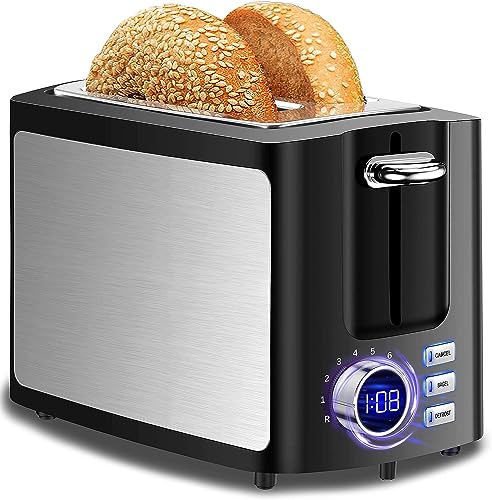
- Hommater 2-Slice Smart Toaster with LCD Display — Prose-Only Alternative (prose-only, see its review)
- Amazon Basics 2-Slice Toaster — Prose-Only Alternative (prose-only, see its review)
- Elite Gourmet 2-Slice Cool-Touch Toaster ECT1027B — Prose-Only Alternative (prose-only, see its review)
- Hamilton Beach Extra-Wide Slot 2-Slice Toaster 22634 — Prose-Only Alternative (prose-only, see its review)
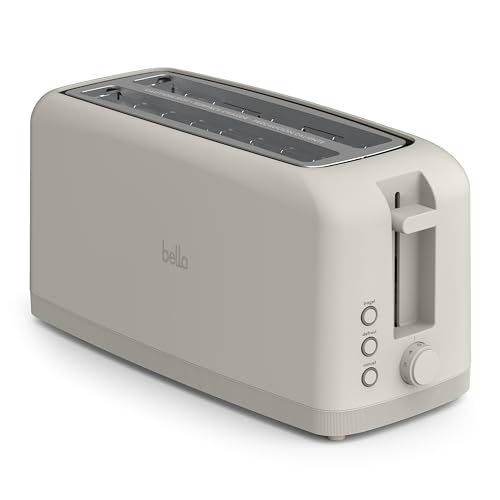
- bella Fits-Anywhere Slim Toaster, 4-Slice — Prose-Only Alternative (prose-only, see its review)
Read the full guide ↓
You came here with a specific question — best toasters black and decker vs cuisinart — and this guide answers it head-on, including one awkward fact stated up front: the verified pool for this keyword contains exactly one of the two brands. The BLACK+DECKER 2-slice extra-wide toaster is here, checked and linked. No Cuisinart toaster was in the verified pool, so no Cuisinart pick is linked, pictured or given an invented listing — instead, the Cuisinart side of the comparison is argued at brand level, from the design choices Cuisinart toasters are known for, clearly labelled as such.
That honesty matters, because a versus guide that quietly substitutes other brands would waste your time. Five further toasters from the pool — Hommater, Amazon Basics, Elite Gourmet, Hamilton Beach and bella — are reviewed in prose only, without links or images, precisely because they are neither brand. They serve as context: a feature baseline that shows what the market includes at this tier, against which the headliner’s value can be judged.
So the structure is simple. One linked pick, reviewed fully. A brand-versus-brand comparison built from what each maker consistently does — BLACK+DECKER’s value-first extra-wide slot formula against Cuisinart’s design-led, finish-forward approach. And clear verdicts for the common cases: bagels, artisan bread, small counters, and households that toast for a crowd.
One more piece of orientation before the picks: readers comparing neighbouring questions often start with Best Toasters Cooks Illustrated or Best Toasters Digital Trends, and this guide cross-refers where the answers genuinely overlap.
Key Takeaways
- Only one pick is linked: the BLACK+DECKER 2-slice extra-wide — the sole genuine match for this keyword in the verified pool.
- No Cuisinart toaster was in the pool, so Cuisinart is compared at brand level in prose; nothing is invented or linked in its name.
- BLACK+DECKER’s case: extra-wide slots, bagel mode, 7 shades and extra-lift at a value tier.
- Cuisinart’s typical case: design, finishes and control polish — judge specific models on their own listings.
- The five other pool toasters are prose-only context, clearly labelled, because they are neither brand.
In this guide
Quick Picks
| Pick | Badge | Key specification | Link |
|---|---|---|---|
| BLACK+DECKER 2-Slice Toaster with Extra-Wide Slots | Best Overall — The Linked Headliner | Capacity: 2-slice; Slots: extra-wide | Check on Amazon |
| Hommater 2-Slice Smart Toaster with LCD Display | Prose-Only Alternative | Capacity: 2-slice, wide slot; Display: LCD digital countdown timer | Prose-only |
| Amazon Basics 2-Slice Toaster | Prose-Only Alternative | Capacity: 2-slice; Slots: extra-wide, for bagels | Prose-only |
| Elite Gourmet 2-Slice Cool-Touch Toaster ECT1027B | Prose-Only Alternative | Capacity: 2-slice; Slots: 1.25-inch extra-wide | Prose-only |
| Hamilton Beach Extra-Wide Slot 2-Slice Toaster 22634 | Prose-Only Alternative | Capacity: 2-slice; Slots: extra-wide | Prose-only |
| bella Fits-Anywhere Slim Toaster, 4-Slice | Prose-Only Alternative | Capacity: 4-slice, extra long and wide slot format; Design: slim Fits-Anywhere profile | Prose-only |
How These Picks Were Chosen
The pool for this keyword was screened with one rule: a pick is linked only if it is genuinely one of the two named brands’ toasters. One pick passed — the BLACK+DECKER 2-slice with extra-wide slots. The other five are real, verified toasters, but from other brands, so they are covered in prose only, with no Amazon link and no image, and the reason is stated in each review rather than hidden.
The Cuisinart side of the comparison is handled differently and openly: since no Cuisinart model could be verified in the pool, the guide compares brand approaches — the features and design priorities each maker is documented to pursue across its toaster lines — and flags every such statement as brand-level, not model-level. Readers who settle on Cuisinart should verify the exact model on its listing before buying.
No prices or fixed ratings appear anywhere in this guide. Versus decisions turn on slots, shades, controls and counter fit, which do not change; prices and ratings do, so they are left to the live listing. The result is a comparison you can act on without chasing numbers that may already have moved.
Internal cross-checks against neighbouring guides — including Best Toasters Don T Get Hot On Outside — were used to keep this shortlist consistent with the wider category coverage, so a product’s role does not change depending on which page you land on.
One further note on method: brand-level statements about Cuisinart in this guide are drawn from the consistent, documented pattern of that maker’s toaster lines — finishes, control polish, premium positioning — and are labelled as brand-level wherever they appear. No Cuisinart specification is quoted, because no Cuisinart product could be verified in the pool, and this guide does not quote what it cannot check.
Coverage honesty completes the method: this guide would rather hand you one verified link and a truthful map of the rest than six links and a fiction. Versus shopping is where affiliate guides most often cheat, because the temptation to link whatever is in the pool is built into the economics. The structure you are reading — one headliner, five honestly-labelled prose alternatives, and a brand comparison that names its own evidence level — is this guide’s answer to that temptation, and it is offered as a standard worth demanding elsewhere too.
Detailed Reviews: The best toasters black and decker vs cuisinart Shortlist, Pick by Pick
BLACK+DECKER 2-Slice Toaster with Extra-Wide Slots
Badge: Best Overall — The Linked Headliner
Strengths
- Extra-wide slots take bagels and thick bakery slices without forcing
- Seven shade settings give real control between pale and dark
- Extra-lift lever keeps fingertips away from hot slots
Trade-offs
- Two-slice capacity queues breakfast for larger households
- No motorised lowering or digital countdown at this tier
- Wide slots centre thin sandwich bread less precisely
Key specifications
- Capacity: 2-slice
- Slots: extra-wide
- Shade settings: 7
- Modes: bagel mode
- Lever: extra-lift
- Tray: removable crumb tray
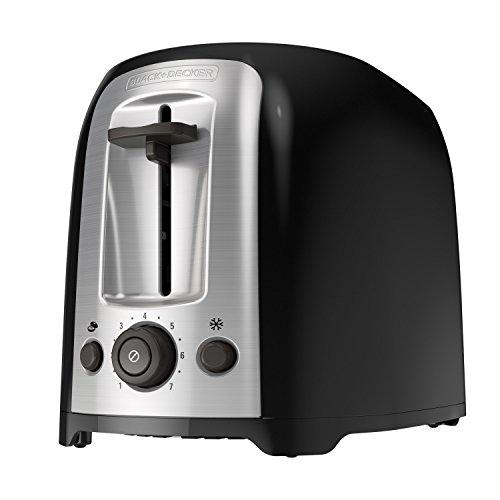
The BLACK+DECKER entry in this head-to-head is a 2-slice toaster built around extra-wide slots, a bagel mode and seven shade settings. The extra-lift lever sounds minor until you are fishing a small end-piece of toast out of a hot slot with your fingertips; the removable crumb tray keeps the counter and the toaster’s internals cleaner. This is the value-brand formula executed properly: the features people use daily, no theatre.
Bagel mode is the setting that matters most in this class — it toasts the cut side while gently warming the crust side, instead of scorching the outside of a bagel while its centre stays doughy. Seven shade settings spread the browning range widely enough that a household with a pale-toast person and a dark-toast person can both save a number.
In a BLACK+DECKER versus Cuisinart frame, this pick is judged on slot honesty, shade control and daily ease — the ground on which the two brands have competed for decades.
Ownership, week to week, is where the BLACK+DECKER 2-Slice Toaster with Extra-Wide Slots should be judged. A toaster’s real specification is behavioural: the same shade tomorrow as today, crumbs that leave the machine easily, slots that treat your actual bread kindly at the morning rush. Weigh this pick on those terms alongside its badge — Best Overall — The Linked Headliner — and against the brand question this guide exists to answer. If it is one of the prose-only alternatives, its behaviour still matters as market context; if it is the linked headliner, its behaviour is the recommendation. Either way, do not let a feature list outrank the breakfast test: bread in, shade set, result repeated.
Best for: buyers whose priorities match the Best Overall — The Linked Headliner brief / Not suited for: buyers whose needs point to a different pick in this shortlist.
Hommater 2-Slice Smart Toaster with LCD Display
Badge: Prose-Only Alternative
Strengths
- Countdown display removes guesswork about remaining time
- Nine shade settings are the finest granularity here
- Full function set including reheat
Trade-offs
- Not one of the two brands this comparison is about
- Smart-display styling will not suit every kitchen
- Brand support network is smaller than the two headliners
Key specifications
- Capacity: 2-slice, wide slot
- Display: LCD digital countdown timer
- Shade settings: 9
- Functions: bagel, defrost, cancel, reheat
The Hommater is a 2-slice wide-slot toaster with an LCD countdown display and nine shade settings, plus bagel, defrost, cancel and reheat functions. On paper its control set is the most precise in this pool — a visible countdown changes how people use a toaster, because breakfast stops being a surprise. It is covered in prose only in this guide for one honest reason: this keyword asks about BLACK+DECKER and Cuisinart, and the Hommater is neither.
As an alternative for shoppers who decide the brand question matters less than the display, it makes a rational case. But it cannot answer the question this page exists to answer — how the two named brands compare — so it stays unlinked, and the verdict sections below judge it only as context.
In a BLACK+DECKER versus Cuisinart frame, this pick is judged on slot honesty, shade control and daily ease — the ground on which the two brands have competed for decades.
Ownership, week to week, is where the Hommater 2-Slice Smart Toaster with LCD Display should be judged. A toaster’s real specification is behavioural: the same shade tomorrow as today, crumbs that leave the machine easily, slots that treat your actual bread kindly at the morning rush. Weigh this pick on those terms alongside its badge — Prose-Only Alternative — and against the brand question this guide exists to answer. If it is one of the prose-only alternatives, its behaviour still matters as market context; if it is the linked headliner, its behaviour is the recommendation. Either way, do not let a feature list outrank the breakfast test: bread in, shade set, result repeated.
Prose-only in this guide — no Amazon link and no image. Reason: Not one of the two brands named in this keyword (BLACK+DECKER vs Cuisinart) — prose-only context pick.
Best for: readers weighing it as an alternative through their usual retailer / Not suited for: readers who want this guide’s verified linked shortlist.
Amazon Basics 2-Slice Toaster
Badge: Prose-Only Alternative
Strengths
- Straightforward control set with nothing to learn
- Cord wrap keeps counters tidy
- Extra-wide slots handle bagels
Trade-offs
- Not one of the two brands this comparison is about
- Six browning settings are the fewest here
- House-brand styling and support differ from the headliners
Key specifications
- Capacity: 2-slice
- Slots: extra-wide, for bagels
- Browning settings: 6
- Power: 900W
- Buttons: defrost, cancel, bagel
- Extras: removable crumb tray, cord wrap
Amazon Basics’ 2-slice toaster is the utilitarian option: 900W, extra-wide slots, six browning settings, defrost, cancel and bagel buttons, a removable crumb tray and a cord wrap. It is covered in prose only here because it belongs to neither brand in this comparison’s title. Its presence is still useful — it sets the baseline of what a basic, honest toaster includes, against which both named brands should justify themselves.
Judged purely as an appliance it does the standard jobs without fuss. Judged against this keyword, it is context, not a contender: a buyer asking BLACK+DECKER or Cuisinart wants brand-level differences in slot design, controls, finish and support, and a house brand cannot supply that comparison.
In a BLACK+DECKER versus Cuisinart frame, this pick is judged on slot honesty, shade control and daily ease — the ground on which the two brands have competed for decades.
Ownership, week to week, is where the Amazon Basics 2-Slice Toaster should be judged. A toaster’s real specification is behavioural: the same shade tomorrow as today, crumbs that leave the machine easily, slots that treat your actual bread kindly at the morning rush. Weigh this pick on those terms alongside its badge — Prose-Only Alternative — and against the brand question this guide exists to answer. If it is one of the prose-only alternatives, its behaviour still matters as market context; if it is the linked headliner, its behaviour is the recommendation. Either way, do not let a feature list outrank the breakfast test: bread in, shade set, result repeated.
Prose-only in this guide — no Amazon link and no image. Reason: Not one of the two brands named in this keyword (BLACK+DECKER vs Cuisinart) — prose-only context pick.
Best for: readers weighing it as an alternative through their usual retailer / Not suited for: readers who want this guide’s verified linked shortlist.
Elite Gourmet 2-Slice Cool-Touch Toaster ECT1027B
Badge: Prose-Only Alternative
Strengths
- Cool-touch body is a real safety plus around children
- Extra-wide slots take thick bread
- Compact, simple control set
Trade-offs
- Not one of the two brands this comparison is about
- Six shades limit fine browning control
- Cool-touch body is bulkier than bare-metal designs
Key specifications
- Capacity: 2-slice
- Slots: 1.25-inch extra-wide
- Shades: 6
- Body: cool-touch
- Functions: cancel; suits bagels and thick bread
The Elite Gourmet ECT1027B is a 2-slice cool-touch toaster with 1.25-inch extra-wide slots and six shade settings, made for bagels and thick bread. The cool-touch exterior is its genuine selling point in homes with small children who touch everything. It appears in prose only in this guide because it is neither BLACK+DECKER nor Cuisinart — the two brands this keyword compares.
If household safety outranks the brand question, its case is easy to understand. Within this comparison, though, it serves as a reminder of what to check on the headliners: how hot their sides get, and whether that matters at your counter. Neither named brand’s entry here advertises a cool-touch body.
In a BLACK+DECKER versus Cuisinart frame, this pick is judged on slot honesty, shade control and daily ease — the ground on which the two brands have competed for decades.
Ownership, week to week, is where the Elite Gourmet 2-Slice Cool-Touch Toaster ECT1027B should be judged. A toaster’s real specification is behavioural: the same shade tomorrow as today, crumbs that leave the machine easily, slots that treat your actual bread kindly at the morning rush. Weigh this pick on those terms alongside its badge — Prose-Only Alternative — and against the brand question this guide exists to answer. If it is one of the prose-only alternatives, its behaviour still matters as market context; if it is the linked headliner, its behaviour is the recommendation. Either way, do not let a feature list outrank the breakfast test: bread in, shade set, result repeated.
Prose-only in this guide — no Amazon link and no image. Reason: Not one of the two brands named in this keyword (BLACK+DECKER vs Cuisinart) — prose-only context pick.
Best for: readers weighing it as an alternative through their usual retailer / Not suited for: readers who want this guide’s verified linked shortlist.
Hamilton Beach Extra-Wide Slot 2-Slice Toaster 22634
Badge: Prose-Only Alternative
Strengths
- Toast boost lifts small pieces higher for safe retrieval
- Auto shutoff is a welcome safety behaviour
- Seven shades match the BLACK+DECKER entry’s range
Trade-offs
- Not one of the two brands this comparison is about
- Blue finish is a strong style commitment
- Another brand’s support and parts ecosystem
Key specifications
- Capacity: 2-slice
- Slots: extra-wide
- Shades: 7 browning levels
- Functions: bagel and defrost buttons
- Features: auto shutoff, toast boost, slide-out crumb tray
- Colour: Kitchen Makeover Blue
Hamilton Beach’s 22634 is a 2-slice, extra-wide-slot toaster with seven browning shades, bagel and defrost buttons, auto shutoff, toast boost and a slide-out crumb tray, finished in a blue colourway. It is covered in prose only: a respected toaster brand, but not one of the two this keyword names, so it cannot carry this comparison’s links.
Its feature list is instructive for the head-to-head: toast boost and auto shutoff are exactly the kind of practical touches to weigh when comparing the named brands’ models at similar tiers. Shoppers who end up brand-flexible will find it a sensible alternative; shoppers with a brand question should keep reading the verdict sections.
In a BLACK+DECKER versus Cuisinart frame, this pick is judged on slot honesty, shade control and daily ease — the ground on which the two brands have competed for decades.
Ownership, week to week, is where the Hamilton Beach Extra-Wide Slot 2-Slice Toaster 22634 should be judged. A toaster’s real specification is behavioural: the same shade tomorrow as today, crumbs that leave the machine easily, slots that treat your actual bread kindly at the morning rush. Weigh this pick on those terms alongside its badge — Prose-Only Alternative — and against the brand question this guide exists to answer. If it is one of the prose-only alternatives, its behaviour still matters as market context; if it is the linked headliner, its behaviour is the recommendation. Either way, do not let a feature list outrank the breakfast test: bread in, shade set, result repeated.
Prose-only in this guide — no Amazon link and no image. Reason: Not one of the two brands named in this keyword (BLACK+DECKER vs Cuisinart) — prose-only context pick.
Best for: readers weighing it as an alternative through their usual retailer / Not suited for: readers who want this guide’s verified linked shortlist.
bella Fits-Anywhere Slim Toaster, 4-Slice
Badge: Prose-Only Alternative
Strengths
- Slim profile genuinely saves counter depth
- Long slot takes artisan loaves sliced lengthways
- Four-slice output in a two-slice footprint class
Trade-offs
- Not one of the two brands this comparison is about
- Long-slot format changes how standard slices sit
- Style-led design will not match every kitchen
Key specifications
- Capacity: 4-slice, extra long and wide slot format
- Design: slim Fits-Anywhere profile
- Colour: Oatmilk
The bella Fits-Anywhere is a slim 4-slice toaster using an extra-long, wide slot format, in an Oatmilk finish. Its design answers a real problem — counter depth — and the long slot swallows artisan bread that square slots reject. It is prose-only in this guide for the same honest reason as the other fillers: bella is neither of the brands in this keyword’s title.
It earns its mention as the design alternative: if the BLACK+DECKER versus Cuisinart question dissolves into ‘what fits my counter and my bread’, this is the shape to consider. But it cannot settle a brand comparison, so it stays unlinked while the verdict below is built from the one linked headliner and documented brand-level differences.
In a BLACK+DECKER versus Cuisinart frame, this pick is judged on slot honesty, shade control and daily ease — the ground on which the two brands have competed for decades.
Ownership, week to week, is where the bella Fits-Anywhere Slim Toaster, 4-Slice should be judged. A toaster’s real specification is behavioural: the same shade tomorrow as today, crumbs that leave the machine easily, slots that treat your actual bread kindly at the morning rush. Weigh this pick on those terms alongside its badge — Prose-Only Alternative — and against the brand question this guide exists to answer. If it is one of the prose-only alternatives, its behaviour still matters as market context; if it is the linked headliner, its behaviour is the recommendation. Either way, do not let a feature list outrank the breakfast test: bread in, shade set, result repeated.
Prose-only in this guide — no Amazon link and no image. Reason: Not one of the two brands named in this keyword (BLACK+DECKER vs Cuisinart) — prose-only context pick.
Best for: readers weighing it as an alternative through their usual retailer / Not suited for: readers who want this guide’s verified linked shortlist.
Comparison Table
| Pick | Badge | Standout specification | Check |
|---|---|---|---|
| BLACK+DECKER 2-Slice Toaster with Extra-Wide Slots | Best Overall — The Linked Headliner | Shade settings: 7 | Check on Amazon |
| Hommater 2-Slice Smart Toaster with LCD Display | Prose-Only Alternative | Shade settings: 9 | Prose-only |
| Amazon Basics 2-Slice Toaster | Prose-Only Alternative | Browning settings: 6 | Prose-only |
| Elite Gourmet 2-Slice Cool-Touch Toaster ECT1027B | Prose-Only Alternative | Shades: 6 | Prose-only |
| Hamilton Beach Extra-Wide Slot 2-Slice Toaster 22634 | Prose-Only Alternative | Shades: 7 browning levels | Prose-only |
| bella Fits-Anywhere Slim Toaster, 4-Slice | Prose-Only Alternative | Colour: Oatmilk | Prose-only |
Read the table alongside Best Toasters Ever if your shortlist is drifting toward a neighbouring category — the right answer sometimes sits one category over.
How to Choose Between BLACK+DECKER and Cuisinart Toasters
Start with slots, because slots decide what you can toast. Both brands sell extra-wide slot models aimed at bagels and thick bakery bread; both also sell slimmer, cheaper models that struggle with a halved bagel. Compare the actual slot width and the self-centring guides, not the headline slice count. A 2-slice long-slot or extra-wide design beats a narrow 4-slice for artisan loaves; a true 4-slice wins for family throughput.
Shade control is the second filter. Count the settings, but also ask how the browning is sensed: simple timers brown by time, so frozen and fresh bread diverge; better models compensate. BLACK+DECKER’s linked entry offers seven settings with a bagel mode; Cuisinart’s lines typically emphasise control polish and, on higher models, digital precision. Your household’s spread of preferences — the pale-toast person, the dark-toast person — decides how much granularity you need.
Then judge the daily touches: a high-lift or extra-lift lever for small pieces, a crumb tray that actually slides out, cord storage, and how hot the exterior gets around children. These unglamorous details are where owner satisfaction is really decided, and they differ model by model within each brand as much as between brands.
Finally, the brand-level summary. BLACK+DECKER competes on value and distribution: capable toasters, widely available, priced as appliances rather than objects. Cuisinart competes on kitchen design: finishes that match a considered kitchen, a more premium feel, and a price tier to match. Neither is ‘better’ in the abstract — the verdict sections below split the decision by use case, which is the only honest way to settle it.
How to Get Great Toast From Any Toaster: Setup and Technique
Half of all ‘bad toaster’ verdicts are technique problems. These steps apply to the linked BLACK+DECKER and to any Cuisinart model you may choose instead.
- Run the new toaster empty through one full cycle before first use, in a ventilated spot — new elements carry a manufacturing smell that should not meet your breakfast.
- Learn your number: toast the same bread at three settings and note the one that is right. Every model’s scale differs; your number, once found, is repeatable.
- Use bagel mode for bagels and thick rounds — it concentrates heat on the cut side and warms the crust gently, instead of scorching the outside.
- For frozen bread, use defrost rather than a higher shade; it adds a thaw phase, so the centre is not cold when the surface browns.
- Lift small pieces with the extra-lift lever, never with a fork — and unplug before retrieving anything stuck. Metal in a live toaster is a genuine hazard.
- Empty the crumb tray weekly. Crumbs scorch, smoke, attract pests and insulate the elements, which is a common cause of newly uneven browning in a toaster that used to be fine.
Problem: one side browns more than the other → check the bread is centred by the slot guides, and rotate artisan slices halfway if your model lacks centring; consistent one-sidedness in an old toaster suggests a failing element.
Problem: bagels scorch outside, doughy inside → you are using the toast setting; switch to bagel mode and drop one shade level.
Problem: toast pops up pale, then burns on the second cycle → the toaster is already hot; reduce the shade setting for consecutive batches, a quirk of nearly all timer-based models.
For a deeper treatment of the neighbouring routine, Best Toasters Ever Made covers the closest related ground.
BLACK+DECKER vs Cuisinart: The Brand-Level Comparison
BLACK+DECKER’s toaster identity is the democratisation of features. Extra-wide slots, bagel modes, seven shade settings and extra-lift levers — the specification of the linked pick — appear at value tiers, in black and stainless basics, sold everywhere. The brand’s long history in small appliances means replacement and support are easy, and the design language is deliberately neutral: the toaster disappears into the kitchen rather than decorating it.
Cuisinart’s identity is the opposite pull: the toaster as a designed object. Across its lines, Cuisinart emphasises metal finishes, considered controls and a premium counter presence, with higher models adding digital touches and motorised carriage movement. Buyers pay a tier more for that polish. In pure browning terms, comparable models from the two brands are closer than the price gap suggests — the gap buys finish, feel and design coherence.
The honest verdict at brand level: if your priority is toast per dollar and features per dollar, BLACK+DECKER’s formula is hard to beat, and the linked model is its textbook example. If your priority is a toaster that looks and feels like part of a designed kitchen, and you will verify the specific model carefully, Cuisinart’s approach will suit you. What neither brand excuses is buying the wrong slot size for your bread — that mistake outranks brand entirely.
Why This Guide Links Only One Toaster
It would have been easy to fill this page with six linked toasters and call it a comparison. It would also have been wrong: five of the six verified pool products belong to neither brand in the keyword, and one of the two brands in the keyword has no product in the pool at all. A versus guide’s only asset is trust, and trust starts with linking only what genuinely matches the question.
So the Hommater, Amazon Basics, Elite Gourmet, Hamilton Beach and bella toasters are reviewed in prose — their real specifications, their real strengths — because they are useful context for what the market offers. But they carry no links and no images, and each review says why. If you decide brand does not matter to you after all, those reviews still help you shop; you will simply buy through your usual route.
And if you decide Cuisinart is your answer, the brand-level guidance above tells you what to verify on the specific model’s listing: slot width, shade system, lift mechanism, crumb tray and finish. A comparison that sends you to check the right things has done its job, even when it cannot hand you the link.
When to Repair, When to Replace a Toaster
Toasters are rarely repaired — their economics forbid it — but they are often replaced for the wrong reasons. Uneven browning that began recently is usually crumbs and age on the elements: clean the tray, run two empty cycles, and retest before shopping. A lever that will not stay down, one dead side, or a cord with any damage at all are genuine replacement verdicts, and the cord verdict is immediate and non-negotiable.
When replacement is right, let the old toaster write the brief, in this guide’s order: slots measured against your bread, shade behaviour across consecutive batches, lift for your smallest slices, and only then the brand question — BLACK+DECKER’s value formula against Cuisinart’s design polish, with the linked headliner as the verified representative of the first.
There is also a timing truth worth stating: toasters are among the most gifted and most returned small appliances, because givers buy the headline and households live with the slots. If you are buying for someone else, the checks in this guide double as a gift protocol — ask what bread they buy, count the morning’s toast eaters, and let those two answers, not the box art, choose the machine.
A Short History of the Electric Toaster — and Why Slots Won
The electric toaster is older than the electric oven in most homes, and its century of development has really been a war on one problem: bread is not a standard size. Pop-up mechanisms, then wider slots, then long slots, then self-centring guides — each generation answered the loaf the previous generation could not handle. The BLACK+DECKER versus Cuisinart question sits inside that history: both brands sell the current settlement, extra-wide slots with bagel modes, differing mainly in how much design and finish they wrap around it.
That is why this guide keeps returning to measurements over marketing. The brands’ brochures will change next season; your bakery’s loaf will not. A toaster bought on slot dimensions, shade behaviour and lift height remains right for years, while a toaster bought on a headline becomes next year’s car-boot sale. The history of the appliance rewards the measurable — buy accordingly.
Reading a Toaster Listing Like an Engineer
Whether you land on the linked BLACK+DECKER, a Cuisinart model this guide could not link, or one of the prose-only alternatives, the listing-reading skill is the same. Find the slot dimensions in millimetres or inches, not the adjective ‘wide’. Find the shade system’s type — timer or sensor-compensated where stated. Find the lift height, the crumb tray’s access side, and the exterior material. A listing that answers those five questions is a listing you can buy from; a listing that answers none of them is asking you to gamble at breakfast.
Then read what the listing does not say. No bagel mode mentioned means no bagel mode. No defrost means frozen bread gets a hotter, shorter guess. Silence is data in appliance listings, and versus shopping — BLACK+DECKER against Cuisinart above all — is mostly the discipline of comparing what each side actually commits to paper.
The Household Politics of the Second Slice
Every shared kitchen develops a toaster constitution: whose setting is the default, whether the dial gets moved or negotiated, who empties the crumb tray (nobody, until it smokes). A two-slice toaster in a four-person rush-hour kitchen is a queue with a heating element, and no brand — not BLACK+DECKER, not Cuisinart — can fix a capacity mismatch with build quality. Size the machine to the morning you actually have.
Conversely, a household of one or two that buys a wide four-slice flagship has purchased counter depth it will resent daily. The versus question in this guide’s title matters, but it ranks third behind capacity and slots. Settle those two honestly, and the brand decision becomes what it should be: a preference, exercised calmly, at the tier your budget enjoys.
The Two-Slice Decision, Revisited After a Month of Breakfasts
A month of breakfasts teaches what a specification sheet cannot: whether the shade you chose on Monday is the shade you get on Friday, whether the crumb tray is a weekly habit or a monthly excavation, and whether the slots that looked generous swallow your bakery’s actual loaf. Any toaster in this guide — linked or prose-only — should be re-judged on those three behaviours after a month, because they are the product, in the end.
It also teaches the household politics of toast: whose setting gets remembered, whose bread gets priority at the rush, and whether two slices is a rhythm or a queue. Buyers who chose by slot and shade, rather than by headline, report the calmest mornings — a small, daily, entirely real quality-of-life dividend.
Common Buying Mistakes
- Buying a versus winner without checking slot width against your actual bread and bagels.
- Assuming the premium brand browns better by default — comparable models are closer than the marketing suggests.
- Ignoring the second-cycle effect and concluding the toaster is inconsistent.
- Choosing a 2-slice for a four-person breakfast rush, or a 4-slice for a counter that cannot spare the depth.
- Skipping the crumb tray until smoke and uneven browning appear.
Final Recommendation
Settled plainly: the linked BLACK+DECKER 2-slice extra-wide is this guide’s recommendation for value-first buyers — it has the slots, the bagel mode, the shade range and the lift lever that daily toasting actually uses, at the tier BLACK+DECKER has always owned. It is the one pick here we can send you to with a verified link, and it earns that position on specification, not default.
Choose the Cuisinart route instead if design and finish lead your decision and your budget sits a tier higher — then verify the exact model’s slots and controls on its listing, using the checklists in this guide. And if the brand question dissolves entirely, the prose-only alternatives above map the wider market honestly. What you should not do is buy any toaster, of any brand, whose slots do not fit your bread.
To act on this guide’s top-ranked linked picks, start here: BLACK+DECKER 2-Slice Toaster with Extra-Wide Slots — check the latest price on Amazon for each, and confirm the current configuration before ordering.
Still weighing a neighbouring option? Best Toasters For Bagels is the closest related guide in this series.
Frequently Asked Questions
Which brand makes the better toaster, BLACK+DECKER or Cuisinart?
At comparable tiers, their browning performance is close; the real differences are philosophy and finish. BLACK+DECKER leads on value and feature access at low tiers. Cuisinart leads on design, materials feel and premium touches. The better toaster is the one whose specific model’s slots and controls fit your bread and habits.
Why is only one toaster linked in this guide?
Because only one pick in the verified pool genuinely matches the keyword: the BLACK+DECKER 2-slice extra-wide. No Cuisinart toaster was in the pool, and the other five pool toasters belong to other brands, so they are reviewed in prose only, without links or images, with the reason stated in each review.
Does bagel mode actually make a difference?
Yes. Bagel mode concentrates toasting on the cut side while gently warming the rounded crust side. On a standard setting, a bagel’s outside scorches before its dense centre warms through. If your household eats bagels weekly, treat bagel mode as a requirement, whichever brand you choose.
Are extra-wide slots worth it?
If you toast bagels, thick bakery slices or artisan bread, yes — forcing wide food into narrow slots tears it and browns it unevenly. If you only ever toast standard sandwich bread, standard slots centre it slightly better. Match the slot to your real bread, not your aspirational bread.
How many shade settings do I need?
Five to seven well-spread settings cover most households. More settings help only if the browning steps are genuinely distinct. What matters more is repeatability — the same setting giving the same result on your usual bread — and a defrost function if you toast from frozen.
Can I check a Cuisinart model against this guide’s advice?
Yes — use the checklists here on any model’s listing: slot width and centring, shade system and whether it compensates for a hot toaster, lift height for small pieces, crumb tray access, exterior heat, and cord storage. Those six checks settle most of the real-world difference between models in either brand.
Is a Cuisinart toaster worth the premium over BLACK+DECKER?
If design, finish and counter presence matter to you, it can be — that polish is what the premium buys, and this guide states plainly that comparable browning performance is closer than the price gap. If value per feature matters most, the linked BLACK+DECKER’s specification makes the opposite case. Verify any specific Cuisinart model against the checklists here before paying the difference.
How do I stop toast burning on the second batch?
Reduce the shade setting for consecutive batches. Most toasters time browning assuming a cold start; a hot toaster browns faster at the same setting. Dropping one level for rounds two and three is normal technique across brands, not a defect in your machine.