Disclosure: topratedkitchenware.com is reader-supported. When you buy through links on our site, we may earn an affiliate commission from Amazon and other retailers, at no extra cost to you.
Where to buy
The picks below are the verified shortlist for this guide to bestreviews com 5 best stand mixers. Linked picks take you to their Amazon listing, where you can check the latest price on Amazon and confirm the current configuration. Picks marked prose-only are reviewed in full below but carry no link, for the reason given in each review.
- Cuisinart Stand Mixer SM-50 Ruby Red — Check on Amazon
- Cuisinart Stand Mixer SM-50 White Linen
- Cuisinart Stand Mixer SM-50 Onyx
- KitchenAid 5 Ultra Power Speed Hand Mixer Contour Silver (prose-only pick, reviewed below)
- Proctor Silex Easy Mix 5-Speed Hand Mixer 62511 (prose-only pick, reviewed below)
- Cuisinart 9-Speed Hand Mixer HM-90BCS (prose-only pick, reviewed below)
Read the full guide ↓ for the ranking, the honest limitations of every pick, and the checks that matter more than any headline claim.
Shoppers who type bestreviews com 5 best stand mixers are usually doing something sensible: they have seen a shortlist format elsewhere, five stand mixers ranked in a row, and they want a second, independent version before spending serious money on a countertop machine. This guide answers in that spirit. It ranks the stand mixers in the verified pool, three Cuisinart SM-50 machines in different finishes, and it is honest about what that means: the performance contest between them is about colour and availability, because the platform, the 5.5 quart bowl, the twelve speeds and the three attachments are shared. The three hand mixers in the pool are reviewed prose-only as cross-checks, the machines to buy instead if the stand shortlist turns out to be more machine than your baking needs.
This guide compares the picks side by side, explains how the order and badges were decided, and gives every pick a detailed review with strengths, trade-offs and a plain statement of who should skip it. You will also find a comparison table, a choosing guide, a practical how-to section with troubleshooting, and answers to the questions buyers ask most. Readers comparing neighbouring searches will find our notes on Best Mixers For Powered Speakers useful alongside this one, because the two questions attract the same shoppers at slightly different stages.
Key Takeaways
- Portability is a property you can check: weight in the hand, size in the drawer, seconds to set up.
- Hand mixers win on storage and speed; stand mixers win on dough, volume and hands-free work.
- A slow first speed matters more than a high top speed for everyday baking.
- Attachments decide what a mixer is for: dough hooks change the category, cases change the storage.
- Buy for the baking you actually do, at the frequency you actually do it.
In this guide
Quick Picks
| Pick | Badge | Why it is here | Link |
|---|---|---|---|
| Cuisinart Stand Mixer SM-50 Ruby Red | Best Overall Stand Pick | the stand-mixer buyer this keyword is really about: someone mixing weekly, choosing a finish they enjoy seeing, and wanting one machine for cakes, dough and whipped work | Check on Amazon |
| Cuisinart Stand Mixer SM-50 White Linen | Best Finish for Bright Kitchens | frequent bakers who mix weekly, knead dough and make large batches, and who are comparing it as a countertop alternative rather than as something to carry | Check on Amazon |
| Cuisinart Stand Mixer SM-50 Onyx | Best Finish for Dark Kitchens | high-volume bakers who prefer the dark finish and want stand-mixer capacity, included here so readers can weigh the countertop route honestly | Check on Amazon |
| KitchenAid 5 Ultra Power Speed Hand Mixer Contour Silver | Best Hand-Mixer Alternative | readers cross-shopping hand and stand designs who mostly make cakes and creams and may not need a stand machine at all | Prose-only pick |
| Proctor Silex Easy Mix 5-Speed Hand Mixer 62511 | Best Simple Hand Mixer | occasional bakers, students and small households who mix a few times a month and want the smallest, simplest tool that still beats hand whisking by a wide margin | Prose-only pick |
| Cuisinart 9-Speed Hand Mixer HM-90BCS | Best Control in a Hand Mixer | keen bakers who want hand-mixer portability with stand-mixer levels of speed control, and who whisk small batches often | Prose-only pick |
How These Picks Were Chosen
Every pick in this guide comes from a verified product pool checked against Amazon listing data, with the title, configuration and included accessories taken from that listing rather than from memory or from other roundups. We compared format, speeds, bowl or bundle configuration, attachments and storage design across the pool, then ordered the picks for the specific question in the keyword rather than for a generic idea of best. Where a pool product did not honestly match the keyword, it was not quietly linked anyway: it was demoted to a prose-only review with the mismatch stated in plain language.
This is research-led guidance, not a claim of hands-on laboratory testing. We do not invent test results, scores or measurements the listings do not provide. Specs in the mini spec boxes come only from the verified listing data. Where a listing is silent, the box is silent too, and the review says what to confirm on the listing before you buy. That restraint is deliberate: a guide you can trust about small things is worth more than a guide that sounds certain about everything.
One more note on method, because it shapes the whole guide. Readers arriving from searches such as Best Mixers For Brown Rum often want a single winner. We do name a first choice in the final recommendation, but the detailed reviews are written so that the right pick for your kitchen, patio and habits can overrule the ranking. Badges mark the job each pick does best, not a league table of worth.
Detailed Reviews: bestreviews com 5 best stand mixers
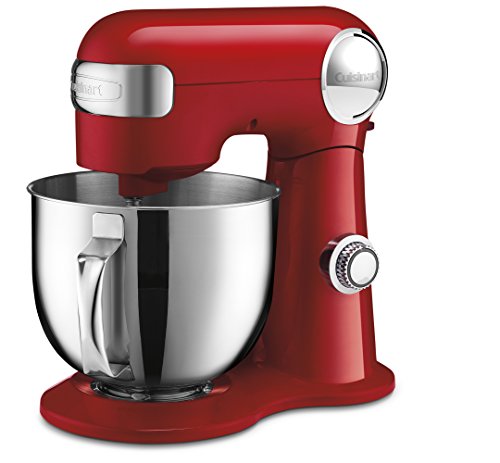
Cuisinart Stand Mixer SM-50 Ruby Red
Badge: Best Overall Stand Pick
Strengths
- Full stand-mixer range: twelve speeds from slow stir to fast whisk
- 5.5 quart bowl handles family batches in one go
- Included dough hook makes it a genuine bread option
Trade-offs
- Colour variants do not change performance, so do not pay a premium in your head for red
- Heavy and counter-bound compared with hand mixers
- Small single batches can feel lost in a bowl this size
At a glance
- 12 speeds
- 5.5 quart stainless steel bowl
- Chef’s whisk, mixing paddle and dough hook included
- Splash guard with pour spout
- Colour listed: Ruby Red
This pick suits the stand-mixer buyer this keyword is really about: someone mixing weekly, choosing a finish they enjoy seeing, and wanting one machine for cakes, dough and whipped work. In everyday use the pattern is consistent: it handles the core jobs in its class without drama, provided you respect the limits in the trade-offs list. Batters, creams and everyday doughs in its comfort zone come together evenly, and the controls stay understandable under flour-dusted, mid-recipe conditions, which is when complicated machines get abandoned. Work it within its design, keep the beaters or attachments matched to the task, and it rewards you with the unglamorous quality that matters most in a mixer: you reach for it without thinking.
The honest limitation deserves its own paragraph. No mixer in this guide does everything, and this one’s limits are listed above rather than buried. If your baking regularly runs into those limits, a different pick in this same guide is the answer, not a workaround. If your baking sits comfortably inside them, those trade-offs will rarely cross your mind after the first week. That is the real test of a shortlist like this one: not which machine is best in the abstract, but which set of compromises you will never notice.
Best for: readers whose habits match the strengths above / Not suited for: buyers whose needs run straight into the listed trade-offs
Check on Amazon to see the current listing, confirm the configuration and included accessories, and read the newest owner feedback.

Cuisinart Stand Mixer SM-50 White Linen
Badge: Best Finish for Bright Kitchens
Strengths
- A real stand mixer: it works while your hands stay free
- Large 5.5 quart bowl suits double batches and bread dough
- Three proper attachments cover whisking, mixing and kneading
Trade-offs
- It is not portable in any honest sense: it lives on the counter
- Far heavier to move for storage than any hand mixer here
- Overkill for a single small cake batter
At a glance
- 12 speeds
- 5.5 quart stainless steel bowl
- Chef’s whisk, mixing paddle and dough hook included
- Splash guard with pour spout
- Colour listed: White Linen
This pick suits frequent bakers who mix weekly, knead dough and make large batches, and who are comparing it as a countertop alternative rather than as something to carry. In everyday use the pattern is consistent: it handles the core jobs in its class without drama, provided you respect the limits in the trade-offs list. Batters, creams and everyday doughs in its comfort zone come together evenly, and the controls stay understandable under flour-dusted, mid-recipe conditions, which is when complicated machines get abandoned. Work it within its design, keep the beaters or attachments matched to the task, and it rewards you with the unglamorous quality that matters most in a mixer: you reach for it without thinking.
The honest limitation deserves its own paragraph. No mixer in this guide does everything, and this one’s limits are listed above rather than buried. If your baking regularly runs into those limits, a different pick in this same guide is the answer, not a workaround. If your baking sits comfortably inside them, those trade-offs will rarely cross your mind after the first week. That is the real test of a shortlist like this one: not which machine is best in the abstract, but which set of compromises you will never notice.
Best for: readers whose habits match the strengths above / Not suited for: buyers whose needs run straight into the listed trade-offs
Check on Amazon to see the current listing, confirm the configuration and included accessories, and read the newest owner feedback.
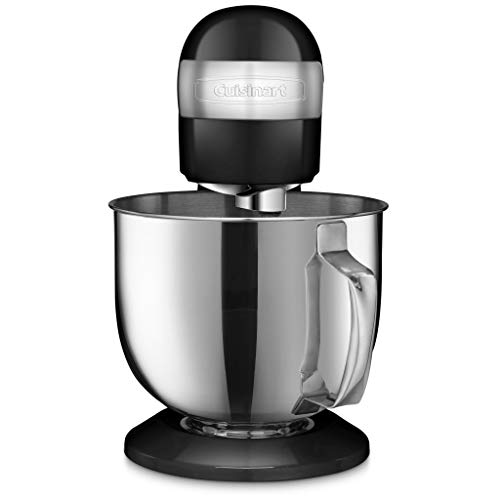
Cuisinart Stand Mixer SM-50 Onyx
Badge: Best Finish for Dark Kitchens
Strengths
- Same capable stand platform in a dark finish that hides flour dust
- Hands-free kneading and whisking for long jobs
- Big bowl and pour spout suit celebration cakes and double batches
Trade-offs
- Countertop machine, not a portable pick
- Takes real counter or cupboard volume
- Colour is the main difference from the White Linen version
At a glance
- 12 speeds
- 5.5 quart stainless steel bowl
- Chef’s whisk, mixing paddle and dough hook included
- Splash guard with pour spout
- Colour listed: Onyx
This pick suits high-volume bakers who prefer the dark finish and want stand-mixer capacity, included here so readers can weigh the countertop route honestly. In everyday use the pattern is consistent: it handles the core jobs in its class without drama, provided you respect the limits in the trade-offs list. Batters, creams and everyday doughs in its comfort zone come together evenly, and the controls stay understandable under flour-dusted, mid-recipe conditions, which is when complicated machines get abandoned. Work it within its design, keep the beaters or attachments matched to the task, and it rewards you with the unglamorous quality that matters most in a mixer: you reach for it without thinking.
The honest limitation deserves its own paragraph. No mixer in this guide does everything, and this one’s limits are listed above rather than buried. If your baking regularly runs into those limits, a different pick in this same guide is the answer, not a workaround. If your baking sits comfortably inside them, those trade-offs will rarely cross your mind after the first week. That is the real test of a shortlist like this one: not which machine is best in the abstract, but which set of compromises you will never notice.
Best for: readers whose habits match the strengths above / Not suited for: buyers whose needs run straight into the listed trade-offs
Check on Amazon to see the current listing, confirm the configuration and included accessories, and read the newest owner feedback.
KitchenAid 5 Ultra Power Speed Hand Mixer Contour Silver
Badge: Best Hand-Mixer Alternative
Prose-only pick: this product is reviewed for comparison but is not linked and carries no photo in this guide, because it does not fully match the core requirement of the keyword. The review below explains the mismatch honestly rather than hiding it.
Strengths
- Light, balanced hand mixer that is easy to guide around a bowl
- Gentle low speed for folding and starting dry ingredients
- Cord locks to either side, useful for left-handed bakers
Trade-offs
- It is a hand mixer, so it cannot knead while you do something else
- No stand, bowl or splash guard in the listed configuration
- Five speeds rather than the wider range of the stand picks
At a glance
- 5 speeds
- Lockable swivel cord
- Turbo Beater accessories
- Easy-release beater button
- Dishwasher-safe beaters
- Colour listed: Contour Silver
This pick suits readers cross-shopping hand and stand designs who mostly make cakes and creams and may not need a stand machine at all. In everyday use the pattern is consistent: it handles the core jobs in its class without drama, provided you respect the limits in the trade-offs list. Batters, creams and everyday doughs in its comfort zone come together evenly, and the controls stay understandable under flour-dusted, mid-recipe conditions, which is when complicated machines get abandoned. Work it within its design, keep the beaters or attachments matched to the task, and it rewards you with the unglamorous quality that matters most in a mixer: you reach for it without thinking.
The honest limitation deserves its own paragraph. No mixer in this guide does everything, and this one’s limits are listed above rather than buried. If your baking regularly runs into those limits, a different pick in this same guide is the answer, not a workaround. If your baking sits comfortably inside them, those trade-offs will rarely cross your mind after the first week. That is the real test of a shortlist like this one: not which machine is best in the abstract, but which set of compromises you will never notice.
Best for: readers whose habits match the strengths above / Not suited for: buyers whose needs run straight into the listed trade-offs
Proctor Silex Easy Mix 5-Speed Hand Mixer 62511
Badge: Best Simple Hand Mixer
Prose-only pick: this product is reviewed for comparison but is not linked and carries no photo in this guide, because it does not fully match the core requirement of the keyword. The review below explains the mismatch honestly rather than hiding it.
Strengths
- Bowl Rest lets it sit on the bowl rim instead of the counter
- Very light to lift, carry and put away
- Simple control that a first-time baker cannot really get wrong
Trade-offs
- Peak power figure is modest, so thick dough slows it down
- Fewer included accessories than bundle-style rivals
- Plastic-bodied value design rather than a keep-for-decades build
At a glance
- 5 speeds
- 215 watts peak power listed
- Bowl Rest feature
- Compact, lightweight body
- Colour listed: Black
This pick suits occasional bakers, students and small households who mix a few times a month and want the smallest, simplest tool that still beats hand whisking by a wide margin. In everyday use the pattern is consistent: it handles the core jobs in its class without drama, provided you respect the limits in the trade-offs list. Batters, creams and everyday doughs in its comfort zone come together evenly, and the controls stay understandable under flour-dusted, mid-recipe conditions, which is when complicated machines get abandoned. Work it within its design, keep the beaters or attachments matched to the task, and it rewards you with the unglamorous quality that matters most in a mixer: you reach for it without thinking.
The honest limitation deserves its own paragraph. No mixer in this guide does everything, and this one’s limits are listed above rather than buried. If your baking regularly runs into those limits, a different pick in this same guide is the answer, not a workaround. If your baking sits comfortably inside them, those trade-offs will rarely cross your mind after the first week. That is the real test of a shortlist like this one: not which machine is best in the abstract, but which set of compromises you will never notice.
Best for: readers whose habits match the strengths above / Not suited for: buyers whose needs run straight into the listed trade-offs
Cuisinart 9-Speed Hand Mixer HM-90BCS
Badge: Best Control in a Hand Mixer
Prose-only pick: this product is reviewed for comparison but is not linked and carries no photo in this guide, because it does not fully match the core requirement of the keyword. The review below explains the mismatch honestly rather than hiding it.
Strengths
- Nine speeds give unusually fine control for a hand mixer
- SmoothStart is designed to reduce the flour-splatter start
- Storage case keeps the six pieces together
Trade-offs
- Still requires you to hold and move it through the batter
- More speeds than most bakers will ever consciously use
- Not a kneading replacement for a stand mixer with a dough hook
At a glance
- 9 speeds
- 220 W motor listed
- SmoothStart anti-splatter technology
- Snap-on storage case
- 6-piece set
- Brushed chrome finish
This pick suits keen bakers who want hand-mixer portability with stand-mixer levels of speed control, and who whisk small batches often. In everyday use the pattern is consistent: it handles the core jobs in its class without drama, provided you respect the limits in the trade-offs list. Batters, creams and everyday doughs in its comfort zone come together evenly, and the controls stay understandable under flour-dusted, mid-recipe conditions, which is when complicated machines get abandoned. Work it within its design, keep the beaters or attachments matched to the task, and it rewards you with the unglamorous quality that matters most in a mixer: you reach for it without thinking.
The honest limitation deserves its own paragraph. No mixer in this guide does everything, and this one’s limits are listed above rather than buried. If your baking regularly runs into those limits, a different pick in this same guide is the answer, not a workaround. If your baking sits comfortably inside them, those trade-offs will rarely cross your mind after the first week. That is the real test of a shortlist like this one: not which machine is best in the abstract, but which set of compromises you will never notice.
Best for: readers whose habits match the strengths above / Not suited for: buyers whose needs run straight into the listed trade-offs
Comparison Table
| Pick | Badge | Key listed attributes | Link |
|---|---|---|---|
| Cuisinart Stand Mixer SM-50 Ruby Red | Best Overall Stand Pick | 12 speeds, 5.5 quart stainless steel bowl, Chef’s whisk, mixing paddle and dough hook included | Check on Amazon |
| Cuisinart Stand Mixer SM-50 White Linen | Best Finish for Bright Kitchens | 12 speeds, 5.5 quart stainless steel bowl, Chef’s whisk, mixing paddle and dough hook included | Check on Amazon |
| Cuisinart Stand Mixer SM-50 Onyx | Best Finish for Dark Kitchens | 12 speeds, 5.5 quart stainless steel bowl, Chef’s whisk, mixing paddle and dough hook included | Check on Amazon |
| KitchenAid 5 Ultra Power Speed Hand Mixer Contour Silver | Best Hand-Mixer Alternative | 5 speeds, Lockable swivel cord, Turbo Beater accessories | Prose-only pick |
| Proctor Silex Easy Mix 5-Speed Hand Mixer 62511 | Best Simple Hand Mixer | 5 speeds, 215 watts peak power listed, Bowl Rest feature | Prose-only pick |
| Cuisinart 9-Speed Hand Mixer HM-90BCS | Best Control in a Hand Mixer | 9 speeds, 220 W motor listed, SmoothStart anti-splatter technology | Prose-only pick |
How to Choose the Right Mixer
Start with your real mixing diary, not your aspirational one. List what you mixed in the last three months and how often. Weekly bread points one way; monthly cakes point another. Then weigh four factors. First, format: hand mixers trade your arm for storage space and speed of setup, stand mixers trade counter space for hands-free power. Second, capacity: a 5.5 quart stand bowl suits double batches, while a hand mixer works in whatever bowl matches the job. Third, attachments: a dough hook changes what a machine is for, while extra beaters and whisks mostly change convenience. Fourth, control: more speeds matter most at the extremes, a gentle start and a confident whip.
Power figures need translating. Hand mixer wattage is often quoted as peak power, which describes a moment, not a sustained effort, so treat it as a rough class marker rather than a score. What you feel in use is torque at low speed: whether the beaters keep turning through stiff dough instead of slowing to a complaint. Reviews and honest trade-off notes, like the ones in this guide, tell you more than the wattage line.
Tiers in this category are qualitative. Value designs cover batters and occasional cookies perfectly well. Mid-tier machines add better speed control, storage thinking and attachments. Premium stand machines add capacity, kneading ability and the expectation of a decade of service. None of that requires a printed price to understand: buy the tier that matches your frequency, because a mixer used weekly earns its tier and a mixer used twice a year does not, whatever it cost.
Finally, measure your storage before you fall in love. A stand mixer needs a permanent home or a cupboard it can be lifted into without a struggle, and its height must clear your wall cabinets if it lives on the counter. A hand mixer needs a drawer and, ideally, a case or a hook for its beaters. The best mixer is the one that fits your kitchen’s geography as well as your recipes.
How to Use a Mixer Well: Setup, Mixing, Cleaning and Care
Good mixing is mostly sequence. Bring ingredients to the temperature the recipe assumes, because cold butter and cold eggs resist every mixer ever made. Start dry ingredients on the slowest speed for a few seconds before adding liquid, and scrape the bowl down once halfway through: no domestic mixer, hand or stand, reaches every corner of its bowl, and the unscraped ring at the bottom is where unmixed flour pockets hide.
Work in stages. Cream butter and sugar until the mixture visibly lightens, because that stage is where a cake’s rise is built. Add eggs one at a time so the emulsion holds. Alternate dry and wet additions, beginning and ending with dry, and stop the moment the last streak of flour disappears. Overmixing after flour meets liquid develops gluten, and gluten is what turns a tender cake into a bready one. A mixer gives you power; restraint is still your job.
For whipped cream and egg whites, chill the bowl and beaters if your kitchen is warm, use the highest comfortable speed, and watch closely at the end: the distance between soft peaks, stiff peaks and grainy overwhipped cream is measured in seconds, not minutes. For mashed potatoes, use low speed and a light hand, because aggressive beating turns potatoes gluey.
Cleaning is simple and worth doing immediately. Beaters and attachments wash best before batter dries into cement; the dishwasher-safe beaters on the KitchenAid pick make this painless. Wipe the motor body with a damp cloth only, never immerse it, and store hand mixers with their cords loosely coiled rather than yanked tight around the body, which is how internal wires eventually fail.
Troubleshooting
Problem: flour explodes over the counter at switch-on → start on the lowest speed, bury the beaters in the mixture before switching on, and add flour in two additions.
Problem: the mixer strains and slows in cookie dough → the batch is too big or too cold; split it, warm the butter properly next time, and finish the last folds by hand.
Problem: cream will not whip → check that the bowl is clean and grease-free, the cream is cold, and you are actually on a high speed rather than a middle one.
How to Read a Five-Best Shortlist Without Being Sold
Shortlists compress judgement. A ranked list of stand mixers hides three separate questions: is the platform right, is the size right, and is this finish the one in stock at a fair position in its range. When three entries share one platform, as the Cuisinart picks do here, the honest reading is that the list is really saying one machine, three ways to buy it. That is not a failure of the list; it is information. It tells you the platform is the recommendation, and your real decision is the stand-versus-hand question and the colour you want to look at for a decade.
Why Colour Variants Fill Stand Mixer Lists
Stand mixers are furniture as much as tools. They sit out, they are photographed, and manufacturers release finishes because kitchens differ. Ruby Red, White Linen and Onyx change nothing about torque, bowl or attachments, and this guide scores them identically on performance while reviewing each on its own page space so you can judge the finish properly. Anyone whose shortlist pretends a colour is a performance upgrade is selling, not guiding. Spend your decision energy on bowl size, attachments and counter space instead.
Guides like this one sit in a family of related questions. If your search started nearer Best Rum Mixers or Best Mixers For Ciroc Red Berry, the choosing framework above still applies: decide the core requirement first, then the format, then the individual model, and let badges and rankings advise rather than decide. Readers who arrived from Best Mixers With Dante will find the same discipline helps there too, because most buying regret in this category comes from matching the wrong format to the right intentions.
The Jobs That Decide It: A Task-by-Task Map
Cake batters are the home ground of every mixer in this guide, and the differences show in the details rather than the result: a hand mixer moves around the bowl and catches the corners a stand paddle can miss, while a stand mixer creams butter and sugar for a full five minutes without your arm filing a complaint. Cookie dough is the first real test, because it stiffens as flour goes in; hand mixers handle standard batches happily and ask you to split the biggest, coldest ones, while the stand picks take double batches in stride. Whipped cream and egg whites reward speed range and a clean bowl more than raw power, and here the nine-speed prose-only hand mixer and the twelve-speed stand machines both shine at the fine-control end. Bread dough is the dividing line stated throughout this guide: enriched doughs in small quantities are the hand mixer ceiling, and regular lean dough belongs to a dough hook. Mashed potatoes, icings, glazes and pancake batters sit at the easy end for everything here, which is worth remembering when a salesperson tries to sell you capacity using jobs that any mixer can do. Map your own top five jobs against that list and the shortlist usually shortens itself.
Longevity, Repairs and Living With the Machine
A mixer should be a decade purchase, and longevity is mostly habits. Let a hot motor rest rather than pushing through batch after batch on a warm afternoon. Keep vents clear of flour, which sounds trivial until you see how much flour a busy baking day suspends in the air. Store beaters and attachments with the machine, in a case where one is provided, because the most common mixer failure in real kitchens is not electrical at all: it is a lost or bent attachment that never gets replaced. Bent beaters wobble, wobbling stresses the motor and scrapes the bowl, so a damaged beater is a replace-now item, not a put-up-with-it item. For stand mixers, check the bowl seating and the head lock as part of a yearly clean; a machine that has crept slightly out of adjustment mixes unevenly long before it breaks. None of this is specialised knowledge, and that is the point: the machines in this guide are mainstream designs with mainstream parts, and a buyer who confirms attachment availability on the listing before purchase has done most of the longevity work already.
Accessories, Bowls and the Supporting Cast
The mixer is the headline, but bowls decide half the experience. A deep, medium bowl with a handle suits hand mixing best: deep enough to contain a whip, light enough to hold, heavy enough not to skate. Glass lets you see unmixed pockets at the base; steel chills well for cream; plastic is light but can hold grease that ruins egg whites if it is not scrupulously clean. For stand mixers, a second bowl is the single most useful accessory a frequent baker can own, because it turns sequential batters and frostings into a continuous workflow instead of a washing-up relay. Spatulas matter too: a thin, flexible scraper reaches the bowl’s centre dimple where beaters cannot. Measuring discipline is the invisible accessory; weighed flour behaves the same in every mixer, while scooped flour varies enough to make a good machine look inconsistent. Build the supporting cast deliberately and a mid-tier mixer will outperform a premium one surrounded by the wrong bowls and guesswork.
Your First Month With a New Mixer
Week one should be easy wins: a simple sponge, whipped cream, a batch of muffins. These teach you the speed control with forgiving mixtures, and they reveal the machine’s sound at each setting, which matters because experienced bakers diagnose by ear: a smooth rise in pitch is health, a laboured groan is a batch too big. In week two, try the job you actually bought it for, at standard batch size, and note what the trade-off list in its review predicted; most readers find the prediction accurate, which builds the trust that makes the third week pleasant. By the fourth week, bake something for other people. Nothing exposes a mixer’s real place in your kitchen like a deadline and guests, and nothing settles a purchase like a cake that came out exactly as intended. If a problem appears in that month, it is usually technique, sequence or ingredient temperature rather than the machine, and the troubleshooting notes in the how-to section cover the common three. Keep the box and paperwork until that month is done, as you would with any appliance, then recycle them and let the mixer become furniture in the best sense: unnoticed, ready, used.
Terms Worth Knowing Before You Buy
Planetary mixing describes a stand mixer head whose beater rotates while also travelling around the bowl, covering more of the bowl than a fixed twin-beater design; it is a genuine design difference, not a slogan. Peak power is a momentary maximum, useful only as a rough class marker. SmoothStart and similar names describe a slow ramp at switch-on, designed to keep flour in the bowl. Bowl Rest is a shaped shoulder that lets a hand mixer sit on the bowl rim between additions. A splash guard is a lidded shield with a pour opening that keeps flour and batter contained on a stand mixer. Turbo or burst buttons give a short extra push of power for stubborn pockets. None of these terms guarantees a good mixer, but knowing them turns a listing from advertising into information, and information is what this guide has tried to give you for every pick, linked or prose-only.
Baking Patterns: How Often You Bake Changes the Answer
A monthly baker needs reliability after stillness: a machine that starts happily after weeks in a drawer, with beaters that have not wandered off. That profile favours the hand mixers here, especially the cased Hamilton Beach. A weekly baker needs workflow: quick setup, easy cleaning, a bowl routine that does not create a washing-up mountain, and that profile can sit on either side of the hand-stand line. A near-daily baker, or one selling at markets, needs the stand machine’s stamina and capacity, and should read the two prose-only Cuisinart reviews in the portable guide as the main event rather than the footnote. Households also change: a new baby, a new bread habit, a teenager discovering baking can all move a kitchen from one pattern to another within a year. Buying slightly toward your likely future pattern is sensible; buying for a fantasy pattern is how good machines become ornaments. The reviews in this guide name the pattern each pick serves, so match the pattern first and the badge second.
A Short Word on Noise, Vibration and Neighbours in the Kitchen
Mixers are not silent, and the honest differences are about character more than volume. Hand mixers put the motor near your hand and ear, so their sound feels present even when it measures modestly; stand mixers put distance between you and the motor but can walk slightly on a smooth counter under a heavy dough load if their feet are flour-dusted. Vibration through a thin bowl is normal with a hand mixer and is steadied by your free hand, which is another reason deep, grippable bowls matter. Early-morning bakers in thin-walled homes should favour smooth speed ramps and avoid the highest settings for long stretches, not because the machine minds, but because households do. None of the picks in this guide is an outlier in either direction based on its listed design, and we have not invented decibel figures the listings do not provide. Treat noise as a living-with-it factor, check owner feedback on the listing for the current version, and you will not be surprised.
What to Check on the Listing Before You Order
Confirm the exact model number, because several picks here share names across configurations and colours. Confirm what is in the box: beaters, whisk, dough hook, case, bowls, and whether the splash guard is included or separate. Confirm the bowl size on stand models and the speed count on hand models, since both are easy to misread in a hurry. Check the dimensions against your drawer or counter space, and the weight against the person who will lift it most often. Read the newest owner feedback for pattern complaints rather than single dramatic stories, and look for comments about the specific job you bought it for. Finally, confirm the return route while you do not need it. Five minutes of this checking prevents nearly every avoidable disappointment this category produces, and it is the same checking discipline this guide applied when it demoted mismatched picks to prose-only instead of linking them on hope.
Common Buying Mistakes
- Buying capacity for imaginary baking. A stand mixer bought for bread you never make becomes expensive counter decoration; be honest about frequency.
- Judging by wattage alone. Peak power is a momentary figure. Low-speed torque and speed control decide real mixing.
- Ignoring storage. If there is no drawer for the hand mixer or no home for the stand mixer, the purchase creates a daily annoyance.
- Forgetting attachments. Check what is actually included: a dough hook, a whisk and a case change what the machine does and how it stores.
- Skipping the scrape. Not a buying mistake but a using one: every mixer leaves an unscraped ring, and blaming the machine for it is unfair.
- Choosing colour over configuration. Finishes are legitimately enjoyable, but bowl size and attachments are what you will live with.
Final Recommendation
If you want one answer for bestreviews com 5 best stand mixers, start with the Cuisinart Stand Mixer SM-50 Ruby Red (Check on Amazon). It earns the first place in this guide because it matches the core of the keyword most completely while carrying the fewest compromises for the widest range of readers. It is the pick we would point a friend to first, with the trade-offs in its review read aloud before they buy.
If your habits lean the other way, look next at the Cuisinart Stand Mixer SM-50 White Linen (Check on Amazon). Between those two, most readers will find their answer. The remaining picks are not runners-up so much as specialists: choose them when their badge describes your situation better than the headline recommendation does, and choose a prose-only pick only with its stated mismatch fully in view.
Frequently Asked Questions
Are the three Cuisinart stand mixers actually different machines?
In performance terms, no: same SM-50 platform, 5.5 quart bowl, twelve speeds and the same three attachments. The finishes differ, and that is the real choice.
Is 5.5 quarts the right stand mixer bowl size?
For most households, yes. It handles double cake batches and family bread dough while still managing a single batch without the paddle skating over the top.
Which attachments matter most?
The paddle for everyday mixing, the whisk for creams and egg whites, and the dough hook if bread is even an occasional plan. All three are listed with the Cuisinart picks.
Should I buy a hand mixer instead of a stand mixer?
If you bake monthly rather than weekly, mix single batches, and have little counter space, the prose-only hand mixers in this guide are the smarter spend.
What does twelve speeds actually change?
A slower, gentler start for flour and a finer range for whisking. You will use the ends of the range more than the middle.
How do I verify a shortlist claim before buying?
Check the model number, bowl size and included attachments on the listing itself, and treat any list that cannot name those three things as decoration, not research.


