Where to buy
Check the latest price, availability and delivery on Amazon. Orders are placed on Amazon. We may earn a commission from qualifying purchases.
- Best overall: Boll & Branch Down Duvet Insert, Full/Queen, All Season — Check on Amazon
- puredown Goose Down Comforter, 800 Fill Power, Full/Queen Oversized — Check on Amazon
- Continental Bedding Siberian Goose Down Comforter, Queen, 800 Fill Power — Check on Amazon
- CUDDLE DREAMS Classic Wool Comforter, Midweight, Queen — Check on Amazon
See 2 more Amazon options
- DAPU 100% Linen Duvet Cover Set, Queen — Check on Amazon
- puredown Goose Feathers and Down Pillows, Set of 2, Queen — Check on Amazon
Read the full guide ↓
Disclosure: As an Amazon Associate, topratedkitchenware.com earns from qualifying purchases. Links to Amazon on this page are affiliate links; they cost you nothing extra. Listing details such as price and availability change often, so check the current Amazon listing before you buy.
Two thousand dollars is not a comforter budget, and in a small bedroom it is not even a whole-room budget — it is a whole-bed budget, and this guide will spend it as one, honestly. Start with the fact most $2,000 roundups skip: there is no single comforter on Amazon — no down duvet, no wool quilt, no made-to-order luxury insert we could verify — that honestly costs $2,000. Amazon’s verifiable single-comforter ceiling sits well below that figure: the most expensive queen comforters we could tie to a live Amazon listing sit at the top of the premium tier, genuine high-fill-power down sits below them, and the one listing whose price history reaches highest — the Continental Bedding Siberian — swings so widely that even it spends most of its life far below this guide’s title figure — check the current price on Amazon before judging it.
A small bedroom changes what the money is for, though. The same smallness cuts the other way on quantity. A small bedroom usually has no linen closet, little or no spare storage, and — in many small homes — no guest bed at all. So this guide prices the bed a small room actually has: a certified flagship down insert for most of the year, a true winter-weight down comforter that compresses down to the smallest stored size of any fill, a flatter wool comforter for the shoulder seasons, a real French linen duvet cover set against the skin, and genuine goose feather and down pillows. Put together, that bed sits comfortably inside the $2,000 budget — and a substantial remainder should stay unspent. This guide explains what to cut from the usual whole-house plan, and is honest about how much of a $2,000 allocation a small room genuinely needs.
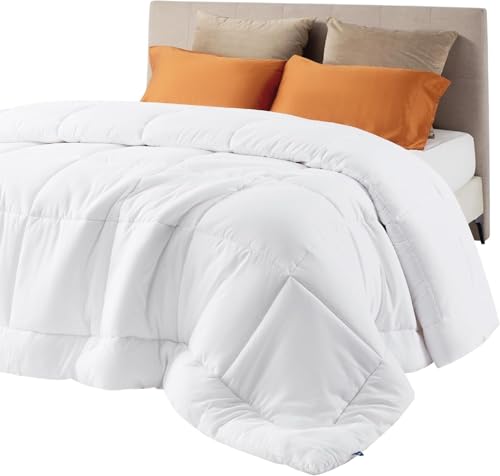
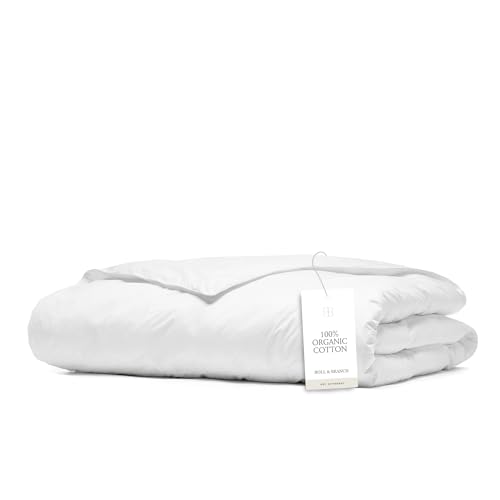
Every pick in this guide is for the queen size — full/queen where a brand sells a combined size. For the flagship we would begin with the Boll & Branch down duvet insert: responsibly sourced down in an organic cotton baffle-box shell from a brand that publishes its certifications — check price on Amazon for the full/queen all-season. If you want the clearest spec sheet instead — down percentage, fill power and fill weight all printed — the puredown below it states 93% goose down at a maker-rated 800 fill power — check the current price on Amazon.
In this guide
Quick Picks
Short on time, or comparing several options at once? Each row below names the job in the bed and the product that does it, with a link to the listing. All picks are queen size; premium comforter prices move with sales and stock, so check the current price on Amazon on the listing.
| Job in the bed | Pick | Why it stands out | Link |
|---|---|---|---|
| Best overall — the flagship | Boll & Branch Down Duvet Insert, Full/Queen, All Season | Responsibly sourced down, organic cotton baffle-box shell, published certifications — the surface your whole room is built around — check price on Amazon | Check on Amazon |
| Best winter weight | puredown Goose Down Comforter, Full/Queen, 800 Fill Power | 93% goose down and a 700-thread-count cotton shell, oversized at 98 x 90 — and down compresses smallest when storage is scarce — check price on Amazon | Check on Amazon |
| Best ceiling pick | Continental Bedding Siberian Goose Down Comforter, Queen | 800 fill power Siberian white goose down; a notably volatile listing — check the current price on Amazon, buy only on a low reading, and only instead of the flagship | Check on Amazon |
| Best natural alternative to down | CUDDLE DREAMS Classic Wool Comforter, Midweight, Queen | 240 GSM Australian wool in a quiet cotton shell, OEKO-TEX certified — a flatter profile and flatter storage for a small room — check price on Amazon | Check on Amazon |
| Best cover set | DAPU 100% Linen Duvet Cover Set, Queen | Real French flax linen at 170 GSM with a zipper closure and eight corner ties — in a small room, this is the fabric the whole room wears — check price on Amazon | Check on Amazon |
| Best pillows | puredown Goose Feathers and Down Pillows, Set of 2, Queen | Real goose feather and down fill in a cotton cover, machine washable — moldable enough to double as backrests on a bed that is also the sofa — check price on Amazon | Check on Amazon |
How These Picks Were Chosen
The first filter was verification, and at this budget it eliminated most of the obvious candidates. Every product below is a real Amazon listing whose queen or full/queen version we could verify through the listing itself. That is why the genuine top-end comforter discussed later in this guide — a European down duvet sold direct by its maker — appears by name but without a link: we verified the product, and we could not verify an Amazon listing for it.
The second filter was the room itself. A small bedroom imposes three tests a large one does not. First, display: the bed fills the view from the door, so every pick had to earn its place as a visible surface — shell, drape and cover matter as much as fill. Second, storage: with no linen closet, anything bought in a rotation has to live somewhere real, so we favored the fills that store smallest — down, which compresses further than any synthetic or feather fill relative to its loft, and wool, which stores flat — and we audited where each off-season piece would actually go.
We did not sleep under these comforters ourselves. We read maker listings and specification pages, compared fill materials, down percentages, fill weights, shell fabrics, dimensions and care instructions, and favored products that publish the numbers premium prices are supposed to rest on: a down percentage, a fill weight in ounces, a shell you can identify. Where a maker prints a warmth, loft or fill-power figure, this guide reports it as a maker claim. The allocation section below shows how the components combine for one small bedroom.
The 6 Best Comforters for Small Bedrooms Under $2000
Boll & Branch Down Duvet Insert, Full/Queen, All Season
Who it suits: Buyers spending flagship money who want the certifications and the company to be as verifiable as the comforter — and who will use a duvet cover. In a small bedroom, this is also the buyer who understands the flagship is on permanent display.
This is the pick the premium tier is supposed to look like, and it anchors the allocation as the stable flagship at the top of Amazon’s market. The fill is responsibly sourced, triple-washed white down held in baffle boxes — fabric walls between the layers, so the down keeps its loft instead of being pinched flat at every stitch — inside a down-proof shell of certified organic long-staple cotton. The brand is Fair Trade Certified, the down carries International Down Standard sourcing certification, and the finished textile is OEKO-TEX Standard 100 certified, per the brand and review coverage. The insert comes in three weights — lightweight, midweight and ultraweight; check price on Amazon for the full/queen all-season version; the range’s price varies by weight. The lightweight full/queen is listed at about 6.6 lb, which tells you the design priority: loft and drape, not bulk.
A baffle-box insert drapes in soft, even squares instead of the pinched quilting of cheaper comforters, and the all-season weight is the right center of a rotation in a room that has no space for piles of layered throws: one insert that is correct for most of the year, swapped at the extremes.
Now the honesty this pick requires, because it is the most instructive in the guide. Boll & Branch does not publish the fill power of its own duvet on its own product page. The 650 fill-power figure attached to this insert comes from review coverage — Sleep Foundation’s testing roundup — not from the maker, and at flagship level that omission is worth naming: fill power is the number buyers are taught to compare, and the flagship brand in this guide declines to state it. Judge the insert on what is verifiable instead — certified sourcing, an organic shell, baffle-box construction, three honest weight options — and it earns its place. The brand’s published warranty, per the same coverage, covers its mattresses and foundations rather than bedding, and its trial on bedding is 30 nights; at flagship level, read the current terms on the listing before ordering.
- Responsibly sourced, triple-washed down in baffle boxes, per the brand — loft without stitched-flat squares, and a drape that reads as furniture in a small room.
- Certified organic long-staple cotton shell; Fair Trade Certified, with IDS and OEKO-TEX marks reported in coverage.
- Full/queen all-season — check price on Amazon; three weight options, with price varying by weight.
Honest limitation: The maker does not publish a fill-power figure for this duvet — the 650 figure in circulation comes from reviewers, not Boll & Branch — and the brand’s warranty coverage of bedding is limited, so the premium buys certified materials and construction rather than a stated spec or a long guarantee.
Choose it if traceable sourcing, an organic shell and a choice of weights matter more to you than a headline fill-power number — and if you want the one comforter your whole room is seen wearing to be the good one. Skip it if you shop by fill power, or you want a warranty that treats a flagship comforter like a flagship purchase.
puredown Goose Down Comforter, Full/Queen, 800 Fill Power, Winter Oversized (98 x 90 Inch)
Who it suits: Cold sleepers and spec shoppers — anyone who wants the down percentage, the fill power and the fill weight all printed where they can be checked — and the winter half of this guide’s rotation. In a small bedroom it also suits anyone whose storage is a single shelf or one under-bed box, because down is the fill that gives that space back.
If the Boll & Branch is the flagship by reputation, the puredown is the flagship by spec sheet, and in this guide it plays the winter role. The listing states the fill plainly: 93% white goose down — a genuinely high down share, well above the 75% minimum a fill must meet to be labeled simply “down” in the US — at a maker-rated 800 fill power, with 40 ounces of fill in the full/queen. The shell is 100% cotton at a stated 700 thread count, the construction is a pinch-pleat baffle style, and the dimensions are honestly oversized at 98 by 90 inches, so it drapes a queen bed instead of merely covering it. The down is RDS and OEKO-TEX Standard 100 certified per the maker. It is fulfilled by Amazon — check the current price on Amazon — real, high-share down in the premium tier that leaves most of this guide’s budget unspent, which is exactly why a $2,000 plan buys it as the second comforter rather than the only one.
The small-bedroom argument for this pick is storage physics. Down clusters trap more air per ounce than any other fill, which is why they insulate — and the same clusters compress further, relative to the warmth they deliver, than feather, wool or polyester when the comforter comes off the bed. Two cautions come with the room, though. The oversized 98 x 90 cut drapes generously, and in a tight room a bed hard against a wall will trap that extra drape on the wall side — fold it deliberately rather than letting it bunch.
Read the warmth words carefully, because this is a winter comforter wearing year-round marketing. Forty ounces of 800-fill-power down is a lot of insulation: the maker itself labels this version winter weight and “extra warmth,” and in a heated bedroom or a mild climate it will be too much blanket for much of the year. That is not a flaw — it is the product, and it is the reason the rotation exists.
- 93% white goose down per the listing — a down share most listings in this category never state.
- Maker-rated 800 fill power with 40 oz of fill in the full/queen; RDS and OEKO-TEX certified per the maker.
- Oversized 98 x 90 inches in a 700-thread-count cotton shell — check price on Amazon — and the fill that compresses smallest in storage.
Honest limitation: It is a winter-weight comforter: 40 oz of high-loft down will overheat warm sleepers and heated bedrooms outside the cold months — sooner, in a small warm room — and care is dry clean only per roundup coverage of this model, a real running cost at this size.
Choose it if you sleep cold, your winters are real, and you want the clearest spec sheet in this guide. Skip it if you want one comforter for July and January alike, or your small bedroom runs warm year-round — make the wool your second comforter instead.
Continental Bedding Siberian Goose Down Comforter, Queen, 800 Fill Power
Who it suits: Patient, price-watching buyers who want the highest-ceiling down Amazon sells — and are willing to buy it only when its price behaves. In a small bedroom, it suits exactly one kind of buyer: the one who will own a single flagship and wants it to be this one, bought on a dip.
This is the listing that defines Amazon’s verifiable comforter ceiling. The product is a Siberian white goose down comforter at a maker-rated 800 fill power, model CB-Siberian-800FP-Duvet-Q. Its price history for the queen is extraordinary: it has swung widely over time, from well below its usual level to well above it, sometimes within the same season — check the current price on Amazon before judging it. Continental Bedding’s wider range supports the positioning — its Serenity line of 700 fill-power Hungarian white goose down comforters, minimum 90% down per the brand’s retail listings, sits in the premium tier at other retailers — but this Siberian queen’s Amazon price is the volatile one, and the guide treats it accordingly.
The buying rule is therefore the review: this is a tracker purchase, not a cart purchase, and it is an alternative flagship rather than a second one — nobody needs both this and the Boll & Branch, and in a small bedroom nobody has anywhere to put both. Set a price alert, buy the Siberian only when its current price dips well below its usual level — ideally near one of its recorded dips, where it can undercut the flagship while out-speccing it — and walk away without regret when it sits high, because at a high reading the Boll & Branch plus the wool below cover more of the year together. What the money buys when the price cooperates is the top of the Amazon down market: Siberian down is prized because birds raised in severe cold grow larger clusters, and larger clusters are what 800 fill power is measuring.
- Siberian white goose down at a maker-rated 800 fill power — the ceiling specification on Amazon.
- A notably volatile listing — check the current price on Amazon and buy only on a dip.
- The brand’s Hungarian-down Serenity queen sits in the premium tier at other retailers, corroborating the positioning.
Honest limitation: The price is the limitation. This listing has swung to a very high level within the last year — above what this guide would pay for a single component — and nothing about the product changes when it does. Buy the price, not the product, and only on a low reading.
Choose it if you can wait for a dip and want the highest-specification down Amazon lists, in place of the flagship above. Skip it if you need a comforter this week at a predictable price — the Boll & Branch is the more stable flagship, and the puredown gives you a stated 93% down at 800 fill power in a lower tier again.
CUDDLE DREAMS Classic Wool Comforter, Midweight for All Season, Queen (88 x 88 Inch)
Who it suits: Sleepers who run hot and cold in the same night, couples who disagree about temperature, and anyone whose down comforter feels like a sealed plastic bag by 3 a.m. In a small bedroom it also suits the eye: wool’s flat, tailored drape is the calmest-looking surface in this guide.
Every premium guide needs the pick that is not down, because down’s one genuine weakness is moisture: it insulates superbly in dry air and sulks when damp. Wool is the opposite specialist, and in a whole-bed plan it is the shoulder-season comforter — the one on the bed in spring and autumn, and the one that stays there year-round for warm sleepers. This comforter carries 240 GSM of Australian wool — the brand’s midweight, all-season fill weight, with lighter 120 GSM summer and heavier winter versions in the same line — inside a soft, noiseless jacquard cotton shell, with eight ties for a duvet cover, double-stitched edges, and an OEKO-TEX Standard 100 certification. A short zipper in the shell lets you inspect the wool itself, a small transparency gesture more brands should copy. It sits in a much lower tier than the down picks — check price on Amazon — which makes it the most accessible comforter in this guide and, pound for pound, possibly the most useful.
The small-bedroom case for wool is twofold. Visually, it lies flat: where a high-loft down comforter swells a small bed into a duvet mountain that crowds the room, the wool’s heavier, flatter drape reads as a made bed in a tailored room — and on the room’s dominant surface, that composure is worth money. Practically, it stores flat too: folded, a wool comforter takes a fraction of the shelf depth of a lofted synthetic, which matters when the rotation’s storage plan is one shelf. Wool’s comfort claim is temperature regulation, and it is a comfort claim, not a medical one: wool fibers absorb and release moisture vapor, which is why a wool comforter feels less clammy across a night of temperature swings than either down or polyester. Care is the friction: coverage of this line describes dry-clean-only handling, and owners report a mild natural wool scent on opening that fades with airing.
- 240 GSM Australian wool fill — the midweight of a three-weight line — in a quiet jacquard cotton shell.
- OEKO-TEX Standard 100 certified, eight duvet ties, and an inspection zipper to verify the fill.
- Midweight queen in a lower tier than the down picks — check price on Amazon; stores flatter than any lofted fill.
Honest limitation: Wool does not loft: expect a flatter, heavier drape than any down pick here, plus dry-clean-style care and a faint wool scent at first. Cold sleepers in cold houses will find the midweight a three-season comforter, not a winter one — that is the puredown’s job.
Choose it if you sleep hot, share a bed with someone who does not, or want the natural-fill rotation partner that stores flat and looks calm. Skip it if the cloud-like puff of down is the whole point of the purchase, or you need machine-washable care.
DAPU 100% Linen Duvet Cover Set, Queen (90 x 90 Inch, 3 Pieces)
Who it suits: Anyone whose flagship comforter deserves a cover made of a real natural fiber. In a small bedroom, it suits the realist: the cover, not the insert inside it, is the color and texture your room actually wears.
A $2,000 bed does not put a flagship insert inside a bargain microfiber cover — and in a small bedroom it cannot hide the mistake, because the cover is the largest single expanse of color and texture in the room. The DAPU set is the honest premium cover on Amazon: 100% French linen, woven from Normandy-grown flax per the brand, at a substantial 170 GSM — heavier and drapier than the light linen sets that dominate the category — with a hidden zipper closure instead of buttons, eight interior corner ties to keep the insert from migrating, and two pillowcases in the same fabric. The set is OEKO-TEX Standard 100 certified. Pricing varies by colorway and offer — check the current price on Amazon for the queen set.
Judge linen on its own terms. It is not smooth like sateen and it is not soft like flannel on night one; it has a dry, textured hand that softens with every wash and outlasts cotton by years, and it moves moisture better than any other cover fabric. The honest cautions are fit, feel and count. The queen cover measures 90 by 90 inches, so the puredown’s oversized 98 by 90 insert will bunch unless you size the cover to it or fold the excess deliberately — measure both before ordering. Sleepers who want a slick, cool-to-the-touch surface should buy cotton sateen instead. And the count question is a small-room question: our wider guides buy two sets so laundry day never strips the bed, and that advice survives here — but the second set needs a home, and in a small bedroom that home is a drawer or a shelf you have actually measured, not a hope.
- 100% French linen at 170 GSM — real flax with weight and drape, OEKO-TEX Standard 100 certified; the room’s main textile, chosen like one.
- Zipper closure and eight interior corner ties — the insert stays spread instead of migrating.
- Queen set — check price on Amazon; price varies by colorway.
Honest limitation: Linen’s textured hand is an acquired taste, the queen cover is a standard 90 x 90 inches that will not swallow the oversized puredown without bunching, and one crawl of a colorway child on this listing showed no featured offer — confirm a live offer in your color before ordering.
Choose it if you want the natural-fiber layer against your skin and a cover built to outlast the insert — and you are choosing your room’s dominant color on purpose. Skip it if you want a smooth sateen feel, or your insert is oversized and you are not willing to match the cover size to it.
puredown Goose Feathers and Down Pillows, Set of 2, Queen (20 x 30 Inch)
Who it suits: Anyone completing the bed honestly — sleepers who have upgraded the comforter twice over and are still resting their head on a flattened polyester pillow from a multipack. In a small bedroom, it also suits anyone whose bed doubles as the sofa: these are pillows you can punch into a backrest.
A whole-bed budget that ends at the comforter is a plan half finished, and this is the pillow line in it: a pair of queen pillows, 20 by 30 inches each, filled with goose feathers and goose down — independent roundups that checked the live listing put the fill at about 90% goose feather and 10% goose down, so read these as feather pillows with a down component, the same honest labeling this guide demands of comforters — inside a 100% cotton cover. The listing states the pair is machine washable in cold water on a gentle cycle, a genuine practical advantage over the dry-clean down elsewhere in this guide. Check the current price on Amazon for the queen pair, because pillow prices move by size on a single page.
Read the feel honestly, the way the reviews do. A feather-rich pillow is moldable and substantial rather than lofty: you punch it into shape, it holds a valley for your head, and it asks for a daily fluff that a down-cluster pillow does not. In a small bedroom that moldability earns its keep twice — the same pillow that holds a valley at night props you upright for reading in the morning, on a bed that is likely the room’s only comfortable seat. They are not the luxury end of the pillow market — the Canadian down pillows named in the ceiling section below sit in a much higher tier — but they are real goose fill from the same maker as this guide’s winter comforter, washable at home, and cheap enough that a small bedroom needs only the one pair: the second pair in our whole-house plan exists for a guest bed, and if your home does not have one, that line is the first honest cut in the allocation below.
- Real goose feather and down fill — about 90/10 per roundup checks of the listing — in a 100% cotton cover.
- Machine washable per the listing.
- Queen 2-pack — check price on Amazon; pricing varies by size in this line.
Honest limitation: Feather-rich pillows sleep flatter and heavier than down-cluster pillows, need daily fluffing, and can let an occasional quill through the cover; and the exact queen price on this listing moves — check the current price on Amazon before ordering.
Choose it if you want real goose fill, home washing and a moldable pillow that works as hard sitting up as lying down. Skip it if you want high, springy loft that resets itself — that is a true down pillow in a much higher tier, and the ceiling section names where those live.
Comparison Table
| Product | Type | Best use | Link |
|---|---|---|---|
| Boll & Branch Down Duvet Insert, Full/Queen | Down, organic cotton shell, baffle box | Certified flagship for duvet-cover users — the room’s main surface — check price on Amazon | Check on Amazon |
| puredown Goose Down Comforter, Full/Queen | 93% goose down, 800 fill power (maker) | The winter weight of the rotation — and the smallest-storing fill — check price on Amazon | Check on Amazon |
| Continental Bedding Siberian Comforter, Queen | Siberian goose down, 800 fill power (maker) | The ceiling pick — buy only on a price dip, check the current price on Amazon, and only instead of the flagship | Check on Amazon |
| CUDDLE DREAMS Classic Wool Comforter, Queen | Australian wool, 240 GSM | Shoulder seasons, temperature swings and the flattest storage — check price on Amazon | Check on Amazon |
| DAPU 100% Linen Duvet Cover Set, Queen | French linen, 170 GSM, 3 pieces | The layer against the skin — and the room’s dominant color — check price on Amazon | Check on Amazon |
| puredown Goose Feather and Down Pillows, Queen, Set of 2 | Goose feather and down, cotton cover | Completing the bed — and propping you up on it — check price on Amazon | Check on Amazon |
How to Choose a Comforter for a Small Bedroom Under $2000
- Do the allocation first — the small-room one. No single Amazon queen comforter verifiably costs $2,000, so decide what one bed in one small room actually needs before you fall for any one listing. For most small bedrooms that is a flagship, a winter weight, a wool third weight, covers and pillows — a combination that sits comfortably inside, not at, the $2,000 budget.
- Buy the surface, not just the fill. In a small bedroom the comforter is the largest visible thing you own. The cover set’s color and texture, and the insert’s drape under it, will do more for the room than any other purchase in this guide — choose them like furniture, because here they are.
- Audit storage before you buy a rotation. Name the exact shelf, drawer or under-bed space each off-season comforter will occupy. Down compresses smallest relative to its warmth and wool folds flattest; if the audit fails for three comforters, buy two weights well rather than three that live on a chair.
- Read fill power and fill weight together. Fill power grades the down; fill weight decides the warmth. An 800-fill-power comforter with 40 oz of fill (the puredown) is a winter blanket; the same rating on half the fill is a summer one.
- Demand the down percentage. US labeling lets a fill be called “down” at 75% clusters. The puredown states 93%; where a maker will not state a fill power at all, like the Boll & Branch, buy it for its certifications and construction — or do not buy it.
- Separate clusters from fiber. Down clusters, down fiber and feather fiber are three different products at three different prices.
- Match weights to your room’s seasons, not the calendar’s. Small rooms heat and cool fast and often run warm on a building’s heating. “Winter” and “all-season” are maker words: around 40 oz of high-loft down is seriously warm, 240 GSM of wool is a temperate all-season, and a small warm room may need the winter weight for six weeks, not six months.
- Price-watch the volatile listings. The Continental Siberian has a notably wide recorded price range — check the current price on Amazon. On listings like that, a price tracker and patience are worth more than any coupon — and a dip can swap it in for the flagship outright. One bed takes one flagship; never both.
- Size the cover to the insert. Queens in this guide run from 88 x 88 to an oversized 98 x 90 inches. Measure your insert before ordering the linen set, or the flagship will bunch inside it — the most common premium-bed mistake of all, and in a small room there is nowhere to hide the bunching.
- Cut the lines your home does not have. No guest bed means no guest-bed comforter and no second pillow pair — a meaningful part of the whole-house plan that a small home should simply not spend. A remainder is not a shortfall; it is the correct outcome of pricing a real room honestly.
- Budget the care, not just the bedding. Real down and wool want professional-style cleaning; the pillows here wash at home. A cover washed weekly is the cheapest care upgrade for every comforter in the plan.
The Bed Is the Room: Why Premium Reads Differently in a Small Bedroom
Walk into a small bedroom and your eye lands on the bed, because the bed is most of what there is. A queen mattress is roughly twenty square feet of horizontal surface, and in a room of eighty or ninety square feet the made bed — comforter, cover, pillows — is the single largest designed object in the space, larger than the wardrobe front, larger than any wall you could paint. In a big room, a flagship is a private pleasure: nobody sees it but you, and its value is entirely in the sleeping. In a small room, the same flagship is also the room’s upholstery, its color scheme and its texture — the thing a guest sees from the doorway and the thing you see every waking hour you spend there.
Because the bed dominates, clutter on it dominates too: a rotation of three comforters with nowhere to live becomes a permanent pile on the room’s only chair; an oversized insert bunching in an undersized cover reads as untidiness at the exact center of the room; a second set of everything, bought because a whole-house guide said so, becomes storage you trip over.
No Linen Closet: Where a Rotation Actually Lives in a Small Bedroom
The standard objection to a two- or three-comforter rotation is storage, and in a small bedroom the objection is legitimate — which is why this guide’s rotation is built from the two fills that store smallest. Down is the champion by physics: clusters that trap the most air per ounce also collapse the furthest when that air is pressed out, so the puredown’s 40 ounces of winter warmth, aired and rolled into a breathable cotton storage bag, occupies roughly the shelf space of a folded synthetic blanket that delivers a third of its insulation. What neither fill tolerates is the vacuum bag. Down clusters crushed flat for a season recover slowly and sometimes incompletely, and the storage guidance in every premium guide in this series is the same: breathable bag, clean and completely dry, cool dry place, never vacuum-packed.
The care rhythm matters more in a small room too, because there is no spare room to stage it in. The workable pattern is seasonal and simple: the outgoing comforter is aired for a day — over the bed itself is fine — bagged, and shelved; the incoming one is shaken out and given a night to re-loft before it is judged. The linen covers carry the weekly washing, which is why two sets remain in this guide’s small-room allocation despite the storage cost: a single set means the bed sits stripped on laundry day, in the room you also live in.
The Small-Bedroom Allocation: One Bed, Priced Piece by Piece
Here is the budget spent properly for one small bedroom, based on the reviews above. Our wider $2,000 guide covers a whole house’s sleeping — a main bed, a guest bed, two pillow pairs.
| Piece of the bed | Component | Place in the budget |
|---|---|---|
| Flagship, most of the year | Boll & Branch Down Duvet Insert, Full/Queen All Season | Flagship tier — check price on Amazon |
| Winter weight | puredown Goose Down Comforter, 800 fill power | Premium tier — check price on Amazon |
| Shoulder seasons / warm sleepers | CUDDLE DREAMS Classic Wool Comforter, queen | Lower tier — check price on Amazon |
| The layer against the skin, x2 | 2 × DAPU 100% Linen Duvet Cover Sets, queen | Mid tier each — check price on Amazon |
| Pillows | puredown Goose Feather and Down Pillows, queen 2-pack | Accessible tier — check price on Amazon |
| One small bedroom, done properly | Comfortably inside the $2,000 budget |
The two down comforters — the flagship and the winter weight — take the largest share of the money, and everything else, the wool, both linen sets and the pillows, takes a much smaller combined share. What is missing, deliberately, is a meaningful part of the whole-house plan: the guest-bed comforter (an APSMILE all-season queen, named here without a link) and a second pillow pair. If your small home does have a guest bed — a sofa bed that hosts monthly, a second small room — add both lines back. If it does not, those lines were never bedding; they were inventory. The Continental Siberian is likewise not a line: it is the flagship’s understudy, swapped in only on a price dip — at a low reading it can undercut the Boll & Branch, and at a high reading it would push the plan up, which is why the plan is built on the more stable flagship.
And the remainder of the $2,000 against the small-room total is deliberately unspent. It is larger than the whole-house plan’s remainder precisely because the room is smaller, and that is the honest headline of this guide: for one small bedroom, $2,000 is not a tight ceiling to squeeze under. It is more money than Amazon’s bedding offer can honestly absorb for a single bed. The most expensive mistake at this level is treating the budget as a target and buying a second flagship to reach it, in the one kind of room that has nowhere to put it.
Common Buying Mistakes
- Treating the budget as a target, and hunting for a $2,000 comforter that does not honestly exist on Amazon instead of pricing the one bed you actually have.
- Buying the whole-house plan for a small home — a guest-bed comforter and a second pillow pair for a guest bed that does not exist.
- Buying two flagships. The Continental Siberian and the Boll & Branch are alternatives, not a pair; in a small bedroom there is one bed and it takes one.
- Skipping the storage audit, then storing a three-comforter rotation on the room’s only chair for six months of the year.
- Vacuum-packing the off-season down to save space, and meeting next winter’s flattened fill as a surprise.
- Paying a marketplace listing’s inflated price for a luxury name — a tracker record with no live featured offer behind it is not a price, it is a rumor.
- Buying the volatile ceiling listing at its high. The Continental Siberian has swung from low readings to very high ones; the difference is patience, not product.
- Buying on fill power alone and receiving a beautifully graded wisp of down — always find the fill weight, and the down percentage beside it.
- Choosing the cover set by a thumbnail color while it becomes the largest expanse of color in the room — order the fabric decision like the furniture decision it is here.
- Putting a premium insert in a bargain cover, or one cover only, so the weekly-washed layer is the one that was never bought and laundry day strips the room’s only bed.
- Sizing the cover from the bed instead of the insert — an oversized 98 x 90 comforter in a standard 90 x 90 cover bunches from the first night, at the center of the room.
- Skipping the pillows. A flagship comforter over multipack polyester pillows is a finished bed with an unfinished head — in a small room, an unfinished everything.
Final Recommendation
- The flagship: Boll & Branch Down Duvet Insert, Full/Queen, All Season.
- The winter weight: puredown Goose Down Comforter, Full/Queen, 800 Fill Power.
- The opportunistic swap: Continental Bedding Siberian Goose Down Comforter, Queen — on a price dip only, and instead of the flagship, never as well as it.
- Shoulder seasons and hot sleepers: CUDDLE DREAMS Classic Wool Comforter, Midweight, Queen.
- The layer against the skin — and the room’s main color: DAPU 100% Linen Duvet Cover Set, Queen — buy two.
- Completing the bed: puredown Goose Feathers and Down Pillows, Set of 2, Queen.
Our top two are the Boll & Branch and the puredown, because between them they answer the two searches that bring shoppers to this budget: the certified, responsibly sourced flagship that asks nothing of you but a cover, and the genuine high-loft winter down comforter with the most complete spec sheet on Amazon. The wool covers the shoulder seasons and stores flat, the linen goes against the skin, into the wash weekly, and across the largest surface in the room, the pillows finish the bed and prop you up on it — and the whole bedroom sits comfortably inside the budget, with the guest lines honestly cut and money left over. Check the queen size is selected, check the current price on Amazon, measure the shelf the off-season comforter will live on, set one price alert for the Siberian, and let the rest of the budget stay unspent. A $2,000 comforter project in a small bedroom is not a bigger blanket. It is the room itself, finished properly.
Frequently Asked Questions
Can you really spend $2,000 on a comforter on Amazon?
Not on one comforter, and not honestly on one small bedroom either. No single comforter on Amazon verifiably costs $2,000; the Continental Siberian is the highest-ceiling listing in this guide — check the current price on Amazon, as it swings widely — and the Boll & Branch is the stable flagship. What $2,000 buys is a whole-bed system — and for a single small bedroom, with no guest bed to furnish, that system sits comfortably inside the budget, with the remainder deliberately unspent. Top-end comforters like Lincove’s Batiste are sold direct by the maker, not on Amazon, and are named here without a link.
Is a three-comforter rotation realistic in a small bedroom with no linen closet?
Yes — if it is built from the fills that store smallest, and if you audit the space before buying. Down compresses further relative to its warmth than any other fill, so the winter puredown in a breathable storage bag takes roughly a shelf or an under-bed box; the wool folds flat into a drawer or onto the same shelf. Measure the shelf, then buy the rotation that fits it — two weights stored well beat three stored on a chair.
Does an oversized comforter work in a small bedroom?
Mostly, with one discipline. The puredown’s 98 x 90 inches drapes a queen generously, and in a small room that drape is part of the room’s look — mostly a virtue. The cautions are mechanical: a bed pushed against a wall will trap the extra fabric on the wall side unless you fold it deliberately, and the oversized insert will bunch inside a standard 90 x 90 cover, including the linen set in this guide.
Why does the cover set matter more in a small bedroom?
Because it is the largest expanse of color and texture in the room. In a big suite a duvet cover is bedding; in a small bedroom it is effectively upholstery and wall color combined. That is why this guide chooses real French linen sets, twice, rather than treating the cover as an accessory: it is the layer against your skin, the layer that takes the weekly washing so the down does not have to, and the room’s dominant textile, all in one purchase.
How do I store the comforter that is out of rotation?
Loosely, in a breathable cotton storage bag, clean and completely dry, in a cool dry place — the top shelf of the wardrobe or the under-bed space are the usual small-room answers — and never vacuum-packed, because down clusters crushed flat for months recover slowly and sometimes incompletely, and wool deserves the same air. Air the returning comforter for a day and give it a shake or a gentle low-heat tumble, where the care label allows, before its first night back.
Should I skip the guest-bed lines if my home has no guest room?
Yes — that is the single most useful cut in this guide. The whole-house version of this plan includes a guest-bed comforter and a second pillow pair. In a home without a guest bed, that money buys inventory, not sleep. If guests sleep on your sofa bed twice a year, a mid-price comforter from our under-$200 guide serves them honestly; if a real guest bed exists, add the lines back.
Are feather pillows a good choice when the bed doubles as a sofa?
They are arguably the best choice for it. The puredown pair is feather-rich — about 90% feather, 10% down per roundup checks — so the pillows are moldable: punched into a valley for sleeping, and punched into a firm wedge for reading or working sitting up, which a springy down-cluster pillow resists. The trade is maintenance: a daily fluff, and a pillow protector against the occasional quill through the 233-thread-count cover. True down pillows cost several times more and give back self-resetting loft; for a bed that works two jobs, moldable usually wins.
What should I do with the money left over?
First, the unglamorous items that make the system work: breathable storage bags for the off-season comforters, pillow protectors for the feather pillows, and the first professional cleaning, budgeted rather than resented. After that, the honest answer is that the leftover against this guide’s small-room total belongs to a different purchase entirely: sheets, a mattress topper, blackout curtains for the small room’s one window, or nothing.