Where to buy
Check the latest price, availability and delivery on Amazon. Orders are placed on Amazon. We may earn a commission from qualifying purchases.
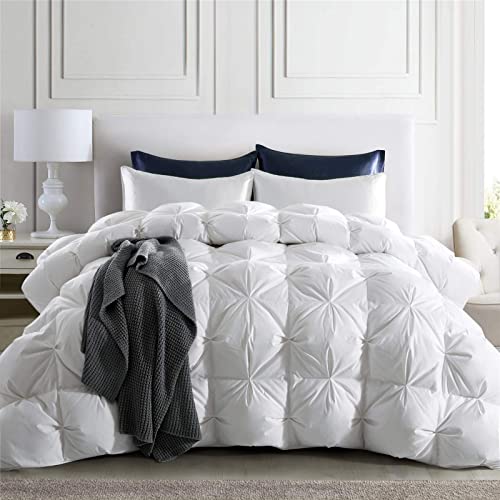
- Best overall: puredown Goose Down Duvet Insert, Full/Queen Oversized 98×90 — Check on Amazon
- Globon Winter White Goose Down Duvet Insert, Queen 90×90 — Check on Amazon
- Beautyrest Hungarian White Goose Down Duvet Insert, Full/Queen 90×98 — Check on Amazon
- APSMILE All Season Down Comforter Duvet Insert, Queen 90×90 — Check on Amazon
See 2 more Amazon options
- Brooklinen All Season Down Alternative Duvet Insert, Full/Queen 90×90 — Check on Amazon
- Egyptian Bedding Luxurious Goose Down Fiber Duvet Insert, Queen 90×90 — Check on Amazon
Read the full guide ↓
Disclosure: As an Amazon Associate, topratedkitchenware.com earns from qualifying purchases. Links to Amazon on this page are affiliate links; they cost you nothing extra. Listing details such as price and availability change often, so check the current Amazon listing before you buy.
In a small bedroom the bed is not one piece of furniture among many — it is most of the room. That changes what a duvet insert has to do. A small room holds a small volume of air, so it warms up faster from body heat and cools faster when the heating clicks off, and the insert that felt right in a big, steady-temperature room can swing between too much and too little in a small one. Storage is the second pressure: a small bedroom usually has a small closet or none, so the classic two-insert system — a light summer insert and a heavy winter one, each spending half the year in a cupboard — collapses for lack of anywhere to put the off-duty half. And drape is the third: an oversized insert that looks luxurious spilling over a king in a showroom just pools on the floor of a nine-foot bedroom and makes the whole room look swamped. This guide judges six verified inserts under $400 against those three small-room realities, not just against fill specifications.
The good news is that $400 is the budget where genuine down — real clusters, not the processed “down fiber” that fills most cheaper inserts — becomes the normal expectation, and cluster down happens to be the small room’s best friend for a physical reason: it delivers the most warmth at the least bulk, and it compresses down to a fraction of its lofted size when it does have to be stored. Two of the six picks below are filled with down fiber, a different and cheaper material, and we say so in their reviews rather than letting the word “down” blur the difference. A note on sizes before the picks: small bedrooms often hold twin or full beds rather than queens, while the picks below are judged in their queen or full/queen size. The same listings sell twin and full sizes on the same page — select your size there and check the current price on Amazon for that size, because insert listings headline whichever size is cheapest and sizes rarely share one price.
In this guide
Quick Picks
Short on time, or comparing several options at once? Each row below names a buyer type and the insert that suits it, with a link to the listing.
| Buyer type | Pick | Why it stands out | Link |
|---|---|---|---|
| Best overall | puredown Goose Down Duvet Insert, Full/Queen 98×90 | 93% down clusters that compress small for storage | Check on Amazon |
| Best value in genuine down | Globon Winter White Goose Down Duvet Insert, Queen 90×90 | Cluster down in a standard cut that suits small-room beds | Check on Amazon |
| Best named-origin down | Beautyrest Hungarian White Goose Down Duvet Insert, Full/Queen 90×98 | 75% Hungarian down; extra length for tall sleepers | Check on Amazon |
| Best warmth for cold rooms | APSMILE All Season Duvet Insert, Queen 90×90 | 46 oz of fiber fill — check price on Amazon | Check on Amazon |
| Best no-animal-fill insert | Brooklinen All Season Down Alternative Duvet Insert, Full/Queen 90×90 | Recycled fill, cotton sateen, corner loops, washable | Check on Amazon |
| Best attachment hardware | Egyptian Bedding Luxurious Duvet Insert, Queen 90×90 | 8 corner loops and tabs, 48 oz fill | Check on Amazon |
How These Picks Were Chosen
The first filter was the budget, applied to the queen or full/queen size specifically, because insert listings headline whichever size is cheapest. Every product below is a real Amazon listing sold as a duvet insert or comforter-duvet insert in that size at or under $400, and the six are inherited from this site’s verified under-$400 insert research, re-judged here through the small-bedroom lens: how the fill behaves in a room whose temperature swings, how small the insert packs when it has to be stored, and whether its dimensions suit a bed that fills most of its room. Check the current price on Amazon for each pick, in the size you need, before deciding, because listing prices change often and vary by size.
We did not use these inserts ourselves. We read the maker listings and specification pages and compared the things that decide how an insert behaves inside a cover: what the fill actually is (down clusters, down fiber, feather fiber or synthetic — the single most blurred distinction in this category), the maker’s fill-power and fill-weight figures, shell fabric and thread count, baffle-box versus sewn-through construction, the number and placement of corner tabs or loops, and the finished dimensions. Fill-power, warmth and loft figures are maker claims throughout this guide; no independent lab verified them in the sources we checked, and we flag them as claims wherever they appear.
One overlap deserves stating openly: duvet inserts and comforters are largely the same products under two names on Amazon, and several picks here also appear in our comforter guides. That reuse is deliberate — each product below is genuinely titled or sold as a duvet insert, and this guide re-judges them on insert criteria (attachment hardware, shell behavior inside a cover, sizing against standard covers) and on the small-room criteria above, rather than repeating the comforter verdicts. If you will use the product bare, without a cover, the comforter guide is the better read; this one assumes a cover goes over it.
The 6 Best Duvet Inserts for Small Bedrooms Under $400
puredown Goose Down Duvet Insert, Full/Queen Oversized 98×90 (800 Fill Power)
Who it suits: Small-room buyers who want the genuine premium-down insert at this budget — and who understand that in a small room, cluster down’s compressibility is worth as much as its loft.
This is the insert the tier exists for. The listing specifies 93% white goose down — clusters, not fiber — at a maker-rated 800 fill power, with 40 oz of fill in the full/queen size, inside a 100% cotton shell at a stated 700 thread count. The fill carries RDS and OEKO-TEX Standard 100 certifications per the listing, the construction is a 3D baffle box under a pinch-pleat face, and the listing’s own copy confirms corner tabs for anchoring a duvet cover. This pick sits at the top of this budget tier, so check the current price on Amazon before you order. For a small bedroom, the deeper virtue is what clusters do off the bed: genuine down compresses to a fraction of its lofted volume and springs back, so the one premium insert can live in a modest storage bag on a closet shelf or in an under-bed box instead of demanding a cupboard of its own.
The small-room tension is the cut. At 98×90 inches this insert is oversized against the 90×90 of a standard queen insert, and oversized drape is exactly what a small room has no space for: the extra fabric hangs closer to the floor, collects dust along the hem, and can make a bed that already fills the room look drowned. Inside a generously cut or oversized cover it fills properly and the loft is superb; inside a true-to-size 90×90 cover it can bunch. Measure your cover before assuming — and if your small room holds a twin or full bed, select that size on the listing rather than letting a full/queen insert swallow a smaller mattress. Roundup coverage of this model consistently reports dry clean only, which in practice makes the cover mandatory equipment: it takes the washing so the insert does not have to.
- 93% goose down clusters — the highest genuine down content in this guide, and the most compressible fill here.
- Maker-rated 800 fill power with 40 oz of fill in the full/queen size.
- Corner tabs for the duvet cover, baffle-box construction, RDS and OEKO-TEX certified fill per the listing.
Honest limitation: This pick sits near the top of this budget tier, so check the current price on Amazon first; the oversized 98×90 cut is a lot of drape for a small room and can bunch in a standard 90×90 cover, and care is dry clean only.
Choose it if you want the best genuine-down insert under $400 and your cover is oversized or generously cut. Skip it if your cover is exactly 90×90 and closely fitted, your bed is a twin the insert would swamp, or machine washing is non-negotiable.
Globon Winter White Goose Down Duvet Insert, Queen 90×90
Who it suits: Small-room buyers who want real cluster down and baffle-box construction in a standard cut, without spending near the cap — the value route into genuine down.
Globon’s winter queen pairs a maker-claimed 800+ fill power with roughly 37 oz of goose down fill (per detailed comparison coverage of the line) in a 3D baffle-box build, with corner tabs listed for cover attachment. It sits in the lower part of this budget tier for cluster down with these stated specifications, and that positioning is the reason this insert is the guide’s value pick: it delivers the same construction class as the hero without sitting at the top of the tier — check the current price on Amazon. For a small bedroom its plain 90×90 cut is a genuine advantage rather than a compromise: it matches standard queen covers exactly, and on the twin and full sizes selected on the same listing it stays proportioned to smaller beds instead of trailing off them. The brand reports RDS and OEKO-TEX certifications and a Texcote-Nano moisture treatment, the latter printed here as what it is — a maker claim, not a measured property.
The trade sits in the shell, and a small room sharpens it. Where the puredown wraps its down in pure cotton, Globon’s shell is a 68% cotton / 32% polyester blend at a stated 420 thread count. Inside a duvet cover that matters less than it would for a bare comforter — your skin meets the cover, not the shell — but the blend is less breathable than pure cotton, and small rooms run warm: a small air volume plus two sleepers raises the temperature fast, so a less breathable shell works against you on mild nights. The fill-power figure also deserves its flag: 800+ is the maker’s number, not independently lab-verified in the sources we checked, and Globon sells several near-identical variants, so confirm the live listing still resolves to the winter queen 90×90 before ordering.
- Genuine goose down clusters with a maker-claimed 800+ fill power and ~37 oz fill weight.
- 3D baffle-box construction and corner tabs for the cover, in a standard 90×90 cut that suits small-room beds and covers.
- Positioned in the lower part of this budget tier — check price on Amazon.
Honest limitation: The shell is a cotton-polyester blend rather than pure cotton — a real consideration in a small room that heats up quickly — and the 800+ fill-power figure is a maker claim that no source we checked verified independently.
Choose it if you want real down positioned lower in this tier, in a size that behaves in a small room, and your insert will live inside a cover. Skip it if a pure cotton shell is a hard requirement.
Beautyrest Hungarian White Goose Down Duvet Insert, Full/Queen 90×98
Who it suits: Tall sleepers in small rooms — people who need length in the bed, not width around it — and buyers who care about named-origin down and domestic making.
Beautyrest’s Hungarian insert is the provenance pick. Per the maker’s product description, the fill is 75% Hungarian white goose down with 25% white goose feather — that 75% figure matters, because it meets the US labeling threshold at which a fill may be sold simply as “down,” and it is clusters rather than fiber. The maker rates it at 750 fill power, the shell is 100% US-grown cotton at 500 thread count in a damask stripe, the construction is baffle box with self-piping, and the listing confirms 4 corner tabs for securing a duvet cover. The model is made in the USA. The full/queen cut runs 90×98 — standard width, extra length — which is a very specific small-room proposition: the width behaves like any queen insert, while the eight extra inches go where a tall sleeper’s feet are.
Judge that length honestly against your room. On a standard bed in a small bedroom, 98 inches of insert will drape well past the foot and toward the floor, and if the foot of your bed is a walkway — in a small room it usually is — the drape is in your path and in the dust. For a tall sleeper it is the difference between covered feet and a nightly tug-of-war; for everyone else it is surplus fabric. Check the current price on Amazon in your size before deciding — if it sits within this guide’s under-$400 budget it is one of the strongest inserts in this guide; if it sits above that budget, the Globon above covers similar ground lower in the tier.
- 75% Hungarian white goose down clusters — meets the US “down” labeling threshold — with a maker-rated 750 fill power.
- 500 thread count US-grown cotton damask shell; made in USA; OEKO-TEX certified per the maker.
- Baffle-box construction with 4 corner tabs and a longer 90×98 cut for tall sleepers.
Honest limitation: Check the current price on Amazon in your size before you decide, and note that the 90×98 length will swamp a short bed and trail toward the floor in a small room.
Choose it if you are tall, named-origin down and US making top your list — check price on Amazon. Skip it if you need a standard-length cut, or your bed and room have no use for eight extra inches of length.
APSMILE All Season Down Comforter Duvet Insert, Queen 90×90
Who it suits: Buyers in cold, drafty small rooms who want the warmth and weight of a natural fill positioned in the middle of this tier, and who understand exactly which natural fill they are getting.
Read this pick’s label the way this guide reads every label: APSMILE’s own materials line for this listing reads “down fibers & feathers fibers.” That is processed fiber fill — down and feather material broken down into fiber form — not the intact clusters in the puredown, Globon and Beautyrest above, and no fill-power figure belongs to it: the “750 fill power” number attached to APSMILE’s line in some roundups is brand marketing for the range, and it is not printed for this listing in the sources we could verify. Judged on its own honest terms, though, the insert is well specified: 46 oz of fill weight — more ounces than the hero — in a 90×90 queen, baffle-box construction and corner tabs for the cover, fulfilled by Amazon — check the current price on Amazon. In a small room that runs cold — an older building, an exterior wall on two sides, heating that gives up at night — that fill mass is a real virtue: fiber’s warmth comes from weight, and weight is what a chilly small room asks for.
The small-room cost is storage and recovery. Fiber fill does not compress the way clusters do and does not spring back as completely, so this is the bulkiest pick in the guide to put away and the slowest to re-loft after a season in a bag; in a room with no closet, that bulk has to be planned for rather than discovered in May. Fiber also compresses sooner over years of use and recovers less than cluster down. Buy it as what it is — a generously filled fiber insert positioned in the middle of this tier, well suited to a cold small room — and it is a good purchase; buy it believing the roundup headline that it is a 750 fill power down comforter, and you have expected cluster-down quality from a fiber product.
- 46 oz fill weight — the heaviest fill in this guide — check price on Amazon.
- Baffle-box construction and corner tabs; fulfilled by Amazon.
- Natural fiber warmth that suits small rooms which run cold, positioned below the cluster-down picks in this tier.
Honest limitation: The fill is down and feather fiber, not clusters — it is the bulkiest pick to store in a small room — and any “750 fill power” figure attached to this brand’s line should not be attributed to this listing.
Choose it if generous warmth from fiber fill is the priority, your small room runs cold, and you are content with fiber fill honestly labeled. Skip it if you are specifically shopping for cluster down, or storage space is your binding constraint — that is the Globon or the puredown.
Brooklinen All Season Down Alternative Duvet Insert, Full/Queen 90×90
Who it suits: Small-room buyers who want a premium insert with no animal fill at all — and whose laundry reality means the insert itself gets washed, not just its cover.
Brooklinen’s down alternative is the synthetic pick that earns its place on construction rather than apology. The fill is recycled polyester formed to mimic down clusters, the shell is 100% cotton sateen, the construction is baffle box, and — the insert-specific detail — it carries corner loops for tying into a duvet cover, confirmed in independent review coverage of the model. Check the current price on Amazon for the all-season full/queen. Most of this model’s sales happen through the brand’s own store, so judge it here on its construction and fill.
The small-bedroom case for it is laundry. Small bedrooms usually belong to small homes, where the washing machine is small too — or is a laundromat trip — and where a dry-clean-only insert (the puredown above) depends entirely on its cover staying between it and every spill. Synthetic fill tolerates machine washing in a way the cluster-down picks do not — follow the listing’s care label — so this is the pick for households that wash the insert itself regularly. As an insert it behaves well: the baffle boxes keep the synthetic fill distributed, the loops do the one job an insert must do inside a cover, and the cotton sateen shell slides into covers without the static grab of microfiber shells. It will not compress as small as cluster down for storage, so budget it a full storage bag’s worth of space. One terms note: Brooklinen’s generous brand-store trial and warranty apply to brand-store purchases; an Amazon purchase follows Amazon’s return policies, and this guide recommends it on the product, not the perks.
- No animal fill: recycled polyester fill in a 100% cotton sateen shell.
- Baffle-box construction with corner loops for the duvet cover.
- The most wash-friendly pick in this guide — check price on Amazon.
Honest limitation: Synthetic fill stores bulkier than cluster down, and most sales happen through the brand’s own store rather than Amazon — check the current price on Amazon before you decide.
Choose it if you want premium construction without down, or an insert you can machine wash in a small home’s laundry setup. Skip it if genuine down loft is the point of spending at this tier, or storage space is your scarcest resource.
Egyptian Bedding Luxurious Goose Down Fiber Duvet Insert, Queen 90×90
Who it suits: Buyers whose last insert bunched into a corner of its cover every night — this one has the best attachment hardware in the guide — and who sleep in small rooms that run cold rather than hot.
Egyptian Bedding has sold this insert since 2009, and its specification is a study in insert-first design: 48 oz of fill in a 90×90 queen, a 100% Egyptian cotton shell, baffle-box construction with double-needle stitching and rope piping, and 8 corner loops and tabs — double the anchor points of most inserts — to hold a duvet cover exactly where you tied it. In a small bedroom that hardware earns its keep in an unglamorous way: making a bed in a tight room means working from one side, tugging the cover straight from whatever angle the walls allow, and an insert anchored at eight points stays spread through that handling instead of migrating to the far corner. The fill, stated plainly on the listing, is 80% goose down fiber and 20% waterfowl feather fiber: fiber again, not clusters, and the listing publishes no fill-power figure. The certifications are real ones — RDS, Downpass and OEKO-TEX Standard 100 are all stated on the listing — and the long sales history is its own kind of evidence in a category full of listings that vanish in a year.
Two disciplines apply. First, warmth: the brand’s own language for this product contradicts itself, describing it as both lightweight and extra warm in different places, and independent coverage of the line notes that 48 oz of fiber fill runs warm in practice. In a small room — which heats up faster than a large one, for the air-volume reasons in the section below — a warm-running insert is a genuine caution, not a footnote: this pick suits cold rooms and cold sleepers, and is the wrong buy for a small room that already sleeps hot. Second, positioning: this is a fiber-filled pick, so check the current price on Amazon — if it sits up with the cluster-down picks at the top of this tier, the guide’s own advice is to buy the Globon or puredown instead.
- 8 corner loops and tabs — the most attachment points in this guide, and a real help when making a bed in tight quarters.
- 48 oz fill, Egyptian cotton shell, baffle box with rope piping; on sale since 2009.
- RDS, Downpass and OEKO-TEX certifications stated on the listing.
Honest limitation: The fill is down fiber rather than clusters, it runs warm — a liability in a small room that heats quickly — the brand’s warmth language contradicts itself (lightweight in one line, extra warm in another) — check the current price on Amazon before you decide.
Choose it if cover-shifting is your chief complaint, your small room runs cold, and you want a warm, well-anchored insert. Skip it if your small room sleeps hot, or if you want genuine cluster down instead of fiber.
Comparison Table
| Product | Fill (queen) | Construction & attachment | Link |
|---|---|---|---|
| puredown Goose Down Duvet Insert, 98×90 | 93% down clusters, 40 oz, maker-rated 800 FP | 3D baffle box, pinch pleat, corner tabs | Check on Amazon |
| Globon Winter Duvet Insert, 90×90 | Goose down clusters, ~37 oz, maker-claimed 800+ FP | 3D baffle box, corner tabs | Check on Amazon |
| Beautyrest Hungarian Duvet Insert, 90×98 | 75% Hungarian down clusters, maker-rated 750 FP | Baffle box, 4 corner tabs | Check on Amazon |
| APSMILE All Season Duvet Insert, 90×90 | Down & feather fiber, 46 oz | Baffle box, corner tabs | Check on Amazon |
| Brooklinen Down Alternative Duvet Insert, 90×90 | Recycled polyester, no animal fill | Baffle box, corner loops | Check on Amazon |
| Egyptian Bedding Luxurious Duvet Insert, 90×90 | 80% down fiber / 20% feather fiber, 48 oz | Baffle box, 8 corner loops and tabs | Check on Amazon |
How to Choose a Duvet Insert for a Small Bedroom Under $400
- Size the insert to the bed and cover you actually have. Small bedrooms often hold twin or full beds. Buy the insert in the size of your bed, matched to your cover’s inside dimensions — not the queen size this guide uses for its comparisons. A full/queen insert draped over a twin bed is not luxury; it is fabric on the floor.
- Buy one all-season insert, not two seasonal ones. The summer/winter swap system needs a cupboard for the off-duty insert, and a small bedroom rarely has one. One mid-weight insert, layered with a blanket you already own on the coldest nights, beats two inserts and nowhere to put one of them.
- Read the fill line before the headline. “Down” in a title can mean clusters, down fiber or a blend. The materials line tells the truth: clusters loft most per ounce, compress smallest for storage and last longest; fiber delivers warmth through fill weight but is bulkiest to store and compresses sooner.
- Know the 75% rule. Under US labeling practice a fill sold simply as “down” must be at least 75% down clusters. The Beautyrest’s stated 75% and the puredown’s 93% both clear it; anything labeled “down fiber” is a different material by definition.
- Treat fill power as a maker claim. Fill power (the volume an ounce of down occupies) is the best single proxy for loft quality, but no figure in this guide was independently lab-verified — compare claims within the guide, and weigh fill weight alongside them.
- Plan the storage before the purchase. Cluster down packs down smallest and recovers best; store any insert in a breathable cotton bag, loosely rather than vacuum-sealed for months, and know where the bag will live — under-bed box, closet shelf, top of a wardrobe — before the box arrives.
- Count the anchor points. Four corner tabs are the premium-tier minimum; eight loops (the Egyptian Bedding) hold the side edges too, which matters when you make the bed from one side in a tight room. Match the insert’s anchors to your cover’s ties, or the extra hardware does nothing.
- Prefer baffle box at this price. Sewn-through stitching pinches the fill at every seam and caps loft; baffle walls let clusters expand fully and stop migration. Every pick in this guide is baffle box — at $400, accept nothing less.
- Decide the care question against your laundry, not your intentions. High-cluster down here is dry clean only in practice, which makes the duvet cover mandatory equipment and suits homes where the cover is what gets washed. If the insert itself must go in a home machine — a common reality in small homes — the Brooklinen is the pick designed for that life.
- Check the current price on Amazon for every pick. Prices change often and vary by size, so check the figure in the size you need on Amazon before deciding, and weigh it against the under-$400 budget for this guide.
Why Small Bedrooms Swing Hot and Cold — and What That Means for Fill
A bedroom’s temperature stability is mostly a question of air volume, and a small room has very little of it. Two sleepers give off heat all night into a space that may hold a third of the air of a large bedroom, so the room warms faster and further; a radiator or a sun-facing wall has proportionally more effect; and when the heating cuts out or a window is opened, the same small volume sheds its heat just as quickly. The result is a room that swings — stuffy by 2 a.m., chilly by 5 — where a large room merely drifts. No insert changes the room, but the swing changes what a good insert is. A very warm, heavy fill that would be insurance in a big cold house becomes a trap in a small room’s warm phase: you cannot push a duvet far enough off a small bed to escape it, because there is floor, not bed, on the other side of the edge.
The practical answer is a mid-weight, all-season insert — which is what most of this guide is — plus layering you can remove to somewhere. A folded blanket at the foot of the bed adds the cold-phase layer and, crucially, stores on the bed itself rather than in a closet. Judge the warm-running picks with the swing in mind: the Egyptian Bedding’s 48 oz of fiber fill and the APSMILE’s 46 oz are assets in a small room that runs cold — an older building, a corner room with two exterior walls — and liabilities in a small room above a boiler or facing afternoon sun. The cluster picks, the puredown and Globon, regulate best across the swing for a simple physical reason: lofty down insulates in proportion to the air it traps, and it can be fluffed up or shaken down in a way a fixed slab of fiber cannot. In a small room, adaptability beats maximum warmth almost every time.
No Closet, No Problem: Storing One Premium Insert in a Small Room
The standard bedding advice — a light insert for summer, a heavy one for winter, rotate them — quietly assumes a linen cupboard. Small bedrooms break the assumption, and the breakage is where insert choice and storage physics meet. Fills differ enormously in how they store. Down clusters are mostly air by design: pressed into a storage bag, a cluster insert gives up that air and packs down to a fraction of its lofted size, then recovers its loft when it comes back out — which is why the puredown and Globon are the natural picks for a one-insert, small-storage life. Down and feather fiber, the APSMILE and Egyptian Bedding fills, compress less and recover more slowly, and recycled-polyester fill sits in between: springy, but bulky per unit of warmth. If an insert will spend months in a bag in your room, the fill decides whether that bag is a shoebox-sized bundle on a shelf or a sack that needs its own furniture.
Two storage rules protect whichever fill you buy. Store the insert in a breathable cotton bag, not a sealed plastic one — natural fills need air exchange, and a season sealed in plastic is how a premium insert acquires a permanent musty smell. And store it compressed only as much as the bag requires, not vacuum-flat for months: clusters recover well from ordinary compression, but no fill is improved by being crushed to a wafer all summer, and the loft you paid for at this tier is exactly what over-compression spends. The under-bed storage box is the small room’s natural home for the bag — one more reason the one-insert system wins: the bed that dominates the room also hides its own bedding’s storage, and the second, seasonal insert that the system does not need never has to be found a home at all.
Drape Is a Dimension: Sizing an Insert for a Bed in a Small Room
In a large bedroom, an oversized insert reads as generosity: deep drape on three sides, a bed that looks dressed. In a small bedroom the same inches read as clutter, because the geometry is different — the bed’s edges are near walls, the floor around it is a walkway rather than a margin, and every extra inch of insert hangs closer to the floor, brushes the wall or pools where you step out of bed in the dark. This guide’s six picks make the point concretely. The puredown’s 98×90 oversized cut is a virtue inside an oversized cover and a nuisance anywhere else. The Beautyrest’s 90×98 keeps a standard width and spends its extra inches on length, which serves exactly one small-room case — a tall sleeper — and otherwise trails toward the floor at the foot. The four 90×90 picks are cut to the standard the covers in most small rooms are already sewn to.
The sizing discipline that matters most, though, is the one at the top of this guide: match the insert to the bed, not to the guide. Small bedrooms hold twin and full beds at least as often as queens, and an insert should be bought in the bed’s own size, an inch or two wider than the mattress at most, and matched to the cover’s internal dimensions so it fills the cover without bunching. A full/queen insert on a twin bed does not drape elegantly; it folds, slides and heats unevenly, and its tabs will not land where a twin cover’s ties are. Every listing in this guide sells its insert in twin and full sizes on the same page — choose your size there, check the current price on Amazon for that size rather than assuming one size’s price carries over to another, and let the bed you have, in the room you have, set the dimensions.
Common Buying Mistakes
- Reading “down” in a title and never checking the materials line — then expecting cluster-down quality from down fiber.
- Attributing a brand-line fill-power figure (such as APSMILE’s marketed 750) to a specific fiber-filled listing that publishes no fill power at all.
- Buying a queen or oversized insert for a twin or full bed in a small room, and blaming the insert for the drape, bunching and floor-pooling the size mismatch caused.
- Buying two seasonal inserts for a room with no closet, then storing one of them crushed in a sealed plastic bag on top of a wardrobe all year.
- Vacuum-sealing a down insert flat for a whole season; clusters recover from compression, but months wafer-thin spends the loft you paid a premium for.
- Choosing maximum warmth for a small room that runs hot — a small air volume heats fast, and a heavy fill cannot be pushed far enough away on a small bed.
- Skipping the duvet cover on a dry-clean-only down insert to save money, then paying the savings back in cleaning bills and stained shell fabric.
- Assuming every size on a listing costs the same; insert listings headline the cheapest size, and prices vary by size — check the current price on Amazon in the size you need.
- Counting only corner tabs when your cover has eight ties, or buying eight loops for a cover with four — anchor hardware only works in matched pairs.
- Judging loft in the first hour. Vacuum-packed down needs a day of airing and fluffing — some brands specify up to 24 hours — before it reaches its real height.
Final Recommendation
- Most buyers: puredown Goose Down Duvet Insert, Full/Queen 98×90.
- Genuine down on a budget, standard cut: Globon Winter White Goose Down Duvet Insert.
- Tall sleepers and named-origin down: Beautyrest Hungarian White Goose Down Duvet Insert (check price on Amazon).
- Cold small rooms, generous fiber warmth: APSMILE All Season Duvet Insert.
- No animal fill, home-washable: Brooklinen All Season Down Alternative Duvet Insert.
- Cover-shifting sufferers: Egyptian Bedding Luxurious Duvet Insert (check price on Amazon).
Our top two are the puredown for anyone whose cover can take its oversized cut — it is the only pick here combining 93% clusters, a maker-rated 800 fill power, a 700 thread count cotton shell and proper corner tabs in one listing, and its clusters pack down smallest when the small room needs it stored — and the Globon for everyone else, because genuine cluster down in a baffle box positioned lower in this tier, in a standard 90×90 cut that behaves on small-room beds, is the best value in the guide even allowing for its blended shell. The Beautyrest is the tall sleeper’s alternative if its current price on Amazon sits within this budget. What this tier rewards in a small bedroom is the same label literacy as anywhere, plus one extra discipline: read the fill line, match the dimensions to your bed and cover rather than to the guide’s queen size, count the anchor points, and ask where the insert will live when it is off the bed. In a room this size, that last question is not housekeeping — it is half the purchase.
Frequently Asked Questions
What size duvet insert should I buy for a twin or full bed in a small room?
The bed’s own size. Buy the twin or full version of the insert — every listing in this guide sells those sizes on the same page — and match it to your cover’s inside dimensions, aiming for an insert the same size as the cover or an inch larger so it stays spread without bunching. Do not buy the queen just because this guide judges queens: an oversized insert on a small bed drapes to the floor, slides inside its cover and heats unevenly. And check the current price on Amazon in your size, because sizes on one listing routinely differ in price.
Why does my small bedroom feel too hot at night and too cold by morning?
Air volume. A small room holds little air, so body heat, a radiator or afternoon sun warms it quickly — and it sheds that heat just as quickly when the heating stops or a window opens. The bedding answer is a mid-weight all-season insert you can layer over, rather than the heaviest fill available: maximum-warmth inserts (the 46–48 oz fiber picks here) suit small rooms that run cold, while warm-running small rooms are better served by the adaptable loft of cluster down, which can be fluffed up or shaken down as the room swings.
Can I store a down insert compressed in a small room?
Yes, with two rules. Store it in a breathable cotton storage bag rather than a sealed plastic one, and compress it only as much as the bag needs — not vacuum-flat for months at a time. Cluster down (the puredown and Globon) packs down smallest and recovers its loft best, which is why it suits small storage; fiber and synthetic fills take more room and recover more slowly. An under-bed storage box is the usual small-room home for the bag. Fluff the insert and give it a day of air when it comes back out before judging its loft.
Is one all-season insert really better than a summer and a winter insert?
In a small room, usually yes — not because two inserts are worse bedding, but because the off-duty one has to live somewhere for six months, and small bedrooms rarely have the cupboard the rotation assumes. One mid-weight insert, layered with a blanket stored folded on the bed itself for the coldest weeks, covers the year for most heated homes. The exception is a small room with extreme swings — an unheated older building, say — where the seasonal pair earns its storage cost; if that is your room, the cluster-down picks compress smallest in their off months.
Is a $400 duvet insert really better than a $100 one?
In fill, yes, measurably: at $100 the honest offer is down-alternative and feather/down-fiber inserts, while $400 buys intact down clusters at high stated fill powers, which loft more per ounce, compress and recover for more years, and insulate at lower weight — that last pair of virtues matters doubly in a small room, where bulk and storage are the constraints. In construction the gap is smaller: good baffle boxes and corner tabs exist at $100 too. The premium is for the clusters, and it is worth paying only if you have read the materials line and confirmed clusters are what you are getting.
What is the difference between down clusters and down fiber?
Clusters are the intact three-dimensional plumes; they trap air in a springy structure and are graded by fill power. Down fiber is down and feather material processed into loose fiber — the structure is broken down, so it insulates like a natural batting: warm and soft, but flatter per ounce, faster to stay flat, and bulkier to store. Both are legitimate fills in their own tier positions; the mistake is expecting cluster-down quality from fiber, which is why this guide names the material in every review.
Why does this guide not print prices?
Because listing prices change often and vary by size, this guide does not print static prices for any pick. Check the current price on Amazon, in the size you actually need, and judge it against this guide’s under-$400 budget and each pick’s positioning in the tier — the cluster-down picks sit higher in the tier, while the fiber and synthetic picks sit lower.
Can I machine wash a down insert?
The high-cluster picks in this guide should be treated as dry clean only — roundup coverage of the puredown reports exactly that — which is why the duvet cover is not optional: it takes the washing so the insert does not have to. That arrangement suits most small homes, where the cover fits the machine the insert would overwhelm. The Brooklinen down alternative is the pick designed for regular machine washing; follow its listing’s care label. Whatever you buy, never judge or wash a vacuum-packed insert in its first day — let it air and reach full loft first.
Does a down insert help with allergies?
An insert is a comfort product, not a medical one, and this guide makes no health claims for any pick. Where a maker labels a product “hypoallergenic,” we report it only as the maker’s label. Down is washed and certified under standards such as RDS and OEKO-TEX by the brands here, and a washable duvet cover is the practical hygiene layer for any sleeper; if allergies are a medical concern in your household, the synthetic Brooklinen removes animal fill from the equation entirely, and a clinician’s advice comes before any bedding purchase.
